H-1B Visa Fee Increase Florida 2026: New Costs & Your
The H-1B visa fee increase in Florida for 2026 demands careful attention from employers and skilled foreign workers. Effective April 1, 2026, new USCIS fee schedules will impact the cost of H-1B petitions, necessitating a thorough understanding of the updated process and financial implications. This comprehensive guide from Florida Immigration Lawyers details the new fees, step-by-step application process, essential documents, and common mistakes to avoid. We also address frequently asked questions and highlight the impact on Florida's economy. Navigating these changes successfully requires expert legal counsel. Contact Florida Immigration Lawyers for a free consultation to ensure compliance and a smooth application journey in Kissimmee and across Florida.
The H-1B visa fee increase in Florida for 2026 introduces significant new costs for employers and affects the application process for skilled foreign workers. These changes, effective April 1, 2026, aim to fund USCIS operations but necessitate careful planning. Understanding the updated fee structure and compliance requirements is crucial for success.
- New fee structure for H-1B petitions.
- Effective date: April 1, 2026.
- Increased financial burden for sponsoring employers.
- Importance of legal counsel to navigate changes.
- Impact on skilled workers and businesses in Florida.
H-1B Visa Fee Increase Florida 2026: New Costs & Your Options
Are you an employer in Florida looking to sponsor a highly skilled foreign worker? Perhaps you are an international professional seeking to work in the U.S. on an H-1B visa. If so, you need to be aware of significant changes coming in 2026, particularly the H-1B visa fee increase.
Effective April 1, 2026, U.S. Citizenship and Immigration Services (USCIS) is implementing new fee schedules that will impact H-1B petitions across the nation, including here in Florida. These changes are designed to help USCIS recover its operating costs, but they will undoubtedly present new challenges for businesses and individuals alike.
This comprehensive guide from Florida Immigration Lawyers will walk you through everything you need to know about the upcoming fee increases. We will cover the new costs, the updated application process, critical deadlines, and strategies to ensure a smooth transition. Understanding these changes is vital for anyone involved in the H-1B program in Kissimmee, Orlando, and throughout Florida.
Do not navigate these complex regulatory changes alone. For personalized guidance and to discuss your specific situation, call Florida Immigration Lawyers at 1-844-967-3536 for a free consultation. Our experienced team is ready to assist you.
Understanding the H-1B Visa Fee Increase in Florida for 2026
The H-1B visa program is a cornerstone of the U.S. economy, allowing employers to temporarily employ foreign workers in specialty occupations. These occupations generally require a bachelor's degree or higher in a specific field. Many businesses in Florida, particularly in the booming technology, healthcare, and tourism sectors around cities like Kissimmee and Orlando, rely on the H-1B program to fill critical skill gaps.
The upcoming H-1B visa fee increase for 2026 represents a significant adjustment. USCIS, primarily funded by application fees, periodically updates its fee structure to ensure it can continue to process petitions efficiently. These increases are not arbitrary; they reflect the rising operational costs, technological advancements, and the need to maintain service levels.
For employers in Florida, this means re-evaluating budgets and planning carefully for the increased financial outlay associated with sponsoring H-1B workers. The new fees will apply to various stages of the H-1B process, from initial petitions to extensions and amendments. It is essential for Florida businesses, from startups to large corporations, to factor these new costs into their hiring strategies.
Beneficiaries, while not typically responsible for the main filing fees, will still be impacted. The increased burden on employers could potentially influence the number of H-1B petitions filed or the types of positions offered. Staying informed about these changes is the first step towards successfully navigating the 2026 H-1B landscape.
The H-1B Visa Application Process: A Step-by-Step Guide
Navigating the H-1B visa process can be intricate, especially with new fee structures. Here is a general step-by-step guide to help you understand the journey. Remember, each case is unique, and legal guidance is highly recommended.
-
Employer Sponsorship and LCA Filing
The process begins with a U.S. employer offering a job in a specialty occupation. The employer must first file a Labor Condition Application (LCA), Form ETA-9035, with the U.S. Department of Labor (DOL). This ensures that the H-1B worker will be paid at least the prevailing wage for their occupation in the specific geographic area, such as Kissimmee or Miami, and that working conditions will not adversely affect U.S. workers. The LCA must be certified by the DOL before an H-1B petition can be filed. For more details on business immigration, visit our business immigration page.
-
H-1B Cap Registration (if applicable)
If the H-1B petition is subject to the annual cap (most are), the employer must register the prospective H-1B worker electronically with USCIS during a designated registration period, typically in March. USCIS then conducts a lottery to select enough registrations to meet the annual cap. Only selected registrations can proceed to the next step. This system helps manage the high demand for H-1B visas.
-
Filing Form I-129, Petition for a Nonimmigrant Worker
Once a registration is selected, the employer must file Form I-129, Petition for a Nonimmigrant Worker, with USCIS. This petition includes all supporting documentation, such as the certified LCA, educational credentials, and proof of the employment offer. This is the stage where the new H-1B visa fee increase will be most evident, as updated filing fees will apply.
-
Consular Processing or Change of Status
If the beneficiary is outside the U.S., they will undergo consular processing at a U.S. embassy or consulate in their home country to obtain the H-1B visa stamp. If the beneficiary is already in the U.S. in a different nonimmigrant status, they may apply for a change of status to H-1B. Both routes require careful attention to detail and adherence to specific regulations.
-
Maintaining H-1B Status
Once approved, the H-1B worker must maintain their status by adhering to the terms of their petition, including working for the sponsoring employer in the approved occupation. Any significant changes, such as a new employer or substantial change in job duties, typically require a new or amended H-1B petition. Compliance is key to avoiding issues like deportation defense scenarios.
Essential Documents for Your H-1B Visa Application
A successful H-1B application hinges on submitting a complete and accurate set of documents. Missing or incorrect paperwork can lead to delays or even denial, especially with the heightened scrutiny that often accompanies fee changes. Here is a general checklist of documents typically required:
- Certified Labor Condition Application (LCA), Form ETA-9035.
- Form I-129, Petition for a Nonimmigrant Worker, with all required supplements.
- Petitioner's (Employer's) Federal Employer Identification Number (FEIN).
- Company incorporation documents, business license, and tax returns.
- Detailed job description outlining specialty occupation duties.
- Evidence of employer's ability to pay the prevailing wage.
- Beneficiary's valid passport.
- Copies of all academic degrees, diplomas, and official transcripts (foreign degrees may require an evaluation).
- Letters of experience from previous employers demonstrating qualifications.
- Beneficiary's resume or Curriculum Vitae (CV).
- Any previous U.S. visa documents (e.g., I-20 for F-1, I-797 for previous H-1B).
- Marriage certificate and birth certificates for any dependents (for H-4 visa applications).
- Photographs meeting USCIS specifications.
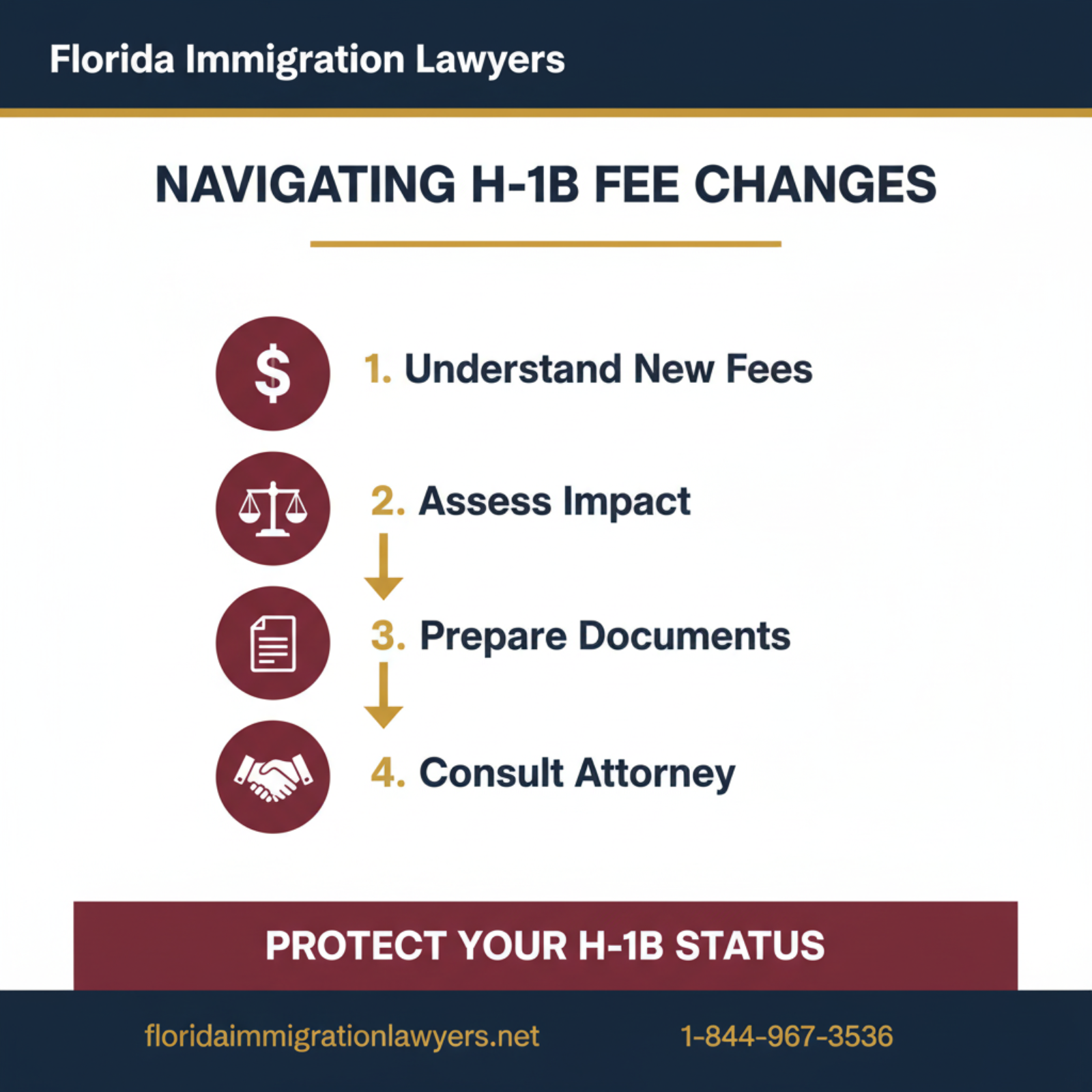
This list is not exhaustive, and specific cases may require additional documentation. Always consult with an immigration lawyer to ensure your application is comprehensive and compliant with the latest USCIS requirements.
Navigating H-1B Processing Times and Expectations
Understanding the timeline for H-1B visa processing is crucial for both employers and beneficiaries. Processing times can vary significantly based on the USCIS service center handling the petition, the volume of applications, and whether premium processing is utilized. The H-1B visa fee increase may also indirectly influence processing times as USCIS adjusts its resources.
Standard processing for Form I-129 can range from several months to over a year. USCIS provides estimated processing times on its website, which are updated regularly. These estimates can fluctuate, making it challenging to predict an exact approval date. Patience and proactive planning are essential components of the process.
For those needing a faster decision, USCIS offers an optional Premium Processing Service for an additional fee. This service guarantees a decision within 15 calendar days for eligible petitions. While this comes at an extra cost, it can be invaluable for employers needing to onboard critical talent quickly or for beneficiaries facing expiring statuses.
Requests for Evidence (RFEs) can significantly extend processing times. An RFE is issued when USCIS determines that additional information or documentation is needed to make a decision on a petition. Responding promptly and thoroughly to an RFE is critical to avoid further delays or a potential denial. Working with an experienced immigration attorney can help prepare a robust initial application, minimizing the chances of an RFE.
H-1B Visa Cost Factors and Fee Breakdown
The H-1B visa fee increase for 2026 mandates a careful review of all associated costs. While we cannot provide specific dollar amounts here as they are subject to change and should always be verified on the official USCIS website, we can outline the various fees involved. These costs are typically borne by the sponsoring employer, although some exceptions and negotiations may occur.
-
Form I-129 Filing Fee
This is the base fee for filing the Petition for a Nonimmigrant Worker. The new fee schedule will reflect an increase in this foundational cost. This fee is mandatory for all H-1B petitions.
-
H-1B Anti-Fraud Fee
Mandated by Congress, this fee supports USCIS efforts to combat fraud in the H-1B and L-1 visa programs. It applies to initial H-1B petitions and petitions filed by new employers.
-
American Competitiveness and Workforce Improvement Act (ACWIA) Fee
This fee varies based on the size of the employer. It funds U.S. worker training and education programs. Employers with 25 or fewer full-time equivalent employees pay a lower amount, while those with 26 or more employees pay a higher amount. Educational institutions and non-profit research organizations are generally exempt.
-
Public Law 114-113 Fee (for Certain Employers)
An additional fee applies to employers who have 50 or more employees, with 50% or more of those employees in H-1B or L-1 nonimmigrant status. This fee is substantial and applies to initial H-1B petitions and change of employer petitions.
-
Premium Processing Fee (Optional)
As mentioned, this expedited service comes with a significant additional cost. It guarantees faster processing but is not mandatory for all petitions. Employers often consider this for urgent cases.
h-1b visa fee increase - Key Statistics -
Attorney Fees
These fees cover the legal services provided by an immigration lawyer to prepare and file the petition. While not a government fee, legal fees are a crucial part of the overall cost for many employers seeking expert guidance. Our firm, Florida Immigration Lawyers, offers transparent fee structures.
It is crucial to consult the official USCIS website on fees for the most current fee schedule and to understand which fees apply to your specific situation. These fees are subject to change, and staying updated is vital.
Do not navigate this process alone. The complexities of the H-1B visa fee increase and the application process can be overwhelming. Contact Florida Immigration Lawyers today for expert assistance and peace of mind. We are here to help you every step of the way. Visit our contact page to schedule a consultation.
Common Mistakes to Avoid During the H-1B Process
The H-1B visa process is fraught with potential pitfalls that can lead to delays, RFEs, or even denials. Avoiding these common mistakes is essential for a successful outcome, especially with the added layer of the H-1B visa fee increase in 2026.
- Incorrect Labor Condition Application (LCA) Filing: Errors in the LCA, such as an incorrect prevailing wage determination or misclassification of occupation, can invalidate the entire H-1B petition. Always ensure the LCA precisely matches the job offer and local wage requirements.
- Missing or Incomplete Documentation: Submitting a petition with missing forms, unsigned documents, or insufficient evidence is a leading cause of RFEs. Double-check every item on the checklist and ensure all documents are properly compiled and legible.
- Failing to Meet Prevailing Wage Requirements: Employers must pay the H-1B worker at least the prevailing wage for the occupation in the specific area of employment. Failure to meet this standard can result in severe penalties and denial.
- Late Filing: Missing deadlines, especially for the H-1B cap registration or RFE responses, can be catastrophic. Timeliness is critical in immigration matters, which are often subject to strict cut-off dates.
- Misrepresenting Information: Any false statements or fraudulent documents can lead to a permanent bar from the U.S. Always provide truthful and accurate information, supported by verifiable evidence.
- Not Responding to RFEs Promptly and Thoroughly: An RFE requires a detailed and timely response. A weak or late response can lead to a denial. Seek legal counsel immediately if you receive an RFE.
- Changing Jobs Without Proper Transfer: An H-1B visa is employer-specific. If an H-1B worker changes employers, the new employer must file a new H-1B petition. Working for a new employer without an approved transfer can result in a violation of status.
- Overstaying Previous Status: If the beneficiary is in the U.S., allowing their previous nonimmigrant status to expire before the H-1B is approved can lead to unlawful presence and potential bars to re-entry.
- Not Seeking Legal Counsel: Attempting to navigate the complex H-1B process without an experienced immigration lawyer can lead to costly errors. An attorney can ensure compliance and optimize your chances of approval.
- Assuming Cap-Exempt Status Incorrectly: Some organizations, like universities or non-profit research entities, are cap-exempt. However, misunderstanding these exemptions can lead to petitions being incorrectly filed and rejected.
- Not Understanding Specific Fee Requirements: With the H-1B visa fee increase, it's easy to miscalculate or miss certain fees. Ensure you have the exact, current fee amounts from USCIS and include all applicable payments.
- Relying on Outdated Information: Immigration laws and regulations, including fees, are subject to frequent changes. Always verify information with official USCIS sources or an immigration attorney, rather than relying on old articles or anecdotal advice.
When to Call a Lawyer for Your H-1B Visa
While this guide provides general information, the H-1B visa process is highly individualized. There are many scenarios where the expertise of an immigration lawyer becomes invaluable. Florida Immigration Lawyers is here to provide the support you need.
You should consider contacting an attorney if your employment situation is complex, such as working for multiple employers, being self-employed, or having an unusual corporate structure. Lawyers can help navigate these unique circumstances and ensure compliance with USCIS regulations. We also assist with other immigration matters.
If you have a history of immigration challenges, such as previous visa denials, overstays, or issues with other immigration applications, legal counsel is crucial. An attorney can assess your history, identify potential red flags, and strategize the best approach to mitigate risks for your H-1B petition.
Receiving a Request for Evidence (RFE) or a Notice of Intent to Deny (NOID) from USCIS is a clear signal to seek immediate legal help. These notices indicate a problem with your petition that requires a well-crafted, legally sound response within a strict deadline. Our attorneys are adept at preparing compelling responses.
Furthermore, if your employer has questions about compliance, audits, or changes in employment terms, an attorney can provide guidance to ensure they meet their obligations under H-1B regulations. With the H-1B visa fee increase, understanding employer responsibilities is more critical than ever.
Addressing Your H-1B Visa Questions (FAQ)
We understand you may have many questions about the H-1B visa and related immigration topics. Here, we address some common inquiries, including those frequently asked by the public.
Do tourists have to pay $250 to enter the US?
This article specifically addresses the H-1B visa, which is for temporary specialty occupation workers. There is no general $250 fee for tourists to enter the U.S. Tourist visa fees (B-1/B-2) vary by nationality and are generally paid during the application process at a U.S. embassy or consulate, not upon entry. Different visa categories have distinct fee structures.
Who pays the $100,000 for H-1B?
There is a common misunderstanding or outdated reference regarding a $100,000 H-1B fee. Currently, there is no standard $100,000 fee for an H-1B visa. The fees involved, as outlined in our cost section, are significantly lower. Some legislative proposals in the past have suggested very high fees or penalties for certain situations, but these are not currently standard H-1B filing fees. Employers are typically responsible for most H-1B government filing fees.
How much is a Green Card?
A Green Card (lawful permanent residency) is a distinct immigration process from the H-1B nonimmigrant visa. Green Card applications involve different forms and fee structures, which also vary based on the specific category (e.g., family-based, employment-based). Information on Green Card fees can be found on the official USCIS website.
What is the minimum salary for an H-1B visa?
There isn't a single, fixed minimum salary for an H-1B visa. Instead, H-1B workers must be paid at least the "prevailing wage" for their occupation in the specific geographic area of employment. The Department of Labor (DOL) determines these prevailing wages based on factors like occupation, industry, location (e.g., Kissimmee, Florida), and experience level. The employer must certify this on the Labor Condition Application (LCA).
What if my H-1B petition is denied?
A denied H-1B petition can be disheartening. If your petition is denied, it's crucial to understand the reasons for the denial. You may have options such as filing a motion to reconsider or reopen, or potentially filing a new petition if eligible. Consulting with an immigration attorney immediately after a denial is highly recommended to explore your legal avenues.
The Impact of H-1B Visa Changes on Florida's Economy and Workforce
Florida's economy is vibrant and diverse, with significant growth in sectors like technology, tourism, and healthcare. Cities like Kissimmee, Orlando, and Tampa are increasingly becoming hubs for innovation and specialized industries. The H-1B visa program plays a crucial role in allowing Florida businesses to access the global talent pool, bringing in highly skilled professionals who contribute to economic growth and innovation.
The H-1B visa fee increase for 2026 will undoubtedly present new considerations for Florida employers. While the fees are intended to support USCIS operations, they represent an added cost that businesses must absorb. This could potentially influence hiring decisions, especially for smaller businesses or startups looking to sponsor international talent.
However, the demand for specialized skills in Florida remains high. H-1B workers often fill roles where there is a shortage of qualified U.S. workers, particularly in STEM fields. They contribute to research, development, and the overall competitiveness of Florida companies on a national and international scale. Their presence also enriches the diverse communities across the state, including in Central Florida.
Florida Immigration Lawyers understands the unique challenges and opportunities facing both employers and skilled workers in our state. We are committed to helping our clients navigate these changes effectively, ensuring that Florida continues to benefit from the contributions of international professionals while adhering to all immigration laws.
About Florida Immigration Lawyers
Florida Immigration Lawyers is a leading immigration law firm dedicated to serving individuals and businesses across all of Florida. Our team of experienced attorneys provides comprehensive legal solutions for a wide range of immigration matters, including H-1B visas, family immigration, business immigration, asylum, deportation defense, and citizenship.
We understand the complexities of U.S. immigration law and the profound impact it has on our clients' lives. Our firm is committed to delivering compassionate, effective, and personalized legal representation. We pride ourselves on clear communication, strategic advice, and unwavering advocacy for our clients.
Why choose Florida Immigration Lawyers? We offer free consultations, are available 24/7 to address your urgent needs, and provide bilingual services (English and Spanish) to ensure every client feels understood and supported. Our deep understanding of Florida's unique demographic landscape and legal environment positions us to serve you best.
Let us be your trusted partner in navigating the ever-changing landscape of immigration law. Visit our website at www.floridaimmigrationlawyers.net or call us directly at 1-844-967-3536 to schedule your free consultation today.
Sources and References
- U.S. Citizenship and Immigration Services (USCIS)
- USCIS Fee Schedule Information
- U.S. Department of Labor (DOL) - H-1B Program
- U.S. Department of State - Bureau of Consular Affairs
- Immigration and Nationality Act (INA) Section 214(g) (8 U.S.C. § 1184(g)) - H-1B Numerical Limitations
- Immigration and Nationality Act (INA) Section 212(n) (8 U.S.C. § 1182(n)) - Labor Condition Application Requirements
- 8 Code of Federal Regulations (CFR) 214.2(h) - Regulations Pertaining to H-1B Nonimmigrants
This article provides general legal information and is not intended as legal advice. Every case is unique, and outcomes depend on specific facts and circumstances. Contact an attorney for advice about your particular situation.
The changes to the H-1B visa program, including the H-1B visa fee increase, are significant for anyone involved in U.S. immigration. Ensuring compliance and understanding your options is paramount. Do not risk your future or your business's ability to thrive in Florida due to complex regulations.
Contact Florida Immigration Lawyers today for a free consultation. Our dedicated team is ready to provide the expert guidance you need. Call us at 1-844-967-3536. Se Habla Español - Estamos aquí para ayudarle.
Do Not Navigate This Process Alone
Our experienced immigration attorneys are ready to fight for you. Get a free, confidential consultation today.
Se Habla Español
Florida Immigration Lawyers
Immigration Attorney | Founder, Vasquez Law Firm
U.S. Air Force veteran and immigration attorney with thousands of cases resolved. J.D., NCCU School of Law. AILA member. Admitted to the 4th, 5th, and 11th Circuit Courts.
Available 24/7 - Free Evaluations
Related Legal Services
Our Florida immigration attorneys can help you with family immigration services, immigration practice areas and free immigration consultation. Call today at 1-844-967-3536 for a free consultation.
Related Links
Related Topics
Free Legal Consultation
Discuss your case with our experienced attorneys. We're available 24/7.
Se Habla Español - Estamos aquí para ayudarle.
Related Articles
L-1 Visa Transfer for Florida Companies | VLF Florida
Learn about L-1 visa intracompany transfers for Florida companies. Ensure a smooth transition for your employees to Tampa. Call 1-844-967-3536 for expert advice.
H-2A Visa Opportunities for Florida Agricultural Workers
Explore opportunities for Florida agricultural workers under the H-2A visa program. Learn about application steps, costs, and common mistakes.
Derived Citizenship Through Parents in Florida | VLF Florida
Discover how children born abroad can gain U.S. citizenship through their parents in Florida. Learn about eligibility, the application process, and common pitfalls. Contact Florida Immigration Lawyers at 1-844-967-3536 for expert assistance.
Understanding Immigration Bond Hearings in Florida
Navigating an immigration bond hearing in Florida can be complex. Learn about the process, necessary documents, and common mistakes. Call Florida Immigration Lawyers for assistance.