H-1B Visa Fee Increase Florida 2026: Navigating New Costs
The H-1B visa fee increase for 2026 will bring significant changes to the costs of sponsoring skilled foreign workers in Florida. This comprehensive guide from Florida Immigration Lawyers details the new fee structure, including adjustments to base filing, ACWIA, fraud prevention, and premium processing fees. We explain the step-by-step application process, list essential documents, and clarify common misconceptions like the "$100,000 H-1B fee." Learn about processing times, critical mistakes to avoid, and when to seek legal counsel for complex cases or RFEs. Our expert attorneys serve Orlando and all of Florida, offering free consultations to help you navigate these updated regulations effectively.

The H-1B visa fee increase for 2026 will introduce significant changes to the costs associated with sponsoring skilled foreign workers in Florida. These adjustments, aimed at covering USCIS operational expenses, will impact employers in Orlando and across the state. Understanding the new fee structure and application process is crucial for successful petitions.
- New fees will apply to base filing, premium processing, and other surcharges.
- Employers bear the primary responsibility for most H-1B visa fees.
- The H-1B cap registration fee will also see an increase.
- Careful preparation and legal guidance are essential to navigate these changes.
Are you an employer in Florida looking to sponsor a skilled foreign professional, or a talented individual seeking to work in the U.S.? The H-1B visa program is vital for many industries, particularly in thriving areas like Orlando, Miami, and Tampa. However, significant changes are coming with the H-1B visa fee increase set for 2026, which will impact both employers and beneficiaries across the Sunshine State.
These new fee structures can be complex and daunting. Understanding how they affect your application or your company's hiring strategy is paramount. This comprehensive guide from Florida Immigration Lawyers will walk you through the upcoming changes, the application process, and how to secure your H-1B visa in 2026.
Do not let these changes disrupt your plans. Call Florida Immigration Lawyers at 1-844-967-3536 for a free consultation to discuss your specific H-1B visa needs.
Understanding the H-1B Visa and Recent Changes
The H-1B visa is a nonimmigrant visa that allows U.S. employers to temporarily employ foreign workers in specialty occupations. These occupations generally require a bachelor's degree or higher in a specific field. Many professionals in Florida's technology, healthcare, and engineering sectors rely on this visa.
For years, the H-1B program has been a cornerstone for bringing global talent to American businesses. Florida's economy, with its diverse industries and growing tech hubs, greatly benefits from the skilled workers that the H-1B visa attracts. This contributes significantly to innovation and economic growth throughout the state.
The U.S. Citizenship and Immigration Services (USCIS) regularly reviews its fee schedule. These reviews ensure that the agency can recover the costs of processing immigration and naturalization petitions and applications. The upcoming H-1B visa fee increase for 2026 reflects these operational adjustments.
These adjustments are often driven by inflation, increased operational demands, and the need to fund various immigration programs. The goal is to maintain efficient and secure immigration services for all applicants. Understanding these underlying reasons helps contextualize the fee changes you will encounter.
H-1B Visa Fee Increase 2026: A Detailed Cost Breakdown
The total H1B visa cost to employer can vary significantly based on several factors, including the size of the employer and whether premium processing is requested. The 2026 fee increase will affect multiple components of the H-1B application. It is crucial to understand each part to budget effectively.
While specific new fee amounts are subject to finalization by USCIS, we can outline the categories of fees typically involved. Always verify the latest fee schedule on the official USCIS website before filing. This ensures you have the most current information for your application.
Base Filing Fee Adjustments
The base filing fee for Form I-129, Petition for a Nonimmigrant Worker, is a fundamental component. This fee covers the cost of processing the petition itself. The 2026 H-1B visa fee increase will likely see a substantial rise in this base amount.
For small employers and non-profit organizations, there are often reduced fees. However, these reduced fees are also subject to increases. It is important for all employers to check their eligibility for any fee exemptions or reductions.
ACWIA and Fraud Prevention Fees
The American Competitiveness and Workforce Improvement Act (ACWIA) fee funds U.S. worker training and education programs. This fee varies based on the employer's size. Additionally, a Fraud Prevention and Detection Fee helps combat immigration fraud.
These fees are mandatory for most H-1B petitions. The H1b visa fees 2026 will likely see adjustments to these surcharges as well. They are critical components of the total cost of H-1B sponsorship.
Public Law 114-113 Fee and the $100,000 Question
Many individuals ask, "Who pays the $100,000 for H-1B?" This question refers to the Public Law 114-113 fee. This fee is a significant additional cost for specific employers. It applies to companies with 50 or more employees, where 50% or more of their workforce are H-1B or L-1 nonimmigrant workers.
This "50/50 rule" fee is $4,000 for H-1B petitions. It is not $100,000 as commonly misunderstood. The $100,000 figure often originates from early, unconfirmed proposals or misinterpretations of past legislative discussions. There is no current $100,000 H-1B fee requirement. Understanding this distinction is crucial for employers navigating the cost of h1b visa sponsorship.
H-1B Cap Registration Fee
For cap-subject H-1B petitions, employers must first register electronically with USCIS. A small fee is associated with this registration. This fee is also expected to increase in 2026. This initial step is critical for participation in the annual H-1B lottery.
Premium Processing Costs
Employers can opt for premium processing for an expedited decision on their H-1B petition. This service guarantees a response within a specific timeframe (typically 15 calendar days) for an additional fee. The premium processing fee is also subject to periodic increases by USCIS.
While optional, premium processing can be invaluable for time-sensitive cases. It provides certainty and faster results, which can be critical for business operations. The H1b visa fees 2026 will include an updated premium processing cost.
Navigating the H-1B Application Process: A Step-by-Step Guide
The H-1B application process is multi-faceted and requires careful attention to detail. Any misstep can lead to delays or even denial. Here is a general outline of the steps involved, which remains largely consistent despite fee changes:
-
Labor Condition Application (LCA) Filing: The employer must first file a Labor Condition Application (Form ETA Form 9035) with the U.S. Department of Labor (DOL). This certifies that the H-1B worker will be paid the prevailing wage for their occupation in the specific geographic area, such as Orlando, Florida. This step ensures fair labor practices.
-
H-1B Cap Registration (If Applicable): For cap-subject H-1B visas, the employer must register the prospective H-1B employee during the designated registration period, typically in March. USCIS then conducts a lottery if the number of registrations exceeds the annual cap. This is a critical initial step for many petitions.
-
File Form I-129, Petition for a Nonimmigrant Worker: If selected in the lottery (or if cap-exempt), the employer files Form I-129 with USCIS. This petition includes all supporting documentation about the employer, the beneficiary, and the specialty occupation. This is the core of the H-1B application.
-
Beneficiary Applies for H-1B Visa (Consular Processing) or Changes Status (Adjustment of Status): If the beneficiary is outside the U.S., they will apply for an H-1B visa stamp at a U.S. consulate or embassy abroad after the I-129 is approved. If already in the U.S. on another valid nonimmigrant status, they may apply to change their status. This step depends on the individual's current location.
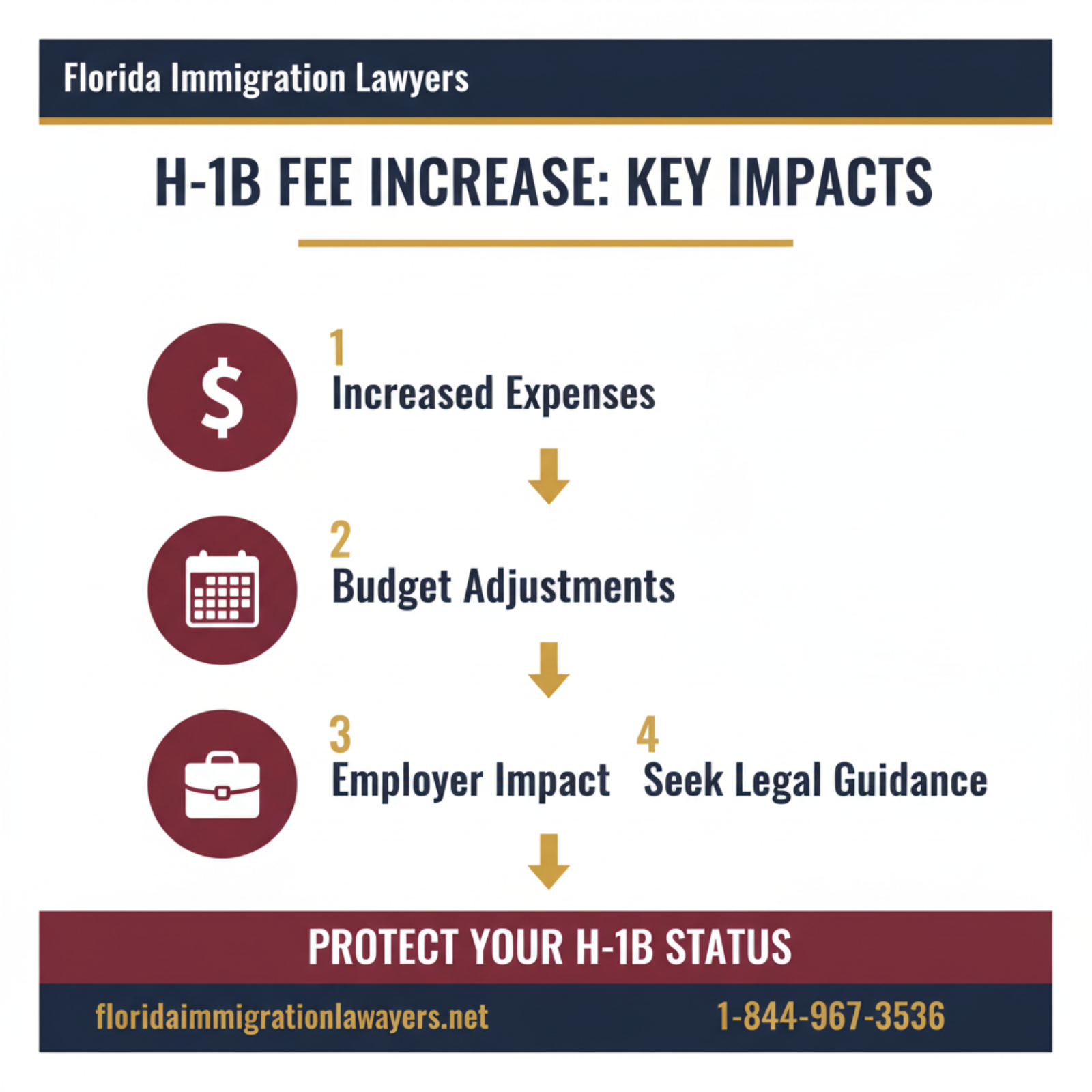
Step-by-Step Process Guide -
Attend Visa Interview (Consular Processing Only): For those applying at a consulate, an interview is typically required. The applicant must demonstrate their eligibility and intent to comply with visa terms. Thorough preparation for this interview is essential.
-
Entry to U.S. or Status Activation: Upon visa approval and successful interview, the beneficiary can enter the U.S. (consular processing). If changing status, the H-1B status becomes active on the designated start date. This marks the successful completion of the process. For expert guidance on this intricate journey, visit our business immigration page.
Essential Documents for Your H-1B Visa Application
A successful H-1B petition hinges on submitting a complete and accurate set of documents. Missing or incorrect documentation is a common reason for Requests for Evidence (RFEs) or denials. Therefore, meticulous organization is vital.
Both the employer and the beneficiary must provide extensive documentation. This includes proof of qualifications, business legitimacy, and financial stability. Ensuring every required document is present and correctly formatted can significantly smooth the process.
- Employer's Documents:
- Certified Labor Condition Application (LCA).
- Form I-129, Petition for a Nonimmigrant Worker.
- Employer's Federal Employer Identification Number (FEIN).
- Company's business license, articles of incorporation, and financial statements.
- Detailed job offer letter and description of the specialty occupation.
- Organizational charts and information about the work site in Florida (e.g., Orlando office).
- Beneficiary's Documents:
- Valid passport and birth certificate.
- Academic degrees, transcripts, and evaluations of foreign degrees.
- Resumes/CVs and professional letters of experience.
- Any previous U.S. visa copies, I-94 records, and immigration documents (e.g., I-20, DS-2019).
- Marriage certificate and birth certificates for any dependents (for H-4 visa applications).
H-1B Visa Processing Times and Expectations
H-1B visa processing times can vary significantly. Factors include the USCIS service center handling the petition, the volume of applications, and whether premium processing is utilized. General processing can take several months, while premium processing offers a much faster turnaround.
For petitions filed by Florida employers, cases are typically adjudicated by one of the USCIS Service Centers, such as the California Service Center or Vermont Service Center. You can check the current average processing times for specific forms and service centers on the official USCIS website. This resource provides valuable estimates for planning.
It is important to set realistic expectations regarding timelines. Unforeseen delays, such as Requests for Evidence (RFEs), can extend processing. Planning ahead and submitting a robust application package from the outset can help mitigate potential delays.
Do not navigate this process alone. Contact Florida Immigration Lawyers today to ensure your application is handled efficiently and correctly.
Common Mistakes to Avoid in Your H-1B Application
Navigating the H-1B visa process, especially with new fees and regulations, can be challenging. Avoiding common pitfalls is crucial for a smooth application. Here are some frequent mistakes that can jeopardize your H-1B petition:
-
Inaccurate or Incomplete LCA: Errors in the Labor Condition Application (LCA), such as incorrect prevailing wage, job duties, or work location, can lead to DOL rejection or USCIS RFE. This will cause significant delays and may even result in denial.
-
Missing the H-1B Cap Registration Deadline: For cap-subject petitions, failing to register during the designated window means you miss the opportunity for that fiscal year. This can delay an employee's start date by an entire year, impacting business operations in Florida.
-
Errors on Form I-129: Simple typos, missing signatures, or incorrect information on the I-129 petition can result in rejection or an RFE. Thorough review and double-checking every field are essential before submission.
-
Insufficient or Irrelevant Documentation: Not providing all required supporting documents, or submitting documents that do not clearly support the petition's claims, is a common issue. Ensure every piece of evidence directly addresses the H-1B requirements.
-
Failure to Respond to RFEs Promptly: If USCIS issues a Request for Evidence, a timely and comprehensive response is critical. Missing the deadline or submitting an inadequate response will almost certainly lead to a denial.
-
Misunderstanding the "Specialty Occupation" Requirement: The H-1B visa is for specialty occupations. Petitioners often fail to clearly demonstrate how the position requires a specific bachelor's degree or higher. This is a frequent point of contention for USCIS.
-
Ignoring Fee Changes or Incorrect Payments: With the H-1B visa fee increase for 2026, paying the wrong amount or using outdated fee schedules will cause rejection. Always verify the latest fees directly from USCIS before sending payments.
When to Call a Florida Immigration Lawyer
While this guide provides general information, the complexities of immigration law, especially with the upcoming H-1B visa fee increase, often necessitate professional legal assistance. An experienced immigration lawyer can provide invaluable guidance and support.
You should consider contacting Florida Immigration Lawyers if you encounter any of the following scenarios:
- Complex Case History: If the beneficiary has previous visa denials, immigration violations, or a criminal record, a lawyer can assess the impact and strategize the best approach.
- Employer Compliance Concerns: Businesses, particularly those new to H-1B sponsorship or with high volumes of petitions, benefit from legal counsel to ensure compliance with DOL and USCIS regulations.
- Receipt of an RFE or NOID: If you receive a Request for Evidence (RFE) or a Notice of Intent to Deny (NOID), it is a critical juncture. A lawyer can help craft a compelling and legally sound response.
- Strategic Planning for Future Needs: For long-term immigration goals, such as transitioning from H-1B to permanent residency, a lawyer can help plan and navigate the complex pathways.
Florida Immigration Lawyers has extensive experience in handling H-1B petitions for clients in Orlando, Miami, Tampa, and throughout Florida. Our dedicated attorneys stay updated on the latest immigration policies and fee changes. We are here to advocate for your best interests. Contact us for personalized assistance.
Frequently Asked Questions About the H-1B Visa Fee Increase
Who pays the H-1B visa fees, especially the higher ones?
Generally, the employer is legally responsible for paying the H-1B base filing fee, the ACWIA fee, and the fraud prevention and detection fee. The Public Law 114-113 fee (the $4,000 fee for certain "50/50" employers) is also an employer's responsibility. Employers cannot pass these specific fees on to the H-1B employee. However, premium processing fees may sometimes be paid by the employee if mutually agreed upon, provided it is not a condition of employment.
Do I have to pay $250 to enter the US?
There is no general $250 fee to enter the U.S. for H-1B visa holders. This question may be confusing different fees. For example, USCIS implemented an Asylum Program Fee for certain petitions, which may apply to employers filing Form I-129. There are also specific fees for certain border crossings or services, but not a universal $250 entry fee for H-1B beneficiaries.
Which US visa is hardest to get?
Defining the "hardest" U.S. visa is subjective and depends on individual circumstances. H-1B visas are notoriously difficult due to the annual cap and lottery system, making selection highly competitive. Other challenging visas include the O-1 visa for individuals with extraordinary ability, which requires extensive proof of achievement, or certain employment-based green cards with long backlogs. Family-based visas can also be difficult due to extensive waiting periods.
What is the minimum salary for an H-1B visa?
There is no single "minimum salary" for an H-1B visa. Instead, the employer must pay the H-1B worker at least the "prevailing wage" for their occupation in the specific geographic area of employment. This wage is determined by the U.S. Department of Labor (DOL) based on factors like occupation, industry, and location (e.g., Orlando, Florida). The employer must certify this wage on the Labor Condition Application (LCA).
About Florida Immigration Lawyers
Florida Immigration Lawyers is a leading law firm dedicated to providing comprehensive immigration services across the entire state of Florida. Our team of experienced attorneys is committed to guiding individuals, families, and businesses through the complexities of U.S. immigration law.
We specialize in a wide range of immigration matters, including H-1B visas, family-based petitions, business immigration, deportation defense, asylum claims, and citizenship applications. We understand the unique challenges faced by Florida's diverse immigrant communities and strive to offer empathetic and effective legal solutions.
Choosing Florida Immigration Lawyers means partnering with a firm that prioritizes your success. We offer personalized attention, clear communication, and strategic advice tailored to your specific situation. Our commitment to excellence and client advocacy sets us apart.
Contact us today for a free consultation. We are available 24/7 to assist you. Call 1-844-967-3536 or visit our website at https://www.floridaimmigrationlawyers.net. We are here to help you achieve your immigration goals in Florida.
Sources and References
- U.S. Citizenship and Immigration Services (USCIS)
- U.S. Department of Labor (DOL)
- Executive Office for Immigration Review (EOIR)
- 8 U.S.C. Chapter 12 - Immigration and Nationality Act (INA)
- 8 CFR § 214.2(h) - Petitions for nonimmigrant workers (H classification)
- Public Law 114-113 - Consolidated Appropriations Act, 2016 (relevant sections on H-1B fees)
This article provides general legal information and is not intended as legal advice. Every case is unique, and outcomes depend on specific facts and circumstances. Contact an attorney for advice about your particular situation.
Navigating the upcoming H-1B visa fee increase in Florida requires expert guidance. Do not leave your future to chance. Let Florida Immigration Lawyers provide the legal support you need for a successful H-1B petition.
Call us today for a free, no-obligation consultation at 1-844-967-3536. Se Habla Español - Estamos aquí para ayudarle.
Do Not Navigate This Process Alone
Our experienced immigration attorneys are ready to fight for you. Get a free, confidential consultation today.
Se Habla Español
Or leave your details and we’ll call you:
Free Evaluation in 24 Hours
Or talk to us right now

AI voice assistant — available 24/7
FreeFrequently Asked Questions

William J. Vásquez
Founding Attorney · Vasquez Law Firm
U.S. Air Force veteran and immigration attorney with years of hands-on U.S. immigration experience. J.D., NCCU School of Law. AILA member. Admitted to the 4th, 5th, and 11th Circuit Courts.
Available 24/7 - Free Evaluations
Reviewed for legal accuracy by William J. Vásquez
Licensed in North Carolina; U.S. immigration is federal practice.
Related Legal Services
Our Florida immigration attorneys can help you with asylum protection, deportation defense and citizenship and naturalization. Call today at 1-844-967-3536 for a free consultation.
Related Links
Related Topics
Free Legal Consultation
Discuss your case with our experienced attorneys. We're available 24/7.
Se Habla Español - Estamos aquí para ayudarle.
Related Articles
Stem OPT Immigration Lawyer: 2026 Florida Guide
For F-1 students in Florida, the STEM OPT extension offers a vital 24-month work authorization after their initial OPT. This guide, updated for 2026, covers eligibility, the step-by-step application process, required documents, and critical timelines. Graduates from Florida universities in STEM fields must navigate strict USCIS regulations, including the E-Verify employer requirement. Learn how to avoid common mistakes and when to seek professional legal assistance from a dedicated stem OPT immigration lawyer to ensure a successful application and continued career growth in the U.S. Florida Immigration Lawyers offers expert guidance for students across the state.
Dual Citizenship Lawyer: Navigating Delays in Florida
Facing citizenship delays in Florida can be challenging, but understanding the process and knowing your options is key. Learn how a dual citizenship lawyer can assist you in navigating N-400 processing and USCIS backlogs in Hialeah.
"ina § 208(a)(2)" One-Year Filing Deadline: Florida Asylum
Discover the importance of the "ina § 208(a)(2)" one-year filing deadline for asylum seekers in Florida. Learn about the steps, documents needed, and common mistakes to avoid in your asylum application process.
DV-2027 Registration Period: Your Green Card Lottery Guide
The DV-2027 Diversity Visa (DV) lottery offers a unique pathway to permanent residency for individuals from countries with historically low immigration rates to the U.S. Expected to open in Fall 2025, the registration period requires strict adherence to eligibility criteria, including country of birth and specific education or work experience. This guide from Florida Immigration Lawyers covers the step-by-step application process, essential documents, critical timelines, and associated costs. We highlight common mistakes to avoid and explain when legal counsel is indispensable, especially for residents in Florida. Understanding the nuances of the green card lottery is vital for a successful application. Contact us for expert guidance on your DV-2027 journey.