H-1B Visa Florida Employers Guide 2026: Secure Talent
For Florida employers, navigating the H-1B visa program for 2026 is essential for securing top talent in specialty occupations. This comprehensive guide from Florida Immigration Lawyers provides crucial insights into the H-1B visa Florida employers guide 2026, covering eligibility, the beneficiary-centric lottery system, and the detailed application process. Learn about the importance of a certified Labor Condition Application (LCA), the steps for filing Form I-129, and the options for consular processing or adjustment of status. We also highlight essential documents required, estimated timelines, and the various cost factors involved, clarifying that a $100,000 H-1B fee is not standard. Avoid common pitfalls by understanding prevailing wage requirements, deadlines, and the need for meticulous documentation. Whether your business is in St. Petersburg or elsewhere in Florida, expert legal counsel can make a significant difference in successfully acquiring H-1B visas. Contact Florida Immigration Lawyers for a free consultation to ensure compliance and efficiency in your H-1B petitions.

For Florida employers, the H-1B visa Florida employers guide 2026 outlines the process to sponsor skilled foreign workers in specialty occupations. This guide covers eligibility, the lottery system, application steps, and new rules for 2026, ensuring compliance with USCIS and DOL regulations. Employers must understand prevailing wage requirements and deadlines to successfully secure talent.
- H-1B visas are for specialty occupations requiring a bachelor's degree or higher.
- The 2026 H-1B lottery system continues to be beneficiary-centric.
- Employers must file a Labor Condition Application (LCA) before the H-1B petition.
- Prevailing wage requirements are crucial for H-1B compliance.
- Expert legal guidance is essential for navigating the complex H-1B process.
As a Florida employer, are you seeking to bring highly skilled foreign talent to your St. Petersburg-based company or other businesses across the Sunshine State? The H-1B visa program offers a vital pathway for U.S. employers to hire nonimmigrant workers in specialty occupations. Navigating the complexities of the H-1B visa Florida employers guide 2026 can be challenging, especially with ongoing regulatory changes and a highly competitive lottery.
This comprehensive guide is designed to provide Florida businesses with critical information regarding the H-1B visa process for the upcoming 2026 fiscal year. We will cover everything from eligibility and application steps to common pitfalls and crucial deadlines. Understanding these requirements is key to successfully securing the talent your business needs.
Do not let the intricate immigration system deter you from finding the best professionals. Our team at Florida Immigration Lawyers is here to simplify this journey for you. Call Florida Immigration Lawyers at 1-844-967-3536 for a free consultation and let us help your Florida business thrive.
Understanding the H-1B Visa Program for Florida Employers in 2026
The H-1B nonimmigrant visa program enables U.S. employers to temporarily employ foreign workers in specialty occupations. These occupations generally require a bachelor's degree or higher in a specific field. For Florida employers, this visa is a crucial tool for filling high-skill positions that might be difficult to staff with domestic workers.
Florida's economy, particularly in areas like St. Petersburg, thrives on innovation and specialized industries such as technology, healthcare, and engineering. The H-1B visa program supports this growth by allowing companies to access a global talent pool. This ensures that businesses can remain competitive and continue to expand.
What is a Specialty Occupation?
A specialty occupation is defined as one that requires theoretical and practical application of a body of highly specialized knowledge. It also requires at least a bachelor's degree or its equivalent as a minimum entry requirement for the position. Examples include IT professionals, engineers, doctors, and certain types of analysts.
The job duties must be complex enough to necessitate such specialized knowledge. USCIS carefully reviews job descriptions to ensure they meet this criterion. This is a critical first step for any employer considering an H-1B petition.
The H-1B Cap and Lottery System 2026
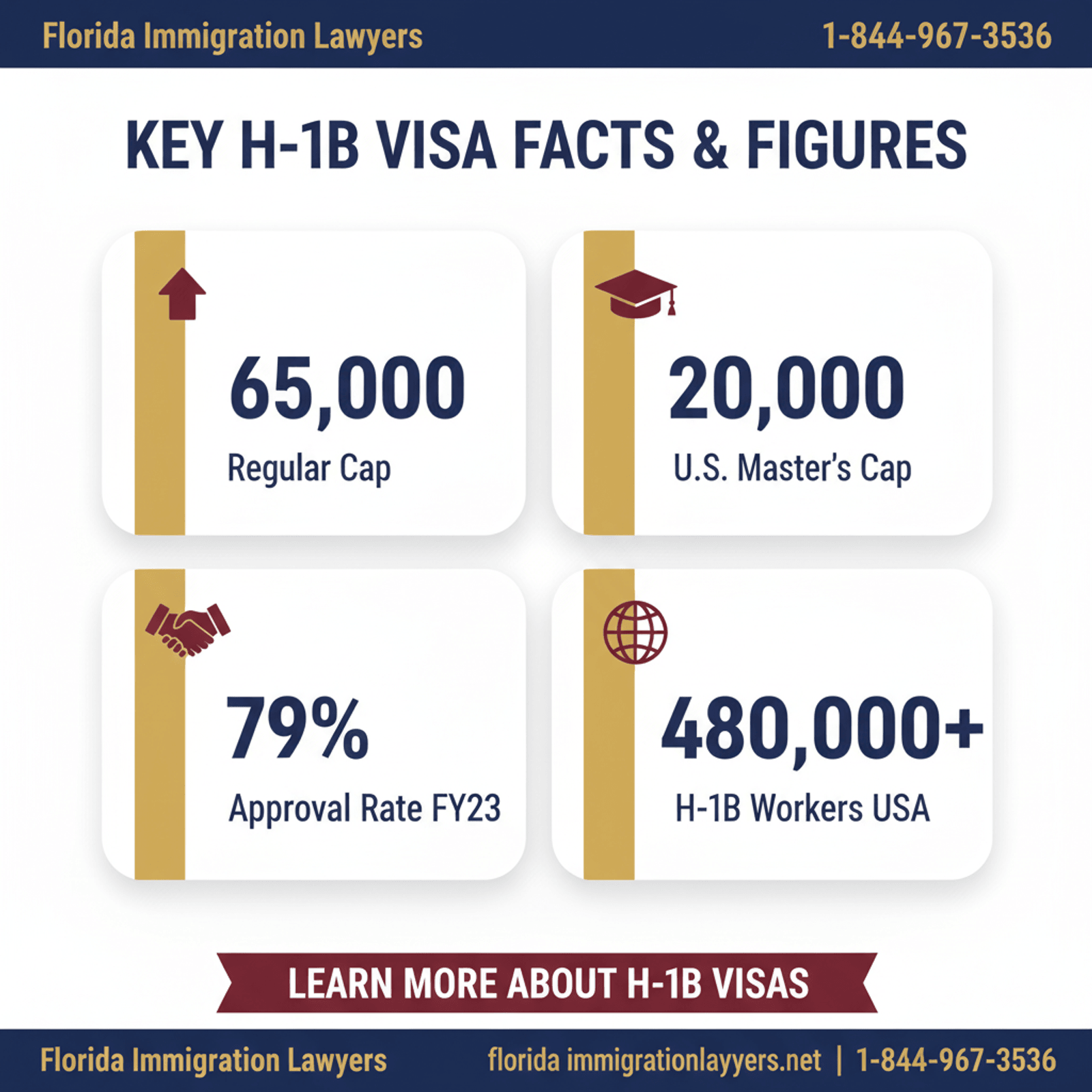
Each fiscal year, Congress sets a limit, or "cap," on the number of H-1B visas issued. This cap is currently 65,000 for the regular cap and an additional 20,000 for beneficiaries holding a U.S. master's degree or higher. Due to high demand, the number of petitions often exceeds the available visas, leading to a lottery system.
For the 2026 fiscal year, USCIS continues to implement a beneficiary-centric lottery system. This means each prospective beneficiary is entered into the lottery once, regardless of how many employers register on their behalf. This change aims to reduce fraud and provide a fairer chance for individuals. The registration period typically opens in early March.
Step-by-Step H-1B Application Process for 2026
Navigating the H-1B application process requires careful attention to detail and adherence to strict deadlines. Here is a general step-by-step guide for Florida employers seeking to sponsor an H-1B worker for the 2026 fiscal year.
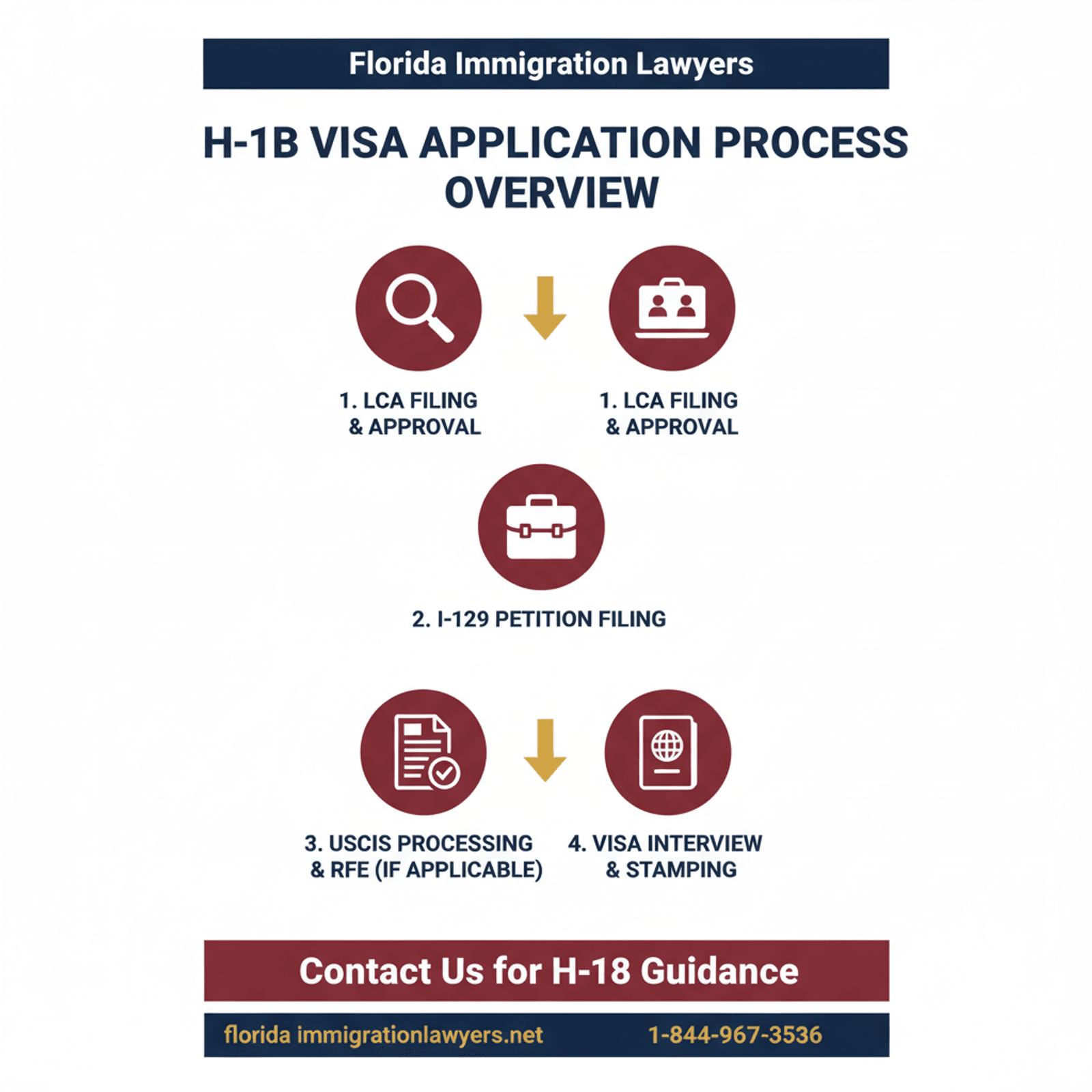
- Determine Eligibility and Prevailing Wage: First, ensure the position qualifies as a specialty occupation and the beneficiary meets the educational requirements. Obtain a prevailing wage determination from the Department of Labor (DOL) for the specific occupation and geographical area in Florida, such as St. Petersburg. This step is crucial for compliance.
- File a Labor Condition Application (LCA) with DOL: Before filing an H-1B petition, the employer must submit Form ETA-9035, Labor Condition Application, to the DOL. The LCA attests that the employer will pay the H-1B worker at least the prevailing wage or the actual wage paid to other employees with similar experience and qualifications, whichever is higher. It also ensures working conditions will not adversely affect U.S. workers. The DOL must certify the LCA before proceeding.
- H-1B Registration: If the H-1B cap is expected to be met, employers must register electronically for the H-1B lottery during the designated registration period (typically in March). Each registration requires a fee and basic information about the employer and beneficiary. If selected in the lottery, USCIS will issue a selection notice.
- File Form I-129, Petition for a Nonimmigrant Worker: Upon selection in the lottery, the employer files Form I-129, Petition for a Nonimmigrant Worker, with USCIS. This petition must be filed within the specified filing period indicated on the selection notice. It includes extensive documentation about the employer, the beneficiary, and the specialty occupation. Supporting evidence is vital for a strong petition.
- Consular Processing or Adjustment of Status: If the beneficiary is outside the U.S., they will undergo consular processing at a U.S. embassy or consulate abroad after the I-129 is approved. This involves an interview and visa stamping. If the beneficiary is already in the U.S. in a valid nonimmigrant status, they may be eligible to apply for an Adjustment of Status to H-1B status concurrently with or after the I-129 approval, using Form I-485 if applicable, or more commonly, a Change of Status with Form I-129.
Essential Document Checklist for H-1B Petitions
A complete and accurate set of documents is paramount for a successful H-1B petition. Missing or incorrect documents can lead to delays, Requests for Evidence (RFEs), or even denials. Here is a general checklist of documents typically required:
- Certified Labor Condition Application (LCA), Form ETA-9035.
- Form I-129, Petition for a Nonimmigrant Worker, and its supplements.
- Form G-28, Notice of Entry of Appearance as Attorney or Accredited Representative (if applicable).
- Copy of the H-1B lottery selection notice (if applicable).
- Beneficiary's educational documents: degree certificates, transcripts, and foreign degree evaluations.
- Beneficiary's resume or CV.
- Copies of beneficiary's passport, visa, I-94 arrival/departure record, and previous U.S. immigration documents (if applicable).
- Letters of experience from previous employers for the beneficiary.
- Employer's IRS tax ID number and business registration documents.
- Detailed job offer letter for the beneficiary.
- Company financial statements, tax returns, and payroll records to demonstrate ability to pay the proffered wage.
- Organizational charts and company brochures.
- Evidence supporting the specialty occupation nature of the position (e.g., industry standards, expert opinions).
- Copies of any contracts between the employer and the beneficiary.
H-1B Visa Timeline and Processing Expectations for 2026
The H-1B visa timeline is dictated by USCIS processing cycles and the annual cap. For fiscal year 2026, key dates generally follow a similar pattern to previous years, though exact dates are announced by USCIS.
The H-1B cap registration period typically opens in early March, lasting for a few weeks. Lottery results are usually announced by the end of March. For selected petitions, the filing window for Form I-129 generally begins on April 1st. USCIS processing times can vary significantly depending on the service center and case complexity, ranging from several months to over a year for regular processing.
Employers have the option to request premium processing for Form I-129, which guarantees USCIS action within 15 calendar days for an additional fee. This can significantly expedite the process. However, premium processing is not available for the H-1B cap registration phase itself. USCIS may also suspend premium processing for certain types of petitions during periods of high volume.
Cost Factors and Fee Breakdown for H-1B Petitions
Sponsoring an H-1B worker involves several fees, primarily borne by the employer. It's important for Florida businesses to budget for these costs. Please note that USCIS fees are subject to change, so always refer to the official USCIS website for the most current fee schedule.
Typically, the employer is responsible for most of the filing fees. These include the basic I-129 filing fee, the American Competitiveness and Workforce Improvement Act (ACWIA) fee (which varies based on company size), and the Fraud Prevention and Detection fee. An additional Public Law 114-113 fee may also apply to certain employers. Legal fees for immigration attorneys are also a significant cost factor.
Regarding the question, "Who pays the $100,000 for H-1B?" it's important to clarify that a $100,000 H-1B filing fee is not a standard USCIS requirement for the H-1B program. This figure might refer to specific legislative proposals, penalties for certain violations, or a misunderstanding of the actual fee structure. Standard H-1B fees, while substantial, are significantly lower than this amount. Employers should consult the official USCIS fee schedule and an experienced immigration attorney to understand the accurate costs involved.
Do not navigate this process alone. The complexities of H-1B regulations and the potential for costly errors make legal counsel invaluable. Contact Florida Immigration Lawyers today to ensure your petition is handled correctly and efficiently.
Common H-1B Mistakes to Avoid
Even small errors in the H-1B process can lead to significant delays or even denial. Florida employers should be aware of these common mistakes:
- Incorrect Prevailing Wage Determination: Failing to obtain the correct prevailing wage for the occupation and geographic area (e.g., St. Petersburg) can lead to an LCA denial. This can also result in wage violations and potential penalties.
- Inaccurate or Incomplete LCA: Errors on the Labor Condition Application (Form ETA-9035) can cause delays or rejection by the DOL. Ensure all attestations are accurate and supported by employer records.
- Missing H-1B Lottery Registration Deadlines: The registration window is brief and strict. Missing it means waiting another year. Ensure timely submission during the designated period.
- Insufficient Evidence of Specialty Occupation: Not adequately demonstrating that the position requires a bachelor's degree or higher in a specific field is a common reason for RFEs or denials. Provide detailed job duties and requirements.
- Lack of Employer-Employee Relationship: For third-party placements, USCIS scrutinizes the employer's control over the H-1B worker. Clear evidence of a valid employer-employee relationship is crucial to avoid issues.
- Failure to Document Beneficiary Qualifications: Incomplete educational documents, lack of foreign degree evaluations, or insufficient work experience letters can lead to questions about the beneficiary's eligibility.
- Not Demonstrating Ability to Pay: Employers must prove they can pay the proffered wage from the petition filing date through the duration of the H-1B period. Insufficient financial documentation can lead to an RFE.
- Ignoring Public Access File Requirements: Employers must maintain a public access file (PAF) for each LCA, containing specific documents. Failure to do so can result in penalties during a DOL audit.
- Misrepresenting Information: Any false statements or fraudulent documents can lead to severe penalties, including criminal charges and permanent bars from immigration benefits. Always be truthful and accurate.
- Not Responding to RFEs Timely or Adequately: If USCIS issues a Request for Evidence, a prompt and comprehensive response is critical. A weak or late response often leads to denial.
- Failing to Notify USCIS of Material Changes: Changes in employment location (especially across different metropolitan statistical areas), job duties, or employer mergers require amended H-1B petitions. Failure to file amendments can invalidate the H-1B status.
When to Call a Lawyer for Your H-1B Visa Needs
While this H-1B visa Florida employers guide 2026 provides valuable information, the complexities of immigration law often necessitate professional legal assistance. Our experienced immigration attorneys at Florida Immigration Lawyers can provide invaluable support for your H-1B needs.
You should consider calling a lawyer if you encounter any of these scenarios: your company is new to H-1B sponsorship, you receive a Request for Evidence (RFE) from USCIS, your petition is denied, or you need to understand the latest H-1B new rules 2026. Legal counsel is also vital for ensuring compliance with H1B minimum wage requirement 2026 and navigating the H1B visa lottery 2026.
Our firm specializes in helping Florida businesses and individuals navigate the intricate H-1B visa program. We can assist with LCA preparation, I-129 petition filing, RFE responses, and compliance issues. Do not risk your business's ability to hire top talent or your employee's immigration status by going it alone. We are here to help.
About Florida Immigration Lawyers
Florida Immigration Lawyers is a leading immigration law firm dedicated to serving individuals and businesses throughout Florida, including St. Petersburg, Miami, Orlando, and Tampa. Our mission is to provide expert legal guidance and compassionate representation for all immigration matters.
We offer a comprehensive range of immigration services, including H-1B visas, family immigration, business immigration, asylum, deportation defense, and citizenship applications. Our attorneys are committed to staying abreast of the latest immigration laws and policies to provide the most effective strategies for our clients.
Why choose Florida Immigration Lawyers? We pride ourselves on our client-focused approach, extensive legal knowledge, and track record of success. We understand the profound impact immigration issues have on lives and businesses, and we are dedicated to achieving the best possible outcomes. Call us anytime at 1-844-967-3536 or visit our website at https://www.floridaimmigrationlawyers.net. We are available 24/7 and offer free consultations. Serving all of Florida, we are your trusted partners in immigration.
Sources and References
- U.S. Citizenship and Immigration Services (USCIS)
- U.S. Department of Labor (DOL) - Foreign Labor Certification
- U.S. Department of State - H-1B Specialty Occupations
- 8 U.S.C. § 1101(a)(15)(H)(i)(b) - Definition of H-1B Nonimmigrant
- 8 U.S.C. § 1184(g) - Numerical Limitations on H Nonimmigrants
- 20 CFR Part 655 - Labor Condition Applications and Requirements for Employers
Related services: business immigration services, L-1 intracompany transfer visas, work visas for professionals.
This article provides general legal information and is not intended as legal advice. Every case is unique, and outcomes depend on specific facts and circumstances. Contact an attorney for advice about your particular situation.
Securing an H-1B visa for your skilled foreign workers is a strategic investment in your Florida business's future. Do not leave this critical process to chance. Let Florida Immigration Lawyers provide the expert guidance you need. Call us today at 1-844-967-3536 for your free consultation. Se Habla Español - Estamos aquí para ayudarle.
Do Not Navigate This Process Alone
Our experienced immigration attorneys are ready to fight for you. Get a free, confidential consultation today.
Se Habla Español
Or leave your details and we’ll call you:
Free Evaluation in 24 Hours
Or talk to us right now
AI voice assistant — available 24/7
FreeFrequently Asked Questions

William J. Vásquez
Founding Attorney · Vasquez Law Firm
U.S. Air Force veteran and immigration attorney with years of hands-on U.S. immigration experience. J.D., NCCU School of Law. AILA member. Admitted to the 4th, 5th, and 11th Circuit Courts.
Available 24/7 - Free Evaluations
Reviewed for legal accuracy by William J. Vásquez
Licensed in North Carolina; U.S. immigration is federal practice.
Related Legal Services
Our Florida immigration attorneys can help you with immigration practice areas, free immigration consultation and experienced immigration attorneys. Call today at 1-844-967-3536 for a free consultation.
Related Links
Related Topics
Free Legal Consultation
Discuss your case with our experienced attorneys. We're available 24/7.
Se Habla Español - Estamos aquí para ayudarle.
Related Articles
"ina § 208(a)(2)" One-Year Filing Deadline: Florida Asylum
Discover the importance of the "ina § 208(a)(2)" one-year filing deadline for asylum seekers in Florida. Learn about the steps, documents needed, and common mistakes to avoid in your asylum application process.
DV-2027 Registration Period: Your Green Card Lottery Guide
The DV-2027 Diversity Visa (DV) lottery offers a unique pathway to permanent residency for individuals from countries with historically low immigration rates to the U.S. Expected to open in Fall 2025, the registration period requires strict adherence to eligibility criteria, including country of birth and specific education or work experience. This guide from Florida Immigration Lawyers covers the step-by-step application process, essential documents, critical timelines, and associated costs. We highlight common mistakes to avoid and explain when legal counsel is indispensable, especially for residents in Florida. Understanding the nuances of the green card lottery is vital for a successful application. Contact us for expert guidance on your DV-2027 journey.
Blake Doughty: T Visa Eligibility for Florida Trafficking
For victims of human trafficking in Florida, like Blake Doughty, the T visa offers a critical pathway to safety and legal status. This comprehensive guide details the eligibility requirements, including demonstrating severe forms of trafficking, physical presence in the U.S. due to trafficking, and cooperation with law enforcement. Learn about the multi-step application process, the essential documents needed, and the typical timelines and costs involved in 2026. We also highlight common mistakes to avoid and when it's crucial to seek expert legal assistance. Florida Immigration Lawyers provides compassionate and dedicated support for T visa applicants across the state, ensuring victims receive the protection and resources they deserve. Contact us for a free consultation to understand your options and secure your future.
USCIS Oath Ceremony Schedule 2026 in Florida
Navigating the USCIS oath ceremony schedule for 2026 in Florida is crucial for new citizens. This guide provides insights into planning, processing times, and what to expect in Orlando. Call Florida Immigration Lawyers at 1-844-967-3536 for a free consultation.