H-1B Visa Fee Increase Florida 2026: Your Guide to New Costs
The H-1B visa program is experiencing significant changes in 2026, including a notable fee increase that impacts employers and skilled foreign workers across Florida. This comprehensive guide from Florida Immigration Lawyers delves into the new USCIS fee structure, the intricate application process, and critical considerations for those seeking a specialty occupation visa. We cover essential documentation, processing timelines, and cost factors, offering crucial insights for businesses and individuals in West Palm Beach and throughout the state. Learn how to avoid common mistakes and understand when legal counsel is indispensable to navigate these evolving immigration regulations successfully. Our expert team is ready to provide the guidance you need.

The H-1B visa fee increase for 2026 significantly impacts employers and foreign workers in Florida seeking specialty occupation visas. These changes, enacted by USCIS, introduce new costs and complex requirements. Understanding these updates is crucial for a successful application process. Compliance and proactive planning are key to navigating these adjustments effectively.
- New USCIS fees affect H-1B petitions starting 2026.
- Employers bear primary responsibility for most H-1B fees.
- Compliance with updated regulations is essential for success.
- Consulting an immigration lawyer is highly recommended for guidance.
- The H-1B visa is for individuals in specialty occupations.
Are you an employer in Florida considering sponsoring an H-1B worker, or a skilled professional hoping to work in the Sunshine State? The landscape of U.S. immigration is constantly evolving, and 2026 brings significant changes to the H-1B visa program, particularly regarding fees. These updates can profoundly impact your plans and budget.
Understanding the implications of the H-1B visa fee increase is critical for anyone involved in this process, especially here in Florida. From West Palm Beach to Miami, businesses rely on skilled foreign talent, and these fee adjustments will require careful planning. This comprehensive guide from Florida Immigration Lawyers will walk you through the new fee structure, the application process, common pitfalls, and how our experienced team can help you navigate these complexities. For broader immigration law needs, our firm is always ready to assist.
Do not let new regulations deter your goals. Knowledge is your first line of defense. Call Florida Immigration Lawyers at 1-844-967-3536 for a free consultation to discuss how these changes affect your specific situation.
Understanding the H-1B Visa Fee Increase in Florida for 2026
The H-1B visa program is vital for U.S. employers seeking to hire foreign workers in specialty occupations. These roles typically require a bachelor's degree or higher in a specific field. For years, the H-1B has been a cornerstone for bringing skilled talent to industries across Florida, from technology to healthcare.
The U.S. Citizenship and Immigration Services (USCIS) regularly reviews and adjusts its fee schedule to cover operational costs. The latest round of adjustments, effective in 2026, includes a notable H-1B visa fee increase. These changes are part of broader efforts to ensure the agency's financial solvency and streamline processing.
What is the H-1B Visa?
The H-1B nonimmigrant visa allows U.S. employers to temporarily employ foreign workers in specialty occupations. A specialty occupation demands theoretical and practical application of a body of highly specialized knowledge. This typically includes, but is not limited to, professions in IT, engineering, medicine, and education.
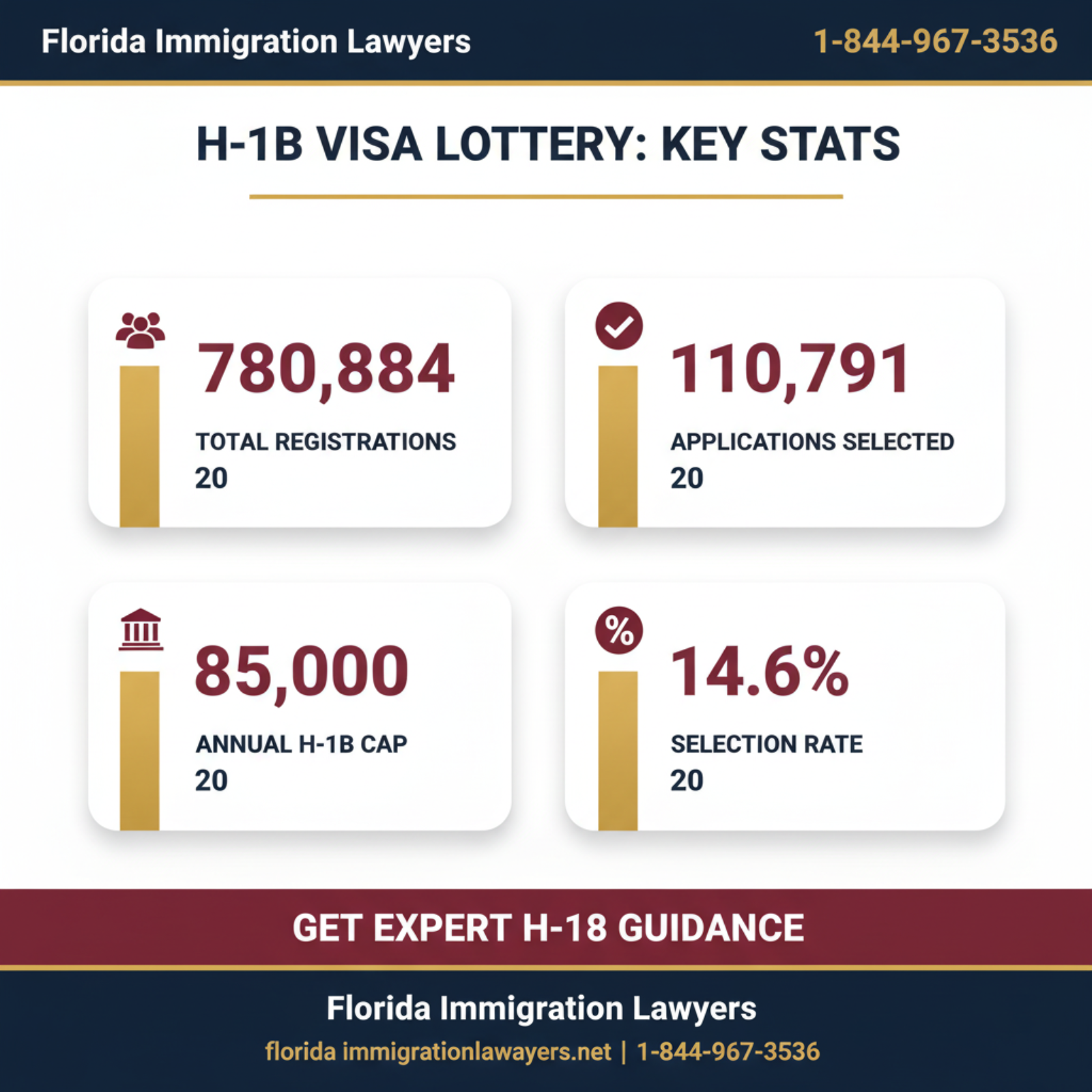
Each year, Congress sets a cap on the number of H-1B visas issued. This cap, currently 65,000 for the regular cap and an additional 20,000 for those with a U.S. master's degree or higher, makes the H-1B a highly competitive visa. The demand often far exceeds the available supply, leading to a lottery system for selection, as outlined in 8 U.S.C. § 1101(a)(15)(H)(i)(b).
Key Changes to USCIS H-1B Fees
The USCIS H-1B fees are undergoing significant revisions. These adjustments apply to various forms associated with the H-1B petition. Employers must be aware of these new costs to accurately budget for their sponsorship efforts.
While specific amounts can change, the general trend indicates an increase across several categories. This includes the base filing fee for Form I-129, Petition for a Nonimmigrant Worker. There are also potential increases to the Fraud Prevention and Detection Fee and the American Competitiveness and Workforce Improvement Act (ACWIA) fee.
For some petitioners, the Public Law 114-113 fee, often referred to as the "H-1B and L-1 Border Security Act" fee, may also be subject to review. This fee applies to employers with 50 or more employees, where more than 50% of their workforce are H-1B or L-1 nonimmigrants. Navigating these various fees requires careful attention to detail.
Navigating the H-1B Visa Application Process: A Step-by-Step Guide
The H-1B visa application process is detailed and requires precise execution. Employers in Florida, whether in Orlando, Tampa, or West Palm Beach, must meticulously follow each step to ensure a successful outcome. Any misstep can lead to delays or even denial, especially with the increased scrutiny surrounding fee changes.
Working with an experienced immigration lawyer Florida can significantly simplify this process. Our firm helps ensure all requirements are met, from initial registration to final approval. We understand the specific nuances of applying in Florida's diverse economic landscape.
Initial Steps for Employers in Florida
- Determine Eligibility: The employer must confirm the position qualifies as a specialty occupation and the foreign worker meets the minimum educational requirements. This often involves evaluating the job duties against Department of Labor (DOL) guidelines and the beneficiary's academic credentials.
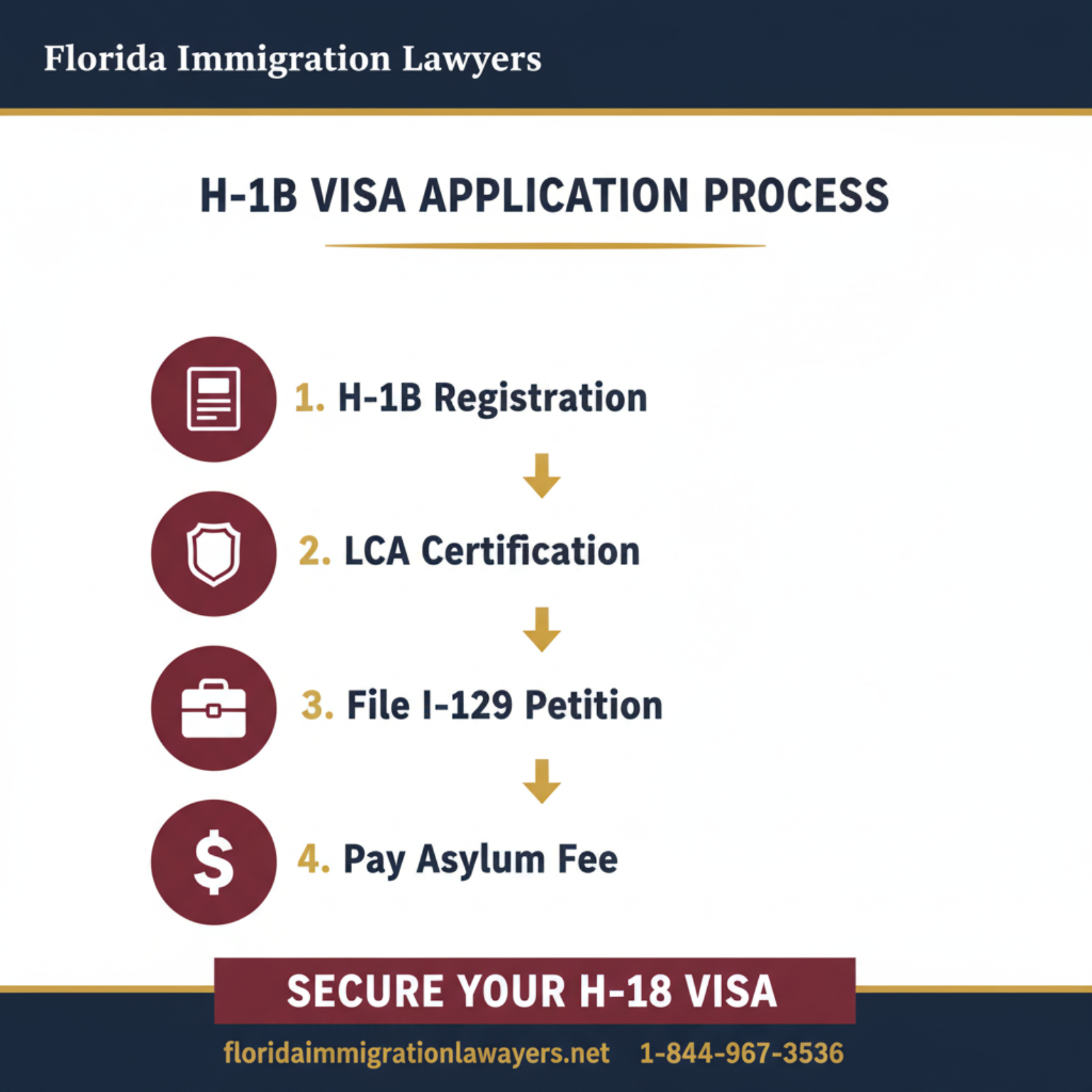
- Obtain a Certified Labor Condition Application (LCA): Before filing the H-1B petition, employers must file Form ETA-9035, a Labor Condition Application, with the Department of Labor. The LCA attests that the employer will pay the H-1B worker at least the prevailing wage or the actual wage, whichever is higher, and will provide working conditions that will not adversely affect other workers, as per 8 U.S.C. § 1182(n).
- Participate in the H-1B Lottery (if applicable): Due to the annual cap, USCIS conducts an electronic registration process, typically in March, for cap-subject H-1B petitions. Employers must register each prospective H-1B worker during this period. If selected in the lottery, the employer then has a specific window to file the full petition.
Filing the H-1B Petition
- Prepare and File Form I-129, Petition for a Nonimmigrant Worker: This is the core of the H-1B application. It must be accompanied by all required supporting documentation, including the certified LCA, educational transcripts, employment letters, and the appropriate fees. USCIS requires specific evidence to prove eligibility for a specialty occupation visa, as detailed in 8 CFR Part 214.2(h).
- Respond to Requests for Evidence (RFEs): USCIS may issue an RFE if they require additional information or clarification on any aspect of the petition. Responding comprehensively and timely to an RFE is critical. A well-prepared response can often save an otherwise strong case.
- Attend Visa Interview (for beneficiaries outside the U.S.): If the H-1B beneficiary is outside the United States, they must attend an interview at a U.S. Embassy or Consulate in their home country after the I-129 petition is approved. This interview is a crucial step for visa stamping.
- Maintain H-1B Status: Once the H-1B visa is approved and the beneficiary enters the U.S. or changes status, both the employer and employee must adhere to all terms of the visa. This includes maintaining the specified employment, wage, and location.
Essential Documents for Your H-1B Visa Application
A complete and accurate submission of documents is paramount for any H-1B petition, especially with the heightened scrutiny that often accompanies fee increases. Missing or incorrect documentation can lead to RFEs or even denials, causing significant delays and added costs. We help our clients in Florida compile robust application packages.
Ensuring every piece of evidence aligns with USCIS requirements is a complex task. Our firm, Florida Immigration Lawyers, offers comprehensive assistance in gathering and organizing all necessary paperwork. We understand the specific demands of a specialty occupation visa application.
Employer-Specific Documentation
- Certified Labor Condition Application (LCA) Form ETA-9035.
- Federal Employer Identification Number (FEIN) confirmation.
- Company financial statements, tax returns, and business plans.
- Detailed job description outlining specialty occupation duties.
- Organizational charts and information about the supervisory structure.
- Copies of client letters or contracts if the H-1B worker will be placed at a third-party site.
- Proof of ability to pay the proffered wage.
Beneficiary-Specific Documentation
- Copies of passport, visa, and I-94 arrival/departure record.
- Educational degrees, diplomas, and official transcripts.
- Foreign degree evaluations if applicable.
- Letters of experience from previous employers.
- Professional licenses or certifications relevant to the specialty occupation.
- Resumes or CVs.
- Any previous U.S. immigration documents (e.g., I-20s, EADs, previous I-797 approval notices).
H-1B Visa Timeline and Processing Expectations
Understanding the timeline for an H-1B visa application is crucial for both employers and beneficiaries. The process can be lengthy and varies significantly based on several factors, including the annual cap and USCIS processing backlogs. The H-1B visa fee increase does not necessarily shorten processing times but reflects the agency's operational needs.
For those in Florida, whether you are applying through the California Service Center or the Vermont Service Center, timelines can fluctuate. Our team keeps abreast of the latest USCIS processing updates to provide the most current expectations.
Standard Processing vs. Premium Processing
Standard Processing: This is the default processing track for H-1B petitions. Processing times can range from several months to over a year, depending on the service center workload and current USCIS priorities. There is no guaranteed timeframe for standard processing.
Premium Processing: For an additional fee, petitioners can opt for Premium Processing. This guarantees USCIS will take action on the petition (approval, denial, RFE, or notice of intent to deny) within 15 calendar days. This option is invaluable for employers needing to onboard talent quickly, though the premium processing fee itself has also seen increases.
Factors Affecting Processing Times in Florida
- USCIS Service Center Workload: The volume of petitions received by the service centers directly impacts how quickly cases are processed.
- Annual H-1B Cap: Cap-subject petitions can only be filed during a specific window after the lottery, adding a fixed start date to the timeline.
- Requests for Evidence (RFEs): Responding to an RFE adds significant time to the overall process.
- Changes in Immigration Policy: New policies or administrative priorities can shift processing focus and timelines.
- Government Holidays and Furloughs: These can cause temporary slowdowns in agency operations.
Understanding H-1B Visa Cost Factors and Fee Breakdown
The total cost of an H-1B visa petition is a significant consideration for employers. The recent H-1B visa fee increase adds another layer of complexity to this financial planning. It's important to understand each component of the fees to avoid surprises and ensure compliance. Remember, specific fee amounts are subject to change by USCIS.
Florida employers in cities like Jacksonville, Tampa, and West Palm Beach must factor these costs into their recruitment budgets. Our legal team can help you understand the current fee structure and your obligations.
Employer Responsibilities for H-1B Fees
U.S. immigration law places the responsibility for certain H-1B fees squarely on the employer. These typically include the base filing fee for Form I-129, the American Competitiveness and Workforce Improvement Act (ACWIA) fee (which varies based on employer size), and the Fraud Prevention and Detection Fee. Employers cannot pass these specific fees on to the beneficiary.
For certain employers, such as those with a higher percentage of H-1B or L-1 employees, an additional Public Law 114-113 fee may apply. This fee is substantial and also falls to the employer. It is crucial for businesses to properly assess their status to determine if this fee is applicable. These employer-paid fees aim to ensure fair labor practices and support USCIS operations.
Potential Additional Costs
- Premium Processing Fee: If an employer opts for expedited processing, an additional fee is required. This fee is paid to USCIS and ensures a faster adjudication timeframe.
- Attorney Fees: Legal fees for immigration counsel are an investment in ensuring a smooth and compliant application. While employers typically pay these, they are not mandated by law to do so.
- Visa Interview Fees: For beneficiaries applying from outside the U.S., a visa application fee is paid to the Department of State. This is typically the responsibility of the beneficiary.
- Dependent Visa Fees: If the H-1B worker brings dependents (H-4 visa holders), additional filing fees apply for their Form I-539, Application to Extend/Change Nonimmigrant Status, and any associated biometrics fees.
- Educational Credential Evaluation: If a foreign degree needs to be evaluated for U.S. equivalency, there will be a cost for this service.
Frequently Asked Questions About H-1B Visas in Florida
The H-1B visa process can raise many questions, especially with new fee structures and evolving regulations. Here are answers to some common inquiries we receive from individuals and employers in Florida.
Who pays the $100,000 for H-1B?
There has been discussion and proposals in the past for significantly high H-1B fees, including a hypothetical $100,000 fee. However, a general $100,000 fee per H-1B petition is not a standard or currently implemented USCIS H-1B fee. The significant fees that do apply, such as the Fraud Prevention and Detection Fee and the ACWIA fee, are typically borne by the employer, as mandated by law. Our firm clarifies these obligations for our clients.
Do I have to pay $250 to enter the US?
The $250 fee you might be referring to is generally the USCIS Immigrant Fee, which applies to individuals who are issued an immigrant visa by a U.S. Embassy or Consulate abroad and are coming to the U.S. to become lawful permanent residents (green card holders). The H-1B is a nonimmigrant visa. Therefore, this specific fee typically does not apply to H-1B visa holders upon entry to the U.S. However, other fees, such as the visa application fee at the consulate, are separate.
Which US visa is hardest to get?
Defining the "hardest" U.S. visa is subjective, as difficulty depends on individual qualifications and the competitiveness of the visa category. The H-1B visa is notably competitive due to its annual cap and lottery system. Other visas, such as the EB-1A (Extraordinary Ability) or O-1 (Extraordinary Ability in Arts/Sciences), require extensive documentation of sustained national or international acclaim, making them challenging for most applicants. Family-based visas can also present difficulties depending on priority dates and backlogs.
What is the minimum salary for an H-1B visa?
There isn't a single universal minimum salary for an H-1B visa. Instead, employers must pay the H-1B worker at least the prevailing wage for the occupational classification in the area of intended employment, or the actual wage paid by the employer to all other individuals with similar experience and qualifications for the specific employment in question, whichever is higher. The Department of Labor (DOL) determines prevailing wages, and these vary significantly by occupation, industry, and geographic location within Florida, such as West Palm Beach versus a rural area.
Common Mistakes to Avoid in H-1B Petitions
Navigating the H-1B process, especially with a new H-1B visa fee increase, requires meticulous attention to detail. Avoiding common errors can save significant time, money, and stress. Here are critical mistakes to watch out for:
- Failing to Meet Prevailing Wage Requirements: Not offering the H-1B worker the higher of the prevailing wage or actual wage can lead to LCA certification denial or even sanctions. This is a common pitfall for many employers.
- Inaccurate or Incomplete LCA: Errors on the Labor Condition Application (Form ETA-9035) can cause delays or rejection by the Department of Labor. Ensure all details are precise and consistent.
- Missing the H-1B Lottery Registration Deadline: For cap-subject visas, missing the electronic registration window means waiting another year. Procrastination can be costly.
- Insufficient Documentation for Specialty Occupation: Not providing enough evidence to prove the position requires a bachelor's degree in a specific field, or that the beneficiary holds such a degree, is a frequent reason for RFEs.
- Failing to Respond to RFEs Adequately: A weak or incomplete response to a Request for Evidence often leads to denial. Every point in an RFE must be addressed with strong evidence.
- Incorrect Fee Payment: With the USCIS H-1B fees increasing, paying the wrong amount or using an outdated fee schedule can cause the petition to be rejected. Always double-check current fees.
- Not Disclosing Prior Immigration History: Omitting details about previous visas, denials, or U.S. stays can be seen as misrepresentation and lead to serious consequences. Transparency is key.
- Improper Employer-Employee Relationship: For third-party placements, failing to establish a clear employer-employee relationship with the petitioner can lead to RFE or denial. USCIS scrutinizes these arrangements closely.
- Late Filing of Change of Status: If the beneficiary is already in the U.S., filing a change of status petition too close to the expiration of their current status can result in a lapse of legal status if the H-1B is not adjudicated quickly.
- Lack of Attorney Review: Attempting to navigate the complex H-1B regulations without experienced legal counsel significantly increases the risk of errors and missed opportunities.
- Ignoring Changes in Law or Policy: Immigration law is dynamic. Failing to stay updated on new rules, like the recent H-1B visa fee increase, can lead to non-compliance.
- Overlooking Public Law 114-113 Fee Eligibility: Some employers mistakenly believe they are exempt from this significant fee, leading to underpayment and petition rejection.
When to Call a Lawyer for Your H-1B Visa in Florida
Given the complexities of the H-1B visa fee increase and the intricate application process, seeking legal counsel is not just advisable-it's often essential. Florida Immigration Lawyers are dedicated to guiding individuals and businesses throughout Florida, including West Palm Beach, through every stage of their immigration journey. We help you avoid pitfalls and optimize your chances of success.
You should consider contacting an experienced immigration lawyer Florida if any of the following scenarios apply:
- Uncertainty about Specialty Occupation Eligibility: If you are unsure whether a position or your qualifications meet the strict definition of a specialty occupation, legal guidance can provide clarity.
- Complex Employment Structures: For companies with third-party placements, multiple worksites, or unique business models, an attorney can help structure the petition correctly. This is particularly relevant for business immigration matters.
- Previous Immigration Issues: If you or the beneficiary have had prior visa denials, overstays, or other immigration challenges, legal expertise is critical to address these issues proactively.
- Responding to an RFE or NOID: Receiving a Request for Evidence (RFE) or Notice of Intent to Deny (NOID) means your case is in jeopardy. An attorney can formulate a robust and timely response.
- Changes in Employment: If an H-1B worker needs to change employers, job duties, or worksite locations, an attorney can advise on the proper amendment or new petition filing.
- Urgent Processing Needs: While Premium Processing expedites USCIS review, an attorney can ensure the initial submission is flawless, preventing delays.
- Need for Strategic Planning: For long-term immigration goals, an attorney can help plan beyond the H-1B, including pathways to permanent residency.
- Any Questions about the New Fee Structure: If the H-1B visa fee increase or other associated costs are unclear, a lawyer can provide up-to-date information and ensure correct payment.
Our team at Florida Immigration Lawyers is well-versed in the latest USCIS policies and procedures. We stand ready to provide the personalized attention and strategic advice you need to navigate the H-1B visa process successfully. Your immigration goals are our priority.
About Florida Immigration Lawyers
Florida Immigration Lawyers is a leading immigration law firm serving clients throughout the entire state of Florida. With a deep understanding of U.S. immigration law and a commitment to our clients, we provide comprehensive legal services to individuals, families, and businesses.
Our dedicated team of attorneys specializes in a wide range of immigration matters, including H-1B visas, family-based petitions, business immigration, asylum claims, and deportation defense. We pride ourselves on offering compassionate, effective, and results-oriented representation.
We understand that navigating the U.S. immigration system can be daunting. That is why we are available 24/7 to answer your questions and provide the support you need. We offer free consultations to discuss your case and explore your legal options. Choose Florida Immigration Lawyers for experienced advocacy and a steadfast commitment to your future in Florida.
Contact us today:
Phone: 1-844-967-3536
Website: https://www.floridaimmigrationlawyers.net
Serving: All of Florida
Sources and References
- U.S. Citizenship and Immigration Services (USCIS) - H-1B Specialty Occupations
- U.S. Citizenship and Immigration Services (USCIS) - New USCIS Fee Schedule
- U.S. Department of Labor (DOL) - Labor Condition Applications (LCAs)
- 8 U.S.C. § 1101(a)(15)(H)(i)(b) - Definition of H-1B nonimmigrant.
- 8 U.S.C. § 1182(n) - Labor condition applications for H-1B nonimmigrants.
- 8 CFR Part 214.2(h) - Requirements for H nonimmigrants.
- Public Law 114-113 - Consolidated Appropriations Act, 2016 (relevant sections on H-1B and L-1 fees).
This article provides general legal information and is not intended as legal advice. Every case is unique, and outcomes depend on specific facts and circumstances. Contact an attorney for advice about your particular situation.
The changes to the H-1B visa program, including the H-1B visa fee increase, present new challenges for employers and skilled workers alike. However, with the right legal guidance, these hurdles can be successfully overcome. Do not risk your future or your business's ability to thrive in Florida.
Florida Immigration Lawyers is here to provide the expert assistance you need. We are committed to helping you navigate the complexities of U.S. immigration law with confidence and peace of mind. Call us today at 1-844-967-3536 for a free consultation. You can also visit our contact page. Se Habla Español - Estamos aquí para ayudarle.
Do Not Navigate This Process Alone
Our experienced immigration attorneys are ready to fight for you. Get a free, confidential consultation today.
Se Habla Español
Frequently Asked Questions
Florida Immigration Lawyers
Immigration Attorney | Founder, Vasquez Law Firm
U.S. Air Force veteran and immigration attorney with thousands of cases resolved. J.D., NCCU School of Law. AILA member. Admitted to the 4th, 5th, and 11th Circuit Courts.
Available 24/7 - Free Evaluations
Related Legal Services
Our Florida immigration attorneys can help you with asylum protection, deportation defense and citizenship and naturalization. Call today at 1-844-967-3536 for a free consultation.
Related Links
Related Topics
Free Legal Consultation
Discuss your case with our experienced attorneys. We're available 24/7.
Se Habla Español - Estamos aquí para ayudarle.
Related Articles
VAWA Self-Petition Florida: Abused Spouses Immigration Guide
For abused spouses in Florida, the VAWA self-petition offers a critical pathway to legal immigration status without the abuser's cooperation. This comprehensive guide details the eligibility requirements, the step-by-step process of filing Form I-360, essential documentation, and expected timelines. Learn how to gather evidence, draft a compelling personal statement, and understand the costs and potential fee waivers. We also highlight common mistakes to avoid and explain when seeking legal counsel from Florida Immigration Lawyers is invaluable. This process is designed to empower survivors to achieve safety, independence, and a secure future, free from the fear of deportation.
Immigration Bond Hearing Florida: Get Released from ICE Detention
Facing an immigration bond hearing in Florida can be daunting, especially for families in Kissimmee, Orlando, and Miami. This comprehensive guide demystifies the process, explaining what an immigration bond hearing entails, who is eligible, and the crucial steps to take. We detail the essential documents required, outline timelines and cost factors, and highlight common mistakes to avoid. Discover why experienced legal representation from Florida Immigration Lawyers is vital to navigate this complex system and secure release from ICE detention. Understand your rights and learn how to present a strong case for bond.
Understanding the Child Status Protection Act in Florida
The Child Status Protection Act helps families in Florida prevent their children from aging out of immigration eligibility. Learn how it works and what steps to take if you're in Miami or elsewhere in Florida.
Dual Citizenship Guide for Florida Residents | VLF Florida
Explore the essentials of obtaining dual citizenship in Florida. Learn the benefits, challenges, and steps involved. Contact Florida Immigration Lawyers for expert guidance.
