Green Card Holder ICE Detention in Florida: Your Rights & Defense
Green card holders in Florida are not immune to ICE detention and potential deportation, especially due to criminal convictions or immigration violations. If you're a Lawful Permanent Resident (LPR) facing an ICE arrest in West Palm Beach or anywhere in Florida, understanding your rights is crucial. This comprehensive guide covers the detention process, essential documents for defense, potential timelines, and cost factors. Learn about mandatory vs. discretionary detention, common mistakes to avoid, and when to seek expert legal counsel. Florida Immigration Lawyers offers robust deportation defense for LPRs, providing free consultations to protect your status and fight for your right to remain in the U.S.
Green card holders in Florida can be detained by ICE, especially if they have certain criminal convictions or immigration violations. While permanent residents have more rights than undocumented individuals, they are not immune to detention and potential deportation. It is critical to understand your rights, seek legal counsel immediately, and prepare a strong defense to challenge any removal proceedings.
- Green card holders can be detained and deported for specific offenses.
- Immediate legal representation is crucial during ICE detention.
- You have rights, including the right to remain silent and speak with a lawyer.
- Bond may be available, but some detentions are mandatory.
- A strong defense can challenge removal proceedings and protect your status.
Green Card Holder ICE Detention in Florida: Navigating Your Rights and Defense
Imagine a routine traffic stop in West Palm Beach, Florida, or a seemingly innocent encounter that suddenly escalates into an arrest by U.S. Immigration and Customs Enforcement (ICE). For green card holders, also known as Lawful Permanent Residents (LPRs), this scenario is a terrifying reality that can lead to detention and the threat of deportation. Even with a green card, your status is not always fully secure.
Understanding your rights and the complex legal landscape is paramount if you or a loved one faces ICE detention in Florida. The immigration system is intricate, and mistakes can have severe, lasting consequences. This comprehensive guide from Florida Immigration Lawyers will walk you through what to expect, how to prepare, and why expert legal counsel is indispensable.
If you are a green card holder facing ICE detention, do not wait. Call Florida Immigration Lawyers at 1-844-967-3536 for a free consultation today. Our experienced team serves all of Florida and is ready to assist you.
Understanding Green Card Holder ICE Detention in Florida
Many green card holders mistakenly believe their status grants them absolute immunity from arrest or deportation. While LPRs have significantly more rights and protections than undocumented immigrants, certain actions or past events can still make them deportable. ICE has the authority to detain green card holders for a variety of reasons, primarily related to criminal history or violations of immigration law.
The question, "Can ICE detain you if you have a green card?" is a resounding yes. ICE can detain green card holders. This often happens if an LPR has a criminal conviction that falls under specific categories of deportable offenses, such as aggravated felonies, crimes involving moral turpitude, or drug offenses. Even minor offenses, depending on their classification, can trigger an ICE detainer.
"Can green card holders be deported right now?" The answer is yes, if they are found deportable under immigration law and ordered removed by an immigration judge. The process can be lengthy, but the risk is very real. The current legal climate in Florida, as seen in recent news regarding immigration policies, underscores the importance of being prepared and informed about your rights.
Mandatory detention provisions under the Immigration and Nationality Act (INA) are particularly harsh. These provisions, primarily found in INA § 236(c) (8 U.S.C. § 1226(c)), require ICE to detain certain non-citizens, including green card holders, without bond if they have committed specific criminal offenses. This means that even if a green card holder has strong ties to the community and no flight risk, they may not be eligible for bond and could remain in detention for the entire duration of their removal proceedings.
Discretionary detention, on the other hand, allows an immigration judge to consider factors like community ties, family responsibilities, and the likelihood of appearing for future hearings when deciding whether to grant bond. Knowing whether your case falls under mandatory or discretionary detention is critical and often requires a detailed legal analysis of your criminal record and immigration history. Our team at Florida Immigration Lawyers is adept at navigating these complex classifications.
The Process After ICE Detention: A Step-by-Step Guide
Being detained by ICE is a frightening experience, but understanding the typical process can help you prepare. This guide outlines the general steps a green card holder might face after an ICE arrest in Florida.
-
Initial Custody and Processing
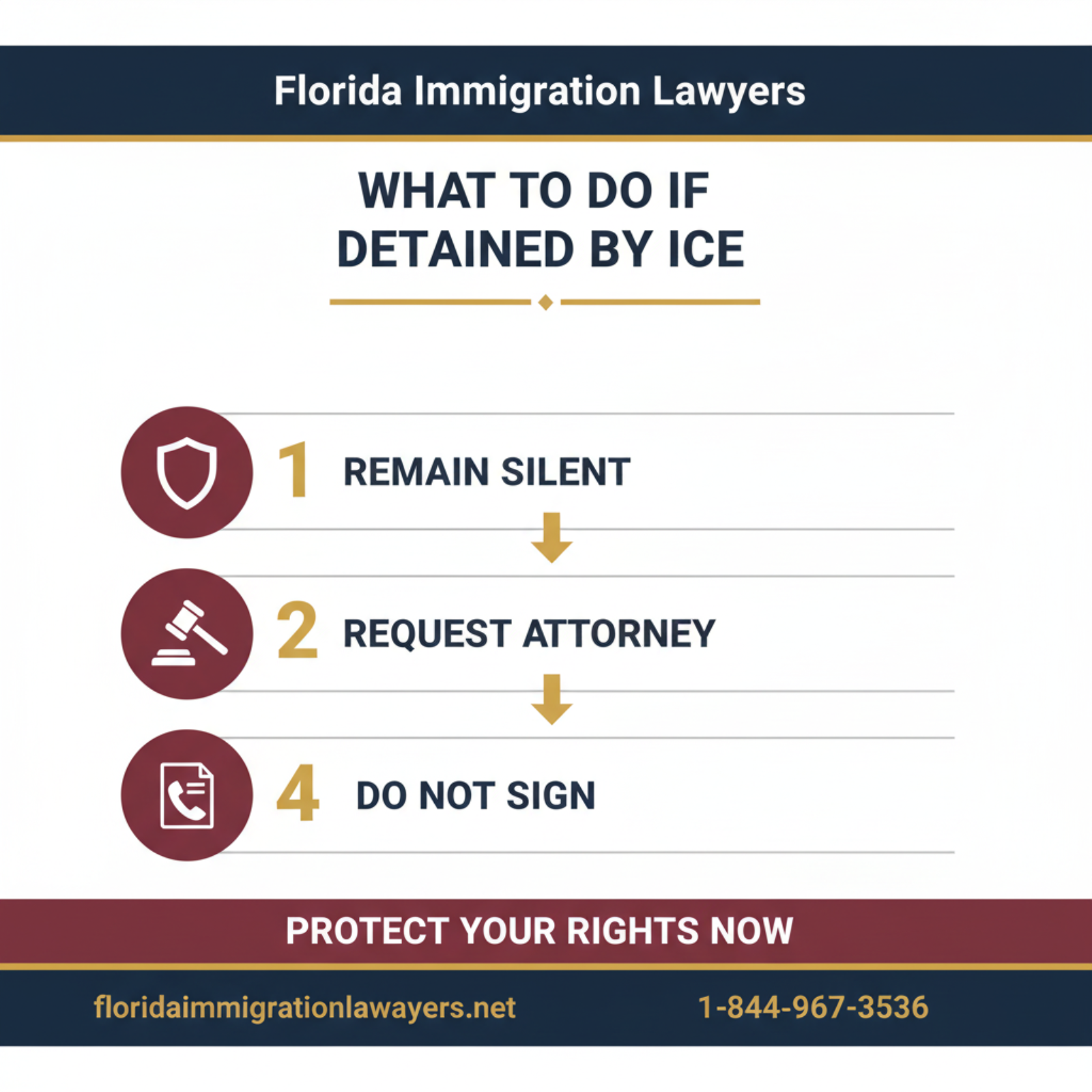
After an arrest, you will be taken to an ICE detention facility, often in areas like Pompano Beach, Bradenton, or Miami. During this initial phase, ICE agents will process your information, verify your identity, and review your immigration and criminal history. You will be fingerprinted and interviewed. It is crucial to remember your right to remain silent and your right to speak with an attorney before answering any questions.
ICE may issue a Notice to Appear (NTA), which is the charging document that initiates removal proceedings in immigration court. The NTA will specify the reasons ICE believes you are deportable. Do not sign anything you do not understand, and always request to speak with your lawyer.
-
Bond Hearings and Release
If you are not subject to mandatory detention, you may be eligible for a bond hearing before an immigration judge. At this hearing, the judge will determine if you pose a flight risk or a danger to the community. They will consider factors such as your ties to the U.S., employment, family, and criminal record. The goal is to secure your release on bond, allowing you to fight your case from outside detention.
An experienced deportation defense attorney from Florida Immigration Lawyers can present a compelling case for your release, arguing for a reasonable bond amount or even release on your own recognizance. We understand the specific nuances of bond hearings in Florida immigration courts.
-
Removal Proceedings in Immigration Court
Whether you are released on bond or remain in detention, your case will proceed to immigration court. Here, an immigration judge will preside over hearings where the government (through an ICE attorney) will try to prove you are deportable, and your attorney will present your defense. This involves submitting evidence, calling witnesses, and making legal arguments.
Common defenses for green card holders include challenging the grounds of deportability, demonstrating eligibility for waivers, or applying for other forms of relief, such as cancellation of removal. The stakes are incredibly high, as an unfavorable decision can lead to deportation from the U.S.
-
Appeals Process
If the immigration judge denies your relief or orders your removal, you generally have the right to appeal the decision to the Board of Immigration Appeals (BIA). This is a crucial step to challenge legal errors or misinterpretations by the immigration judge. Further appeals may be possible to federal circuit courts, but these are complex and require specialized legal expertise.
Essential Documents for Your ICE Detention Defense
Gathering the right documents is vital for building a strong defense against deportation. The more evidence you can provide to support your ties to the U.S. and good moral character, the better your chances. Work closely with your attorney to compile a comprehensive file.
- Proof of Lawful Permanent Resident Status: Your green card (Form I-551) and any past immigration approvals (e.g., I-130, I-485).
- Personal Identification: Passport, birth certificate, driver's license (if applicable).
- Criminal Records: Certified court dispositions for all arrests and convictions, even if expunged or dismissed. This is critical for assessing deportability grounds under INA § 237 (8 U.S.C. § 1227).
- Family Information: Birth certificates of U.S. citizen or LPR children, spouse, and parents; marriage certificate; divorce decrees.
- Financial Documents: Tax returns (past 5-10 years), pay stubs, employment letters, property deeds, bank statements. These demonstrate financial stability and ties to the community.
- Community Ties: Letters from community leaders, religious figures, employers, and friends attesting to your good character and contributions.
- Medical Records: Especially if you or a family member has a serious medical condition that would be difficult to treat outside the U.S.
- Evidence of Rehabilitation: Certificates from counseling, rehabilitation programs, or community service, if applicable.
- Previous Immigration Filings: Copies of any prior applications, petitions, or correspondence with USCIS or immigration courts.
Timeline and Processing Expectations for Detention Cases
The timeline for ICE detention cases in Florida can vary dramatically, ranging from a few weeks to several months, or even over a year. Several factors influence this duration, including the complexity of your case, the specific immigration court's caseload (e.g., Orlando, Miami), the availability of judges, and whether you are eligible for bond.
Cases involving mandatory detention often take longer because the individual remains in custody throughout the proceedings. This means there is less urgency to conclude the case quickly from the government's perspective. For those released on bond, hearings may be scheduled further apart, extending the overall timeline but allowing the individual to prepare their defense from home.
The current backlogs in immigration courts, exacerbated by various factors, mean that even straightforward cases can face significant delays. Preparing thoroughly and having an attorney who can efficiently manage your case and push for timely hearings is crucial. Your Florida Immigration Lawyers attorney will provide realistic expectations regarding your case's potential duration.
Understanding Cost Factors and Legal Fees
Navigating an ICE detention case involves various costs, and understanding these can help you plan. The primary expenses typically include immigration bond fees (if granted), legal fees for your attorney, and potentially court filing fees or fees for obtaining certified documents.
Immigration bond amounts are set by an immigration judge and can range significantly, often from a few thousand dollars to tens of thousands, depending on the perceived flight risk and danger. These bonds are paid to the Department of Homeland Security (DHS) and are refundable once your case concludes, provided you attend all hearings.
Legal fees for an experienced immigration attorney are a significant investment but are essential for a strong defense. These fees cover the attorney's time, expertise, preparation of documents, representation in court, and communication with ICE and other agencies. Florida Immigration Lawyers offers transparent fee structures and will discuss all costs upfront during your free consultation. We believe everyone deserves quality legal representation, especially when facing the threat of deportation.
Do not navigate this process alone. The complexities of green card holder ICE detention require seasoned legal expertise. Contact Florida Immigration Lawyers today at 1-844-967-3536 for immediate assistance and to begin building your defense.
Common Mistakes to Avoid During ICE Detention
Making mistakes during an ICE encounter or detention can severely jeopardize your case and even lead to expedited deportation. Be aware of these common pitfalls and how to avoid them:
-
Signing Documents Without Understanding: ICE agents may present documents for your signature, including waivers of rights or voluntary departure forms. Never sign anything you do not fully understand or without first consulting your attorney. Signing a voluntary departure order could mean forfeiting your right to a hearing before an immigration judge and a potential bar from re-entering the U.S. for many years.
-
Lying or Providing False Information: Providing false information to an immigration officer can lead to serious charges, including criminal penalties and permanent bars from immigration benefits. Always be truthful, but exercise your right to remain silent regarding questions that could incriminate you.
-
Failing to Disclose Prior Arrests or Convictions: Even if a criminal case was dismissed, expunged, or occurred many years ago, it is crucial to disclose it to your attorney. Immigration law defines "conviction" broadly (8 CFR § 1003.41), and what seems minor to you could have major immigration consequences. Your attorney needs a complete picture to build an effective defense.
-
Not Exercising Your Right to Remain Silent: You have the right to remain silent. Beyond stating your name, date of birth, and nationality, you are not required to answer questions about your immigration status, where you were born, or how you entered the U.S. Politely state, "I wish to speak with my attorney."
-
Not Contacting an Attorney Immediately: The first hours after an ICE arrest are critical. Delaying legal counsel can mean missed opportunities for bond, improper statements, or signing away rights. Contact Florida Immigration Lawyers at your earliest opportunity.
-
Carrying False Documents: Possessing or using false documents can lead to charges of fraud and make you inadmissible or deportable. This includes fake IDs or Social Security cards.
-
Resisting Arrest: Never resist arrest. While you have rights, physically resisting can lead to additional criminal charges and complicate your immigration case significantly. Cooperate physically, but verbally assert your rights.
-
Assuming Your Green Card is Invincible: As discussed, a green card does not provide absolute protection. Many LPRs are deported each year. Staying informed and compliant with immigration laws is essential.
-
Ignoring an ICE Detainer: If you are in local custody and an ICE detainer is placed on you, it means ICE intends to take you into custody. Do not ignore this. It is a clear sign that you need an immigration lawyer immediately to prepare for potential transfer to ICE detention.
-
Not Attending All Court Hearings: Failure to appear at any scheduled immigration court hearing can result in an "in absentia" removal order, meaning you are ordered deported without your presence. This is one of the most serious mistakes and is extremely difficult to reverse.
When to Call a Florida Immigration Lawyer
Understanding when to seek legal counsel is crucial for green card holders in Florida. The immigration system is complex, and early intervention by an experienced attorney can make a significant difference in the outcome of your case. Here are specific scenarios where calling Florida Immigration Lawyers is not just recommended, but essential:
- Immediately After an ICE Arrest or Detention: This is the most critical time. As soon as you or a loved one is taken into ICE custody, contact us. We can advise on rights, attempt to secure release, and begin building a defense.
- If an ICE Detainer is Placed on You: If you are in local or state custody (e.g., in a county jail in West Palm Beach) and receive an ICE detainer, it's a clear indication that ICE intends to take you into federal custody. An attorney can prepare for this transfer and assess your eligibility for bond.
- Receiving a Notice to Appear (NTA): An NTA means removal proceedings have officially begun. Do not go to court alone. Our attorneys can represent you, analyze the charges, and develop a defense strategy.
- Facing Criminal Charges: If you are a green card holder facing any criminal charges, consult an immigration lawyer in addition to a criminal defense attorney. Certain criminal convictions, even seemingly minor ones, can have severe immigration consequences, making you deportable under INA § 237 (8 U.S.C. § 1227).
- Denied Bond or Facing Mandatory Detention: If a bond is denied, or you are informed you are subject to mandatory detention under INA § 236(c), an attorney can review your case for legal challenges or alternative arguments for release.
- Concerns About Deportability: If you have a past criminal record, a previous immigration violation, or any other issue that makes you wonder, "Who is at risk of being deported?" as a green card holder, proactively seek legal advice. We can assess your situation and identify potential risks or avenues for protection.
- Appealing an Immigration Judge's Decision: If an immigration judge rules against you, time is of the essence for filing an appeal to the Board of Immigration Appeals (BIA). Our firm has extensive experience with immigration appeals.
For questions like, "Can I sue ICE for detaining me as a citizen?" it's important to note that while this article focuses on green card holders, any claim of unlawful detention, particularly for U.S. citizens, requires immediate and specialized legal counsel. Florida Immigration Lawyers is prepared to evaluate such serious matters and guide you on the appropriate legal actions.
Our firm, Florida Immigration Lawyers, specializes in deportation defense and protecting the rights of green card holders across Florida. We offer comprehensive services, from bond hearings to complex removal proceedings and appeals. Trust us to fight for your right to remain in the U.S.
About Florida Immigration Lawyers
Florida Immigration Lawyers is a leading immigration law firm dedicated to serving individuals and families across the entire state of Florida. With offices strategically located to assist clients from West Palm Beach to Jacksonville, Orlando to Miami, our team of experienced attorneys is committed to providing exceptional legal representation and compassionate guidance.
We understand the profound impact immigration matters have on your life. Our firm offers a wide range of immigration services, including family-based immigration, business immigration, asylum claims, citizenship and naturalization, and robust deportation defense. We pride ourselves on our client-focused approach, ensuring every client receives personalized attention and a tailored legal strategy.
Choosing Florida Immigration Lawyers means choosing a team that is available 24/7 for emergencies, offers free initial consultations, and possesses an in-depth understanding of both federal immigration law and the specific challenges faced by immigrants in Florida. We are here to be your unwavering advocate.
Contact us today for a free consultation: 1-844-967-3536. Visit our website: https://www.floridaimmigrationlawyers.net.
Sources and References
- U.S. Citizenship and Immigration Services (USCIS)
- Executive Office for Immigration Review (EOIR)
- U.S. Immigration and Customs Enforcement (ICE)
- 8 U.S.C. Chapter 12 - Immigration and Nationality Act (INA)
- INA § 236 (8 U.S.C. § 1226) - Apprehension and Detention of Aliens
- INA § 237 (8 U.S.C. § 1227) - Deportable Aliens
- 8 CFR § 1003.41 - Definitions for criminal conviction
This article provides general legal information and is not intended as legal advice. Every case is unique, and outcomes depend on specific facts and circumstances. Contact an attorney for advice about your particular situation.
If you or a loved one is a green card holder facing ICE detention in Florida, immediate action is critical. Do not risk your future by attempting to navigate the complex immigration system alone. Florida Immigration Lawyers is here to provide the expert legal defense you need.
Call us now for a free, confidential consultation at 1-844-967-3536. Se Habla Español - Estamos aquí para ayudarle.
Need help with Immigration?
Our Florida immigration attorneys offer free consultations. Call today or schedule online.
Frequently Asked Questions
Florida Immigration Lawyers
Legal Team
Our experienced attorneys at Florida Immigration Lawyers have been serving clients across Florida for over 20 years. We specialize in immigration, personal injury, criminal defense, workers compensation, and family law.