Work Permit (EAD) Florida Application Guide 2026
Navigating the U.S. immigration system to obtain employment authorization can feel overwhelming, especially when seeking a <strong>work permit (EAD)</strong> in <strong>Florida</strong>. This comprehensive guide for 2026 simplifies the <strong>I-765</strong> application process, detailing eligibility requirements, necessary documents, and what to expect regarding timelines and costs. We address common pitfalls and explain how <strong>Florida Immigration Lawyers</strong> can provide crucial support. Whether you're in St. Petersburg, Miami, or anywhere across the state, understanding your path to <strong>employment authorization</strong> is the first step towards your professional goals. Learn how to secure your <strong>EAD card</strong> and begin your journey to working legally in the U.S.
To apply for a work permit (EAD) in Florida, you must file Form I-765, Application for Employment Authorization, with USCIS. Eligibility depends on your immigration status, such as being an asylee, refugee, DACA recipient, or having a pending adjustment of status. The process involves gathering specific documents, submitting the form and fees, and attending biometrics. An approved EAD allows you to work legally in the U.S. for a specific period.
- File Form I-765 with USCIS based on your eligible immigration category.
- Gather all required supporting documents, including proof of status and identification.
- Pay the USCIS filing fee or apply for a fee waiver if eligible.
- Attend your biometrics appointment as scheduled by USCIS.
- Consult an experienced immigration lawyer for personalized guidance.
Imagine building a new life in sunny Florida, eager to contribute your skills and pursue your career aspirations. For many immigrants, obtaining a work permit, also known as an Employment Authorization Document (EAD), is a crucial step towards achieving this dream.
This comprehensive guide for 2026 will walk you through the entire process of applying for an EAD in Florida. We will cover eligibility, the necessary documents, the Form I-765 application, processing times, and potential costs. Our goal is to demystify the journey to securing your employment authorization, whether you are in St. Petersburg, Orlando, or anywhere across the Sunshine State.
Don't navigate this complex legal landscape alone. For personalized assistance and to understand your specific eligibility, call Florida Immigration Lawyers at 1-844-967-3536 for a free consultation today. We are here to help you.
Understanding the Work Permit (EAD) and Employment Authorization in Florida
What is an EAD Card?
The Employment Authorization Document, or EAD card, is a plastic card issued by U.S. Citizenship and Immigration Services (USCIS) that serves as proof of your authorization to work in the United States. It's often referred to simply as a work permit.
This document is essential for individuals seeking legal employment authorization in Florida and across the nation. It allows you to accept employment and, in many cases, apply for a Social Security number.
Who is Eligible for a Florida Work Permit?
Eligibility for a work permit (EAD) is tied to your specific immigration status or the nature of your pending immigration application. USCIS categorizes eligible individuals into various classifications, each with unique requirements.
Common categories include individuals with a pending Form I-485, Application to Adjust Status; those granted asylum or refugee status; DACA recipients; and certain non-immigrants like spouses of E or L visa holders. Your specific situation dictates which eligibility category on Form I-765 applies to you, such as applicants for adjustment of status.
The Step-by-Step Guide to Your I-765 Application Process in Florida
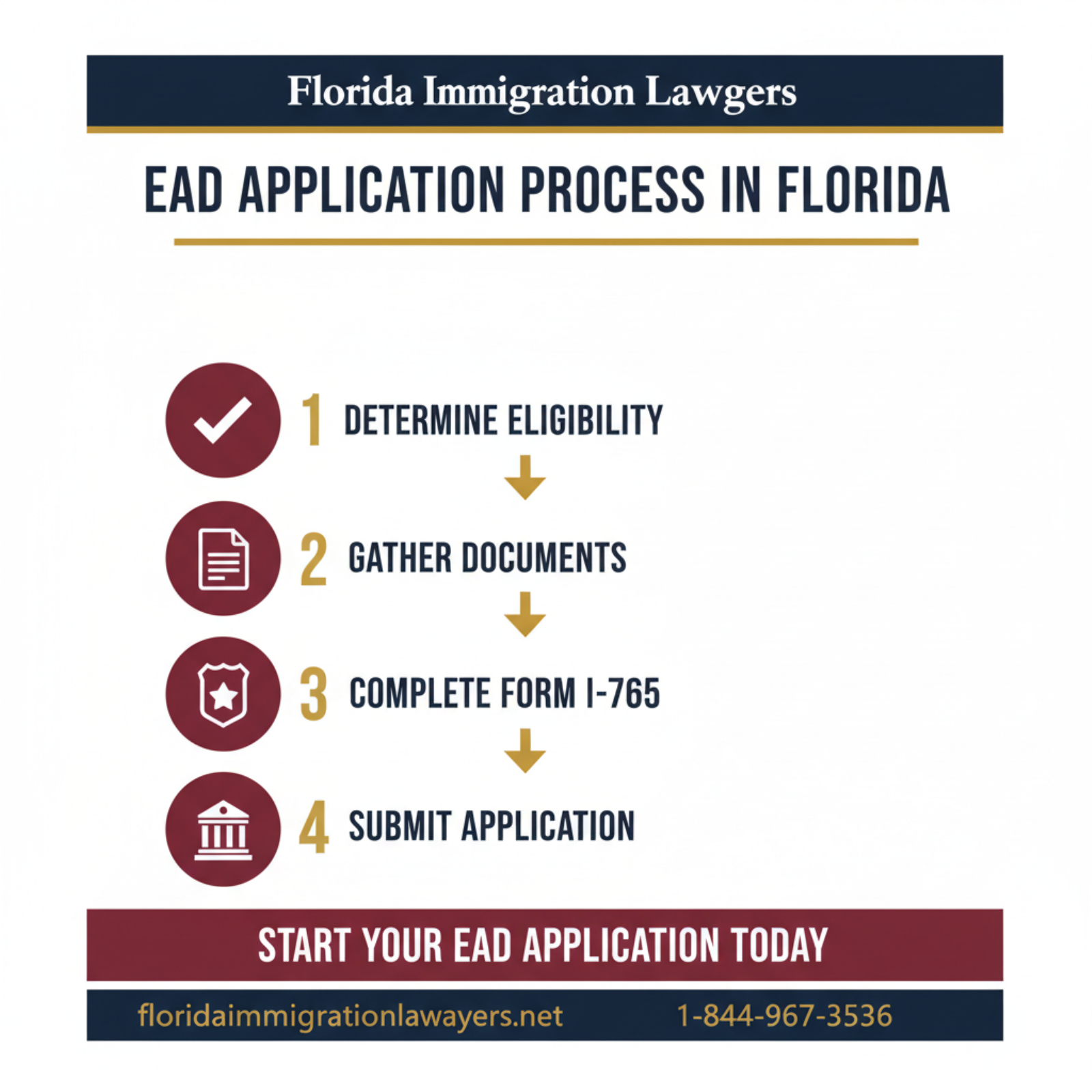
- Determine Your Eligibility Category: Before you begin, carefully review the USCIS instructions for Form I-765 to identify your specific eligibility category. This is a critical first step, as it dictates the required supporting documents and filing fees.
- Gather Required Documents: Collect all necessary supporting documentation. This typically includes proof of your identity, immigration status, and any documents related to your eligibility category. We will provide a detailed checklist shortly.
- Complete Form I-765, Application for Employment Authorization: Fill out Form I-765 accurately and completely. You can download the form from the USCIS website or file it online through your USCIS account. Ensure all sections are addressed to avoid delays.
- Prepare Supporting Evidence: Attach copies of your supporting documents. This might include your I-94 Arrival/Departure Record, previous EAD cards, marriage certificates, birth certificates, or asylum grant letters. Do not send original documents unless specifically requested by USCIS.
- Calculate and Pay Filing Fees: Check the current USCIS fee schedule for Form I-765. You can pay by money order, personal check, cashier's check, or credit card. Some applicants may be eligible for a fee waiver, typically if their income is below a certain threshold.
- Assemble and Mail Your Application: Organize your application packet according to USCIS guidelines. Mail it to the correct USCIS lockbox facility, which depends on your eligibility category and where you reside in Florida. Keep a copy of everything you submit. If you need assistance, do not hesitate to contact Florida Immigration Lawyers.
- Attend Biometrics Appointment: After filing, USCIS will send you an appointment notice for biometrics (fingerprints, photos, signature). This appointment is usually held at an Application Support Center (ASC) in Florida, such as those near St. Petersburg, Tampa, or Miami.
- Respond to RFEs (if applicable): If USCIS needs more information, they will send a Request for Evidence (RFE). Respond promptly and thoroughly to avoid denials or further delays in your employment authorization.
- Receive Your EAD Card: Upon approval, USCIS will mail your EAD card to the address you provided. This card will have an expiration date, and you will need to renew it before it expires to maintain continuous work permit status.
Essential Document Checklist for Your Florida Work Permit Application
- Completed and signed Form I-765, Application for Employment Authorization.
- Two passport-style photos taken within 30 days of filing.
- Copy of your last EAD card (front and back), if applicable.
- Copy of your Form I-94, Arrival/Departure Record, or a printout from CBP website.
- Copy of your visa (if applicable) and passport biographical page.
- Proof of your eligibility category (e.g., I-797C receipt notice for I-485, asylum grant letter, marriage certificate for spouses of certain visa holders).
- Copy of birth certificate (if applicable).
- Copy of government-issued identification (e.g., driver's license, state ID).
- Documentation for fee waiver request, if applicable (Form I-912).
- Any other documents specifically required for your eligibility category as per 8 CFR 274a.12.
Timeline and Processing Expectations for EAD in Florida (2026)
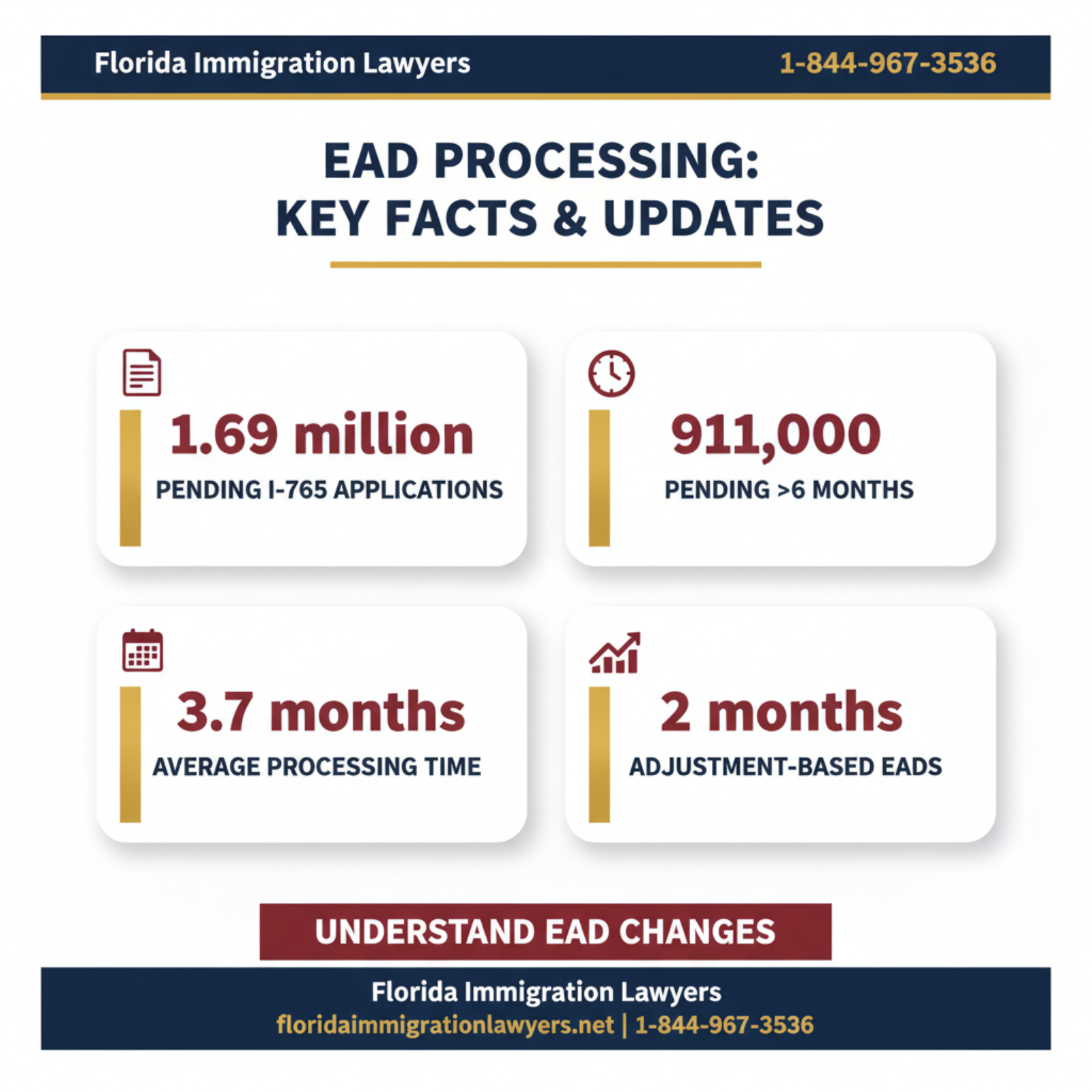
The processing time for an EAD application (Form I-765) can vary significantly based on your eligibility category, the specific USCIS service center handling your case, and current USCIS workloads. As of 2026, applicants in Florida should anticipate waiting several months.
Typically, processing times can range from 3 to 12 months, or even longer for some complex cases. USCIS provides an online tool to check current processing times by form type and service center. It's crucial to file your application as accurately and completely as possible to avoid delays. You can check current processing times at USCIS Processing Times.
For renewals, USCIS generally recommends filing at least 180 days before your current EAD card expires. Some categories may qualify for an automatic extension of their EAD validity, allowing them to continue working while the renewal is pending, provided they file on time.
Cost Factors and Fee Breakdown for Your Work Permit Application
Applying for a work permit (EAD) involves several potential costs. The primary expense is the USCIS filing fee for Form I-765, Application for Employment Authorization. This fee is subject to change, so always check the most current fee schedule on the USCIS website before filing.
In addition to the filing fee, some applicants may also need to pay a biometrics services fee. However, many EAD categories, particularly those filed concurrently with an I-485 adjustment of status application, include the biometrics fee as part of the overall filing cost or are exempt.
Consider the potential cost of professional passport photos and mailing expenses. Most importantly, if you choose to hire an experienced immigration attorney, like those at Florida Immigration Lawyers, their legal fees will be an additional but often invaluable investment. These fees cover expert guidance, document preparation, and representation, significantly reducing the risk of errors and delays.
Certain low-income applicants may be eligible for a fee waiver by filing Form I-912, Request for Fee Waiver. Eligibility for a fee waiver is based on specific income guidelines or receipt of means-tested public benefits. We can help you determine if you qualify. For more details on the form, visit the USCIS I-765 Form Page.
The path to securing your work permit in Florida can be intricate, with numerous forms, deadlines, and legal nuances. Do not navigate this process alone. Contact Florida Immigration Lawyers today for expert assistance and peace of mind. Our team is ready to support you.
Common Mistakes to Avoid When Applying for Your Florida Work Permit
Filing an I-765 application requires precision. Even minor errors can lead to significant delays or outright denial of your work permit. Here are common pitfalls to avoid:
- Filing with an Expired Form: USCIS frequently updates its forms. Using an outdated version of Form I-765 will result in rejection. Always download the latest version from the USCIS website.
- Incomplete or Inaccurate Information: Any missing fields, inconsistent data, or incorrect answers can trigger an RFE or denial. Double-check every entry for accuracy and completeness.
- Incorrect Eligibility Category: Selecting the wrong eligibility category on Form I-765 is a common mistake. This can lead to denial because you haven't proven eligibility under the correct section of immigration law.
- Insufficient Supporting Documentation: Failing to include all required evidence for your specific category will cause delays. Ensure every document listed in the instructions or requested for your category is attached.
- Improperly Taken Passport Photos: Photos that do not meet USCIS specifications (size, background, quality, recentness) will result in rejection. Use professional passport photo services.
- Incorrect Filing Fee or Missing Fee Waiver Request: Submitting the wrong fee amount or forgetting to include a properly filed Form I-912 for a fee waiver will lead to the return of your entire application.
- Missing Signature: Forgetting to sign Form I-765 is a simple yet critical error that will cause your application to be rejected immediately. Ensure all required signatures are present.
- Mailing to the Wrong Address: USCIS has specific lockbox facilities based on the type of form and your eligibility category. Sending your application to the wrong address will delay processing.
- Not Keeping Copies of Your Application: Always make a complete copy of your entire application packet before mailing it. This serves as your record and is vital if USCIS requests further information or if the original is lost.
- Waiting Too Long to Renew: If your EAD card is expiring, waiting until the last minute to file a renewal can lead to a lapse in employment authorization. File well in advance, typically 180 days before expiration.
When to Call a Lawyer for Your Work Permit Application
While this guide provides general information, your personal situation is unique. There are many scenarios where the expertise of an immigration lawyer, especially one familiar with Florida's specific context and USCIS offices, becomes invaluable.
Consider consulting Florida Immigration Lawyers if you:
- Are unsure about your eligibility category or have a complex immigration history.
- Have a criminal record or previous immigration violations, which might impact your deportation defense strategy.
- Have received a Request for Evidence (RFE) or a Notice of Intent to Deny (NOID).
- Are seeking a renewal and your case has unusual circumstances.
- Have experienced significant delays in processing beyond published timelines.
- Simply want the assurance that your application is prepared perfectly and filed correctly by our experienced attorneys.
Our attorneys can help you navigate the intricacies of Form I-765, prepare a robust application, and represent your interests effectively. We are committed to helping individuals in St. Petersburg, Miami, and across Florida secure their employment authorization.
About Florida Immigration Lawyers
Florida Immigration Lawyers is a leading law firm dedicated to providing exceptional immigration services across the entire state of Florida. With a deep understanding of U.S. immigration law and a compassionate approach, we proudly serve individuals, families, and businesses in St. Petersburg, Tampa, Orlando, Miami, Jacksonville, and beyond.
Our experienced team specializes in a wide range of immigration matters, including work permits (EAD), family-based visas, business immigration, asylum, naturalization, and deportation defense. We are committed to achieving positive outcomes for our clients by offering personalized strategies and diligent representation.
We understand the challenges and anxieties that come with immigration processes. That's why we offer free consultations and are available 24/7 to address your concerns. Choose us for our expertise, dedication, and unwavering support throughout your immigration journey.
Contact Florida Immigration Lawyers today:
- Phone: 1-844-967-3536
- Website: www.FloridaImmigrationLawyers.net
- Serving all of Florida, including St. Petersburg, Miami, Orlando, and Tampa.
- Se Habla Español
Sources and References
- U.S. Citizenship and Immigration Services (USCIS)
- Form I-765, Application for Employment Authorization - USCIS
- USCIS Policy Manual
- 8 U.S.C. § 1324a - Unlawful employment of aliens
- 8 CFR § 274a.12 - Classes of aliens authorized to accept employment
This article provides general legal information and is not intended as legal advice. Every case is unique, and outcomes depend on specific facts and circumstances. Contact an attorney for advice about your particular situation.
Securing your work permit (EAD) is a significant step towards achieving your goals in Florida. Don't leave your future to chance. Let the experienced attorneys at Florida Immigration Lawyers guide you through every stage of your I-765 application.
We offer free consultations to discuss your case and provide the clarity you need. Reach out to us today.
Call 1-844-967-3536 now for your free consultation! Se Habla Español - Estamos aquí para ayudarle.
Need help with Immigration?
Our Florida immigration attorneys offer free consultations. Call today or schedule online.
Frequently Asked Questions
Florida Immigration Lawyers
Legal Team
Our experienced attorneys at Florida Immigration Lawyers have been serving clients across Florida for over 20 years. We specialize in immigration, personal injury, criminal defense, workers compensation, and family law.