UK Immigration Reform Denmark Model: Implications for Florida Immigration Law
Discover the UK's exploration of the Denmark immigration model and its broader implications for global immigration trends. While the UK immigration reform Denmark model is a European discussion, this post clarifies its indirect relevance to U.S. immigration law, particularly for residents in Florida. Learn essential steps for navigating the U.S. immigration system, common mistakes to avoid, and when to seek expert legal counsel. Florida Immigration Lawyers offers comprehensive guidance, ensuring your journey through U.S. immigration is well-informed and supported. Contact us for a free consultation and personalized advice on your unique situation.
The UK immigration reform Denmark model refers to the United Kingdom's recent consideration of adopting elements of Denmark's stringent asylum and immigration policies. While this is a discussion among European nations, it highlights global trends in immigration policy. For individuals in Florida, understanding these international dialogues underscores the critical importance of navigating current, specific U.S. immigration laws with expert legal counsel.
- The Denmark model emphasizes strict asylum rules and external processing.
- The UK is exploring similar reforms to its own asylum system.
- These discussions are not directly U.S. law but reflect global policy shifts.
- U.S. immigration law remains complex and distinct, requiring specialized legal guidance.
- Florida immigrants must focus on current federal regulations and seek local legal support.
UK Immigration Reform Denmark Model: Implications for Florida Immigration Law
The global landscape of immigration policy is in constant flux, with nations continually evaluating and reforming their approaches. One significant development drawing international attention is the UK immigration reform Denmark model, where the United Kingdom has expressed interest in adopting aspects of Denmark's notably strict immigration and asylum policies. While these discussions primarily concern European nations, they resonate across the globe, prompting questions about potential influences on immigration debates and policies elsewhere, including here in Florida.
For immigrants and their families residing in or looking to move to Florida, it is crucial to understand that U.S. immigration law operates independently. However, being informed about global trends helps to contextualize the broader discussions around immigration. This article will delve into the specifics of the Denmark model, the UK's proposed reforms, and, most importantly, provide essential guidance on navigating the current U.S. immigration system within Florida. For personalized advice and comprehensive support, we urge you to call Florida Immigration Lawyers at 1-844-967-3536 for a free consultation. Our dedicated team is here to assist you every step of the way.
Understanding Global Immigration Trends: The UK, Denmark Model, and Florida's Context
Discussions around the UK immigration reform Denmark model highlight a global shift towards more restrictive immigration policies in some parts of the world. The Denmark model, in particular, has gained prominence for its unique approach to managing asylum seekers and immigrants. Understanding its core tenets can shed light on the broader international dialogue surrounding immigration.
What is the Denmark Immigration Model?
The Danish immigration model is characterized by its stringent approach to asylum and a strong emphasis on integration requirements for those granted residency. At its heart, the model seeks to deter irregular migration and ensure that those who are granted protection are genuinely in need and willing to integrate into Danish society. This often involves policies designed to process asylum applications outside of Denmark, aiming to prevent arrivals on Danish soil.
Denmark's policies have evolved over the years, consistently tightening restrictions on family reunification, social benefits for refugees, and the criteria for obtaining permanent residency. The goal has been to reduce the number of asylum seekers arriving in the country and to make Denmark less attractive as a destination for economic migrants. This model stands in contrast to more liberal immigration frameworks seen in other European nations.
Denmark's Policy Evolution
The evolution of Denmark's immigration policy has seen a consistent trajectory towards increased control, particularly under the Social Democratic government led by Prime Minister Mette Frederiksen. While traditionally a left-leaning party, the Social Democrats have embraced a tough stance on immigration, arguing it is necessary to preserve the welfare state and social cohesion. This cross-party consensus on restrictive immigration policies is a notable feature of the Danish political landscape.
Policy changes have included making it harder to obtain Danish citizenship, reducing welfare benefits for new arrivals, and even exploring options to process asylum applications in third countries. These measures reflect a national determination to assert greater control over who enters the country and under what conditions. The focus is on temporary protection rather than permanent settlement for many asylum seekers.
Where Do Most of Denmark's Immigrants Come From?
Historically, Denmark has seen immigration from various regions, including other Nordic countries and parts of Europe. However, in recent decades, asylum seekers and refugees have largely originated from conflict zones in the Middle East and Africa. Countries like Syria, Afghanistan, and Eritrea have been significant sources of individuals seeking protection in Denmark.
The Danish government's policies aim to manage these flows, focusing on repatriation when conditions in home countries are deemed safe. This approach is a key component of the Danish immigration model and influences how the country addresses humanitarian crises and international obligations. The emphasis is on a managed and controlled immigration system.
The UK's interest in the UK immigration reform Denmark model stems from a desire to curb irregular migration, particularly across the English Channel. Home Secretary Shabana Mahmood has reportedly looked to Denmark's strategies as a potential blueprint for overhauling Britain's asylum system. The aim is to deter illegal crossings and process asylum claims more efficiently, potentially through offshore centers.
While the specifics of any UK reform are still developing, the discussion highlights a shared concern among some European governments about managing migration flows. For residents of Pembroke Pines and other Florida communities, it is essential to remember that these are foreign policy debates. U.S. immigration laws, governed by federal statutes like the Immigration and Nationality Act (INA), remain the primary concern for anyone seeking to live or work in the United States.
Navigating US Immigration Law in Florida: Your Step-by-Step Guide
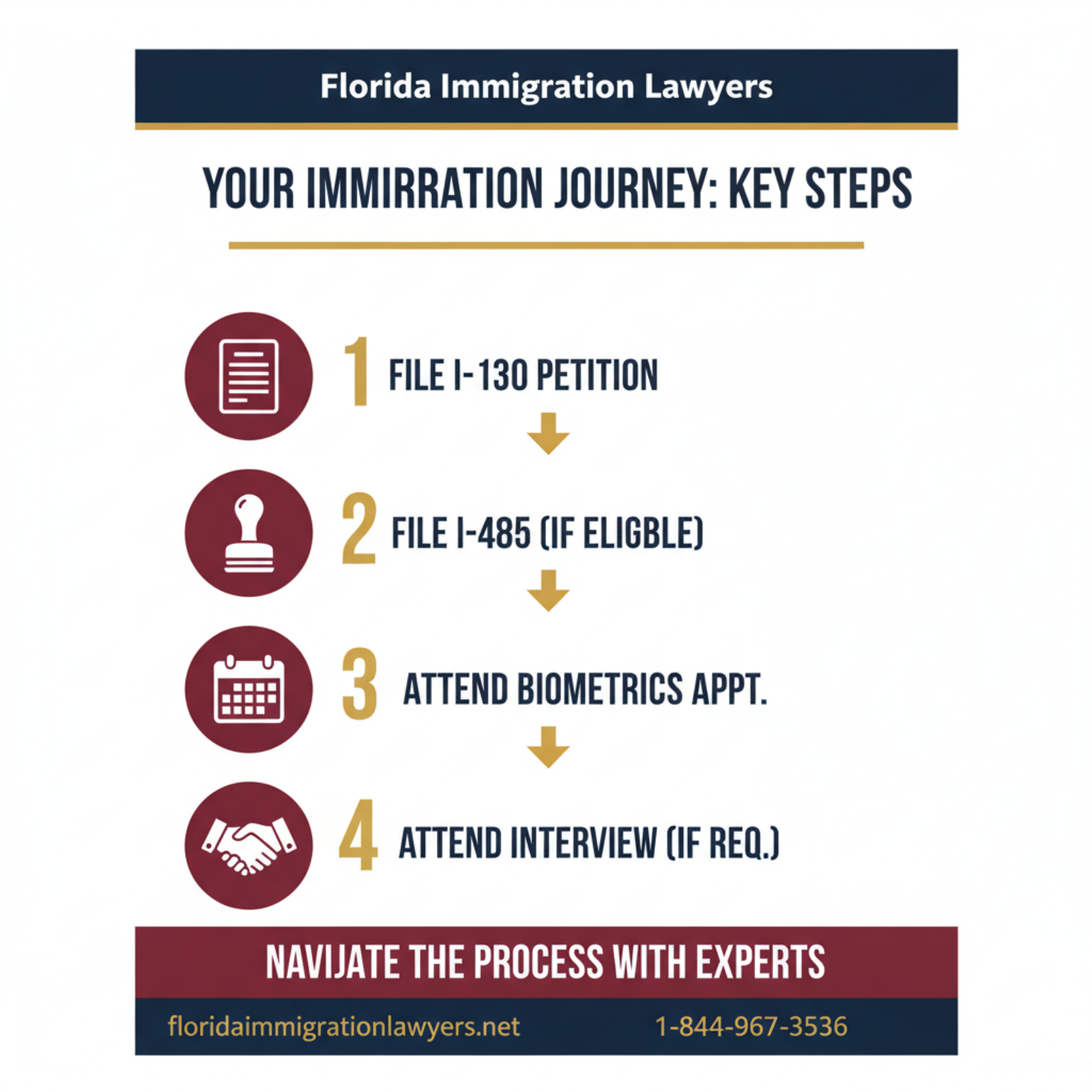
While global immigration policies like the UK immigration reform Denmark model are important to monitor, your immigration journey in Florida is governed by U.S. federal law. The process can be intricate and demanding, requiring careful attention to detail and adherence to specific legal requirements. Here is a general step-by-step guide to help you understand the typical U.S. immigration process.
-
Assess Your Eligibility and Goals: Before taking any action, it is crucial to determine which immigration pathway aligns with your circumstances. Are you seeking family-based immigration, employment-based immigration, asylum, or citizenship? Each category has distinct eligibility criteria and requirements. Understanding your options is the first critical step. Our team at Florida Immigration Lawyers can help you evaluate your situation and identify the most appropriate path forward. Learn more about general U.S. immigration services.
-
Gather Necessary Documentation: U.S. immigration applications require extensive documentation to prove eligibility. This includes personal identification, birth certificates, marriage certificates, financial records, educational credentials, and sometimes police clearances. Accurate and complete documentation is paramount to avoid delays or denials. We guide our clients in Pembroke Pines and across Florida through this crucial document collection process.
-
File Petitions/Applications with USCIS: Most immigration processes begin with filing a petition or application with U.S. Citizenship and Immigration Services (USCIS). For example, a U.S. citizen or lawful permanent resident might file Form I-130 for a family member, or an employer might file Form I-140 for a foreign worker. Asylum seekers file Form I-589. Each form has specific instructions that must be followed precisely. USCIS offices in Florida, such as those in Miami, Orlando, and Tampa, process many of these applications.
-
Attend Biometrics Appointment: After filing certain applications, USCIS will schedule a biometrics appointment at an Application Support Center (ASC). During this appointment, your fingerprints, photograph, and signature will be collected. These biometrics are used for background checks and identity verification. It is essential to attend this appointment and bring all requested documents.
-
Undergo Interviews (If Required): Many immigration pathways, especially those leading to a green card or citizenship, require an interview with a USCIS officer. This interview is an opportunity for the officer to verify the information in your application, ask clarifying questions, and assess your eligibility. Proper preparation for these interviews is vital. For asylum cases, interviews are a critical part of the process, and legal representation can be invaluable. Find out more about asylum policy Florida.
-
Receive Decision: Once all steps are completed, USCIS will issue a decision on your application or petition. This could be an approval, a request for additional evidence (RFE), or a denial. An RFE means USCIS needs more information to make a decision, and a denial typically comes with an explanation of the reasons. If your application for citizenship is approved, you will attend a naturalization ceremony.
-
Adjust Status or Obtain Visa: If your petition is approved and you are in the U.S., you may be eligible to adjust your status to that of a lawful permanent resident. If you are outside the U.S., you will typically proceed with consular processing at a U.S. embassy or consulate in your home country to obtain an immigrant visa. Both processes have their own set of requirements and timelines.
Essential Documents for Florida Immigration Applications
Regardless of the specific U.S. immigration path you are pursuing, a comprehensive set of documents is always required. These documents serve as evidence to support your claims and prove your eligibility. Organizing them meticulously can prevent delays. Here is a general checklist of commonly requested documents:
- Valid Passport(s) and Travel Documents
- Birth Certificates (for all applicants and beneficiaries)
- Marriage Certificates (if applicable for family-based immigration)
- Divorce Decrees or Death Certificates (if applicable)
- Police Clearance Certificates from all countries of residence (if required)
- Financial Documents (e.g., tax returns, bank statements, employment letters, affidavits of support)
- Medical Examination Results (completed by a USCIS-approved physician)
- Passport-style Photographs (meeting USCIS specifications)
- Educational Transcripts and Diplomas (for employment-based visas or certain waivers)
- Evidence of Relationship (e.g., photos, joint bank accounts, lease agreements for family petitions)
- Proof of U.S. Entry and Status (e.g., I-94 records, visa stamps)
Immigration Processing Timelines and Expectations in Florida
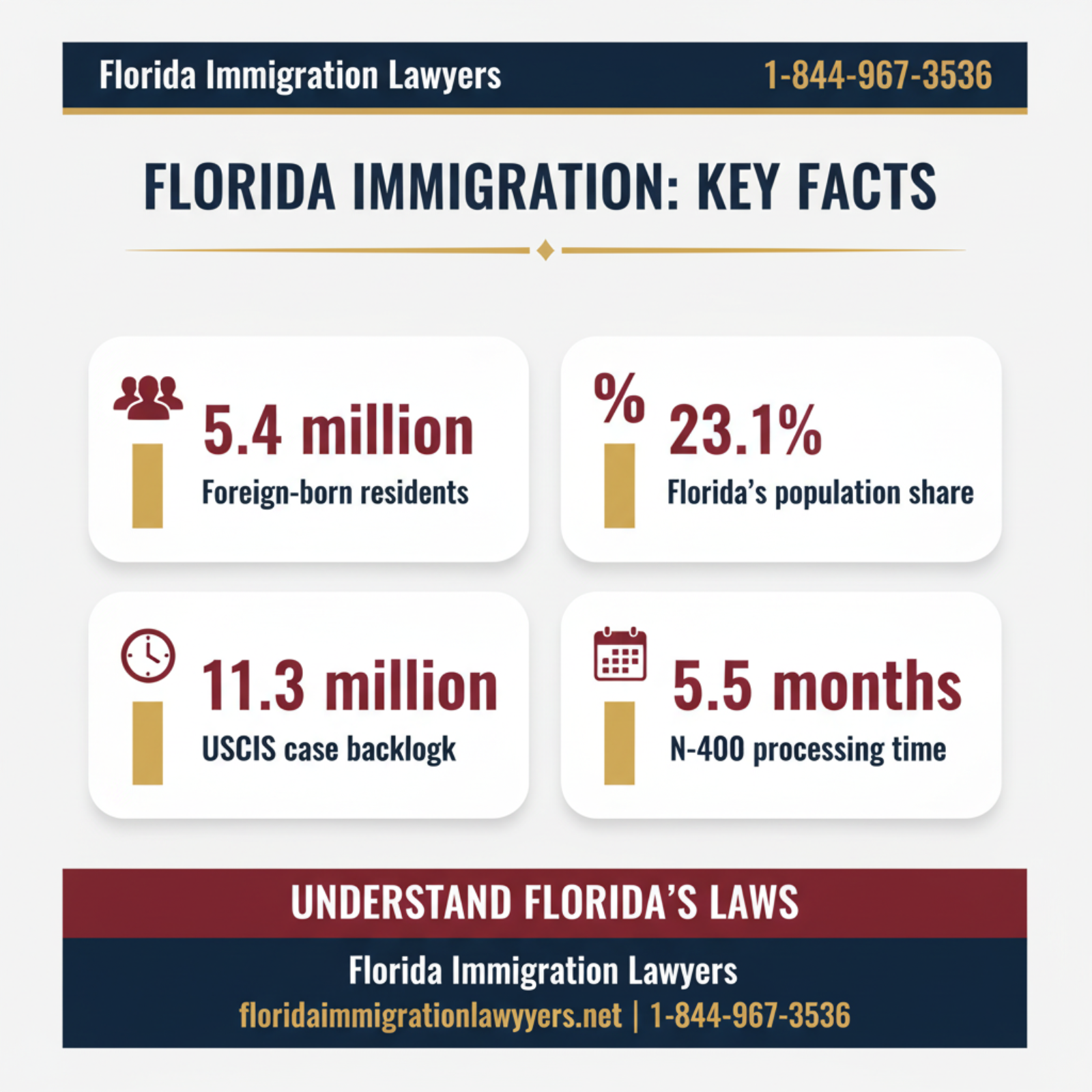
One of the most common questions immigrants have concerns how long their application will take. U.S. immigration processing times can vary significantly based on the type of application, the specific USCIS service center or field office, and current caseloads. It is important to set realistic expectations.
USCIS regularly updates its processing times on its official website. We recommend checking the USCIS processing times tool for the most current estimates for your specific form and field office (e.g., Miami, Orlando, or Tampa). Factors such as requests for evidence, background checks, and interview scheduling can all influence the overall timeline. While the UK immigration reform Denmark model might be discussed internationally, it does not affect current U.S. processing times.
Understanding Immigration Costs and Fee Breakdown
Pursuing an immigration benefit in the U.S. involves various costs beyond just the application itself. These include government filing fees, legal fees for attorney assistance, and other miscellaneous expenses. It is important to budget for these costs from the outset.
USCIS filing fees are subject to change and vary depending on the form. These fees are non-refundable, even if your application is denied. Additionally, there may be fees for medical examinations, translation services, and obtaining necessary documents. Legal fees for an experienced immigration lawyer Florida will cover the preparation of your case, representation, and expert advice, which can be an invaluable investment in your future. Florida Immigration Lawyers offers free consultations to help you understand potential costs.
Do not navigate this complex process alone. The stakes are too high to risk common mistakes or misunderstandings. Contact Florida Immigration Lawyers today to ensure your case is handled with precision and care. We serve clients throughout Florida, including Pembroke Pines, providing comprehensive legal support.
Common Mistakes Florida Immigrants Should Avoid
Navigating the U.S. immigration system, especially with discussions around global policies like the UK immigration reform Denmark model, can be confusing. However, focusing on U.S. law is key. Many applicants inadvertently make mistakes that can lead to significant delays or even denial of their applications. Being aware of these pitfalls can help you avoid them:
-
Submitting Incomplete or Inaccurate Applications: Failing to fill out forms entirely or providing incorrect information is a frequent cause of Requests for Evidence (RFEs) or outright denials. Even minor omissions can lead to substantial delays. It is crucial to double-check every detail.
-
Missing Deadlines: Immigration processes are time-sensitive. Missing a deadline for filing an application, responding to an RFE, or appearing for an interview can result in your case being closed or denied, often without the possibility of appeal. Always be mindful of all deadlines.
-
Failing to Disclose Criminal History: Attempting to hide a criminal record, no matter how minor, can lead to serious consequences, including accusations of misrepresentation and permanent bars from immigration benefits. Full disclosure is always the best policy, allowing your attorney to assess potential waivers. (Referencing INA § 212(a)(2) for inadmissibility grounds).
-
Providing Inconsistent Information: Discrepancies between different applications, interviews, or documents can raise red flags for USCIS officers. Consistency is vital to maintain credibility throughout your immigration journey. Ensure all your statements and submissions are aligned.
-
Overstaying a Visa: Remaining in the U.S. beyond your authorized period of stay can trigger bars to re-entry and make it difficult to adjust status later. Understanding your authorized stay and adhering to it is critical for future immigration prospects. (Referencing INA § 222(g) for visa overstays).
-
Entering the U.S. Without Inspection (EWI): Entering the United States without being admitted or paroled by an immigration officer can lead to significant challenges in adjusting status, as it often makes individuals inadmissible. This is a common issue that requires experienced legal counsel. (Referencing INA § 212(a)(6)(A) for inadmissibility due to EWI).
-
Marrying Solely for Immigration Benefits: Entering into a fraudulent marriage to obtain a green card is a severe federal offense with harsh penalties, including imprisonment and permanent bars from all immigration benefits. USCIS actively investigates suspected marriage fraud.
-
Not Seeking Legal Counsel: Attempting to navigate the complex U.S. immigration system without the guidance of an experienced immigration lawyer Florida is a common and costly mistake. An attorney can help avoid errors, prepare strong cases, and represent your best interests.
-
Ignoring Requests for Evidence (RFEs): When USCIS sends an RFE, it means they need more information to make a decision. Failing to respond comprehensively and on time will almost certainly lead to a denial. Treat every RFE with urgency and precision.
-
Assuming Global Policy Changes Directly Affect U.S. Cases: While it's good to be informed about international discussions like the UK immigration reform Denmark model, do not assume they directly impact U.S. immigration law. U.S. law is distinct and follows its own legislative and regulatory processes. Focus on current U.S. federal regulations.
-
Not Preparing for Interviews: Interviews with USCIS or consular officers are critical. Many applicants fail to adequately prepare, leading to nervousness, inconsistent answers, or an inability to articulate their case clearly. Thorough preparation with your attorney is essential.
-
Failing to Update Contact Information with USCIS: If you move, you must update your address with USCIS promptly using Form AR-11. Failure to do so can result in missed notices, interview appointments, or even decisions being sent to the wrong address, potentially jeopardizing your case.
When to Call an Immigration Lawyer in Pembroke Pines, Florida
The U.S. immigration system is notoriously complex, and even seemingly straightforward cases can encounter unforeseen challenges. While understanding international discussions like the UK immigration reform Denmark model is interesting, your focus must remain on U.S. law. Knowing when to seek professional legal assistance can make all the difference in your immigration journey. Florida Immigration Lawyers are here to help residents of Pembroke Pines and beyond.
You should consider contacting an experienced immigration lawyer Florida in the following scenarios:
- Complex Case Scenarios: If your case involves a criminal history, previous immigration violations, or other complicating factors, legal expertise is essential. This includes issues related to deportation defense or waivers of inadmissibility.
- Asylum and Refugee Claims: Asylum law is highly specialized and requires a deep understanding of international and domestic protections. An attorney can help you build a strong case and navigate the interview process.
- Denied Applications or Appeals: If your application has been denied, or if you need to appeal a decision, an attorney can review your case, identify errors, and guide you through the appeals process.
- Changes in Immigration Law or Policy: Immigration laws are subject to frequent changes. An attorney stays updated on the latest developments and understands how they might affect your case.
- Business Immigration Needs: For employers or foreign workers seeking employment-based visas, the process can be intricate, involving labor certifications and specific visa categories. Our business immigration team can assist.
- Family Immigration Challenges: While family-based petitions are common, issues like proving legitimate relationships or navigating consular processing can be complex.
- Uncertainty or Confusion: If you are unsure about your eligibility, the correct forms to file, or any aspect of the process, a consultation with an attorney can provide clarity and peace of mind.
Don't wait until you encounter a problem. Proactive legal guidance from Florida Immigration Lawyers can prevent costly mistakes and enhance your chances of a successful outcome. Our experienced attorneys are dedicated to providing clear, empathetic, and effective representation.
About Florida Immigration Lawyers
Florida Immigration Lawyers is a leading immigration law firm dedicated to serving individuals, families, and businesses throughout the entire state of Florida. With a deep understanding of U.S. immigration law and a commitment to our clients, we strive to make the complex immigration process as smooth and stress-free as possible.
Our firm offers a comprehensive range of immigration services, including family-based petitions, employment visas, asylum claims, deportation defense, naturalization, and more. We pride ourselves on our personalized approach, ensuring that each client receives tailored strategies and compassionate support. We understand the unique challenges faced by immigrants in Florida, from Pembroke Pines to Miami, Orlando, and beyond.
Why choose Florida Immigration Lawyers? We offer free consultations, are available 24/7 to address your urgent needs, and provide bilingual services to ensure effective communication. Our experienced team is passionate about helping you achieve your immigration goals. Visit our website at https://www.floridaimmigrationlawyers.net or call us directly at 1-844-967-3536 to schedule your free consultation today. Let us be your trusted partner in your immigration journey.
Sources and References
- U.S. Citizenship and Immigration Services (USCIS)
- U.S. Department of State - Bureau of Consular Affairs
- Executive Office for Immigration Review (EOIR)
- 8 U.S.C. Chapter 12 - Immigration and Nationality Act (INA)
- INA § 208 - Asylum
- INA § 212 - General Classes of Aliens Ineligible for Visas and Admission; Waivers of Inadmissibility
- INA § 222(g) - Visa Overstays
- 8 CFR Part 208 - Asylum and Withholding of Removal
This article provides general legal information and is not intended as legal advice. Every case is unique, and outcomes depend on specific facts and circumstances. Contact an attorney for advice about your particular situation.
Understanding the nuances of U.S. immigration law is paramount, especially when global policy discussions like the UK immigration reform Denmark model create a complex information environment. Do not risk your future by navigating this intricate legal landscape alone. Florida Immigration Lawyers are here to provide the expert guidance and support you need to achieve your immigration goals.
We offer free, confidential consultations to discuss your specific case and outline your best path forward. Our team is available 24/7 to answer your questions and provide peace of mind. Call us today at 1-844-967-3536 to schedule your consultation. Se Habla Español - Estamos aquí para ayudarle.
Need help with Immigration?
Our Florida immigration attorneys offer free consultations. Call today or schedule online.
Frequently Asked Questions
Florida Immigration Lawyers
Legal Team
Our experienced attorneys at Florida Immigration Lawyers have been serving clients across Florida for over 20 years. We specialize in immigration, personal injury, criminal defense, workers compensation, and family law.