Naturalization Ceremony ICE Concerns Florida: Your 2026
For many aspiring U.S. citizens in Florida, the naturalization ceremony is the culmination of years of hard work. However, concerns about ICE presence at these ceremonies can cause apprehension. This comprehensive guide addresses naturalization ceremony ICE concerns in Florida for 2026, explaining the process, your rights, and when to seek legal counsel. We delve into common mistakes, essential documents, and what to expect. Florida Immigration Lawyers offers expert guidance to protect your path to citizenship, ensuring you are well-prepared and your rights are upheld. Learn how to navigate this crucial final step with confidence and peace of mind.

While U.S. Citizenship and Immigration Services (USCIS) conducts naturalization ceremonies, U.S. Immigration and Customs Enforcement (ICE) has a separate enforcement mission. Concerns about ICE presence near or at these ceremonies in Florida are valid for some individuals, particularly those with complex immigration histories or pending issues. Understanding your rights and having legal counsel is crucial to navigate these situations effectively and ensure your path to citizenship is protected.
- ICE generally does not target individuals solely for attending naturalization ceremonies.
- Concerns typically arise for those with prior criminal records or outstanding immigration orders.
- Knowing your rights and having legal representation is vital.
- Consulting an experienced Florida immigration lawyer can provide peace of mind.
Naturalization Ceremony ICE Concerns Florida: Your 2026 Guide
The journey to U.S. citizenship is a significant milestone for many immigrants across Florida, culminating in the joyous naturalization ceremony. This final step marks the official transition from lawful permanent resident to American citizen, a moment of immense pride and hope.
However, for some, particularly in diverse communities like Homestead and throughout Florida, concerns about U.S. Immigration and Customs Enforcement (ICE) presence at or near these ceremonies can cast a shadow. These worries are understandable, given the evolving landscape of immigration enforcement.
This comprehensive guide addresses your naturalization ceremony ICE concerns in Florida for 2026. We will explore the realities, your rights, and how to safeguard your path to citizenship. For personalized guidance, Call Florida Immigration Lawyers at 1-844-967-3536 for a free consultation.
Understanding Naturalization Ceremony ICE Concerns in Florida
Naturalization is the process by which a lawful permanent resident (green card holder) becomes a U.S. citizen. It involves meeting specific eligibility requirements, passing tests, and ultimately taking the Oath of Allegiance.
While USCIS oversees the naturalization process, ICE is responsible for enforcing federal immigration laws. Their distinct missions sometimes lead to anxieties, especially regarding their potential presence in public spaces where immigrants gather, such as courthouses or federal buildings used for ceremonies.
Historically, there have been instances where ICE has conducted operations near naturalization ceremonies, though typically targeting individuals with specific outstanding warrants or prior deportation orders. These operations are not generally aimed at disrupting the ceremony itself or indiscriminately detaining new citizens.
In Florida, a state with a large and diverse immigrant population, these concerns are particularly salient. Communities in areas like Homestead, Miami, Orlando, and Tampa include many individuals on their path to citizenship. Understanding the distinction between USCIS and ICE is crucial for applicants.
It is important to remember that becoming a naturalized citizen offers significant protection against deportation. However, concerns can still arise if there are undisclosed issues from an applicant's past or if they have a pending immigration matter. An experienced immigration lawyer can help you assess your unique situation.
The Naturalization Process: A Step-by-Step Guide
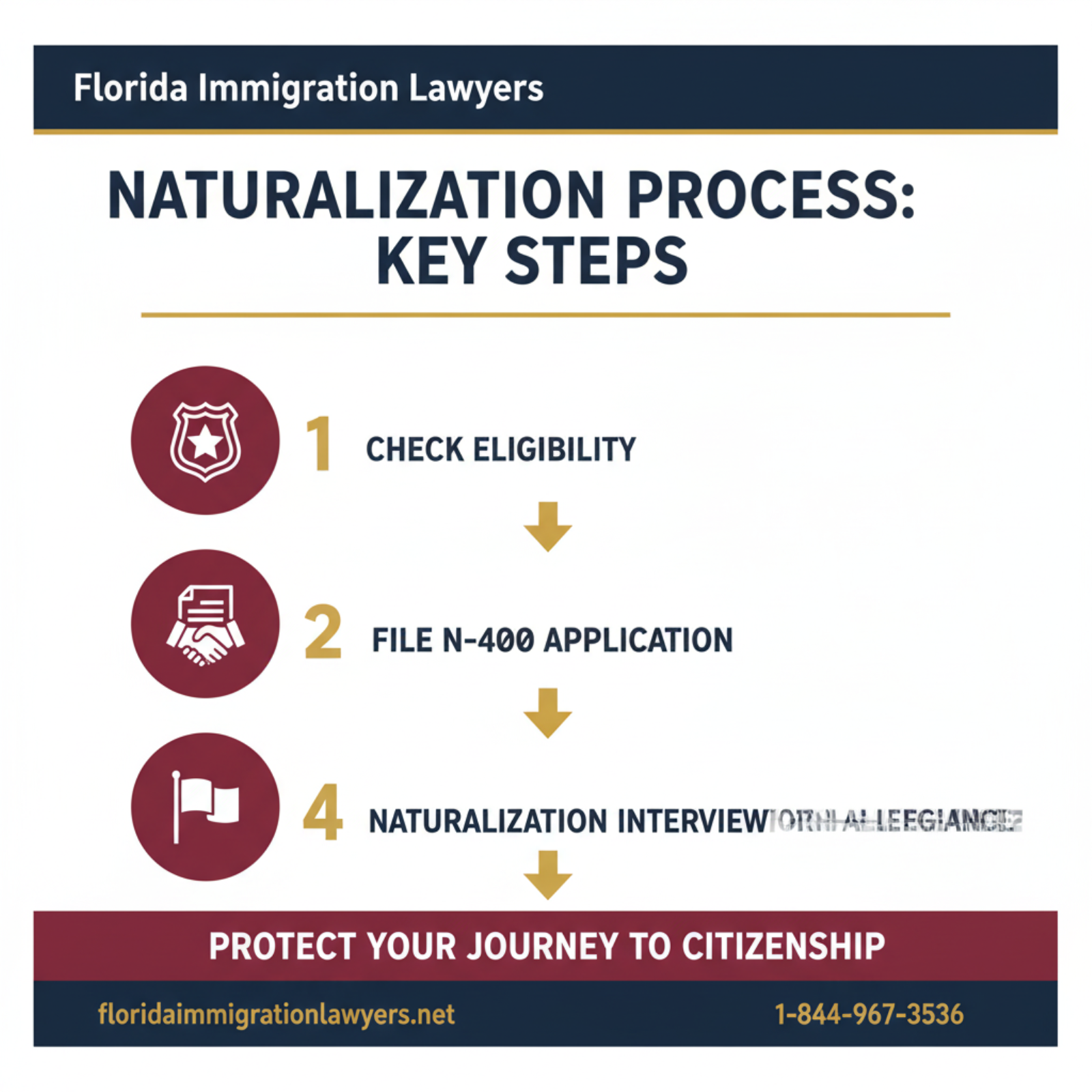
Becoming a U.S. citizen involves several key stages, each requiring careful attention to detail and adherence to USCIS regulations. Understanding these steps can help alleviate some naturalization ceremony ICE concerns.
-
Determine Eligibility: You must meet specific criteria, including age, continuous residency, physical presence, good moral character, and English/civics proficiency. Most applicants must be at least 18 years old and have been a lawful permanent resident for at least five years (or three years if married to a U.S. citizen and meeting other requirements). You can find detailed eligibility rules in the Immigration and Nationality Act (INA) Section 316 and 319 (8 U.S.C. 1427, 1430).
-
File Form N-400, Application for Naturalization: This is the primary application form you will submit to USCIS. It requires extensive personal information, immigration history, and answers about your moral character. Honesty and accuracy are paramount in completing this form.
-
Attend Biometrics Appointment: After filing, USCIS will send you a notice for a biometrics appointment. At this appointment, your fingerprints, photograph, and signature will be collected for background checks. This is a standard security measure for all applicants.
-
Complete the Naturalization Interview: A USCIS officer will interview you to review your N-400 application, assess your English proficiency (reading, writing, speaking), and test your knowledge of U.S. civics and history. The officer will also evaluate your good moral character during this interview.
-
Receive Decision and Attend Oath Ceremony: If your application is approved, you will receive a Form N-445, Notice of Naturalization Oath Ceremony. This document instructs you on the date, time, and location of your ceremony. This is the final step where you take the Oath of Allegiance and officially become a U.S. citizen. Concerns about ICE at the naturalization ceremony specifically relate to this last step.
Throughout this process, maintaining good moral character is essential. Any issues, such as arrests or legal problems, can impact your eligibility. Consulting with a citizenship lawyer can help you prepare for each stage.
Essential Documents for Your Naturalization Ceremony
On the day of your naturalization ceremony, you must bring specific documents as instructed by USCIS. Failing to present these could delay your citizenship.
- Form N-445, Notice of Naturalization Oath Ceremony: This is your official invitation and instructions for the ceremony. Read it carefully.
- Your Permanent Resident Card (Green Card): You must surrender your Green Card at the ceremony.
- All Reentry Permits or Refugee Travel Documents: If applicable, these must also be surrendered.
- Any other immigration documents USCIS requested: Always review your N-445 for any specific additional documents required.
- Valid State-Issued Photo ID: Such as a Florida driver's license or state ID card.
- Two Passport-Style Photos: If you did not provide them at your interview or if instructed to bring them.
Ensure all documents are current and readily accessible. It is wise to keep a copy of your N-445 and any other important notices for your records. This meticulous preparation helps ensure a smooth ceremony experience, reducing any naturalization ceremony ICE concerns.
Navigating Timelines and Processing Expectations for Naturalization
The naturalization process timeline can vary significantly based on several factors. These include the USCIS field office processing your application, the complexity of your case, and current caseloads.
For applicants in Florida, processing times can differ between offices like Miami, Orlando, and Tampa. You can check the USCIS website for current average processing times for Form N-400 applications. These times are estimates and can change.
After your interview, if approved, you might receive your Form N-445, Notice of Naturalization Oath Ceremony, relatively quickly, sometimes within a few weeks. However, in other cases, there can be a delay of several months between interview and ceremony.
On the day of your ceremony, arrive early as instructed on your N-445. You will typically check in, surrender your Green Card, and then participate in a group ceremony. The entire event usually lasts a few hours, after which you receive your Certificate of Naturalization.
While the wait can be anxious, especially with naturalization ceremony ICE concerns, remember that delays do not necessarily indicate a problem. Always monitor your case status online and respond promptly to any USCIS requests. Patience and thorough preparation are key.
Cost Factors and Fee Breakdown for Naturalization
Applying for naturalization involves several costs. It is important to budget for these to avoid any unexpected financial burdens that could delay your application.
-
USCIS Filing Fee for Form N-400: This fee is subject to change, so always check the USCIS website for the most current amount. This fee is non-refundable, even if your application is denied.
-
Biometrics Services Fee: This fee is generally included with the N-400 filing fee, but verify this on the USCIS fee schedule. This covers the cost of your fingerprint and background checks.
-
Waivers: If you meet specific income guidelines, you may be eligible to apply for a fee waiver using Form I-912, Request for Fee Waiver. This can significantly reduce the financial burden of applying. Consult with an attorney to see if you qualify.
-
Legal Fees: Hiring an experienced immigration attorney, like those at Florida Immigration Lawyers, is an additional cost but can be a valuable investment. An attorney can help prepare your application, represent you at interviews, and address any complex issues, including naturalization ceremony ICE concerns.
Key Statistics & Data -
Miscellaneous Costs: These might include fees for obtaining necessary documents (e.g., birth certificates, marriage licenses, criminal records) or travel expenses to appointments.
Understanding all potential costs upfront allows for better financial planning. Do not let financial concerns deter you from pursuing citizenship; explore all options, including fee waivers and legal aid, if needed.
Do not navigate this process alone. Contact Florida Immigration Lawyers today. Our team is ready to assist you through every step of your naturalization journey, addressing any naturalization ceremony ICE concerns you may have.
Common Mistakes to Avoid During the Naturalization Process
-
Failing to Disclose All Arrests or Citations: Even minor incidents, dismissed charges, or arrests without conviction must be disclosed. Concealing information is considered misrepresentation and can lead to denial, and in severe cases, even denaturalization later. Honesty is critical for demonstrating good moral character.
-
Providing Inconsistent Information: Ensure all information on your N-400 matches previous immigration applications. Discrepancies can raise red flags and lead to further scrutiny, delays, or even accusations of fraud.
-
Traveling Excessively Outside the U.S.: Long absences can break your continuous residency requirement or impact your physical presence requirement. Understand the rules for maintaining continuous residency before planning significant travel outside the United States.
-
Not Updating USCIS About Address Changes: You are legally required to inform USCIS of any address changes within 10 days. Failure to do so can result in missed appointments or crucial notices, leading to application delays or denial.
-
Missing Appointments or Deadlines: USCIS operates on strict schedules. Missing a biometrics appointment, interview, or failing to respond to a Request for Evidence (RFE) by the deadline can lead to your application being denied or abandoned.
-
Failing the English or Civics Test: While you get a second chance, inadequate preparation can cause unnecessary stress and delays. Study diligently for both components, or seek waivers if applicable (e.g., for age or disability).
-
Having Outstanding Tax Obligations: Failure to file taxes or having significant unpaid taxes can negatively impact your good moral character determination. Ensure all tax responsibilities are up-to-date.
-
Falling Behind on Child Support Payments: Non-payment of court-ordered child support is a serious issue that can reflect negatively on your good moral character. It must be resolved before applying for naturalization.
-
Assuming Past Immigration Issues Are Irrelevant: Previous immigration violations, even if resolved, might still impact your naturalization. Always disclose these and discuss them with an attorney.
-
Attending the Ceremony with a Pending Removal Order: This is a critical mistake. If you have any active removal or deportation orders, attending a naturalization ceremony could lead to immediate detention by ICE. Seek legal counsel immediately if this applies to you. A deportation defense lawyer is essential in such cases.
-
Bringing Unauthorized Individuals to the Ceremony: Only bring individuals specifically allowed by the N-445 notice. Overcrowding can cause issues, and security may be heightened, especially if there are naturalization ceremony ICE concerns.
-
Not Seeking Legal Advice for Complex Cases: If your case involves any complexities-criminal history, long absences, previous denials, or any naturalization ceremony ICE concerns-trying to navigate it alone is risky. An attorney can identify potential pitfalls and strategize accordingly.
When to Call a Lawyer for Naturalization and ICE Concerns
While many naturalization cases are straightforward, certain situations warrant immediate legal assistance. An experienced immigration lawyer from Florida Immigration Lawyers can provide invaluable support and peace of mind.
You should consider calling an attorney if:
- You have any criminal history, even minor arrests or charges that were dismissed.
- You have previously been placed in removal proceedings or have any past immigration violations.
- You have had long absences from the U.S. that might affect your continuous residency.
- Your naturalization application has been denied or delayed without clear explanation.
- You have received a Request for Evidence (RFE) from USCIS that you do not fully understand.
- You have any specific naturalization ceremony ICE concerns due to a complex past or a family member's situation.
- You are unsure about any questions on the N-400 form or during the interview.
- You require deportation defense or believe you might be subject to a detainer.
- You simply want expert guidance to ensure your application is as strong as possible.
Our attorneys are well-versed in Florida immigration law and federal regulations. We can help you prepare thoroughly, address any red flags, and represent your interests. Do not wait until a problem arises; proactive legal counsel is your best defense against potential issues, including naturalization ceremony ICE concerns.
Frequently Asked Questions About Naturalization and ICE
Can ICE deport me if I am a naturalized citizen?
Generally, no. Once you are a naturalized U.S. citizen, you have the same rights and protections as a native-born citizen. You cannot be deported for immigration violations that occurred before your naturalization. The only way a naturalized citizen can lose citizenship and potentially face deportation is through a process called denaturalization, which typically occurs in rare cases of fraud or misrepresentation during the naturalization process. This is why honesty on your N-400 is so crucial.
Do naturalized citizens have to worry about ICE?
For the vast majority of naturalized citizens, the answer is no. Once you take the Oath of Allegiance and receive your Certificate of Naturalization, you are a U.S. citizen and are no longer subject to immigration enforcement actions by ICE. The only exception would be if your citizenship was obtained through fraud, which could lead to denaturalization proceedings. Otherwise, naturalized citizens are fully protected under U.S. law.
What is the 3-3-3 rule for citizenship?
There is no official "3-3-3 rule" for citizenship. This phrase may be a colloquialism or misunderstanding. However, it might loosely refer to common requirements: 3 years of continuous residency if married to a U.S. citizen (instead of 5 years), a focus on good moral character for the 3 years preceding application, and perhaps ensuring you have 3 key documents. It is vital to rely on official USCIS guidelines and the Immigration and Nationality Act, not informal rules, to understand eligibility for naturalization.
What not to say during a citizenship interview?
During your citizenship interview, it is crucial to be truthful, respectful, and clear in your responses. You should never lie or intentionally misrepresent facts, as this can lead to a denial of your application and potential accusations of fraud. Avoid providing irrelevant information, being evasive, or showing disrespect to the USCIS officer. Answer questions directly and honestly, and if you do not understand a question, politely ask the officer to rephrase it. Preparation with an attorney can help you confidently navigate the interview.
About Florida Immigration Lawyers
Florida Immigration Lawyers is a leading immigration law firm dedicated to serving individuals and families across the entire state of Florida. With years of experience and a deep understanding of complex U.S. immigration laws, we are committed to providing compassionate, effective, and personalized legal representation.
Our firm offers a comprehensive range of immigration services, including naturalization and citizenship applications, family-based immigration, business immigration, asylum claims, and robust deportation defense. We pride ourselves on guiding our clients through every legal challenge with integrity and expertise.
Choosing Florida Immigration Lawyers means partnering with a team that genuinely cares about your future. We are available 24/7 to address your urgent needs and offer free consultations to help you understand your options without financial commitment. We serve all Florida communities, from Homestead to Jacksonville, Tampa to Fort Lauderdale, ensuring access to justice for everyone. Your American dream is our mission.
Sources and References
- U.S. Citizenship and Immigration Services (USCIS)
- Executive Office for Immigration Review (EOIR)
- 8 U.S.C. Chapter 12 - Immigration and Nationality Act (INA)
- INA Section 316 - Requirements for Naturalization (8 U.S.C. 1427)
- INA Section 319 - Spouses of U.S. Citizens (8 U.S.C. 1430)
- 8 CFR Part 316 - General Requirements for Naturalization
- USCIS Policy Manual - Citizenship and Naturalization (Part D)
- U.S. Immigration and Customs Enforcement (ICE)
This article provides general legal information and is not intended as legal advice. Every case is unique, and outcomes depend on specific facts and circumstances. Contact an attorney for advice about your particular situation.
Your journey to U.S. citizenship is too important to leave to chance, especially with potential naturalization ceremony ICE concerns. Let Florida Immigration Lawyers be your trusted partner. We are here to provide the expert legal guidance and representation you deserve. Call us today for a free consultation at 1-844-967-3536. Se Habla Español - Estamos aquí para ayudarle.
Do Not Navigate This Process Alone
Our experienced immigration attorneys are ready to fight for you. Get a free, confidential consultation today.
Se Habla Español
Frequently Asked Questions
Florida Immigration Lawyers
Immigration Attorney | Founder, Vasquez Law Firm
U.S. Air Force veteran and immigration attorney with thousands of cases resolved. J.D., NCCU School of Law. AILA member. Admitted to the 4th, 5th, and 11th Circuit Courts.
Available 24/7 - Free Evaluations
Related Legal Services
Our Florida immigration attorneys can help you with citizenship and naturalization, family immigration services and immigration practice areas. Call today at 1-844-967-3536 for a free consultation.
Related Links
Related Topics
Free Legal Consultation
Discuss your case with our experienced attorneys. We're available 24/7.
Se Habla Español - Estamos aquí para ayudarle.
Related Articles
F-1 Reinstatement Process for Florida Students | VLF Florida
Learn about the F-1 reinstatement process for students in Coral Springs, Florida, including steps, timelines, and common mistakes to avoid. Contact Florida Immigration Lawyers for professional assistance.
VAWA Self-Petition Florida: Abused Spouses Immigration Guide
For abused spouses in Florida, the VAWA self-petition offers a critical pathway to legal immigration status without the abuser's cooperation. This comprehensive guide details the eligibility requirements, the step-by-step process of filing Form I-360, essential documentation, and expected timelines. Learn how to gather evidence, draft a compelling personal statement, and understand the costs and potential fee waivers. We also highlight common mistakes to avoid and explain when seeking legal counsel from Florida Immigration Lawyers is invaluable. This process is designed to empower survivors to achieve safety, independence, and a secure future, free from the fear of deportation.
Immigration Bond Hearing Florida: Get Released from ICE Detention
Facing an immigration bond hearing in Florida can be daunting, especially for families in Kissimmee, Orlando, and Miami. This comprehensive guide demystifies the process, explaining what an immigration bond hearing entails, who is eligible, and the crucial steps to take. We detail the essential documents required, outline timelines and cost factors, and highlight common mistakes to avoid. Discover why experienced legal representation from Florida Immigration Lawyers is vital to navigate this complex system and secure release from ICE detention. Understand your rights and learn how to present a strong case for bond.
Understanding the Child Status Protection Act in Florida
The Child Status Protection Act helps families in Florida prevent their children from aging out of immigration eligibility. Learn how it works and what steps to take if you're in Miami or elsewhere in Florida.