Immigration Policy News Florida: Updates for Residents
Stay ahead of Florida's evolving immigration policy news for 2026. This guide from Florida Immigration Lawyers details legislative changes, federal directives, and their impact on residents in Coral Springs and statewide. Learn about processing timelines, essential documents, and common pitfalls to avoid. We provide a step-by-step approach to navigating new rules, covering everything from visa applications to deportation defense. Understanding these updates is crucial for safeguarding your future. Our firm offers expert legal counsel, available 24/7, with free consultations to help you navigate these complexities confidently. Protect your rights and secure your future in Florida.

The latest immigration policy news in Florida for 2026 brings significant changes impacting residents, particularly in areas like Coral Springs. These updates may affect visa processes, enforcement, and eligibility for benefits. Staying informed is crucial for navigating these evolving legal landscapes and protecting your rights.
- Florida's immigration landscape is dynamic in 2026.
- New policies impact various immigration statuses.
- Proactive legal guidance is essential for compliance.
- Changes may affect families and businesses statewide.
- Consult an attorney for personalized advice.
Are you a resident of Florida, perhaps in Coral Springs or a neighboring community, closely following the ever-changing immigration policy news? The legal landscape for immigrants in Florida is constantly evolving, with new legislative actions and federal directives frequently shaping the lives of individuals and families across our state. Understanding these developments is not just helpful—it's absolutely critical for safeguarding your future and making informed decisions.
This comprehensive guide from Florida Immigration Lawyers will break down the latest immigration policy news affecting Florida in 2026, offering clarity on what these changes mean for you. We will cover significant updates, explain their potential impact, and provide actionable steps to help you adapt. Our goal is to empower you with the knowledge needed to navigate these complex legal waters confidently.
We understand the anxiety and uncertainty that can accompany changes in immigration law. Our firm is dedicated to providing clear, empathetic, and effective legal counsel. If you have immediate concerns or need personalized advice regarding your specific situation, do not hesitate. Call Florida Immigration Lawyers at 1-844-967-3536 for a free consultation today.
Understanding Florida's Evolving Immigration Policy News Landscape in 2026
Florida, a state known for its diverse population, often finds itself at the forefront of national discussions surrounding immigration. In 2026, the discussion around immigration policy news continues to be a central topic, with both state-level initiatives and federal mandates influencing millions. For residents of Coral Springs, Miami, Orlando, and other Florida cities, staying updated on these developments is paramount. New legislation can alter everything from employment eligibility to access to social services.
Recent Legislative Actions and Their Impact
In recent years, Florida has seen proactive state-level immigration legislation. While federal law primarily governs immigration, state laws can significantly impact the daily lives of non-citizens. For example, state measures have focused on E-Verify requirements for employers or transportation of undocumented individuals. These can have far-reaching consequences, leading to increased encounters with law enforcement or heightened scrutiny. It is vital to understand your rights and obligations under these evolving statutes.
Federal vs. State Immigration Authority
Understanding the distinction between federal and state immigration authority is crucial when evaluating immigration policy news. The power to regulate immigration generally rests with the federal government, as outlined in the U.S. Constitution and defined by the Immigration and Nationality Act (INA). Federal agencies like U.S. Citizenship and Immigration Services (USCIS) primarily enforce these laws. States can enact laws that indirectly affect immigrants, but these must not conflict with federal immigration law. This creates a complex patchwork of regulations challenging to navigate without expert legal assistance.
Navigating the Latest Immigration Policy Changes: A Step-by-Step Guide
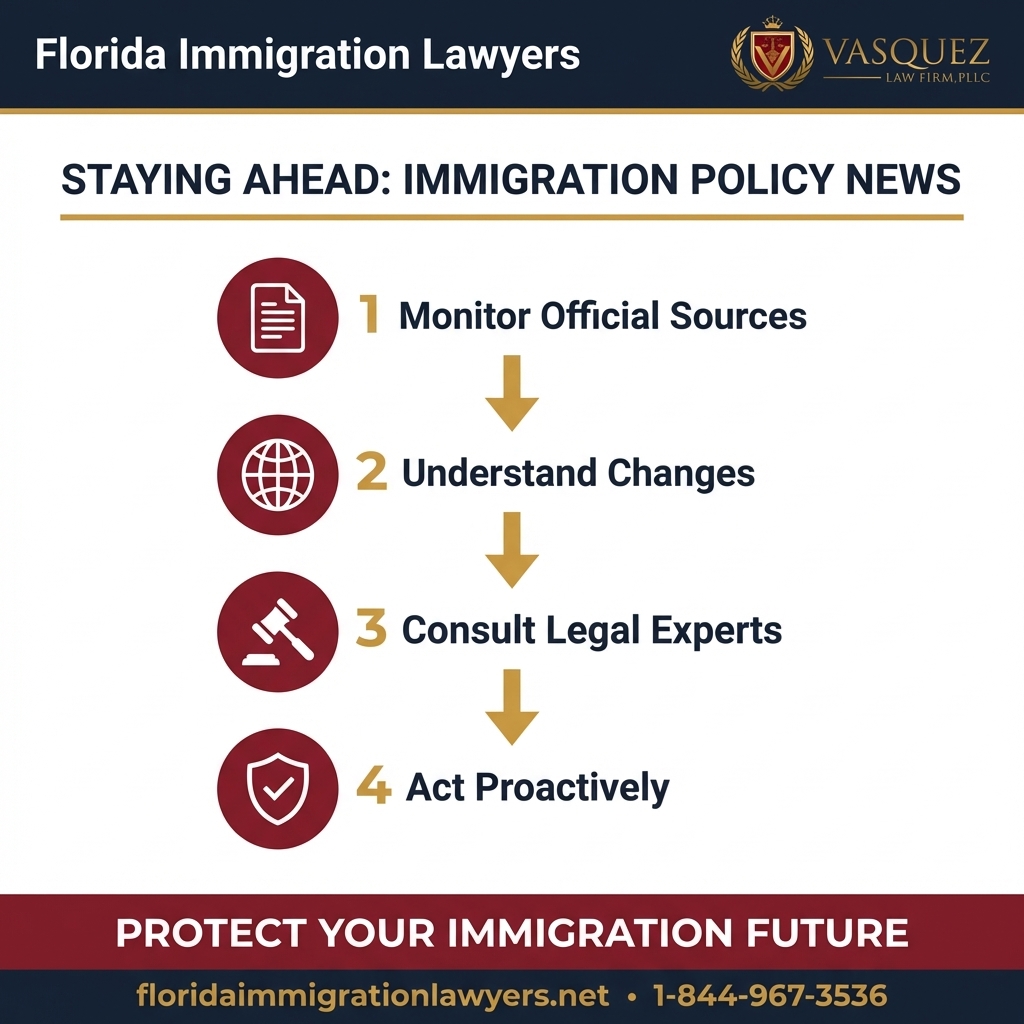
The current immigration policy news can feel overwhelming, but breaking down the process into manageable steps can help. Whether you are applying for a visa, seeking asylum, or defending against deportation, understanding the procedural aspects is key. This guide offers a general overview; remember that each case is unique.
-
Assess Your Current Immigration Status and Goals: Clearly understand your current legal status and what you aim to achieve—permanent residency, citizenship, or a specific visa type. This forms the foundation of your strategy and helps avoid common pitfalls. Consulting with an attorney is often beneficial at this stage.
-
Stay Informed on Relevant Policy Updates: Immigration laws change frequently. Regularly check official government websites like USCIS.gov and Travel.State.Gov for the latest announcements. Understanding specific changes, such as new eligibility criteria or updated forms, is essential. For example, recent USCIS news today might announce new interview procedures.
-
Gather All Required Documentation: Compile all necessary documents based on your immigration goal. This typically includes identity, birth, marriage certificates, financial records, and police clearances. Ensure all foreign-language documents have certified English translations. Missing or incorrect documentation is a leading cause of delays.
-
Complete and File Your Application or Petition: Carefully fill out all forms, paying close attention to detail. Submit the completed application with all supporting documents and the correct filing fee to the appropriate agency. Always keep copies for your records and consider certified mail for tracking.
-
Attend Biometrics Appointments and Interviews: Prepare thoroughly for any required biometrics and interviews. Review your application and be truthful and concise. Consider having an attorney accompany you, especially for complex cases, to ensure your rights are protected.
-
Monitor Your Case Status and Respond to Requests: Regularly check your case status online. Respond promptly and thoroughly to any Request for Evidence (RFE) or Notice of Intent to Deny (NOID). Failing to respond or submitting insufficient evidence can lead to a denial. Keep all contact information updated with USCIS.
Essential Document Checklist for Immigration Policy Updates
Thorough preparation of documents is crucial for any successful immigration application, especially with dynamic immigration policy news. Specific requirements vary, but many core documents are universally important. Always refer to the specific instructions for the form you are filing on the USCIS website for the most accurate and up-to-date document requirements.
- Proof of Identity: Valid passport, birth certificate (with translation).
- Proof of Legal Status: Current visa stamps, I-94, Green Card (I-551), EAD (I-766), Notices of Action (I-797).
- Biographical Documents: Marriage/divorce certificates, children's birth certificates, police clearance.
- Financial Support Documents: Affidavit of Support (I-864), sponsor's tax returns, employment verification, bank statements.
- Education/Employment Records: Diplomas, transcripts, employment history, offer letters.
- Medical Examination: Completed Form I-693 from a USCIS-approved civil surgeon.
- Photos: Recent passport-style photographs.
- Court/Criminal Records: Certified copies of any arrest records or court dispositions.
Immigration Processing Timelines and Expectations in Florida
Immigration processing times vary significantly due to application type, specific USCIS service center or field office, and current caseloads. The latest USCIS news today often includes updates on these timelines. Applicants in Coral Springs and across Florida should be prepared for potential fluctuations. You can check estimated processing times directly on the USCIS website, but these are estimates, not guarantees.
Factors influencing your timeline include the application type (e.g., immediate relative vs. preference categories), the specific service center (e.g., Miami or Orlando Field Office), the completeness of your application, and changes in immigration policy. All applicants undergo security checks, which can also be unpredictable. While some applications might be processed in months, complex cases can take years. Managing expectations and planning accordingly is essential. Our attorneys can provide realistic estimates based on your case specifics.
Cost Factors and Fee Breakdown for Immigration Services
Navigating the immigration process involves various costs beyond just legal fees. Understanding these expenses is crucial for proper financial planning. The primary categories include government filing fees, legal fees, and miscellaneous expenses. Always check the official USCIS website for the most current government fees, as they are subject to change.
- Government Filing Fees: These include USCIS fees for forms like petitions, adjustments of status, naturalization, and biometric services. Department of State fees apply for consular processing abroad. Medical examination fees are paid directly to the civil surgeon.
- Legal Fees for Attorney Assistance: The cost of hiring an immigration attorney varies by case complexity and attorney experience. Florida Immigration Lawyers offers transparent fee structures, often flat-fee, covering services like case assessment, document preparation, and interview representation. Investing in legal counsel can significantly improve your outcome.
- Miscellaneous Expenses: These include fees for certified translations of foreign-language documents, photocopying, mailing, and travel expenses for appointments or consultations.
While government fees are non-negotiable, our firm offers free consultations to discuss your case and provide an estimate of legal costs. We believe in accessible legal representation.
The intricacies of immigration policy news and its practical application can be daunting. Navigating complex legal forms, understanding ever-changing regulations, and preparing for interviews requires a precise and knowledgeable approach. Do not navigate this process alone. The stakes are too high to risk errors or misunderstandings that could jeopardize your future in Florida.
For expert guidance tailored to your unique situation, contact Florida Immigration Lawyers today. Our team is ready to provide the dedicated support you need, ensuring every step of your immigration journey is handled with professionalism and care. We are here to advocate for you.
Common Mistakes to Avoid in Florida Immigration Cases
-
Submitting Incomplete or Inaccurate Applications: Failing to provide all required information or providing incorrect details is a leading cause of delays or denials. Always double-check every entry and cross-reference with official instructions to avoid RFEs.
-
Missing Deadlines: Immigration processes have strict deadlines. Missing one can lead to case closure, denial, or even a deportation order. Maintain a meticulous calendar and be aware of all critical dates.
-
Failing to Disclose Criminal History: Hiding past arrests or convictions, even minor ones, is a severe mistake. Immigration authorities have extensive databases, and undisclosed information can lead to permanent bars or criminal charges. Always be truthful with your attorney.
-
Not Updating Your Address with USCIS: You are legally required to inform USCIS of any address change within 10 days by filing Form AR-11. Failure to do so can result in missed notices, appointments, or RFEs, leading to case abandonment.
-
Traveling Without Proper Authorization: Many immigrants with pending applications cannot travel internationally without specific advance parole. Leaving the U.S. without this permission can abandon your pending application. Always consult your attorney before travel.
-
Providing Inconsistent Information: Discrepancies between current and previous filings, or statements to different agencies, can raise red flags. Be consistent and truthful in all interactions to avoid accusations of fraud or misrepresentation.
-
Failing to Seek Legal Advice: Attempting to navigate complex immigration laws without legal counsel is a significant risk. The latest immigration policy news can introduce nuances difficult for laypersons to interpret. Self-representation often leads to unforeseen complications and costly errors.
When to Call a Lawyer for Florida Immigration Matters
Given the complexity and frequent changes in immigration policy news, knowing when to seek professional legal assistance is crucial. While some straightforward cases might seem manageable, even minor errors can have severe, long-lasting consequences. Here are specific scenarios where contacting Florida Immigration Lawyers is highly recommended:
- Facing Deportation or Removal Proceedings: If you have received a Notice to Appear (NTA), immediate legal representation for deportation defense is essential.
- Previous Denials or Complex Immigration History: Past visa denials, overstays, or other violations make your case complex. An attorney can analyze your history and identify potential waivers.
- Criminal Record Concerns: Any arrest or conviction can have significant immigration consequences. An attorney can assess the impact of your criminal record.
- Seeking Asylum or Refugee Status: Asylum claims are intricate and require deep legal understanding. An attorney specializing in asylum law can help build a strong case.
- Marriage-Based Green Card Applications: Proving the bona fides of a marriage is critical. An attorney can help gather evidence and prepare for the interview.
- Employment-Based Immigration: Businesses and individuals navigating work visas face specific requirements. A business immigration lawyer ensures compliance and efficient processing.
- Citizenship and Naturalization Issues: For eligibility questions, denials, or application assistance for citizenship, legal guidance is invaluable.
- Any Doubts or Uncertainty: If you feel overwhelmed or unsure about the best path forward, a free consultation with Florida Immigration Lawyers can provide clarity.
Our experienced attorneys at Florida Immigration Lawyers understand the nuances of both federal and Florida-specific immigration laws. We serve clients across the state, including Coral Springs, Miami, Tampa, and Orlando. We offer comprehensive support for all your immigration needs, including family immigration.
People Also Ask About Florida Immigration Policy News
We understand that the evolving landscape of immigration law generates many questions. Here, we address some common inquiries related to immigration policy news in Florida:
-
What's happening with immigration in Florida?
In 2026, Florida continues to see a dynamic interplay of state and federal immigration policies. State laws often focus on employer verification and access to state resources, while federal policies govern visas, green cards, and citizenship. Ongoing legislative efforts and enforcement initiatives impact immigrants and their families across the state, from Jacksonville to Coral Springs. The goal is often to balance economic needs with enforcement priorities.
-
Can ICE legally ask for ID?
Yes, agents from U.S. Immigration and Customs Enforcement (ICE) can legally ask for identification. If you are not a U.S. citizen, you are generally required to carry proof of your immigration status (e.g., green card or visa). If you are a U.S. citizen, carrying ID is not legally required, but it can help establish your identity. Regardless of status, you have the right to remain silent and to speak with an attorney.
-
Can a green card holder still be deported?
Yes, a green card holder (Lawful Permanent Resident) can still be deported under certain circumstances. Grounds for deportation (removal) include committing certain crimes like aggravated felonies, engaging in marriage fraud, or failing to register a change of address. While green card holders have more protections, their status is not absolute. Consulting with a deportation defense lawyer is critical if you face such allegations.
-
Who will be affected by new immigration rules?
New immigration rules can affect a broad spectrum of individuals and entities: undocumented immigrants, lawful permanent residents, temporary visa holders (e.g., H-1B, F-1 students), U.S. citizens sponsoring family, and businesses employing foreign workers. Changes can impact eligibility, application processes, enforcement actions, and travel. Staying informed about the latest immigration policy news is vital for everyone involved in Florida's immigration system.
About Florida Immigration Lawyers Section
At Florida Immigration Lawyers, we are a leading immigration law firm dedicated to serving individuals, families, and businesses throughout Florida. With offices conveniently located across the state, we provide comprehensive legal representation for a wide range of immigration matters. Our experienced attorneys are committed to helping you navigate the complexities of U.S. immigration law with confidence and peace of mind.
We understand that every immigration journey is unique and often challenging. That's why we offer personalized attention, strategic advice, and compassionate support to each of our clients. Our services include family-based immigration, employment visas, deportation defense, asylum claims, naturalization, and more. We pride ourselves on our deep knowledge of federal immigration laws and their intersection with Florida-specific regulations.
Why choose Florida Immigration Lawyers? We offer free consultations, are available 24/7 to address your urgent needs, and are fluent in English and Spanish, ensuring clear communication. Our firm is built on a foundation of integrity, advocacy, and a genuine commitment to achieving the best possible outcomes for those we serve. Let us be your trusted partner in your immigration journey.
Contact us today: Call 1-844-967-3536 or visit our website at https://www.floridaimmigrationlawyers.net. We are here to help you secure your future in Florida.
Sources and References
- U.S. Citizenship and Immigration Services (USCIS)
- USCIS Check Case Processing Times
- U.S. Department of State (Travel.State.Gov)
- Executive Office for Immigration Review (EOIR)
- 8 U.S.C. Chapter 12 - Immigration and Nationality Act (INA)
- 8 CFR - Code of Federal Regulations related to Immigration
- INA § 212 - General Classes of Aliens Ineligible for Visas and Admission; Waivers of Inadmissibility
- INA § 237 - Deportable Aliens
This article provides general legal information and is not intended as legal advice. Every case is unique, and outcomes depend on specific facts and circumstances. The information presented reflects the understanding of immigration policy news as of 2026 and is subject to change. Contact an attorney for advice about your particular situation.
The landscape of immigration policy news in Florida is dynamic and requires vigilant attention. We encourage you to stay informed and seek professional legal counsel for any questions or concerns regarding your immigration status or future plans. Protecting your future and the future of your loved ones in Florida is our priority.
Do not navigate these complex waters alone. For expert legal guidance and a clear path forward, call Florida Immigration Lawyers at 1-844-967-3536 for a free consultation. Se Habla Español - Estamos aquí para ayudarle.
Do Not Navigate This Process Alone
Our experienced immigration attorneys are ready to fight for you. Get a free, confidential consultation today.
Se Habla Español
Or leave your details and we’ll call you:
Free Evaluation in 24 Hours
Or talk to us right now

AI voice assistant — available 24/7
FreeFrequently Asked Questions

William J. Vásquez
Founding Attorney · Vasquez Law Firm
U.S. Air Force veteran and immigration attorney with years of hands-on U.S. immigration experience. J.D., NCCU School of Law. AILA member. Admitted to the 4th, 5th, and 11th Circuit Courts.
Available 24/7 - Free Evaluations
Reviewed for legal accuracy by William J. Vásquez
Licensed in North Carolina; U.S. immigration is federal practice.
Related Legal Services
Our Florida immigration attorneys can help you with free immigration consultation, experienced immigration attorneys and business immigration. Call today at 1-844-967-3536 for a free consultation.
Related Links
Related Topics
Free Legal Consultation
Discuss your case with our experienced attorneys. We're available 24/7.
Se Habla Español - Estamos aquí para ayudarle.
Related Articles
I-601 Waiver Lawyer Florida: Comprehensive Guide 2026
For many immigrants in Florida, overcoming grounds of inadmissibility is a critical step towards securing their future in the U.S. An I-601 waiver provides a pathway to address issues like unlawful presence, certain criminal convictions, or immigration fraud. This comprehensive guide, relevant for 2026, explains who needs an I-601 waiver, how to prove "extreme hardship" to a qualifying U.S. citizen or lawful permanent resident relative, and the step-by-step application process. We also cover typical timelines, cost factors, and crucial mistakes to avoid. Florida Immigration Lawyers offers expert guidance for I-601 waiver applications across the state, ensuring you build the strongest possible case and navigate the complex legal requirements effectively. Contact us for a free consultation to discuss your specific situation.
Immigration Lawyer Orlando Free Consultation in 2026
Navigating the complexities of U.S. immigration law requires expert guidance. For those in Orlando and across Florida, a free consultation with an immigration lawyer can provide crucial insights into your legal options without financial commitment. This comprehensive guide from Florida Immigration Lawyers details why an initial consultation is essential, what services immigration attorneys offer, the step-by-step process, typical timelines, and associated costs. We also highlight common mistakes to avoid and when it's critical to seek professional legal assistance. Our firm serves all of Florida, including Naples and Collier County, ensuring accessible, high-quality representation for families, businesses, asylum seekers, and individuals facing deportation. Understand your rights and build a strong case with trusted legal partners.
Stem OPT Immigration Lawyer: 2026 Florida Guide
For F-1 students in Florida, the STEM OPT extension offers a vital 24-month work authorization after their initial OPT. This guide, updated for 2026, covers eligibility, the step-by-step application process, required documents, and critical timelines. Graduates from Florida universities in STEM fields must navigate strict USCIS regulations, including the E-Verify employer requirement. Learn how to avoid common mistakes and when to seek professional legal assistance from a dedicated stem OPT immigration lawyer to ensure a successful application and continued career growth in the U.S. Florida Immigration Lawyers offers expert guidance for students across the state.
Dual Citizenship Lawyer: Navigating Delays in Florida
Facing citizenship delays in Florida can be challenging, but understanding the process and knowing your options is key. Learn how a dual citizenship lawyer can assist you in navigating N-400 processing and USCIS backlogs in Hialeah.