Exclusive Citizenship Act of 2025: Florida Immigration &
The proposed Exclusive Citizenship Act of 2025 (S.3283) aims to mandate sole allegiance to the U.S., potentially impacting dual citizenship. As of March 2026, this bill has a very low likelihood of passing and is not current law. This comprehensive guide from Florida Immigration Lawyers explores the bill's status, outlines the existing U.S. citizenship process in Florida, details necessary documents, processing timelines, and cost factors. We also highlight common mistakes to avoid and when legal counsel is essential, especially for residents in Homestead and across Florida. Stay informed about your rights and options for U.S. citizenship. Contact us for expert guidance.

The Exclusive Citizenship Act of 2025 (S.3283) is a proposed federal bill that aims to mandate sole allegiance to the United States, potentially impacting dual citizenship. As of March 2026, this bill remains in its early stages of introduction in Congress with a very low probability of passing. It is not current law and does not affect the existing U.S. citizenship process in Florida or nationwide.
- The Act is a proposed bill, not current law.
- It aims to require sole allegiance to the U.S., potentially restricting dual citizenship.
- As of March 2026, its legislative status indicates a low likelihood of passage.
- Existing U.S. citizenship laws and processes remain unchanged.
- Consult an immigration lawyer for accurate information and guidance on your specific situation.
Exclusive Citizenship Act of 2025: Florida Immigration & Your Rights
As residents of Florida, a state with a vibrant and diverse immigrant community, you may have heard discussions about the proposed Exclusive Citizenship Act of 2025. This legislation has sparked questions and concerns among many, particularly those who hold or are seeking dual citizenship. Understanding the facts about this bill, its current status, and what it might mean for your immigration journey is crucial.
At Florida Immigration Lawyers, we understand the anxieties that proposed immigration legislation can cause. Our goal is to provide clear, accurate, and up-to-date information to help you navigate the complexities of U.S. immigration law. We are here to ensure you understand your rights and options.
This comprehensive guide will delve into the specifics of the Exclusive Citizenship Act of 2025, its current legislative standing, and what it could mean for individuals in Florida. We will also outline the existing U.S. citizenship process, offer practical advice, and explain when professional legal assistance is indispensable. If you have immediate concerns or questions, do not hesitate to call Florida Immigration Lawyers at 1-844-967-3536 for a free consultation.
Understanding the Exclusive Citizenship Act of 2025: A Florida Perspective
The Exclusive Citizenship Act of 2025, identified as S.3283, is a bill introduced in the U.S. Senate. Its primary objective is to establish that citizens of the United States shall owe sole and exclusive allegiance to the United States. In essence, this proposed act seeks to eliminate dual citizenship, requiring individuals to renounce any foreign citizenship to maintain U.S. citizenship.
It is vital to stress that as of March 2026, this is a proposed bill and not an enacted law. Legislative tracking indicates that S.3283 remains in the early stages of the legislative process, with a very low probability of passing into law. Many bills are introduced each session but do not advance beyond committee review.
Florida, particularly areas like Homestead, Miami, and Orlando, is home to a significant population of dual nationals and individuals with strong ties to their countries of origin. If the Exclusive Citizenship Act of 2025 were to pass, it would represent a monumental shift in U.S. immigration policy, impacting countless individuals and families across our state. For current information on federal legislation, you can consult Congress.gov.
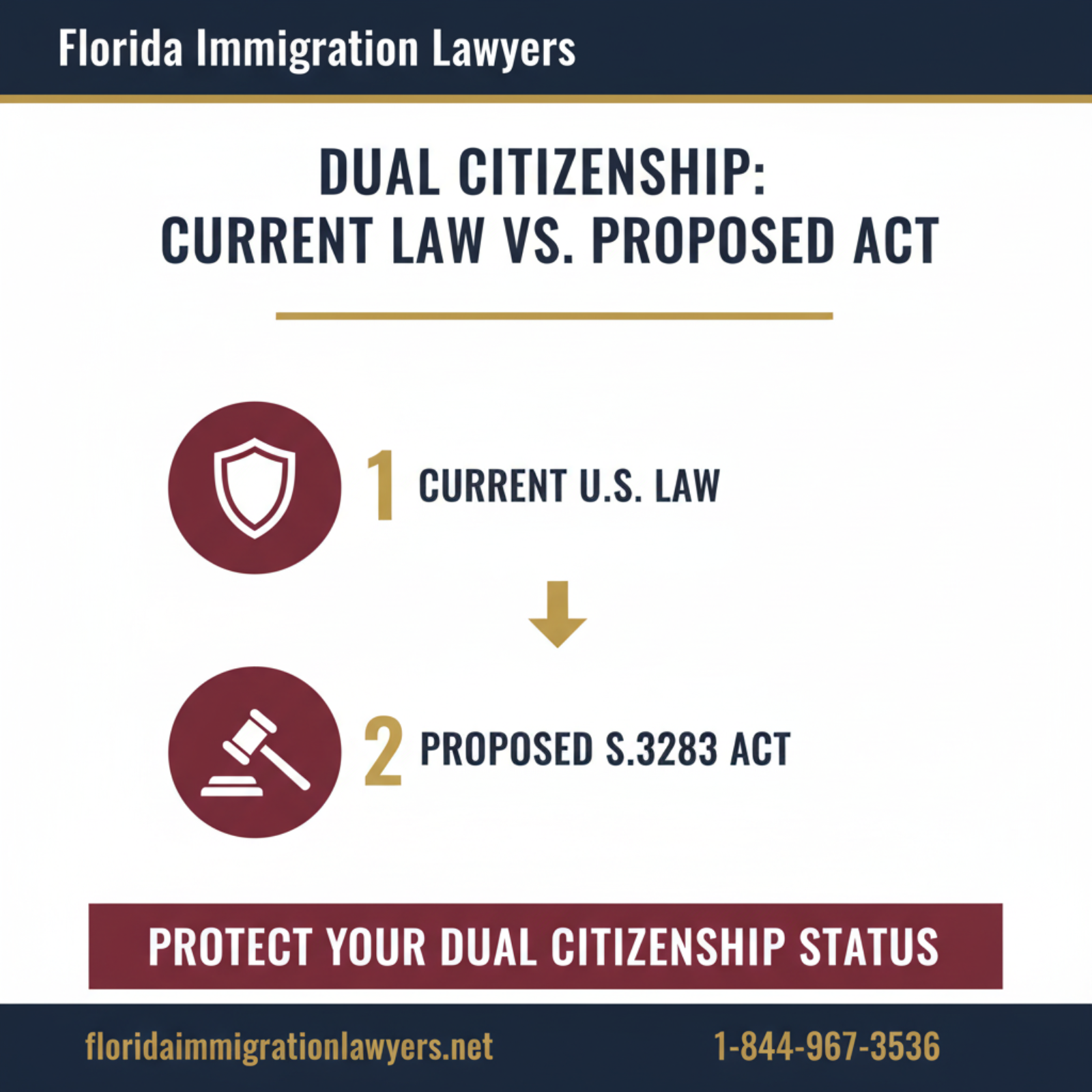
Currently, U.S. law generally permits dual citizenship. The U.S. government does not require you to choose between your U.S. citizenship and citizenship of another country. This proposed act aims to fundamentally alter that long-standing principle, creating uncertainty for those who value their connections to multiple nations.
Our firm, Florida Immigration Lawyers, closely monitors all legislative developments that could impact our clients. We understand that even the proposal of such an act can cause significant worry. We are dedicated to keeping you informed about the status of the Exclusive Citizenship Act of 2025 and any other relevant immigration law changes.
Navigating Potential Changes: The Citizenship Process in Florida
Given that the Exclusive Citizenship Act of 2025 is not law, the path to U.S. citizenship remains governed by existing statutes, primarily the Immigration and Nationality Act (INA). The naturalization process is a structured journey that requires careful attention to detail and adherence to specific eligibility criteria. Here is a step-by-step guide to the current U.S. citizenship process, applicable to residents across Florida, including Homestead and surrounding communities:
-
Determine Your Eligibility: Before applying, you must meet several requirements. Generally, you must be 18 years old, a lawful permanent resident (Green Card holder) for at least 5 years (or 3 years if married to a U.S. citizen), demonstrate continuous residence and physical presence in the U.S., possess good moral character, and be able to read, write, and speak basic English. You must also have knowledge of U.S. history and government.
-
Prepare and File Form N-400, Application for Naturalization: This is the official application form for U.S. citizenship. You will need to gather extensive documentation to support your application, ensuring all information is accurate and complete. Filing fees are required, though fee waivers may be available for eligible applicants.
-
Attend a Biometrics Appointment: After filing your N-400, USCIS will send you an appointment notice for biometrics collection. This involves fingerprinting, photographs, and a signature, primarily for background checks and identity verification. USCIS has field offices throughout Florida, including in Miami, Orlando, and Tampa, where these appointments typically occur.
-
Complete the Naturalization Interview: You will be scheduled for an interview with a USCIS officer. During the interview, the officer will review your N-400 application, ask questions about your eligibility, and administer the English and civics tests. It is crucial to be prepared to discuss your application thoroughly.
-
Receive a Decision from USCIS: Following your interview, USCIS will issue a decision. This could be an approval, a request for additional evidence, or a denial. If approved, you will typically receive a notice for an Oath of Allegiance ceremony.
-
Take the Oath of Allegiance: The final step to becoming a U.S. citizen is attending an Oath of Allegiance ceremony. During this ceremony, you will pledge your allegiance to the United States. Upon taking the oath, you will receive your Certificate of Naturalization, officially making you a U.S. citizen. For more detailed information on the naturalization process, visit our Citizenship practice area page.
It is important to remember that if a bill like the Exclusive Citizenship Act of 2025 were to pass, future naturalization processes could be significantly altered, potentially requiring renunciation of other citizenships. However, as of today, this is not the case.
Essential Documents for Naturalization: Your Checklist
A complete and accurate application package is vital for a smooth naturalization process. Missing or incorrect documents can lead to delays or even denial. Below is a general checklist of documents you will typically need to prepare for your N-400 application. Always refer to the specific USCIS instructions for the most up-to-date requirements.
- Your Permanent Resident Card (Green Card)
- State-issued identification (driver's license or ID card)
- All passports (U.S. and foreign, current and expired)
- Marriage certificate (if applicable, especially for 3-year eligibility)
- Divorce decrees or death certificates of former spouses (if applicable)
- Birth certificates of your children (if applicable)
- Tax returns for the past 5 years (or 3 years, if applicable)
- Proof of selective service registration (for males aged 18-26)
- Court disposition records for any arrests or citations (even if dismissed)
- Records of trips outside the U.S. (dates of departure and return)
- Proof of payment for child support or alimony (if applicable)
- Evidence of good moral character (e.g., community involvement, stable employment)
Timeline and Processing Expectations for Florida Applicants
The time it takes to become a U.S. citizen can vary significantly based on several factors, including the USCIS field office processing your application, the completeness of your submission, and current agency backlogs. For applicants in Florida, processing times can differ between offices like Miami, Orlando, and Tampa.
Generally, from the time you file your N-400 application to the Oath of Allegiance ceremony, the process can take anywhere from 8 to 24 months, or even longer in some cases. USCIS regularly updates its processing times online, which you can check using their Case Processing Times tool. This tool allows you to select your form type (N-400) and the specific USCIS field office or service center handling your case.
Factors that can influence your timeline include:
- The volume of applications at your local USCIS office.
- The complexity of your individual case (e.g., criminal history, extensive travel).
- How quickly you respond to Requests for Evidence (RFEs) from USCIS.
- Unexpected delays due to policy changes or administrative backlogs.
Understanding the Costs: Fees for Citizenship Applications
Applying for U.S. citizenship involves certain fees that are subject to change by USCIS. While we cannot provide specific amounts here, it is important to budget for these costs. The primary fee is for filing Form N-400, Application for Naturalization. This fee typically includes the cost of biometrics services.
USCIS occasionally adjusts these fees, so it is crucial to check the most current fee schedule on the official USCIS website before filing your application. There may also be additional costs associated with obtaining necessary documents, such as birth certificates, marriage licenses, or court records.
For individuals who meet specific income guidelines, USCIS offers fee waivers. If you believe you may be eligible for a fee waiver, you can file Form I-912, Request for Fee Waiver. This can significantly reduce the financial burden of the application process. Our team at Florida Immigration Lawyers can help you understand the current fees and assess your eligibility for a fee waiver. We recommend a consultation to discuss your specific financial situation.
Do not navigate this process alone. Contact Florida Immigration Lawyers today.
Common Mistakes to Avoid in Your Citizenship Application
The naturalization process is complex, and even minor errors can lead to significant delays or even denial. Being aware of common pitfalls can help you avoid them. Here are some mistakes frequently made by applicants in Florida:
-
Incomplete or Inaccurate Application: Failing to answer all questions truthfully and completely, or submitting an application with missing information, is a common reason for delays or rejections. USCIS expects meticulous detail.
-
Misunderstanding Eligibility Requirements: Many applicants mistakenly believe they meet all criteria when they do not, particularly concerning continuous residence, physical presence, or good moral character. This can lead to a wasted application fee and time.
-
Undisclosed Criminal History: Attempting to hide arrests, citations, or convictions, even minor ones, is a serious offense that can lead to a finding of lack of good moral character and potential deportation. Always disclose all incidents, regardless of outcome.
-
Failing to Update Address with USCIS: If you move, you are legally required to notify USCIS within 10 days using Form AR-11. Failure to do so can result in missed notices, interview appointments, and severe processing delays.
-
Poor Preparation for the Interview: Not studying for the English and civics tests, or being unable to articulate details from your application, can lead to failure and a need to reschedule, prolonging the process.
-
Long Absences from the U.S.: Extended trips outside the United States can break your continuous residence requirement, making you ineligible for naturalization. Understand the rules regarding absences before traveling.
-
Not Maintaining Good Moral Character: Engaging in activities that demonstrate a lack of good moral character during the statutory period (e.g., tax evasion, certain criminal acts) can disqualify you from citizenship.
-
Ignoring USCIS Requests for Evidence (RFEs): Failing to respond to RFEs by the deadline, or providing insufficient evidence, will almost certainly lead to a denial of your application.
-
Submitting Outdated Forms or Incorrect Fees: USCIS forms and fees are subject to change. Using an old form version or sending an incorrect payment amount will result in your application being rejected.
-
Lack of Legal Guidance: Attempting to navigate the complex naturalization process without consulting an experienced immigration lawyer can lead to avoidable errors and missed opportunities.
When to Call a Lawyer for Your Citizenship Journey in Florida
While some naturalization cases are straightforward, many situations benefit immensely from the guidance of an experienced immigration attorney. If you are considering applying for U.S. citizenship, especially in light of proposed legislation like the Exclusive Citizenship Act of 2025, consulting a lawyer is a prudent step.
You should strongly consider contacting Florida Immigration Lawyers if any of the following apply to your situation:
- You have any criminal history, even minor arrests or citations.
- You have previously been denied naturalization or had an immigration application denied.
- You have taken multiple or extended trips outside the U.S. during your permanent residency.
- You have concerns about meeting the good moral character requirement.
- You are a dual national and are worried about the implications of the Exclusive Citizenship Act of 2025 if it were to pass.
- You have complex family situations, such as divorce, child support issues, or children born abroad.
- You have received a Request for Evidence (RFE) or a Notice of Intent to Deny (NOID) from USCIS.
- You have questions about disability waivers for the English or civics tests.
- You require assistance with asylum or deportation defense, which can impact citizenship eligibility.
- You need guidance on family-based immigration or business immigration matters that could affect your path to naturalization.
Our attorneys at Florida Immigration Lawyers are well-versed in the nuances of U.S. immigration law. We can help you prepare a strong application, represent you at interviews, and address any challenges that arise. We serve clients throughout Florida, including Homestead, Miami, Orlando, and Tampa, ensuring personalized and effective legal strategies for your unique case.
About Florida Immigration Lawyers
Florida Immigration Lawyers is a leading law firm dedicated to providing exceptional legal representation to immigrants across the entire state of Florida. With years of experience and a deep understanding of complex U.S. immigration laws, we are committed to guiding individuals and families through every step of their immigration journey.
Our firm offers a comprehensive range of immigration services, including naturalization, family-based petitions, employment visas, asylum applications, deportation defense, and more. We pride ourselves on our client-focused approach, empathetic advocacy, and unwavering dedication to achieving the best possible outcomes for those we serve.
Why choose Florida Immigration Lawyers? We are available 24/7 to address your urgent concerns, offer free consultations to discuss your case without financial commitment, and possess a proven track record of success. Our team is bilingual, with fluent Spanish speakers ready to assist you. We serve all of Florida, from Homestead to Jacksonville, ensuring expert legal support is always within reach.
Your immigration future is too important to leave to chance. Trust the experienced professionals at Florida Immigration Lawyers to be your advocates. Call us today at 1-844-967-3536 or visit our website: https://www.floridaimmigrationlawyers.net.
Sources and References
- U.S. Citizenship and Immigration Services (USCIS)
- S.3283 - Exclusive Citizenship Act of 2025 (Congress.gov)
- USCIS Filing Fees
- USCIS Case Processing Times
- 8 U.S.C. Chapter 12 - Immigration and Nationality Act (INA)
- INA § 316 - Requirements for Naturalization
- 8 CFR Part 316 - General Requirements for Naturalization
This article provides general legal information and is not intended as legal advice. Every case is unique, and outcomes depend on specific facts and circumstances. Contact an attorney for advice about your particular situation.
The journey to U.S. citizenship can be complex, and the landscape of immigration law is constantly evolving. While the Exclusive Citizenship Act of 2025 remains a proposed bill, staying informed and prepared is always the best approach. Our team at Florida Immigration Lawyers is here to provide the clarity and support you need.
Do not face your immigration challenges alone. We are committed to protecting your rights and helping you achieve your American dream. Call Florida Immigration Lawyers at 1-844-967-3536 for a free consultation today. Se Habla Español - Estamos aquí para ayudarle.
Do Not Navigate This Process Alone
Our experienced immigration attorneys are ready to fight for you. Get a free, confidential consultation today.
Se Habla Español
Frequently Asked Questions
Florida Immigration Lawyers
Immigration Attorney | Founder, Vasquez Law Firm
U.S. Air Force veteran and immigration attorney with thousands of cases resolved. J.D., NCCU School of Law. AILA member. Admitted to the 4th, 5th, and 11th Circuit Courts.
Available 24/7 - Free Evaluations
Related Legal Services
Our Florida immigration attorneys can help you with immigration practice areas, free immigration consultation and experienced immigration attorneys. Call today at 1-844-967-3536 for a free consultation.
Related Links
Related Topics
Free Legal Consultation
Discuss your case with our experienced attorneys. We're available 24/7.
Se Habla Español - Estamos aquí para ayudarle.
Related Articles
H-2A Visa Guide for Florida Agricultural Workers | VLF Florida
Discover how the H-2A visa program can assist Florida growers in hiring temporary agricultural workers. Learn about eligibility, application process, and legal support available. Contact Florida Immigration Lawyers for a free consultation.
Immigration Bond Hearing in Florida: What You Need to Know
Navigating an immigration bond hearing in Florida can be daunting. Learn the process, necessary documents, and how legal guidance can aid your case. Contact Florida Immigration Lawyers at 1-844-967-3536 for expert assistance.
Understanding VAWA Self-Petition for Abused Spouses in Florida
Explore the VAWA self-petition process for abused spouses in Florida. Learn about eligibility, steps to file Form I-360, and resources available in Fort Lauderdale. Call Florida Immigration Lawyers at 1-844-967-3536 for a free consultation.
Withholding of Removal Defense in Florida | VLF Florida
Learn how withholding of removal can protect you from deportation in Florida. Explore the process, common mistakes, and seek legal advice. Call us for a free consultation.