DACA News 2026 Florida: Navigating Updates for Dreamers
For DACA recipients in Florida, particularly in Gainesville, 2026 brings ongoing legal challenges and crucial renewal considerations. While new DACA applications remain paused due to court rulings, current recipients can generally continue to renew their status, ensuring temporary protection from deportation and work authorization. This comprehensive guide details the renewal process, essential document checklists, and expected processing times. We also explore the complexities of Advance Parole and highlight common mistakes to avoid. Given the evolving legal landscape, understanding the implications of court decisions and state-specific nuances is vital. Florida Immigration Lawyers offers expert legal assistance to help Dreamers navigate these uncertainties, ensuring their rights are protected. Contact us for a free consultation to discuss your DACA status and future options.
DACA in 2026 remains a complex issue for Florida residents, with ongoing legal challenges impacting new applications while renewals generally continue. Dreamers in Gainesville and across Florida must stay informed about court decisions and USCIS guidance. Consulting an experienced immigration lawyer is crucial to navigate these uncertainties and protect your deferred action status.
- New DACA applications are generally not accepted.
- Renewals for current DACA recipients typically continue.
- Legal challenges, especially from the 5th Circuit, influence DACA's future.
- Florida-specific implications require careful attention.
- Seek legal counsel for personalized guidance.
Are you a DACA recipient in Florida, perhaps living in Gainesville, wondering about your status and future in 2026? The landscape of Deferred Action for Childhood Arrivals (DACA) is constantly evolving, bringing both hope and uncertainty to thousands of Dreamers across our state. Understanding the latest developments and how they might impact your life is paramount.
This comprehensive guide will delve into the current state of DACA, explain the renewal process, highlight potential challenges, and offer critical advice for navigating the year 2026. We understand the anxieties you may face, and our goal is to provide clear, actionable information. To discuss your specific situation and get personalized legal advice, do not hesitate to Call Florida Immigration Lawyers at 1-844-967-3536 for a free consultation.
Understanding DACA's Current Status in 2026 for Florida Residents
The Deferred Action for Childhood Arrivals program, established in 2012, has provided temporary relief from deportation and work authorization to eligible young immigrants. However, its future has been fraught with legal battles, particularly in recent years. As of 2026, the program continues to operate under significant judicial scrutiny.
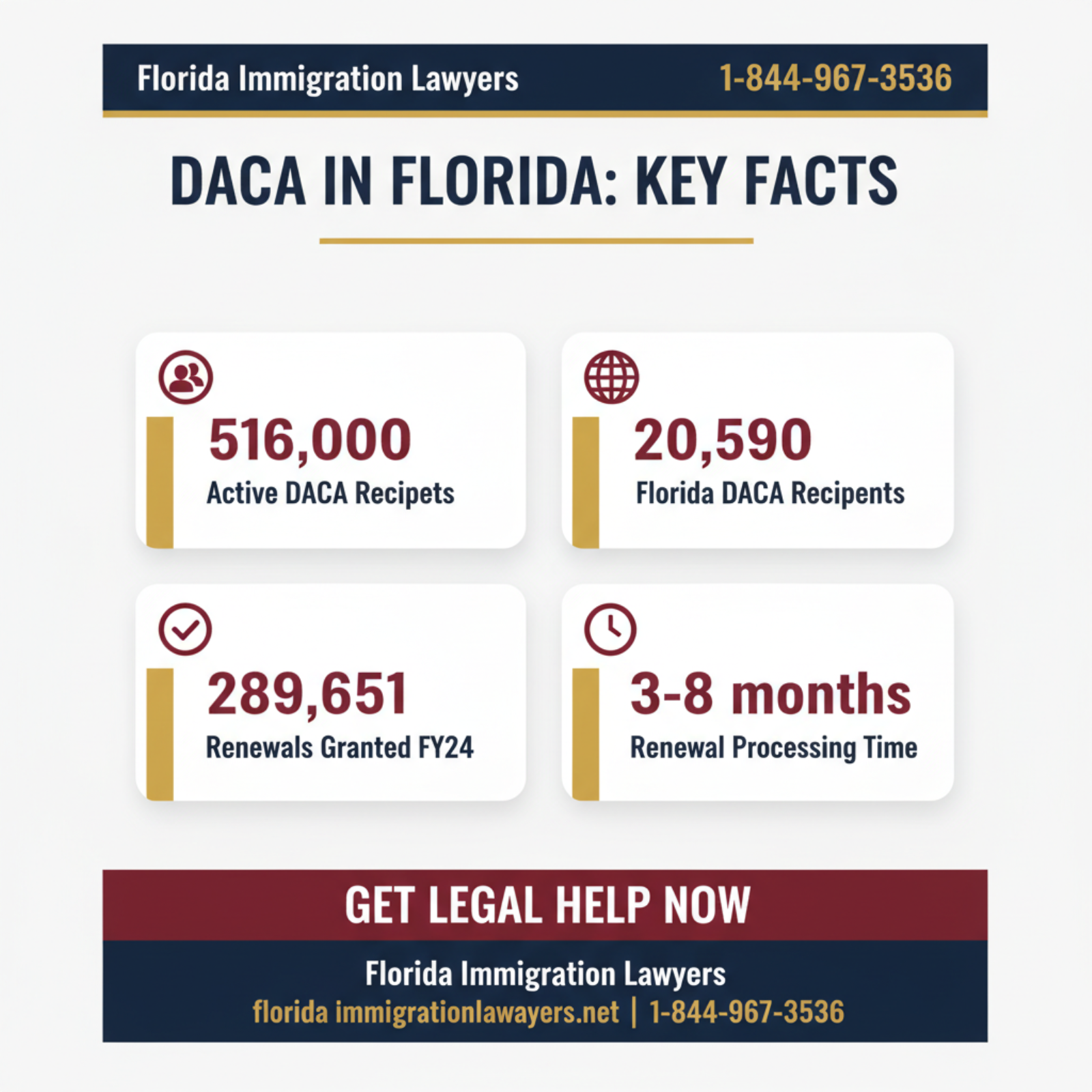
A key development impacting DACA recipients nationwide, including those in Florida, stems from the 5th U.S. Circuit Court of Appeals. This court has consistently ruled against the legality of the DACA program, affirming a lower court's decision. This means that while current DACA recipients can generally continue to renew their status, U.S. Citizenship and Immigration Services (USCIS) is prohibited from approving any new initial DACA requests.
For DACA recipients in Florida, this ongoing legal limbo creates considerable stress. Our state is home to a significant population of Dreamers, many of whom have built lives, pursued education, and contributed to our communities in cities like Gainesville, Orlando, and Miami. The uncertainty surrounding DACA's long-term viability means that while renewals are being processed, the pathway for new applicants remains closed.
It is natural to ask, "Should DACA be worried?" While the legal challenges are serious, current DACA recipients are generally protected from deportation as long as their status is valid. The primary concern is the inability to apply for initial DACA and the program's ultimate fate. Staying informed about court rulings and potential legislative efforts is crucial for all Florida Dreamers.
The legal framework governing DACA is complex, often referencing sections of the Immigration and Nationality Act (INA) and federal regulations. For example, 8 U.S.C. Chapter 12 broadly outlines immigration law, under which DACA was implemented as an exercise of prosecutorial discretion. Understanding these legal nuances requires expert guidance. You can find official updates on the program's status directly from U.S. Citizenship and Immigration Services (USCIS).
Navigating the DACA Renewal Process in 2026: A Step-by-Step Guide
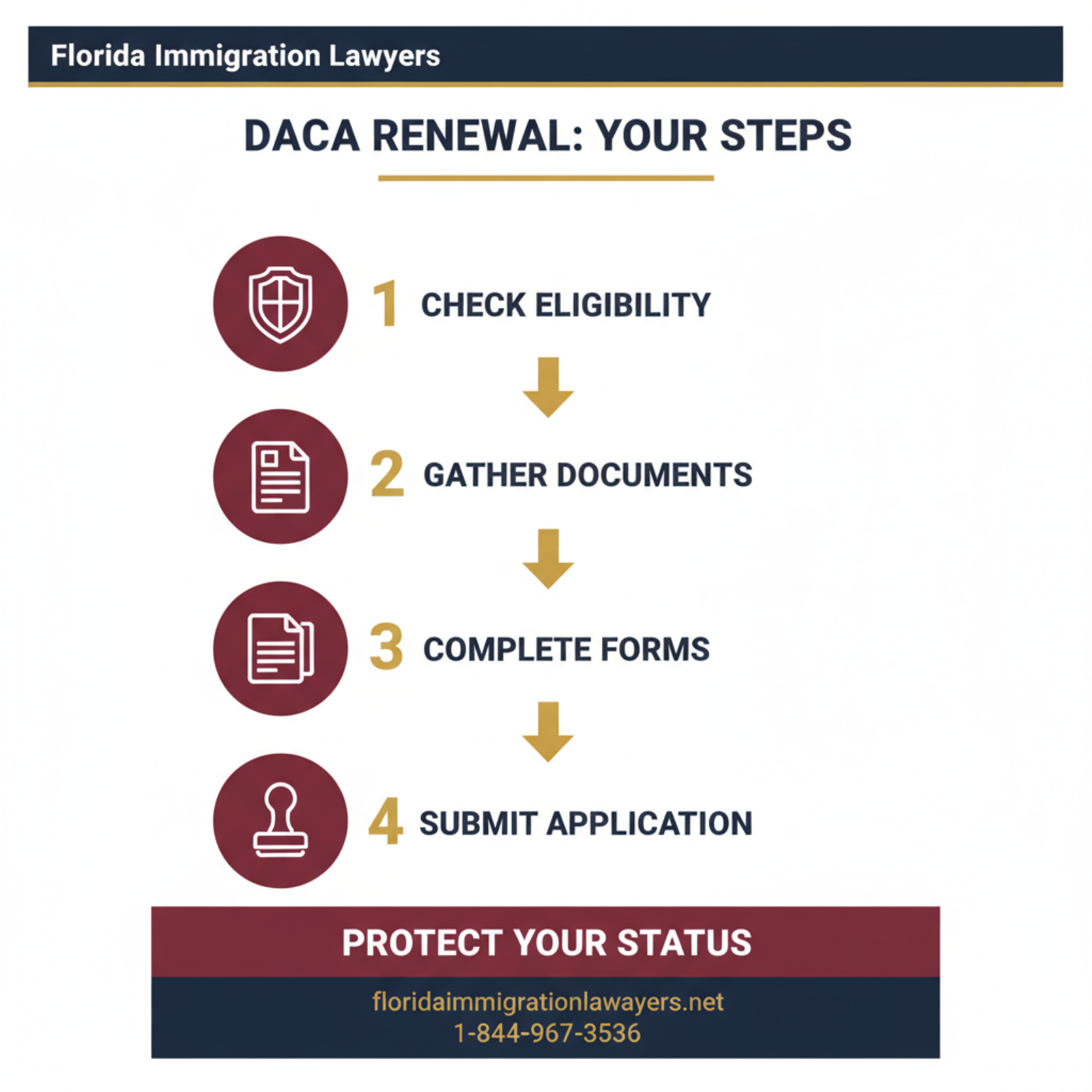
If you are a current DACA recipient in Florida, renewing your status is a critical step to maintain your protection from deportation and work authorization. The renewal process in 2026 largely mirrors previous years, but vigilance and timely action are essential. Here is a detailed step-by-step guide to help you through it:
-
Check Your Eligibility: Ensure you continue to meet all DACA eligibility criteria. This includes not having departed the U.S. without advance parole, not having been convicted of a felony or significant misdemeanor, and maintaining continuous residence in the U.S. since your last DACA approval.
-
Gather Necessary Documents: Collect all required supporting documentation. This typically includes copies of your previous DACA approval notices, employment authorization documents (EAD), and any documents proving continuous residence since your last renewal. We will detail a full document checklist in the next section.
-
Complete Forms I-821D, I-765, and I-765WS: You must accurately complete Form I-821D (Consideration of Deferred Action for Childhood Arrivals), Form I-765 (Application for Employment Authorization), and Form I-765WS (Worksheet). These forms are essential for both your deferred action and your work permit.
-
Pay the Required Fees: The DACA renewal process involves a filing fee for Form I-765 and a biometrics services fee. USCIS fees are subject to change, so always check the most current fee schedule on the USCIS website. Fee waivers are generally not available for DACA renewals, but always verify current policies.
-
Submit Your Application: Mail your completed forms, supporting documents, and payment to the appropriate USCIS Lockbox facility. It is highly recommended to send your application by certified mail with a return receipt requested to track delivery.
-
Attend Your Biometrics Appointment: After USCIS accepts your application, you will receive a notice to attend a biometrics appointment at an Application Support Center (ASC). This appointment is mandatory for fingerprinting and photographs. Be sure to attend on time and bring the required identification.
-
Receive a Decision: USCIS will review your application. If approved, you will receive a new I-797 approval notice and a new Employment Authorization Document (EAD). If there are issues, you may receive a Request for Evidence (RFE) or a Notice of Intent to Deny (NOID).
Starting your renewal process early is crucial. USCIS recommends filing your DACA renewal application 120 to 150 days before your current DACA and EAD expire. This timeframe helps account for potential processing delays and ensures you maintain continuous work authorization. For complex cases or any questions about eligibility, consulting with an attorney specializing in immigration law can provide invaluable peace of mind.
Essential Document Checklist for DACA Applications and Renewals
Successfully renewing your DACA status in 2026 hinges on submitting a complete and accurate application package. Missing documents or incomplete information can lead to delays or even denial. Here is a comprehensive DACA document requirements checklist:
- Completed Forms: Signed Form I-821D, Form I-765, and Form I-765WS. Ensure all sections are filled out accurately and completely.
- Proof of Identity: A copy of your birth certificate with a certified translation if not in English, passport identity page, or national identity card.
- Proof of Entry Before Age 16: Documents showing you entered the U.S. before your 16th birthday. Examples include school records, medical records, or travel documents.
- Proof of Continuous Residence: Evidence demonstrating you have continuously resided in the U.S. since your last DACA approval. This is a critical part of the DACA renewal list. Gather utility bills, bank statements, school transcripts, employment records, tax returns, or rental agreements from Florida addresses, including Gainesville, for the entire period.
- Proof of Educational Enrollment/Completion or Military Service: High school diploma or GED certificate, school transcripts, or military discharge papers (Form DD-214).
- Previous DACA Approval Notices: Copies of all prior Form I-797 DACA approval notices and Employment Authorization Documents (EADs).
- Photographs: Two recent, identical passport-style photographs. Write your A-Number lightly on the back of each photo.
- Arrest Records (if applicable): If you have any arrest records, even if charges were dismissed, you must provide certified court dispositions. Consult an attorney before submitting these.
Organizing these documents meticulously before submission will significantly streamline your DACA renewal process. Keep copies of everything you send to USCIS for your records.
DACA Processing Timelines and Expectations for 2026
Understanding the DACA processing times for 2026 is vital for planning and managing expectations. USCIS processing times can fluctuate based on application volume, staffing levels, and policy changes. While there is no guaranteed timeline, we can outline general expectations.
Typically, DACA renewal applications take several months to process. USCIS generally aims to process renewals within 3-5 months, but this can vary. Some applications may be processed faster, while others, especially those requiring additional review or a Request for Evidence (RFE), might take longer. It is not uncommon for DACA recipients in Florida to experience processing times that push close to their EAD expiration date, which underscores the importance of filing early.
You can monitor current processing times for Form I-821D and Form I-765 on the USCIS website. Select the form types and the service center to get an estimate. For DACA, applications are generally processed through specific service centers, regardless of your physical location in Florida.
Factors that can affect your DACA processing times include the completeness of your application, any past immigration history, and the volume of applications USCIS is currently handling. If your EAD is nearing expiration and you haven't received a decision, you may need to contact USCIS or your legal counsel for assistance. Remember that while your DACA is pending renewal, you are not authorized to work if your previous EAD has expired.
Understanding the Costs Associated with DACA Applications
The financial aspect of DACA renewals is an important consideration for many Dreamers in Florida. The costs primarily involve filing fees paid to USCIS, and potentially legal fees if you choose to work with an attorney. It is crucial to be aware of these expenses to budget accordingly.
As of early 2026, the USCIS filing fees for a DACA renewal application typically include a fee for Form I-765, Application for Employment Authorization, and a biometrics services fee. These fees are subject to change by USCIS, so it is imperative to always check the most current fee schedule on the official USCIS website before submitting your application. USCIS does not generally offer fee waivers for DACA applications, though there may be limited exemptions in very specific circumstances, which are rare and require verification.
Beyond the government filing fees, you should also consider the potential cost of legal assistance. While it is possible to file a DACA renewal application on your own, many DACA recipients, especially those with complex cases or concerns about the DACA class action lawsuits, choose to hire an experienced immigration lawyer. Legal fees can vary depending on the complexity of your case and the services provided. Investing in legal counsel can help ensure your application is accurate, complete, and submitted correctly, potentially preventing delays or denials.
For individuals in Gainesville and throughout Florida, understanding these cost factors is part of responsible planning for your DACA renewal. Be wary of unauthorized individuals offering to help with your application at unusually low prices or promising guaranteed outcomes, as this can lead to serious legal problems.
Exploring Advance Parole for DACA Recipients in Florida
Advance Parole offers a unique opportunity for DACA recipients to travel outside the United States and lawfully return. This is particularly relevant for those in Florida who may have family abroad or need to travel for educational, humanitarian, or employment purposes. Applying for Advance Parole requires careful consideration and adherence to specific guidelines.
To be eligible for Advance Parole (Form I-131, Application for Travel Document), DACA recipients must demonstrate a legitimate reason for travel. USCIS generally grants Advance Parole for three categories: humanitarian, educational, or employment purposes. For instance, traveling for medical treatment for a family member, attending an academic conference, or participating in overseas job training could qualify. It's important to specifically articulate the advance parole educational purpose if that's your reason.
The application process for Advance Parole is separate from your DACA renewal and involves submitting Form I-131 to USCIS, along with supporting documentation that substantiates your reason for travel. It is crucial to apply for Advance Parole well in advance of your intended travel date, as processing times can vary. Traveling outside the U.S. without an approved Advance Parole document can lead to severe consequences, including being barred from re-entry and potentially losing your DACA status.
While Advance Parole can offer significant benefits, it also carries risks. Even with an approved document, re-entry into the U.S. is not guaranteed, as Customs and Border Protection (CBP) officers retain final authority. Consulting with an attorney is highly recommended before applying for Advance Parole, especially if you have any prior immigration violations or criminal history. Our team at Florida Immigration Lawyers can help you assess your eligibility and navigate the complexities of international travel as a DACA recipient, including those seeking family-based immigration options.
Do not navigate this process alone. Contact Florida Immigration Lawyers today.
Common Mistakes to Avoid in Your DACA Renewal
Renewing your DACA status requires meticulous attention to detail. Even minor errors can lead to significant delays or even denial of your application. Here are some common mistakes DACA recipients in Florida should actively avoid:
-
Filing Late: Submitting your application too close to your current DACA expiration date can result in a lapse in your work authorization and protection from deportation. Aim to file 120-150 days before expiration.
-
Incomplete Application: Failing to fill out all required sections on Forms I-821D, I-765, and I-765WS, or not signing the forms, will lead to rejection or a Request for Evidence (RFE).
-
Missing Supporting Documents: Not including all necessary evidence, such as proof of continuous residence or copies of previous approval notices, can significantly delay processing.
-
Incorrect Fees: Submitting an incorrect payment amount or an outdated form of payment will cause your application to be rejected. Always verify the current USCIS fees.
-
Not Disclosing Criminal History: Failing to disclose any arrests, charges, or convictions, even if they were minor or dismissed, can be considered misrepresentation and lead to denial. Always provide certified court dispositions.
-
Traveling Without Advance Parole: Leaving the U.S. without an approved Advance Parole document will likely result in you being unable to re-enter and could lead to the termination of your DACA status.
-
Assuming Automatic Renewal: DACA status does not automatically renew. You must actively file a renewal application and meet all eligibility criteria for each renewal cycle.
-
Ignoring USCIS Communications: Not responding to a Request for Evidence (RFE) or a Notice of Intent to Deny (NOID) by the specified deadline will almost certainly lead to denial.
-
Providing Inconsistent Information: Any discrepancies between your current application and previous submissions or other immigration records can raise red flags and cause scrutiny.
-
Seeking Advice from Unauthorized Individuals: Only qualified immigration attorneys or BIA-accredited representatives can provide legal advice. Relying on notarios or untrained individuals can jeopardize your case.
When to Call a Lawyer for Your DACA Case
While some DACA renewals may seem straightforward, the current legal environment makes professional legal guidance more important than ever. Knowing when to consult an attorney can be the difference between a successful renewal and a denied application, or even worse, facing deportation proceedings.
You should strongly consider contacting Florida Immigration Lawyers if any of the following scenarios apply to you:
- Criminal History: If you have any arrests, charges, or convictions, no matter how minor, consulting an attorney is crucial. These issues can significantly impact your DACA eligibility and may require expert legal analysis.
- Prior Deportation Orders: If you have ever been subject to a removal or deportation order, even if it was issued years ago, your DACA case is highly complex and requires immediate legal review.
- Gaps in Residence or Travel History: If you have had significant periods outside the U.S. or difficulty proving continuous residence, an attorney can help you gather evidence and address potential issues.
- Requests for Evidence (RFEs) or Notices of Intent to Deny (NOIDs): If USCIS sends you one of these notices, it means there are serious concerns about your application. Responding correctly within the strict deadlines is vital, and legal assistance is highly recommended.
- Questions About Advance Parole: If you are considering international travel, an attorney can help you understand the risks, eligibility, and application process for Advance Parole.
- Concerns About Your Eligibility: If you are unsure whether you meet all DACA eligibility criteria, or if your circumstances have changed since your last approval, seek legal advice before filing.
- Interest in Other Immigration Pathways: If you are exploring options beyond DACA, such as citizenship or other visas, an attorney can assess your eligibility and guide you through the process. Our firm also handles asylum and deportation defense cases for clients in Florida.
Our experienced attorneys at Florida Immigration Lawyers are dedicated to protecting the rights and futures of Dreamers across Florida, including those in Gainesville. We understand the nuances of DACA law and can provide the strategic guidance you need.
People Also Ask (FAQ) About DACA in Florida
Many DACA recipients and their families in Florida have similar questions about their status and rights. Here are answers to some frequently asked questions:
Can DACA get a license in Florida?
Yes, DACA recipients in Florida are generally eligible to obtain a Florida driver's license or state identification card. You will need to present your Employment Authorization Document (EAD) and DACA approval notice (Form I-797) along with other required identification and residency documents to the Florida Department of Highway Safety and Motor Vehicles (FLHSMV).
What is the 5th Circuit decision for DACA?
The 5th U.S. Circuit Court of Appeals has repeatedly ruled that DACA is unlawful. Specifically, it upheld a Texas district court's decision that the 2012 DACA memorandum and a subsequent DACA Final Rule were not lawfully created. This decision prohibits USCIS from approving new initial DACA applications, but it allows for the processing of DACA renewal applications for existing recipients.
Are they bringing DACA back?
As of 2026, the prospect of "bringing DACA back" for new applicants depends heavily on future legislative action by Congress or a favorable ruling from the U.S. Supreme Court. While there have been ongoing efforts to pass comprehensive immigration reform or a standalone Dream Act, a permanent legislative solution has yet to materialize. Without new legislation, the program's ability to accept new applications remains blocked by court orders.
Is DACA allowed in Florida?
Yes, DACA is allowed in Florida. While Florida is part of the 5th Circuit's jurisdiction, the court's decision primarily impacts the federal government's ability to administer DACA, not the state's recognition of DACA status. DACA recipients in Florida can still renew their status, work legally with an EAD, and obtain driver's licenses. However, state-level policies can sometimes affect certain benefits or opportunities, so it's always wise to stay informed and consult legal counsel.
About Florida Immigration Lawyers
Florida Immigration Lawyers is a leading law firm dedicated to providing exceptional legal representation to immigrants and their families across the entire state of Florida. With years of experience and a deep understanding of complex immigration laws, our compassionate attorneys are committed to helping you achieve your immigration goals.
We specialize in a wide range of immigration services, including DACA renewals, family-based visas, employment-based immigration, asylum claims, deportation defense, and naturalization. Our firm prides itself on offering personalized attention, strategic advice, and vigorous advocacy for every client. We understand the unique challenges faced by the immigrant community in Florida, from Gainesville to Miami, and we strive to be a trusted resource.
When you choose Florida Immigration Lawyers, you gain a dedicated partner committed to protecting your rights and securing your future. We offer free consultations, are available 24/7, and are ready to assist you. Visit our website at https://www.floridaimmigrationlawyers.net or call us directly at 1-844-967-3536 to learn how we can help you today.
Sources and References
- U.S. Citizenship and Immigration Services (USCIS) - Deferred Action for Childhood Arrivals
- U.S. Citizenship and Immigration Services (USCIS) - Check Case Processing Times
- Executive Office for Immigration Review (EOIR) - Immigration Courts
- 8 U.S.C. Chapter 12 - Immigration and Nationality Act
- 8 CFR Part 274a - Control of employment of aliens
This article provides general legal information and is not intended as legal advice. Every case is unique, and outcomes depend on specific facts and circumstances. Contact an attorney for advice about your particular situation.
The journey through DACA in 2026 can be daunting, but you don't have to face it alone. Florida Immigration Lawyers is here to provide the expert guidance and support you need. Protect your future and ensure your peace of mind. Call us today for a free, confidential consultation at 1-844-967-3536. Se Habla Español - Estamos aquí para ayudarle.
Florida Immigration Lawyers
Legal Team
Our experienced attorneys at Florida Immigration Lawyers have been serving clients across Florida for over 20 years. We specialize in immigration, personal injury, criminal defense, workers compensation, and family law.