Criminal Waiver Immigration Florida: I-601 Inadmissibility Guide
Navigating criminal waiver immigration in Florida, especially with a past conviction, can be a daunting process. This comprehensive guide explains the I-601 waiver, a critical tool for overcoming grounds of inadmissibility. We delve into eligibility, the step-by-step application process, essential documentation, and what to expect regarding processing times and costs. Understanding how Florida state convictions impact federal immigration law is vital. Florida Immigration Lawyers is dedicated to helping individuals in Jacksonville and across the state overcome these complex legal hurdles. We provide expert guidance to build a strong case, emphasizing the importance of demonstrating extreme hardship and thorough documentation. Contact us for a free consultation to explore your options and secure your future in the U.S.
A criminal waiver in immigration, typically filed using Form I-601, is a legal petition that asks the U.S. government to forgive certain grounds of inadmissibility, such as past criminal convictions. These waivers are crucial for individuals in Florida who wish to overcome barriers to obtaining a visa, green card, or other immigration benefits despite their criminal history. It allows USCIS to consider the positive factors of a case against the negative ones.
- Criminal waivers (I-601) address inadmissibility due to specific past convictions.
- Eligibility often requires demonstrating extreme hardship to a qualifying U.S. citizen or LPR relative.
- The process is complex and demands thorough documentation and legal strategy.
- Consulting an experienced immigration attorney is vital to navigate the requirements effectively.
Facing immigration challenges due to a past criminal conviction can feel overwhelming. You might be wondering if your dreams of living legally in Florida, or reuniting with your family, are permanently out of reach. Many individuals in Jacksonville and across Florida find themselves in this difficult situation, grappling with the complexities of U.S. immigration law.
However, a past mistake does not always mean the end of your immigration journey. The U.S. immigration system provides pathways, known as criminal waivers, to overcome certain grounds of inadmissibility. This comprehensive guide will explain the **criminal waiver** process, specifically focusing on Form I-601, and how it applies to immigrants in Florida with past convictions.
We will cover eligibility requirements, the application process, necessary documentation, and what to expect regarding timelines and costs. Our goal is to provide clear, actionable information to help you understand your options. Do not face this complex legal battle alone; help is available. Call Florida Immigration Lawyers at 1-844-967-3536 for a free consultation to discuss your specific situation and explore your eligibility for a criminal waiver.
Understanding Criminal Inadmissibility and Waivers in Florida Immigration
U.S. immigration law defines specific reasons why a foreign national may be deemed "inadmissible" to the United States. These grounds of inadmissibility can prevent someone from obtaining a visa, adjusting status to a lawful permanent resident, or even entering the country. Criminal convictions are among the most common and serious reasons for inadmissibility, as outlined in the Immigration and Nationality Act (INA).
Under INA § 212(a)(2), various criminal offenses can lead to inadmissibility. These include, but are not limited to, crimes involving moral turpitude (CIMT), controlled substance violations, and certain aggravated felonies. The impact of a criminal conviction can be significant, potentially leading to denial of immigration benefits or even deportation from Florida.
A **criminal waiver**, also known as an inadmissibility waiver, is a legal mechanism designed to overcome these bars to admission. It allows the U.S. Citizenship and Immigration Services (USCIS) to consider humanitarian factors, rehabilitation, and the impact on qualifying family members when deciding whether to forgive a ground of inadmissibility. The most common form used for criminal grounds is Form I-601, Application for Waiver of Grounds of Inadmissibility.
While Form I-601 is broadly applicable for many grounds of inadmissibility, including some criminal ones, other waivers exist. For instance, Form I-212, Application for Permission to Reapply for Admission into the United States After Deportation or Removal, addresses prior removals. Additionally, the I-601A provisional unlawful presence waiver, while not directly for criminal grounds, is often discussed in conjunction with waivers due to its impact on overall immigration processes. Our focus here remains on the **I-601 waiver** for criminal inadmissibility.
For individuals in Florida, understanding how a state-level conviction translates into federal immigration consequences is critical. Florida's diverse legal landscape means that the specifics of a conviction, including the statute, sentence, and actual conduct, must be carefully analyzed against federal immigration definitions. This complex interplay underscores the necessity of expert legal guidance to navigate the intricate details of your case. Learn more about general immigration pathways on our immigration practice area page.
Eligibility for a Criminal Waiver (I-601) in Florida
Determining eligibility for an **I-601 waiver** is a crucial first step for anyone in Florida seeking to overcome criminal inadmissibility. Not all criminal offenses are waivable, and specific criteria must be met. Generally, a waiver under INA § 212(h) is available for certain criminal grounds, including single convictions for crimes involving moral turpitude, multiple criminal convictions, prostitution, and certain offenses related to controlled substances.
A key requirement for most I-601 waivers based on criminal grounds is demonstrating "extreme hardship" to a "qualifying relative." A qualifying relative is typically a U.S. citizen or lawful permanent resident (LPR) spouse, parent, son, or daughter. The hardship must be more than the normal difficulties associated with separation or relocation. It could involve severe medical conditions, financial instability, or significant psychological impact if the foreign national is denied admission or if the qualifying relative must relocate outside the U.S.
For certain minor offenses or those committed more than 15 years ago, a waiver might be available without the extreme hardship requirement, provided the person is rehabilitated and not a danger to the U.S. However, these exceptions are narrow. Crimes such as aggravated felonies or certain controlled substance trafficking offenses are generally not waivable. This strict differentiation highlights why a thorough legal analysis of your specific conviction is essential.
The definition of a "crime involving moral turpitude" (CIMT) is particularly complex and has been subject to extensive legal interpretation. Whether a specific Florida conviction qualifies as a CIMT can significantly impact your eligibility. This requires a detailed review of the conviction's elements and the underlying facts. If you are facing deportation due to criminal grounds, our deportation defense services can provide critical assistance.
Step-by-Step Guide to Applying for an I-601 Criminal Waiver
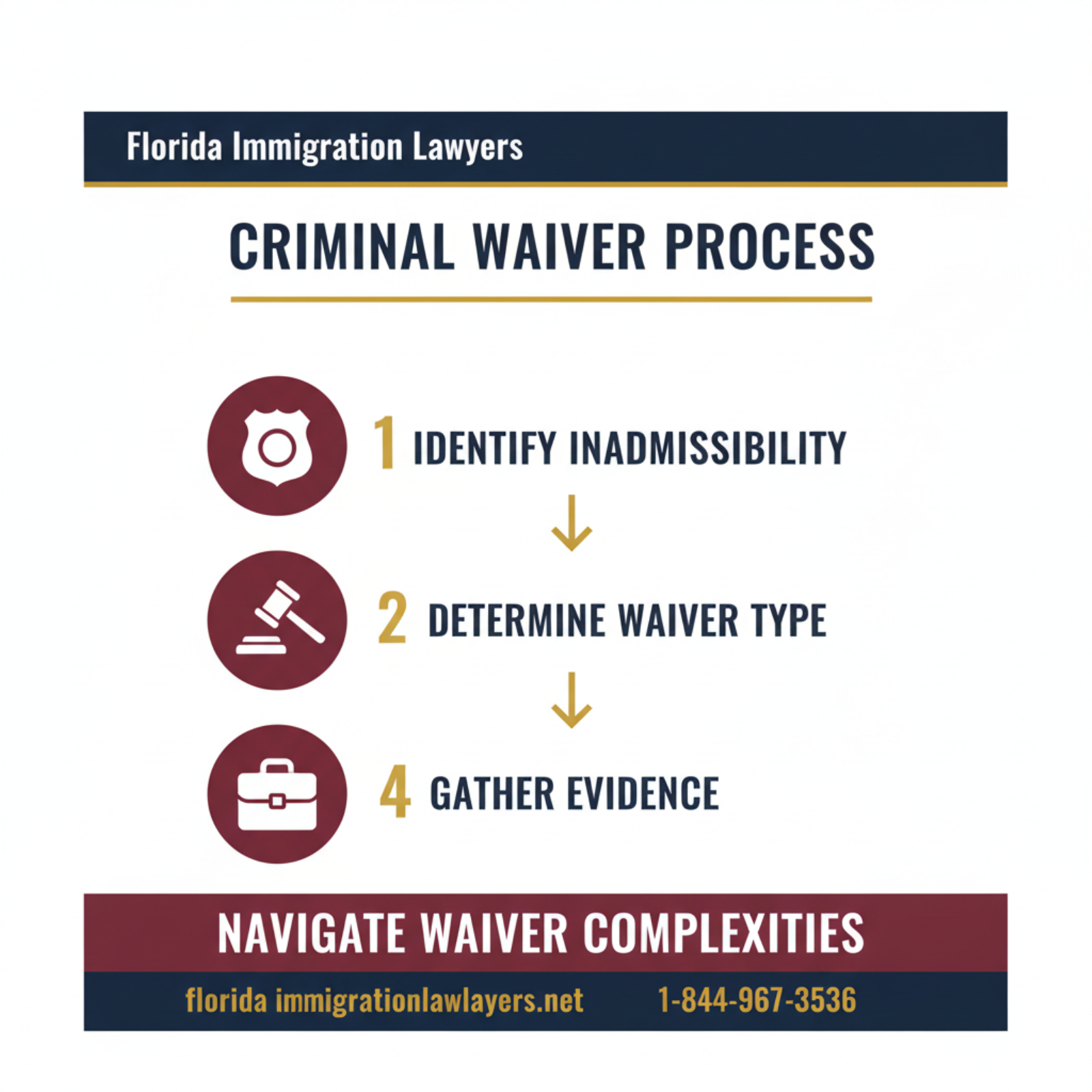
Applying for an **I-601 waiver** for criminal inadmissibility is a detailed and often lengthy process. Following these steps carefully, ideally with the assistance of an immigration attorney, can significantly improve your chances of success.
-
Determine Eligibility and Strategy: Your first step should always be a comprehensive legal consultation. An attorney will review your entire criminal history, immigration record, and family situation to determine if you are eligible for an I-601 waiver. They will help identify the specific grounds of inadmissibility you need to waive and develop a strong legal strategy to demonstrate extreme hardship or other waiver criteria. This involves a detailed analysis of your Florida conviction documents.
-
Gather Comprehensive Evidence: Building a strong waiver application hinges on compelling evidence. This includes certified court documents for all convictions, proof of your qualifying relationship, and extensive documentation demonstrating extreme hardship. Evidence of rehabilitation, such as completion of probation, counseling, community service, and stable employment, is also crucial. Psychological evaluations and expert reports detailing country conditions or medical needs can be vital components.
-
Prepare Form I-601 and Supporting Statements: Accurately complete Form I-601, Application for Waiver of Grounds of Inadmissibility. This form requires detailed information about your inadmissibility and the reasons for requesting a waiver. You and your qualifying relative will also need to prepare detailed personal statements explaining the circumstances of the conviction, the hardship, and why the waiver should be granted. These statements are powerful tools for communicating your story to USCIS.
-
File with USCIS or the Department of State: The filing location for Form I-601 depends on your underlying immigration application. If you are applying for adjustment of status within the U.S., you typically file the I-601 with USCIS. If you are applying for an immigrant visa through consular processing abroad, you would file it with the Department of State at the U.S. Embassy or Consulate. Ensure all required fees are paid and the application is mailed to the correct address, often a lockbox facility.
Step-by-Step Process Guide -
Respond to Requests for Evidence (RFEs) or Attend Interviews: USCIS or the Department of State may issue a Request for Evidence (RFE) if they need more information or documentation to make a decision. Responding promptly and thoroughly to an RFE is critical. In some cases, you may be called for an interview, particularly if there are complex issues or inconsistencies in your application. Your attorney can help prepare you for any potential interview.
-
Await Decision: After submission and any subsequent requests or interviews, you will await a decision from the immigration authorities. Processing times can vary significantly. If approved, you can proceed with your underlying immigration application. If denied, your attorney can discuss options for appeal or reconsideration. Navigating family-based immigration with a criminal waiver requires careful planning. Visit our family immigration page for more insights.
Essential Document Checklist for Your Inadmissibility Waiver Application
A meticulously prepared application package is paramount for a successful **inadmissibility waiver**. Missing or incorrect documents can lead to delays or even denial. This checklist provides a general overview of the types of documents typically required for an I-601 criminal waiver:
- Form I-601: The completed and signed Application for Waiver of Grounds of Inadmissibility.
- Proof of Qualifying Relationship: Marriage certificates, birth certificates, adoption decrees to establish your relationship with a U.S. citizen or LPR spouse, parent, son, or daughter.
- Evidence of Extreme Hardship:
- Medical Records: For qualifying relatives with health issues, including diagnoses, treatment plans, and letters from doctors detailing the impact of separation or relocation.
- Financial Documents: Bank statements, tax returns, employment letters, property deeds, mortgage statements, and debt records to show financial dependence and potential financial ruin.
- Psychological Evaluations: Reports from licensed mental health professionals detailing the psychological impact of separation or relocation on the qualifying relative.
- Country Conditions Reports: Evidence demonstrating why the qualifying relative cannot relocate to your home country (e.g., lack of medical care, safety concerns, political instability).
- Educational Records: For children, showing disruption to schooling or special needs education.
- Criminal Court Documents: Certified copies of all arrest records, charging documents, plea agreements, sentencing orders, probation or parole records, and certificates of completion for all criminal convictions in Florida or elsewhere.
- Evidence of Rehabilitation: Letters of recommendation, certificates of completion for drug/alcohol treatment, community service records, proof of consistent employment, and evidence of positive community involvement since the conviction.
- Personal Statements: Detailed, sworn affidavits from you and your qualifying relative(s) describing the circumstances of the conviction, your remorse, your rehabilitation efforts, and the specific extreme hardship that would result from a waiver denial.
- Character Affidavits: Letters from employers, friends, family, and community leaders attesting to your good moral character and positive contributions to society.
- Identity and Nationality Documents: Copies of your passport, birth certificate, and any previous visa or immigration documents.
- Translation Certificates: Any document not in English must be accompanied by a certified English translation.
This list is not exhaustive, and additional documents may be required depending on the specifics of your case. An experienced attorney from Florida Immigration Lawyers can help you compile a comprehensive and compelling application package.
I-601 Waiver Processing Expectations and Timelines for Florida Applicants
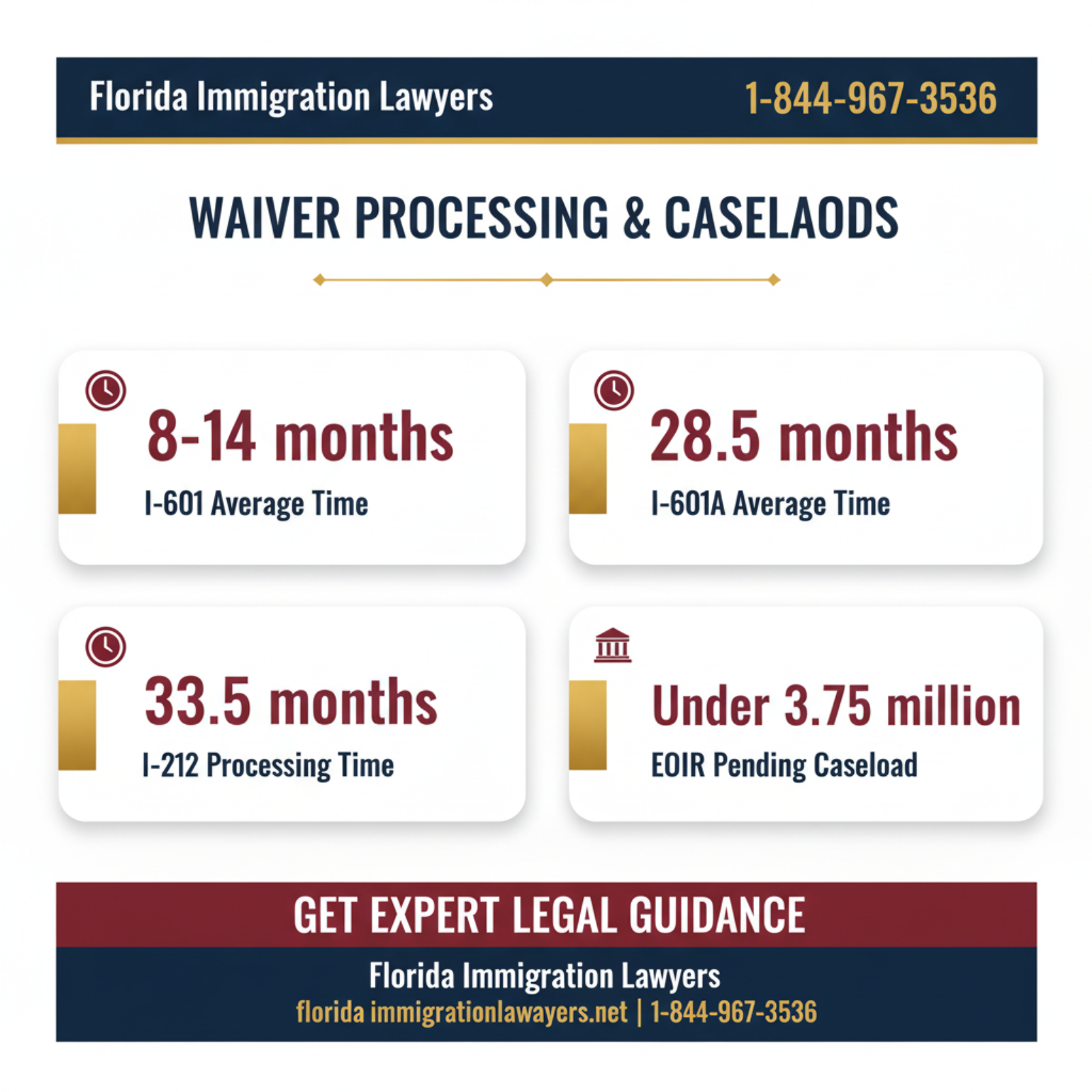
Understanding the **I-601 waiver processing time** is a common concern for applicants in Florida. Unfortunately, there is no single, fixed timeline for waiver applications. Processing times can vary significantly based on several factors, including the specific USCIS service center handling your case, the complexity of your application, the volume of cases being processed, and whether you are filing domestically or through consular processing.
USCIS generally publishes estimated processing times on its website, which can provide a general idea. However, these are averages and your individual case may take more or less time. As of 2026, applicants should be prepared for processing times that can range from several months to over a year. Cases involving extensive criminal histories or complex hardship claims may take longer to adjudicate.
Factors that can influence your processing timeline include:
- Completeness of Application: A fully prepared application with all required evidence and no errors is likely to be processed faster.
- Requests for Evidence (RFEs): If USCIS issues an RFE, it will add time to the process, as you will need to gather and submit additional documentation.
- Interview Requirements: While not always required for I-601 waivers, an interview can extend the timeline.
- Jurisdiction: The specific USCIS office or U.S. consulate abroad where your application is processed can have different backlogs.
It is important to remain patient during this period. Your attorney can help you monitor the status of your application and respond to any inquiries from USCIS. While waiting, focus on maintaining good moral character and adhering to all immigration laws. For the most current information on processing times, you can visit the official USCIS website.
Cost Factors and Fee Breakdown for Immigration Waivers
When considering an **inadmissibility waiver** in Florida, it is essential to understand the associated costs. These costs typically fall into two main categories: government filing fees and legal fees, along with potential ancillary expenses. While we cannot provide exact figures due to their fluctuating nature, we can outline the types of costs you should anticipate.
First, there is the USCIS filing fee for Form I-601. This fee is set by the U.S. government and is subject to change. It is crucial to check the most current fee schedule on the USCIS website before filing your application. Fees must be paid in the correct amount and format, or your application may be rejected. Some individuals may be eligible for a fee waiver, but eligibility is strict and usually applies to those receiving means-tested public benefits.
Second, and often the most significant component, are attorney fees. The cost of legal representation for a criminal waiver varies widely depending on the complexity of your case, the extent of your criminal history, the amount of evidence required, and the attorney's experience and location in Florida. While legal fees are an investment, experienced legal counsel can be invaluable in preparing a strong case, navigating legal complexities, and significantly increasing your chances of approval. They ensure all grounds of inadmissibility are addressed and extreme hardship is compellingly demonstrated.
Finally, you should budget for ancillary costs. These can include fees for obtaining certified court documents from Florida courthouses, translation services for any non-English documents, expert witness fees (e.g., for psychological evaluations or country conditions reports), and travel expenses if interviews are required. These additional costs can add up, so it is wise to factor them into your overall financial planning for the waiver process.
Do not navigate this process alone. Contact Florida Immigration Lawyers today.
Common Mistakes to Avoid with Criminal Waivers
Applying for a **criminal waiver** is a highly complex legal process. Even minor errors can lead to significant delays or outright denial. Being aware of common pitfalls can help you avoid them and strengthen your application. Here are several mistakes to actively avoid:
-
Not Disclosing All Criminal History: Attempting to hide or omit any past arrests or convictions, no matter how minor or old, is a severe mistake. Immigration authorities have access to extensive databases. Failure to disclose can lead to a finding of misrepresentation, which is an independent ground of inadmissibility and often much harder to waive.
-
Insufficient Evidence of Extreme Hardship: Many applicants underestimate what constitutes "extreme hardship." Simply showing that your qualifying relative will miss you or face financial difficulty is often not enough. You must provide compelling, well-documented evidence of hardship that is truly beyond the normal difficulties of separation or relocation. Vague statements without supporting documents are a common reason for denial.
-
Filing the Wrong Waiver Form: The U.S. immigration system has various waiver forms for different grounds of inadmissibility. Filing an I-601 when an I-212 or another waiver is appropriate, or vice-versa, will result in rejection and wasted time and fees. Correctly identifying all grounds of inadmissibility and the appropriate waiver is critical.
-
Not Addressing All Grounds of Inadmissibility: It is possible to have multiple grounds of inadmissibility. If you only apply for a waiver for one ground but are inadmissible on others, your application will be denied. A thorough legal analysis is needed to identify and address every single ground of inadmissibility.
-
Incomplete or Inaccurate Documentation: Submitting an application with missing documents, uncertified court records, or inconsistent information can lead to RFEs or denials. Every piece of evidence must be accurate, complete, and properly translated if not in English.
-
Missing Deadlines: Immigration processes are strict with deadlines for filing applications, responding to RFEs, or appealing decisions. Missing a deadline can result in the automatic denial of your waiver or underlying immigration benefit, potentially without recourse.
-
Failing to Consult an Experienced Attorney: The complexities of criminal waivers, especially determining what constitutes a CIMT or extreme hardship, make legal representation almost indispensable. Attempting to navigate this alone significantly increases the risk of errors and denial.
-
Poorly Prepared Personal Statements: Personal statements from the applicant and qualifying relative are crucial. They should be heartfelt, detailed, consistent, and clearly articulate the hardship and rehabilitation. Vague, generic, or poorly written statements fail to convey the necessary emotional and factual impact.
-
Not Understanding "Moral Turpitude": The legal definition of a "crime involving moral turpitude" (CIMT) can be counter-intuitive and does not always align with common understanding. What seems minor in state court could be a serious CIMT for immigration purposes. Incorrectly assessing whether a conviction is a CIMT can derail an application.
-
Assuming a Conviction is Minor: Even seemingly minor offenses like shoplifting or misdemeanor drug possession can have severe immigration consequences. Never assume a conviction is too small to matter. Always disclose and have it evaluated by an immigration attorney.
-
Not Providing Certified Court Dispositions: Simple copies of court documents are often insufficient. USCIS typically requires certified copies of all final court dispositions, proving the outcome of your criminal case. Failing to obtain these certified documents will lead to an RFE or denial.
-
Overlooking Rehabilitation Evidence: While extreme hardship is key, evidence of rehabilitation (e.g., counseling, community service, stable employment, positive character references) can significantly strengthen your case. Failing to present a compelling narrative of personal growth and change is a missed opportunity.
When to Call a Lawyer for Your Criminal Waiver in Florida
The decision to pursue a **criminal waiver** is one of the most critical steps in your immigration journey, especially with a past conviction. Given the high stakes and intricate legal requirements, engaging an experienced immigration attorney from Florida Immigration Lawyers is almost always advisable. Here are specific scenarios and warning signs that strongly indicate you need immediate legal assistance:
- Complex Criminal History: If you have multiple arrests, convictions across different states, or convictions for offenses that are particularly problematic under immigration law (e.g., aggravated felonies, drug offenses beyond simple possession of a small amount of marijuana).
- Difficult Hardship Claim: If demonstrating "extreme hardship" to your qualifying relative is challenging, or if your qualifying relative's situation does not immediately appear to meet the high threshold. An attorney can help identify and articulate nuanced hardship factors.
- Prior Immigration Violations: If you have previous deportations, removals, or other immigration violations in addition to criminal issues, your case becomes significantly more complicated, potentially requiring multiple waivers.
- Received a Notice to Appear (NTA): If you have been served with an NTA, it means you are in removal proceedings. This is an urgent situation where you absolutely need an attorney to defend you and explore all available relief, including waivers. Our deportation defense team is ready to assist.
- Denied Application or RFE: If your waiver application has been denied, or you have received a Request for Evidence (RFE) from USCIS, an attorney can help analyze the reasons for the denial or RFE and advise on the best course of action, which may include an appeal or a new filing.
- Uncertainty About Eligibility: If you are unsure whether your specific conviction makes you inadmissible or if you qualify for any waiver, a lawyer can provide a definitive assessment based on current immigration law and case precedents.
- Seeking Citizenship: Even if you have a green card, certain past criminal convictions can bar you from becoming a U.S. citizen. An attorney can assess your eligibility for citizenship and advise on any waivers needed for naturalization.
Florida Immigration Lawyers has extensive experience in handling complex criminal waiver cases for individuals throughout Florida, including Jacksonville, Miami, Orlando, and Tampa. We understand the specific nuances of Florida state criminal law as it intersects with federal immigration regulations. Our team is dedicated to providing compassionate, strategic, and effective legal representation to help you achieve your immigration goals.
About Florida Immigration Lawyers
Florida Immigration Lawyers is a leading law firm dedicated to providing exceptional immigration legal services across the entire state of Florida. With a deep understanding of the complexities of U.S. immigration law, our experienced attorneys are committed to helping individuals, families, and businesses navigate their immigration journeys successfully. We pride ourselves on offering personalized attention and strategic solutions tailored to each client's unique circumstances.
We offer a comprehensive range of immigration services, including family-based immigration, employment visas, asylum claims, deportation defense, and naturalization. Our firm is particularly adept at handling challenging cases involving criminal inadmissibility, helping clients secure critical waivers like the I-601. We serve clients in Jacksonville, Miami, Orlando, Tampa, and all other Florida communities, ensuring access to high-quality legal representation no matter where you are in the state.
Choosing Florida Immigration Lawyers means partnering with a team that genuinely cares about your future. We are available 24/7 to address your concerns and provide timely advice. We offer free consultations to evaluate your case and discuss your legal options without financial commitment upfront. Our bilingual staff (Se Habla Español) ensures clear communication and comfortable interactions for all our clients. Trust us to be your dedicated advocates in the complex world of immigration law.
Contact Florida Immigration Lawyers today at 1-844-967-3536 or visit our website at https://www.floridaimmigrationlawyers.net to schedule your free consultation.
Sources and References
- U.S. Citizenship and Immigration Services (USCIS)
- Executive Office for Immigration Review (EOIR)
- U.S. Department of State - Bureau of Consular Affairs
- 8 U.S.C. Chapter 12 - Immigration and Nationality Act (INA)
- Immigration and Nationality Act (INA) § 212(a)(2) - Criminal and Related Grounds of Inadmissibility
- Immigration and Nationality Act (INA) § 212(h) - Waiver of Certain Criminal Grounds of Inadmissibility
- 8 CFR § 212.7 - Waiver of certain grounds of inadmissibility
This article provides general legal information and is not intended as legal advice. Every case is unique, and outcomes depend on specific facts and circumstances. Contact an attorney for advice about your particular situation.
Do not let a past criminal conviction prevent you from achieving your immigration goals in Florida. The path to a **criminal waiver** can be challenging, but with the right legal guidance, it is achievable. Our dedicated team at Florida Immigration Lawyers is here to provide the expertise and support you need.
Take the first step towards securing your future. Call Florida Immigration Lawyers now for a free consultation at 1-844-967-3536. Se Habla Español - Estamos aquí para ayudarle.
Need help with Immigration?
Our Florida immigration attorneys offer free consultations. Call today or schedule online.
Frequently Asked Questions
Florida Immigration Lawyers
Legal Team
Our experienced attorneys at Florida Immigration Lawyers have been serving clients across Florida for over 20 years. We specialize in immigration, personal injury, criminal defense, workers compensation, and family law.