Conditional Green Card Removal Florida: Your Comprehensive
Navigating conditional green card removal in Florida requires precision. Our comprehensive I-751 guide for 2026 helps marriage green card holders understand requirements, waivers, and the application process. Contact Florida Immigration Lawyers for expert guidance and a free consultation.

Conditional Green Card Removal Florida: Your Comprehensive I-751 Guide for 2026
Receiving a green card is a monumental step towards permanent residency in the United States. However, for many individuals who obtain their green card through marriage to a U.S. citizen or lawful permanent resident, the initial green card is conditional. This means it's valid for only two years. To transition from a conditional resident to a lawful permanent resident, you must file Form I-751, Petition to Remove Conditions on Residence, with U.S. Citizenship and Immigration Services (USCIS). This process can be complex, and understanding the requirements and deadlines is crucial, especially for those residing in Florida. This comprehensive guide for 2026 will walk you through everything you need to know about conditional green card removal in the Sunshine State.
Understanding Your Conditional Green Card Status in Florida
A conditional green card is issued when a marriage is less than two years old at the time the green card is approved. The U.S. government implemented this two-year conditional period to deter marriage fraud. It serves as a probationary period, requiring you and your spouse to prove to USCIS that your marriage is genuine and ongoing. Failing to remove these conditions can lead to the termination of your residency and potential deportation proceedings.
Who Receives a Conditional Green Card?
Primarily, individuals who obtain their green card based on a marriage to a U.S. citizen or lawful permanent resident, and whose marriage was less than two years old on the day they were granted permanent residency, receive a conditional green card. This also applies to their dependent children. In some cases, immigrant investors (EB-5 visa holders) also receive conditional green cards, though their removal process involves a different form (I-829).
The Two-Year Condition: What It Means for You
The two-year condition means that your permanent resident status is not truly permanent until you successfully file Form I-751 and USCIS approves your petition. During this period, you have most of the rights and responsibilities of a lawful permanent resident, including the ability to work and travel freely. However, the clock is ticking. You must file your I-751 petition within the 90-day window immediately preceding the expiration date on your conditional green card. Missing this crucial deadline without a valid reason can have severe consequences, potentially leading to the loss of your residency status.
The I-751 Petition: Removing Conditions on Residence
The core of removing your conditional status lies in filing Form I-751. This petition requires you to demonstrate that your marriage was entered into in good faith and that it remains a legitimate union. USCIS will scrutinize the evidence you provide to ensure the marriage was not solely for immigration benefits. A well-prepared petition with ample supporting documentation is key to a smooth process.
Eligibility Requirements for Joint Filing
The most common way to remove conditions is through a joint petition with your U.S. citizen or lawful permanent resident spouse. To be eligible for joint filing, you generally must meet the following criteria:
- You and your spouse are still married.
- You entered into the marriage in good faith, not solely to obtain a green card.
- You are not legally separated or divorced at the time of filing.
If these conditions are met, you and your spouse will sign the I-751 petition together, asserting the bona fide nature of your marriage.
Essential Documents for Your I-751 Application
Gathering comprehensive evidence is paramount. USCIS looks for proof of a shared life and commingled finances. Here’s a list of crucial documents:
- Marriage Certificate: A copy of your official marriage certificate.
- Birth Certificates: Copies of birth certificates for any children born of the marriage.
- Financial Documents: Joint bank account statements, joint credit card statements, joint tax returns, joint utility bills, joint mortgage or lease agreements.
- Property Ownership: Copies of deeds or titles to property owned jointly.
- Insurance Policies: Joint health, life, or auto insurance policies listing both spouses.
- Affidavits: Sworn statements from friends, family, or employers attesting to the bona fide nature of your marriage.
- Photographs: A collection of dated photographs showing you and your spouse together over time, with family, and at significant events.
- Travel Records: Evidence of joint travel, such as airline tickets, hotel reservations, or passport stamps.
- Other Joint Documents: Any other documentation that demonstrates you have built a life together, such as joint memberships, wills, or power of attorney documents.
The more compelling and diverse your evidence, the stronger your petition will be. Always submit copies, not originals, unless specifically requested by USCIS.
The Application Process: Step-by-Step Guide
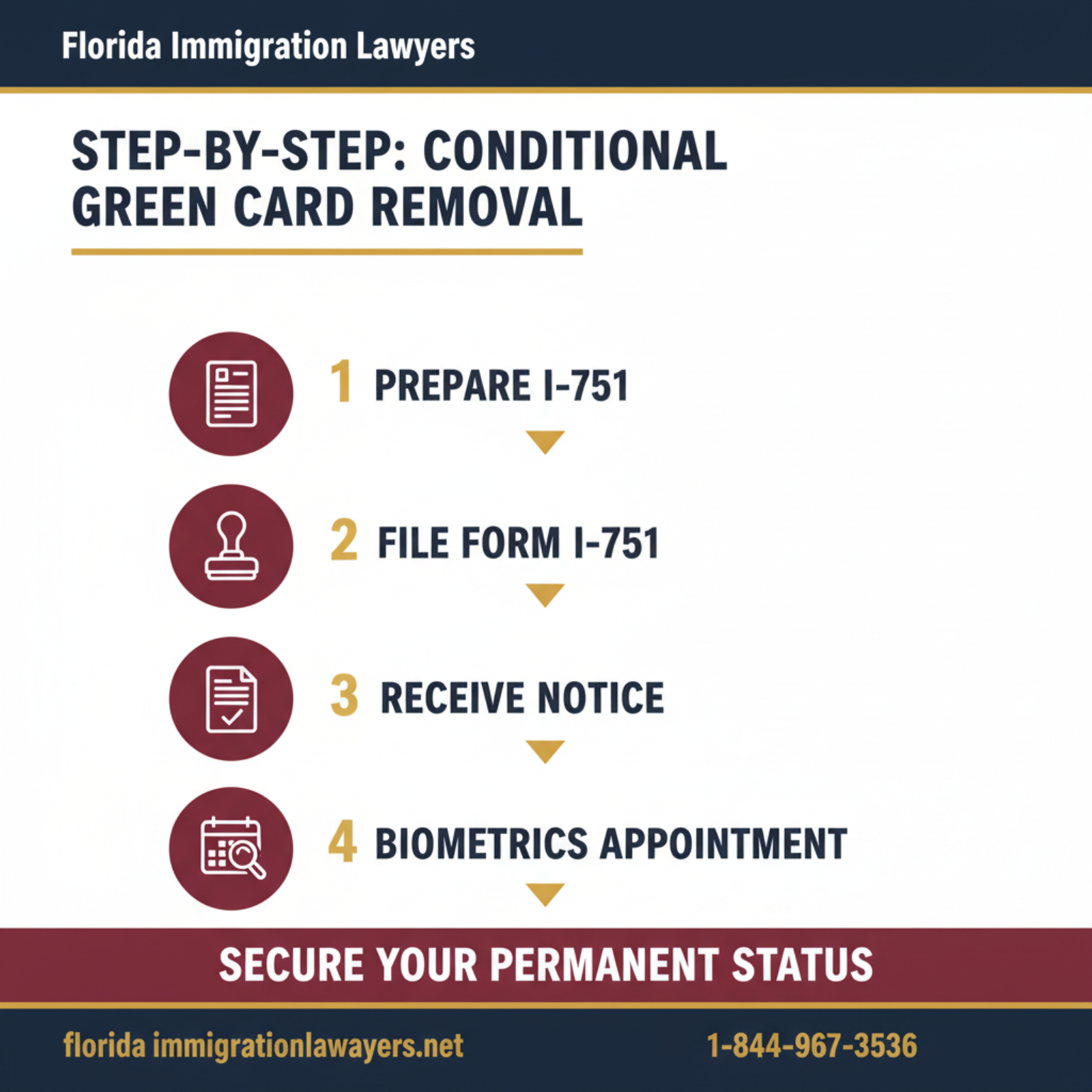
The I-751 application process involves several critical steps:
- Complete Form I-751: Fill out the form accurately and completely. Do not leave any sections blank; if a question doesn't apply, write "N/A."
- Gather Supporting Documents: Collect all the evidence listed above, organizing it clearly. It's often helpful to create a cover letter and a table of contents for your submission.
- Pay Filing Fees: The I-751 typically requires a filing fee and a biometrics fee. Check the USCIS website for the most current fees, as they can change.
- Mail Your Petition: Send your completed Form I-751, supporting documents, and fees to the correct USCIS Lockbox facility. The mailing address depends on where you live and whether you are filing jointly or with a waiver.
- Receive Receipt Notice: After USCIS receives your petition, they will send you Form I-797C, Notice of Action, which serves as your receipt notice and typically extends your conditional resident status for a specified period (e.g., 18, 24, or 48 months) while your petition is pending.
Navigating Waivers for the Joint Filing Requirement
Life circumstances can change, and not every marriage lasts. USCIS understands this and provides provisions for conditional residents to file Form I-751 without their spouse, known as a waiver of the joint filing requirement. This is a critical option for many individuals in Florida facing difficult situations.
Filing a waiver can be more complex than a joint petition, as it requires you to prove not only the bona fide nature of your original marriage but also the specific circumstances that prevent you from filing jointly. This process often benefits significantly from the guidance of an experienced immigration lawyer.
When Can You File a Waiver?
You may be eligible to file an I-751 waiver if:
- Your spouse died: You can file a waiver if your U.S. citizen or lawful permanent resident spouse has passed away.
- You entered the marriage in good faith, but it was terminated through divorce or annulment: This is a common waiver scenario. You must prove the marriage was legitimate at its inception, even if it later ended.
- You entered the marriage in good faith, but you or your child were subjected to battery or extreme cruelty by your spouse: This waiver is crucial for victims of domestic violence.
- Termination of your status and removal from the U.S. would result in extreme hardship: This is a more challenging waiver to obtain, requiring substantial proof of the hardship you would face.
Each waiver category has specific evidentiary requirements. For instance, if you're filing based on divorce, you'll need your final divorce decree. If it's based on abuse, police reports, medical records, and affidavits from counselors or social workers will be vital.
Required Documentation for Waiver Petitions
In addition to the evidence of a bona fide marriage (as required for joint filing), waiver petitions demand specific documentation related to the waiver category:
- Death of Spouse: Death certificate of your U.S. citizen/LPR spouse.
- Divorce/Annulment: Certified copy of the final divorce decree or annulment order. You must demonstrate that the marriage was entered into in good faith, even though it ended.
- Battery or Extreme Cruelty: Police reports, court records, medical reports, affidavits from shelters, counselors, psychologists, or other credible witnesses. You may also submit personal statements detailing the abuse. Evidence showing you sought help or left the abusive situation is also important.
- Extreme Hardship: Extensive documentation proving the hardship, such as medical records, financial statements, educational records, and country condition reports (e.g., from travel.state.gov) if the hardship is related to returning to your home country. This often requires a very strong legal argument.
Given the sensitivity and complexity of waiver applications, consulting with an attorney is highly recommended to ensure you submit the strongest possible case and protect your rights.
What Happens After Filing Your I-751?
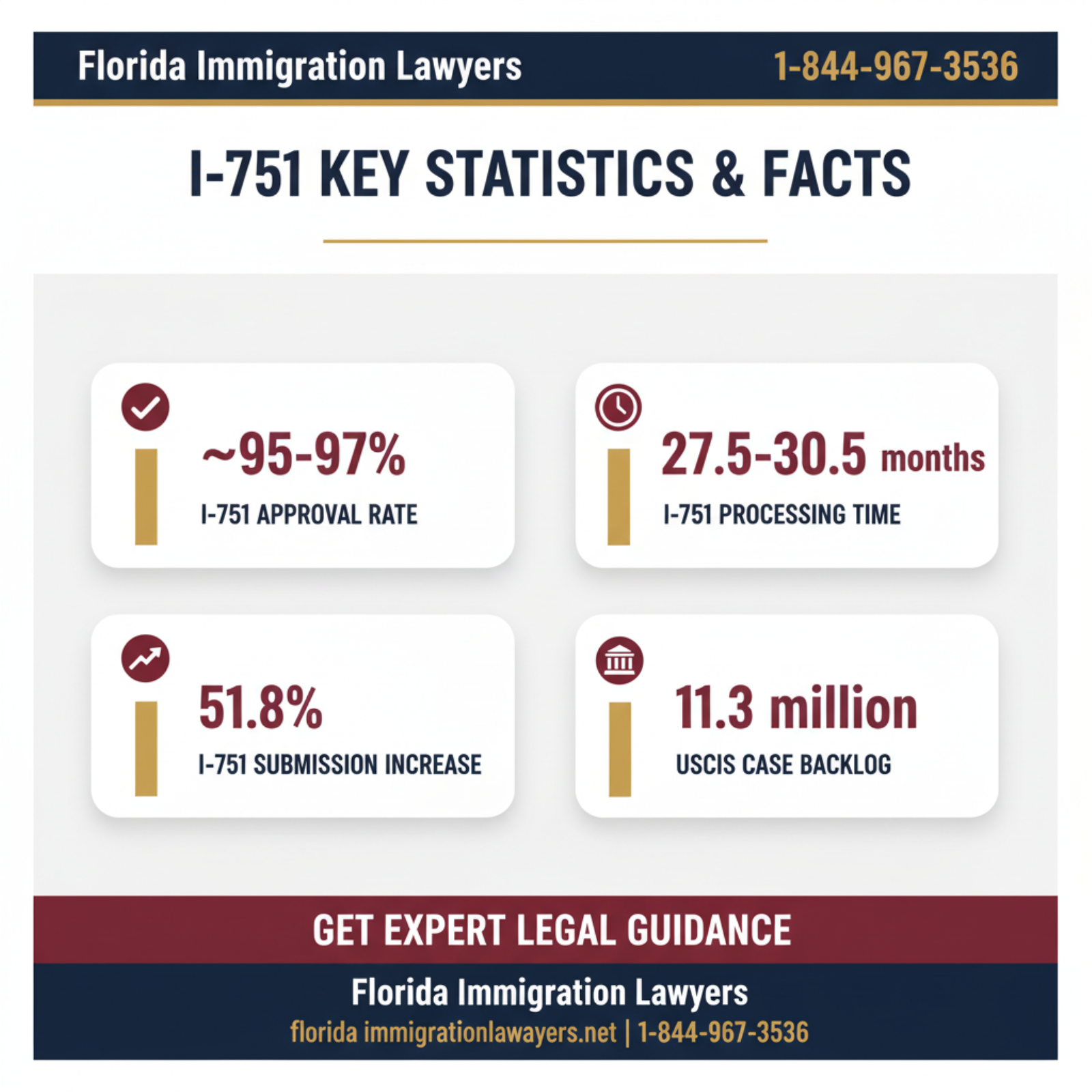
Once you've submitted your I-751 petition, the waiting period begins. USCIS processing times can vary significantly, ranging from several months to over a year. During this time, it's essential to understand the potential next steps and how to respond to any requests from USCIS.
Receipt Notice and Extension of Status
As mentioned, the first thing you'll receive after filing is Form I-797C, Notice of Action. This is not just a receipt; it's a crucial document that extends your conditional resident status. For many years, this extension was for 18 months, then 24 months, and as of late 2022, USCIS began issuing 48-month extensions. This notice, along with your expired conditional green card, serves as proof of your continued lawful status and work authorization. It's vital to keep this document safe and carry it with you when traveling internationally.
Biometrics Appointment and Potential Interview
After receiving your receipt notice, USCIS will typically send you an appointment notice for a biometrics screening at an Application Support Center (ASC). At this appointment, your fingerprints, photograph, and signature will be collected. This information is used for background checks. While many I-751 petitions are approved without an interview, USCIS reserves the right to call you and your spouse (if filing jointly) for an interview. This is more likely if the evidence is insufficient, if there are discrepancies in your application, or if USCIS has concerns about the bona fides of your marriage. If an interview is scheduled, it's highly advisable to attend with your attorney, especially if there are any complexities in your case.
The Decision: Approval or Request for Evidence (RFE)
Eventually, USCIS will make a decision. If your petition is approved, you will receive a new, permanent green card, typically valid for 10 years. This signifies that you are now a lawful permanent resident without conditions. If USCIS requires more information to make a decision, they will send a Request for Evidence (RFE). An RFE is not a denial, but it's a serious request that must be responded to thoroughly and within the given deadline. Failure to respond adequately can lead to a denial. In some cases, if USCIS has significant concerns, they might issue a Notice of Intent to Deny (NOID), giving you a final opportunity to present your case before a final decision is made.
Potential Challenges and How to Address Them
While many I-751 petitions are approved without major issues, some applicants face significant challenges. Being prepared for these potential hurdles can make a substantial difference in the outcome of your case. This is where professional legal assistance becomes invaluable.
Dealing with an I-751 Denial
An I-751 denial is a serious matter. If your petition is denied, your conditional permanent resident status is automatically terminated, and USCIS will likely issue a Notice to Appear (NTA) in immigration court. This initiates deportation proceedings. However, a denial is not necessarily the end of the road. You will have the opportunity to present your case before an immigration judge, who can review the USCIS decision and potentially grant your petition. This process is complex and requires robust legal representation. An immigration attorney can help you prepare your defense, gather additional evidence, and argue your case effectively in court.
The Importance of Timely Filing
As mentioned, the I-751 must be filed within the 90-day window before your conditional green card expires. Filing late is one of the most common reasons for denial. While USCIS may accept a late filing in exceptional circumstances (e.g., hospitalization, death of a family member, or other unavoidable situations), you must provide a compelling explanation and strong evidence to justify the delay. Without a valid excuse, your status will terminate, and you will be placed in removal proceedings. If you anticipate a delay, or have already missed the deadline, seek legal advice immediately to understand your options.
Why Expert Legal Counsel is Crucial for Your I-751 in Florida
Navigating the U.S. immigration system can be daunting, and the I-751 process is no exception. While it may seem straightforward for some, the nuances of immigration law, the strict evidentiary requirements, and the potential for severe consequences make expert legal guidance invaluable, especially in a diverse state like Florida.
Navigating Complex Immigration Laws
Immigration laws are constantly evolving, and interpretations can vary. An experienced immigration attorney stays abreast of the latest regulations, policy changes, and court decisions. They understand the specific requirements for I-751 petitions, including the types of evidence USCIS prefers and the common pitfalls that can lead to RFEs or denials. While the I-751 is a federal process, having a local Florida attorney who understands the regional USCIS field office practices and common issues faced by Florida residents can be a distinct advantage.
How a Florida Immigration Lawyer Can Help
A dedicated Florida immigration lawyer can provide comprehensive support throughout your I-751 journey:
- Case Evaluation: Assess your specific situation, identify potential challenges, and advise on the best strategy, especially if you need to file a waiver.
- Document Preparation and Review: Help you gather, organize, and present all necessary supporting documents in a clear and compelling manner, ensuring no critical piece of evidence is missed.
- Petition Filing: Ensure your Form I-751 is completed accurately and filed correctly and on time with USCIS.
- Responding to RFEs: If USCIS issues a Request for Evidence, your attorney will help you prepare a robust and timely response.
- Interview Preparation: Prepare you and your spouse for a potential interview, explaining what to expect and how to answer questions truthfully and effectively.
- Waiver Assistance: Provide expert guidance and strong advocacy if you need to file a waiver of the joint filing requirement due to divorce, abuse, or other circumstances.
- Deportation Defense: If your I-751 is denied and you are placed in deportation proceedings, an attorney can represent you in immigration court, fighting to protect your right to remain in the U.S.
- General Immigration Support: Beyond I-751, an attorney can assist with other immigration matters, such as asylum applications or other immigration services.
Don't leave your future to chance. The stakes are too high. If you are a conditional green card holder in Florida, seeking professional legal assistance is a wise investment in your future in the United States. Contact Florida Immigration Lawyers today for a free consultation to discuss your I-751 petition and ensure a smooth transition to permanent residency.
Do Not Navigate This Process Alone
Our experienced immigration attorneys are ready to fight for you. Get a free, confidential consultation today.
Se Habla Español
Frequently Asked Questions
Florida Immigration Lawyers
Immigration Attorney | Founder, Vasquez Law Firm
U.S. Air Force veteran and immigration attorney with thousands of cases resolved. J.D., NCCU School of Law. AILA member. Admitted to the 4th, 5th, and 11th Circuit Courts.
Available 24/7 - Free Evaluations
Related Legal Services
Our Florida immigration attorneys can help you with asylum protection, deportation defense and citizenship and naturalization. Call today at 1-844-967-3536 for a free consultation.
Related Links
Related Topics
Free Legal Consultation
Discuss your case with our experienced attorneys. We're available 24/7.
Se Habla Español - Estamos aquí para ayudarle.
Related Articles
EB-5 Investor Green Card in Florida: Key Insights | VLF Florida
Explore how the EB-5 investor green card program can help you start a new life in Florida. Learn about the benefits, processes, and common pitfalls of this investment immigration path. Call 1-844-967-3536 for expert guidance.
E-2 Visa for Florida Business Investors | VLF Florida
Learn how the E-2 investor visa can help you start a business in Naples, Florida. We cover eligibility, application steps, common mistakes, and when to seek legal help. Contact Florida Immigration Lawyers for a free consultation.
VAWA Immigration Relief: Support in Florida | VLF Florida
Explore VAWA immigration relief options for abuse victims in Hollywood, Florida. Learn about eligibility, application steps, and common mistakes to avoid. Contact Florida Immigration Lawyers for a free consultation.
EB-5 Investor Green Card in Florida: A Comprehensive Guide
Learn how the EB-5 investor green card program can help you gain U.S. residency through investment in Florida. Discover key steps, common mistakes, and when to seek legal advice. Call Florida Immigration Lawyers at 1-844-967-3536 for a free consultation.