Annual Asylum Fee Florida 2026: Navigating New USCIS
For asylum seekers in Florida, understanding the annual asylum fee (AAF) for 2026 is essential. This fee applies to certain pending asylum applications and helps fund the processing system. Our guide covers who needs to pay, the step-by-step payment process, critical deadlines, and potential consequences of non-payment. We also highlight common mistakes and explain when to seek legal counsel. Navigating these requirements can be complex, and a single error could impact your case. Florida Immigration Lawyers offers expert guidance to ensure compliance and protect your asylum claim. Learn how to manage the AAF effectively and secure your future.

The annual asylum fee (AAF) for 2026 is a statutory charge required from certain asylum applicants whose cases remain pending for a specified period. This fee helps fund asylum processing. Eligibility typically depends on the duration your asylum application has been pending with USCIS or EOIR. Failure to pay can lead to significant delays or adverse decisions on your asylum claim.
- Certain asylum applicants with pending cases must pay.
- The fee helps cover costs associated with asylum processing.
- Deadlines are strict; non-payment can have serious consequences.
- The fee amount is subject to change by federal regulations.
- Consult a Florida immigration lawyer for personalized guidance.
Navigating the U.S. immigration system can be incredibly complex, especially when new fees and regulations are introduced. For many asylum seekers in Florida, understanding the annual asylum fee (AAF) for 2026 is a critical concern. This fee, part of broader immigration policy updates, can significantly impact your asylum application process and future in the United States.
This comprehensive guide will break down everything you need to know about the annual asylum fee in Florida for 2026. We will cover who is required to pay, the payment process, important deadlines, and common pitfalls to avoid. Our goal is to empower you with clear, actionable information so you can navigate this requirement successfully. If you have questions or need personalized assistance, do not hesitate to call Florida Immigration Lawyers at 1-844-967-3536 for a free consultation.
Understanding the Annual Asylum Fee (AAF) in Florida for 2026
The annual asylum fee is a relatively recent development in U.S. immigration law, designed to help fund the operational costs associated with processing asylum applications. This fee applies to certain individuals whose asylum applications remain pending for a specific duration, typically beyond one year, as determined by the U.S. Citizenship and Immigration Services (USCIS) or the Executive Office for Immigration Review (EOIR).
What is the Annual Asylum Fee?
The AAF is a mandatory charge for eligible asylum applicants. It is not a fee for filing the initial asylum application itself, but rather an annual fee for maintaining a pending asylum case. This fee was established to ensure that resources are available to manage the growing number of asylum claims and to streamline the adjudication process. Its legal basis stems from federal regulations and changes to the Immigration and Nationality Act (INA), specifically related to the funding of immigration services, often referenced in 8 U.S.C. § 1158.
For individuals residing in Florida, including those in Fort Lauderdale and surrounding areas, understanding this fee is crucial. The requirement applies uniformly across the nation, but local processing centers and immigration courts in Florida will manage the specific notices and payment compliance for applicants in our state.
Who is Required to Pay the AAF?
Eligibility for the annual asylum fee is typically determined by the length of time an asylum application has been pending. Generally, if your Form I-589, Application for Asylum and for Withholding of Removal, has been pending with USCIS or EOIR for a period exceeding one year as of a specific date (e.g., October 1st of the preceding fiscal year), you may be required to pay the AAF for the current fiscal year. This includes both affirmative asylum applicants and those in removal proceedings.
It is important to review any notices received from USCIS or EOIR carefully, as they will explicitly state if you are subject to the AAF. These notices are the primary way the government communicates your obligation to pay. Our team at Florida Immigration Lawyers can help you interpret these complex notices and determine your specific obligations.
Why Was the AAF Implemented?
The implementation of the annual asylum fee is part of a broader effort by the U.S. government to address the increasing costs and backlogs within the immigration system. The fee is intended to provide a dedicated funding stream for asylum processing, including resources for adjudicators, administrative support, and technology enhancements. This policy aims to improve the efficiency and integrity of the asylum system, although it places an additional financial burden on applicants.
While the intent is to support the system, the practical impact on asylum seekers in Florida can be substantial. Many individuals fleeing persecution have limited financial resources, making the AAF an additional hurdle. It is essential to be aware of this requirement and plan accordingly to avoid any negative repercussions on your asylum case.
Step-by-Step Guide to Paying Your Annual Asylum Fee
Paying the annual asylum fee can seem daunting, but by following a structured process, you can ensure compliance. This guide outlines the typical steps involved for asylum seekers in Florida.
-
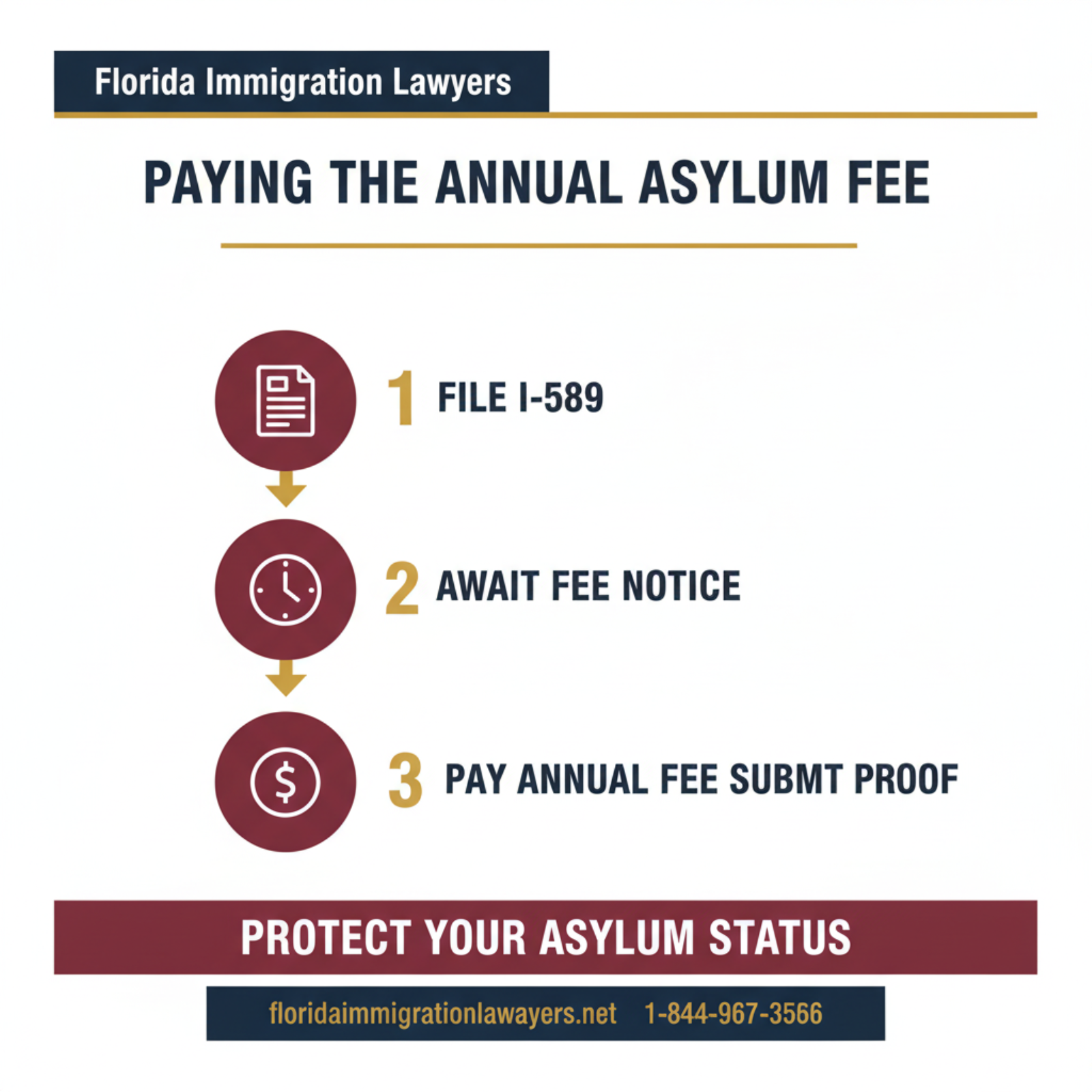
Determine Your Eligibility: The first step is to confirm whether you are required to pay the AAF. You will typically receive a specific fee notice from USCIS or EOIR if your case meets the eligibility criteria. Do not assume you need to pay without receiving official notification. If you are unsure, consult with an experienced asylum lawyer.
-
Locate Your Fee Notice: Once eligible, you will receive a formal notice. This document contains crucial information, including your A-Number, case receipt number, the exact fee amount, and the payment deadline. Keep this notice in a safe place, as you will need it for the payment process.
-
Access the Designated Payment Portal: USCIS and EOIR typically utilize online payment portals for the AAF. For USCIS cases, this may involve the USCIS ELIS system or a specific payment portal linked from your USCIS online account. For EOIR cases (immigration court), a separate portal administered by the Department of Justice may be used. Ensure you are using the official government website.
-
Submit Payment: Follow the instructions on the payment portal to submit the required fee. Accepted payment methods generally include credit/debit cards, bank transfers, or other electronic payment options. Double-check all information, especially your A-Number and case number, before finalizing the transaction. Incorrect information can lead to payment processing errors.
-
Retain Proof of Payment: After successful payment, you will receive a confirmation or receipt. It is absolutely critical to save and print this proof of payment. This document serves as your official record of compliance and may be required for future inquiries or to resolve any discrepancies. Keep both digital and physical copies.
-
Monitor Your Case Status: After paying the AAF, continue to monitor your asylum case status through the USCIS online case status tool or the EOIR automated case information system. While payment of the AAF does not directly impact the adjudication timeline, it is a necessary step to keep your case in good standing. Any further notices regarding your case will be sent to your address on file.
Essential Documents and Information for AAF Payment
To successfully pay your annual asylum fee, you will need several key pieces of information and documents. Having these ready before you begin the payment process can prevent delays and errors.
- Official Fee Notice/Billing Statement: This is the most important document, as it contains all the specific details about your AAF obligation, including the amount and deadline.
- USCIS A-Number (Alien Registration Number): This unique identifier is crucial for linking your payment to your asylum application. It can be found on your fee notice, receipt notices, or previous immigration documents.
- Case Receipt Number: This number, typically starting with three letters (e.g., EAC, WAC, LIN), identifies your specific asylum application. It is also found on your fee notice and previous USCIS correspondence.
- Proof of Identity: While not always directly uploaded for online payment, having your identification documents (e.g., passport, state ID) readily available can help verify personal details if needed.
- Payment Method Details: Ensure you have the necessary information for your chosen payment method, such as your credit card number, expiration date, security code, or bank account details for electronic transfers.
- Proof of Previous Payments (if applicable): If you have paid the AAF in prior years, keeping those receipts can be helpful for your records, though usually not required for the current year's payment.
- Current Contact Information: Verify that your address and contact details on file with USCIS and EOIR are up-to-date to ensure you receive all official correspondence.
Timeline and Processing Expectations for the AAF
Understanding the timeline for the annual asylum fee is crucial for maintaining compliance and avoiding potential issues with your asylum case in Florida.
When is the AAF Due?
The deadline for paying the annual asylum fee is clearly stated on the fee notice you receive from USCIS or EOIR. These deadlines are strict and typically correspond to the government's fiscal year or specific legislative mandates. For 2026, pay close attention to the dates provided on your official notice, as they can vary based on when your case became eligible. Generally, you will have a specific window, often 30-60 days, from the date of the notice to submit your payment.
What Happens After Payment?
Once you successfully submit the AAF, you will receive a confirmation or receipt. This usually means your obligation for that year is fulfilled. USCIS or EOIR will update their records to reflect your payment, and your asylum application will remain in good standing regarding this fee requirement. However, payment of the AAF does not accelerate the processing of your asylum claim itself. It simply ensures that your case is not negatively impacted by non-compliance with fee regulations.
Consequences of Late or Non-Payment
Failing to pay the annual asylum fee by the specified deadline can lead to severe consequences. These may include:
- Case Delays: Your asylum application processing may be halted or significantly delayed until the fee is paid.
- Notice of Intent to Deny/Terminate (NOID/NOIT): USCIS or EOIR may issue a notice indicating their intent to deny or terminate your asylum application due to non-payment.
- Denial or Termination of Asylum: In the most serious cases, consistent non-compliance could lead to the denial of your asylum application or the termination of your asylum proceedings, potentially placing you in deportation proceedings.
- Loss of Work Authorization: If your work authorization (EAD) is tied to your pending asylum application, non-payment of the AAF could jeopardize your eligibility to maintain or renew your EAD, as outlined in 8 CFR § 208.7.
Cost Factors and Fee Breakdown: The Annual Asylum Fee
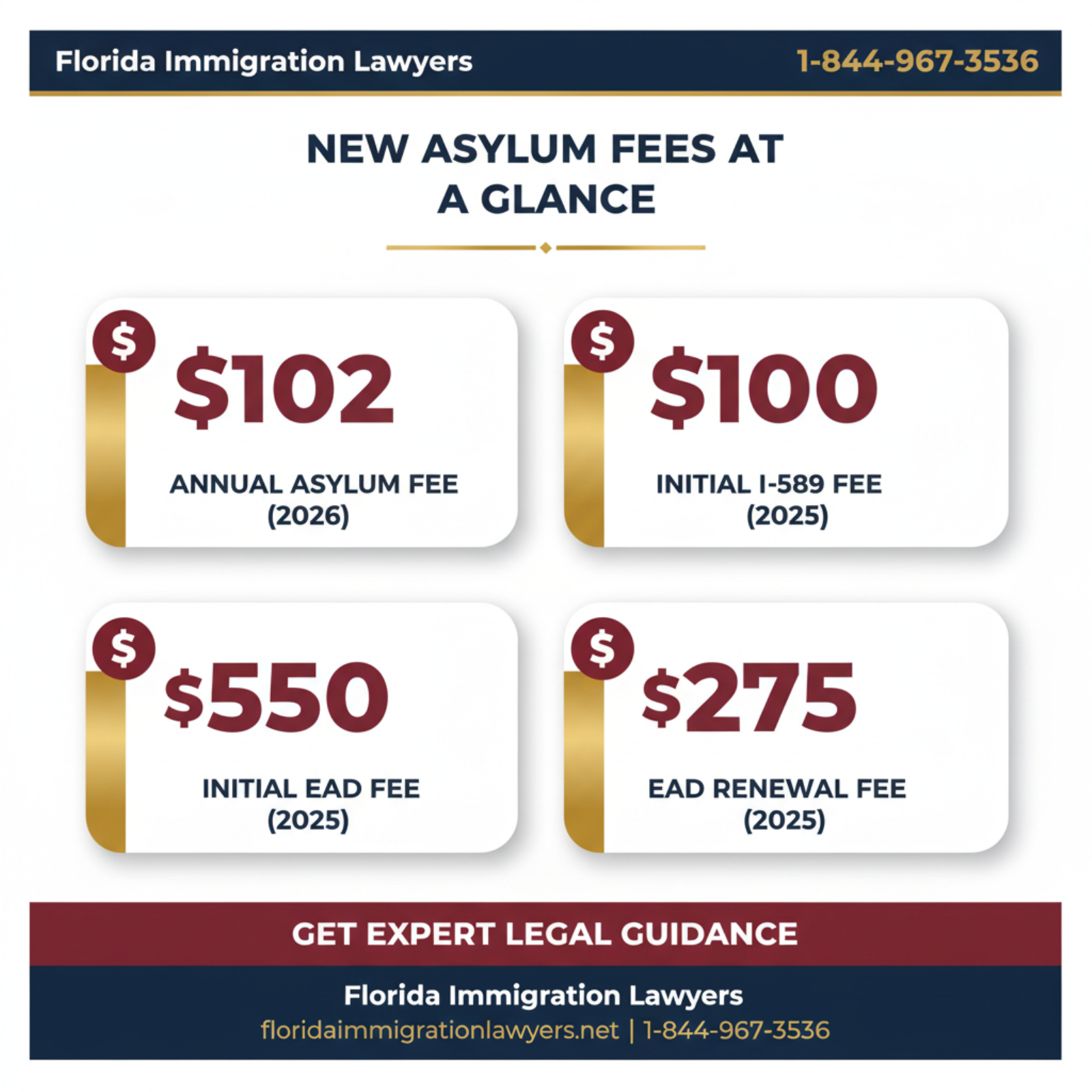
The specific amount of the annual asylum fee is determined by federal regulations and is subject to change. While we cannot provide exact figures as fees are periodically updated, it is typically around a specific amount per eligible individual, often referenced in legislative discussions as approximately $100-$150. It is crucial to refer to your official fee notice for the precise amount applicable to your case in 2026.
Current Fee Amount and How it's Determined
The AAF is established by Congress or through regulatory changes by the Department of Homeland Security (DHS) and the Department of Justice (DOJ). These amounts are designed to partially recover the costs of adjudicating asylum claims. The fee is a per-person charge, meaning each eligible individual with a pending asylum application may be required to pay it. Always check the latest information on USCIS.gov/fees or your specific fee notice for the most accurate and up-to-date amount.
Potential Exemptions or Waivers
In limited circumstances, certain individuals may be exempt from paying the annual asylum fee or may be eligible for a fee waiver. These exemptions are typically based on age (e.g., minors under a certain age) or severe financial hardship. The criteria for fee waivers are strict and require thorough documentation of your inability to pay. It is essential to understand that waivers for the AAF are not as broadly available as for some other immigration application fees.
If you believe you may qualify for an exemption or waiver, you must follow the specific instructions provided by USCIS or EOIR. Submitting an unsupported waiver request can delay your case. Consulting with a Florida immigration lawyer can help you assess your eligibility for any available waivers and prepare the necessary documentation.
Understanding Related Fees
It is important not to confuse the annual asylum fee with other immigration-related fees. For example, the fee for an Employment Authorization Document (EAD), Form I-765, is a separate charge. While an EAD is often sought by asylum applicants, its fee is distinct from the AAF. Similarly, there might be other program fees or biometric fees for various immigration processes. Always verify which fee is being requested to avoid mispayments. Our firm specializes in various immigration law matters, including asylum applications and related work authorization issues.
Do not navigate this process alone. Contact Florida Immigration Lawyers today. Our experienced team is ready to provide the guidance and support you need to ensure compliance with all immigration requirements. Call us at 1-844-967-3536 for expert legal assistance.
Common Mistakes to Avoid When Paying the Annual Asylum Fee
Paying the annual asylum fee correctly is vital for the success of your asylum application. Many applicants make common errors that can lead to delays or adverse outcomes. Be aware of these pitfalls:
-
Ignoring the Fee Notice: Many applicants overlook or misunderstand the official fee notice from USCIS or EOIR. Ignoring this notice means you will miss the deadline, leading to non-compliance and potential denial of your case.
-
Missing the Deadline: The deadlines for paying the AAF are strict. Failing to submit payment by the specified date, even by a day, can result in your application being deemed abandoned or subject to a Notice of Intent to Deny.
-
Incorrectly Identifying Eligibility: Some applicants mistakenly believe they are exempt or not required to pay, without official confirmation. Always rely on the formal notice from USCIS or EOIR to confirm your obligation. Do not self-assess your eligibility.
-
Paying the Wrong Amount: Fees can change. Paying an outdated amount or an incorrect sum can cause your payment to be rejected. Always refer to your most recent fee notice for the exact amount due for 2026.
-
Not Retaining Proof of Payment: After paying, failing to save and print your payment confirmation or receipt is a critical mistake. This proof is your only defense if there's a dispute about whether you paid.
-
Using an Invalid Payment Method: Only specific payment methods are accepted by USCIS and EOIR. Attempting to pay with an unaccepted method can lead to your payment being rejected and your fee being considered unpaid.
-
Failing to Update Contact Information: If your address changes and USCIS or EOIR does not have your current information, you might not receive the fee notice. This can lead to missing the payment deadline through no fault of your own, yet still result in penalties.
-
Confusing AAF with Other USCIS Fees: The annual asylum fee is distinct from other application fees, such as those for work permits (EAD) or travel documents. Paying the wrong fee or confusing them will not fulfill your AAF obligation.
-
Not Consulting with an Immigration Lawyer: The most significant mistake is trying to navigate these complex regulations without legal guidance. An experienced immigration lawyer can help you understand your obligations, ensure timely payment, and address any complications.
When to Call a Florida Immigration Lawyer About Your Annual Asylum Fee
While this guide provides general information, the specifics of your asylum case and your obligations regarding the annual asylum fee can be highly individualized. There are several situations where seeking professional legal assistance from Florida Immigration Lawyers is not just helpful, but essential.
Complex Eligibility Questions
If you have received a fee notice but are unsure whether you are truly required to pay, or if you believe you might qualify for an exemption or waiver, a lawyer can provide clarity. We can review your case details, immigration history, and the specific regulations to confirm your eligibility and advise on the best course of action. This is particularly important for cases involving complex family structures or multiple applications.
Receiving a Notice of Intent to Deny/Terminate (NOID/NOIT)
If USCIS or EOIR sends you a Notice of Intent to Deny or Terminate your asylum application due to non-payment of the AAF, you are in a critical situation. This notice typically provides a short window to respond. A Florida immigration lawyer can help you formulate a robust response, provide proof of payment if available, or argue for a waiver or exemption, potentially saving your asylum case from denial or escalating into deportation proceedings.
Payment Issues or Technical Difficulties
Experiencing problems with the online payment portal, having a payment rejected, or receiving conflicting information about your payment status can be incredibly frustrating. Our attorneys can intervene on your behalf, communicate with USCIS or EOIR to resolve technical issues, and ensure your payment is properly recorded without jeopardizing your case.
Seeking Exemptions or Waivers
Applying for an exemption or fee waiver for the AAF requires precise documentation and adherence to strict criteria. A lawyer can help you gather the necessary evidence, prepare a compelling argument for your financial hardship, and submit your request correctly, significantly increasing your chances of approval. This is often a nuanced process that benefits from legal expertise.
General Asylum Case Assistance
Beyond the AAF, our firm provides comprehensive legal services for all aspects of asylum law. Whether you are preparing your initial application, responding to Requests for Evidence (RFEs), or navigating interviews and court hearings, our team in Florida is equipped to assist. We understand the unique challenges faced by asylum seekers in our state and are committed to protecting your rights and advocating for your future.
Do not let the complexity of the annual asylum fee or any other immigration challenge overwhelm you. The seasoned legal professionals at Florida Immigration Lawyers are here to offer dedicated support. Contact us today for a consultation tailored to your specific needs.
About Florida Immigration Lawyers
Florida Immigration Lawyers is a leading immigration law firm dedicated to serving individuals and families across the entire state of Florida. With a deep understanding of U.S. immigration laws and a passion for helping our clients achieve their American dream, we provide expert legal representation in a wide array of immigration matters.
Our firm handles cases including asylum, family-based immigration, business immigration, deportation defense, citizenship and naturalization, and visa applications. We pride ourselves on offering compassionate, client-focused services, ensuring that each individual receives personalized attention and strategic legal advice.
Why choose Florida Immigration Lawyers? We are available 24/7 to address your urgent concerns. We offer free, no-obligation consultations to discuss your case and outline your options. Our bilingual team is proficient in English and Spanish, ensuring clear and effective communication. We are committed to upholding the highest standards of legal ethics and professionalism, advocating tirelessly for your rights and interests.
For trusted legal guidance on your immigration journey, contact Florida Immigration Lawyers at 1-844-967-3536 or visit our website at https://www.floridaimmigrationlawyers.net. We are here to help you every step of the way.
Frequently Asked Questions About the Annual Asylum Fee in Florida
Do I have to pay the annual asylum fee?
You are generally required to pay the annual asylum fee if your asylum application (Form I-589) has been pending with USCIS or EOIR for a specified duration, typically exceeding one year, and you receive an official fee notice. Eligibility is determined by federal regulations and specific dates set by the government. Always refer to the official notice for your obligation.
Do asylum seekers have to pay $100 per year?
The amount of the annual asylum fee is subject to change based on federal regulations and legislative updates. While discussions have often referenced figures around $100-$150, the precise amount for 2026 will be stated on your official fee notice from USCIS or EOIR. It is crucial not to rely on older figures but to check your specific notice.
What is the $600 asylum program fee?
There has been discussion and proposals for various fees related to asylum processing, sometimes including a higher program fee. However, the exact implementation and amount of such fees are subject to ongoing policy changes and congressional action. As of early 2026, the primary annual fee discussed is the AAF. Always verify the specific fee being requested on official government notices.
Is the annual asylum fee on hold?
The status of the annual asylum fee can be subject to court challenges, policy reviews, or legislative changes. While some immigration fees have faced temporary injunctions or policy pauses in the past, you should always assume the AAF is in effect unless you receive official notification directly from USCIS or EOIR stating otherwise. Always check official government websites like uscis.gov for the latest updates.
Sources and References
- U.S. Citizenship and Immigration Services (USCIS)
- Executive Office for Immigration Review (EOIR)
- 8 U.S.C. § 1158 - Asylum (Immigration and Nationality Act Section 208)
- 8 CFR § 208.7 - Employment authorization (Code of Federal Regulations)
- 8 CFR § 103.7 - Fees (Code of Federal Regulations)
- USCIS Filing Fees
This article provides general legal information and is not intended as legal advice. Every case is unique, and outcomes depend on specific facts and circumstances. Contact an attorney for advice about your particular situation.
The landscape of immigration law is constantly evolving, and staying informed is paramount. For personalized legal guidance regarding the annual asylum fee or any other immigration concern in Florida, trust the experienced team at Florida Immigration Lawyers. We are committed to providing you with clear, effective, and compassionate legal representation.
Contact us today for a free consultation! Call 1-844-967-3536. Se Habla Español - Estamos aquí para ayudarle.
Do Not Navigate This Process Alone
Our experienced immigration attorneys are ready to fight for you. Get a free, confidential consultation today.
Se Habla Español
Frequently Asked Questions
Florida Immigration Lawyers
Immigration Attorney | Founder, Vasquez Law Firm
U.S. Air Force veteran and immigration attorney with thousands of cases resolved. J.D., NCCU School of Law. AILA member. Admitted to the 4th, 5th, and 11th Circuit Courts.
Available 24/7 - Free Evaluations
Related Legal Services
Our Florida immigration attorneys can help you with experienced immigration attorneys, business immigration and asylum protection. Call today at 1-844-967-3536 for a free consultation.
Related Links
Related Topics
Free Legal Consultation
Discuss your case with our experienced attorneys. We're available 24/7.
Se Habla Español - Estamos aquí para ayudarle.
Related Articles
Withholding of Removal Defense in Florida | VLF Florida
Learn how withholding of removal can protect you from deportation in Florida. Explore the process, common mistakes, and seek legal advice. Call us for a free consultation.
F-1 Reinstatement Process for Florida Students | VLF Florida
Learn about the F-1 reinstatement process for students in Coral Springs, Florida, including steps, timelines, and common mistakes to avoid. Contact Florida Immigration Lawyers for professional assistance.
VAWA Self-Petition Florida: Abused Spouses Immigration Guide
For abused spouses in Florida, the VAWA self-petition offers a critical pathway to legal immigration status without the abuser's cooperation. This comprehensive guide details the eligibility requirements, the step-by-step process of filing Form I-360, essential documentation, and expected timelines. Learn how to gather evidence, draft a compelling personal statement, and understand the costs and potential fee waivers. We also highlight common mistakes to avoid and explain when seeking legal counsel from Florida Immigration Lawyers is invaluable. This process is designed to empower survivors to achieve safety, independence, and a secure future, free from the fear of deportation.
Immigration Bond Hearing Florida: Get Released from ICE Detention
Facing an immigration bond hearing in Florida can be daunting, especially for families in Kissimmee, Orlando, and Miami. This comprehensive guide demystifies the process, explaining what an immigration bond hearing entails, who is eligible, and the crucial steps to take. We detail the essential documents required, outline timelines and cost factors, and highlight common mistakes to avoid. Discover why experienced legal representation from Florida Immigration Lawyers is vital to navigate this complex system and secure release from ICE detention. Understand your rights and learn how to present a strong case for bond.
