Annual Asylum Fee Florida 2026: Your Guide to USCIS
For asylum seekers in Florida, understanding potential requirements like an annual asylum fee for 2026 is critical. While immigration fees are dynamic, preparing for all possibilities is essential. This guide from Florida Immigration Lawyers covers potential eligibility, payment processes, necessary documents, and crucial timelines. We aim to equip you with the knowledge to navigate these requirements effectively and protect your future. Learn about specific criteria, fee waivers, and common mistakes to avoid. Our firm is dedicated to providing expert legal assistance across Florida.

The annual asylum fee in Florida for 2026, if implemented, would generally apply to individuals whose asylum applications have been pending for a specified period. While past proposals for a broad annual fee were rescinded, new regulations or specific settlement agreements could introduce or reintroduce such requirements. Understanding potential eligibility, payment methods, and deadlines is crucial for asylum seekers in Florida.
- Potential fee for long-pending asylum applications.
- Eligibility depends on specific USCIS/EOIR criteria.
- Fee waivers may be available for eligible applicants.
- Always consult official sources and legal counsel.
- Non-payment could impact your immigration case.
Navigating the Annual Asylum Fee in Florida for 2026
Facing the complexities of the U.S. immigration system can be daunting, especially when new fees or regulations emerge. For asylum seekers in Florida, understanding potential requirements like an annual asylum fee is critical. While the landscape of immigration fees is dynamic, preparing for all possibilities is essential for your case.
This comprehensive guide from Florida Immigration Lawyers will walk you through what an annual asylum fee might entail for 2026. We will cover potential eligibility, the payment process, necessary documents, and crucial timelines. Our goal is to equip you with the knowledge to navigate these requirements effectively.
Do not face these challenges alone. For personalized guidance on the annual asylum fee or any aspect of your asylum case, call Florida Immigration Lawyers at 1-844-967-3536 for a free consultation. We are here to help protect your future in Florida.
Understanding the Potential Annual Asylum Fee in Florida for 2026
The concept of an annual asylum fee is not entirely new, though its implementation has seen various proposals and changes. Historically, U.S. Citizenship and Immigration Services (USCIS) has explored ways to fund asylum operations, leading to discussions about fees for pending applications. For 2026, it's important for asylum seekers in Florida to be aware of how such a fee could impact their cases.
Currently, while a broad annual asylum fee as previously proposed in 2020 was rescinded, the regulatory environment is always subject to change. Specific settlement agreements or new legislative actions could introduce or reintroduce a similar fee structure. Our firm monitors these developments closely to provide the most current advice.
The purpose of any such fee would typically be to help offset the costs associated with processing asylum applications. Asylum law is governed by the Immigration and Nationality Act (INA), specifically 8 U.S.C. § 1158, which outlines the eligibility for asylum. Any fee would be implemented under the authority of the Department of Homeland Security (DHS) and USCIS, often codified in 8 C.F.R. § 208.
For individuals residing in Florida, including cities like Pembroke Pines, Miami, and Orlando, staying informed about these potential fees is crucial. The state has a significant population of asylum seekers, making local impact a key consideration. USCIS offices and immigration courts throughout Florida would be involved in administering any such fee.
Who Might Need to Pay the Annual Asylum Fee in Florida?
The question, "Do I have to pay the annual asylum fee?" is paramount for many asylum seekers. If an annual asylum fee is in effect for 2026, eligibility criteria would typically be very specific. Generally, such a fee would apply to individuals whose Form I-589, Application for Asylum and for Withholding of Removal, has been pending for a certain duration, often exceeding one year, at the close of a fiscal year.
This means that if your asylum application has been in process for an extended period, you might be among those required to pay. The specific dates and duration would be outlined in any official USCIS or Executive Office for Immigration Review (EOIR) guidance. It's not a fee for *filing* an asylum application, but rather for maintaining its pending status over time.
Eligibility Criteria for the Fee
To determine if you are subject to the fee, you would need to review official notices from USCIS or EOIR. These notices typically specify the period your application must have been pending to trigger the fee requirement. For instance, it might apply if your application was pending for the entire federal fiscal year (October 1 to September 30).
Certain categories of asylum seekers may be exempt from the fee. These exemptions often include unaccompanied minors, individuals granted withholding of removal or protection under the Convention Against Torture, or those who have successfully applied for a fee waiver due to financial hardship. Understanding these exemptions is vital, especially for vulnerable populations in Florida.
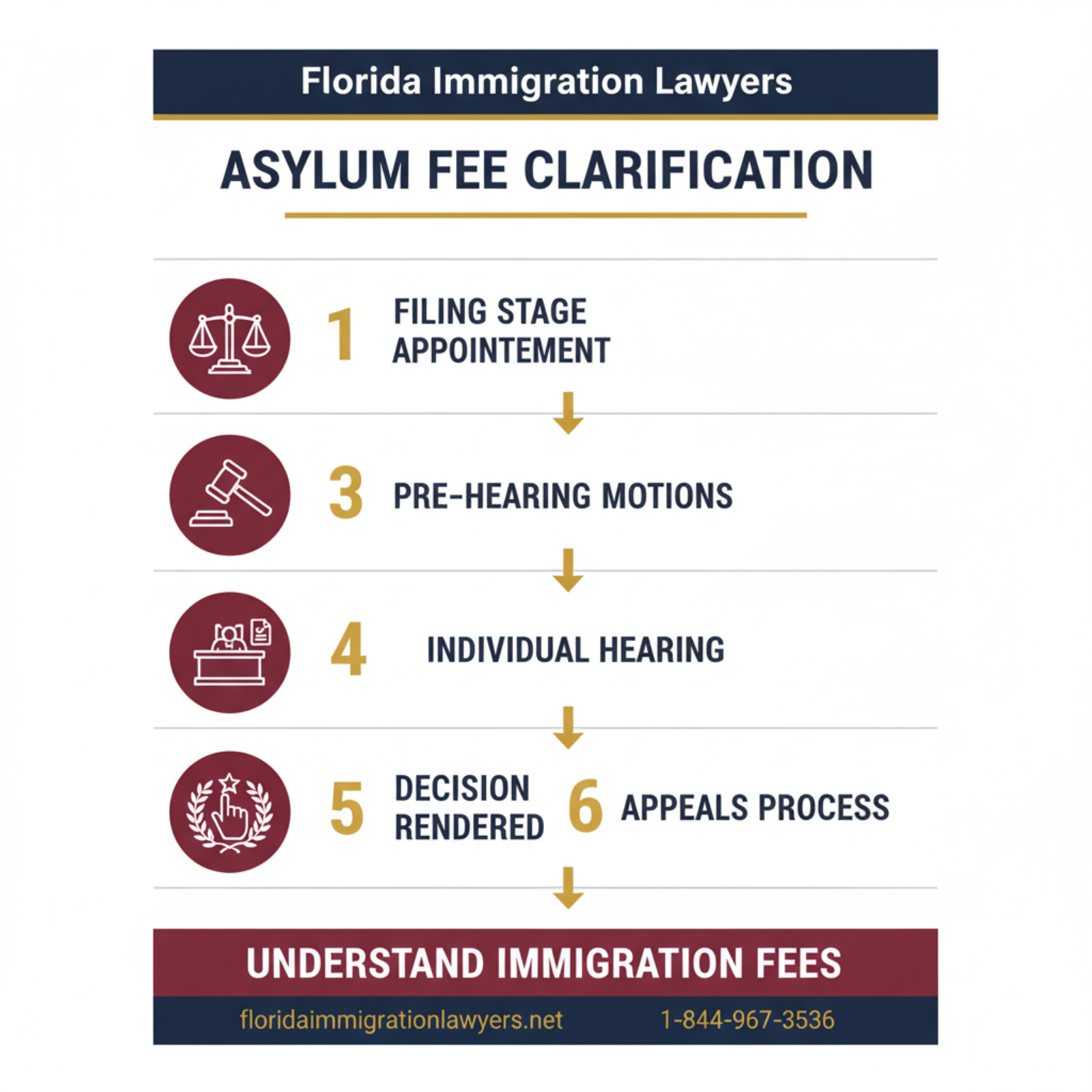
"Do Asylum Seekers Have to Pay $100 Per Year?"
The amount of an annual asylum fee has varied in past proposals. While a figure like $100 per year has been discussed, the actual amount for 2026, if implemented, could be different and is subject to change. It's important not to rely on outdated information. Always verify the current fee amount directly from official USCIS sources or by consulting with an experienced immigration law Florida attorney.
This fee is distinct from the filing fee for Form I-589 itself, which currently has no fee. It is also separate from the fees associated with employment authorization documents (EADs) or other immigration benefits. Always confirm which fee applies to your specific situation.
Navigating the Annual Asylum Fee Payment Process: A Step-by-Step Guide
Should the annual asylum fee be implemented for 2026, following the correct payment process is crucial to avoid complications in your asylum case. This guide provides a general framework for how the process would typically unfold.
- Receive Official Notification: USCIS or the Executive Office for Immigration Review (EOIR) would generally notify eligible individuals by mail. This notice would detail the fee amount, the payment deadline, and instructions on how to pay. It is critical to keep your address updated with USCIS and EOIR.
- Confirm Eligibility and Amount: Carefully review the notice to ensure you meet the criteria for payment and verify the exact fee amount. If you believe you are exempt or the information is incorrect, contact USCIS or your legal representative immediately.
- Choose a Payment Method: USCIS typically accepts various payment methods, including credit/debit cards, checks, money orders, or bank drafts. Online payment through the USCIS website may also be an option. Ensure the payment method is acceptable and that funds are available.
- Submit Payment: Follow the instructions precisely. If paying by mail, include the payment coupon from your notice and mail it to the designated address. If paying online, use the official USCIS payment portal. Always double-check account numbers and routing information.
- Apply for a Fee Waiver (If Applicable): If you qualify for a fee waiver due to financial hardship, you must submit Form I-912, Request for Fee Waiver, along with supporting documentation, before the payment deadline. Do not assume you are exempt; a formal application is required.
- Retain Proof of Payment: Always keep copies of your payment receipt, canceled checks, or confirmation numbers. This documentation is vital for your records and as proof of compliance, should any questions arise later.
Essential Document Checklist for Annual Asylum Fee Compliance
To successfully navigate the annual asylum fee requirements, having the right documents prepared is key. While the specific list may vary depending on USCIS guidance for 2026, here is a general checklist of items you should be ready to provide or reference.
- Official fee notice from USCIS or EOIR, clearly stating the required payment.
- Your Form I-589, Application for Asylum and for Withholding of Removal, receipt notice or copy of the filed application.
- Proof of identity, such as a copy of your passport or other government-issued ID.
- Details of your chosen payment method (e.g., credit card information, checkbook, money order details).
- If applying for a fee waiver, Form I-912, Request for Fee Waiver, along with supporting financial documentation (e.g., tax returns, proof of public benefits, income statements).
- Any correspondence from USCIS or EOIR related to your asylum case.
- Records of prior payments to USCIS, if applicable.
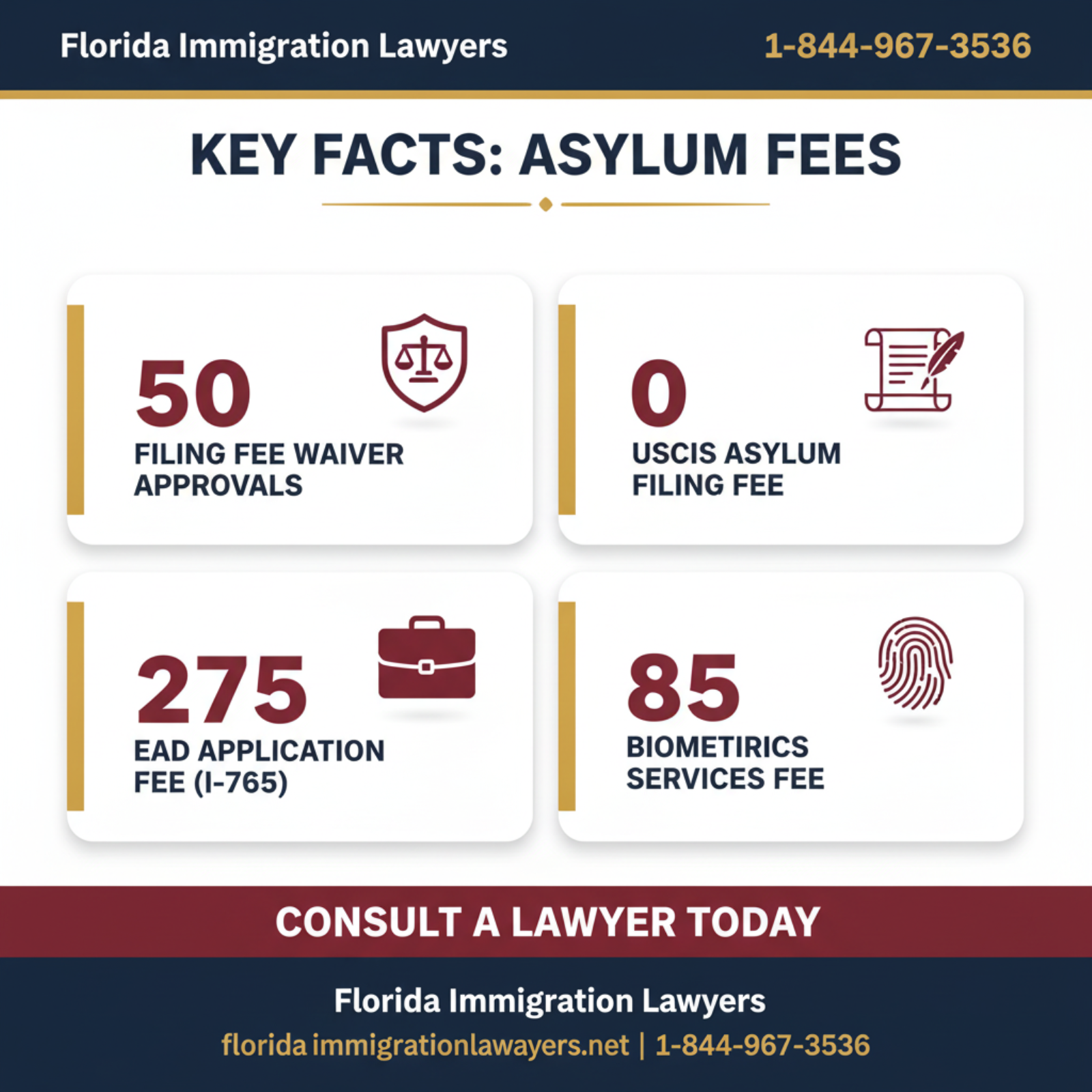
Carefully organizing these documents will streamline the payment process and help you avoid potential delays or issues with your USCIS fees. Keep both physical and digital copies in a secure location.
Understanding Timelines and Processing Expectations for the 2026 Annual Asylum Fee
Timeliness is critical when dealing with immigration fees. If an annual asylum fee is required for 2026, USCIS or EOIR will establish clear deadlines for payment. Missing these deadlines can have serious consequences for your asylum case, potentially leading to delays, rejection of your application, or even placement in deportation defense proceedings.
Payment Deadlines and Consequences
Typically, the notification for an annual asylum fee would include a specific due date. This date is usually non-negotiable, and extensions are rarely granted without exceptional circumstances. Failure to pay by the deadline could result in your asylum application being deemed abandoned or subject to dismissal.
It is important to remember that "Is the annual asylum fee on hold?" is a question that requires current, official information. While previous iterations of the fee have been put on hold or rescinded, you must assume any new notice you receive for 2026 is active and requires your prompt attention. Always check the latest updates on uscis.gov.
Processing Expectations
Once you submit your payment, USCIS or EOIR will process it and update your case records. You should receive a confirmation of payment, either electronically or by mail. The processing time for fee payments is generally quick, but it's always wise to allow a few weeks for the payment to reflect in your case status.
Keep a close eye on your case status online using your receipt number. If you do not see an update within a reasonable timeframe, or if you receive any further correspondence questioning your payment, contact an attorney immediately. Prompt action can prevent minor issues from escalating.
Cost Factors, Fee Waivers, and Exemptions for the Annual Asylum Fee
The financial aspect of immigration can be a significant burden for many asylum seekers in Florida. Understanding the specific cost factors for a potential annual asylum fee in 2026, along with available relief, is essential for effective planning.
Distinguishing the Annual Asylum Fee
It's important to clarify, "What is the $600 asylum program fee?" There is no universally recognized "$600 asylum program fee" as a standalone, annual requirement. This question might stem from confusion with other immigration fees or past proposals. The annual asylum fee, if implemented, would be a distinct charge for maintaining a pending asylum application, separate from the cost of other applications like an Employment Authorization Document (EAD) or other immigration benefits.
The exact amount of the annual asylum fee, if it comes into effect for 2026, will be specified by USCIS. Past discussions have involved amounts around $50-$100, but these are illustrative and subject to official regulation. Always refer to the official USCIS fee schedule or your specific fee notice.
Eligibility for Fee Waivers
Many asylum seekers face financial hardship, making fee waivers a critical option. USCIS provides guidelines for fee waiver eligibility, typically based on:
- Receiving a means-tested public benefit (e.g., Medicaid, SNAP, SSI).
- Having a household income at or below 150% of the Federal Poverty Guidelines.
- Experiencing financial hardship that prevents you from paying the fee.
To apply for a fee waiver, you must submit Form I-912, Request for Fee Waiver, along with comprehensive supporting documentation. This documentation proves your inability to pay. It is crucial to submit a complete and accurate fee waiver request; otherwise, it may be denied, potentially delaying your asylum case.
Other Potential Exemptions
Beyond financial hardship, certain individuals may be automatically exempt from an annual asylum fee. These could include specific categories of minors, individuals with certain medical conditions, or those who have already been granted a form of protection. Always check official USCIS guidance for a complete list of exemptions that might apply in 2026.
For asylum seekers in Florida, understanding these options can alleviate significant stress. Our team at Florida Immigration Lawyers can help you assess your eligibility for fee waivers or exemptions and prepare the necessary documentation.
Do not navigate this process alone. Contact Florida Immigration Lawyers today for expert assistance with your asylum case and any associated fees.
Common Mistakes to Avoid with the Annual Asylum Fee
Navigating immigration fees requires precision and attention to detail. Making mistakes with a potential annual asylum fee in Florida could jeopardize your asylum application. Here are common pitfalls to avoid:
- Ignoring Official Notifications: Many applicants miss crucial deadlines because they fail to open or understand mail from USCIS or EOIR. Always read every document thoroughly. Consequences: Missing payment deadlines, potential case abandonment.
- Missing Payment Deadlines: The due date for the fee is firm. Assuming flexibility can be a critical error. Consequences: Application dismissal, delays, or even initiation of deportation proceedings.
- Submitting the Incorrect Fee Amount: Fee amounts can change, and sometimes notices can be misread. Always verify the exact, current fee. Consequences: Payment rejection, processing delays, and requiring resubmission.
- Using an Unacceptable Payment Method: Not all payment methods are accepted by USCIS. Ensure your chosen method is valid and that funds are available. Consequences: Payment rejection, leading to missed deadlines.
- Failing to Keep Proof of Payment: Without a receipt or confirmation, proving you paid can be challenging if an issue arises. Always retain meticulous records. Consequences: Difficulty resolving payment disputes, potential requirement to repay.
- Assuming Automatic Exemption or Waiver: Even if you believe you qualify for an exemption or fee waiver, you must formally apply or be specifically notified. Consequences: Unpaid fee, leading to case issues.
- Confusing the Annual Fee with Other Immigration Fees: The annual asylum fee is distinct from filing fees for other forms (e.g., I-765 for EAD). Ensure you are paying for the correct requirement. Consequences: Incorrect payment, delays, or outstanding balances.
- Providing Outdated Contact Information: USCIS and EOIR communicate primarily by mail. If your address is not current, you won't receive vital notices. Consequences: Missing critical notifications, inability to comply with requirements.
- Not Seeking Legal Advice: Trying to navigate complex fee requirements and eligibility criteria without legal counsel can lead to errors. Consequences: Costly mistakes, delays, or adverse outcomes for your asylum case.
When to Call Florida Immigration Lawyers for Help
The immigration process, particularly concerning asylum and potential fees like the annual asylum fee, is fraught with complexities. Knowing when to seek professional legal assistance can make all the difference in your case's outcome. Florida Immigration Lawyers is dedicated to serving the needs of immigrants across Florida, from Pembroke Pines to Jacksonville.
You should consider contacting an experienced Florida immigration lawyer if any of the following scenarios apply to you:
- You receive a notice for an annual asylum fee and are unsure if it applies to you or how to pay.
- You believe you qualify for a fee waiver or exemption but need assistance with the application process.
- You have received a denial or a Request for Evidence (RFE) related to your fee payment or asylum application.
- Your asylum application has been pending for an extended period, and you are concerned about new fees or regulations.
- You are in deportation defense proceedings and need to ensure all aspects of your asylum claim, including fees, are handled correctly.
- You have any questions or concerns about your asylum case or other immigration matters in Florida.
Our team provides compassionate, knowledgeable representation. We understand the unique challenges faced by asylum seekers and are committed to protecting your rights and helping you achieve your immigration goals. Do not let confusion or fear prevent you from securing your future.
About Florida Immigration Lawyers
Florida Immigration Lawyers is a premier law firm dedicated to providing exceptional legal services to immigrants throughout Florida. With a deep understanding of U.S. immigration law and a commitment to our clients, we offer comprehensive legal solutions for a wide range of immigration matters.
Our services include expert representation for asylum claims, family-based immigration, business immigration, citizenship applications, and deportation defense. We pride ourselves on offering personalized attention, strategic advice, and aggressive advocacy for every client.
Why choose us? Our firm is known for its client-centered approach, proven track record, and unwavering dedication. We understand the stakes involved in immigration cases and work tirelessly to achieve the best possible outcomes for you and your family.
Contact us today for a free consultation. We are available 24/7 to answer your questions and provide the support you need. Call Florida Immigration Lawyers at 1-844-967-3536 or visit our website at https://www.floridaimmigrationlawyers.net. We serve all of Florida, ensuring that expert legal help is always within reach.
Sources and References
- U.S. Citizenship and Immigration Services (USCIS)
- Executive Office for Immigration Review (EOIR)
- 8 U.S.C. Chapter 12 - Immigration and Nationality Act (INA)
- 8 U.S.C. § 1158 - Asylum
- 8 U.S.C. § 1808 - Authority to collect fees (general reference for fee authority)
- 8 C.F.R. Part 208 - Asylum and Withholding of Removal
- 8 C.F.R. Part 103 - Adjudication of applications (general reference for fee waivers and processing)
This article provides general legal information and is not intended as legal advice. Every case is unique, and outcomes depend on specific facts and circumstances. Contact an attorney for advice about your particular situation.
Understanding potential fees like the annual asylum fee is crucial for your immigration journey. Don't leave your future to chance. Secure the expert legal representation you deserve with Florida Immigration Lawyers.
Call us today for a free, confidential consultation at 1-844-967-3536. Se Habla Español - Estamos aquí para ayudarle.
Do Not Navigate This Process Alone
Our experienced immigration attorneys are ready to fight for you. Get a free, confidential consultation today.
Se Habla Español
Frequently Asked Questions
Florida Immigration Lawyers
Immigration Attorney | Founder, Vasquez Law Firm
U.S. Air Force veteran and immigration attorney with thousands of cases resolved. J.D., NCCU School of Law. AILA member. Admitted to the 4th, 5th, and 11th Circuit Courts.
Available 24/7 - Free Evaluations
Related Legal Services
Our Florida immigration attorneys can help you with citizenship and naturalization, family immigration services and immigration practice areas. Call today at 1-844-967-3536 for a free consultation.
Related Links
Related Topics
Free Legal Consultation
Discuss your case with our experienced attorneys. We're available 24/7.
Se Habla Español - Estamos aquí para ayudarle.
Related Articles
Understanding the Asylum One-Year Deadline in Florida
Understanding the one-year deadline for asylum applications is crucial for those seeking safety in Florida. Learn the importance of timely filing, exceptions, and how legal assistance can guide you through the process. Contact Florida Immigration Lawyers at 1-844-967-3536 for a free consultation.
Immigration Lawyer Services in Miami, Florida | VLF Florida
Explore comprehensive immigration lawyer services in Miami, Florida. From asylum to deportation defense, our attorneys are ready to assist you. Call Florida Immigration Lawyers at 1-844-967-3536 for a free consultation.
DACA Renewal Guide for Dreamers in Florida 2026 | VLF Florida
Navigate the 2026 DACA renewal process in Florida with our comprehensive guide. Learn the steps, avoid common pitfalls, and ensure your application is successful. Call Florida Immigration Lawyers for a free consultation.
Immigration Lawyer Miami: Services in Florida | VLF Florida
Explore the comprehensive immigration lawyer services available in Miami, Florida, offered by Florida Immigration Lawyers. Whether you need assistance with visas, green cards, or deportation defense, our skilled attorneys are here to help. Call us at 1-844-967-3536 for a free consultation.
