Abrego Garcia Deportation Florida: Protecting Your Rights
The Abrego Garcia deportation case underscores critical due process issues in U.S. immigration law. For individuals in Florida facing similar removal proceedings, understanding your rights and the legal avenues available is paramount. This comprehensive guide from Florida Immigration Lawyers aims to demystify the deportation process for individuals across Florida, including Tampa, Orlando, and Miami. We explore the critical aspects of removal proceedings, your fundamental due process rights, and the strategic steps you can take to defend yourself. Learn about essential documents, timelines, costs, and common mistakes to avoid. Our firm offers dedicated legal support to protect your rights and help you navigate the complexities of immigration court. Contact us for a free consultation to discuss your specific situation.

The Abrego Garcia deportation case highlights critical due process issues in U.S. immigration law. For individuals in Florida facing similar removal proceedings, understanding your rights and the legal avenues available is paramount. This article outlines the complexities of deportation defense, emphasizing legal representation to challenge wrongful orders and ensure fair treatment. Key takeaways include the importance of legal counsel, knowing your rights, and understanding the appeals process.
- The Abrego Garcia case underscores due process concerns in deportation.
- Florida residents facing removal need to understand their legal rights.
- Effective legal representation is crucial to challenge deportation orders.
- Learn about the steps to defend against deportation in Florida.
- Appeals and motions to reopen are vital tools in complex cases.
Abrego Garcia Deportation Florida: Protecting Your Rights in 2026
The thought of deportation can be terrifying, bringing immense uncertainty and fear for your future and your family's well-being. Cases like the Abrego Garcia deportation, where questions of due process and proper legal procedures arise, highlight the critical importance of understanding your rights and having expert legal representation. In Florida, navigating the complexities of immigration law requires a deep understanding of federal regulations and local court practices.
This comprehensive guide from Florida Immigration Lawyers aims to demystify the deportation process for individuals across Florida, including Tampa, Orlando, and Miami. We will explore the critical aspects of removal proceedings, your fundamental due process rights, and the strategic steps you can take to defend yourself. Understanding these elements is your first line of defense against potential injustice.
Do not face the daunting prospect of removal proceedings alone. Your future in the United States depends on informed decisions and robust legal advocacy. Call Florida Immigration Lawyers at 1-844-967-3536 for a free consultation to discuss your specific situation and explore your defense options. We are here to help you protect your right to live and thrive in Florida.
Understanding Abrego Garcia Deportation and Due Process in Florida
The Kilmar Abrego Garcia case drew national attention to the critical importance of due process in immigration proceedings. It serves as a stark reminder that even with existing legal protections, individuals can face wrongful deportation if their rights are not vigorously defended. This case highlighted procedural errors and the potential for a lack of proper notice, which are foundational elements of a fair legal process.
In the context of the U.S. legal system, due process immigration rights ensure that individuals are treated fairly by the government. This means you have the right to be informed of the charges against you, the right to present evidence, the right to confront witnesses, and generally, the right to legal representation. These rights are not just abstract concepts; they are vital safeguards against arbitrary government action, especially in life-altering matters like deportation.
For immigrants in Florida, understanding these rights is particularly crucial given the state's diverse population and high volume of immigration cases. Florida is home to significant immigration courts, including the Miami Immigration Court and the Orlando Immigration Court, which handle a substantial number of removal proceedings annually. Each of these courts operates under the Executive Office for Immigration Review (EOIR), part of the U.S. Department of Justice, and adjudicates cases according to federal immigration law. We regularly represent clients in these courts, providing experienced guidance through complex legal challenges.
The principle of due process is enshrined in the Fifth and Fourteenth Amendments of the U.S. Constitution and further elaborated in the Immigration and Nationality Act (INA). Specifically, INA § 240 outlines the procedures for removal proceedings, mandating fair hearings. Without diligent legal counsel, many individuals facing removal proceedings Florida may not fully grasp their entitlements or effectively utilize them. This is where a knowledgeable immigration lawyer becomes indispensable.
Florida's role as a gateway for many immigrants means its legal landscape is constantly evolving with new cases and precedents. The lessons from cases like Abrego Garcia resonate deeply here, emphasizing the need for every individual to assert their rights. Our firm, Florida Immigration Lawyers, is dedicated to upholding these principles for our clients across the state, from Tampa to Fort Lauderdale.
Navigating Removal Proceedings: A Step-by-Step Guide for Florida Residents
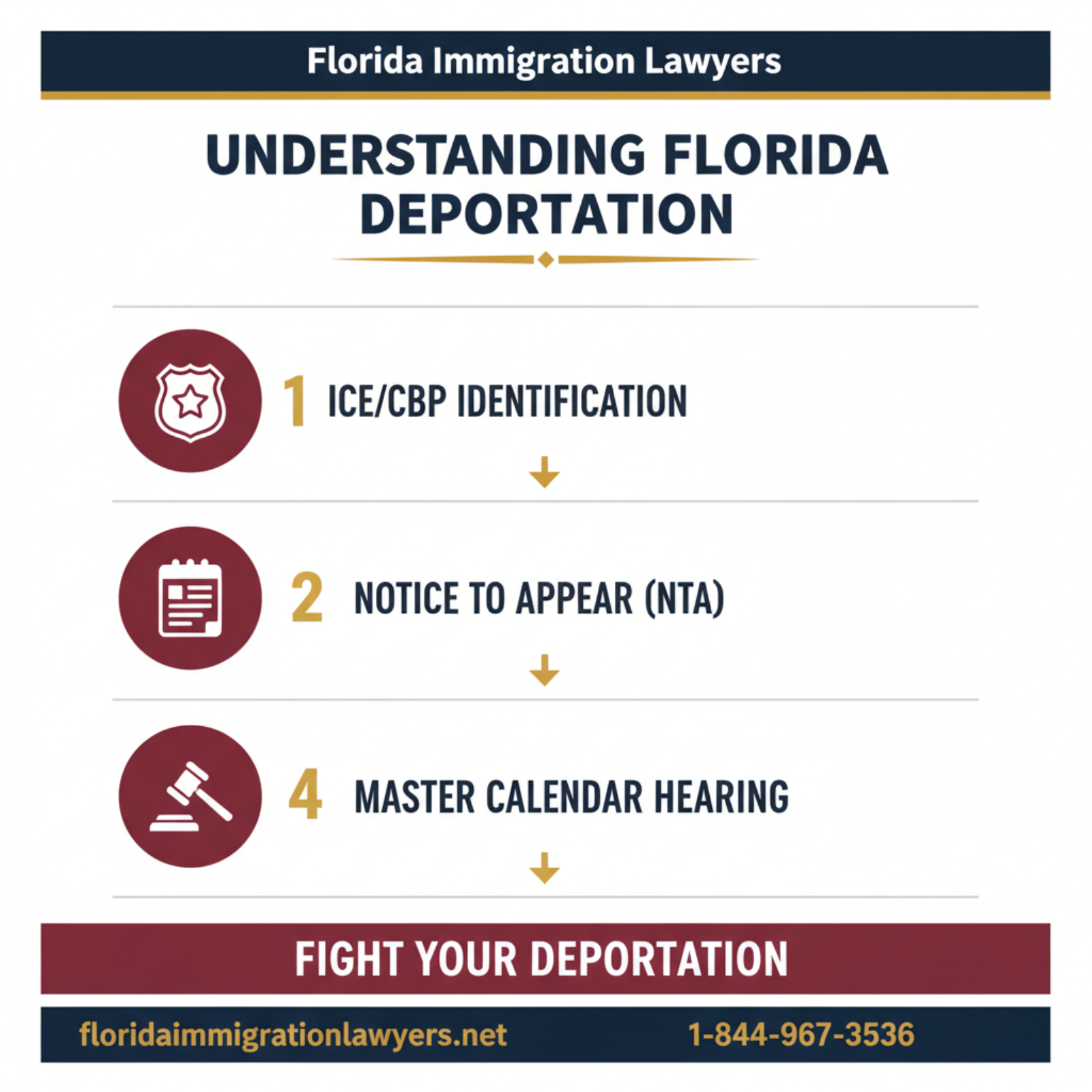
Facing removal proceedings Florida can be an overwhelming experience, but understanding the steps involved can empower you to make informed decisions. This process typically begins with official notice and progresses through several stages, each with its own deadlines and requirements. Having a clear roadmap is essential for building a strong defense.
-
Receipt of a Notice to Appear (NTA): The NTA (Form I-862) is the document that formally initiates removal proceedings. It is issued by the Department of Homeland Security (DHS) and alleges that you are deportable, specifying the charges against you and notifying you of your scheduled appearance before an Immigration Judge. Receiving an NTA means your case has been referred to an immigration court, such as the Miami Immigration Court.
-
Master Calendar Hearings: These are preliminary hearings where the Immigration Judge addresses procedural matters, confirms your identity, and ensures you understand the charges. You will be asked to admit or deny the factual allegations in the NTA and concede or deny the charges of deportability. This is also when you inform the court if you intend to seek any forms of relief from removal, such as asylum, cancellation of removal, or adjustment of status.
-
Individual Hearings (Merits Hearings): If you deny deportability or apply for relief, the judge will schedule an individual hearing. This is a full trial where you and the government present evidence, call witnesses, and make legal arguments. This hearing is your opportunity to demonstrate your eligibility for relief and to challenge the government's case against you. Thorough preparation and an experienced immigration lawyer Tampa are critical at this stage.
-
Decision by the Immigration Judge: After the individual hearing, the Immigration Judge will issue a decision. The judge may order you removed (deported), grant you a form of relief, or terminate the proceedings. The decision is typically delivered orally at the end of the hearing or in writing at a later date. Understanding the judge's reasoning is vital for any potential appeals.
-
Appeals to the Board of Immigration Appeals (BIA): If either you or the government disagrees with the Immigration Judge's decision, you generally have 30 days to file an appeal with the Board of Immigration Appeals (BIA). The BIA reviews the judge's decision for legal error or factual findings that are clearly erroneous. This is an administrative appeal, meaning there are no new hearings or evidence presented; the BIA reviews the record from the Immigration Court. This process is governed by 8 CFR § 1003.1.
-
Motions to Reopen or Reconsider: In certain circumstances, you might be able to file a motion to reopen your case with the Immigration Judge or the BIA. A motion to reopen typically seeks to introduce new evidence that was not available at the time of your hearing. A motion to reconsider asks the judge or BIA to review their previous decision based on a perceived legal or factual error. These motions have strict deadlines and requirements.
Each step in this process requires careful attention to detail and adherence to strict deadlines. Missing a deadline or failing to submit proper documentation can have severe consequences for your case. This is why having an experienced attorney from Florida Immigration Lawyers by your side is not just beneficial, but often essential for a successful outcome in your Florida immigration court.
Essential Documents for Your Deportation Defense in Florida
A strong deportation defense relies heavily on comprehensive and well-organized documentation. Gathering the right evidence can significantly impact the outcome of your removal proceedings. Your immigration attorney will help you identify exactly what is needed, but here is a general checklist of documents commonly required.
- Personal Identification Documents: This includes your passport, birth certificate, national identity card, and any U.S. visas or entry stamps. Any official identification that proves your identity and nationality is crucial.
- Proof of Residence and Ties to Florida: Documents demonstrating your long-term presence and connections in Florida are vital. This can include utility bills, lease agreements, mortgage statements, property deeds, and Florida driver's licenses or state IDs.
- Family Information: If you have U.S. citizen or lawful permanent resident family members, provide their birth certificates, marriage certificates, and immigration documents. This is especially important for relief forms like cancellation of removal or adjustment of status through family petitions.
- Employment History and Financial Records: Pay stubs, W-2 forms, tax returns, and letters from employers can show stable employment and financial contributions. These documents help establish your positive contributions to the community and economy in Florida.
- Educational Records: Diplomas, transcripts, and certificates from schools or training programs attended in the U.S. or your home country. This showcases your educational achievements and integration.
- Medical Records: Any medical conditions that require treatment in the U.S. or would be difficult to obtain in your home country can be relevant, particularly for humanitarian-based relief.
- Police and Court Records: If you have any criminal history, even minor infractions, you must provide certified copies of all arrest and conviction records. Transparency is critical, as failure to disclose can harm your case.
- Affidavits and Letters of Support: Statements from family, friends, employers, or community leaders attesting to your good moral character, community involvement, and the hardship your deportation would cause. These personal testimonials can be powerful.
- Evidence for Specific Relief: Depending on the type of relief you are seeking (e.g., asylum, U visa, T visa, Cancellation of Removal), you will need specific evidence. For asylum, this includes evidence of persecution; for cancellation of removal, it requires proof of physical presence and good moral character.
- Previous Immigration Documents: Any past applications, petitions, notices, or correspondence from USCIS, ICE, or the immigration court. This provides a complete history of your interactions with immigration authorities.
Organizing these documents can be a complex task, but it is a fundamental part of building a strong defense against abrego garcia deportation issues. Florida Immigration Lawyers can help you systematically gather and present all necessary documentation, ensuring nothing is overlooked in your defense.
Deportation Case Timelines and Processing Expectations in Florida
The timeline for a deportation case in Florida can vary significantly, ranging from a few months to several years. This variability depends on numerous factors, including the complexity of your case, the type of relief you seek, court backlogs, and the specific immigration court handling your matter. Understanding these factors can help manage your expectations during this stressful period.
Florida's immigration courts, particularly in Miami and Orlando, often experience heavy caseloads. This can lead to delays in scheduling hearings, especially individual hearings which are more time-intensive. While Master Calendar Hearings might be scheduled relatively quickly, the gap between these and Individual Hearings can sometimes stretch for months or even over a year, depending on the court's docket and the judge's availability.
The type of relief you apply for also impacts the timeline. For instance, an asylum case might involve extensive testimony and evidence, leading to a longer individual hearing. Similarly, complex cases involving criminal history or multiple forms of relief will naturally take more time to adjudicate. Appeals to the Board of Immigration Appeals (BIA) can add another year or more to the overall process.
Changes in immigration policy and enforcement priorities can also influence processing times. For example, shifts in focus toward certain types of cases might expedite or delay others. The U.S. Citizenship and Immigration Services (USCIS) website provides general processing times for various applications, but immigration court timelines are managed by the Executive Office for Immigration Review (EOIR).
While specific predictions are impossible, your immigration lawyer can provide a more realistic estimate based on their experience with the Florida immigration court system. They can also advise on strategies to potentially expedite certain parts of your case, though significant delays are often unavoidable due to systemic issues. Patience and persistent legal advocacy are key components of navigating these timelines effectively.
Cost Factors and Legal Fees in Florida Deportation Defense
Understanding the financial aspects of deportation defense is a critical part of preparing for your case. The costs involved generally fall into two main categories: government filing fees and attorney fees. These expenses can vary widely based on the complexity of your case and the services required.
- Government Filing Fees: Many applications for relief from removal require a filing fee payable to USCIS or EOIR. For example, an application for adjustment of status (Form I-485) or a motion to reopen may have associated fees. These fees are set by the government and are subject to change. It is important to note that some individuals may be eligible for fee waivers based on financial hardship, which your attorney can help you assess.
- Attorney Fees: Legal fees for deportation defense can be structured in various ways. Some attorneys charge an hourly rate, while others may offer a flat fee for specific stages of the process or for the entire case. The total cost will depend on the amount of work involved, the complexity of your case, the experience of your attorney, and the duration of the proceedings. A highly experienced immigration lawyer Tampa typically commands fees commensurate with their expertise and success rate.
- Ancillary Costs: Beyond filing and attorney fees, you might incur other expenses. These can include costs for obtaining certified copies of documents, translation services for foreign-language documents, expert witness fees if required, and travel expenses for court appearances. These smaller costs can add up, so it's important to budget for them.
Investing in qualified legal representation is an investment in your future. While the costs may seem significant, attempting to navigate complex removal proceedings Florida without an attorney can lead to critical errors, missed deadlines, and ultimately, a higher risk of a deportation order. A skilled attorney can identify all available forms of relief, prepare a compelling case, and represent you effectively in court, potentially saving you from irreversible consequences.
At Florida Immigration Lawyers, we believe in transparent fee structures and will discuss all potential costs with you upfront during your consultation. We understand the financial pressures many families face and strive to provide high-quality legal services that are accessible. We offer free consultations to help you understand your options without initial financial commitment.
Do not navigate this process alone. Contact Florida Immigration Lawyers today. Our experienced team is ready to provide the dedicated legal support you need to defend your right to stay in Florida.
Common Mistakes to Avoid in Deportation Proceedings
Navigating deportation proceedings is fraught with potential pitfalls. Even minor errors can have severe, lasting consequences, impacting your ability to remain in the U.S. and potentially leading to a final order of removal. Being aware of these common mistakes is the first step toward avoiding them.
-
Missing Court Dates: Failing to appear for any scheduled Master Calendar Hearing or Individual Hearing will almost certainly result in an in absentia removal order. This means the judge orders you deported without you being present, making it much harder to reopen your case. Always confirm your court dates and arrive on time.
-
Not Understanding the Charges in Your NTA: The Notice to Appear (NTA) outlines the specific legal reasons the government believes you are deportable. If you do not fully understand these charges, you cannot effectively challenge them or identify potential defenses. This lack of understanding can lead to incorrect admissions in court.
-
Failing to Gather Comprehensive Evidence: A weak case is often one with insufficient supporting documentation. Not collecting all necessary personal, financial, family, and relief-specific evidence can severely undermine your claims and reduce your chances of being granted relief from removal. Every piece of evidence tells part of your story.
-
Attempting to Represent Yourself: While you have the right to self-representation, immigration law is incredibly complex. Without legal training, you may miss critical deadlines, misunderstand legal arguments, or fail to present your case effectively. This significantly lowers your chances of a favorable outcome compared to having an experienced attorney.
-
Providing False Information or Misrepresentations: Lying or making false statements to immigration officials or in court documents can lead to severe penalties, including a permanent bar from future immigration benefits. Always be truthful and transparent, even if the information seems detrimental to your case. Your attorney can help you present difficult facts honestly and strategically.
-
Ignoring Appeal Deadlines: If an Immigration Judge issues an unfavorable decision, you typically have only 30 days to file a notice of appeal with the Board of Immigration Appeals (BIA). Missing this deadline means you forfeit your right to appeal, and the judge's removal order becomes final. Timely action is paramount.
-
Traveling Internationally Without Permission: If you are in removal proceedings, leaving the U.S. without specific advance parole or other authorization can be considered self-deportation. This can result in your case being closed and you being barred from re-entry, even if you had a strong defense. Always consult your attorney before any travel plans.
-
Not Updating Your Address with USCIS and EOIR: If you move, you are legally required to notify USCIS and the Executive Office for Immigration Review (EOIR) of your new address within five days. Failure to do so means you may not receive important court notices, potentially leading to an in absentia removal order. This is a common and easily avoidable mistake.
-
Assuming Your Case is Hopeless: Many individuals believe their situation is beyond help, especially after receiving an NTA or having a previous application denied. However, an experienced deportation defense attorney can often find pathways to relief that you may not be aware of. Never give up without exploring all legal options.
-
Delaying Legal Consultation: The sooner you seek legal advice, the better. Early intervention allows your attorney more time to gather evidence, prepare your defense, and identify potential forms of relief. Waiting until the last minute severely limits your options and reduces the effectiveness of your defense strategy.
When to Call a Lawyer for Abrego Garcia Deportation Issues
The moment you suspect you might be at risk of deportation, or if you receive any official communication from immigration authorities, is the time to contact an experienced immigration attorney. Proactive legal counsel can make a significant difference in the outcome of your case. Do not wait until it is too late.
Here are specific scenarios where calling Florida Immigration Lawyers immediately is crucial:
- Receipt of a Notice to Appear (NTA): This is the official start of your removal proceedings. An attorney can review the charges, advise you on how to plead, and begin building your defense strategy.
- Contact with ICE or Border Patrol: If you are approached, detained, or questioned by Immigration and Customs Enforcement (ICE) or Border Patrol, do not answer questions without an attorney present. Assert your right to remain silent and request legal counsel.
- Detention: If you or a loved one is detained by immigration authorities, an attorney can work to secure release on bond and prepare a defense while in custody. We have experience with detention centers like the Krome Service Processing Center in Florida.
- Complex Immigration History: If you have previous denials, criminal convictions (even minor ones), or prior deportation orders, your case is inherently complex. An attorney can assess the impact of these factors and identify possible waivers or forms of relief.
- Seeking Relief from Removal: Whether you believe you qualify for asylum, cancellation of removal, adjustment of status, or other forms of relief, an attorney can help you prepare and present a compelling application with all necessary evidence.
- Appealing a Decision: If an Immigration Judge issues an unfavorable decision, you have a limited time to appeal. An attorney can file the appeal and represent you before the Board of Immigration Appeals.
- Questions about your status or eligibility: If you are unsure about your immigration status, eligibility for benefits, or how a change in law might affect you, a legal consultation can provide clarity and guidance.
Florida Immigration Lawyers specializes in deportation defense, family immigration, and citizenship cases throughout Florida. We understand the specific nuances of the Florida immigration court system and are committed to protecting your rights. Our team is equipped to handle complex cases, from initial notices to appeals, ensuring you receive the robust advocacy you deserve.
About Florida Immigration Lawyers
Florida Immigration Lawyers is a leading immigration law firm dedicated to serving individuals and families across the entire state of Florida. Our mission is to provide compassionate, effective, and client-focused legal representation for all immigration matters, from simple petitions to complex deportation defense cases. We understand the profound impact immigration issues have on your life and are committed to guiding you through every step of your legal journey.
Our team of experienced attorneys possesses an in-depth understanding of U.S. immigration law and the specific challenges faced by immigrants in Florida. We pride ourselves on offering personalized strategies tailored to each client's unique circumstances, ensuring the best possible outcomes. We serve clients in major cities like Tampa, Miami, Orlando, and Jacksonville, as well as smaller communities throughout the state.
We offer a comprehensive range of immigration services, including but not limited to:
- Deportation and Removal Defense
- Asylum and Refugee Claims
- Family-Based Immigration
- Employment and Business Immigration
- Naturalization and Citizenship
- Visa Applications and Consular Processing
- Appeals and Waivers
Choosing Florida Immigration Lawyers means choosing a firm that prioritizes your rights and your future. We are available 24/7 to address urgent concerns and offer free, confidential consultations to help you understand your options without financial obligation. Our bilingual staff ensures that language is never a barrier to receiving expert legal advice.
For dedicated and experienced immigration legal assistance in Florida, contact us today. Our phone number is 1-844-967-3536, and you can learn more about our services at https://www.floridaimmigrationlawyers.net. Let us be your trusted advocates in your immigration journey.
Sources and References
- U.S. Citizenship and Immigration Services (USCIS)
- Executive Office for Immigration Review (EOIR)
- U.S. Department of State (travel.state.gov)
- 8 U.S.C. Chapter 12 - Immigration and Nationality Act (INA)
- INA § 240 - Removal Proceedings
- 8 CFR § 1003.1 - Board of Immigration Appeals
- Fifth Amendment to the U.S. Constitution - Due Process Clause
This article provides general legal information and is not intended as legal advice. Every case is unique, and outcomes depend on specific facts and circumstances. Contact an attorney for advice about your particular situation.
Protect your future. Do not let the complexities of immigration law jeopardize your ability to remain in the United States. Call Florida Immigration Lawyers at 1-844-967-3536 for a free, confidential consultation. Our dedicated team is ready to provide the expert legal guidance and representation you need. Se Habla Español - Estamos aquí para ayudarle.
Do Not Navigate This Process Alone
Our experienced immigration attorneys are ready to fight for you. Get a free, confidential consultation today.
Se Habla Español
Frequently Asked Questions
Florida Immigration Lawyers
Immigration Attorney | Founder, Vasquez Law Firm
U.S. Air Force veteran and immigration attorney with thousands of cases resolved. J.D., NCCU School of Law. AILA member. Admitted to the 4th, 5th, and 11th Circuit Courts.
Available 24/7 - Free Evaluations
Related Legal Services
Our Florida immigration attorneys can help you with immigration practice areas, free immigration consultation and experienced immigration attorneys. Call today at 1-844-967-3536 for a free consultation.
Related Links
Related Topics
Free Legal Consultation
Discuss your case with our experienced attorneys. We're available 24/7.
Se Habla Español - Estamos aquí para ayudarle.
Related Articles
L-1 Visa Transfer for Florida Companies | VLF Florida
Learn about L-1 visa intracompany transfers for Florida companies. Ensure a smooth transition for your employees to Tampa. Call 1-844-967-3536 for expert advice.
H-2A Visa Opportunities for Florida Agricultural Workers
Explore opportunities for Florida agricultural workers under the H-2A visa program. Learn about application steps, costs, and common mistakes.
Derived Citizenship Through Parents in Florida | VLF Florida
Discover how children born abroad can gain U.S. citizenship through their parents in Florida. Learn about eligibility, the application process, and common pitfalls. Contact Florida Immigration Lawyers at 1-844-967-3536 for expert assistance.
Understanding Immigration Bond Hearings in Florida
Navigating an immigration bond hearing in Florida can be complex. Learn about the process, necessary documents, and common mistakes. Call Florida Immigration Lawyers for assistance.