Abrego Garcia Deportation: Florida Immigration Defense
The Kilmar Abrego Garcia deportation case exposed critical flaws in the U.S. immigration system, highlighting the profound importance of due process and robust legal defense. For individuals and families in Florida, understanding the intricacies of removal proceedings is vital to safeguard their future. This article examines the lessons from the Abrego Garcia case, providing a comprehensive guide to navigating deportation challenges in Florida. We cover the step-by-step process, essential documentation, expected timelines, and associated costs. Learn about common mistakes to avoid and when it's crucial to seek expert legal assistance. Florida Immigration Lawyers offers compassionate and strategic representation for all immigration matters, ensuring your rights are protected.

The Kilmar Abrego Garcia deportation case highlights the critical importance of due process and competent legal representation in U.S. immigration proceedings. His wrongful deportation underscores the severe consequences of errors within the system. For Florida immigrants facing similar challenges, understanding your rights and having expert legal counsel is paramount to navigating complex removal proceedings and preventing unjust outcomes.
- Due process is a fundamental right in immigration cases.
- Legal representation significantly reduces risks of wrongful deportation.
- The Abrego Garcia case exemplifies systemic challenges in immigration.
- Florida residents facing removal need vigilant legal defense.
Abrego Garcia Deportation: Florida Immigration Defense Insights 2026
The specter of deportation looms large for many non-citizens in the United States, casting a shadow of uncertainty over their lives and futures. For families living in Florida, particularly in vibrant communities like Jacksonville, the fear of removal proceedings can be constant. The high-profile Kilmar Abrego Garcia deportation case serves as a stark reminder of how fragile an immigrant's status can be, even when due process rights are seemingly assured.
This article delves into the complexities surrounding the Abrego Garcia deportation, exploring its lessons for immigrants across Florida. We will provide a comprehensive guide to understanding removal proceedings, outline essential defense strategies, and emphasize the indispensable role of experienced legal counsel. Our goal is to empower you with knowledge and equip you to protect your rights.
If you or a loved one in Florida is facing immigration challenges or the threat of deportation, do not delay. Understanding your legal options immediately is crucial. Call Florida Immigration Lawyers at 1-844-967-3536 for a free consultation. Our dedicated team is ready to provide the guidance and representation you need.
Understanding the Abrego Garcia Deportation Case and Its Impact in Florida
The case of Kilmar Armando Abrego Garcia, a Salvadoran national, became a national focal point regarding wrongful deportation. His initial removal in March 2025 by U.S. authorities, despite ongoing legal challenges and a stay of deportation, sparked outrage and raised serious questions about the integrity of the immigration system. Abrego Garcia was later returned to the U.S. after his legal team successfully argued that his deportation was unlawful and violated his due process rights.
This incident, though specific, resonates deeply with immigrants and legal advocates across the country, including here in Florida. It underscores the potential for errors, miscommunications, and the critical need for vigilant legal oversight throughout the entire deportation process. The case highlights that even when individuals have a legal basis to remain, procedural missteps can lead to devastating consequences.
For immigrants in Florida, particularly those in areas like Jacksonville, Tampa, and Orlando, the Abrego Garcia case is a cautionary tale. It emphasizes that relying solely on the system to uphold your rights can be risky. Having a knowledgeable deportation defense attorney is not just beneficial; it can be the difference between remaining in the U.S. and being unjustly removed from your home and family.
Our firm, Florida Immigration Lawyers, understands these anxieties. We are committed to ensuring that every client in Florida receives the robust defense and expert guidance they deserve. We analyze every detail of your case to prevent the types of errors that plagued the Abrego Garcia situation.
Navigating Removal Proceedings: A Step-by-Step Guide for Florida Residents
Facing removal proceedings can be overwhelming, but understanding the process is the first step toward building a strong defense. This guide outlines the typical stages of deportation cases in Florida's immigration courts. These courts, primarily located in Orlando, Miami, and Pompano Beach, handle cases for residents across the state, including those from Jacksonville.
-
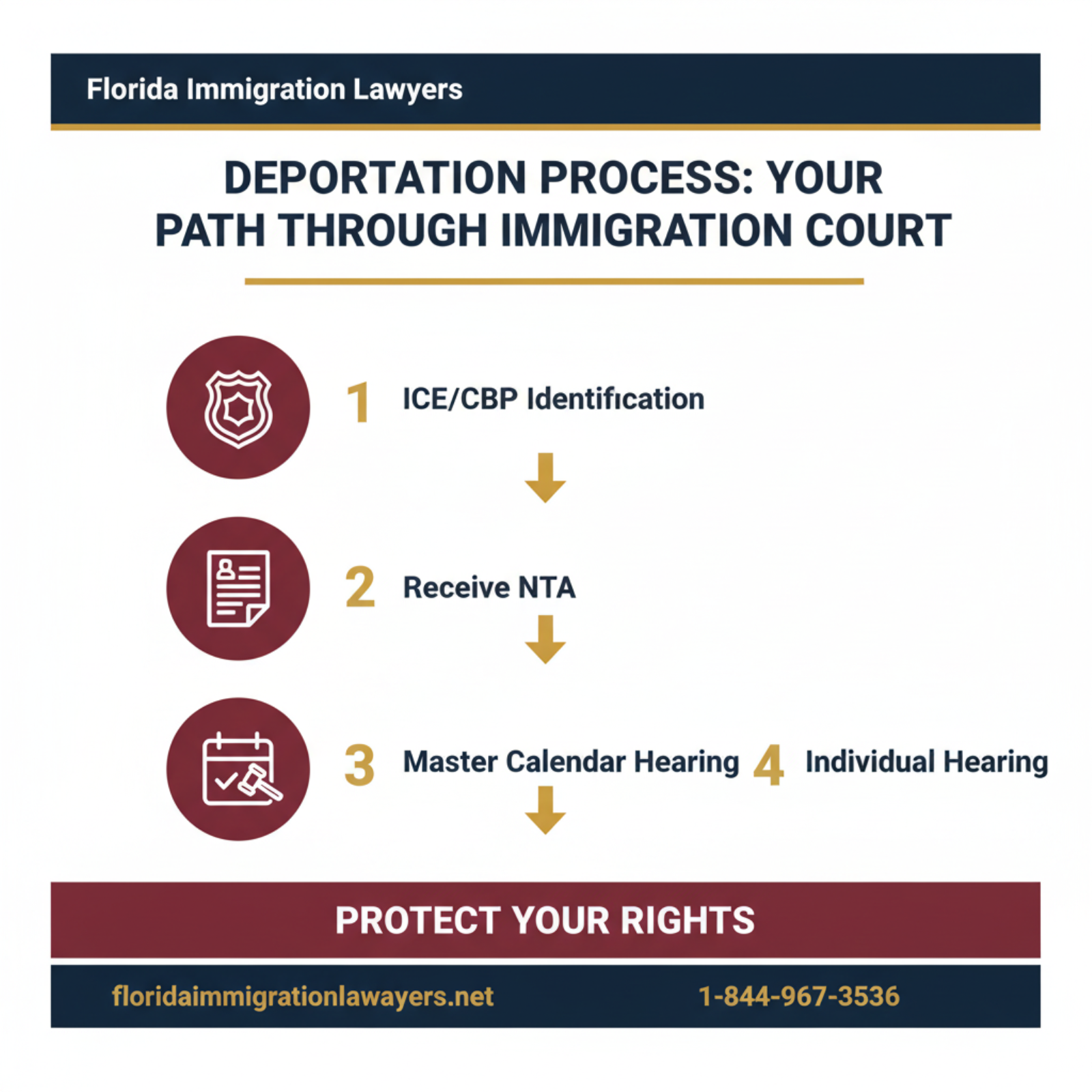
Receipt of a Notice to Appear (NTA): This is the official document that initiates removal proceedings. The NTA will state the charges against you and notify you of your first court date, known as a Master Calendar Hearing. It is crucial to read this document carefully and understand why the government believes you are deportable. Ignoring an NTA can lead to an order of deportation in absentia, which is extremely difficult to reverse.
-
Master Calendar Hearing: This is your initial appearance before an Immigration Judge. During this hearing, the judge will confirm your identity, ensure you received the NTA, and ask you to admit or deny the charges and allegations. You will also be asked to state what form of relief from removal, if any, you intend to seek. This is a procedural hearing, often brief, but vital for setting the course of your case.
-
Pleading for Relief from Removal: If you admit the charges or if the judge finds them proven, you may be eligible to apply for various forms of relief from deportation. Common types of relief include asylum, withholding of removal, protection under the Convention Against Torture, cancellation of removal for certain non-permanent residents, or adjustment of status. Each form of relief has specific eligibility requirements that must be met.
-
Individual Hearing (Merits Hearing): This is the main trial where you present your evidence, testimony, and legal arguments for why you should not be deported. The government attorney (ICE counsel) will also present their case. This hearing is much longer than a Master Calendar Hearing and requires thorough preparation, including witness testimony and extensive documentation. An Immigration Judge will then make a decision based on the evidence presented.
-
Decision and Appeals: After the Individual Hearing, the Immigration Judge will issue a decision. If the judge grants your requested relief, your removal proceedings will terminate. If the judge orders you removed, you typically have the right to appeal the decision to the Board of Immigration Appeals (BIA) within 30 days. Further appeals can be made to a U.S. Circuit Court of Appeals. The appeals process is complex and requires specialized legal knowledge.
Throughout this intricate process, having an experienced Florida immigration lawyer by your side is invaluable. They can help you understand the charges, identify potential forms of relief, prepare your applications, gather evidence, and represent you effectively in court. The U.S. immigration court system is part of the Executive Office for Immigration Review (EOIR), and navigating its rules and procedures requires expertise. For more information on removal proceedings, refer to 8 U.S.C. § 1229a (Removal Proceedings).
Essential Documents for Your Florida Deportation Defense
A strong deportation defense hinges on comprehensive and meticulously organized documentation. Gathering the right evidence can significantly bolster your case for relief from removal. Here is a general checklist of documents often required for individuals in Florida facing deportation proceedings.
- Identity and Travel Documents: Your passport, birth certificate, national ID card, and any previous visas or entry stamps. These establish your identity and immigration history.
- Proof of Residence in Florida: Utility bills, lease agreements, property deeds, bank statements, or other official mail showing your continuous presence in Florida. This helps demonstrate your ties to the community.
- Financial Records: Tax returns (Forms 1040), pay stubs, employment verification letters, and bank statements. These can show financial stability and contributions to the U.S. economy.
- Family Ties Evidence: Marriage certificates, birth certificates of U.S. citizen or legal permanent resident children, divorce decrees, and affidavits from family members. This is crucial for family immigration-based relief.
- Medical Records: Documentation of any serious medical conditions you or your family members have that might be difficult to treat in your home country. This can be relevant for certain forms of relief.
- Educational Records: Diplomas, transcripts, school enrollment verification for yourself or your children. These demonstrate integration into U.S. society.
- Police and Court Records: Certified copies of any arrest records, criminal convictions, or dispositions, even if charges were dropped. Full disclosure is vital, and an attorney can help explain these.
- Evidence for Relief Sought: If you are applying for asylum, you will need extensive evidence of persecution, such as news articles, affidavits, medical reports, and country conditions reports. For cancellation of removal, you will need to prove extreme and unusual hardship to qualifying relatives.
- Affidavits and Witness Statements: Letters from employers, community leaders, friends, and family members attesting to your good moral character, community involvement, and contributions.
Organizing these documents can be daunting, but it is a critical step. An experienced immigration attorney from Florida Immigration Lawyers can help you identify exactly which documents are necessary for your specific case and assist you in gathering them. We understand the unique requirements for filing with USCIS and presenting evidence in immigration court.
Timeline and Processing Expectations for Deportation Cases in Florida
The duration of deportation proceedings in Florida can vary significantly, influenced by numerous factors including the complexity of the case, the specific immigration court's backlog, and the availability of judges. It is important to have realistic expectations regarding the timeline, as these cases are rarely resolved quickly.
Initial Stages and Hearings
After receiving a Notice to Appear (NTA), your first Master Calendar Hearing typically occurs within a few weeks to several months. Florida immigration courts, particularly those in Miami and Orlando, often have substantial caseloads. This means that subsequent hearings, where you formally apply for relief, might be scheduled months apart. The initial phase of establishing your case and filing applications can itself take several months.
Individual Hearing and Appeals
The Individual Hearing, where the merits of your case are presented, can be scheduled anywhere from six months to two years after your initial Master Calendar Hearing, depending on court availability and the judge's schedule. If the Immigration Judge's decision is appealed to the Board of Immigration Appeals (BIA), that process can add another one to two years. Further appeals to a U.S. Circuit Court of Appeals can extend the timeline even longer, sometimes several years.
Factors Influencing Delays
Several elements can contribute to delays. These include requests for continuances by either party, the need to gather additional evidence, the complexity of legal arguments, and the sheer volume of cases handled by Florida's immigration courts. Changes in immigration policy or law can also impact processing times. While the process can be lengthy, remaining engaged and diligently working with your attorney is key to moving your case forward efficiently.
Cost Factors and Fee Breakdown for Immigration Defense in Florida
Understanding the financial aspects of deportation defense is crucial for planning your legal strategy. The costs associated with an immigration case can vary widely based on its complexity, the type of relief sought, and the experience of your legal counsel. While we cannot provide specific fee amounts as they fluctuate, we can outline the general cost factors.
Attorney Fees
Legal fees constitute a significant portion of the total cost. Attorneys typically charge either an hourly rate or a flat fee for specific services. For deportation defense, flat fees are common for defined stages or the entire case, offering predictability. Factors influencing attorney fees include the firm's reputation, the lawyer's experience level, and the estimated time and resources required for your defense. Cases involving criminal history, multiple forms of relief, or extensive litigation will generally incur higher fees.
Government Filing Fees
In addition to attorney fees, you will be responsible for government filing fees for any applications for relief you submit to U.S. Citizenship and Immigration Services (USCIS) or the Executive Office for Immigration Review (EOIR). These fees are set by the government and are subject to change. For instance, applications for adjustment of status or certain waivers have associated fees. Fee waivers may be available for individuals who can demonstrate financial hardship, depending on the specific application. It is important to discuss these potential fees with your attorney.
Other Potential Costs
Beyond attorney and government fees, there may be other expenses. These can include costs for obtaining certified copies of documents, translation services for foreign-language documents, expert witness fees (if required), and travel expenses if your case requires appearances in distant courts or interviews. Our team at Florida Immigration Lawyers provides transparent breakdowns of all anticipated costs, helping you budget effectively for your defense. We encourage you to schedule a free consultation to discuss your specific situation and potential costs.
Do not navigate this process alone. Contact Florida Immigration Lawyers today.
Common Mistakes to Avoid in Florida Deportation Cases
Navigating the complex immigration system, especially when facing deportation, is fraught with potential pitfalls. Even minor missteps can have severe, lasting consequences. Being aware of these common mistakes can help you protect your rights and strengthen your defense.
-
Missing Deadlines: Immigration proceedings have strict deadlines for filing documents, applications, and appeals. Missing a deadline, even by a single day, can lead to the denial of your application or even an order of removal. Consequences: Automatic denial, loss of appeal rights.
-
Failing to Appear in Court: If you receive a Notice to Appear (NTA) and do not show up for your scheduled Master Calendar or Individual Hearing, the Immigration Judge can issue an order of removal in absentia. Consequences: Automatic deportation order, difficulty re-entering the U.S.
-
Providing Inconsistent Information: Any discrepancies in your statements or applications, whether to USCIS, ICE, or the immigration court, can undermine your credibility. Consequences: Denial of relief, accusations of fraud, increased scrutiny.
-
Not Disclosing All Relevant Facts: Attempting to hide past arrests, immigration violations, or other relevant information from your attorney or the court is a serious error. Your attorney needs the full picture to prepare an effective defense. Consequences: Unprepared defense, loss of trust, severe penalties if discovered.
-
Attempting to Represent Yourself: While you have the right to self-representation, the U.S. immigration system is incredibly complex. Without legal training, you are at a significant disadvantage against experienced government attorneys. Consequences: Missed legal arguments, procedural errors, higher likelihood of deportation.
-
Not Gathering Sufficient Evidence: A strong defense requires compelling evidence to support your claims for relief. Failing to collect all necessary documents, witness statements, or expert reports weakens your case. Consequences: Inability to prove eligibility for relief, denial of application.
-
Falling for Notario Scams: Unqualified individuals (often called 'notarios' in Spanish-speaking communities) who offer legal advice are practicing law without a license. They often provide incorrect advice or fill out forms improperly. Consequences: Incorrect filings, lost money, damaged immigration case, potential for deportation.
-
Assuming Your Case is Like Someone Else's: Every immigration case is unique, with specific facts and legal nuances. What worked for a friend or family member may not apply to your situation. Consequences: Misguided strategy, reliance on irrelevant advice, potential for failure.
-
Ignoring a Notice to Appear (NTA): Receiving an NTA is a serious matter and requires immediate attention. Ignoring it will not make the problem go away. Consequences: Order of deportation in absentia, severe limitations on future immigration options.
-
Traveling Outside the U.S. Without Permission: If you are in removal proceedings, leaving the country without explicit permission from an Immigration Judge or USCIS can have dire consequences, including being barred from re-entry. Consequences: Inadmissibility, inability to return to your family in Florida.
-
Not Updating USCIS/EOIR with Address Changes: All non-citizens are required to notify USCIS and/or EOIR of any change of address within 10 days. Failure to do so means you might not receive important notices. Consequences: Missed court dates, orders of deportation in absentia.
-
Discussing Your Case with ICE Without Legal Counsel: Any statements you make to Immigration and Customs Enforcement (ICE) can be used against you. It is always advisable to consult with an attorney before speaking to immigration authorities. Consequences: Self-incrimination, weakening of your defense.
When to Call a Lawyer: Protecting Your Rights in Florida Immigration Cases
The complexities of immigration law, particularly regarding deportation defense, make legal representation not just an option but a necessity. While the Abrego Garcia case highlighted systemic issues, it also underscored the power of determined legal advocacy. Knowing when to seek legal help can significantly impact the outcome of your case.
You should contact an experienced immigration attorney immediately if you:
- Receive a Notice to Appear (NTA): This is the most critical trigger. An NTA means the government is formally trying to deport you. Your attorney can review the charges, identify defenses, and prepare you for court.
- Are Detained by ICE: If you or a loved one is arrested by Immigration and Customs Enforcement (ICE) in Florida, contact an attorney immediately. Your lawyer can work to secure release on bond and begin building a defense.
- Have a Criminal History: Certain criminal convictions can make you deportable or inadmissible. An attorney can assess the immigration consequences of your criminal record and explore potential waivers or relief.
- Fear Persecution in Your Home Country: If returning to your home country would put you at risk of harm, an attorney can help you apply for asylum or other forms of protection. This is a highly complex area of law.
- Have a Denied Immigration Application: If USCIS has denied a visa, green card, or other immigration benefit, an attorney can review the denial, advise on appeal options, or help you refile.
- Need to Appeal a Decision: Appealing an Immigration Judge's decision to the BIA or a federal court requires specific knowledge of appellate procedures and legal arguments.
- Believe You Were Wrongfully Deported: As seen in the Abrego Garcia case, wrongful deportations can occur. If you believe your removal was unlawful, legal counsel is essential to explore avenues for return.
Florida Immigration Lawyers specializes in all aspects of immigration law, including complex deportation defense, asylum claims, and citizenship matters. Our attorneys are well-versed in the specific procedures and challenges faced by immigrants in Jacksonville and across Florida. We offer compassionate, strategic legal support to protect your rights and help you pursue your American dream.
About Florida Immigration Lawyers
Florida Immigration Lawyers is a leading law firm dedicated to providing exceptional legal representation to immigrants across the entire state of Florida. With a deep understanding of U.S. immigration law and a commitment to our clients, we strive to achieve the best possible outcomes in every case. We pride ourselves on our empathetic approach and our unwavering advocacy for those navigating the complexities of the immigration system.
Our comprehensive services cover a wide range of immigration matters, including deportation defense, family-based visas, business immigration, asylum, and naturalization. We understand the unique challenges faced by individuals and families in Florida, from Jacksonville to Miami, and tailor our strategies to meet their specific needs. Our firm is recognized for its thorough preparation, aggressive representation, and compassionate client service.
Choosing Florida Immigration Lawyers means partnering with a team that genuinely cares about your future. We offer personalized attention, clear communication, and a robust defense designed to protect your rights and secure your place in the United States. Our attorneys are available 24/7 to answer your questions and provide urgent assistance.
For a free consultation, contact Florida Immigration Lawyers at 1-844-967-3536 or visit us at https://www.floridaimmigrationlawyers.net. Let us be your trusted advocates in your immigration journey.
Sources and References
- U.S. Citizenship and Immigration Services (USCIS)
- Executive Office for Immigration Review (EOIR)
- 8 U.S.C. Chapter 12 - Immigration and Nationality Act (INA)
- INA § 240 (8 U.S.C. § 1229a) - Removal Proceedings
- 8 CFR Part 1240 - Proceedings to Determine Deportability or Inadmissibility
- U.S. Department of State - Visa Bulletin
This article provides general legal information and is not intended as legal advice. Every case is unique, and outcomes depend on specific facts and circumstances. Contact an attorney for advice about your particular situation.
Do not face immigration challenges alone. The complexities of cases like the Abrego Garcia deportation underscore the need for expert legal guidance. Secure your future and protect your rights with dedicated legal representation. Call Florida Immigration Lawyers today at 1-844-967-3536 for a free consultation. Se Habla Español - Estamos aquí para ayudarle.
Do Not Navigate This Process Alone
Our experienced immigration attorneys are ready to fight for you. Get a free, confidential consultation today.
Se Habla Español
Frequently Asked Questions
Florida Immigration Lawyers
Immigration Attorney | Founder, Vasquez Law Firm
U.S. Air Force veteran and immigration attorney with thousands of cases resolved. J.D., NCCU School of Law. AILA member. Admitted to the 4th, 5th, and 11th Circuit Courts.
Available 24/7 - Free Evaluations
Related Legal Services
Our Florida immigration attorneys can help you with family immigration services, immigration practice areas and free immigration consultation. Call today at 1-844-967-3536 for a free consultation.
Related Links
Related Topics
Free Legal Consultation
Discuss your case with our experienced attorneys. We're available 24/7.
Se Habla Español - Estamos aquí para ayudarle.
Related Articles
Understanding the I-864 Affidavit of Support in Florida
Learn about the I-864 Affidavit of Support process in Florida, including the necessary steps for sponsors and joint sponsors. Discover common mistakes, timeline expectations, and when to seek legal assistance.
SIJS Florida: Special Immigrant Juvenile Status Guide
Special Immigrant Juvenile Status (SIJS) in Florida provides a vital pathway to lawful permanent residency for children who have experienced abuse, neglect, or abandonment. This complex process involves obtaining a specific order from a Florida state juvenile court and then petitioning USCIS for immigration relief. Understanding the detailed eligibility criteria, navigating state court proceedings, and meticulously preparing federal immigration forms are crucial steps. Florida Immigration Lawyers specializes in guiding vulnerable minors and their guardians through every phase of the SIJS application, from securing the initial state court order to obtaining a Green Card. We offer expert legal counsel, ensuring all requirements are met and protecting children's rights across Florida. Contact us for a free consultation.
Immigration Bond Hearing Florida: Secure Release from Detention
Facing an immigration bond hearing in Florida can be one of the most stressful experiences for individuals and their families. When a loved one is detained by ICE, understanding the path to their release is paramount. This detailed guide from Florida Immigration Lawyers explains the entire process, from initial detention and bond eligibility to preparing for your hearing and securing release. We cover essential documents, timelines, cost factors, and common mistakes to avoid. With offices serving all of Florida, including Hialeah, our expert attorneys are ready to provide the compassionate and effective legal representation you need to navigate these complex challenges. Learn how strong legal advocacy can make a difference in securing freedom from detention.
Immigration Rights in Florida: Know Your Legal Protections
Navigating immigration law in Florida can be complex, especially when facing potential encounters with Immigration and Customs Enforcement (ICE). This comprehensive guide empowers you with essential immigration rights, detailing your legal protections and what to do if you or a loved one are stopped or detained. Learn how to protect yourself, avoid critical mistakes, and understand the crucial role of legal counsel in safeguarding your future in Florida. From Homestead to Miami, knowing your rights is your first line of defense against deportation and legal challenges. Contact Florida Immigration Lawyers for a free consultation.
