Abrego Garcia Deportation in Florida: Legal Defense...
Understanding and defending against deportation, especially in cases with complexities akin to the Abrego Garcia deportation, is critical for immigrants in Florida. This comprehensive guide from Florida Immigration Lawyers details the deportation process, essential documentation, and common mistakes to avoid. Learn about your rights, the importance of legal counsel, and how to navigate the U.S. immigration system. We provide insights into timelines, costs, and when to seek professional legal help to protect your future in Florida. Our firm serves all of Florida, offering experienced and empathetic representation.

Facing abrego garcia deportation-type challenges in Florida involves navigating complex legal processes, often stemming from mistaken identity, procedural errors, or due process violations. Understanding your rights, preparing a robust defense, and securing experienced legal counsel are crucial. Individuals may be eligible for various forms of relief, and proactive engagement with an attorney can significantly impact case outcomes.
- Deportation cases demand immediate legal action.
- Due process violations can be grounds for defense.
- Gathering comprehensive evidence is vital for your case.
- Legal representation significantly improves defense prospects.
Imagine receiving a notice that your life in Florida, your home, and your family are at risk due to a deportation order. This terrifying reality is faced by many, sometimes under circumstances as complex and challenging as those seen in cases like the well-known Abrego Garcia deportation. The intricacies of immigration law, coupled with potential errors or misinterpretations, can place individuals in precarious situations.
This article will guide you through understanding deportation proceedings in Florida, highlighting the importance of a strong legal defense. We will explore the process, essential documents, timelines, and how to protect your rights. If you are facing deportation or have questions about your immigration status, do not wait. Call Florida Immigration Lawyers at 1-844-967-3536 for a free consultation today. Our experienced attorneys are ready to provide the dedicated support you need.
Understanding Abrego Garcia Deportation Cases in Florida
Deportation, also known as removal, is a serious legal action taken by the U.S. government to expel a non-citizen from the country. Grounds for deportation are outlined in federal law, primarily the Immigration and Nationality Act (INA). These grounds can range from visa overstays and criminal convictions to national security concerns.
The complexities surrounding cases like the Abrego Garcia deportation underscore the critical need for meticulous legal review and robust defense. Such cases often highlight issues of due process, mistaken identity, or procedural missteps by immigration authorities. For those living in Florida, understanding these nuances is particularly important, given our state's diverse population and significant immigrant communities.
The Legal Framework for Deportation
The legal basis for deportation proceedings is found in the Immigration and Nationality Act (INA). Specifically, INA Section 237 (codified as 8 U.S.C. § 1227) details the various grounds under which an alien in the United States may be deemed deportable. These grounds are broad and can include criminal offenses, violations of immigration status, and security-related issues.
Navigating these complex statutes requires specialized legal knowledge. An experienced immigration lawyer in Florida can help you understand the specific charges against you and identify potential defenses. This initial assessment is crucial for building an effective strategy to fight a removal order.
Kilmar Abrego Garcia's Case: A Precedent
The highly publicized case of Kilmar Abrego Garcia serves as a stark reminder of the potential for error and the profound impact of deportation proceedings. His mistaken removal and subsequent legal battles brought national attention to issues of due process and the rights of individuals within the immigration system. While every case is unique, the lessons from the Abrego Garcia deportation highlight the importance of diligent legal representation.
For individuals in Tallahassee and across Florida facing similar challenges, this case underscores that even seemingly straightforward situations can become incredibly complex. It emphasizes the need for skilled legal advocates who can challenge government actions and protect your fundamental rights. Our firm has experience with various types of complex deportation cases.
Navigating the Deportation Process: A Step-by-Step Guide
The deportation process in Florida, as elsewhere in the U.S., is a multi-stage legal journey. Understanding each step is vital for anyone facing removal. This guide provides a general overview, but remember that specific circumstances can alter the process.
Initial Contact with Immigration Authorities
The process often begins with contact from U.S. Immigration and Customs Enforcement (ICE). This can happen during a traffic stop, at your home, or through a workplace raid. If you are detained, you have rights, including the right to remain silent and the right to speak with an attorney. It is critical to exercise these rights immediately.
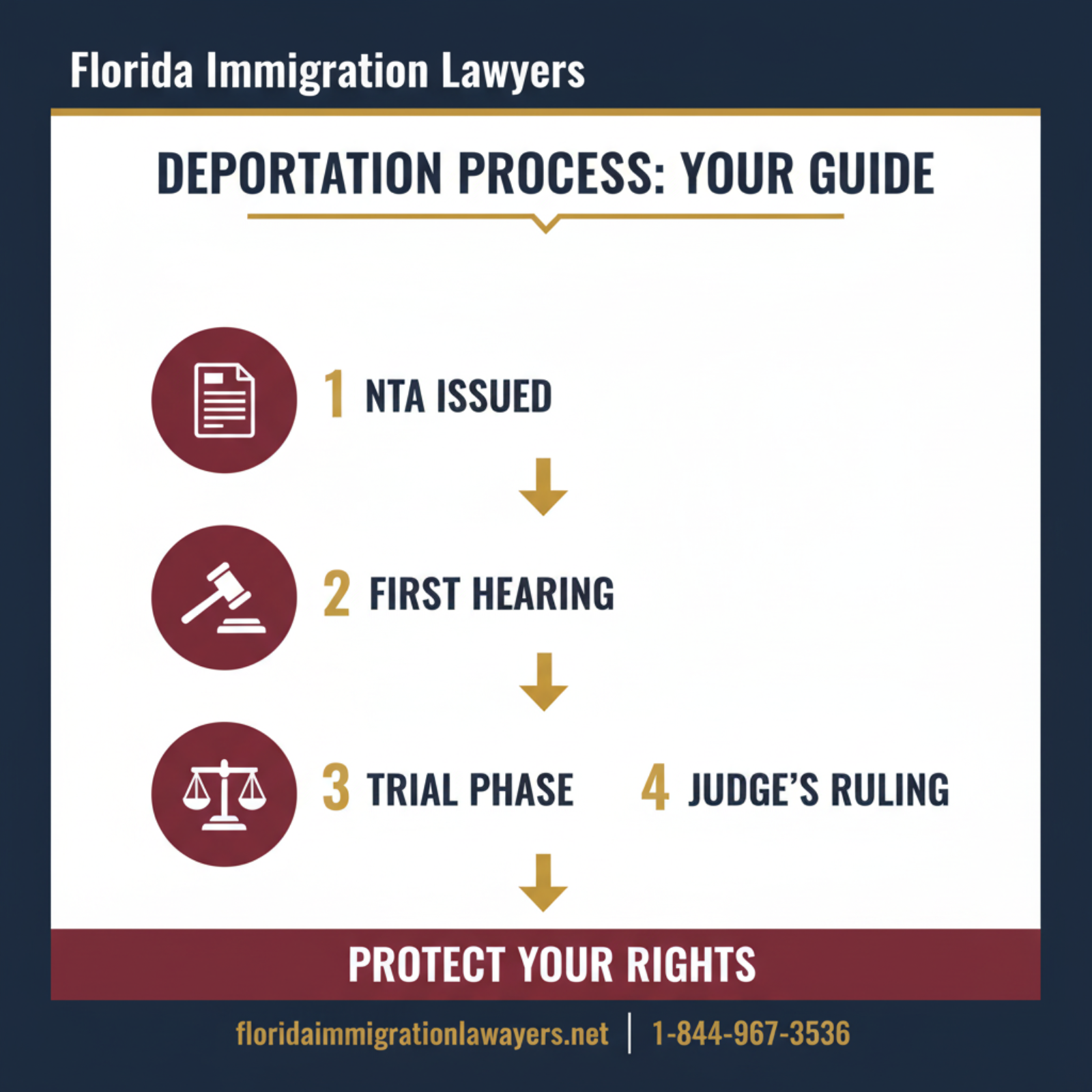
Following detention, ICE may issue a Notice to Appear (NTA), which is the charging document that initiates formal removal proceedings before an immigration judge. This document will state the factual allegations against you and the legal grounds for your deportability. Receiving an NTA is a clear signal to seek legal counsel without delay.
- Issuance of a Notice to Appear (NTA): This formal document from the Department of Homeland Security (DHS) notifies you that the government intends to deport you. It outlines the reasons for your proposed removal and specifies the date and location of your first hearing before an Immigration Judge (IJ).
- Master Calendar Hearing: This is your initial appearance in immigration court. During this hearing, the IJ will confirm your identity, ensure you received the NTA, and ask you to admit or deny the allegations and charges within the NTA. You will also be asked to state what form of relief from removal, if any, you intend to pursue.
- Pleading and Relief from Removal: If you admit the allegations and charges, or if the IJ finds them proven, you must then present your request for relief from removal. Common forms of relief include asylum, cancellation of removal, adjustment of status, or waivers. Each form of relief has specific eligibility requirements.
- Individual Hearing (Merits Hearing): This is akin to a trial. You and your attorney will present evidence, call witnesses, and cross-examine government witnesses. The purpose is to prove your eligibility for the relief you are seeking and to demonstrate why you should not be deported. The government, represented by an ICE attorney, will argue against your eligibility.
- Decision by the Immigration Judge: After the individual hearing, the IJ will issue a decision. If the IJ grants your requested relief, you may be allowed to remain in the U.S. If relief is denied, the IJ will order your removal.
- Appeals Process: If either you or the government disagree with the IJ's decision, you have the right to appeal to the Board of Immigration Appeals (BIA). Further appeals may be possible to a U.S. Court of Appeals. This process can be lengthy and requires a deep understanding of appellate procedures.
Essential Documents for Deportation Defense
A strong defense against deportation in Florida hinges on comprehensive and accurate documentation. The specific documents you need will depend on the grounds for your removal and the form of relief you are seeking. However, a general checklist includes:
- Personal Identification: Birth certificates, passports, national identity cards, driver's licenses (especially Florida-issued IDs).
- Immigration Records: All documents related to your entry into the U.S., visa applications, previous immigration petitions, Notices to Appear (NTAs), and any correspondence from USCIS or ICE.
- Proof of Residence: Utility bills, lease agreements, property deeds, bank statements, and mail showing your continuous presence in Florida.
- Family Ties: Marriage certificates, birth certificates of U.S. citizen or LPR children/spouses, divorce decrees, and affidavits from family members.
- Employment and Financial Records: Pay stubs, tax returns (IRS Form 1040s), employment verification letters, and bank statements demonstrating financial stability and contributions to the U.S. economy.
- Educational Records: Diplomas, transcripts, and enrollment verification from Florida schools or universities.
- Medical Records: Documentation of serious medical conditions for yourself or dependents, especially if relevant to a waiver or humanitarian claim.
- Criminal Records: Certified copies of all court dispositions, police reports, and evidence of rehabilitation, if applicable. This is crucial if your deportation is based on criminal grounds.
- Character Affidavits: Letters from community leaders, employers, teachers, and friends attesting to your good moral character and positive contributions.
- Evidence of Hardship: If seeking cancellation of removal, documents proving extreme and unusual hardship to your qualifying U.S. citizen or LPR family members if you are deported.
Organizing these documents can be overwhelming. Our attorneys at Florida Immigration Lawyers can help you compile the necessary evidence and present it effectively to the immigration court. We understand what immigration judges and ICE attorneys look for.
Timeline and Processing Expectations for Deportation Cases
Deportation cases are notoriously unpredictable in their timelines. The duration can vary significantly based on several factors, including the complexity of your case, the specific immigration court handling it (e.g., Orlando Immigration Court or Miami Immigration Court, which serve regions including Tallahassee), the judge's docket, and the type of relief you are seeking.
Generally, a straightforward deportation case might take anywhere from six months to two years to resolve at the immigration court level. However, complex cases involving multiple forms of relief, extensive evidence, or appeals to the Board of Immigration Appeals (BIA) or federal courts can extend for several years. For instance, the appellate process alone can add one to three years or more to the overall timeline.
Factors influencing your case timeline include:
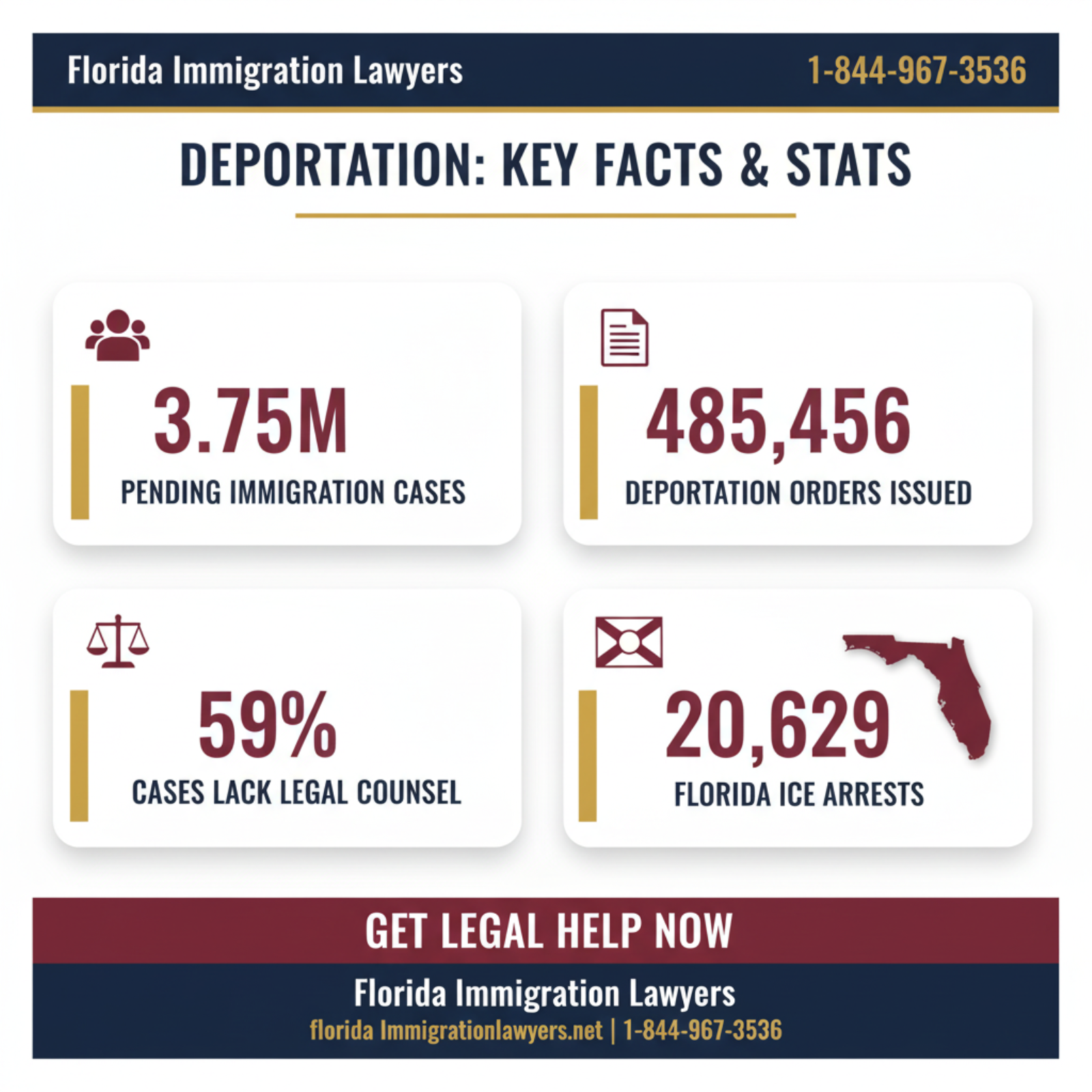
- Court Backlogs: Immigration courts, particularly in Florida, often face significant backlogs, leading to delays in scheduling hearings.
- Detention Status: If you are detained by ICE, your case may be processed more quickly than if you are not detained, although this is not always guaranteed.
- Type of Relief Sought: Some forms of relief, like asylum, may involve additional interviews and processes with USCIS before returning to the immigration court.
- Availability of Evidence: Delays can occur if there are difficulties in obtaining necessary documents or witness testimony.
- Legal Strategy: A well-prepared legal strategy can help streamline the process, while complications or changes in strategy can extend it.
While we cannot guarantee specific timelines, Florida Immigration Lawyers will provide you with a realistic assessment of what to expect. We will work diligently to move your case forward as efficiently as possible, keeping you informed at every stage.
Cost Factors and Legal Fees in Florida Deportation Cases
The cost of fighting a deportation case in Florida can be a significant concern for many families. Legal fees vary widely depending on the complexity of the case, the experience of the attorney, and the amount of time required to prepare and present your defense. It is important to understand the different components of these costs.
Legal fees typically fall into a few categories:
- Attorney Fees: This is the primary cost. Some attorneys charge an hourly rate, while others offer flat fees for specific stages of the deportation process (e.g., initial consultation, master calendar hearing, individual hearing, appeal). Flat fees provide predictability, which many clients prefer.
- Government Filing Fees: While there are no filing fees for the Notice to Appear itself, you may incur fees if you apply for certain forms of relief from removal, such as adjustment of status or some waivers. These fees are paid directly to USCIS and can change over time.
- Ancillary Costs: These can include expenses for obtaining certified copies of documents, translation services for foreign-language documents, expert witness fees (if necessary), and travel expenses for attorneys if the court is in a different city.
At Florida Immigration Lawyers, we believe in transparency regarding our fees. During your free consultation, we will discuss our fee structure and provide a clear estimate of the costs involved in your specific case. We understand the financial strain these situations can cause and strive to offer flexible payment arrangements when possible. Investing in experienced legal counsel for your deportation defense is an investment in your future and your right to remain in the U.S.
Do not navigate this process alone. Contact Florida Immigration Lawyers today to discuss your options and secure dedicated legal representation. Your future in Florida depends on it.
Common Mistakes to Avoid in Deportation Proceedings
Facing a potential abrego garcia deportation-type scenario requires extreme caution. Many individuals inadvertently make mistakes that can severely jeopardize their case. Understanding and avoiding these pitfalls is crucial for a successful defense:
- Failing to Appear in Court: Missing any scheduled immigration court hearing, including Master Calendar Hearings or Individual Hearings, can result in an automatic Order of Removal (deportation in absentia). This is one of the most critical errors.
- Not Disclosing All Facts to Your Attorney: Withholding information, even if you believe it is minor or embarrassing, can severely undermine your legal strategy. Your attorney needs a complete picture to build the strongest possible defense.
- Signing Documents Without Understanding Them: Never sign any document presented by an immigration officer or court official without fully understanding its contents and implications. Always ask for an explanation and, if possible, consult your attorney first.
- Providing False Information: Lying to immigration officials or on legal documents carries severe penalties, including permanent bars from future immigration benefits and criminal charges. Honesty is always the best policy, even if the truth is difficult.
- Not Seeking Legal Counsel Early Enough: Delaying consultation with an immigration attorney can lead to missed deadlines, lost opportunities for relief, and a weaker defense. The sooner you engage legal help, the better your chances.
- Overstaying a Visa or Violating Terms of Entry: While sometimes unavoidable, these actions are common grounds for deportation. If you are in this situation, seek legal advice immediately to explore potential avenues for relief.
- Committing Criminal Offenses: Even minor criminal convictions can have severe immigration consequences, potentially making you deportable. Understand that immigration law treats criminal offenses differently than criminal courts.
- Ignoring Correspondence from Immigration Authorities: Letters or notices from USCIS, ICE, or the immigration court must be taken seriously. Ignoring them can lead to missed deadlines or adverse decisions without your knowledge.
- Traveling Outside the U.S. During Proceedings: Leaving the country while in removal proceedings can be considered self-deportation and may prevent you from returning, even if your case was not formally closed.
- Attempting to Represent Yourself: Immigration law is incredibly complex. Trying to navigate the system without an attorney is a high-risk strategy that often leads to unfavorable outcomes.
When to Call a Lawyer for Your Deportation Case
The stakes in a deportation case are incredibly high, affecting your ability to live and work in the U.S., and potentially separating you from your family. While general information is helpful, it is never a substitute for personalized legal advice. You should contact a knowledgeable deportation defense attorney at Florida Immigration Lawyers immediately if any of the following scenarios apply to you:
- You have received a Notice to Appear (NTA): This is the official start of removal proceedings. Do not delay in seeking legal counsel.
- You are detained by ICE: Being in immigration detention means your case may move quickly, and you need an attorney to represent you in bond hearings and court.
- You are a lawful permanent resident (green card holder) facing deportation: Even LPRs can be deported, often due to criminal convictions. Your rights and defenses are complex.
- You have a previous deportation order: Attempting to re-enter after a prior deportation can lead to severe penalties and expedited removal.
- You are seeking asylum or other forms of relief: These processes are highly technical and require strong legal arguments and evidence. Our firm also handles asylum cases.
- You have a criminal record: Even minor offenses can trigger deportation. An attorney can assess the immigration consequences of your conviction.
- You believe you were wrongfully deported or are at risk of wrongful removal: Cases like the Abrego Garcia deportation highlight that errors can occur. An attorney can review your case for due process violations.
- You are unsure of your immigration status: Clarifying your status is the first step in protecting yourself from potential removal.
Florida Immigration Lawyers has extensive experience in defending individuals against deportation across the state, including those in Tallahassee and surrounding areas. We understand the specific challenges faced by immigrants in Florida and are dedicated to fighting for your right to remain in the U.S. Our team can help you understand your options for citizenship or family immigration as well.
About Florida Immigration Lawyers
Florida Immigration Lawyers is a leading immigration law firm dedicated to serving individuals and families throughout Florida. With a deep understanding of the complexities of U.S. immigration law, our experienced attorneys provide compassionate yet aggressive legal representation to clients facing a wide range of immigration challenges.
We believe every individual deserves robust legal defense and a fair chance to pursue their American dream. Our firm offers comprehensive legal services, including deportation defense, asylum applications, family-based immigration, business immigration solutions, and assistance with naturalization and citizenship. We pride ourselves on personalized attention, strategic advocacy, and a commitment to achieving the best possible outcomes for our clients.
Why choose Florida Immigration Lawyers? We offer free consultations, are available 24/7 to address urgent concerns, and our team is bilingual, ensuring effective communication with our diverse clientele. We serve all of Florida, from Tallahassee to Miami, and are here to be your trusted legal partners. Contact us today to learn how we can help you navigate your immigration journey.
Phone: 1-844-967-3536
Website: https://www.floridaimmigrationlawyers.net
Sources and References
- U.S. Citizenship and Immigration Services (USCIS)
- Executive Office for Immigration Review (EOIR)
- U.S. Immigration and Customs Enforcement (ICE)
- 8 U.S.C. Chapter 12 - Immigration and Nationality Act (INA)
- 8 U.S.C. § 1227 (INA § 237) - Deportable Aliens
- 8 U.S.C. § 1229a (INA § 240) - Removal Proceedings
- 8 CFR Part 240 - Proceedings to Determine Deportability of Aliens
This article provides general legal information and is not intended as legal advice. Every case is unique, and outcomes depend on specific facts and circumstances. Contact an attorney for advice about your particular situation. Immigration laws are subject to change.
Do not face the complexities of immigration law alone. If you are concerned about deportation or need assistance with any immigration matter in Florida, Florida Immigration Lawyers is here to help. Schedule your free, confidential consultation today by calling us at 1-844-967-3536. Se Habla Español - Estamos aquí para ayudarle.
Do Not Navigate This Process Alone
Our experienced immigration attorneys are ready to fight for you. Get a free, confidential consultation today.
Se Habla Español
Frequently Asked Questions
Florida Immigration Lawyers
Immigration Attorney | Founder, Vasquez Law Firm
U.S. Air Force veteran and immigration attorney with thousands of cases resolved. J.D., NCCU School of Law. AILA member. Admitted to the 4th, 5th, and 11th Circuit Courts.
Available 24/7 - Free Evaluations
Related Legal Services
Our Florida immigration attorneys can help you with business immigration, asylum protection and deportation defense. Call today at 1-844-967-3536 for a free consultation.
Related Links
Related Topics
Free Legal Consultation
Discuss your case with our experienced attorneys. We're available 24/7.
Se Habla Español - Estamos aquí para ayudarle.
Related Articles
Free Immigration Consultation in Florida | VLF Florida
Facing immigration issues in Florida? Discover the importance of free consultations with experienced immigration lawyers in Coral Springs. Learn how to prepare for a consultation, avoid common mistakes, and explore when to seek legal help. Call Florida Immigration Lawyers today!
Child Status Protection Act: Florida Guide | VLF Florida
Learn how the Child Status Protection Act (CSPA) can protect your family's immigration status in Florida. This guide covers everything from understanding CSPA to calculating age and avoiding common mistakes. Call Florida Immigration Lawyers for expert help.
Immigration Medical Exam: Florida Doctors Guide | VLF Florida
If you're applying for a green card in Florida, understanding the immigration medical exam is crucial. This guide covers everything from choosing a civil surgeon to what the exam entails. Get a free consultation with Florida Immigration Lawyers.
Solutions for Immigration Backlog in Florida | VLF Florida
Facing immigration backlog in Florida can be daunting. Discover strategies to manage USCIS delays and learn when to seek legal assistance. Call Florida Immigration Lawyers for expert guidance.
