Abrego Garcia Deportation in Florida: Your Legal Defense
The Abrego Garcia deportation case highlights the profound challenges within U.S. immigration law. For individuals in Florida, including Naples residents, facing similar removal proceedings, understanding legal defenses and available relief is crucial. Florida Immigration Lawyers offers expert guidance to navigate the complex immigration court system, build a strong defense, and protect your right to remain in the U.S. We provide comprehensive legal support, from initial Notice to Appear responses to appeals, ensuring you are never alone in this critical process. Learn how our dedicated team can advocate for your future. Contact us for a free consultation today.

The Abrego Garcia deportation case highlights the complex and challenging nature of immigration removal proceedings. For individuals in Florida, including those in Naples and surrounding areas, facing similar deportation threats, it is crucial to understand your legal rights and available defense strategies. Expert legal counsel can help navigate the intricate process, present strong arguments, and seek relief from removal.
- Deportation cases are highly complex and demand a strategic legal approach.
- Various forms of relief from removal, such as asylum or cancellation, may be available.
- Acting quickly with legal guidance is essential for building a robust defense.
- An experienced attorney can provide vital support in Florida's immigration courts.
Are you or a loved one in Florida facing the daunting prospect of deportation? The challenges highlighted by cases like the Abrego Garcia deportation underscore the immense pressure and uncertainty that individuals experience when confronted with immigration removal proceedings. Understanding your legal options and having a skilled advocate by your side is not just helpful-it is often critical to your future. The immigration system is intricate, with procedures and laws that can seem overwhelming to navigate alone, especially when your right to remain in the United States is at stake.
This comprehensive guide from Florida Immigration Lawyers aims to demystify the deportation process in Florida. We will explore the common grounds for removal, the step-by-step procedures involved, and the various defense strategies that may be available to you. Our goal is to empower you with knowledge and clarity, providing actionable insights into protecting your rights and pursuing every possible avenue for relief. We understand the emotional toll these situations take on families across Florida, from Naples to Miami and Orlando. We are here to help you understand your situation and fight for your future.
If you are facing deportation, do not delay. Call Florida Immigration Lawyers at 1-844-967-3536 for a free consultation to discuss your specific circumstances and how we can assist you.
Understanding Abrego Garcia Deportation and Florida Immigration Law
The complexities surrounding cases like the Abrego Garcia deportation serve as a stark reminder of the challenges inherent in U.S. immigration law. While each case is unique, the underlying principles of removal proceedings are consistent. In Florida, individuals can face deportation for various reasons, including visa overstays, criminal convictions, or violations of immigration status. Understanding the grounds for removal is the first step in building an effective defense strategy.
Immigration and Nationality Act (INA) sections 212 and 237 define the categories of individuals who are inadmissible to the U.S. or deportable after admission. These grounds can range from health-related issues and criminal offenses to security concerns and violations of immigration documentation. For instance, 8 U.S.C. § 1227 (INA 237) outlines the specific conditions under which a lawfully admitted noncitizen may be removed from the United States. This includes convictions for certain crimes, marriage fraud, or failing to register as an alien.
Florida is home to a significant immigrant population, and consequently, its immigration courts in Miami and Orlando handle a substantial number of removal cases annually. The specific judicial circuit in which your case is heard can sometimes influence procedural nuances, though federal immigration law remains paramount. Whether you are in Naples, Fort Myers, or any other part of Florida, the fundamental right to due process and the opportunity to present a defense are critical. Our firm, Florida Immigration Lawyers, is well-versed in the specific local court procedures and judicial tendencies within Florida's immigration system. We provide tailored legal representation to address your unique situation effectively.
Navigating Immigration Removal Proceedings: A Step-by-Step Guide
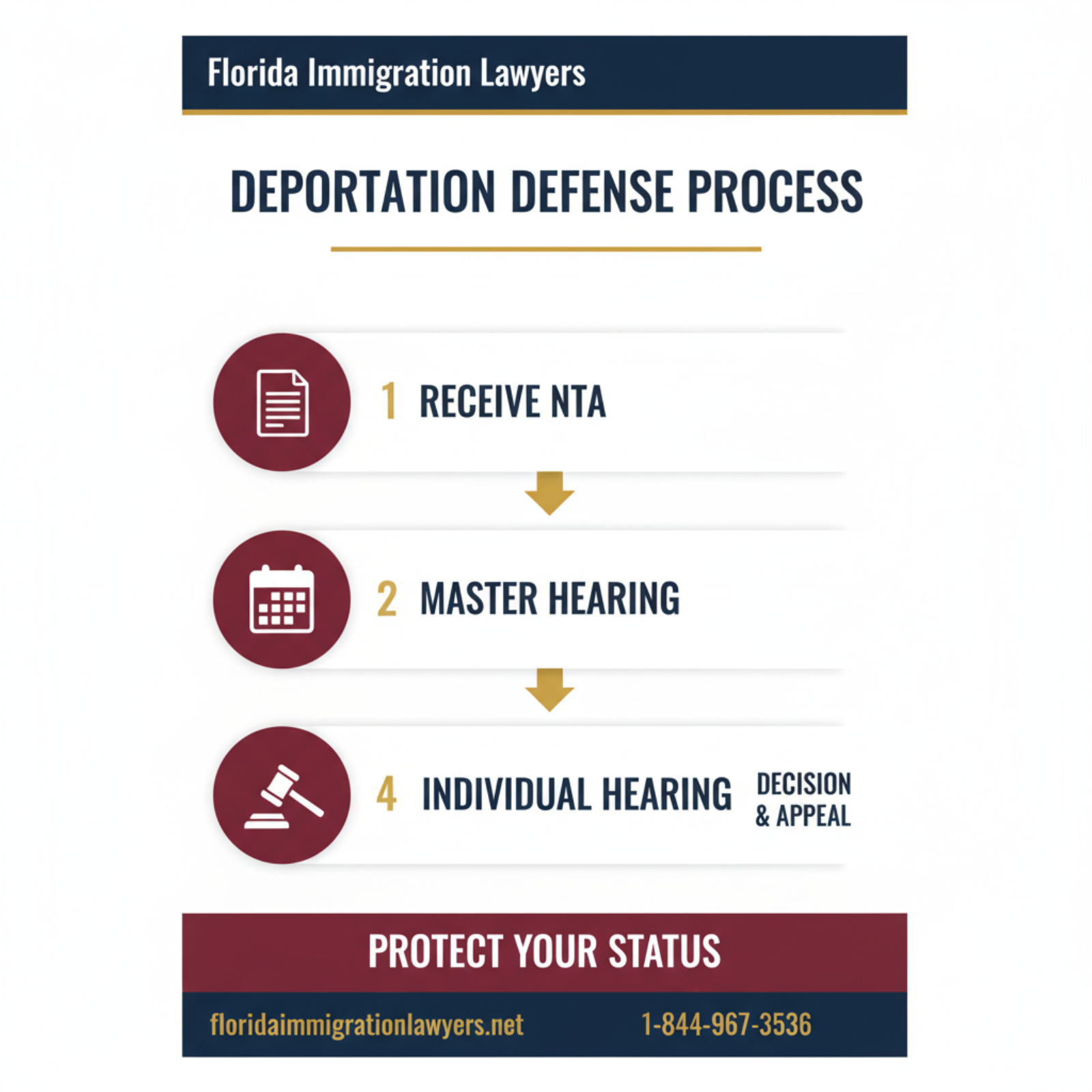
Facing immigration removal proceedings can be a frightening experience, but understanding the process can help alleviate some anxiety. The journey through the immigration court system is structured, with specific stages that must be navigated carefully. For anyone facing the possibility of an Abrego Garcia deportation scenario, knowing these steps is vital.
-
Notice to Appear (NTA): The process typically begins when U.S. Immigration and Customs Enforcement (ICE) issues a Form I-862, Notice to Appear (NTA). This document formally charges you with being removable from the United States and specifies the legal grounds for your deportation. The NTA also schedules your initial hearing before an Immigration Judge. It is crucial to respond promptly and accurately to the NTA.
-
Master Calendar Hearing: This is the first appearance before an Immigration Judge. During this hearing, the judge will confirm your identity, ensure you understand the charges in the NTA, and ask you to admit or deny those charges. You will also have the opportunity to inform the court if you intend to seek legal representation and apply for any forms of relief from removal. This is a critical juncture where your lawyer can outline your defense strategy.
-
Individual Hearing (Merits Hearing): If you deny the charges or apply for a form of relief, the judge will schedule an individual hearing. This is essentially a trial where both you (through your attorney) and the government present evidence, call witnesses, and make legal arguments. This hearing is your primary opportunity to demonstrate why you should be allowed to remain in the U.S., whether through asylum, cancellation of removal, or other forms of relief. Your legal team will prepare you thoroughly for this crucial stage.
-
Decision and Appeals: After the individual hearing, the Immigration Judge will issue a decision. If the judge orders your removal, you generally have the right to appeal this decision to the Board of Immigration Appeals (BIA). The BIA reviews the judge's decision for legal errors. If the BIA upholds the removal order, further appeals may be possible to a U.S. Circuit Court of Appeals. Navigating these appeals requires precise legal knowledge and strategic planning. We can help you understand your appellate options. Learn more about how we defend against deportation at our deportation defense practice area page.
Each step in this process requires careful preparation and adherence to strict deadlines. Missing a deadline or failing to present compelling evidence can have severe consequences.
Essential Documents for Your Deportation Defense in Florida
A strong defense against deportation, similar to what might have been needed in an Abrego Garcia deportation case, relies heavily on comprehensive and well-organized documentation. Gathering the right evidence is paramount to substantiating your claims for relief and refuting the government's allegations. The specific documents needed will vary based on the grounds for deportation and the type of relief you are seeking.
Here is a general checklist of documents commonly required for deportation defense:
- Personal Identification: Passports, birth certificates, national identity cards, driver's licenses, and any prior U.S. visas or entry stamps.
- Proof of Relationship: Marriage certificates, birth certificates of children, divorce decrees, and photographs to establish family ties, especially for family-based relief.
- Residency and Employment Records: Utility bills, lease agreements, property deeds, tax returns (Form 1040), employment letters, pay stubs, and school records for yourself and your family.
- Financial Records: Bank statements, evidence of financial support for dependents, and proof of assets or liabilities.
- Medical and Hardship Evidence: Medical records, psychological evaluations, and letters from doctors or therapists detailing any health conditions or extreme hardship that removal would cause to you or your qualifying relatives.
- Criminal Records: Certified court dispositions for any arrests or convictions, even if they occurred many years ago or were expunged. Full disclosure is vital for your attorney.
- Affidavits and Letters of Support: Signed and notarized statements from family, friends, employers, and community leaders attesting to your good moral character, community ties, and positive contributions.
- Previous Immigration Applications: Copies of all prior applications filed with USCIS, such as I-130, I-485, I-589, or any other immigration forms, along with approval or denial notices.
- Proof of Persecution (for Asylum cases): If seeking asylum, documents detailing persecution in your home country, such as police reports, news articles, medical records, or affidavits from witnesses. Find out more about asylum processes at our asylum practice area page.
Organizing these documents systematically and providing them to your attorney promptly can significantly strengthen your case. Incomplete or missing documentation can lead to delays or even denial of relief.
Timeline and Processing Expectations for Florida Deportation Cases
The timeline for an immigration deportation case in Florida, much like any case involving complex legal issues such as an Abrego Garcia deportation, is highly variable. There is no standard duration, as several factors can significantly influence how long your case will take to resolve. Understanding these variables can help manage expectations and prepare for the journey ahead.
Typically, a deportation case can span anywhere from several months to several years. Factors contributing to this wide range include:
- Court Backlog: Immigration courts, especially those in high-volume areas like Miami and Orlando, often face substantial backlogs. This can lead to long wait times between hearings.
- Case Complexity: Simple cases with clear-cut evidence and straightforward legal arguments may proceed more quickly. However, cases involving criminal convictions, multiple forms of requested relief, or complex factual disputes will naturally take longer.
- Judge's Caseload and Schedule: Each Immigration Judge manages a demanding caseload. Their individual schedule and availability can impact how quickly your hearings are set and decisions are rendered.
- Availability of Evidence and Witnesses: Delays can occur if it takes time to gather necessary documents, secure expert witness testimony, or obtain records from external agencies.
- Appeals Process: If a decision is appealed to the Board of Immigration Appeals (BIA) or a federal circuit court, this adds significant time to the overall process, often extending it by one to three years or more.
- Policy Changes: Changes in immigration policy or enforcement priorities can also affect processing times and court procedures.
While we cannot guarantee a specific timeline, Florida Immigration Lawyers works diligently to expedite your case whenever possible. We emphasize thorough preparation and proactive communication with the court and government attorneys. Our goal is to present your case efficiently and effectively, minimizing unnecessary delays. We keep our clients informed every step of the way, providing realistic expectations based on current court conditions and the specifics of their case.
Cost Factors and Legal Fees in Abrego Garcia Deportation Defense
Navigating an immigration deportation case, especially one with the potential complexities seen in an Abrego Garcia deportation scenario, involves various costs. Understanding these financial aspects upfront is crucial for planning and ensuring you have adequate representation. The total cost of a deportation defense can vary significantly depending on the case's complexity, the type of relief sought, and the amount of legal work required.
The primary cost components generally include:
- Attorney Fees: This is typically the largest expense. Immigration lawyers may charge hourly rates, or they might offer flat fees for specific stages of the deportation process. Flat fees provide predictability, while hourly rates are common for highly complex or unpredictable cases. Our firm offers transparent fee structures and will discuss all costs with you during your initial consultation.
- Government Filing Fees: While not all forms of relief in deportation proceedings require a fee, many do. For example, applications for adjustment of status, waivers, or certain forms of relief from removal often involve fees paid directly to USCIS or the Executive Office for Immigration Review (EOIR). It is important to note that these fees are subject to change by the government.
- Expert Witness Fees: In some cases, particularly those involving asylum claims, criminal issues, or medical hardship, expert witnesses (e.g., psychologists, country condition experts) may be necessary. Their fees can add substantially to the overall cost.
- Translation and Interpretation Costs: If your documents are not in English or if you require an interpreter for court hearings or attorney meetings, these services will incur additional costs.
- Travel and Administrative Expenses: These may include costs for travel to court hearings, photocopying, postage, and other administrative overhead.
Investing in experienced legal representation is an investment in your future. While the costs may seem substantial, the potential consequences of facing deportation without proper counsel-such as removal from the U.S. and separation from family-are far greater. Florida Immigration Lawyers believes in providing high-quality, accessible legal services. We offer free consultations to discuss your case and provide a clear understanding of the potential costs involved. We serve clients across Florida, including Naples, and are dedicated to helping you navigate these financial considerations.
Do not navigate this complex and potentially life-altering process alone. The stakes in a deportation case are incredibly high, and having an experienced legal team can make all the difference. Contact Florida Immigration Lawyers today to secure the knowledgeable advocacy you need.
When facing deportation proceedings, even minor missteps can have significant and lasting consequences. Learning from the challenges highlighted by situations like the Abrego Garcia deportation, it is crucial to avoid common pitfalls that can jeopardize your case. Being proactive and informed is your best defense.
- Ignoring the Notice to Appear (NTA): Failing to appear for your scheduled hearing or respond to the NTA can result in an "in absentia" removal order, meaning you are ordered deported without a chance to present your case. This makes it extremely difficult to reopen your case later.
- Representing Yourself Without Legal Knowledge: Immigration law is incredibly complex. Trying to navigate the system, understand legal arguments, and present evidence effectively without an attorney significantly reduces your chances of a favorable outcome.
- Providing Inconsistent Information: Any discrepancies in your statements or applications, whether to immigration officers or in court, can severely damage your credibility and be used against you. Always be truthful and consistent.
- Not Disclosing All Facts to Your Attorney: Withholding information, especially about past arrests, immigration history, or family details, prevents your attorney from building the strongest possible defense. Full transparency is essential.
- Failing to Gather Sufficient Evidence: A strong case requires compelling evidence. Not collecting all necessary documents, affidavits, or expert opinions can weaken your arguments for relief from removal.
- Not Understanding the Charges Against You: It is vital to fully comprehend the specific grounds for deportation listed in your NTA. Without this understanding, you cannot effectively challenge the charges or identify appropriate forms of relief.
- Overlooking Potential Forms of Relief: Many individuals are unaware of the various forms of relief available, such as asylum, cancellation of removal, adjustment of status, or waivers. An attorney can identify all applicable options.
- Failing to Update Contact Information: Moving without notifying the immigration court and USCIS of your new address can lead to missed hearing notices or important correspondence, potentially resulting in a removal order.
- Traveling Internationally Without Legal Advice: If you are in removal proceedings, traveling outside the U.S. can automatically trigger an expedited removal order upon your attempt to re-enter, making it impossible to continue your case.
- Believing Misinformation from Non-Attorneys: Seeking advice from "notarios" or individuals who are not licensed attorneys can lead to incorrect legal strategies, fraudulent applications, and ultimately, deportation. Always consult a qualified immigration lawyer.
The moment you receive a Notice to Appear (NTA) or have any interaction with immigration enforcement that suggests you may be subject to removal proceedings, it is imperative to seek legal counsel immediately. Proactive engagement with an attorney can significantly impact the outcome of your case. Florida Immigration Lawyers is ready to assist you.
Consider contacting our firm if any of the following scenarios apply to you:
- You have received a Form I-862, Notice to Appear, initiating deportation proceedings.
- You or a family member has been detained by U.S. Immigration and Customs Enforcement (ICE).
- You have prior criminal convictions, even minor ones, that could affect your immigration status.
- Your immigration history is complex, including previous denials, overstays, or multiple entries.
- You believe you may be eligible for relief from removal, such as asylum, adjustment of status, or cancellation of removal. Learn more about your family immigration options at our family immigration page.
- You are unsure about your rights or the legal implications of your situation.
Our experienced attorneys at Florida Immigration Lawyers provide comprehensive deportation defense services across Florida. We can assess your situation, explain your options, represent you in immigration court, and fight tirelessly to protect your right to remain in the U.S. We understand the specific challenges faced by residents in Naples and throughout Florida. Visit our main immigration practice area page for more general information: Florida Immigration Lawyers.
Florida Immigration Lawyers is a leading law firm dedicated to providing comprehensive and compassionate immigration legal services across the entire state of Florida. Our team of highly skilled attorneys is committed to guiding individuals and families through the complexities of U.S. immigration law. We understand the profound impact immigration matters have on our clients' lives and are passionate about achieving favorable outcomes.
We offer a wide range of services, including deportation defense, asylum applications, family-based petitions, business immigration solutions, and naturalization assistance. Our firm prides itself on its client-centered approach, ensuring that each case receives personalized attention and strategic advocacy. We leverage our deep knowledge of immigration statutes, regulations, and court procedures to build strong cases for our clients.
Choosing Florida Immigration Lawyers means partnering with a team that genuinely cares about your future. We are available 24/7 to address your urgent needs and offer free, confidential consultations to help you understand your options without financial obligation. Our commitment extends to serving all communities in Florida, including Naples, Miami, Orlando, and beyond. We are your trusted advocates in the journey to secure your immigration future.
For immediate assistance, please call us at 1-844-967-3536 or visit our website at https://www.floridaimmigrationlawyers.net.
Sources and References
- U.S. Citizenship and Immigration Services (USCIS)
- Executive Office for Immigration Review (EOIR)
- U.S. Immigration and Customs Enforcement (ICE)
- 8 U.S.C. Chapter 12 - Immigration and Nationality Act (INA)
- 8 U.S.C. § 1227 (INA 237) - Deportable Aliens
- 8 U.S.C. § 1182 (INA 212) - Inadmissible Aliens
- 8 CFR Part 1240 - Proceedings to Determine Deportability or Inadmissibility
This article provides general legal information and is not intended as legal advice. Every case is unique, and outcomes depend on specific facts and circumstances. Immigration laws are subject to change. Contact an attorney for advice about your particular situation.
Do not face your deportation process alone. The complexities of immigration law demand experienced legal guidance. Florida Immigration Lawyers is here to provide the dedicated and knowledgeable representation you need to protect your rights and pursue your best possible outcome. We are ready to listen to your story and craft a strategic defense. Call us today at 1-844-967-3536 for a free consultation. Se Habla Español - Estamos aquí para ayudarle.
Do Not Navigate This Process Alone
Our experienced immigration attorneys are ready to fight for you. Get a free, confidential consultation today.
Se Habla Español
Frequently Asked Questions
Florida Immigration Lawyers
Immigration Attorney | Founder, Vasquez Law Firm
U.S. Air Force veteran and immigration attorney with thousands of cases resolved. J.D., NCCU School of Law. AILA member. Admitted to the 4th, 5th, and 11th Circuit Courts.
Available 24/7 - Free Evaluations
Related Legal Services
Our Florida immigration attorneys can help you with family immigration services, immigration practice areas and free immigration consultation. Call today at 1-844-967-3536 for a free consultation.
Related Links
Related Topics
Free Legal Consultation
Discuss your case with our experienced attorneys. We're available 24/7.
Se Habla Español - Estamos aquí para ayudarle.
Related Articles
Immigration Attorney in Gainesville, North Florida
Navigating immigration law in Gainesville and North Florida can be challenging, especially with recent legal changes. Discover how Florida Immigration Lawyers can assist you. Call 1-844-967-3536 for a free consultation.
Refugee Status Florida Resettlement: Your 2026 Guide
Navigating refugee status and resettlement in Florida requires a thorough understanding of U.S. immigration law and available support systems. This 2026 guide covers eligibility, the step-by-step resettlement process, essential documents, timelines, and financial considerations for refugees seeking to build a new life in Florida, particularly in areas like Homestead. It highlights the critical role of organizations like UNHCR and USCIS, and the importance of avoiding common mistakes. Florida Immigration Lawyers offers expert legal assistance, ensuring a smoother transition and helping refugees adjust status to lawful permanent residents. Learn how to secure your future and access vital resources in the Sunshine State.
Dual Citizenship in Florida: What You Need to Know
Explore the benefits and legal steps of obtaining dual citizenship in Florida. Understand the process, avoid common mistakes, and learn when to seek legal help. Contact Florida Immigration Lawyers at 1-844-967-3536 for guidance.
Understanding Immigration Bond Hearings in Florida
Immigration bond hearings in Florida are critical for those detained by ICE. Understand the process, avoid common mistakes, and learn when to contact a lawyer for assistance. Call Florida Immigration Lawyers for a free consultation.