2026 Winter Olympics Ice Hockey Immigration: Florida Legal Guide
For individuals connected to the 2026 Winter Olympics Ice Hockey, understanding U.S. immigration law is vital, particularly for those with ties to Florida. While the Games are in Italy, athletes, coaches, and support staff often train or reside in Florida, requiring specific visas like O-1 or P-1. This guide from Florida Immigration Lawyers provides a comprehensive overview of the immigration process, necessary documentation, timelines, and common pitfalls. We emphasize the importance of securing the correct visa, preparing meticulous documentation, and adhering to strict deadlines. With Florida's significant role in international sports, our firm is uniquely positioned to assist. Contact us for a free consultation to navigate these complexities.
Immigration for the 2026 Winter Olympics Ice Hockey involves navigating specific U.S. visa categories for athletes, coaches, support staff, media, and even fans with specialized roles. While the Games are in Italy, many participants and affiliates may train, reside, or have significant ties in Florida, requiring expert legal guidance for temporary visas, green cards, or addressing complex immigration matters. A Florida immigration lawyer is crucial for ensuring compliance with U.S. immigration laws.
- Specialized visas (O-1, P-1) are typically required for Olympic athletes and support personnel.
- Florida serves as a significant hub for sports training and professional athletes, linking to Olympic participation.
- Timely and accurate documentation is essential for all immigration applications.
- Consulting a Florida immigration lawyer can prevent common pitfalls and delays.
- Immigration processes can be complex and vary based on individual circumstances and roles.
The excitement for the 2026 Winter Olympics Ice Hockey is building, even here in Florida. While the main events will take place in Milano Cortina, Italy, the global nature of the Olympics means that many athletes, coaches, support staff, and even media professionals may have significant connections to the United States, including our vibrant state of Florida. For individuals involved in the 2026 Winter Olympics Ice Hockey with ties to Florida, understanding U.S. immigration law is paramount.
Whether you are an elite athlete, a dedicated coach, a crucial support staff member, or a media professional planning coverage, your ability to train, work, or even reside in Florida before or after the Games often hinges on securing the correct visa. The immigration process can be daunting, filled with intricate requirements and strict deadlines. This comprehensive guide from Florida Immigration Lawyers aims to demystify the immigration journey related to the 2026 Winter Olympics Ice Hockey, focusing on the unique considerations for those in or coming to Florida.
Navigating the complexities of U.S. immigration law requires specialized knowledge and experience. Our firm is dedicated to assisting individuals and organizations through these challenges. We understand the high stakes involved for those contributing to the Olympic spirit. For personalized guidance and to ensure your immigration journey is smooth, call Florida Immigration Lawyers at 1-844-967-3536 for a free consultation.
Understanding 2026 Winter Olympics Ice Hockey Immigration Challenges in Florida
Florida, known for its diverse population and thriving sports industry, plays an often-overlooked but significant role in international sporting events like the 2026 Winter Olympics Ice Hockey. While the games themselves are not held in Florida, many athletes choose our state for year-round training, rehabilitation, or as a base for their professional careers. This connection creates unique immigration scenarios that require careful attention.
The influx of talent and support personnel associated with such a prestigious event naturally brings immigration questions to the forefront. Athletes, coaches, and other specialists, including those who may play for NHL teams like the Florida Panthers or Tampa Bay Lightning, often require specific non-immigrant visas to train or work in the U.S. These visas are distinct from standard tourist visas and have their own set of eligibility criteria and application procedures. Understanding these nuances is the first step toward a successful immigration outcome.
The Global Nature of the 2026 Winter Olympics
The 2026 Winter Olympics are a global spectacle, drawing participants from nearly every corner of the world. For ice hockey, this means national teams composed of players who often compete professionally in various leagues, including the NHL. These individuals, and their accompanying entourage, must meet specific immigration requirements to enter and remain in the United States, even if only for temporary training camps or related activities before heading to Italy.
The U.S. government provides various visa categories designed for individuals with extraordinary abilities or those participating in internationally recognized events. These include the O-1 visa for individuals with extraordinary ability in athletics and the P-1 visa for internationally recognized athletes and athletic teams. Determining the correct visa category is critical, as each has distinct requirements concerning petitions, evidence, and sponsorship.
Florida's Role in International Sports and Immigration
Florida is not just a tourist destination; it is a major hub for professional and amateur sports. Our state boasts world-class training facilities, a robust sports medicine infrastructure, and a climate conducive to year-round training for many sports. This makes Florida an attractive location for 2026 Winter Olympics Ice Hockey athletes and teams looking to prepare.
For foreign nationals, this means that while their ultimate destination might be Italy for the Olympics, their journey might involve a crucial stop or extended stay in Florida. Whether it's a Canadian athlete training in Naples, a European coach conducting a clinic in Tampa, or a support team member residing in Miami, immigration compliance is essential. Florida Immigration Lawyers are uniquely positioned to assist these individuals, understanding both the federal immigration landscape and the local context.
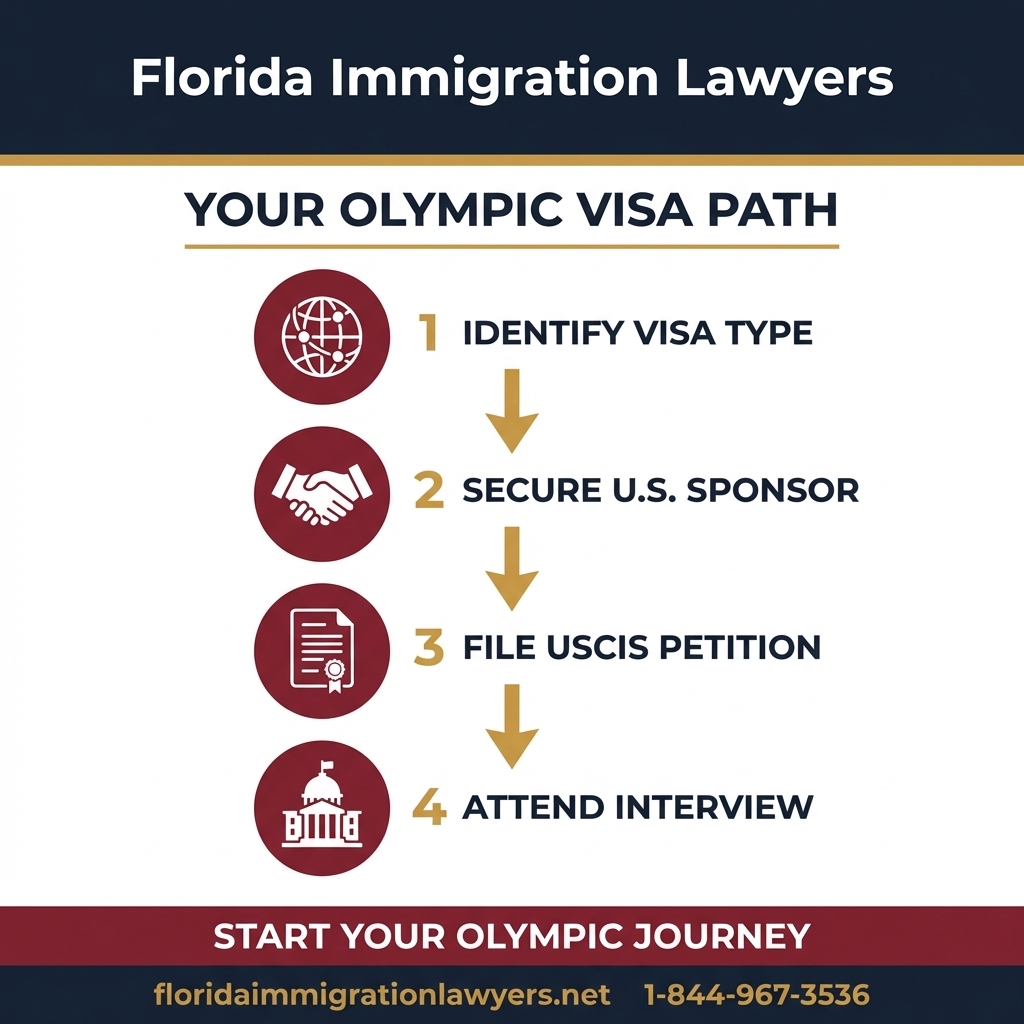
Step-by-Step Guide: Immigration Pathways for Olympic Participants and Support Staff
Navigating the U.S. immigration system for individuals involved in the 2026 Winter Olympics Ice Hockey requires a clear, structured approach. The specific pathway depends heavily on the individual's role, nationality, and the duration of their intended stay in the U.S. Here, we outline the general steps and common visa categories.
-
Determine the Appropriate Visa Category: The first and most crucial step is to identify the correct non-immigrant visa. For Olympic athletes, coaches, and essential support personnel, the O-1 (Extraordinary Ability) or P-1 (Internationally Recognized Athlete) visas are most common. Media personnel might qualify for an I visa, while business visitors or short-term attendees might use a B-1 visa. Each category has specific criteria that must be met. For example, the O-1 visa, covered under 8 U.S.C. § 1101(a)(15)(O), requires demonstrated extraordinary ability through sustained national or international acclaim. The P-1 visa, defined in 8 U.S.C. § 1101(a)(15)(P), is for individual or team athletes who are internationally recognized.
-
Secure a U.S. Sponsor/Petitioner: For O-1 and P-1 visas, a U.S. employer, agent, or sponsor must file a petition on behalf of the foreign national. This could be a U.S. sports organization, an agent representing the athlete, or even a U.S.-based Olympic committee affiliate. The sponsor plays a critical role in demonstrating the need for the foreign national's services and their qualifications.
-
Gather Comprehensive Supporting Documentation: This step involves collecting extensive evidence to prove eligibility for the chosen visa category. For athletes, this includes contracts, awards, media coverage, letters from prominent sports organizations, and evidence of international recognition. For support staff, it might involve proof of their essential role and unique skills. Documentation must be meticulously organized and translated if not in English.
-
File Form I-129, Petition for a Nonimmigrant Worker: The U.S. sponsor files Form I-129 with U.S. Citizenship and Immigration Services (USCIS). This petition must include all supporting documents and a detailed explanation of how the foreign national meets the visa criteria. Premium processing is often available for an additional fee, which can significantly expedite the USCIS decision, a critical factor given Olympic timelines.
-
Attend the Visa Interview at a U.S. Embassy or Consulate: Once USCIS approves the I-129 petition, the foreign national, if outside the U.S., will schedule and attend a visa interview at a U.S. Embassy or Consulate in their home country. During this interview, a consular officer will review the application, ask questions about the applicant's intent, and determine their admissibility to the U.S. This is a crucial step where having all documentation in order is vital.
-
Entry into the U.S.: Upon visa approval, the individual can travel to the U.S. At the port of entry, a Customs and Border Protection (CBP) officer will make the final determination on admission and the duration of stay. It is important to carry copies of all petition and visa approval documents. For those already in the U.S. on another non-immigrant visa, a change of status application may be possible, typically requiring similar petitioning steps.
Essential Documents for Your Olympic-Related Immigration Case
Preparing a robust immigration application for involvement in the 2026 Winter Olympics Ice Hockey demands meticulous document gathering. The success of your case often hinges on the completeness and accuracy of your submission. Here is a general checklist of documents typically required, though specific needs vary by visa type and individual circumstances.
- Valid passport with at least six months validity beyond the intended period of stay.
- Nonimmigrant Visa Application, Form DS-160 confirmation page.
- Receipt for application fee payment.
- One (1) 2x2 photograph meeting U.S. visa requirements.
- Form I-797, Approval Notice, from USCIS for the approved I-129 petition.
- Original letter from the U.S. petitioner/employer detailing the terms and conditions of employment or engagement.
- Contracts between the applicant and the U.S. petitioner or Olympic organization.
- Evidence of international recognition or extraordinary ability (e.g., awards, medals, press clippings, publications, critical reviews, testimonials from experts, high salary).
- Letters of support from relevant sports organizations, national Olympic committees, or governing bodies.
- Detailed itinerary of activities in the U.S. (training, competitions, media appearances).
- Curriculum Vitae or resume highlighting athletic achievements and professional experience.
- Proof of intent to depart the U.S. after the authorized stay (e.g., property ownership abroad, family ties, job offers).
- For dependents (spouse, children), marriage certificate and birth certificates, along with their own passports and DS-160 forms.
Navigating Timelines and Expectations for Visa Processing
The timeline for immigration processes related to the 2026 Winter Olympics Ice Hockey can be highly variable, making early planning absolutely critical. USCIS processing times for Form I-129 petitions can range from several weeks to many months, depending on the service center workload and the complexity of the case. These times are subject to change and can be monitored on the USCIS website.
For individuals requiring rapid processing, USCIS offers Premium Processing for an additional fee. This service guarantees a response from USCIS (approval, denial, request for evidence, or notice of intent to deny) within 15 calendar days. For Olympic-related cases, where deadlines are strict, premium processing is often a wise investment. After USCIS approval, securing an interview at a U.S. Embassy or Consulate can also take time, depending on the country and current visa demand.
It is generally advisable to initiate the immigration process at least six to twelve months before the intended travel or start date of activities in the U.S. This provides ample time to gather documents, respond to any Requests for Evidence (RFEs) from USCIS, and schedule consular interviews without undue pressure. A Florida immigration lawyer can help you strategize and manage these timelines effectively.
Understanding Cost Factors and Immigration Fee Structures
The financial aspect of U.S. immigration for 2026 Winter Olympics Ice Hockey participants includes various fees. While specific amounts are subject to change, understanding the categories of costs involved is important for budgeting. These costs typically include government filing fees, legal fees, and potential expenses for document preparation or translation.
Government fees generally consist of the USCIS filing fee for Form I-129, the premium processing fee (if opted for), and the visa application fee paid to the U.S. Department of State. There may also be biometrics fees for certain applications. These fees are non-refundable, regardless of the outcome of the application. It's crucial to check the most current fee schedule on the official USCIS and Department of State websites.
Legal fees for retaining a Florida immigration lawyer will vary based on the complexity of your case, the type of visa, and the services required. A reputable attorney will provide a clear fee structure and transparency regarding all anticipated costs. Investing in experienced legal counsel can save you significant time, stress, and potential financial losses from errors or delays in the long run.
Do not navigate this process alone. The stakes are too high for missteps, especially when your involvement in the 2026 Winter Olympics Ice Hockey is on the line. Contact Florida Immigration Lawyers today to ensure your immigration journey is handled with precision and expertise. Our team is ready to provide the dedicated support you need.
Common Mistakes to Avoid in Your 2026 Winter Olympics Ice Hockey Immigration Journey
Even with the best intentions, errors in the immigration process can lead to significant delays, denials, or even long-term bars from the U.S. For individuals involved with the 2026 Winter Olympics Ice Hockey, avoiding these common pitfalls is crucial to a successful outcome.
-
Applying for the Wrong Visa Category: Mistaking a B-1 business visitor visa for an O-1 or P-1 athlete visa is a common error. The B-1 visa typically does not permit performances for which a fee is received or extended professional engagement. Using the wrong visa can lead to denial and future immigration issues.
-
Incomplete or Inaccurate Documentation: Submitting an application with missing forms, unsigned documents, or insufficient evidence is a leading cause of Requests for Evidence (RFEs) or outright denials. Every piece of evidence must directly support the eligibility criteria.
-
Failing to Demonstrate International Acclaim: For O-1 and P-1 visas, proving international recognition is paramount. Simply being a professional athlete is often not enough; extensive evidence of awards, high rankings, significant media coverage, and expert testimonials is required.
-
Missing Deadlines: The immigration system operates on strict timelines. Missing a deadline for filing a petition, responding to an RFE, or attending an interview can result in the termination of your application or even deportation proceedings if you are already in the U.S.
-
Misrepresenting Information: Providing false or misleading information on any immigration form or during an interview can have severe consequences, including a permanent bar from entering the United States. Always be truthful and transparent.
-
Lack of a Qualified U.S. Petitioner: O-1 and P-1 visas require a U.S. petitioner. Attempting to self-petition or using an unqualified entity can lead to immediate rejection. The petitioner must be a legitimate U.S. employer or agent.
-
Not Addressing Dual Intent (if applicable): While O-1 and P-1 visas are non-immigrant, some individuals may have long-term goals. Failing to clearly articulate your temporary intent or, conversely, not planning for dual intent where allowed, can complicate matters.
-
Overlooking Consular Processing Issues: Even after USCIS approval, issues can arise at the consulate, such as administrative processing delays or security checks. Not anticipating these or having a plan can cause significant stress and missed opportunities.
-
Ignoring Family Member Visas: Often, athletes and staff wish to bring family members. Each family member needs their own appropriate visa (e.g., O-3 or P-4 for dependents). Failing to apply for them concurrently or correctly can lead to family separation.
-
Not Consulting an Experienced Immigration Lawyer: The most common mistake is attempting to navigate the complex U.S. immigration system without expert legal guidance. An experienced Florida immigration lawyer can identify potential issues, ensure compliance, and maximize your chances of success.
When to Seek Professional Legal Assistance from a Florida Immigration Lawyer
The journey through U.S. immigration law, especially for high-profile events like the 2026 Winter Olympics Ice Hockey, is rarely straightforward. While this guide provides general information, your specific circumstances will dictate the best legal strategy. Knowing when to call a lawyer can make all the difference.
You should immediately seek legal counsel from Florida Immigration Lawyers if you:
- Are an athlete, coach, or support staff member for the 2026 Winter Olympics Ice Hockey and are unsure which visa category applies to you.
- Have received a Request for Evidence (RFE) from USCIS or a denial of your petition.
- Have a criminal record, even a minor one, which could affect your admissibility to the U.S.
- Have previously overstayed a visa or violated U.S. immigration laws.
- Are facing tight deadlines for your Olympic participation and need expedited processing.
- Have dependents who also require visas to accompany you to the U.S.
- Are concerned about potential issues during your visa interview at a U.S. Embassy or Consulate.
- Require assistance with deportation defense or removal proceedings.
- Need help navigating business immigration for your sports organization.
- Are a U.S. entity or agent seeking to sponsor a foreign national for Olympic-related activities.
Our firm, Florida Immigration Lawyers, specializes in complex immigration cases. We offer comprehensive services, from initial visa applications for immigration to appeals and citizenship processes. Our attorneys are skilled at identifying potential roadblocks and developing proactive strategies to overcome them. We serve clients across Florida, including those in Naples, Tampa, Miami, and Orlando, providing dedicated and empathetic legal support. Visit our attorneys page to learn more about our team.
About Florida Immigration Lawyers
Florida Immigration Lawyers is a leading immigration law firm dedicated to serving individuals, families, and businesses across the entire state of Florida. With a deep understanding of U.S. immigration law and a commitment to our clients, we provide strategic and compassionate legal representation for a wide range of immigration matters. Our firm prides itself on its client-focused approach, ensuring that every case receives the attention and expertise it deserves.
Our services encompass various aspects of immigration law, including family-based petitions, employment visas, deportation defense, asylum claims, naturalization, and more. Whether you are an athlete pursuing your dreams, a family seeking unity, or a business looking to bring international talent to Florida, our experienced legal team is here to guide you. We understand the unique challenges faced by immigrants and strive to provide clear, effective solutions.
Why choose Florida Immigration Lawyers? We offer personalized attention, a thorough understanding of federal immigration regulations, and a proven track record of success. Our attorneys are not just legal professionals; they are advocates who genuinely care about your future. We are available 24/7 to address your urgent concerns and offer free consultations to help you understand your options. Your journey to a new life or a successful endeavor in the U.S. starts with reliable legal counsel.
Contact Florida Immigration Lawyers today at 1-844-967-3536 or visit our website at https://www.floridaimmigrationlawyers.net to schedule your free consultation. We are here to help you navigate the complexities of immigration law with confidence.
Sources and References
- U.S. Citizenship and Immigration Services (USCIS)
- U.S. Department of State - Bureau of Consular Affairs
- Executive Office for Immigration Review (EOIR)
- 8 U.S.C. Chapter 12 - Immigration and Nationality Act (INA)
- INA Section 101(a)(15)(O) - O Visas for Individuals with Extraordinary Ability
- INA Section 101(a)(15)(P) - P Visas for Internationally Recognized Athletes, Artists, or Entertainers
- 8 CFR Part 214 - Nonimmigrant Classes
This article provides general legal information and is not intended as legal advice. Every case is unique, and outcomes depend on specific facts and circumstances. Contact an attorney for advice about your particular situation.
Don't leave your immigration future to chance, especially when it involves participating in a global event like the 2026 Winter Olympics Ice Hockey. Secure the expert legal representation you deserve. Call Florida Immigration Lawyers at 1-844-967-3536 for a free consultation today. Se Habla Español - Estamos aquí para ayudarle.
Do Not Navigate This Process Alone
Our experienced immigration attorneys are ready to fight for you. Get a free, confidential consultation today.
Se Habla Español
Frequently Asked Questions
Florida Immigration Lawyers
Immigration Law Team
Our team of experienced immigration attorneys has helped thousands of families across Florida. We offer free consultations and bilingual services for all immigration matters.
Available 24/7 - Free Consultations
Related Legal Services
Our Florida immigration attorneys can help you with immigration practice areas, free immigration consultation and experienced immigration attorneys. Call today at 1-844-967-3536 for a free consultation.
Related Links
Related Topics
Free Legal Consultation
Discuss your case with our experienced attorneys. We're available 24/7.
Se Habla Español - Estamos aquí para ayudarle.
Related Articles
Kilmar Abrego Garcia Deportation Florida: Expert Legal Defense Guide
Understanding the complexities of deportation in Florida is crucial for non-citizens. High-profile cases, such as the deportation of Kilmar Abrego Garcia Florida, highlight the intense legal challenges and the absolute necessity of expert legal representation. This comprehensive guide details the step-by-step deportation process, essential documentation, expected timelines, and cost factors specific to Florida. We also outline common mistakes to avoid and provide clear guidance on when to consult a Florida immigration lawyer. Florida Immigration Lawyers offers compassionate, skilled defense throughout the state, available 24/7 for free consultations. Protect your rights and your future.
Change of Status to F-1 Student Visa in Florida: Your 2026 Guide
Considering a change of status to an F-1 student visa in Florida? This detailed guide from Florida Immigration Lawyers provides essential information for 2026 applicants. Learn about eligibility, the step-by-step application process involving Form I-539, required documentation, and critical timelines. We explain the '90-day rule,' financial requirements, and how to maintain legal status throughout processing. Discover common mistakes to avoid and understand when professional legal assistance is indispensable. Whether you're in Fort Lauderdale or elsewhere in Florida, our firm is ready to help you navigate the complexities of U.S. immigration law to achieve your academic dreams. Contact us for a free consultation.
Immigration Reform Masters Degree: Florida Opportunities in 2026
Considering an immigration reform masters degree in Florida for 2026? This comprehensive guide from Florida Immigration Lawyers explores program options, career paths in immigration policy, and the unique context of Florida's immigration landscape. Learn about application processes, funding, and critical mistakes to avoid. Discover how advanced studies can prepare you for impactful roles in advocacy, government, and legal support. We also provide essential information for immigrants and international students navigating their status while pursuing higher education in Gainesville or other Florida communities. Understand when legal counsel is vital and how our firm can assist you every step of the way.
H-1B Visa Fee Increase Florida 2026: Your Expert Guide
Navigating the H-1B visa fee increase in Florida for 2026? Learn how new costs and rules impact your application. Contact Florida Immigration Lawyers for a free consultation.