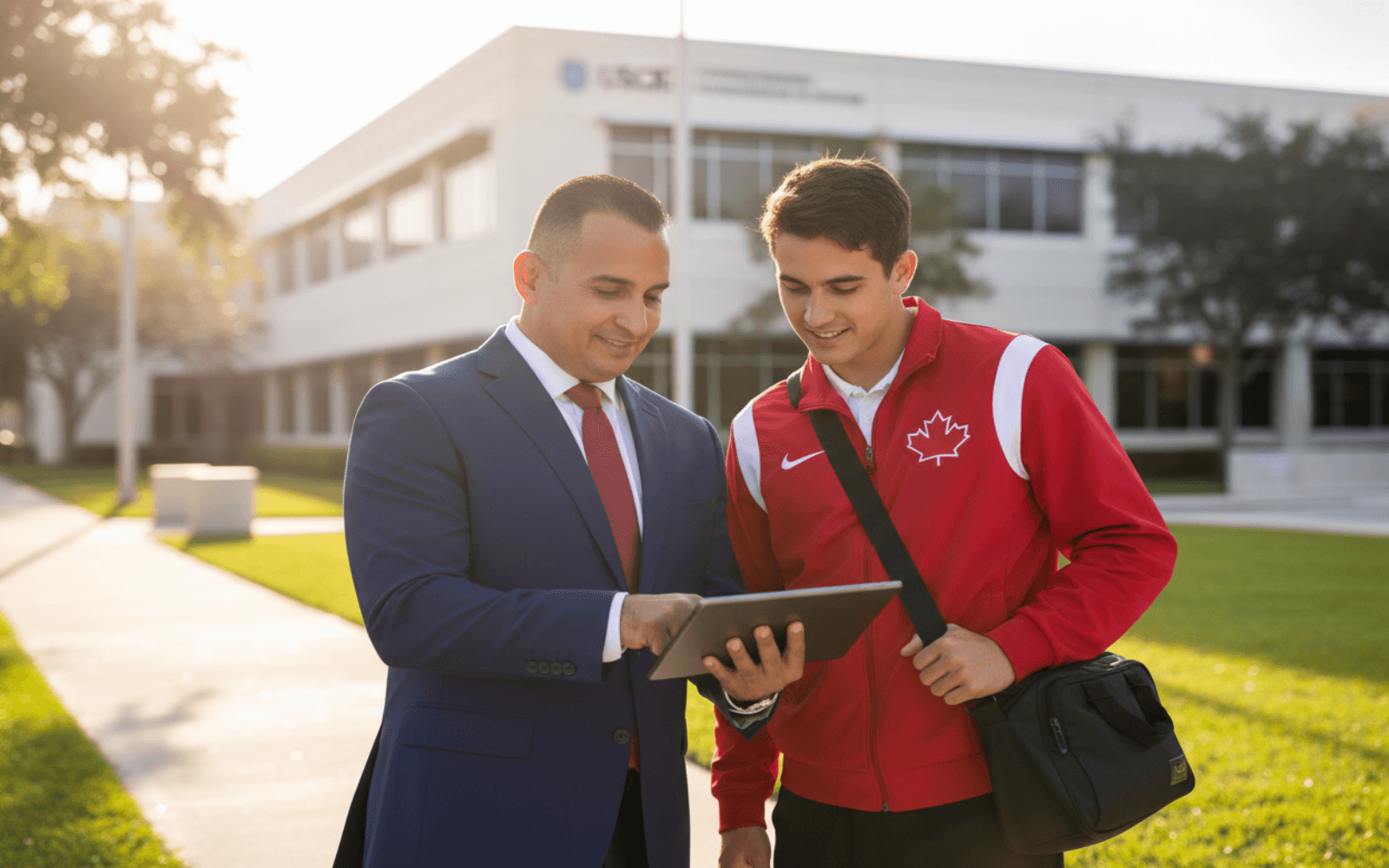
2026 Winter Olympics Ice Hockey & Florida Immigration
International athletes, coaches, and staff connected to the 2026 Winter Olympics ice hockey events often require specialized U.S. visas like the P-1 or O-1 for training and preparation in states like Florida. This guide from Florida Immigration Lawyers details the application process, essential documents, timelines, and costs. We cover critical steps from filing petitions with USCIS to consular interviews, emphasizing the importance of accurate documentation and avoiding common mistakes. Learn how legal assistance can streamline your immigration journey, ensuring you meet all requirements for your Olympic aspirations. Contact us for a free consultation to discuss your specific visa needs for the 2026 Winter Olympics.
William J. VásquezPublished on March 29, 2026
195 views
For international athletes, coaches, and essential support staff participating in or connected to the 2026 Winter Olympics Ice Hockey events, obtaining the correct U.S. visa is paramount. Specialized nonimmigrant visas, such as the P-1 for internationally recognized athletes and the O-1 for individuals of extraordinary ability, are typically required. The application process is complex, involving petitions to USCIS and consular interviews, making legal guidance from a Florida immigration lawyer essential.
Specialized visas (P-1, O-1) are crucial for Olympic participants.
The application involves USCIS petitions and consular processing.
Early planning and accurate documentation are vital for approval.
Florida immigration lawyers can streamline the complex visa process.
Improper visa selection or errors can lead to delays or denials.
The excitement for the 2026 Winter Olympics ice hockey events is building, even as the games are set to take place in Milano Cortina, Italy. For many international athletes, coaches, and support staff, preparing for such a prestigious event often involves training, strategizing, and seeking specialized support in the United States, particularly in vibrant states like Florida. If you are an athlete, coach, or essential personnel looking to train, prepare, or manage aspects of your participation in the 2026 Winter Olympics ice hockey, understanding U.S. immigration law is critical.
Navigating the intricacies of U.S. visa categories can be overwhelming. The process demands meticulous attention to detail and a thorough understanding of immigration regulations. At Florida Immigration Lawyers, we understand the unique needs of international talent. We are here to guide you through every step of securing the appropriate visa for your Olympic journey.
This comprehensive guide will cover the essential visa categories, the application process, required documentation, timelines, and potential costs associated with immigrating to the U.S. for purposes related to the 2026 Winter Olympics ice hockey. We aim to equip you with the knowledge you need to pursue your goals with confidence. For personalized advice and dedicated legal support, do not hesitate to call Florida Immigration Lawyers at 1-844-YO-PELEO for a free consultation.
Navigating Immigration for 2026 Winter Olympics Ice Hockey in Florida
Florida, with its world-class training facilities and diverse international population, often serves as a key preparation ground for athletes globally. For those connected to the 2026 Winter Olympics ice hockey, whether directly participating or providing essential support, understanding the specific immigration pathways available is paramount. The U.S. immigration system offers various nonimmigrant visa options tailored for individuals with specialized skills, including athletes.
The journey to the Olympics is rigorous, and ensuring your legal status in the U.S. is secure should be a top priority. Our firm is deeply familiar with the nuances of these applications. We help individuals and teams navigate the requirements set forth by USCIS (U.S. Citizenship and Immigration Services) and other government agencies.
Specifically, in areas like Homestead, Florida, which boasts a vibrant and growing international community, the need for clear immigration guidance is often high. Many international visitors and residents contribute significantly to Florida's economy and cultural landscape. Ensuring their immigration status aligns with their professional objectives is crucial for both personal success and compliance with federal law.
Featured: 2026 Winter Olympics Ice Hockey & Florida Immigration: Your Visa Guide
While the actual games will be in Italy, Florida's role as a training hub, a place for team strategizing, or even a location for essential support staff to finalize logistics, cannot be understated. Therefore, understanding the relevant U.S. immigration laws for temporary stays for professional purposes is vital for anyone involved with the 2026 Winter Olympics ice hockey.
Key Visa Categories for 2026 Winter Olympics Participants
For athletes, coaches, and support staff associated with the 2026 Winter Olympics ice hockey, specific nonimmigrant visa categories are designed to facilitate their temporary stay in the U.S. The most common and relevant options are the P-1 and O-1 visas, each with distinct eligibility criteria and requirements.
P-1 Visas: For Internationally Recognized Athletes and Entertainment Groups
The P-1 visa is specifically designed for internationally recognized athletes, individually or as part of a team or group, coming to the U.S. to perform at a specific athletic competition. This visa category is often the primary choice for Olympic-level ice hockey players and their essential support personnel. To qualify, you must demonstrate international recognition in your sport, evidenced by a high level of achievement.
Eligibility typically requires a petition filed by a U.S. employer, sponsoring organization, or agent. This petition must include evidence of your sustained national or international recognition and achievement in ice hockey. This could involve significant awards, league standings, media recognition, or letters from sports organizations. Essential support personnel, such as coaches, trainers, and referees, may also be eligible for P-1S visas if their services are integral to the athlete's performance.
The P-1 visa is generally granted for the duration of the event, competition, or season, up to a maximum of 5 years, with possible extensions. This flexibility allows for comprehensive training and participation schedules leading up to the 2026 Winter Olympics. It's crucial to gather robust documentation to prove your international standing in the sport.
O-1 Visas: For Individuals with Extraordinary Ability or Achievement
The O-1 visa is for individuals who possess extraordinary ability in the sciences, arts, education, business, or athletics, or who have a demonstrated record of extraordinary achievement in the motion picture or television industry. This visa category is a higher standard than the P-1 and is typically reserved for top-tier athletes, highly acclaimed coaches, or essential support personnel who have reached the very pinnacle of their profession.
To qualify for an O-1 visa as an athlete or coach, you must demonstrate extraordinary ability by sustained national or international acclaim, and that your achievements have been recognized in your field. This requires extensive documentation, such as major internationally recognized awards (like Olympic medals or world championships), significant media coverage, high salaries, or critical roles in distinguished organizations. An O-1 visa petition also requires an advisory opinion from a peer group, labor organization, or management organization within your field.
The initial O-1 visa can be granted for up to 3 years, with extensions available for 1-year increments. This longer duration can be highly beneficial for athletes and staff requiring an extended stay for training, preparation, and participation across multiple events. Our Florida immigration lawyers can help you assess whether you meet the stringent criteria for an O-1 visa and assist in compiling the compelling evidence required.
While B-1 (business visitor) visas might be considered for very short-term, unpaid activities, they are generally insufficient for professional athletes or staff engaged in significant training or paid work. Therefore, P-1 or O-1 visas are the recommended pathways for most individuals involved with the 2026 Winter Olympics ice hockey.
The Step-by-Step Immigration Application Process for Olympians
The immigration process for obtaining a P-1 or O-1 visa, especially for a high-profile event like the 2026 Winter Olympics ice hockey, involves several critical steps. Following these steps carefully and accurately is essential to avoid delays or denials.
Determine the Appropriate Visa Category: First, you and your sponsoring entity must identify whether a P-1 or O-1 visa best suits your qualifications and the nature of your activities in the U.S. This assessment considers your level of international recognition and the scope of your intended work or training.
File Form I-129, Petition for a Nonimmigrant Worker, with USCIS: Your U.S. employer, agent, or sponsoring organization must file Form I-129 with USCIS. This petition includes extensive evidence supporting your eligibility for the chosen visa category. All supporting documents must be meticulously prepared and translated if necessary.
Receive an Approved Petition (Form I-797): Once USCIS reviews your petition and all supporting evidence, they will issue a Form I-797, Approval Notice, if your petition is granted. This approval is a prerequisite for applying for the actual visa stamp.
Apply for a Visa at a U.S. Embassy or Consulate Abroad: After the I-129 petition is approved, you will typically apply for your visa stamp at a U.S. Embassy or Consulate in your home country. This involves completing the online Nonimmigrant Visa Application, Form DS-160, and scheduling a visa interview.
Attend the Visa Interview: During the interview, a consular officer will review your application, ask questions about your purpose of travel, and verify your eligibility and intent to return to your home country after your temporary stay. It is crucial to be well-prepared and honest in your responses.
Receive Your Visa Stamp: If the interview is successful and the consular officer approves your application, your passport will be stamped with the appropriate P-1 or O-1 visa. This visa allows you to travel to a U.S. port of entry.
Enter the U.S. at a Port of Entry: Upon arrival at a U.S. port of entry (such as Miami International Airport or Orlando International Airport in Florida), a Customs and Border Protection (CBP) officer will review your documents and determine your admission to the U.S. They will issue an I-94 Arrival/Departure Record, indicating your authorized period of stay.
Consider Change of Status (if applicable): If you are already in the U.S. on a different nonimmigrant visa and qualify, it may be possible to file Form I-129 to change your status to P-1 or O-1 without leaving the country. This is a complex process that requires careful legal guidance.
Throughout this detailed process, particularly when dealing with USCIS offices or consular sections, having the guidance of an experienced Florida immigration lawyer can make a significant difference. We ensure all forms are correctly filed and all evidence is compellingly presented.
Essential Document Checklist for Your Olympic Visa Application
A successful visa application for individuals involved in the 2026 Winter Olympics ice hockey hinges on providing comprehensive and accurate documentation. Preparing these documents meticulously is crucial for a smooth process. Here is a general checklist of what you will typically need:
Valid Passport: Your passport must be valid for at least six months beyond your intended period of stay in the U.S.
Approved Form I-129 Petition (Form I-797): The original approval notice from USCIS for your P-1 or O-1 petition.
Nonimmigrant Visa Application (Form DS-160) Confirmation Page: Proof that you have completed and submitted your online visa application.
Photographs: Recent passport-style photographs meeting U.S. visa requirements.
Evidence of International Recognition/Extraordinary Ability: This is the most critical component. For P-1 visas, this includes contracts with major sports leagues, awards, rankings, media articles, and letters from recognized sports organizations. For O-1 visas, this requires even more substantial evidence of sustained national or international acclaim, such as major international awards, significant media coverage, high salaries, or critical roles in distinguished events.
Detailed Itinerary: A clear outline of your activities, training schedule, and locations in the U.S., including any events related to the 2026 Winter Olympics.
Letters of Support: From your U.S. sponsoring organization, sports federation, or agent, detailing your role, the nature of the events, and the necessity of your presence.
Contracts: Any professional contracts related to your participation, training, or employment in the U.S.
Curriculum Vitae (CV) or Resume: Outlining your professional background and achievements in ice hockey or related fields.
Proof of Intent to Return Home: Evidence of strong ties to your home country, such as property ownership, family ties, or a letter from an employer, to demonstrate you do not intend to abandon your foreign residence.
Documents for Dependents (if applicable): If family members are accompanying you, they will need their own passports, DS-160 forms, photos, and proof of relationship to you (e.g., marriage certificates, birth certificates). They will typically apply for P-4 or O-3 visas.
Advisory Opinion (for O-1 visa): A written statement from a peer group, labor organization, or management organization regarding your qualifications.
Organizing these documents can be complex, especially ensuring all evidence directly supports the visa criteria. Our team at Florida Immigration Lawyers excels at helping clients compile robust application packages, minimizing the risk of RFEs (Requests for Evidence) or denials from USCIS.
Understanding Timelines and Processing Expectations for Olympic Visas
The timeline for obtaining a P-1 or O-1 visa for individuals involved in the 2026 Winter Olympics ice hockey can vary significantly. Several factors influence processing times, including the volume of applications at USCIS, the specific service center handling your petition, and the caseload at the U.S. Embassy or Consulate where you apply.
Typically, USCIS processing of Form I-129 can take several months. However, for an additional fee, you can opt for Premium Processing, which guarantees USCIS action on your petition within 15 calendar days. This option is highly recommended for time-sensitive applications related to major events like the Olympics, ensuring that athletes and staff can meet their training and competition schedules.
After USCIS approves the I-129 petition, the next step is consular processing. The wait times for visa interviews at U.S. Embassies and Consulates vary widely by location. Some posts may have appointments available within weeks, while others could have wait times of several months. It is crucial to check the specific embassy's website for current availability.
Given that the 2026 Winter Olympics ice hockey event is still some time away, starting your immigration process early is advisable. This proactive approach allows ample time for USCIS processing, consular appointments, and any potential requests for additional evidence. Planning ahead mitigates the stress and uncertainty associated with last-minute applications.
In Florida, our local USCIS field offices, such as those in Miami, Orlando, and Tampa, manage various immigration services. While P-1 and O-1 petitions are processed by USCIS service centers, these local offices may handle certain interview types or provide information for individuals already in the U.S. Understanding the overall system, including potential interactions with Department of Homeland Security components, is part of our comprehensive legal strategy.
Cost Factors and Fee Breakdown for Immigration Applications
Pursuing a U.S. visa for the 2026 Winter Olympics ice hockey involves various costs that applicants and their sponsoring organizations should anticipate. These fees are subject to change and are set by government agencies. They can generally be categorized into government filing fees and legal service fees.
USCIS Filing Fees: The primary government fee is for filing Form I-129, Petition for a Nonimmigrant Worker. This fee is mandatory for all P-1 and O-1 petitions.
Premium Processing Fee: If expedited processing is desired, an additional fee for Premium Processing is required. This significantly reduces the USCIS processing time to 15 calendar days.
Visa Application Fee (DS-160): Each individual applying for a nonimmigrant visa at a U.S. Embassy or Consulate, including dependents, must pay a visa application fee.
Biometrics Fee: In some cases, applicants may be required to attend a biometrics appointment, which might incur a separate fee.
Legal Service Fees: Engaging an experienced Florida immigration lawyer, such as those at Florida Immigration Lawyers, is a critical investment. Our fees cover comprehensive services, including case evaluation, document preparation, petition filing, communication with USCIS, and preparation for consular interviews.
Ancillary Costs: Other potential costs include translation services for foreign documents, courier fees, and travel expenses for interviews or biometrics appointments.
It is important to budget for all these expenses to ensure a smooth and uninterrupted application process. Our firm provides transparent fee structures and discusses all potential costs upfront, allowing you to plan effectively. We believe in clear communication regarding the financial aspects of your immigration journey.
Do not navigate this process alone. Contact Florida Immigration Lawyers today.
Common Mistakes to Avoid During Your Immigration Journey
Navigating the U.S. immigration system, especially for specialized visas related to events like the 2026 Winter Olympics ice hockey, is fraught with potential pitfalls. Avoiding common mistakes can significantly improve your chances of a successful outcome.
Choosing the Wrong Visa Category: Applying for a B-1/B-2 visitor visa when a P-1 or O-1 professional visa is required is a frequent error. This can lead to denial or issues at the port of entry, as immigration officers may deem your activities inconsistent with your visa type.
Incomplete or Inaccurate Documentation: Failing to provide all required documents or submitting forms with errors is a leading cause of delays, Requests for Evidence (RFEs), or outright denials. Every piece of evidence must directly support your eligibility.
Lack of Sufficient Evidence of International Recognition/Extraordinary Ability: Especially for O-1 visas, merely claiming extraordinary ability is not enough. You must provide compelling, objective evidence that meets the stringent criteria set by USCIS.
Missing Deadlines: Strict deadlines apply to various stages of the application process. Missing these can result in your application being rejected or having to restart the entire process, causing significant delays for your 2026 Winter Olympics preparations.
Misrepresenting Information: Any false statements or fraudulent documents can lead to severe consequences, including visa denial, future inadmissibility to the U.S., and even criminal charges. Honesty and accuracy are paramount.
Not Preparing for the Consular Interview: The visa interview is a critical step. Failing to understand the purpose of your trip, your ties to your home country, or the specifics of your petition can lead to a denial.
Overstaying a Previous Visa: If you have previously overstayed a U.S. visa, even by a short period, it can trigger bars to re-entry and make future visa applications much more challenging.
Ignoring Legal Advice: Attempting to navigate complex immigration laws without the guidance of an experienced attorney often results in costly mistakes and prolonged processes.
Assuming Easy Approval Due to Olympic Status: While your role in the Olympics is significant, it does not automatically guarantee visa approval. All eligibility criteria must still be met rigorously, and the burden of proof lies with the applicant.
Failing to Plan for Dependents: If family members are accompanying you, their applications must be correctly filed for the appropriate derivative visas (P-4 or O-3) with all necessary supporting documents.
Traveling Without Proper Authorization: Entering the U.S. on an ESTA (Visa Waiver Program) or a tourist visa with the intent to train or work professionally for the 2026 Winter Olympics is a violation of status and can lead to serious immigration issues.
Not Disclosing Previous Immigration Issues: Any prior visa denials, deportations, or criminal history must be disclosed truthfully. Attempting to conceal such information will almost certainly lead to a denial and potential permanent bars.
These mistakes can cost you valuable time and resources. Our Florida Immigration Lawyers team emphasizes proactive planning and meticulous preparation to help you avoid these common pitfalls.
When to Call a Florida Immigration Lawyer
While this guide provides general information, the complexities of U.S. immigration law, particularly for specialized visas like those for the 2026 Winter Olympics ice hockey, often necessitate professional legal assistance. Knowing when to engage an attorney can be the difference between a smooth process and significant challenges.
You should contact Florida Immigration Lawyers if:
Your Case is Complex: If you have a unique situation, previous immigration denials, or any criminal history, an attorney can assess your eligibility and strategize the best approach.
You Need Expedited Processing: For time-sensitive events like the Olympics, ensuring your petition is filed correctly and efficiently for premium processing is crucial. We can manage this process effectively.
You Are Unsure of the Correct Visa Category: Choosing the wrong visa can lead to delays or denials. Our experts can help you determine the most appropriate visa based on your specific role and qualifications.
You Need Help Gathering Evidence: Compiling the extensive documentation required for P-1 or O-1 visas, especially proving international recognition or extraordinary ability, can be daunting. We guide you through collecting and presenting compelling evidence.
You Require Assistance with Consular Processing: Preparing for the visa interview, understanding potential questions, and addressing any concerns raised by a consular officer are areas where our experience is invaluable.
You Are Already in the U.S. and Need to Change Status: Changing your immigration status from one nonimmigrant visa to another is a highly technical process best handled by legal professionals.
You Have Dependents: Ensuring your family members apply for and receive the correct derivative visas (P-4 or O-3) involves additional documentation and coordination.
Florida Immigration Lawyers has experience assisting individuals and organizations with complex immigration matters across Florida, including Homestead and surrounding areas. We are dedicated to providing clear, effective legal strategies to help you achieve your immigration goals. Our attorneys are adept at navigating USCIS regulations and can represent your interests throughout the entire process. We offer services for general immigration matters, business immigration, and more. Learn about our attorneys and contact us today.
About Florida Immigration Lawyers
Florida Immigration Lawyers is a leading law firm dedicated to providing exceptional immigration legal services across the entire state of Florida. With a deep understanding of U.S. immigration law and a commitment to our clients, we offer comprehensive legal solutions for individuals, families, and businesses.
Our experienced team focuses on a wide range of immigration matters, including nonimmigrant visas, family-based petitions, employment-based immigration, naturalization, and deportation defense. We pride ourselves on our empathetic approach, ensuring every client receives personalized attention and strategic guidance tailored to their unique circumstances.
Choosing Florida Immigration Lawyers means partnering with a firm that prioritizes your success. We are known for our meticulous preparation, aggressive advocacy, and unwavering dedication to achieving favorable outcomes. Our attorneys stay abreast of the latest immigration policies and procedures, providing you with up-to-date and reliable advice.
We offer free consultations and are available 24/7 to address your urgent immigration needs. Whether you are in Orlando, or anywhere else in Florida, our team is ready to serve you. Contact Florida Immigration Lawyers at 1-844-YO-PELEO or visit our website at https://www.floridaimmigrationlawyers.net to learn how we can assist you.
8 U.S.C. § 1101 - Definitions (Immigration and Nationality Act)
Immigration and Nationality Act (INA) Sections 101(a)(15)(P) and 101(a)(15)(O)
8 CFR Part 214.2(o) and 214.2(p) - Regulations P and O Visas
This article provides general legal information and is not intended as legal advice. Every case is unique, and outcomes depend on specific facts and circumstances. Contact an attorney for advice about your particular situation.
The journey to the 2026 Winter Olympics is a monumental undertaking, and your immigration status in the U.S. should not be a source of stress. Let Florida Immigration Lawyers provide the guidance you need to focus on your athletic pursuits. We are committed to helping you navigate the complexities of U.S. immigration law with confidence and clarity.
Call us today for a free, confidential consultation. Reach Florida Immigration Lawyers at 1-844-YO-PELEO. Se Habla Español - Estamos aquí para ayudarle.
Do Not Navigate This Process Alone
Our experienced immigration attorneys are ready to fight for you. Get a free, confidential case review today.
For international athletes competing in the 2026 Winter Olympics, the P-1A visa for 'Internationally Recognized Athletes' is typically the most suitable category. This non-immigrant visa is designed for individuals who come to the U.S. temporarily to perform at a specific athletic competition, either individually or as part of a team, and who have achieved a high level of international recognition in their sport. The petition must be filed by a U.S. employer, sponsoring organization, or agent, and requires substantial evidence of the athlete's international acclaim and the nature of the event.
Yes, essential support personnel accompanying P-1 athletes can apply for a P-1S visa. This category is for individuals who are an integral part of the performance of a P-1 athlete or team, and whose services are essential to the successful performance of the athlete or team. This includes coaches, trainers, referees, and other support staff. They must demonstrate that they have appropriate qualifications and experience, and that their services are not readily available in the U.S. The P-1S petition is usually filed concurrently with or subsequent to the athlete's P-1 petition.
It is highly recommended that Olympic athletes and their teams begin the visa application process as early as possible, ideally at least 6-12 months before their intended travel date. While USCIS processing times can vary, early application allows ample time for petition approval (Form I-129) and subsequent consular processing at a U.S. embassy or consulate abroad. Premium processing is available for an additional fee to expedite the I-129 petition to 15 calendar days, but consular interview wait times can still be significant, making proactive planning crucial to avoid delays.
Yes, immediate family members (spouses and unmarried children under 21) of P-1 athletes and P-1S support staff can apply for P-4 derivative visas. This allows them to accompany the principal visa holder to the U.S. for the duration of their approved stay. While P-4 visa holders can attend school, they are generally not permitted to work in the U.S. Other family members or visitors might need to apply for a B-2 visitor visa, which permits tourism but not employment or extended stays.
If an athlete or team member needs to extend their stay beyond the initial period granted on their P-1 or P-1S visa, an Extension of Stay application (Form I-129) must be filed with USCIS before their current authorized stay expires. Extensions are typically granted in increments of up to one year to continue the same event or activity. It's crucial to consult with an immigration attorney to ensure all eligibility requirements are met and the application is filed correctly and in a timely manner to maintain lawful status.
Athletes wishing to train in Florida prior to the 2026 Winter Olympics must ensure they have the appropriate visa. A B-1 Business Visitor visa might be suitable for very short, incidental training activities not involving competition or receiving payment from a U.S. source. However, for more formal, structured training, especially if it's part of preparation for the Olympics, a P-1A visa might be necessary. It's vital to clearly define the nature and duration of the training to select the correct visa, as improper visa usage can lead to future immigration issues. Consulting a Florida immigration lawyer is highly recommended.
U.S. immigration lawyers, particularly those specializing in athlete visas like Florida Immigration Lawyers, play a critical role in guiding Olympic participants through the complex visa application process. They assist with determining the most appropriate visa category, preparing and filing the I-129 petition with USCIS, compiling comprehensive supporting documentation, responding to Requests for Evidence (RFEs), and preparing applicants for consular interviews. Their expertise helps ensure compliance with immigration laws, minimizes delays, and maximizes the chances of a successful visa outcome for athletes and their support staff.
Key documentation for an Olympic athlete's P-1A visa application includes a valid passport, evidence of international recognition (e.g., awards, rankings, media articles, invitations to prestigious events like the Olympics), contracts with U.S. organizations or teams, an itinerary of events, and a consultation letter from an appropriate labor organization (if applicable). For the petition filed with USCIS, Form I-129 and its supplements are essential. When applying at a consulate, applicants will also need the I-797 approval notice, DS-160 confirmation, and appointment confirmation.
A prior visa denial or immigration issue does not automatically disqualify an athlete from participating, but it significantly complicates the process. It is crucial to disclose all past immigration history truthfully. Depending on the nature of the issue (e.g., overstay, misrepresentation, certain criminal convictions), a waiver of inadmissibility might be required. The process for obtaining a waiver can be lengthy and complex, requiring strong legal advocacy. Athletes in this situation should seek immediate consultation with an experienced immigration attorney to assess their options and strategize the best path forward.
William J. Vásquez
Founding Attorney · Vasquez Law Firm
U.S. Air Force veteran and immigration attorney with years of hands-on U.S. immigration experience. J.D., NCCU School of Law. AILA member. Admitted to the 4th, 5th, and 11th Circuit Courts.
Available 24/7 - Free Evaluations
Reviewed for legal accuracy by William J. Vásquez
Licensed in North Carolina; U.S. immigration is federal practice.