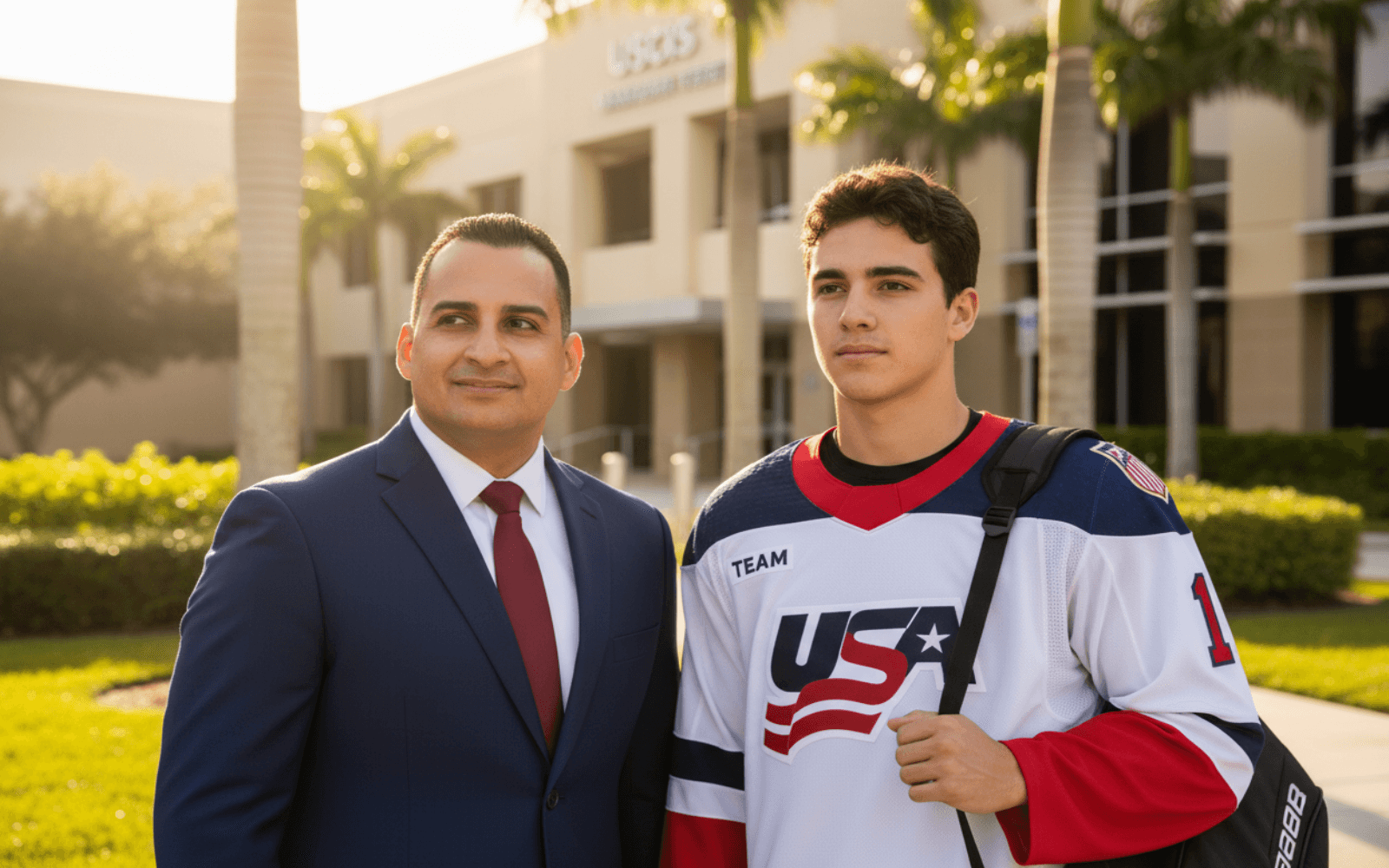
2026 Winter Olympics Ice Hockey: Immigration for Athletes
As the 2026 Winter Olympics ice hockey events approach, international athletes, coaches, and support staff often require specialized U.S. visas for training, competition, or post-event opportunities in Florida. This comprehensive guide details the P-1A and O-1 visa pathways, offering a step-by-step application process and essential document checklists. We emphasize the importance of avoiding common mistakes and knowing when to seek expert legal counsel. Florida Immigration Lawyers provides dedicated assistance to sports professionals throughout Florida, ensuring a smooth immigration journey. Learn about timelines, costs, and how our experienced team can help you achieve your goals in the U.S. Contact us for a free consultation.
William J. VásquezPublished on March 27, 2026
27 views
For athletes, coaches, and support staff participating in or connected to the 2026 Winter Olympics ice hockey events, navigating U.S. immigration law is crucial, especially if you plan to train, reside, or have post-event opportunities in Florida. Specialized visas, like the P-1A, are essential, requiring meticulous documentation and adherence to USCIS regulations. Florida offers unique advantages for preparation and future endeavors.
Athletes and support staff need specific non-immigrant visas (e.g., P-1A, O-1).
The application process involves USCIS and often U.S. consulates abroad.
Proper documentation, including contracts and international recognition, is vital.
Florida provides excellent training facilities and a supportive environment.
Consulting a Florida immigration lawyer is highly recommended for complex cases.
2026 Winter Olympics Ice Hockey: Immigration Pathways for Florida-Bound Talent
The anticipation for the 2026 Winter Olympics ice hockey tournaments in Milano Cortina is building, drawing the world's elite athletes and support teams. While the games are in Italy, many international hockey professionals may find themselves needing to navigate U.S. immigration laws, particularly if their journey involves training, competing, or pursuing opportunities in the Sunshine State. Florida, with its growing sports infrastructure and vibrant international communities, often serves as a hub for athletes.
Are you an athlete, coach, or essential support staff member eyeing the 2026 Winter Olympics ice hockey events, with plans that touch upon Florida? Understanding the specific visa requirements and legal pathways is paramount. This comprehensive guide from Florida Immigration Lawyers will walk you through the immigration process, focusing on how U.S. law applies to international sports professionals, and why having an experienced Florida immigration lawyer by your side is invaluable.
Don't let immigration complexities derail your Olympic dream or professional aspirations in Florida. Call Florida Immigration Lawyers at 1-844-967-3536 for a free consultation today. Our team is ready to assist you.
Understanding Immigration Pathways for 2026 Winter Olympics Ice Hockey Professionals
The journey to the 2026 Winter Olympics ice hockey stage involves more than just athletic prowess; for international participants, it often includes a complex immigration process. The United States offers specific visa categories designed for athletes and entertainment professionals, which are crucial for those who will train, reside temporarily, or seek opportunities within the U.S., including Florida.
These specialized visas recognize the unique nature of professional sports careers. They allow individuals to enter the U.S. legally to perform at a high level. Our firm understands the intricacies involved in securing these non-immigrant visas, ensuring your focus remains on your performance.
Key Non-Immigrant Visas for Athletes and Support Staff
Several visa options exist for those involved in the 2026 Winter Olympics ice hockey. The most common for athletes and their essential support personnel are the P-1A and O-1 visas. Each has distinct eligibility criteria that must be met rigorously.
The choice of visa depends heavily on your specific role and level of achievement. We can help you determine the most appropriate pathway for your situation. Our goal is to simplify this process for you.
The P-1A Visa: Internationally Recognized Athletes
The P-1A visa is specifically for individual athletes or members of an internationally recognized athletic team coming to the U.S. to participate in a specific athletic competition. This includes the high caliber of competition associated with the 2026 Winter Olympics ice hockey.
Featured: 2026 Winter Olympics Ice Hockey: Immigration for Athletes in Florida
To qualify for a P-1A visa, you must demonstrate international recognition. This generally means a high level of achievement in your sport, evidenced by significant awards, rankings, or participation in major international events. This visa is temporary but can be extended.
The O-1 Visa: Individuals of Extraordinary Ability
The O-1 visa is for individuals who possess extraordinary ability in the sciences, arts, education, business, or athletics. This category is often suitable for highly accomplished athletes, coaches, or trainers who have reached the very top of their field, beyond just international recognition.
Proving extraordinary ability requires extensive documentation. This includes evidence of sustained national or international acclaim and recognition for achievements in your field. Many elite 2026 Winter Olympics ice hockey participants may qualify for this prestigious visa.
Step-by-Step Guide to Securing an Athletic Visa for Florida
Navigating the U.S. immigration system can be daunting. Here is a general step-by-step guide for obtaining an athletic visa, such as the P-1A or O-1, relevant for those connected to the 2026 Winter Olympics ice hockey and planning a stay in Florida. Remember, each case is unique, and professional legal guidance is crucial.
Determine the Appropriate Visa Category: First, assess whether a P-1A, O-1, or another visa type best fits your situation. This depends on your role (athlete, coach, trainer, essential support personnel) and your level of international recognition or extraordinary ability. A thorough evaluation of your qualifications is the starting point.
Secure a Sponsoring U.S. Employer or Agent: For most athletic visas, you cannot self-petition. You will need a U.S. employer (e.g., a sports team, league, or organization in Florida) or a U.S. agent to file the petition on your behalf. This entity will attest to your need to enter the U.S. for athletic purposes.
Obtain a Consultation from an Appropriate Peer Group, Labor Organization, or Management Organization: For P-1A and O-1 visas, a written advisory opinion from a relevant U.S. peer group, labor organization, or management organization is typically required. This opinion confirms your qualifications and the nature of your proposed activities. This step ensures industry recognition of your talent.
File Form I-129, Petition for a Nonimmigrant Worker, with USCIS: Your U.S. sponsor or agent will file Form I-129 with U.S. Citizenship and Immigration Services (USCIS). This petition must include extensive supporting documentation proving your eligibility for the chosen visa category. This is the core of your application to USCIS.
Respond to Requests for Evidence (RFE) if Issued: USCIS may issue an RFE if they require additional information or clarification to make a decision on your petition. Prompt and thorough responses are critical. Our firm can help you compile and submit comprehensive responses.
Attend a Visa Interview at a U.S. Embassy or Consulate Abroad (if applicable): Once the I-129 petition is approved, if you are outside the U.S., you will typically need to schedule an interview at a U.S. embassy or consulate in your home country. This interview is a crucial step in obtaining the physical visa stamp in your passport. If you are already in the U.S. on another valid non-immigrant status, you may be able to adjust your status without leaving the country.
Enter the United States: Upon successful interview and visa issuance, you can then travel to the U.S. and present your visa at a port of entry. Customs and Border Protection (CBP) officers will make the final decision on your admission. Ensure you have all your documentation readily available.
Essential Document Checklist for Athletic Visa Applications
A successful visa application, especially for those involved with the 2026 Winter Olympics ice hockey, hinges on meticulous documentation. Gathering all necessary papers in advance can significantly streamline the process. Here is a general checklist of documents typically required for athletic visas like the P-1A or O-1.
Remember, the specific documents needed can vary based on your visa type and individual circumstances. Your Florida immigration lawyer will provide a tailored list.
Copy of passport biographical page (valid for at least six months beyond your intended stay).
Nonimmigrant Visa Application, Form DS-160 confirmation page.
Photographs meeting U.S. visa requirements.
Proof of international recognition or extraordinary ability (e.g., contracts, awards, media articles, testimonials, statistics, rankings).
Detailed itinerary of activities in the U.S., including training, competitions, and appearances.
Copies of all contracts between you and your U.S. employer/agent.
Written advisory opinion from a relevant U.S. peer group or labor organization.
Evidence that you intend to depart the U.S. after your authorized stay (e.g., ties to your home country).
For dependents (spouse, unmarried children under 21), marriage certificates, birth certificates, and their own passport/visa documents.
Any previous U.S. visa stamps or entry/exit records.
Timeline and Processing Expectations for 2026 Winter Olympics Ice Hockey Visas
The processing times for U.S. visas can vary significantly, impacting your plans related to the 2026 Winter Olympics ice hockey. It is essential to start the application process well in advance to avoid any last-minute complications.
USCIS processing times for Form I-129 petitions can range from a few months to over a year, depending on the service center and current caseloads. Premium Processing is an option that can expedite the USCIS decision to 15 calendar days for an additional fee. This is often a wise investment for time-sensitive applications.
After USCIS approval, scheduling a visa interview at a U.S. embassy or consulate can also take time, especially in high-demand locations. It is crucial to monitor embassy wait times. We recommend beginning your immigration journey at least 6-12 months before your intended travel date, particularly if you are seeking a P-1A or O-1 visa for activities related to the 2026 Winter Olympics ice hockey.
Cost Factors and Fee Breakdown for Immigration Applications
Understanding the financial aspects of your immigration journey for the 2026 Winter Olympics ice hockey is important. There are several fees associated with U.S. visa applications, which are subject to change by government agencies.
These costs typically include USCIS filing fees for Form I-129, potentially a Premium Processing fee, and U.S. Department of State visa application fees (DS-160 fee). There may also be additional fees for medical examinations, passport services, and legal representation.
While we cannot provide specific government fee amounts as they frequently change, our firm offers transparent fee structures for our legal services. Investing in experienced legal counsel can save you time, stress, and potential costly errors in the long run. We encourage you to discuss all potential costs during your initial consultation with a Florida immigration lawyer.
Do not navigate this complex process alone. Contact Florida Immigration Lawyers today to ensure your immigration journey is smooth and successful. We are here to help you achieve your goals in Florida.
Common Mistakes to Avoid in Your Immigration Journey
Mistakes in immigration applications, especially for high-stakes events like the 2026 Winter Olympics ice hockey, can lead to significant delays or even denials. Being aware of common pitfalls can help you avoid them. Our firm, Florida Immigration Lawyers, regularly helps clients rectify issues arising from these errors.
Submitting Incomplete Documentation: Failing to provide all required forms or supporting evidence is a frequent cause of delays. USCIS will issue a Request for Evidence (RFE), significantly extending processing times. Always double-check your application against the official checklists.
Misrepresenting Information: Providing false or misleading information, even unintentionally, can have severe consequences, including visa denial and future bars from entering the U.S. Always be truthful and accurate in all submissions.
Missing Deadlines: Immigration processes have strict deadlines for responses to RFEs or appeals. Missing these can result in the denial of your petition without further review. Keep track of all dates and respond promptly.
Failing to Prove International Recognition/Extraordinary Ability: For P-1A and O-1 visas, merely stating you are an athlete is insufficient. You must provide compelling evidence meeting the specific regulatory criteria. Generic evidence or a lack of sufficient proof will lead to denial.
Not Obtaining a Required Advisory Opinion: Overlooking the need for an advisory opinion from a relevant labor organization can halt your application. This is a mandatory component for many athletic and entertainment visas.
Assuming Tourist Visa (B-1/B-2) is Sufficient: Many athletes mistakenly believe a tourist visa covers their athletic activities. Engaging in professional athletic competition or earning income on a tourist visa is a violation of status and can lead to serious immigration consequences.
Ignoring Changes in Immigration Law: Immigration laws and policies are constantly evolving. Relying on outdated information can lead to incorrect application strategies. Staying informed or working with a knowledgeable Florida immigration lawyer is crucial.
Not Planning for Dependents: If your spouse or children will accompany you, they need their own derivative visas. Failing to file for them concurrently or with proper documentation can cause separate delays for your family.
Poor Communication with Sponsor/Agent: A lack of clear communication between you and your U.S. employer or agent can lead to errors, missed information, or uncoordinated efforts. Ensure a strong, collaborative relationship.
Underestimating the Complexity: The U.S. immigration system is complex. Underestimating the time, effort, and specific legal knowledge required often leads to errors. Professional legal guidance is not just an expense; it's an investment.
When to Call a Florida Immigration Lawyer
While this guide provides general information, the nuances of U.S. immigration law, especially for those involved in the 2026 Winter Olympics ice hockey, can be challenging. Knowing when to seek professional legal help is crucial for a smooth process.
You should contact Florida Immigration Lawyers if you:
Are unsure which visa category applies to your situation (e.g., P-1A, O-1, or another).
Have a complex athletic history or unique circumstances that don't fit standard criteria.
Have received a Request for Evidence (RFE) from USCIS or a denial.
Need help gathering and organizing extensive documentation to prove international recognition or extraordinary ability.
Are concerned about potential inadmissibility issues due to past immigration violations or criminal history.
Require assistance with an expedited Premium Processing request.
Are an organization or team in Florida seeking to sponsor international athletes or staff.
Plan to transition from a non-immigrant visa to a green card or other long-term status.
Are an athlete, coach, or support staff member in Naples or other Florida areas, needing local expertise.
Our experienced attorneys at Florida Immigration Lawyers are well-versed in athletic visas and can provide tailored advice. We serve clients throughout Florida, including those near USCIS field offices in Miami, Orlando, and Tampa, and the Executive Office for Immigration Review courts. We understand the specific needs of international sports professionals and are committed to helping you achieve your immigration goals in Florida.
About Florida Immigration Lawyers
Florida Immigration Lawyers is a leading immigration law firm dedicated to serving individuals, families, and businesses across the entire state of Florida. We understand the complexities and emotional challenges often associated with immigration matters, and we are committed to providing compassionate, effective, and results-driven legal representation.
Our firm specializes in a wide range of immigration services, including family-based immigration, business immigration, deportation defense, asylum, citizenship, and various visa categories, including those for athletes and professionals. We pride ourselves on our deep knowledge of U.S. immigration law and our unwavering dedication to our clients.
Why choose Florida Immigration Lawyers? Our experienced attorneys offer personalized attention, strategic legal counsel, and a commitment to protecting your rights and achieving your immigration goals. We are available 24/7 to answer your questions and provide support. We offer free consultations, allowing you to discuss your case without financial obligation. Let us be your trusted partner in your immigration journey.
8 U.S.C. § 1101(a)(15)(P) - Definition of Nonimmigrant (P Visa)
8 U.S.C. § 1101(a)(15)(O) - Definition of Nonimmigrant (O Visa)
8 C.F.R. § 214.2(p) - P Nonimmigrants
8 C.F.R. § 214.2(o) - O Nonimmigrants
This article provides general legal information and is not intended as legal advice. Every case is unique, and outcomes depend on specific facts and circumstances. Contact an attorney for advice about your particular situation.
Frequently Asked Questions (FAQs)
Where is the Winter Olympics 2026 ice hockey?
The 2026 Winter Olympics ice hockey tournaments are scheduled to take place in Milano Cortina, Italy. While the games are hosted there, many international athletes, coaches, and support staff may still require U.S. visas for training camps, pre-Olympic events, or post-Olympic opportunities in places like Florida.
Which Florida Panthers are going to the Olympics? / What teams will play in 2026 Olympic hockey?
Specific rosters for the 2026 Winter Olympics ice hockey are determined by national federations and agreements between the NHL and IIHF closer to the event. Our focus, as immigration lawyers, is on assisting any athlete, coach, or essential support staff member who qualifies for their respective national team with their U.S. immigration needs, regardless of their current club affiliation, including those who play for or train with teams in Florida.
What did Aaron Ekblad do to get suspended? / Gaudreau hockey
Questions regarding specific player disciplinary actions, such as those involving Aaron Ekblad, or details about individual players like Gaudreau, typically fall under NHL or IIHF regulations and are outside the scope of U.S. immigration law. However, any legal issues or suspensions could potentially impact an individual's U.S. visa eligibility or status. Our firm can advise on how such matters might affect your immigration case if they arise.
How can Florida Immigration Lawyers help with 2026 Winter Olympics ice hockey related immigration?
Our firm specializes in helping athletes, coaches, and support personnel navigate the complex U.S. visa system. We assist with visa applications (P-1A, O-1, etc.), respond to RFEs, and provide comprehensive legal guidance to ensure you meet all requirements for your U.S. stay related to the 2026 Winter Olympics ice hockey. We are your dedicated Florida immigration lawyer for sports professionals.
If you are an international athlete, coach, or essential support staff member with ties to the 2026 Winter Olympics ice hockey and need expert immigration guidance in Florida, don't hesitate. Call Florida Immigration Lawyers at 1-844-967-3536 for a free consultation. Se Habla Español - Estamos aquí para ayudarle.
Do Not Navigate This Process Alone
Our experienced immigration attorneys are ready to fight for you. Get a free, confidential consultation today.
International athletes aiming to compete in the 2026 Winter Olympics in Florida typically pursue non-immigrant visas designed for individuals with extraordinary abilities. The most common options include the P-1A visa, designated for internationally recognized athletes, and potentially the O-1 visa for individuals with extraordinary ability in athletics. The P-1A requires a U.S. employer, agent, or sponsoring organization to petition on the athlete's behalf, demonstrating their international recognition and the nature of the event. Understanding the specific requirements for each visa category is crucial, and expert legal guidance can streamline the application process, ensuring all criteria are met for successful entry. For comprehensive details on these and other relevant visas, visit our dedicated page on <a href="/practice-areas/immigration">Immigration Law</a>.
Yes, athletes holding primary non-immigrant visas like the P-1A or O-1 can generally bring their immediate family members to Florida. For P-1A visa holders, spouses and unmarried children under 21 may apply for P-4 derivative visas. Similarly, O-1 visa holders' immediate family can apply for O-3 derivative visas. These derivative visas allow family members to reside in the U.S. for the duration of the principal athlete's authorized stay, though they typically do not permit employment. It's essential to file separate applications for each family member and provide evidence of the familial relationship. Our firm can assist with all aspects of <a href="/practice-areas/immigration">family-based immigration</a> for athletes.
If an athlete's visa expires before they can depart the U.S. due to unforeseen circumstances, it's critical to act immediately. Overstaying a visa can lead to severe immigration consequences, including bars to future U.S. entry. Depending on the situation, options might include filing for an extension of stay or, in very limited cases, a change of status if eligible. However, these options are not guaranteed and require prompt legal intervention. If an athlete finds themselves in this precarious situation, seeking advice from an experienced attorney is paramount to explore all possible avenues and mitigate potential negative impacts, including <a href="/practice-areas/deportation-defense">deportation defense</a>. Our <a href="/attorneys">legal team</a> is ready to provide urgent assistance.
While participation in the Olympics is a significant achievement, it doesn't automatically grant a Green Card. However, it can significantly strengthen an athlete's eligibility for certain employment-based immigrant visas, particularly the EB-1A visa for individuals of extraordinary ability. This category requires demonstrating sustained national or international acclaim in their field. Other potential pathways include the EB-2 National Interest Waiver (NIW) or employer-sponsored green cards if the athlete secures a professional contract with a U.S. team or organization. Each path has stringent requirements, and a successful application often hinges on meticulous documentation and expert legal strategy in <a href="/practice-areas/immigration">immigration law</a>.
To qualify for a P-1A visa, an international ice hockey player must demonstrate they are coming to the U.S. to participate in a specific athletic competition as an individual or part of a team at an internationally recognized level of performance. Key evidence includes documentation of their international ranking, significant awards or honors received, participation in major international competitions, media recognition of their achievements, and letters from recognized sports organizations or experts confirming their international stature. A U.S. employer, agent, or sponsoring organization must file the petition on their behalf. Navigating these detailed requirements is a core part of our <a href="/practice-areas/immigration">immigration services</a>.
The processing time for P-1A or O-1 visas for Olympic athletes can vary significantly. Standard processing through USCIS can range from several weeks to several months, depending on the service center workload. For those with urgent deadlines, Premium Processing is available for an additional fee, guaranteeing a response (approval, denial, or Request for Evidence) within 15 calendar days. After USCIS approval, the athlete must attend a visa interview at a U.S. embassy or consulate abroad, which adds further processing time. It is always advisable to begin the application process as early as possible and to <a href="/contact">contact us</a> for current processing estimates and strategic planning.
International athletes often encounter several legal challenges when seeking to compete in the U.S. These can include demonstrating "intent to return" to their home country (for non-immigrant visas), providing extensive documentation to prove their extraordinary ability or international recognition, and navigating the complexities of U.S. immigration regulations. Issues like Requests for Evidence (RFEs) from USCIS are common, requiring a precise and timely response. Furthermore, ensuring compliance with all visa terms and conditions throughout their stay is crucial. Engaging experienced <a href="/attorneys">immigration attorneys</a> who understand both sports and immigration law can significantly mitigate these challenges and ensure a smooth process.
Yes, an athlete, like any other individual, can seek asylum in the U.S. if they have a well-founded fear of persecution in their home country based on their race, religion, nationality, political opinion, or membership in a particular social group. Athletic status itself does not grant asylum, but if an athlete faces persecution for one of the protected grounds, they may be eligible. The asylum process is distinct from athlete visas and involves a rigorous application and interview process with USCIS or an immigration judge. This is a complex area of law, and individuals considering this path should seek immediate legal counsel from an expert in <a href="/practice-areas/asylum">asylum law</a>.
William J. Vásquez
Founding Attorney · Vasquez Law Firm
U.S. Air Force veteran and immigration attorney with years of hands-on U.S. immigration experience. J.D., NCCU School of Law. AILA member. Admitted to the 4th, 5th, and 11th Circuit Courts.
Available 24/7 - Free Evaluations
Reviewed for legal accuracy by William J. Vásquez
Licensed in North Carolina; U.S. immigration is federal practice.