Voluntary Departure vs. Deportation in Florida: Your Guide
Understanding the difference between voluntary departure and deportation is critical for anyone in Florida facing removal proceedings. Voluntary departure allows you to leave the U.S. without a formal deportation order, preserving future immigration possibilities. Deportation, however, carries severe consequences, including long-term bars to re-entry. This guide details eligibility, the step-by-step process, required documents, and critical differences between these two outcomes. Learn how to avoid common mistakes and when to seek legal counsel to protect your future. Florida Immigration Lawyers offers free consultations to help you navigate these complex legal challenges in Fort Lauderdale and across the state.

Voluntary departure allows an individual to leave the U.S. at their own expense within a specified timeframe, avoiding a formal deportation order. In contrast, deportation (also known as removal) is the forced expulsion from the country, carrying harsher penalties and a significant bar to future re-entry. Choosing voluntary departure in Florida can preserve future immigration options.
- Voluntary departure avoids a formal removal order.
- Deportation typically results in a 10-year bar to re-entry.
- Eligibility for voluntary departure requires proving good moral character and ability to depart.
- An immigration judge must grant voluntary departure.
- Consulting a Florida immigration lawyer is crucial for either process.
Facing immigration challenges in Florida can be incredibly stressful, especially when the possibility of being removed from the country looms. You might be wondering about your options if you are in removal proceedings. Understanding the critical differences between voluntary departure and a formal deportation order is essential for your future.
This comprehensive guide will walk you through what voluntary departure entails, how it compares to deportation, and why making the right choice, with expert legal guidance, is paramount. We will cover eligibility criteria, the application process, and potential consequences for your immigration journey in Fort Lauderdale and across Florida. Do not face this complex situation alone. Call Florida Immigration Lawyers at 1-844-967-3536 for a free consultation to discuss your specific circumstances and explore your best path forward.
Understanding Voluntary Departure in Florida
Voluntary departure is a form of relief from removal that allows eligible individuals to leave the United States on their own accord. This permission is granted by an immigration judge or, in some cases, by U.S. Immigration and Customs Enforcement (ICE). It is a significant alternative to being formally deported.
The primary benefit of voluntary departure is that it prevents the creation of a formal removal order on your immigration record. A deportation order carries severe negative consequences, including a statutory bar to re-entry for many years. By contrast, a voluntary departure can make it easier to seek legal re-entry in the future.
In Florida, like elsewhere, the decision to grant voluntary departure rests with the immigration judge presiding over your case. They will assess various factors, including your eligibility and whether you can demonstrate the intent and means to depart within the allotted time. It is a discretionary form of relief.
Many individuals in Fort Lauderdale and other Florida communities facing removal proceedings explore this option. It offers a chance to manage your departure on your own terms, often with less long-term impact on your ability to apply for visas or other immigration benefits in the future. This is a crucial distinction from a formal deportation.
Eligibility for Voluntary Departure in Florida
Not everyone in removal proceedings is eligible for voluntary departure. The Immigration and Nationality Act (INA) outlines specific criteria that you must meet. These requirements vary depending on whether you request voluntary departure before or after your removal proceedings have concluded.
Pre-Hearing Voluntary Departure
If you request voluntary departure before the conclusion of your master calendar hearing or individual hearing, the requirements are generally less stringent. You must concede removability and waive your right to appeal the immigration judge’s decision. You also need to show that you have the financial means to depart the U.S. and possess a valid travel document.
Furthermore, you must agree to depart within a specific period, typically 120 days. This option is often available to individuals who have not committed serious crimes and who have a relatively clean immigration history. It offers a quicker resolution for some cases.
Post-Hearing Voluntary Departure
Requesting voluntary departure at the conclusion of your removal proceedings, after a finding of removability, comes with stricter requirements. You must demonstrate good moral character for at least five years immediately preceding your application. You also cannot have been convicted of an aggravated felony.
Additionally, you must show clear and convincing evidence that you have the financial ability to depart and intend to do so. You will also typically be required to post a voluntary departure bond. This bond ensures that you will depart the U.S. within the time frame granted, usually 60 days. See INA § 240B(b) (8 U.S.C. § 1229c(b)).
An immigration judge in a Fort Lauderdale immigration court, for example, will carefully consider all these factors. They assess your overall record, including any criminal history or prior immigration violations. Your attorney can help you gather the necessary evidence to support your claim.
The Step-by-Step Process for Requesting Voluntary Departure
Navigating the immigration court system in Florida can be complex. The process for requesting voluntary departure involves several key steps, and missing any of them could jeopardize your chances. Here is a general overview of what you can expect:
-
Consult with an Immigration Attorney: Your first and most critical step is to seek legal counsel from an experienced immigration lawyer. A lawyer can assess your eligibility, review your case for any potential bars, and advise you on the best strategy. They can also represent you in court.
-
Attend Master Calendar Hearings: If you are in removal proceedings, you will have initial master calendar hearings. During these hearings, the immigration judge will explain the charges against you and inquire about your intentions. This is often the first opportunity to express your interest in voluntary departure.
-
File a Motion for Voluntary Departure: Your attorney will prepare and file a formal motion or request for voluntary departure with the immigration court. This document will include arguments supporting your eligibility and evidence fulfilling the statutory requirements. It is a crucial legal filing.
-
Demonstrate Eligibility and Good Moral Character: You must present evidence to the immigration judge proving you meet all the eligibility criteria. This includes demonstrating good moral character, showing you have the financial means to leave, and proving you possess a valid travel document. Your lawyer will help you compile this evidence.
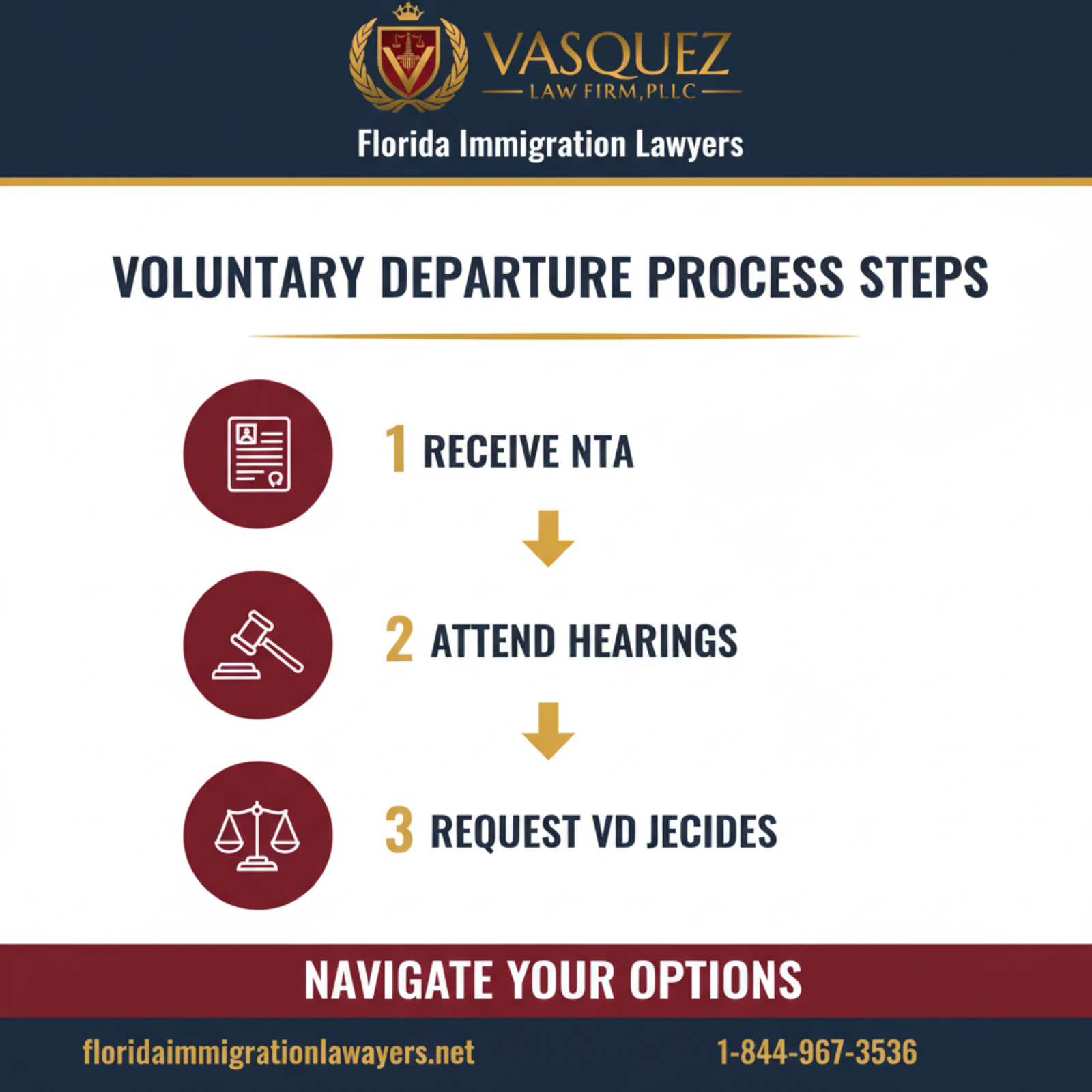
voluntary departure - Step-by-Step Process -
Judge's Decision and Bond: The immigration judge will review your request and evidence. If granted, the judge will specify the departure date and any bond requirements. If a bond is required, you or a sponsor must post it with ICE. The bond is returned once you confirm your departure.
-
Depart Within the Allotted Time: It is imperative that you depart the U.S. by the date set by the immigration judge. Failure to do so results in the automatic conversion of your voluntary departure into a formal deportation order. This also forfeits your bond and can lead to severe future immigration consequences, including a 10-year bar.
Key Documents Required for Voluntary Departure
To successfully request voluntary departure, you will need to present various documents to the immigration court. Preparing these documents thoroughly and accurately is vital for your case. Your Florida immigration lawyer can guide you through this process and ensure all necessary paperwork is in order.
- Valid Passport or Travel Document: Proof that you have the means to leave the country and enter another.
- Evidence of Financial Ability to Depart: Bank statements, affidavits of support from family, or other financial records showing you can cover your travel expenses.
- Proof of Good Moral Character: This may include affidavits from employers, community leaders, or family members, alongside evidence of no criminal record.
- Immigration Court Documents: Any notices to appear, prior orders, or other official court correspondence related to your case.
- Personal Identification: State ID, driver's license, or other forms of identification.
- Biometric Information: You may be required to undergo fingerprinting and background checks.
- Voluntary Departure Bond (if required): Documentation of the posted bond.
Voluntary Departure vs. Deportation: Critical Differences and Consequences
The choice or outcome between voluntary departure and a formal deportation order has profound and lasting implications for your life. Understanding these differences is crucial for anyone in Florida facing removal proceedings. While both result in leaving the U.S., their legal consequences are vastly different.
Impact on Future Re-entry
A formal deportation order typically triggers a 10-year bar to re-entry into the United States. This means you are generally inadmissible for ten years from the date of your deportation. In some cases, depending on the grounds for removal, this bar can be permanent. Re-entering unlawfully after deportation carries severe criminal penalties.
With voluntary departure, you avoid this automatic 10-year bar. While you still need to apply for a visa or other immigration benefit to return, your record does not reflect a formal removal order. This significantly improves your chances of future legal re-entry, provided you meet all other admissibility requirements.
Adjustment of Status After Voluntary Departure
If you depart voluntarily, you may be eligible to apply for certain immigration benefits, such as an adjustment of status or a new visa, from outside the U.S. This is generally not possible after a deportation order, which often requires a waiver of inadmissibility, a much more challenging process. The ability to pursue adjustment of status after voluntary departure is a key benefit.
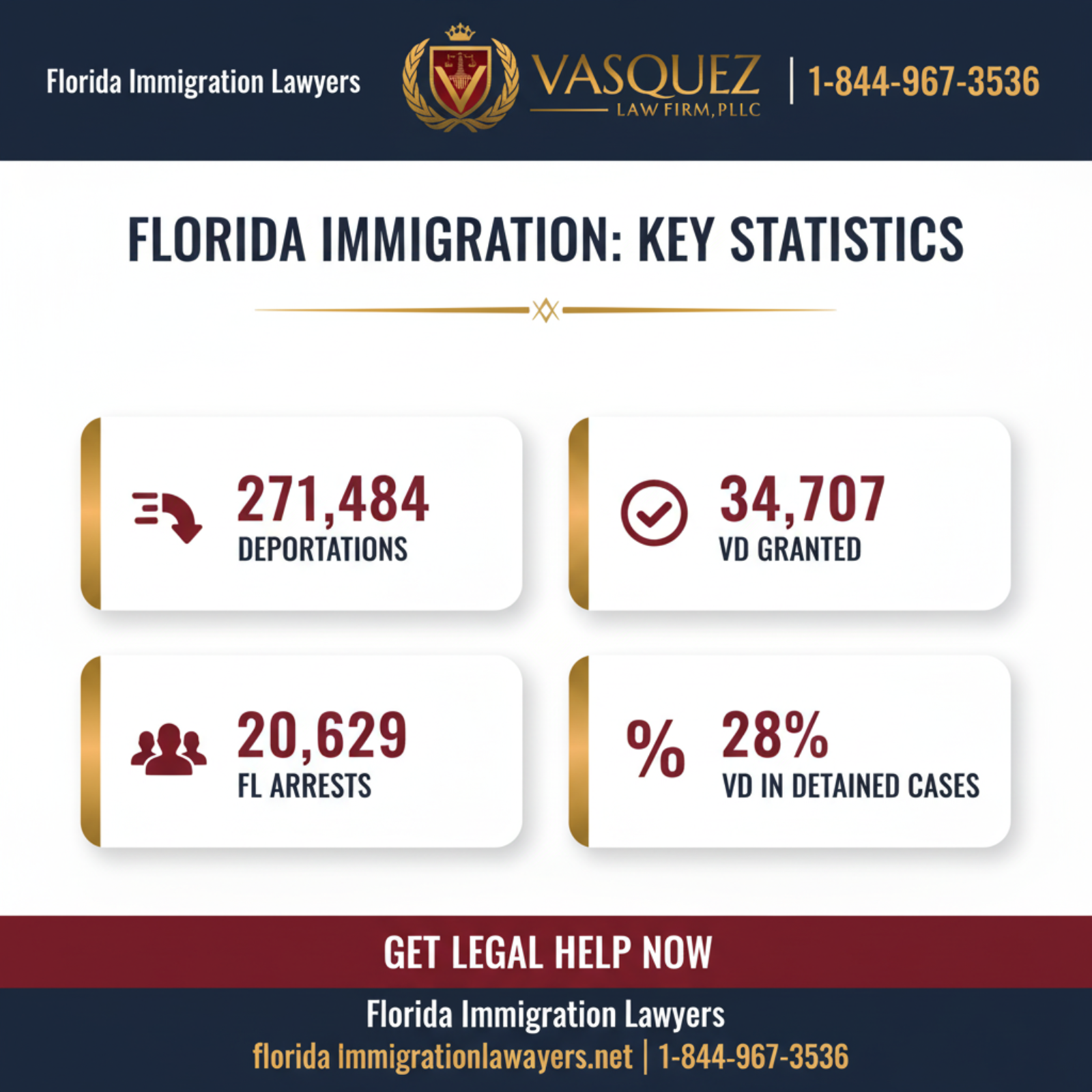
Voluntary Departure After Removal Order?
It is generally not possible to receive voluntary departure after a final order of removal has been issued. Once an immigration judge issues a deportation order, the individual is subject to forced removal by ICE. This underscores the importance of seeking voluntary departure early in the process.
Credit Score and Public Record
A deportation order can negatively impact your credit score and appear on public records, affecting future employment or housing opportunities. Voluntary departure generally avoids these collateral consequences, preserving your financial and personal standing. This can be a significant advantage.
Timeline and Processing Expectations for Voluntary Departure
When voluntary departure is granted, the immigration judge will specify a deadline by which you must leave the United States. This timeframe is critical and must be strictly adhered to. The duration granted can vary based on when you request it during your proceedings.
If granted voluntary departure before the conclusion of your master calendar hearing, you typically receive up to 120 days to depart. This provides more flexibility for making travel arrangements and settling your affairs. It is a more generous allowance.
However, if voluntary departure is granted at the conclusion of your removal proceedings, after a finding of removability, the judge will typically grant a maximum of 60 days. This shorter timeframe requires prompt action to ensure compliance. Extensions are rarely granted and only under exceptional circumstances.
It is important to remember that the clock starts ticking the moment the judge grants voluntary departure. Failing to depart by the deadline has severe consequences, including the issuance of a formal deportation order and forfeiture of any bond posted. For individuals in Fort Lauderdale and surrounding areas, understanding these timelines is vital.
Cost Factors and Fee Breakdown
While there is no direct USCIS application fee specifically for voluntary departure itself, there are several associated costs you should anticipate. These can include legal fees, travel expenses, and potentially a voluntary departure bond. Understanding these financial aspects is crucial for planning.
Legal Fees: The most significant cost for many individuals will be the attorney fees. An experienced immigration lawyer provides invaluable assistance in preparing your case, representing you in court, and ensuring you meet all deadlines. These fees vary based on the complexity of your case and the attorney's experience.
Travel Expenses: You are responsible for the cost of your own departure from the United States. This includes airfare, ground transportation, and any other travel-related expenses. You must demonstrate that you have the financial means to cover these costs.
Voluntary Departure Bond: If you are granted voluntary departure at the conclusion of your removal proceedings, the immigration judge will typically require you to post a bond. This bond acts as a guarantee that you will depart the U.S. within the specified time. The amount of the bond is determined by the judge, but it cannot be less than $500. This bond is returned to you after you provide proof of your timely departure to ICE.
It is important to note that filing fees for other immigration benefits or waivers, if applicable to your situation, would be separate. Always consult with your attorney for a clear understanding of all potential costs involved in your specific voluntary departure case.
Do not navigate this complex process alone. Contact Florida Immigration Lawyers today to ensure you understand all your options and obligations. We are here to provide the expert legal guidance you need.
Common Mistakes to Avoid
Navigating voluntary departure can be fraught with potential pitfalls. Making a mistake can lead to severe consequences, including the issuance of a formal deportation order and bars to future re-entry. Be aware of these common errors:
-
Not Consulting an Immigration Attorney: Attempting to handle a voluntary departure request without legal counsel is one of the biggest mistakes. An attorney understands the legal complexities, eligibility requirements, and court procedures. Without professional guidance, you risk missing crucial details.
-
Missing Deadlines: Immigration court proceedings operate on strict deadlines. Failing to file necessary documents or motions on time can lead to the denial of your request or even a default deportation order. Timeliness is paramount.
-
Failing to Depart on Time: This is perhaps the most critical mistake. If you are granted voluntary departure but do not leave the U.S. by the specified date, your voluntary departure automatically converts into a formal deportation order. You will also forfeit any bond posted and face a 10-year bar to re-entry.
-
Not Understanding Eligibility Requirements: Many individuals mistakenly believe they qualify for voluntary departure when they do not. Certain criminal convictions or prior immigration violations can make you ineligible. It is vital to accurately assess your eligibility with an attorney.
-
Providing Inaccurate or False Information: Submitting fraudulent documents or providing false testimony to an immigration judge can lead to severe penalties. These include criminal charges, permanent bars to immigration benefits, and immediate deportation. Honesty is always the best policy.
-
Assuming Automatic Approval: Voluntary departure is a discretionary form of relief. An immigration judge can deny your request for various reasons, even if you meet the basic eligibility criteria. There is no guarantee of approval, making strong legal arguments essential.
-
Not Having Valid Travel Documents: You must possess a valid passport or travel document from your home country to be granted voluntary departure. Without proper travel documents, proving your ability to depart is difficult, and your request may be denied.
-
Ignoring the Voluntary Departure Bond Requirement: If a bond is required by the judge, you must post it. Failure to post the bond within the specified timeframe can result in the denial of voluntary departure. Ensure you understand and fulfill this obligation.
-
Attempting Re-entry Too Soon or Illegally: Even with voluntary departure, you still need to follow legal channels for re-entry. Attempting to re-enter without proper authorization can lead to serious consequences, including expedited removal and criminal charges. Always seek legal advice before attempting re-entry.
-
Not Understanding the 10-Year Bar Implications: While voluntary departure avoids the automatic 10-year bar associated with deportation, certain underlying reasons for your removability might still trigger other bars to future admissibility. A lawyer can explain these nuances.
When to Call a Lawyer
The immigration system is incredibly complex, and the stakes in removal proceedings are exceptionally high. While this article provides general information, it cannot substitute for personalized legal advice. You should contact an experienced immigration lawyer from Florida Immigration Lawyers immediately if any of the following scenarios apply to you:
- You have received a Notice to Appear (NTA) in immigration court in Fort Lauderdale or any other Florida location.
- You are currently detained by ICE and facing removal proceedings.
- You have a criminal history, even minor offenses, that could impact your eligibility for voluntary departure.
- You have previously been ordered deported or have a history of immigration violations.
- You are unsure whether you meet the eligibility requirements for voluntary departure.
- You wish to appeal a decision or explore other forms of relief from removal.
- You need assistance gathering documents or preparing your arguments for court.
- You are considering applying for adjustment of status after voluntary departure.
- You want to understand the potential consequences of voluntary departure versus deportation for your specific situation.
Our team at Florida Immigration Lawyers is dedicated to protecting your rights and helping you navigate these challenging times. We serve clients across all of Florida, offering compassionate and effective legal representation. Do not hesitate to seek professional guidance.
About Florida Immigration Lawyers
Florida Immigration Lawyers is a leading law firm dedicated to providing comprehensive immigration services to individuals and families throughout Florida. Our team of experienced attorneys understands the complexities of U.S. immigration law and is committed to achieving the best possible outcomes for our clients.
We offer a wide range of services, including deportation defense, asylum applications, family-based immigration, business immigration, and citizenship applications. Our firm is known for its empathetic approach, meticulous attention to detail, and unwavering advocacy for immigrant rights. We pride ourselves on clear communication and personalized strategies.
Why choose us? We offer free consultations, are available 24/7, and are fluent in English and Spanish, ensuring that you can communicate comfortably and effectively. Our deep understanding of Florida's specific immigration landscape, including courts in Fort Lauderdale, makes us a reliable partner in your immigration journey. Visit our attorneys page to learn more about our dedicated legal team.
Your future in the United States is too important to leave to chance. Let Florida Immigration Lawyers be your trusted advocate. Call us today at 1-844-967-3536 or visit https://www.floridaimmigrationlawyers.net to schedule your confidential consultation. We are here to help you every step of the way.
Sources and References
- U.S. Citizenship and Immigration Services (USCIS)
- Executive Office for Immigration Review (EOIR)
- U.S. Immigration and Customs Enforcement (ICE)
- 8 U.S.C. Chapter 12 - Immigration and Nationality Act (INA)
- INA § 240B (8 U.S.C. § 1229c) - Voluntary Departure
- 8 CFR § 240.26 - Voluntary departure - criteria and procedures
This article provides general legal information and is not intended as legal advice. Every case is unique, and outcomes depend on specific facts and circumstances. Contact an attorney for advice about your particular situation. Immigration laws are subject to change, and this information is current as of 2026-03-31.
Do not let uncertainty dictate your future. Take control by seeking expert legal guidance. Call Florida Immigration Lawyers today at 1-844-967-3536 for a free consultation. We are ready to listen and help you explore your best options for voluntary departure or other immigration relief. Se Habla Español - Estamos aquí para ayudarle.
Do Not Navigate This Process Alone
Our experienced immigration attorneys are ready to fight for you. Get a free, confidential consultation today.
Se Habla Español
Frequently Asked Questions
Florida Immigration Lawyers
Immigration Attorney | Founder, Vasquez Law Firm
U.S. Air Force veteran and immigration attorney with thousands of cases resolved. J.D., NCCU School of Law. AILA member. Admitted to the 4th, 5th, and 11th Circuit Courts.
Available 24/7 - Free Evaluations
Related Legal Services
Our Florida immigration attorneys can help you with free immigration consultation, experienced immigration attorneys and business immigration. Call today at 1-844-967-3536 for a free consultation.
Related Links
Related Topics
Free Legal Consultation
Discuss your case with our experienced attorneys. We're available 24/7.
Se Habla Español - Estamos aquí para ayudarle.
Related Articles
Special Immigrant Juvenile Status in Florida | VLF Florida
SIJS offers a pathway to legal residency for minors in Florida who have faced abuse, abandonment, or neglect. Learn how SIJS can provide legal protection and a brighter future. Call us for a free consultation.
Asylum Interview Preparation in Florida: Key Steps
Prepare for your asylum interview in Florida with expert guidance. Learn about key steps, document requirements, common mistakes, and when to seek legal help.
EB-5 Investor Green Card in Florida: Key Insights | VLF Florida
Explore how the EB-5 investor green card program can help you start a new life in Florida. Learn about the benefits, processes, and common pitfalls of this investment immigration path. Call 1-844-967-3536 for expert guidance.
E-2 Visa for Florida Business Investors | VLF Florida
Learn how the E-2 investor visa can help you start a business in Naples, Florida. We cover eligibility, application steps, common mistakes, and when to seek legal help. Contact Florida Immigration Lawyers for a free consultation.
