Visa Bulletin October 2025: Florida Immigration Updates & Analysis
The Visa Bulletin October 2025 is a critical update for anyone seeking permanent residency in Florida. This comprehensive guide from Florida Immigration Lawyers breaks down how the new fiscal year's visa availability impacts family-sponsored and employment-based categories. We explain how to interpret priority dates, distinguish between final action dates and dates for filing, and gather the essential documents for your application. Learn about typical processing times and cost factors, and understand the common mistakes to avoid. Our expert analysis is tailored for Florida residents in Fort Lauderdale, Miami, Orlando, and Tampa. Don't navigate these complex changes alone; discover when to seek professional legal counsel to ensure your immigration journey is successful. Contact Florida Immigration Lawyers for a free consultation and personalized guidance.
The Visa Bulletin October 2025 outlines visa availability for prospective immigrants, marking the start of the new fiscal year. It details final action dates and dates for filing for family-sponsored and employment-based preferences. For individuals and families in Florida, understanding these dates is crucial for anticipating green card eligibility and next steps in their immigration journey. Priority dates, country of chargeability, and preference categories all play a vital role in interpreting the bulletin's impact.
- The Visa Bulletin dictates when immigrant visas become available.
- October 2025 signifies the start of a new fiscal year for visa allocations.
- Family-sponsored and employment-based categories have distinct waiting lines.
- Priority dates are critical for determining your place in the queue.
- Consulting an immigration lawyer is recommended for personalized guidance.
Are you a hopeful immigrant in Florida, eagerly awaiting your turn for a green card? Do you wonder how the latest immigration updates will affect your family's future or your career prospects in Fort Lauderdale or Miami? The intricate world of U.S. immigration can often feel like a maze, especially when it comes to understanding crucial documents like the Visa Bulletin.
This comprehensive guide will break down the Visa Bulletin October 2025, offering a clear and actionable analysis tailored for our vibrant Florida community. We will explore how these dates impact family-sponsored and employment-based visa categories, what you need to know about your priority date, and how to navigate the complex application process. Our goal is to empower you with the knowledge to move forward confidently. For immediate, personalized assistance with your unique immigration situation, call Florida Immigration Lawyers at 1-844-967-3536 for a free consultation today.
Understanding the Visa Bulletin October 2025: A Florida Perspective
The Visa Bulletin is a monthly publication issued by the U.S. Department of State. It serves as an essential guide for individuals seeking permanent residency in the United States, indicating when immigrant visas are available. For the many diverse communities across Florida, from Orlando to Tampa, this bulletin is a critical tool for planning.
October marks the beginning of the federal government's fiscal year. This means the Visa Bulletin October 2025 often brings significant changes or resets in visa availability. New allocations of visas become available, potentially advancing priority dates for many categories. Understanding these shifts is paramount for those on the path to becoming lawful permanent residents.
The bulletin primarily features two charts for most preference categories: Final Action Dates and Dates for Filing. The Final Action Dates indicate when a visa can actually be issued or an adjustment of status application can be approved. The Dates for Filing chart allows certain applicants to submit their adjustment of status applications to USCIS earlier. Knowing which chart to use is crucial for Florida residents. Learn more about the general immigration process by visiting our immigration practice area page.
Deciphering Family-Based Visa Categories for Floridians
Family reunification is a cornerstone of U.S. immigration policy, and the Visa Bulletin plays a direct role in this process. For countless families across Florida, the dates listed under family-sponsored preferences determine when they can finally be together. These categories are defined under Immigration and Nationality Act (INA) Section 203(a).
Here is a step-by-step guide on how to interpret the family-based categories in the Visa Bulletin October 2025:
- Identify Your Preference Category:
Determine which family-sponsored preference category applies to your situation. This depends on your relationship to the U.S. citizen or lawful permanent resident petitioner. For example, F1 is for unmarried sons and daughters of U.S. citizens, while F2A is for spouses and children of lawful permanent residents.
- Locate Your Country of Chargeability:
Find your country of birth (usually) in the appropriate column. Certain countries, like China, India, Mexico, and the Philippines, often have longer wait times due to high demand. This is particularly relevant for Florida's diverse immigrant population.
- Find Your Priority Date:
Your priority date is established when your I-130 petition (Petition for Alien Relative) was properly filed with USCIS. Compare your priority date to the date listed in the bulletin for your category and country. If your priority date is earlier than the listed date, a visa number may be available or soon to be available.
- Understand Final Action Dates vs. Dates for Filing:
The Final Action Dates chart indicates when a visa can be approved. The Dates for Filing chart dictates when you can submit your adjustment of status application (Form I-485) to USCIS, even if a final visa is not yet available. USCIS will announce monthly which chart should be used for adjustment of status applications. Always check the USCIS website for this crucial update. For detailed guidance on family-based petitions, visit our family immigration page.
Navigating Employment-Based Visa Availability in Florida
Florida's economy thrives on diverse talent, making employment-based visas crucial for many professionals and businesses. The Visa Bulletin October 2025 also provides critical information for those seeking green cards through employment. These categories are outlined in INA Section 203(b).
Here's how to interpret the employment-based categories:
- Determine Your Employment Preference Category:
Employment-based (EB) preferences range from EB-1 (priority workers) to EB-5 (investors). Each has specific requirements. For instance, EB-2 is generally for professionals holding advanced degrees or individuals of exceptional ability, while EB-3 is for skilled workers, professionals, and other workers. Your employer-sponsored petition, typically Form I-140, determines your category.
- Check Your Country and Priority Date:
Similar to family-based visas, you must locate your country of chargeability and compare your priority date to the dates listed in the bulletin. For employment-based visas, the priority date is usually the date your labor certification application was filed, or the date the I-140 was filed if no labor certification is required. High-demand countries like India and China frequently experience significant backlogs.
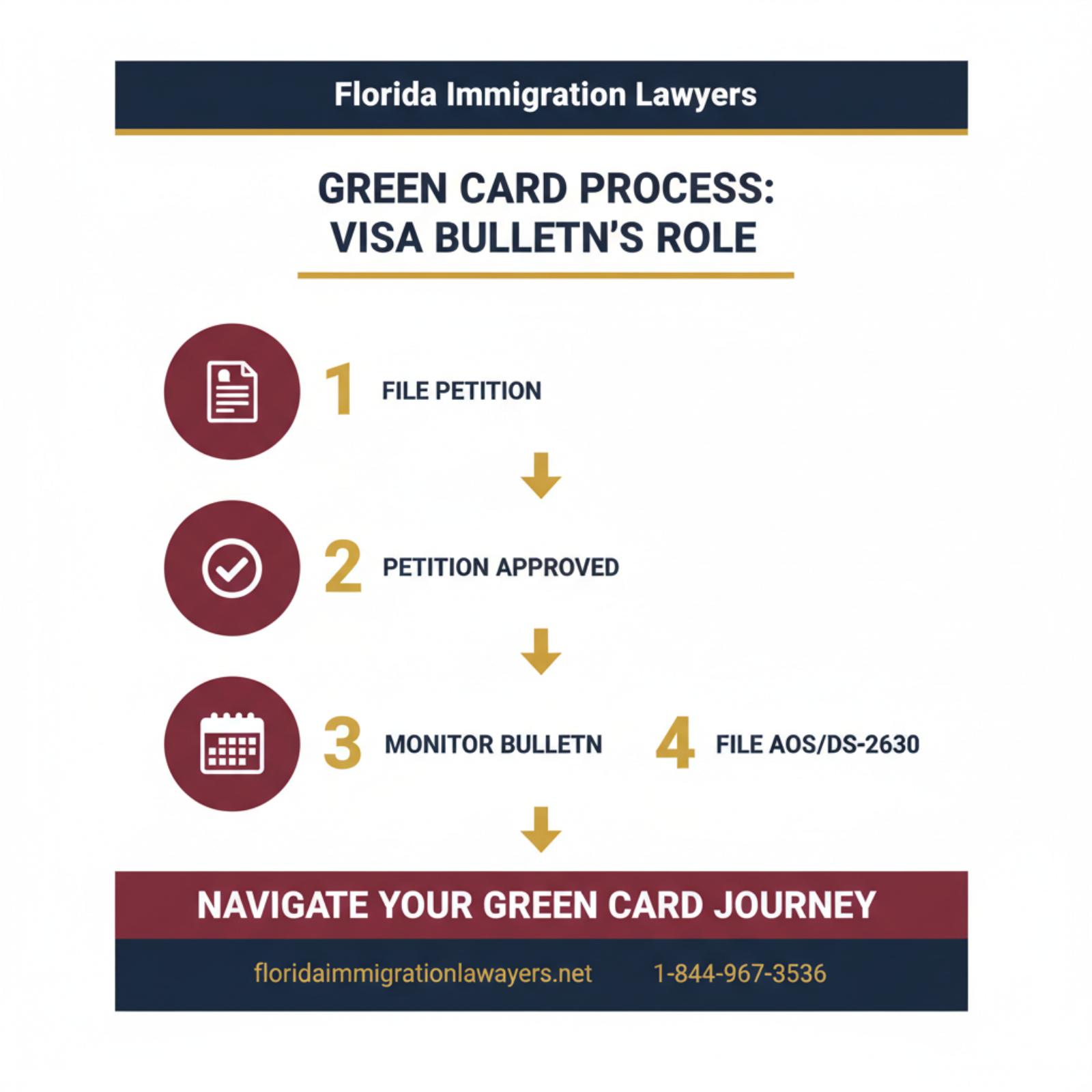
Step-by-Step Process Guide - Distinguish Between Final Action Dates and Dates for Filing:
Again, pay close attention to which chart USCIS has announced for adjustment of status filings. The Final Action Date is when your employment-based green card can be issued. The Dates for Filing allows for earlier submission of your I-485 application. This distinction can significantly impact the timeline for professionals working in Fort Lauderdale, Orlando, or other Florida cities.
- Understand Per-Country Limits:
U.S. immigration law imposes per-country limits on immigrant visas. This means no single country can receive more than 7% of the total available visas in a given year. This often leads to longer wait times for individuals from high-population countries, even if their priority date is otherwise current for other nationalities. Businesses in Florida relying on international talent must be aware of these limitations. For assistance with business immigration matters, explore our business immigration services.
Key Documents for Your Florida Visa Application
A successful visa application, whether family-sponsored or employment-based, hinges on meticulous documentation. Missing or incorrect documents can cause significant delays or even denials. For Florida residents, gathering the right paperwork is a critical step after understanding the Visa Bulletin October 2025.
While specific requirements vary by visa type, here is a general checklist of commonly requested documents:
- Valid passport and copies of all previous passports.
- Birth certificates for all applicants.
- Marriage certificate (if applicable).
- Divorce decrees or death certificates of previous spouses (if applicable).
- Police certificates from all countries where you have lived for six months or more since age 16.
- Court and prison records (if applicable).
- Military records (if applicable).
- Completed visa application forms (e.g., Form DS-260 for consular processing, Form I-485 for adjustment of status).
- Medical examination results from an authorized physician.
- Affidavit of Support (Form I-864) and supporting financial documents from the petitioner.
- Proof of petitioner's U.S. citizenship or lawful permanent residency (e.g., birth certificate, naturalization certificate, green card).
- Form I-130 (Petition for Alien Relative) or Form I-140 (Immigrant Petition for Alien Worker) approval notice.
- Photographs meeting specific USCIS requirements.
- Educational and employment records for employment-based visas.
- Evidence of bona fide relationship for family-based visas (e.g., joint bank accounts, photos, utility bills).
Visa Bulletin October 2025 Processing Times and Costs in Florida
Understanding the processing timeline and associated costs is crucial for anyone navigating the immigration system in Florida. The dates in the Visa Bulletin October 2025 provide a roadmap for when a visa number may become available, but they do not dictate the overall processing time for your application. This can vary significantly.
Timeline and Processing Expectations
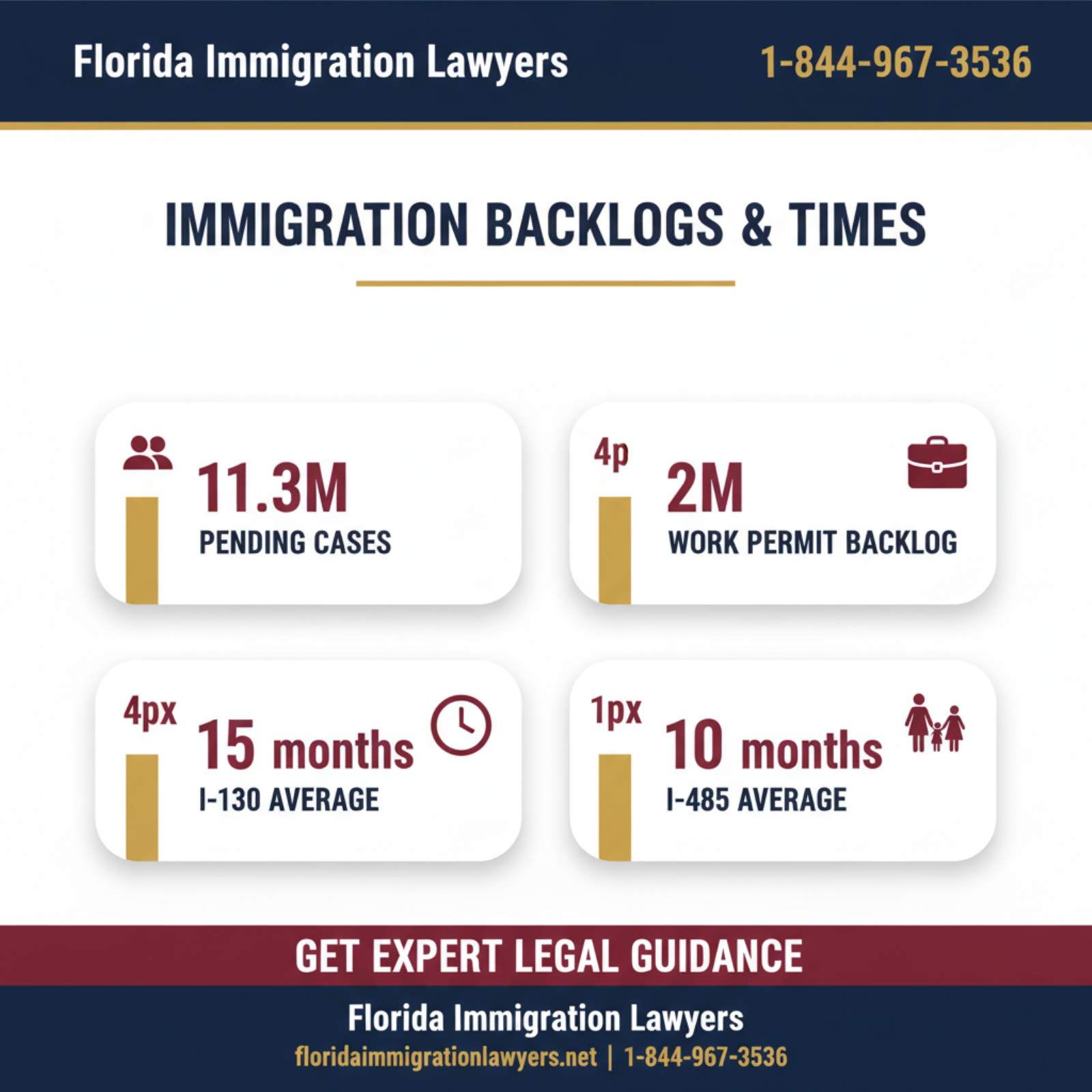
Processing times for immigrant visa applications are influenced by several factors. These include the specific visa category, your country of chargeability, the volume of applications, and the efficiency of the U.S. Citizenship and Immigration Services (USCIS) and Department of State (DOS) offices. While the Visa Bulletin gives you an idea of when your priority date might become current, the actual time it takes for USCIS to process your I-485 application or for a U.S. embassy or consulate to process your DS-260 can be lengthy. You can monitor average processing times on the official USCIS website: U.S. Citizenship and Immigration Services Processing Times.
For Florida residents, applications are typically processed through the USCIS service centers, and interviews for adjustment of status often occur at local field offices, such as those in Miami, Orlando, or Tampa. Consular processing, for those applying from outside the U.S., involves a U.S. embassy or consulate in their home country. Both pathways have their own distinct timelines and potential delays. The start of the new fiscal year in October 2025 could bring new processing trends, but patience is always key.
Cost Factors and Fee Breakdown
The financial aspect of immigration can be substantial. Applicants should budget for various fees throughout the process. These typically include filing fees for petitions (e.g., I-130, I-140), application fees for adjustment of status (I-485) or immigrant visa processing (DS-260), biometric fees, and medical examination fees. These fees are set by USCIS and the Department of State and are subject to change. We cannot provide specific amounts here, but it's important to check the latest fee schedules on the official USCIS and DOS websites.
Beyond government fees, many individuals choose to hire an experienced immigration attorney. While not legally required, legal representation can be invaluable, particularly for complex cases or if you are unfamiliar with the process. Attorney fees cover services such as preparing and filing petitions, responding to Requests for Evidence (RFEs), and representing you in interviews. Investing in legal counsel from Florida Immigration Lawyers can help ensure your application is accurate and complete, potentially saving you time and stress in the long run.
Do not navigate this complex process alone. The stakes are too high for your future in Florida. Contact Florida Immigration Lawyers today to ensure your application is handled with precision and care.
Common Mistakes to Avoid When Interpreting the Visa Bulletin
Navigating the Visa Bulletin October 2025 and the subsequent application process can be fraught with potential pitfalls. Avoiding these common mistakes can save you significant time, money, and emotional distress.
- Misinterpreting Your Priority Date: Many applicants mistakenly believe their priority date is the date they mailed their application. It's actually the date USCIS received your petition, or the date a labor certification was filed. Always confirm the exact date with your receipt notice or attorney.
- Confusing Final Action Dates with Dates for Filing: These two charts serve different purposes. Using the wrong date for your adjustment of status application can lead to rejection and significant delays. Always check the USCIS website for the monthly announcement on which chart to use.
- Ignoring Per-Country Limits: Even if your general category seems current, high demand from your country of birth can create a backlog. Failing to account for country-specific limitations can lead to false expectations and missed opportunities.
- Submitting Incomplete or Incorrect Documentation: This is one of the most frequent causes of Requests for Evidence (RFEs) or outright denials. Double-check every form and ensure all supporting documents are accurate, translated if necessary, and properly submitted.
- Failing to Notify USCIS of Address Changes: Moving without informing USCIS can result in missed notices, interview appointments, or even a denial due to abandonment. Always update your address promptly via Form AR-11 and through your online USCIS account.
- Missing Deadlines: Immigration processes are strict about deadlines. Whether it's responding to an RFE or attending an interview, missing a deadline can have severe consequences, including case closure.
- Assuming Automatic Eligibility: Even if your priority date is current, it does not guarantee approval. You must still meet all eligibility criteria for the specific visa or green card, including admissibility requirements.
- Not Seeking Legal Counsel for Complex Cases: While some simple cases might be manageable independently, complex situations like prior denials, criminal history, or issues with a petitioner's status warrant professional legal advice.
- Relying on Outdated Information: Immigration law and policies, including the Visa Bulletin, can change frequently. Always consult the most current official sources and legal professionals, especially for the Visa Bulletin October 2025.
- Making False Statements or Providing Fraudulent Information: Any misrepresentation, intentional or unintentional, can lead to severe penalties, including permanent bars from the U.S. Always be truthful and accurate in all your submissions.
When to Call a Florida Immigration Lawyer
Understanding the Visa Bulletin October 2025 is just one step in a much larger journey. While this guide provides general information, your individual circumstances are unique. Knowing when to seek professional legal help can make all the difference in the success of your immigration case. Florida Immigration Lawyers are here to provide that crucial support.
You should consider calling an attorney if:
- Your Priority Date is Current, but You Haven't Received a Notice: There might be an issue with your file, or a notice could have been lost. An attorney can inquire on your behalf.
- You Receive a Request for Evidence (RFE) or Notice of Intent to Deny (NOID): These require precise and timely responses. Our legal team can help you gather the necessary documentation and craft a compelling reply.
- You Have a Complex Family Situation: Issues like previous marriages, stepchildren, or children born out of wedlock can complicate family-based petitions.
- You Have a Criminal History: Even minor offenses can impact your admissibility. An attorney can assess the implications and advise on potential waivers.
- You Are Facing Deportation or Removal Proceedings: This is a serious situation requiring immediate legal intervention. Our firm offers robust deportation defense services.
- You Are Seeking Asylum or Refugee Status: These cases are highly complex and require specialized legal knowledge. Visit our asylum practice area page for more information.
- Your Case Involves a Previous Denial or Complications: If you've had past immigration issues, a lawyer can help analyze the situation and strategize for a new application.
- You Are Unsure About Which Visa Category Applies to You: A consultation can clarify your options and guide you toward the correct path.
Our experienced Florida immigration lawyers understand the nuances of U.S. immigration law and the specific challenges faced by individuals and families in Florida. We serve clients across the state, including those in Fort Lauderdale, Miami, Orlando, and Tampa, and are well-versed in the procedures of local USCIS field offices and immigration courts, such as the Miami Immigration Court or Orlando Immigration Court. Don't leave your future to chance.
About Florida Immigration Lawyers
Florida Immigration Lawyers is a leading immigration law firm dedicated to serving individuals and families throughout Florida. With a deep understanding of U.S. immigration laws and policies, our experienced attorneys provide compassionate and effective legal representation. We are committed to helping our clients achieve their American dream, offering personalized strategies for a wide range of immigration matters.
Our services include family-based immigration, employment visas, green cards, naturalization and citizenship applications, asylum, deportation defense, and more. We pride ourselves on clear communication, meticulous preparation, and unwavering advocacy for our clients. When you choose Florida Immigration Lawyers, you gain a trusted partner who understands the complexities of the immigration system and is dedicated to your success.
We offer free consultations and are available 24/7 to address your concerns. Serving all of Florida, including Fort Lauderdale, Miami, Orlando, and Tampa, our firm is ready to stand by your side. Contact us today.
Phone: 1-844-967-3536
Website: https://www.floridaimmigrationlawyers.net
Sources and References
- U.S. Citizenship and Immigration Services (USCIS)
- U.S. Department of State - Visa Bulletin
- Executive Office for Immigration Review (EOIR)
- 8 U.S.C. Chapter 12 - Immigration and Nationality Act (INA)
- INA Section 203(a) - Family-Sponsored Immigrants
- INA Section 203(b) - Employment-Based Immigrants
- 22 CFR Part 42 - Immigrant Visas
This article provides general legal information and is not intended as legal advice. Every case is unique, and outcomes depend on specific facts and circumstances. Contact an attorney for advice about your particular situation. Immigration laws are subject to change.
Navigating the nuances of the Visa Bulletin October 2025 and the broader immigration landscape requires expert guidance. Don't let uncertainty derail your dreams. Take the proactive step to protect your future and that of your loved ones in Florida. Call Florida Immigration Lawyers at 1-844-967-3536 for a free consultation today. Se Habla Español - Estamos aquí para ayudarle.
Florida Immigration Lawyers
Legal Team
Our experienced attorneys at Florida Immigration Lawyers have been serving clients across Florida for over 20 years. We specialize in immigration, personal injury, criminal defense, workers compensation, and family law.