Oxford Historian Faces Deportation: Florida Immigration Defense
The case of an Oxford historian facing deportation underscores the critical importance of visa compliance for professionals in Florida. Even minor violations can trigger complex and stressful removal proceedings. This article explains the deportation process in Florida, detailing the grounds for removal under the INA, providing a step-by-step guide through immigration court, and outlining essential documentation for a robust defense. We also cover potential timelines, cost factors, and various forms of relief available. Learn to avoid common mistakes and understand when immediate legal intervention from an experienced Florida immigration lawyer is crucial to protect your future.
The situation of an Oxford historian facing deportation highlights the severe consequences of visa compliance issues for professionals. In Florida, individuals on academic or work visas can face similar challenges if they violate immigration laws, overstay, or commit certain offenses. It is crucial to understand your rights and the complex deportation process. Seeking immediate legal counsel from an experienced Florida immigration lawyer is essential to explore defense options and protect your right to remain in the U.S.
- Visa violations can lead to deportation for academics and professionals.
- Deportation defense requires immediate, expert legal intervention.
- Florida immigration courts handle these complex cases.
- Gathering comprehensive documentation is vital for a strong defense.
- Legal counsel can identify potential avenues for relief from removal.
Imagine dedicating years to your academic career, building a life, and contributing to your field, only to face the daunting prospect of deportation. While the recent high-profile case of an Oxford historian facing deportation occurred in the UK, the underlying anxieties and legal complexities resonate deeply with professionals and academics living and working in Florida on various visas. The United States, much like other nations, has strict immigration laws, and even minor missteps can trigger severe consequences, including removal proceedings.
This article aims to demystify the deportation process in Florida, particularly for those on academic or professional visas. We will explore common reasons for deportation, outline the steps involved in removal proceedings, discuss essential documentation for your defense, and highlight the critical role of legal representation. Understanding these nuances is paramount for anyone navigating the intricate landscape of U.S. immigration law. Call Florida Immigration Lawyers at 1-844-967-3536 for a free consultation to protect your future.
Understanding Deportation for Academics and Professionals in Florida
The term 'deportation' (or 'removal') can evoke fear and uncertainty. For professionals, scholars, and academics in Florida, understanding the grounds for deportation is the first step in safeguarding their immigration status. Whether you hold an H-1B, O-1, J-1, F-1 (OPT), or another non-immigrant visa, strict adherence to visa terms is mandatory.
Common Grounds for Deportation Under INA 237
The Immigration and Nationality Act (INA) outlines numerous reasons an individual can be deemed removable from the U.S. Section 237 of the INA (8 U.S.C. § 1227) broadly categorizes these grounds. For academics and professionals, common triggers often include:
- Visa Violations: Failing to maintain your non-immigrant status, such as working without authorization, changing employers without proper approval, or exceeding the allowed period of stay. The Oxford historian's case, for instance, involved allegations of exceeding permitted time outside the UK, a type of visa condition violation.
- Overstaying Your Visa: Remaining in the U.S. beyond the authorized period on your I-94 record, even by a single day, can lead to accrual of unlawful presence and trigger removal proceedings.
- Criminal Offenses: Convictions for certain crimes, particularly those involving moral turpitude or aggravated felonies, can lead to immediate deportation, regardless of visa status or length of U.S. residency.
- Misrepresentation or Fraud: Providing false information or engaging in fraud to obtain a visa or other immigration benefit.
- Security-Related Grounds: Involvement in activities deemed a threat to national security or public safety.
It's vital to remember that these grounds are complex and often require nuanced legal interpretation. A seemingly minor issue can quickly escalate. For comprehensive guidance on defending against removal, visit our dedicated deportation defense page.
The Manikarnika Dutta Case and Its Relevance to Florida Immigrants
Many have asked: Which Indian historian from Oxford faces deportation for spending too much time on research in India? and Who is Manikarnika Dutta? Dr. Manikarnika Dutta is an Indian historian from Oxford University who faced deportation from the UK due to allegations of spending too much time outside the country, violating the terms of her visa. While her specific case is tied to UK immigration law, the core issue-visa compliance and the potential for deportation due to perceived breaches-is highly relevant to individuals in Florida holding U.S. visas. The U.S. also has rules regarding maintaining status, and extended absences or specific activities outside the U.S. can sometimes impact future admissibility or even lead to questions about intent.
This case serves as a stark reminder for all visa holders in Florida, from Kissimmee to Miami, to meticulously understand and adhere to the conditions of their U.S. visas. Any deviation, whether intentional or accidental, can put your immigration status at risk. Consulting an immigration lawyer in Florida is crucial to ensure you remain compliant and avoid such perilous situations.
The Deportation Process in Florida: A Step-by-Step Guide
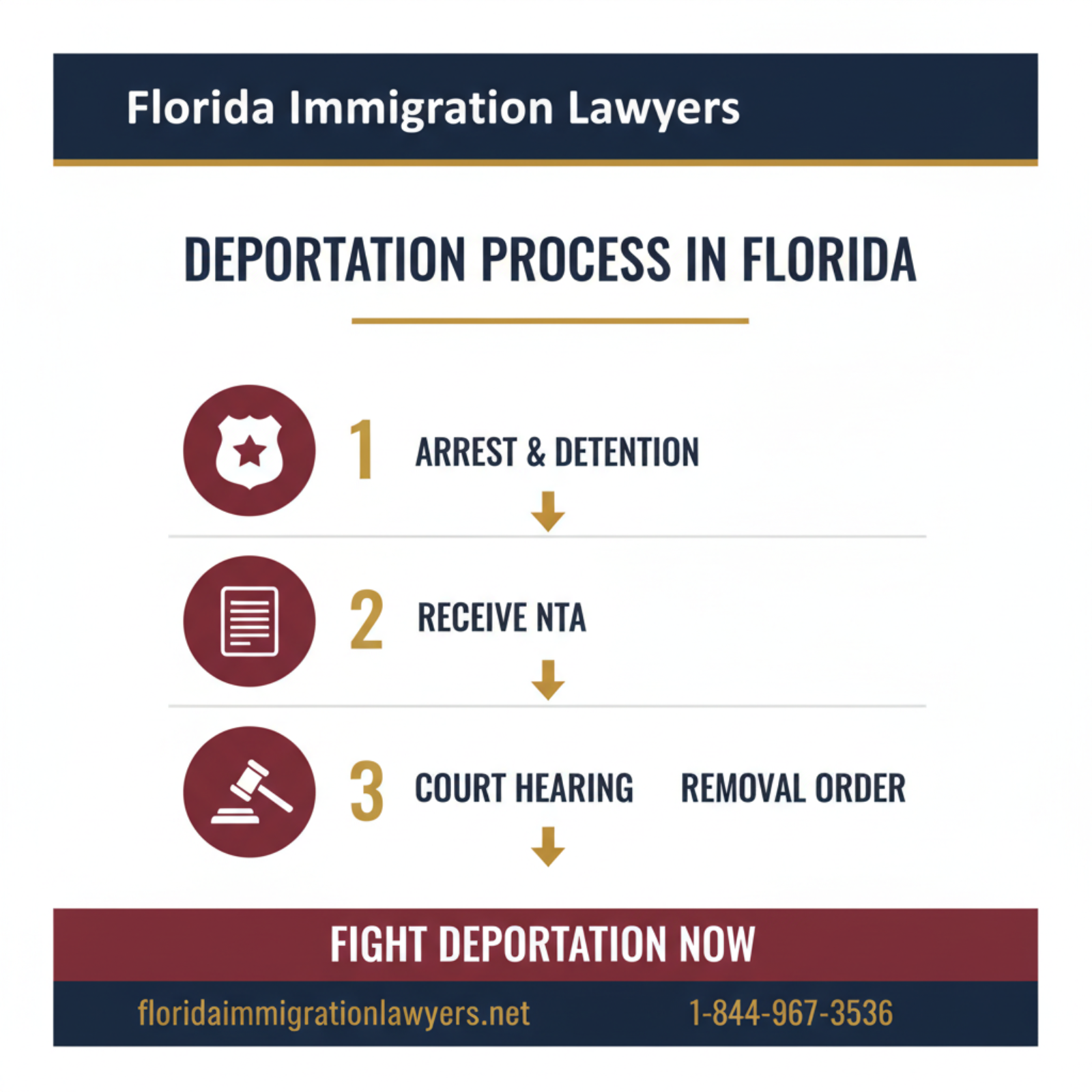
If you or someone you know, like an Oxford historian facing deportation, receives a Notice to Appear (NTA), it means formal removal proceedings have begun. This is a critical juncture requiring immediate legal action. The process generally unfolds in immigration courts, with Florida hosting several key locations, including Orlando and Miami, which serve areas like Kissimmee and surrounding Central Florida communities.
-
Issuance of a Notice to Appear (NTA): This is the official document from the Department of Homeland Security (DHS) informing you that the government believes you are removable from the U.S. It will list the specific grounds for your alleged removability and schedule your initial hearing, known as the Master Calendar Hearing.
-
Master Calendar Hearing (MCH): This is your first appearance before an Immigration Judge. It is typically brief. During the MCH, you or your attorney will acknowledge receipt of the NTA, state whether you admit or deny the allegations, and inform the judge if you intend to seek any form of relief from removal. The judge will set deadlines for filing applications for relief and schedule your Individual Hearing.
-
Individual Hearing (Merits Hearing): This is the main trial where both sides present their arguments. The DHS attorney will attempt to prove you are removable, and your attorney will present evidence and testimony to counter these claims and support your application for relief from deportation. This can involve expert witnesses, extensive documentation, and detailed legal arguments.
-
Decision by the Immigration Judge: After reviewing all evidence and testimony, the Immigration Judge will issue a decision. They may order you removed, grant you a form of relief, or terminate the proceedings. The judge's decision is usually delivered orally in court, followed by a written order.
-
Appeals Process: If either you or the government disagrees with the Immigration Judge's decision, you generally have 30 days to file an appeal with the Board of Immigration Appeals (BIA). If the BIA's decision is unfavorable, further appeals may be possible in the U.S. Circuit Courts of Appeals. This process can be lengthy and intricate, underscoring the need for experienced legal counsel.
Navigating these steps without legal representation is exceedingly difficult. Our experienced attorneys at Florida Immigration Lawyers are well-versed in the specifics of Florida's immigration courts and procedures.
Building Your Defense: Essential Documents and Evidence
A strong defense against deportation, especially for an academic or professional, hinges on comprehensive documentation. Every piece of evidence helps to establish your eligibility for relief, demonstrate your strong ties to the U.S., and counter the government's allegations. Preparing a thorough document checklist is critical.
Document Checklist for Deportation Defense:
- Personal Identification: Passport, birth certificate, driver's license, state ID.
- Immigration Documents: All past and current visas, I-94 records, I-20s (for students), DS-2019s (for exchange visitors), employment authorization documents (EADs), previous applications (I-130, I-140, I-485, etc.), Notices to Appear (NTA).
- Academic and Professional Records: Diplomas, transcripts, certifications, letters of employment, job offer letters, curriculum vitae (CV) or resume, publications, research grants, awards, professional licenses, letters from colleagues or employers attesting to your contributions and good standing.
- Financial Records: Bank statements, tax returns (federal and state), proof of property ownership or rental agreements, investment statements.
- Proof of U.S. Ties: Utility bills, leases, mortgage statements, proof of community involvement (volunteer work, club memberships), letters from U.S. citizens or lawful permanent residents attesting to your good moral character and relationships.
- Family Records: Marriage certificates, birth certificates of U.S. citizen or LPR children/spouses, photos, letters from family members.
- Medical Records: Especially if seeking relief based on medical conditions or if a U.S. citizen/LPR family member has a serious medical condition.
- Criminal Records (if applicable): Certified disposition of any arrests or convictions, even if expunged or dismissed.
- Witness Statements: Affidavits from employers, colleagues, family, and community members.
Organizing these documents can be overwhelming, but it is vital. An experienced immigration lawyer will help you identify which documents are most relevant to your specific case and how to present them effectively in immigration court.
Navigating Timelines and Potential Costs of Deportation Defense
The deportation process in Florida is rarely swift. Understanding the potential timelines and financial implications is crucial for planning your defense. While there is no fixed duration, cases can often stretch for years, particularly if appeals are involved.
Timeline and Processing Expectations
- Initial Hearings (Master Calendar): Typically scheduled a few weeks to several months after the NTA is issued, depending on court dockets in Orlando or Miami.
- Individual Hearings (Merits): Can be scheduled months to over a year after the MCH, again depending on court backlog and the complexity of your case.
- Appeals to the BIA: If an appeal is filed, a decision from the Board of Immigration Appeals can take anywhere from several months to over a year.
- Circuit Court Appeals: Further appeals to a U.S. Circuit Court of Appeals can add another year or more to the process.
Factors like the specific immigration court (e.g., Orlando Immigration Court serving Kissimmee), the complexity of your case, the availability of judges, and the type of relief sought all influence the overall timeline. Patience and persistent legal advocacy are key.
Cost Factors and Fee Breakdown
Defending against deportation involves various costs. These generally fall into two categories:
- Government Filing Fees: While there are no filing fees for the NTA itself, if you apply for certain forms of relief from removal (e.g., adjustment of status, waivers), USCIS or EOIR will require specific application fees. These fees are subject to change and vary by application type.
- Legal Fees: This constitutes the largest portion of the cost. Legal fees can vary widely based on the attorney's experience, the complexity of your case, and the number of hearings and appeals involved. Many attorneys offer payment plans, but it's important to discuss all financial aspects during your initial consultation.
Investing in skilled legal representation is an investment in your future and your ability to remain in the U.S. Do not let financial concerns deter you from seeking help. Explore your options with Florida Immigration Lawyers.
Relief from Deportation: Options for Academics and Professionals
Even if you are facing deportation, various forms of relief may be available to you. An experienced Florida immigration lawyer can assess your specific situation and determine which options apply. These options are complex and have strict eligibility requirements.
-
Cancellation of Removal (INA 240A & B): This relief is for certain long-term residents with U.S. citizen or lawful permanent resident family members (INA 240A) or for non-permanent residents who have been in the U.S. for a significant period, have good moral character, and can demonstrate exceptional and extremely unusual hardship to a qualifying relative (INA 240B, 8 U.S.C. § 1229b).
-
Adjustment of Status: If you are eligible for a green card through a family petition (e.g., through a U.S. citizen spouse or parent) or an employment-based petition, you may be able to adjust your status to a lawful permanent resident while in removal proceedings.
-
Asylum and Withholding of Removal: If you fear persecution in your home country based on race, religion, nationality, political opinion, or membership in a particular social group, you may be eligible for asylum. This is a critical protection for many individuals, including academics and human rights advocates. Learn more on our asylum page.
-
Waivers of Inadmissibility: Certain grounds for deportation can be waived if you meet specific criteria, often involving extreme hardship to a qualifying U.S. citizen or LPR relative. This is typically applicable if the ground for deportation also makes you inadmissible.
Key Statistics & Data -
Prosecutorial Discretion: In some cases, the government attorney may agree to close or terminate your removal proceedings, especially if you have strong equities and pose no threat. This is not a right but a discretionary decision by ICE/DHS. This can be a strategic avenue for an experienced deportation defense lawyer.
Each form of relief has its own set of challenges and requirements. A seasoned family immigration lawyer or business immigration expert can help you understand your eligibility and build a compelling case.
Do not navigate this process alone. The complexities of immigration law demand professional expertise. Contact Florida Immigration Lawyers today to discuss your options and build a robust defense strategy.
Common Mistakes to Avoid When Facing Deportation
Facing deportation is a stressful experience, and it's easy to make critical errors that can jeopardize your case. Avoiding these common pitfalls is essential for a successful defense.
-
Ignoring the Notice to Appear (NTA): Failing to appear at scheduled hearings can lead to an 'in absentia' removal order, meaning you are ordered deported without even being present. This is one of the most serious mistakes you can make.
-
Not Seeking Legal Counsel Immediately: Delaying consultation with an immigration lawyer can severely limit your defense options. Critical deadlines are often missed, and valuable evidence may not be gathered in time.
-
Lying or Misrepresenting Facts: Any false statements to immigration officials or in court can be used against you, leading to further charges like immigration fraud and making future relief nearly impossible.
-
Attempting to Self-Represent: U.S. immigration law is incredibly complex. Representing yourself against trained DHS attorneys and an Immigration Judge is highly risky and almost always leads to unfavorable outcomes, even for highly educated individuals like an Oxford historian facing deportation.
-
Failing to Gather All Relevant Documents: A weak case often stems from insufficient evidence. Not providing comprehensive documentation, including academic records, employment history, and proof of U.S. ties, can undermine your defense.
-
Leaving the U.S. Voluntarily Without Legal Advice: While voluntary departure can be an option, leaving without proper legal guidance might trigger a re-entry bar, preventing you from returning to the U.S. for many years.
-
Admitting Guilt to Charges Without Understanding Implications: In your initial Master Calendar Hearing, admitting to the allegations in the NTA without fully understanding their legal consequences can severely limit your ability to seek relief.
-
Not Disclosing Past Criminal History: Even minor arrests or convictions, if not properly disclosed and addressed, can resurface and derail your case. Always be transparent with your attorney.
-
Ignoring Changes in Contact Information: It is your responsibility to keep the immigration court and DHS informed of your current address. Failure to do so can result in missed notices and 'in absentia' removal orders.
-
Failing to Understand Your Visa Conditions: As exemplified by the Oxford historian facing deportation, a lack of understanding or adherence to the specific conditions of your visa can be grounds for removal. Always review your visa terms carefully.
When to Call a Lawyer
The moment you suspect there might be an issue with your immigration status, or if you receive any communication from USCIS, ICE, or an immigration court, it is time to call a lawyer. Early intervention can make a significant difference in the outcome of your case. Florida Immigration Lawyers are here to help you.
You should immediately contact us if:
- You receive a Notice to Appear (NTA) in immigration court.
- You are detained by ICE or other law enforcement agencies.
- Your visa is about to expire, and you are unsure of your options, or you have already overstayed.
- You have been accused of a crime, even a minor one, and you are not a U.S. citizen.
- You believe you have violated the terms of your academic or work visa.
- You are seeking to adjust your status or apply for a green card while in removal proceedings.
- You are exploring options for citizenship and have concerns about past immigration issues.
Our firm specializes in providing robust deportation defense and comprehensive immigration services throughout Florida, including the Kissimmee area. We understand the unique challenges faced by professionals and academics and are dedicated to protecting your rights and future.
About Florida Immigration Lawyers
Florida Immigration Lawyers is a leading law firm dedicated to providing comprehensive and compassionate immigration legal services across the entire state of Florida. With years of experience and a deep understanding of U.S. immigration law, our team is committed to guiding individuals, families, and businesses through every aspect of the immigration process.
We offer a wide range of services, including deportation defense, family-based immigration, business immigration solutions, visa applications, asylum claims, and naturalization assistance. Our mission is to provide personalized, effective legal strategies tailored to each client's unique needs, ensuring the best possible outcome.
Why choose Florida Immigration Lawyers? We pride ourselves on our unwavering dedication to our clients, our profound legal expertise, and our commitment to clear, consistent communication. We understand the stakes involved in immigration matters and approach every case with the seriousness and sensitivity it deserves. Our firm is available 24/7, offering free consultations to help you understand your options without financial burden. Serving all of Florida, we are your trusted partners in navigating the complexities of immigration law.
Visit our website at https://www.floridaimmigrationlawyers.net or call us directly at 1-844-967-3536.
Sources and References
- U.S. Citizenship and Immigration Services (USCIS)
- Executive Office for Immigration Review (EOIR)
- 8 U.S.C. Chapter 12 - Immigration and Nationality Act (INA)
- INA Section 237 (8 U.S.C. § 1227) - Deportable Aliens
- INA Section 240B (8 U.S.C. § 1229b) - Cancellation of Removal; Adjustment of Status
- U.S. Department of State - Bureau of Consular Affairs
- 8 CFR Part 240 - Proceedings to Determine Deportability or Inadmissibility; Apprehension, Custody, Detention and Removal of Aliens
This article provides general legal information and is not intended as legal advice. Every case is unique, and outcomes depend on specific facts and circumstances. Contact an attorney for advice about your particular situation. Immigration laws are subject to change.
Facing deportation is a profound challenge, but you do not have to face it alone. Florida Immigration Lawyers are here to provide the expert legal guidance and tenacious advocacy you need. We are committed to fighting for your right to remain in the U.S. Call us today at 1-844-967-3536 for a free, confidential consultation. Se Habla Español - Estamos aquí para ayudarle.
Florida Immigration Lawyers
Legal Team
Our experienced attorneys at Florida Immigration Lawyers have been serving clients across Florida for over 20 years. We specialize in immigration, personal injury, criminal defense, workers compensation, and family law.