Visa Bulletin October 2025 Florida: Navigating Your Immigration Future
The Visa Bulletin October 2025 is a critical update for Florida immigrants, signaling the start of a new fiscal year and potentially new visa number allocations. This guide helps you understand the intricate details of the bulletin, including Final Action Dates and Dates for Filing, and how they impact your family-sponsored or employment-based green card application. Learn about key categories, processing expectations, and essential documents needed for your application. We also highlight common mistakes to avoid and emphasize the vital role of an experienced Florida immigration lawyer, especially for residents in Hialeah and other diverse communities. Our firm, Florida Immigration Lawyers, is dedicated to helping you navigate these complex regulations and secure your future in the U.S. Contact us for a free consultation.
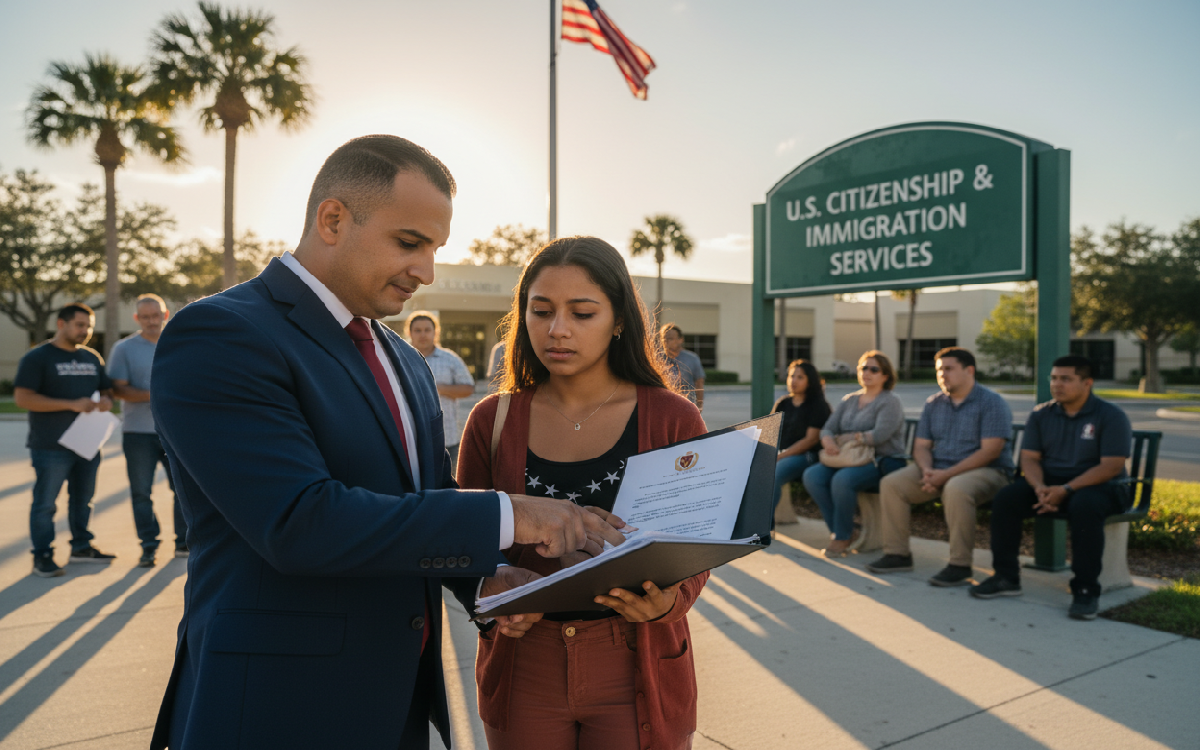
Quick Answer: Understanding the October 2025 Visa Bulletin
The Visa Bulletin October 2025 marks the start of a new fiscal year for U.S. immigration, often bringing significant changes to visa availability. For Florida residents, especially in areas like Hialeah, understanding these dates is crucial for family-sponsored and employment-based green card applications. It dictates when you can file your Adjustment of Status application or proceed with consular processing.
- The Visa Bulletin announces "Final Action Dates" and "Dates for Filing Applications."
- October typically signals new visa number allocations for the fiscal year.
- Movement in family-sponsored and employment-based categories can open or close filing windows.
- Consulting an experienced Florida immigration lawyer is vital to interpret these complex changes.
Are you a Florida resident, perhaps in Hialeah or Miami, eagerly awaiting your turn for a green card? The release of the Visa Bulletin October 2025 is a moment of significant anticipation for thousands of immigrants across the Sunshine State. This crucial document from the U.S. Department of State determines when aspiring immigrants can take the next step in their journey to permanent residency.
Understanding the intricacies of the Visa Bulletin can be challenging. It's filled with dates and categories that directly impact your eligibility to file certain applications with USCIS. For many families and individuals in Florida, the October bulletin is particularly important as it kicks off the new federal fiscal year, potentially bringing new visa availability.
This comprehensive guide will break down the Visa Bulletin October 2025, explain its implications for Florida immigrants, and provide essential steps to navigate your immigration process. We will cover key categories, processing expectations, common pitfalls, and when to seek professional legal assistance. Our goal is to empower you with the knowledge needed to pursue your American dream effectively.
Schedule Your Free Consultation
Call Florida Immigration Lawyers at 1-844-967-3536 for a free case evaluation.
Get Free ConsultationUnderstanding the Visa Bulletin October 2025 for Florida Immigrants
The Visa Bulletin is a monthly publication by the U.S. Department of State. It outlines the availability of immigrant visas for both family-sponsored and employment-based categories. These visas are limited by law, and the demand often exceeds the supply, leading to backlogs.
For Florida residents, staying informed about the Visa Bulletin October 2025 is crucial. It dictates whether you can file your Adjustment of Status application (Form I-485) with USCIS if you are already in the U.S., or if your case can proceed with consular processing through a U.S. embassy or consulate abroad.
Each bulletin contains two key charts for most categories: the "Final Action Dates" (Chart A) and the "Dates for Filing Applications" (Chart B). USCIS determines which chart applicants can use for filing Adjustment of Status applications each month. You can check the USCIS website for their specific guidance.
The October bulletin is particularly significant because it marks the beginning of the new fiscal year (FY2026). This means that new allocations of immigrant visa numbers become available. This often leads to some forward movement in various categories, offering hope to many waiting immigrants. However, such movement is never guaranteed and can vary widely by category and country of chargeability.
Navigating these dates and understanding their impact on your specific situation can be complex. An experienced Florida immigration lawyer is essential to help you interpret the bulletin and plan your next steps effectively. This is especially true for the diverse communities in Hialeah, Orlando, Tampa, and Jacksonville, where many families rely on these visa categories.
Key Categories and Movement in the October 2025 Visa Bulletin
The Visa Bulletin categorizes immigrant visas into several preference categories, each with its own annual limits. These categories are primarily divided into family-sponsored and employment-based visas. Understanding your specific category is the first step in interpreting the bulletin.
Family-Sponsored Preference Categories: These visas are for relatives of U.S. citizens and lawful permanent residents (LPRs).
- F1: Unmarried Sons and Daughters of U.S. Citizens.
- F2A: Spouses and Children (unmarried, under 21) of LPRs. This category often sees significant movement due to high demand.
- F2B: Unmarried Sons and Daughters (21 years of age or older) of LPRs.
- F3: Married Sons and Daughters of U.S. Citizens.
- F4: Brothers and Sisters of U.S. Citizens. This category typically has the longest waits.
Employment-Based Preference Categories: These visas are for individuals with specific job offers or skills.
- EB-1: Priority Workers (e.g., extraordinary ability, outstanding professors/researchers, multinational executives).
- EB-2: Professionals Holding Advanced Degrees and Persons of Exceptional Ability.
- EB-3: Skilled Workers, Professionals, and Other Workers.
- EB-4: Certain Special Immigrants (e.g., religious workers).
- EB-5: Immigrant Investors.
For the Visa Bulletin October 2025, you should pay close attention to the dates listed under your specific category and country of chargeability. Some categories, especially those with high demand from countries like India, China, Mexico, and the Philippines, may experience significant backlogs. The new fiscal year often brings a fresh allocation of visas, which can lead to forward movement, but retrogression (dates moving backward) is also possible if demand quickly outstrips supply. Our team at Florida Immigration Lawyers monitors these changes closely to advise clients effectively.
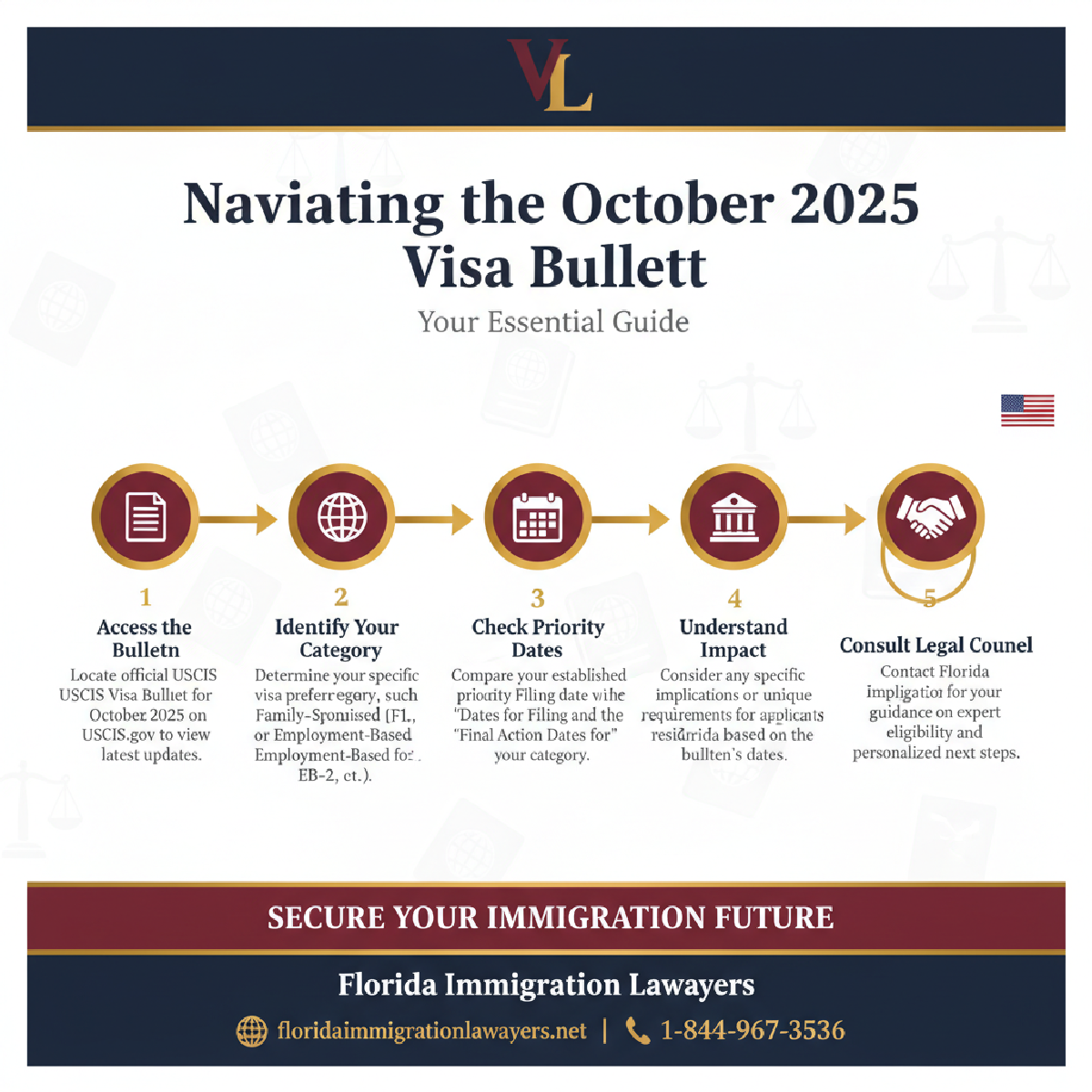
Step-by-Step Guide: Navigating the Visa Bulletin Process
Understanding where you stand in the immigration queue can be daunting. Here’s a simplified step-by-step guide to help Florida residents navigate the process, especially with the release of the Visa Bulletin October 2025.
- Check the Latest Visa Bulletin: The first step is always to review the most recent Visa Bulletin on the U.S. Department of State's website (travel.state.gov). Pay attention to the October 2025 edition and any subsequent updates like the Visa Bulletin November 2025.
- Identify Your Preference Category and Country of Chargeability: Determine if your petition is family-sponsored (F1-F4) or employment-based (EB-1 to EB-5). Your country of chargeability is generally your country of birth, not your citizenship.
- Locate Your Priority Date: This is the date your immigrant petition (e.g., Form I-130 or I-140) was properly filed with USCIS. This date establishes your place in the queue.
- Compare Your Priority Date to the Bulletin's Dates: Look at Chart A (Final Action Dates) and Chart B (Dates for Filing Applications) for your category and country. USCIS will announce monthly which chart to use for Adjustment of Status filings. If your priority date is earlier than the date listed, your visa number is considered 'current' or 'available.'
- Consult an Immigration Attorney: This is arguably the most critical step. Interpreting the Visa Bulletin and its implications for your case requires expert knowledge. An experienced immigration lawyer, like Attorney William Vasquez at Florida Immigration Lawyers, can confirm your eligibility and guide you through the next steps, whether you're in Hialeah or elsewhere in Florida.
- Prepare Your Application (I-485 or DS-260): If your date is current, you may be eligible to file your Adjustment of Status application (Form I-485) if you are in the U.S., or your immigrant visa application (Form DS-260) through consular processing. Timely and accurate filing is paramount to avoid delays or denials.
Essential Document Checklist for Your Green Card Application
Once your priority date becomes current according to the Visa Bulletin October 2025, preparing your green card application diligently is essential. Missing documents or errors can lead to significant delays, including Requests for Evidence (RFEs) or even denial. Here's a general checklist of documents commonly required for an Adjustment of Status (Form I-485) application:
- Form I-485, Application to Register Permanent Residence or Adjust Status: Ensure all sections are completed accurately and signed.
- Form I-130 (or I-140) Approval Notice: A copy of the approved immigrant petition that established your eligibility.
- Birth Certificate: A certified copy of your birth certificate, translated if not in English.
- Marriage Certificate (if applicable): If applying as a spouse, a certified copy of your marriage certificate.
- Form I-864, Affidavit of Support: Submitted by your petitioner to demonstrate financial capability.
- Form I-693, Report of Medical Examination and Vaccination Record: Completed by a USCIS-approved civil surgeon. This must be submitted within specific timeframes.
- Passport Photos: Typically two recent, identical passport-style photos.
- Copy of Passport Biographic Page and Visa Pages: Including your non-immigrant visa stamp.
- Copy of Form I-94, Arrival/Departure Record: Proving your lawful entry into the U.S.
- Evidence of Lawful Status: Documents like I-20s, I-797 approval notices for previous non-immigrant visas.
- Police Clearances: From all countries where you have lived for six months or more since age 16 (for consular processing).
This list is not exhaustive, and specific requirements can vary based on your individual case. For family-based immigration, additional documents related to the relationship may be needed. Always consult with a qualified attorney to ensure you submit a complete and robust application. Our firm, Florida Immigration Lawyers, can assist you in compiling and reviewing your documentation, ensuring everything is in order before submission.
Visa Bulletin October 2025 Processing Expectations and Timelines in Florida
Understanding the potential timelines for your immigration case after your priority date becomes current in the Visa Bulletin October 2025 is key to managing expectations. Processing times can vary significantly based on the specific USCIS field office or service center handling your case, the complexity of your application, and overall agency backlogs. For Florida residents, this often means dealing with offices in Orlando, Miami, or Tampa.
USCIS Processing Times for Adjustment of Status
After filing your Form I-485, USCIS will typically send a receipt notice, followed by an appointment for biometrics. Subsequently, you may receive an interview notice, usually at a local USCIS field office, such as the one in Hialeah. Processing times are dynamic and are influenced by various factors. While some applicants may see their cases resolved within a year, others could wait much longer. You can check the USCIS website for estimated processing times by form type and field office. However, these are estimates and not guarantees. The USCIS Policy Manual (Volume 7, Part A, Chapter 5) outlines the general process for Adjustment of Status applications.
National Visa Center (NVC) Delays and Strategies
For those undergoing consular processing, your case moves to the National Visa Center (NVC) after the immigrant petition is approved. The NVC is responsible for collecting all necessary documents and fees before forwarding your case to a U.S. embassy or consulate abroad for an interview. NVC processing times can also fluctuate. Delays often occur if documents are missing or incorrectly submitted. To expedite this phase, ensure all required civil documents and Affidavit of Support forms are submitted promptly and accurately. Proactive communication and meticulous preparation can help mitigate potential hold-ups. For more insights on general processing, you may find our article on Immigration Lawyer Miami Florida Services helpful.
Cost Factors and Fee Breakdown for Immigration Applications
Pursuing a green card through the Visa Bulletin October 2025 pathway involves several financial considerations. These costs typically fall into government filing fees, medical examination fees, and legal fees if you choose to hire an immigration attorney. It's important to budget for these expenses to ensure a smooth application process.
Government Filing Fees: USCIS and the Department of State charge fees for various forms and services. These fees are subject to change, so it's crucial to check the most current fee schedule on the USCIS website (uscis.gov/forms/our-fees) before filing. For an Adjustment of Status application, this typically includes fees for Form I-485, Form I-131 (Application for Travel Document), and Form I-765 (Application for Employment Authorization), though fee waivers may be available for eligible individuals. Consular processing also involves various fees, including the immigrant visa application processing fee.
Medical Examination Fees: All applicants for Adjustment of Status or immigrant visas must undergo a medical examination conducted by a USCIS-approved civil surgeon. The cost of this examination varies by provider and is paid directly to the civil surgeon's office. This fee is separate from USCIS filing fees.
Legal Fees: While not mandatory, hiring an experienced immigration lawyer is highly recommended, especially given the complexities of interpreting the Visa Bulletin October 2025 and preparing a robust application. Legal fees vary depending on the complexity of your case and the services provided. Many firms, including Florida Immigration Lawyers, offer free consultations to discuss your case and provide a transparent fee structure. Investing in legal counsel can save you time, stress, and costly mistakes in the long run.
The Role of a Florida Immigration Lawyer in Hialeah
The immigration landscape is constantly evolving, with new policies and fluctuating visa availability. For residents in Hialeah, Miami, and across Florida, navigating the complexities highlighted by the Visa Bulletin October 2025 requires expert guidance. An experienced Florida immigration lawyer serves as your essential advocate and advisor throughout this journey.
A skilled attorney can help you accurately interpret the Visa Bulletin, determine your eligibility, and understand the best course of action for your specific situation. They ensure that your priority date, preference category, and country of chargeability are correctly identified, preventing critical errors that could lead to delays or denials.
Furthermore, an immigration lawyer assists in preparing and meticulously reviewing all necessary forms and supporting documents. They ensure compliance with all USCIS and NVC requirements, helping you avoid common mistakes. If you encounter any challenges, such as Requests for Evidence (RFEs), notices of intent to deny, or interview preparation, your attorney provides crucial support and representation.
Attorney William Vasquez, the founding attorney at Florida Immigration Lawyers, has over 15 years of dedicated legal experience. He and his team specialize in immigration law, serving clients throughout Florida, including Hialeah. Our firm's motto, "Yo Peleo" (I Fight), reflects our commitment to aggressively advocating for our clients' rights and achieving favorable outcomes. We understand the unique needs of Florida's diverse immigrant communities and are dedicated to providing personalized and effective legal strategies. For more information about our team, visit our attorneys page.
Do Not Navigate This Process Alone
Contact Florida Immigration Lawyers today. Our experienced team is here to help you every step of the way.
Call 1-844-967-3536Schedule OnlineCommon Mistakes to Avoid in Your Immigration Journey
Even with careful planning, immigrants can make mistakes that jeopardize their applications. Being aware of these common pitfalls can help you avoid unnecessary delays or even denial, especially when reacting to the Visa Bulletin October 2025.
- Misinterpreting the Visa Bulletin: Incorrectly reading the Final Action Dates or Dates for Filing can lead to premature or delayed filings. This is a common error that can cause significant problems.
- Failing to File on Time: If your priority date becomes current, you have a limited window to file your Adjustment of Status application. Missing this window means you might have to wait for your date to become current again, potentially for months or years.
- Submitting Incomplete or Incorrect Forms: Even minor errors or missing signatures can result in your application being rejected or returned. This wastes valuable time and resources.
- Not Including All Required Supporting Documents: USCIS requires specific evidence for each application type. Forgetting a birth certificate, marriage certificate, or medical exam can lead to Requests for Evidence (RFEs), prolonging your case.
- Failing to Disclose All Relevant Information: Hiding information, such as prior arrests, immigration violations, or previous marriages, can be considered misrepresentation. This can lead to severe consequences, including permanent bars to immigration.
- Not Informing USCIS of Address Changes: If you move, you must notify USCIS within 10 days using Form AR-11. Failing to do so can result in missed notices, interview appointments, or even a denial of your application without your knowledge.
- Traveling Internationally Without Advance Parole: If you have a pending Adjustment of Status application, leaving the U.S. without an approved Advance Parole document can be considered an abandonment of your application. Always consult your attorney before making travel plans.
- Ignoring Requests for Evidence (RFEs): If USCIS sends an RFE, it means they need more information or clarification. You must respond thoroughly and within the specified deadline, or your application may be denied.
- Assuming Advice from Non-Attorneys is Accurate: Relying on advice from friends, family, or 'notarios' who are not licensed attorneys can be detrimental. Only qualified immigration lawyers can provide accurate legal counsel.
- Not Seeking Legal Counsel for Complex Cases: If your case has any complications, such as a criminal record, previous deportations, or complex family situations, attempting to handle it yourself is a high-risk strategy. An attorney is crucial for navigating these challenges. You can find more information on handling complex situations like removal proceedings in our article on USCIS Green Card Removal Proceedings Florida.
When to Call an Immigration Lawyer
While some aspects of immigration may seem straightforward, the process is fraught with legal complexities. The Visa Bulletin October 2025, like all immigration regulations, requires careful interpretation. Knowing when to seek professional legal help can be the difference between success and significant setbacks. You should consider contacting an immigration lawyer if any of these scenarios apply to you:
- Confusion with the Visa Bulletin: If you are unsure about your priority date, preference category, or whether you can file based on the latest bulletin, immediate legal consultation is advised.
- Complex Case History: If you have previous immigration violations, criminal convictions, prior deportations, or overstays, your case is inherently complex and requires expert legal analysis.
- Received a Request for Evidence (RFE) or Notice of Intent to Deny (NOID): These notices indicate that USCIS has concerns about your application. A lawyer can help you formulate a strong and timely response.
- Concerns About Eligibility: If you are unsure whether you meet all the requirements for Adjustment of Status or an immigrant visa, an attorney can assess your eligibility and advise on potential waivers or alternative pathways.
- Family-Based Petitions with Unique Circumstances: Cases involving adopted children, stepchildren, or complex family relationships often benefit from legal guidance to ensure all requirements under the Immigration and Nationality Act (INA) are met.
- You Need to Understand the Impact of Policy Changes: Immigration laws and policies can change rapidly. An attorney stays updated on these changes and can inform you how they might affect your case.
- You are in Removal (Deportation) Proceedings: If you are facing deportation, securing legal representation is absolutely critical to protect your rights and explore all possible defenses. Our firm specializes in deportation defense.
Attorney William Vasquez and the dedicated team at Florida Immigration Lawyers are here to fight for you. With over 15 years of experience, we provide compassionate yet aggressive representation to immigrants throughout Florida, from Hialeah to Jacksonville. Don't navigate these critical moments alone; contact us today for a free consultation.
Frequently Asked Questions
Is USCIS processing faster in 2025?
USCIS processing times are subject to change and vary by form type, service center, and field office. While USCIS continually works to improve efficiency, processing speed can fluctuate due to application volumes, staffing, and policy updates. It's best to check the official USCIS website for the most current processing time estimates for your specific application. Our firm monitors these trends closely to provide the most up-to-date advice.
How long is NVC taking in 2025?
The National Visa Center (NVC) processing times depend on how quickly applicants submit required documents and fees. Once all documents are submitted and accepted, the NVC typically schedules an interview at the appropriate U.S. embassy or consulate. Backlogs can occur, but proactively submitting a complete and accurate document package can help expedite your case. You can monitor the NVC's website for their current processing status.
Is the Visa Bulletin changed in November 2025?
Yes, the Visa Bulletin is a monthly publication. After the Visa Bulletin October 2025 is released, the U.S. Department of State will issue a new bulletin for November 2025. Each monthly bulletin updates the Final Action Dates and Dates for Filing Applications, reflecting changes in visa demand and availability. It is crucial to check the bulletin every month for the most current information relevant to your case.
What is the new visa fee for October 2025?
USCIS and Department of State fees are subject to periodic review and change. While the Visa Bulletin October 2025 itself does not announce fee changes, you should always consult the official USCIS website (uscis.gov/forms/our-fees) for the most current filing fees for any application you plan to submit. It is important not to rely on outdated fee information to avoid rejection of your application.
What is the Visa Bulletin?
The Visa Bulletin is a monthly summary published by the U.S. Department of State. It provides updated information on the availability of immigrant visas for family-sponsored and employment-based preference categories. Because the number of visas is limited by law, the bulletin indicates when a visa number becomes available for eligible immigrants based on their priority date and country of chargeability.
What is a "Priority Date"?
Your priority date is essentially your place in the immigration waiting line. For family-sponsored cases, it's typically the date USCIS receives your Form I-130 petition. For employment-based cases, it's usually the date your Form I-140 petition is filed, or the date the Department of Labor accepts your labor certification application. This date determines when you can move forward with your green card application.
What are "Final Action Dates" and "Dates for Filing Applications"?
The Visa Bulletin includes two charts: Final Action Dates (Chart A) and Dates for Filing Applications (Chart B). Chart A indicates when a visa number is actually available for issuance. Chart B indicates when applicants may *file* their Adjustment of Status application with USCIS, even if a visa number is not yet immediately available for final action. USCIS announces which chart to use each month for Adjustment of Status filings.
Does Florida Immigration Lawyers handle Visa Bulletin related cases?
Yes, absolutely. Florida Immigration Lawyers specializes in all aspects of immigration law, including cases impacted by the Visa Bulletin. Attorney William Vasquez and our team regularly assist clients in Hialeah, Orlando, Miami, and throughout Florida with interpreting the Visa Bulletin, filing Adjustment of Status applications, and navigating complex consular processing. We are dedicated to guiding you through every step.
How does the Visa Bulletin impact Florida residents specifically?
The Visa Bulletin impacts Florida residents in the same way it impacts individuals nationwide, by determining visa availability. However, Florida has a large and diverse immigrant population, particularly in areas like Miami and Hialeah. This means that many residents are directly affected by the movement in family-sponsored categories. Understanding the bulletin allows our local communities to plan their immigration strategies effectively.
What happens if my priority date retrogresses?
If your priority date retrogresses (moves backward), it means that due to high demand, a visa number is no longer available to you, even if it was previously current. This can be frustrating as it means you must wait longer. If you had already filed your Adjustment of Status, your application would remain pending until your priority date becomes current again. It's critical to stay informed and consult with your attorney if this occurs.
About Florida Immigration Lawyers
At Florida Immigration Lawyers, we combine compassion with aggressive representation. Our motto "Yo Peleo" (I Fight) reflects our commitment to standing up for your rights.
- Bilingual Support: Se Habla Espanol
- Service Areas: Orlando, Miami, Tampa, Jacksonville, and all of Florida
- Experience: Over 15 years of dedicated legal practice
- Availability: 24/7 for emergencies and consultations
Attorney William Vasquez holds a Juris Doctor degree and is admitted to practice in both the Florida Bar and North Carolina State Bar. With over 15 years of dedicated legal experience, he has built a reputation for providing personalized attention and achieving favorable outcomes for his clients.
Phone: 1-844-967-3536
Website: https://www.floridaimmigrationlawyers.net
Sources and References
- U.S. Department of State Visa Bulletin
- USCIS Policy Manual
- Immigration and Nationality Act (INA), 8 U.S.C. Chapter 12
- USCIS Forms and Fees
Start Your Free Consultation Now
Our experienced immigration attorneys are ready to fight for you. Available 24/7.
Call 1-844-967-3536Schedule OnlineFlorida Immigration Lawyers
Legal Team
Our experienced attorneys at Florida Immigration Lawyers have been serving clients across Florida for over 20 years. We specialize in immigration, personal injury, criminal defense, workers compensation, and family law.