USCIS Green Card Removal Proceedings Florida: Your 2026
For conditional green card holders in Florida, understanding and successfully navigating the process of removing conditions is paramount. This comprehensive guide details the Form I-751 petition, required documentation, processing timelines, and associated costs. We discuss common pitfalls that can lead to USCIS green card removal proceedings and emphasize the critical role of legal counsel, especially for residents of Homestead. Learn how to protect your permanent resident status and what to do if your marriage ends or if you face other complexities. Florida Immigration Lawyers are here to offer guidance and support throughout this vital immigration journey.
USCIS green card removal proceedings in Florida typically refer to the process of removing conditions on a two-year conditional green card, primarily through filing Form I-751. Failure to properly remove these conditions can lead to loss of permanent resident status and initiation of deportation proceedings. It is crucial to demonstrate a bona fide marriage or qualify for a waiver to secure a permanent 10-year green card.
- Conditional green cards require removal of conditions after two years.
- Form I-751 is the primary petition for this process.
- Insufficient evidence or late filing can trigger removal proceedings.
- Waivers are available for divorce, abuse, or extreme hardship.
- Legal guidance is vital to navigate these complex proceedings.
USCIS Green Card Removal Proceedings Florida: Your 2026 Guide
Imagine building a life in beautiful Florida, only to face uncertainty about your immigration status. For many conditional permanent residents in areas like Homestead, the process of removing conditions on a green card can feel daunting. The U.S. Citizenship and Immigration Services (USCIS) mandates this step to ensure the validity of marriage-based green cards.
Failing to navigate this process correctly can lead to serious consequences, including the initiation of USCIS green card removal proceedings Florida. This comprehensive guide will walk you through the intricacies of removing conditions, the importance of Form I-751, and how to protect your future in Florida. We understand your concerns and are here to help.
Do not face this complex process alone. For personalized assistance and to understand your options, Call Florida Immigration Lawyers at 1-844-YO-PELEO for a free consultation. We are dedicated to serving immigrants across Florida, including those in Homestead and surrounding communities.
Understanding Conditional Permanent Residence in Florida
When you obtain a green card based on marriage to a U.S. citizen or lawful permanent resident, and your marriage is less than two years old at the time of approval, USCIS grants you a conditional permanent resident status. This is outlined in the Immigration and Nationality Act (INA) Section 216 (8 U.S.C. § 1186a).
This conditional status is designed to deter marriage fraud. It means your permanent residency is not yet fully secured. You receive a green card that is valid for only two years, unlike the standard ten-year card. Many individuals throughout Florida, including in Homestead, begin their immigration journey this way.
To transition from conditional to permanent resident status, you must file a petition to remove these conditions. Failure to do so can result in the automatic termination of your status. This can immediately place you in USCIS green card removal proceedings Florida, threatening your ability to remain in the country. Our firm focuses on helping you protect your immigration status. Learn more about our general Immigration practice areas.
The Step-by-Step Process for Removing Green Card Conditions
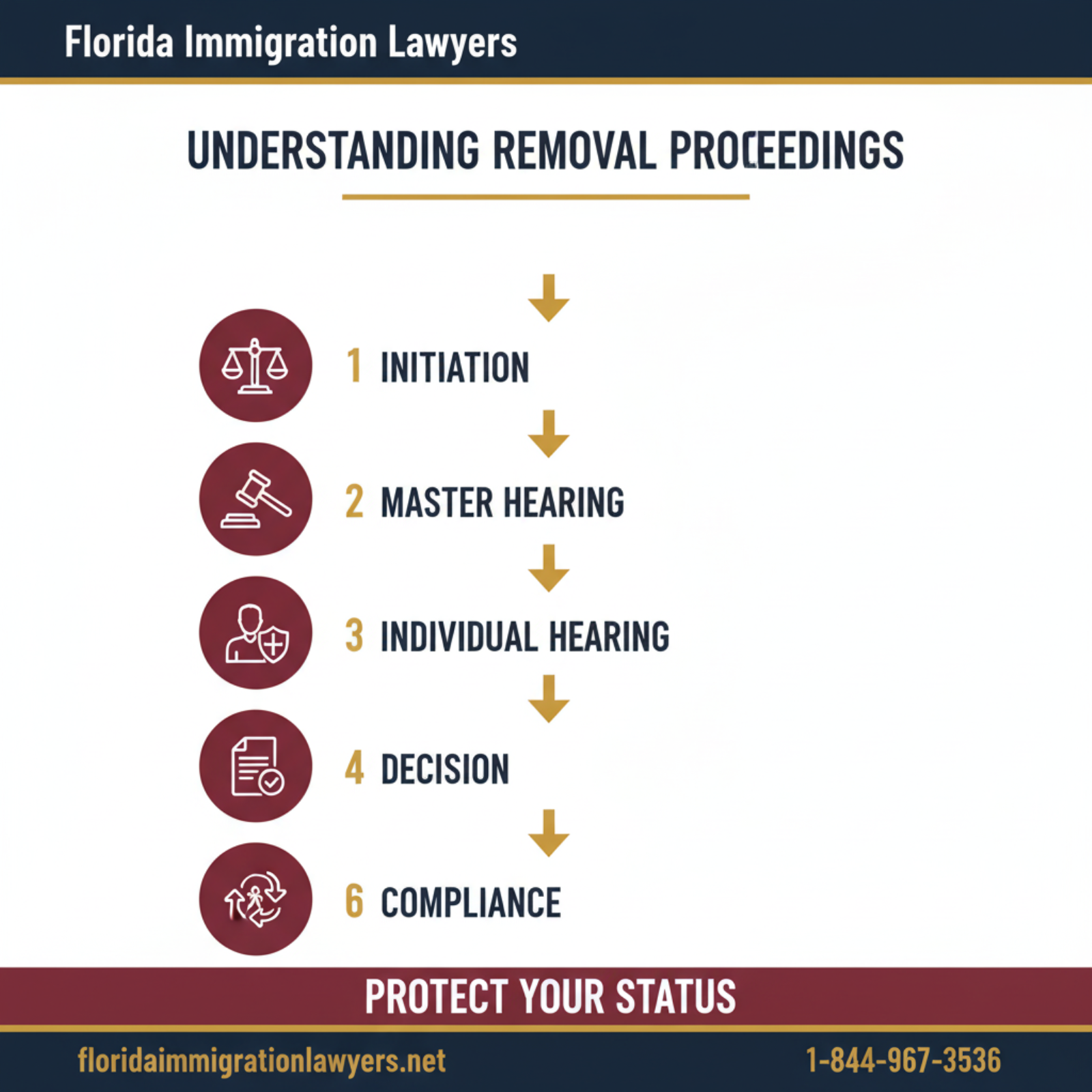
The process of removing conditions on your green card involves several critical steps. Missing any of these steps or failing to provide adequate documentation can jeopardize your status. Here is a detailed guide:
-
File Form I-751, Petition to Remove Conditions on Residence: This is the most crucial step. You and your spouse must generally file Form I-751 jointly within the 90-day period immediately before your conditional green card expires. This form is your official request to USCIS to review your marriage and remove the conditions. If you are filing from Florida, ensure all details are accurate and complete.
-
Receive Receipt Notice and Extension: After filing Form I-751, USCIS will send you a Form I-797C, Notice of Action, acknowledging receipt of your petition. This notice typically extends your conditional permanent resident status for a specified period, usually 24 to 48 months, allowing you to continue living and working in the U.S. while your case is processed.
-
Attend Biometrics Appointment: USCIS will schedule an appointment for you to provide fingerprints, photographs, and a signature. This biometrics data is used for background checks and identity verification. It is a mandatory step in the process.
-
Respond to Requests for Evidence (RFE): USCIS may determine that the initial evidence submitted with your Form I-751 is insufficient. In such cases, they will issue an RFE, requesting additional documents or information to prove the bona fide nature of your marriage. Timely and comprehensive responses are essential.
-
Attend Interview (If Required): While many I-751 petitions are approved without an interview, USCIS may schedule one at a local field office, such as the Miami USCIS office for residents of Homestead. Both spouses generally must attend. The interview assesses the legitimacy of your marriage and verifies the information provided in your petition.
-
Receive Decision: After reviewing all evidence and, if applicable, conducting an interview, USCIS will make a decision. If approved, you will receive a 10-year permanent resident card. If denied, your conditional status will be terminated, and USCIS will typically initiate USCIS green card removal proceedings Florida by issuing a Notice to Appear (NTA).
It is important to remember that if your marriage ends in divorce or if you experience abuse, you may be eligible to file Form I-751 with a waiver of the joint filing requirement. This allows you to petition on your own. Our team can guide you through these sensitive situations. For assistance with family-related immigration matters, visit our page on Family Immigration.
Essential Documents for Your I-751 Petition
A strong Form I-751 petition relies on compelling evidence that your marriage is genuine. Gathering comprehensive documentation is key to a successful outcome. Here is a checklist of commonly required documents:
- A copy of your conditional green card (Form I-551).
- A copy of the I-797C receipt notice for Form I-751, if applicable.
- Proof of joint ownership of property (e.g., deeds, mortgage statements, lease agreements).
- Proof of joint financial resources (e.g., joint bank accounts, credit card statements, tax returns filed jointly).
- Copies of birth certificates for any children born of the marriage.
- Affidavits from at least two people who know both spouses and can attest to the bona fide nature of the marriage.
- Photographs of you and your spouse together from different times, especially from before and after your marriage.
- Evidence of trips taken together, such as airline tickets or hotel bookings.
- Joint utility bills, insurance policies (health, auto, life), or wills.
- For waiver applications (e.g., divorce): a certified copy of the divorce decree.
- For waiver applications (e.g., abuse): police reports, medical records, court documents, or statements from shelters.
The more evidence you can provide to demonstrate the authenticity of your marriage, the stronger your case will be. Each piece of documentation helps USCIS understand the depth and validity of your marital union, reducing the likelihood of complications or further scrutiny.
Navigating Timelines and Processing Expectations for Conditional Green Card Removal
The processing times for Form I-751 can vary significantly. USCIS processing times depend on various factors, including the volume of applications, the complexity of individual cases, and the specific service center handling your petition. For residents of Homestead and other Florida communities, your case will generally be processed through a national service center, with interviews potentially scheduled at the Miami Field Office.
Typically, after you file Form I-751, you will receive a receipt notice that extends your conditional status for a period, often 24 to 48 months. This extension allows you to continue working and traveling while your petition is pending. However, the actual processing can take anywhere from 18 to over 36 months in some instances. This extended timeframe can be a source of anxiety for many applicants.
You can check the current processing times for Form I-751 on the USCIS website. It is important to monitor these times and be prepared for potential delays. While waiting, ensure you keep all your documents organized and your contact information updated with USCIS. Prolonged processing does not mean your case is in trouble, but it does highlight the need for patience and careful planning.
Should your case exceed published processing times, or if you face an emergency, there may be options to inquire about your case status or request expedited processing. However, these are typically reserved for severe circumstances. Always consult with an experienced attorney before taking any action. For the most up-to-date information on processing times, visit the USCIS Processing Times page.
Understanding Costs and Fees for Removing Conditions
The financial aspect of removing conditions on your green card is an important consideration. There are several costs involved, primarily the USCIS filing fees and potential attorney fees. These fees are subject to change, so it is always best to check the most current information directly from USCIS.
The primary cost is the filing fee for Form I-751. In addition to the filing fee, there is typically a separate biometrics services fee. These fees must be paid at the time of filing your petition. USCIS does not refund these fees, regardless of the outcome of your case. For individuals in Florida, these fees are standard across the country.
Beyond government fees, you should also account for potential legal fees if you choose to hire an immigration attorney. While not mandatory, legal representation can be invaluable, especially for complex cases, waivers, or if you are concerned about potential USCIS green card removal proceedings Florida. Attorney fees vary based on the complexity of your case and the services required.
Other potential costs might include translation services for documents not in English, fees for obtaining certified copies of records (like birth certificates or divorce decrees), and travel expenses if an interview is required. Planning for these expenses can help you manage the process more smoothly. For official USCIS fee information, please refer to the USCIS Fee Schedule.
Do not navigate this process alone. The complexities of immigration law require guidance. Contact Florida Immigration Lawyers today to discuss your specific situation and understand how we can assist you.
Common Mistakes to Avoid in Conditional Green Card Removal Proceedings
Navigating the conditional green card removal process can be fraught with pitfalls. Avoiding these common mistakes can significantly improve your chances of success and prevent the initiation of USCIS green card removal proceedings Florida.
-
Filing Form I-751 Late: This is one of the most critical errors. If you fail to file your Form I-751 within the 90-day window before your conditional green card expires, your status will automatically terminate. This often leads directly to the issuance of a Notice to Appear (NTA) and the start of removal proceedings in immigration court.
-
Submitting Insufficient Evidence: USCIS requires substantial evidence to prove your marriage is bona fide. Simply submitting a marriage certificate is not enough. Failing to provide a wide range of joint documents, photographs, and affidavits can lead to a Request for Evidence (RFE) or even a denial.
-
Failure to Update Your Address with USCIS: If you move and do not inform USCIS of your new address, you may miss crucial notices, RFEs, or interview appointments. Missing these communications can result in your case being denied or even closed without your knowledge.
-
Not Disclosing All Relevant Information: Attempting to conceal past arrests, immigration violations, or other pertinent details can be considered misrepresentation or fraud. This can lead to severe penalties, including a permanent bar from the U.S. Always be truthful and transparent.
-
Ignoring Requests for Evidence (RFEs): If USCIS sends an RFE, it means they need more information to make a decision. Failing to respond comprehensively and on time will almost certainly lead to a denial of your I-751 petition.
-
Attending Interviews Unprepared: If an interview is scheduled, you and your spouse should be ready to answer detailed questions about your relationship, shared life, and the evidence submitted. Inconsistent answers can raise red flags for immigration officers.
-
Traveling Internationally Without Proper Documentation: While your I-797C receipt notice extends your status, ensure you understand the specific travel guidance. Traveling without proper proof of your extended status can lead to issues upon re-entry.
-
Assuming a Waiver is Automatic: If your marriage has ended or you are a victim of abuse, you may qualify for a waiver of the joint filing requirement. However, these waivers are not automatic. You must provide compelling evidence to support your eligibility for the waiver.
-
Misrepresentation or Immigration Fraud: Any attempt to misrepresent facts or engage in immigration fraud can have devastating consequences. This can result in a permanent bar from the U.S. and even criminal charges. Honesty is always the best policy.
-
Not Seeking Legal Counsel for Complex Cases: While some straightforward cases may be handled independently, situations involving divorce, criminal history, or prior immigration issues warrant legal expertise. Attempting to navigate these complexities alone significantly increases the risk of denial and removal proceedings.
When to Consult a Florida Immigration Lawyer
While some I-751 cases are relatively straightforward, many situations require the expertise of an experienced immigration attorney. If you are a conditional permanent resident in Florida, especially in areas like Homestead, understanding when to seek legal help is crucial to protecting your future.
You should strongly consider consulting with Florida Immigration Lawyers if any of the following scenarios apply to you:
- Your Marriage Has Ended: If you are divorced or legally separated, you will need to file Form I-751 with a waiver of the joint filing requirement. This is a complex process requiring strong evidence.
- You Are a Victim of Abuse or Extreme Cruelty: If you or your child have been subjected to battery or extreme cruelty by your U.S. citizen or lawful permanent resident spouse, you may be eligible for a waiver. This is a sensitive area where legal support is invaluable.
- Your Spouse Refuses to Cooperate: If your spouse will not sign the joint Form I-751 petition, an attorney can help you explore waiver options.
- You Have a Criminal History: Any past arrests or convictions, even minor ones, can complicate your I-751 petition and potentially lead to USCIS green card removal proceedings Florida. An attorney can assess the impact of your record.
- You Have Previous Immigration Violations: Past overstays, unauthorized employment, or other immigration issues can create complications.
- You Received a Request for Evidence (RFE) or Notice of Intent to Deny (NOID): These notices indicate that USCIS has concerns about your petition. An attorney can help you formulate a comprehensive and persuasive response.
- You Received a Notice to Appear (NTA): If USCIS denies your I-751 petition, they will likely issue an NTA, placing you in immigration court for removal (deportation) proceedings. This is a serious situation where immediate legal representation is essential. Our firm provides robust deportation defense Florida services.
- You Have Concerns About Your Case: If you simply feel overwhelmed or unsure about any aspect of the process, a consultation can provide clarity and peace of mind.
Navigating the U.S. immigration system, particularly when facing potential USCIS green card removal proceedings Florida, requires a deep understanding of legal statutes like INA 237 (8 U.S.C. § 1227) regarding deportable aliens, and the regulations found in 8 C.F.R. § 216.4 concerning petitions to remove conditions. Florida Immigration Lawyers are here to advocate for you. Do not hesitate to contact us today.
About Florida Immigration Lawyers
Florida Immigration Lawyers is an immigration law firm dedicated to serving individuals and families across the entire state of Florida. With years of experience and a deep commitment to our clients, we provide comprehensive legal representation for a wide range of immigration matters.
Our team understands the unique challenges faced by immigrants in Florida, from Homestead to Jacksonville. We pride ourselves on offering compassionate, knowledgeable, and effective legal solutions. We are available 24/7 to answer your questions and provide support.
Why Choose Florida Immigration Lawyers?
- Experience: Our attorneys possess extensive knowledge of U.S. immigration law.
- Client-Centered Approach: Your goals are our priority, and we tailor strategies to your unique situation.
- Bilingual Services: We offer full services in English and Spanish to ensure clear communication.
- Free Consultations: We provide free initial consultations to discuss your case.
- Statewide Service: No matter where you are in Florida, we are here to help.
Protect your future in Florida. Contact us today for a free consultation at 1-844-YO-PELEO or visit our website at https://www.floridaimmigrationlawyers.net. We are here to help you achieve your immigration goals.
Sources and References
- U.S. Citizenship and Immigration Services (USCIS) - Form I-751, Petition to Remove Conditions on Residence
- U.S. Citizenship and Immigration Services (USCIS) - Fee Schedule
- U.S. Citizenship and Immigration Services (USCIS) - Check Case Processing Times
- Executive Office for Immigration Review (EOIR) - Immigration Courts
- 8 U.S.C. § 1186a (INA 216) - Conditional Permanent Resident Status for Certain Alien Spouses and Sons and Daughters.
- 8 U.S.C. § 1227 (INA 237) - Deportable Aliens.
- 8 C.F.R. § 216.4 - Petition to Remove Conditions by Alien Spouses.
This article provides general legal information and is not intended as legal advice. Every case is unique, and outcomes depend on specific facts and circumstances. Contact an attorney for advice about your particular situation.
The journey to permanent residency in the U.S. can be filled with challenges, especially when navigating complex procedures like removing conditions on your green card. Whether you are in Homestead, Miami, Orlando, or anywhere else in Florida, our dedicated team at Florida Immigration Lawyers is ready to provide the guidance and support you need.
Do not let the fear of USCIS green card removal proceedings Florida prevent you from securing your future. We are committed to protecting your rights and helping you achieve your immigration goals. Call Florida Immigration Lawyers today at 1-844-YO-PELEO for a free consultation. Se Habla Español - Estamos aquí para ayudarle.
Do Not Navigate This Process Alone
Our experienced immigration attorneys are ready to fight for you. Get a free, confidential case review today.
Se Habla Español
Or leave your details and we’ll call you:
Free Evaluation in 24 Hours
Or talk to us right now

AI voice assistant — available 24/7
FreeFrequently Asked Questions

William J. Vásquez
Founding Attorney · Vasquez Law Firm
U.S. Air Force veteran and immigration attorney with years of hands-on U.S. immigration experience. J.D., NCCU School of Law. AILA member. Admitted to the 4th, 5th, and 11th Circuit Courts.
Available 24/7 - Free Evaluations
Reviewed for legal accuracy by William J. Vásquez
Licensed in North Carolina; U.S. immigration is federal practice.
Related Legal Services
Our Florida immigration attorneys can help you with citizenship and naturalization, immigration practice areas and free immigration consultation. Call today at 1-844-YO-PELEO for a free case review.
Related Links
Related Topics
Free Legal Case Review
Discuss your case with our experienced attorneys. We're available 24/7.
Se Habla Español - Estamos aquí para ayudarle.
Related Articles
Dual Citizenship Lawyer in Florida: What You Need to Know
For Florida residents, the concept of dual citizenship, or holding two passports, offers a compelling blend of opportunities and challenges. While the U.S. generally permits dual nationality, the path to achieving this status requires a meticulous understanding of both U.S. immigration laws and the citizenship policies of your country of origin. This guide explores the definition of dual citizenship, the detailed step-by-step process for U.S. naturalization, and the significant benefits and potential pitfalls involved. We cover essential documentation, typical timelines, and cost considerations for 2026, providing crucial insights for anyone in Orlando, Miami, or across Florida considering this important legal step. Learn about common mistakes to avoid and understand when to seek professional legal counsel to navigate this complex process successfully. Florida Immigration Lawyers is here to provide expert, bilingual support for your dual citizenship journey.
Immigration Lawyer Orlando Free Consultation in Florida
For individuals and families in Orlando, Florida, navigating the complexities of U.S. immigration law requires expert guidance. An immigration lawyer in Orlando offers crucial support for everything from visa applications and green card processes to naturalization and deportation defense. This comprehensive guide details what a free consultation covers, providing a step-by-step overview of immigration pathways, essential document checklists, and expected timelines in 2026. We also highlight common mistakes to avoid, discuss the critical role of legal counsel in deportation and asylum cases, and explain why choosing a local Orlando immigration attorney is beneficial. Florida Immigration Lawyers is dedicated to serving the diverse community of Orlando with compassionate, effective legal solutions, ensuring you receive personalized advice and robust representation for a successful immigration journey.
EAD Advance Parole Combo Card in Florida 2026
For individuals with a pending Form I-485, Application to Register Permanent Residence or Adjust Status, the EAD Advance Parole Combo Card is an essential document. This single card combines the authorization to work legally in the U.S. (Employment Authorization Document - EAD) with permission to travel internationally and re-enter without abandoning your green card application (Advance Parole). This guide from Florida Immigration Lawyers provides a comprehensive overview for applicants in Florida in 2026, covering eligibility, the step-by-step application process, required documents, expected processing times, and associated costs. We also highlight common mistakes to avoid and when to seek legal counsel to ensure a smooth and successful immigration journey. Understanding this vital card is key to maintaining stability while awaiting your permanent residency approval.
F-1 to H-4 Change of Status Processing in Florida
Explore the F-1 to H-4 change of status process in Florida, including I-539 processing times, steps involved, and common pitfalls. Call Florida Immigration Lawyers for a free case review.