USCIS Green Card Removal Proceedings in Florida: Your 2026
Navigating USCIS green card removal proceedings in Florida is a critical process for conditional permanent residents. This guide for 2026 explains the intricate Form I-751 petition, which is essential to remove conditions on your two-year green card and secure permanent residency. We cover the step-by-step process, crucial document checklists, and current processing expectations. Understanding the requirements and avoiding common mistakes, especially in complex situations like divorce or abuse, is vital to prevent denial and potential deportation. Learn about the associated costs and when professional legal assistance becomes indispensable. Florida Immigration Lawyers offers expert guidance to protect your status and future in the U.S.

USCIS green card removal proceedings typically refer to the process of removing conditions on a two-year conditional green card, usually obtained through marriage to a U.S. citizen or permanent resident, or through certain investor visas. This involves filing Form I-751, Petition to Remove Conditions on Residence. Failure to file or an unsuccessful petition can lead to actual removal (deportation) proceedings. Understanding the requirements and timely filing is crucial to maintaining your permanent resident status.
- Conditional green cards require a separate petition (Form I-751) to remove conditions.
- File Form I-751 within the 90-day window before your conditional green card expires.
- Failure to remove conditions can lead to loss of status and deportation.
- Seek legal counsel, especially in complex cases like divorce or abuse.
- Processing times can vary significantly, often exceeding a year.
Are you a conditional permanent resident in Florida, perhaps living in Fort Lauderdale, facing the critical deadline to remove the conditions on your green card? The prospect of USCIS green card removal proceedings can be daunting, bringing uncertainty about your future in the United States. This crucial step is essential to transition from a two-year conditional green card to a ten-year permanent resident card.
Understanding the specific requirements, timelines, and potential pitfalls is vital. This article will guide you through the intricacies of the I-751 petition process, explain what to expect, and highlight common mistakes to avoid. We will provide valuable insights to help you navigate this complex journey successfully in 2026.
Do not face this challenging process alone. Call Florida Immigration Lawyers at 1-844-967-3536 for a free consultation. Our experienced team is ready to assist you.
Understanding USCIS Green Card Removal Proceedings in Florida
When you first receive a green card through marriage to a U.S. citizen or permanent resident, or through certain investor categories, it is often a conditional green card valid for two years. This conditional status is a measure by U.S. Citizenship and Immigration Services (USCIS) to ensure the legitimacy of the marriage or investment.
The term "removal proceedings" in this context refers to the process of "removing the conditions" on your residency, not necessarily a deportation proceeding, though failure to remove conditions can lead to one. It is a critical step for many immigrants in Florida, from Fort Lauderdale to Orlando, to secure their long-term residency.
What are Conditional Green Cards?
A conditional green card, also known as a CR1 or CR6 visa for marriage-based cases, grants you permanent resident status for a limited period of two years. USCIS issues these cards when the marriage (or investment) that formed the basis of your immigration petition is less than two years old at the time your green card is approved. This temporary status is governed by INA Section 216.
The purpose is to prevent immigration fraud, specifically marriages entered into solely for immigration benefits. After two years, you must prove to USCIS that your marriage or investment remains bona fide and was not fraudulent. If you are a conditional permanent resident, your journey to full permanent residency requires this crucial step.
Why Conditions are Placed on Your Green Card
The primary reason USCIS places conditions on a green card is to verify the authenticity of the relationship or investment. For married couples, this means demonstrating that the marriage is genuine and ongoing, rather than a sham to circumvent immigration laws. USCIS wants to see evidence of a shared life and commitment.
This scrutiny is designed to protect the integrity of the U.S. immigration system. Failure to provide sufficient evidence that your marriage is legitimate can result in the termination of your conditional resident status and potentially lead to actual deportation defense proceedings. This is why understanding **USCIS green card removal proceedings** is so important.
Step-by-Step Guide to Removing Conditions on Your Green Card (Form I-751)
The process of removing conditions involves filing Form I-751, Petition to Remove Conditions on Residence. This must be done correctly and within specific timelines to avoid jeopardizing your immigration status. Here is a general step-by-step guide for conditional residents in Florida:
- Determine Your Filing Category: Most commonly, you will file jointly with your U.S. citizen or permanent resident spouse. However, if your marriage ended in divorce, annulment, or if you suffered abuse, or your spouse passed away, you may need to file a waiver. This is a critical distinction that impacts your documentation.
- Gather Required Documentation: This is arguably the most intensive part of the process. You must compile substantial evidence demonstrating that your marriage was entered into in good faith and is ongoing, or that you qualify for a waiver. We will detail common documents below.
- Complete Form I-751 Accurately: Fill out every section of Form I-751 thoroughly and truthfully. Any errors or omissions can cause delays or lead to a Request for Evidence (RFE). Ensure all information matches your previous immigration applications.
- Pay the Filing Fees: USCIS requires specific filing fees for Form I-751 and a biometrics service fee. These fees are subject to change, so always check the official USCIS website for the most current amounts. Do not send cash.
- Submit Your Petition to the Correct USCIS Lockbox Facility: The filing address depends on where you live and whether you are filing jointly or with a waiver. Verify the correct lockbox address on the USCIS website to avoid your petition being returned or delayed.
- Receive a Receipt Notice (Form I-797C): Once USCIS accepts your petition, you will receive a Form I-797C, Notice of Action. This notice serves as proof that your petition was filed and typically extends your conditional permanent resident status for an additional period, often 24 or 48 months, allowing you to continue working and traveling.
- Attend a Biometrics Appointment: USCIS will send you an appointment notice for biometrics (fingerprints, photos, and signature). This appointment is mandatory, and failure to attend can lead to delays or denial. Biometrics are typically taken at a local Application Support Center (ASC) in Florida, such as those near Fort Lauderdale or Miami.
- Prepare for a Potential Interview: While not all I-751 petitioners are interviewed, USCIS may schedule one, especially in cases involving waivers, insufficient initial evidence, or inconsistencies. If an interview is scheduled at a Florida USCIS field office, such as Miami, Orlando, or Tampa, it is highly advisable to prepare with an attorney.
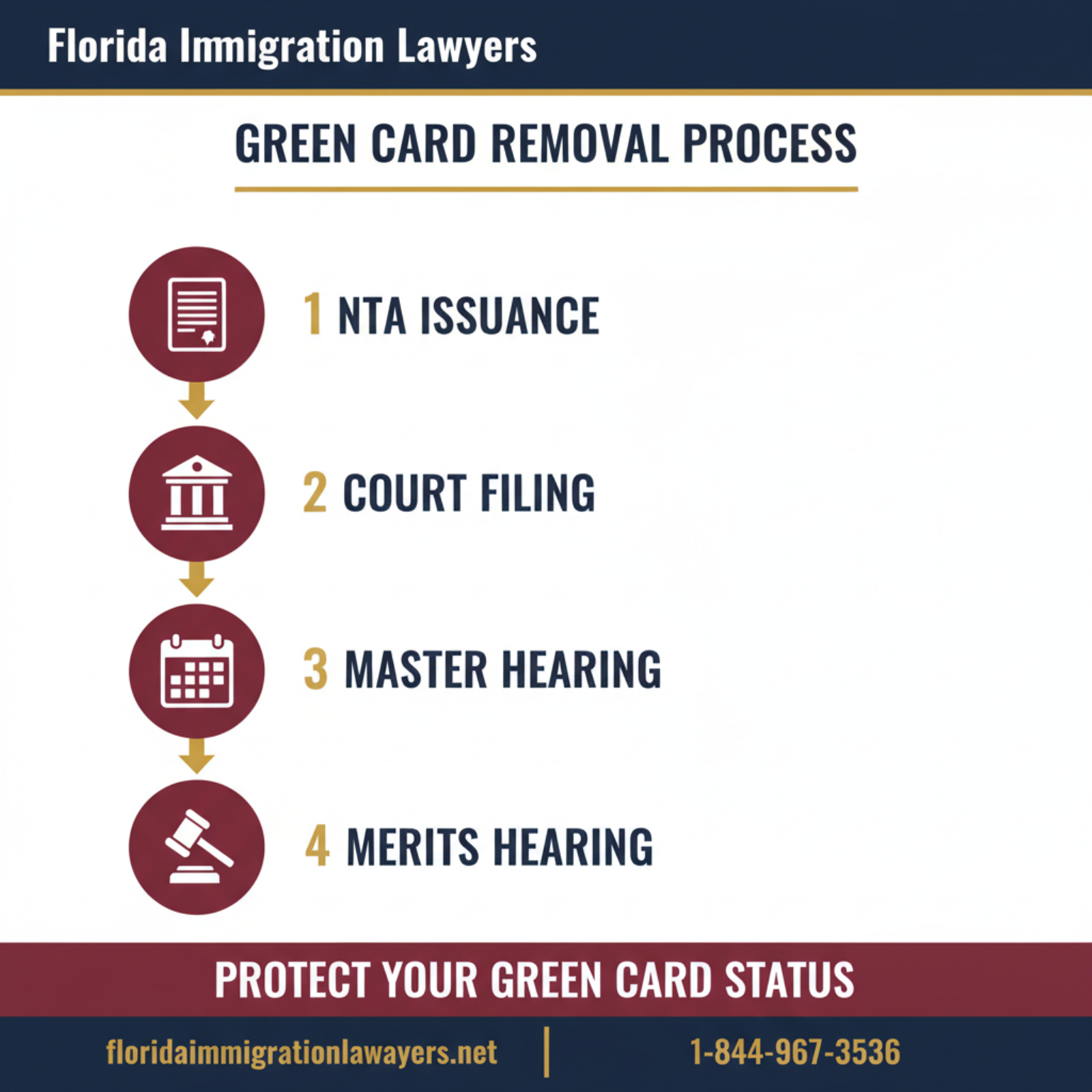
- Receive a Decision from USCIS: After reviewing your petition, biometrics, and any interview, USCIS will make a decision. If approved, you will receive a new 10-year permanent resident card. If denied, you will likely receive a Notice to Appear (NTA) in immigration court for removal proceedings.
Essential Document Checklist for I-751 Petitioners
To successfully navigate **USCIS green card removal proceedings**, providing comprehensive and compelling evidence is paramount. The goal is to demonstrate the bona fide nature of your marriage or the validity of your waiver claim. Here is a checklist of commonly requested documents for your I-751 petition:
- Copy of your conditional green card (front and back).
- Copy of your marriage certificate (if applicable).
- Birth certificates of any children born during the marriage.
- Joint bank account statements, showing active use over time.
- Joint utility bills (electricity, water, gas, internet) addressed to both spouses at the same residence.
- Joint leases or mortgages, proving shared residency.
- Affidavits from friends, family, or employers attesting to the bona fides of your marriage. These should be notarized.
- Insurance policies (life, health, auto, home) showing both spouses as beneficiaries or policyholders.
- Joint federal and state tax returns or tax transcripts from the period of conditional residency.
- Photographs of you and your spouse together over time, including with family and friends, on trips, and celebrating holidays.
- Evidence of commingled assets or shared financial responsibilities, such as joint credit cards or loan agreements.
- For waiver petitions (e.g., divorce or annulment): a certified copy of the final divorce decree or annulment.
- For waiver petitions (e.g., abuse): police reports, medical records, court documents, psychological evaluations, or affidavits from shelters/counselors.
- For waiver petitions (e.g., death of spouse): a certified copy of the death certificate.
- Any other relevant documents that demonstrate the authenticity of your marriage or the validity of your waiver claim, as per 8 CFR § 216.4.
I-751 Processing Times and Expectations in Florida for 2026
One of the most common concerns for those undergoing **USCIS green card removal proceedings** is the length of time it takes to process the I-751 petition. Processing times can vary significantly based on the USCIS service center handling your case, the complexity of your application, and current agency backlogs. In 2026, applicants in Florida should generally expect lengthy processing times.
Typically, the processing time for Form I-751 can range from 18 to 36 months, and sometimes even longer. During this period, your conditional status is extended by the Form I-797C receipt notice. This allows you to maintain your lawful status, continue working, and travel internationally, though it is always advisable to carry the receipt notice with your expired conditional green card.
If USCIS requires additional information, they will issue a Request for Evidence (RFE). Responding promptly and thoroughly to an RFE is crucial to avoid further delays or a denial. Interviews for I-751 petitions are becoming more common, especially for waiver cases or if USCIS has concerns about the bona fides of the marriage. These interviews typically take place at USCIS field offices in Florida, such as those in Miami, Orlando, or Tampa, depending on your residence. Be prepared to discuss your marriage and provide further evidence.
Cost Factors and Fee Breakdown for the I-751 Petition
Understanding the financial aspects of **USCIS green card removal proceedings** is important for planning. The costs associated with filing Form I-751 primarily include USCIS filing fees and potential legal fees. It is crucial to note that USCIS fees are subject to change, so always verify the current amounts on the official USCIS website before filing.
As of recent updates, there is a filing fee for Form I-751 itself, along with a separate biometrics services fee. These fees must be paid to USCIS at the time of filing. In addition to government fees, you may incur costs for gathering supporting documents, such as obtaining certified copies of records, translation services for foreign documents, or postage.
Engaging an experienced family immigration attorney, like those at Florida Immigration Lawyers, also involves legal fees. While these are an additional cost, they represent an investment in the successful outcome of your case. Attorney fees vary depending on the complexity of your situation, whether you are filing jointly or need a waiver, and the extent of legal assistance required. A free consultation can help you understand the potential costs involved for your specific circumstances.
Do not navigate this process alone. The stakes are too high. Contact Florida Immigration Lawyers today at 1-844-967-3536 to protect your future. Our dedicated team in Fort Lauderdale and across Florida is here to help.
Common Mistakes to Avoid in USCIS Green Card Removal Proceedings
Navigating the I-751 process can be complex, and even minor errors can lead to significant delays or denials. Here are common mistakes conditional residents in Florida often make during **USCIS green card removal proceedings**:
- Missing the Filing Deadline: You must file Form I-751 within the 90-day window immediately preceding the expiration date on your conditional green card. Filing late without a valid excuse can result in automatic termination of your conditional resident status and the initiation of actual removal proceedings.
- Insufficient or Weak Evidence: USCIS requires substantial evidence to prove the bona fide nature of your marriage. Submitting only a few documents or generic evidence can lead to a Request for Evidence (RFE) or, worse, a denial. Always provide a wide array of strong, dated, and jointly held documents.
- Filing Jointly When a Waiver is Required: If your marriage has ended in divorce or annulment, or if you are a victim of abuse, you cannot file jointly. Attempting to do so will lead to rejection. You must file a waiver petition, which has different requirements and evidence standards.
- Not Updating Your Address with USCIS: Moving without notifying USCIS using Form AR-11 can cause you to miss crucial notices, RFEs, or interview appointments. Missing these communications can lead to a denial without further notice.
- Inconsistent Information: Discrepancies between the information provided on your I-751 petition and previous immigration applications (e.g., Form I-130) will raise red flags. Always ensure all information is accurate and consistent across all filings.
- Failing to Disclose Criminal History: Even minor arrests or convictions, regardless of the outcome, must be disclosed on your application. Hiding such information can be considered misrepresentation and lead to severe immigration consequences, including inadmissibility.
- Ignoring Requests for Evidence (RFEs) or Notices of Intent to Deny (NOIDs): These notices require prompt and thorough responses. Ignoring them or providing an inadequate response will almost certainly lead to a denial of your I-751 petition.
- Attempting to File for Naturalization Prematurely: You must successfully remove the conditions on your green card before you can apply for U.S. citizenship, even if you meet the residency requirements for naturalization. The I-751 must be approved first.
- Not Seeking Legal Counsel for Complex Cases: While some straightforward cases may be handled independently, situations involving divorce, abuse, criminal history, or prior denials are highly complex. Attempting to navigate these alone significantly increases the risk of an adverse outcome.
When to Call a Lawyer for Your I-751 Petition
While the I-751 process might seem straightforward for some, many situations warrant the expertise of an experienced immigration attorney. If you find yourself in any of the following scenarios in Florida, it is highly advisable to seek legal counsel from Florida Immigration Lawyers:
- Your Marriage Has Ended in Divorce or Annulment: If you are no longer married to your petitioning spouse, you must file a waiver. This requires specific legal arguments and evidence to prove the marriage was bona fide despite its dissolution.
- You Were Subjected to Battery or Extreme Cruelty: If you or your child suffered abuse from your U.S. citizen spouse, you may be eligible for a waiver. This is a sensitive and complex area of law where legal protection is essential.
- Your Petitioning Spouse Has Passed Away: If your spouse died, you can still file Form I-751 with a waiver. An attorney can help you gather the necessary documentation and present your case effectively.
- Your Case Has Been Denied, or You Received a Notice to Appear (NTA): If USCIS denies your I-751, they will typically issue an NTA, initiating removal proceedings in immigration court. At this stage, legal representation is absolutely critical to defend your right to remain in the U.S.
- You Have a Criminal Record: Any criminal history, even minor infractions, can impact your eligibility and lead to complications in your I-751 petition. An attorney can assess the impact and advise on the best course of action.
- You Received a Request for Evidence (RFE) or a Notice of Intent to Deny (NOID): These notices indicate that USCIS has concerns about your application. A lawyer can help you understand the specific issues and prepare a comprehensive, persuasive response.
- You Are Nearing the Filing Deadline and Need Urgent Assistance: If you are close to your 90-day filing window and feel overwhelmed, an attorney can help expedite the preparation of your petition to ensure timely submission.
Florida Immigration Lawyers offers comprehensive assistance for **USCIS green card removal proceedings** and related immigration law matters. We regularly represent clients in Fort Lauderdale, Miami, Orlando, and throughout Florida, providing personalized guidance every step of the way. Do not hesitate to contact us.
About Florida Immigration Lawyers
Florida Immigration Lawyers is a leading immigration law firm dedicated to serving individuals and families across the entire state of Florida. Our team of experienced attorneys is committed to providing compassionate, effective, and results-driven legal representation for a wide range of immigration challenges.
We specialize in areas such as family immigration, deportation defense, asylum, citizenship, and business immigration. We understand the complexities of U.S. immigration law and the profound impact it has on our clients' lives. Our firm prides itself on being accessible and responsive to your needs.
Why choose Florida Immigration Lawyers? We offer free consultations, are available 24/7 to address urgent concerns, and provide bilingual services to ensure clear communication. Our firm is deeply rooted in Florida communities, from Fort Lauderdale to Jacksonville, and we are dedicated to helping you achieve your immigration goals. Call us at 1-844-967-3536 or visit https://www.floridaimmigrationlawyers.net to learn more.
Sources and References
- U.S. Citizenship and Immigration Services (USCIS) - Form I-751
- USCIS Policy Manual - Conditional Permanent Residence
- Executive Office for Immigration Review (EOIR) - Immigration Court Listing
- 8 U.S.C. § 1186a - Conditional permanent resident status for certain alien spouses and sons and daughters
- 8 CFR § 216.4 - Petition to remove conditions by alien spouse
- Immigration and Nationality Act (INA) Section 216
This article provides general legal information and is not intended as legal advice. Every case is unique, and outcomes depend on specific facts and circumstances. Contact an attorney for advice about your particular situation.
Protect your future and your right to remain in the United States. Do not leave your conditional green card status to chance. Contact Florida Immigration Lawyers today for a free, confidential consultation. Call us at 1-844-967-3536. Se Habla Español - Estamos aquí para ayudarle.
Do Not Navigate This Process Alone
Our experienced immigration attorneys are ready to fight for you. Get a free, confidential consultation today.
Se Habla Español
Frequently Asked Questions
Florida Immigration Lawyers
Immigration Attorney | Founder, Vasquez Law Firm
U.S. Air Force veteran and immigration attorney with thousands of cases resolved. J.D., NCCU School of Law. AILA member. Admitted to the 4th, 5th, and 11th Circuit Courts.
Available 24/7 - Free Evaluations
Related Legal Services
Our Florida immigration attorneys can help you with immigration practice areas, free immigration consultation and experienced immigration attorneys. Call today at 1-844-967-3536 for a free consultation.
Related Links
Related Topics
Free Legal Consultation
Discuss your case with our experienced attorneys. We're available 24/7.
Se Habla Español - Estamos aquí para ayudarle.
Related Articles
Expungement Effect on Immigration in Florida | VLF Florida
Discover how expungement impacts immigration in Florida. Learn about eligibility, the process, and potential consequences. Contact Florida Immigration Lawyers at 1-844-967-3536 for a free consultation.
Immigration Services in Kissimmee Florida | VLF Florida
Discover essential immigration services in Kissimmee, Florida. Learn about the resources available for immigrants, including Puerto Rican residents in Osceola County. Contact Florida Immigration Lawyers at 1-844-967-3536 for expert guidance and a free consultation.
Child Status Protection Act (CSPA) Florida: Preventing 'Aging
Understand the Child Status Protection Act (CSPA) in Florida and how it prevents 'aging out' for derivative beneficiaries. Navigate complex immigration laws
I-360 Widow Self-Petition in Florida: A Complete Guide
Learn how to navigate the I-360 widow self-petition process in Florida. This comprehensive guide covers eligibility, documentation, and common mistakes. Call Florida Immigration Lawyers for expert assistance.
