UK Immigration Reform Denmark Model: What Florida Residents
The UK is considering a Danish-style immigration reform, focusing on stricter asylum and family reunification rules. While directly affecting British policy, this global trend could indirectly influence U.S. immigration discussions and enforcement, impacting Florida's diverse immigrant communities. Understanding these potential shifts is vital for anyone navigating the immigration system. Florida Immigration Lawyers provides expert guidance on USCIS processes, asylum, and other immigration matters. Contact us for a free consultation to protect your future in Florida.

The UK immigration reform Denmark model refers to the United Kingdom's consideration of adopting aspects of Denmark's restrictive immigration policies. While directly impacting UK policy, these reforms can indirectly influence global immigration discourse and potentially shape future US immigration discussions, including those affecting Florida's diverse immigrant communities. Understanding these trends is crucial for planning your immigration journey.
- The UK is exploring Denmark's strict immigration policies.
- These reforms focus on deterrence and temporary protection.
- Changes could influence international immigration trends.
- Florida residents should monitor global policy shifts.
- Consult a Florida immigration lawyer for personalized advice.
Are you living in Florida, keeping a close eye on global immigration trends? The proposed UK immigration reform Denmark model has sparked significant international debate. This potential shift in the United Kingdom's approach to immigration could have far-reaching implications, even for those of us here in Tampa and across Florida. Understanding these global policy discussions is key to navigating your immigration journey effectively.
This comprehensive article will explore the specifics of the proposed UK reforms, delve into the core tenets of the Danish model, and discuss the potential indirect impacts on immigration policy and practice in Florida. We will also provide practical guidance on navigating immigration processes here in our state. If you have immediate concerns about your immigration status or future plans, do not hesitate. Call Florida Immigration Lawyers at 1-844-967-3536 for a free consultation today.
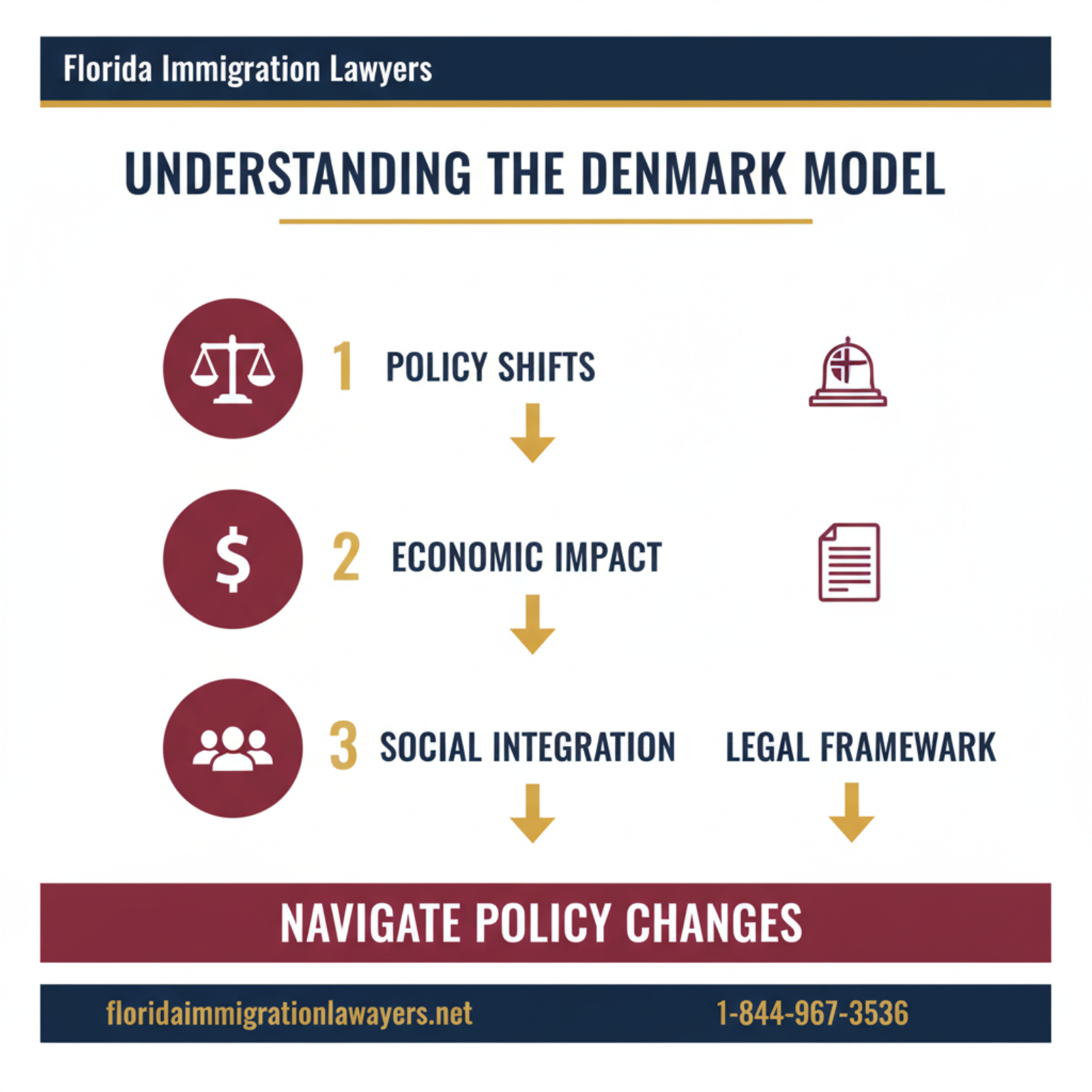
Understanding the UK Immigration Reform Denmark Model
The United Kingdom has been actively discussing significant reforms to its immigration system. These discussions often reference the Danish immigration model as a potential blueprint. The goal is generally to reduce overall immigration numbers and exert greater control over who enters and remains in the country.
This approach is part of a broader global trend towards more restrictive immigration policies. For Florida residents, understanding this trend helps contextualize potential future changes in U.S. immigration policy.
Historical Context of UK Immigration Policy
Historically, the UK has had varying immigration policies, evolving significantly post-Brexit. The departure from the European Union granted the UK greater autonomy over its borders. This autonomy has fueled calls for a more controlled and selective immigration system.
The current government aims to fulfill promises of "taking back control" of borders. This reflects a political desire to move away from previous, more open policies.
Core Principles of the Danish Model
The Danish immigration model is characterized by a firm stance on asylum and integration. Its primary objectives include deterring asylum seekers and limiting family reunification. Denmark has consistently implemented measures to make itself less attractive to those seeking refuge.
This includes strict rules regarding social benefits and pathways to citizenship. The model emphasizes temporary protection over permanent settlement.
International Reactions and Debates
The concept of the UK immigration reform Denmark model has generated considerable debate among international bodies and human rights organizations. Critics often raise concerns about humanitarian implications and the potential for a race to the bottom in terms of asylum seeker treatment. Proponents argue for national sovereignty and the right to control borders for societal stability.
These international discussions can inform and influence immigration discourse in the United States, including among policymakers in Florida.
Key Features of the Danish Immigration Model and Its Goals
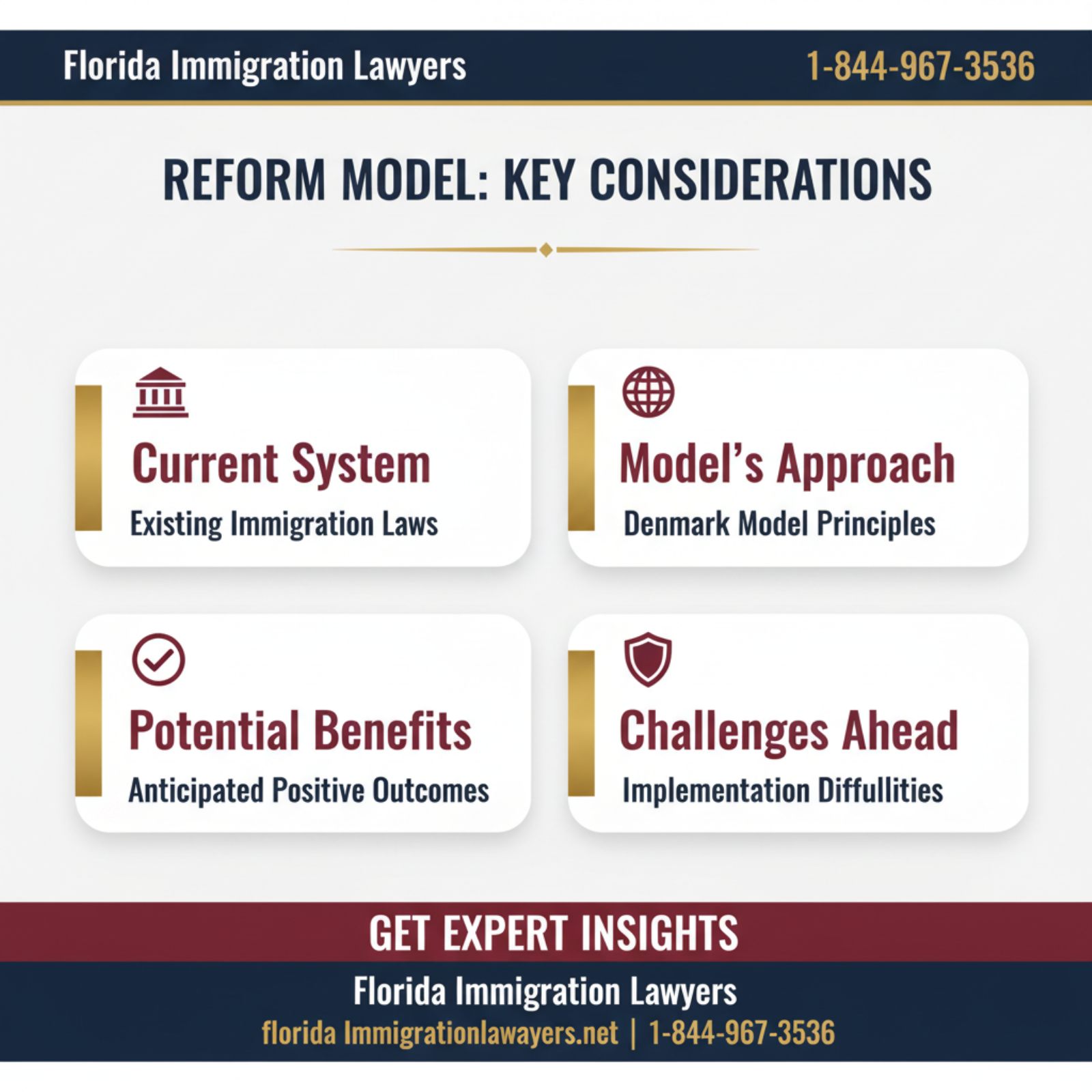
Denmark's immigration framework is built on several pillars designed to manage and reduce immigration. These features provide insight into what the UK might seek to emulate. It is important to remember that each country's context is unique, and direct replication is often complex.
Strict Asylum and Refugee Policies
A cornerstone of the Danish immigration model is its stringent approach to asylum. Denmark aims to process asylum claims quickly and, if approved, grant only temporary protection. The policy emphasizes safe return to the home country once conditions improve, rather than permanent integration.
This contrasts with traditional approaches that often prioritize long-term settlement. Such policies are designed to reduce the overall number of individuals seeking permanent residency through asylum.
Reduced Family Reunification
Another significant feature is the strict criteria for family reunification. Denmark has implemented some of the tightest rules in Europe regarding bringing family members to the country. These measures are designed to limit secondary migration.
The aim is to ensure that those granted protection are genuinely in need, rather than using family links as a primary entry point. This aspect is particularly controversial in international human rights discussions.
Focus on Repatriation and Deterrence
The Danish system heavily emphasizes repatriation for those whose asylum claims are rejected or whose temporary protection expires. Efforts are made to encourage voluntary returns, but forced returns are also a component. The overall policy environment is geared towards deterring new asylum applications.
This proactive approach to deterrence is a key aspect of the proposed UK immigration reform Denmark model considerations. It aims to send a clear message about the country's restrictive stance.
Potential Indirect Impact on Florida Immigration and USCIS Processes
While the UK immigration reform Denmark model directly targets British policy, global shifts in immigration philosophy can create ripple effects. Florida, with its diverse immigrant population and significant role in US immigration, could experience indirect impacts. These influences may manifest in policy discussions, enforcement priorities, or public perception.
Shifting Global Immigration Narratives
The adoption of a more restrictive model by a major Western nation like the UK could embolden similar sentiments in other countries, including the United States. This could lead to increased political pressure for stricter immigration laws and enforcement at the federal level. Such shifts could influence the types of legislation proposed in Congress.
For Florida's immigrant communities, this might mean a heightened sense of uncertainty about future policy directions. It underscores the importance of staying informed and seeking expert legal counsel.
Implications for Asylum Seekers in Florida
Florida has historically been a significant destination for asylum seekers, particularly from Latin American and Caribbean nations. If global policies become more restrictive, it could lead to a re-evaluation of US asylum law and procedures. Changes could affect individuals seeking asylum through USCIS or before immigration courts in Florida, such as those in Miami or Orlando.
We help clients with complex asylum cases; learn more at our asylum practice area page. Understanding the nuances of INA § 208 and 8 CFR § 208 is critical for successful asylum claims.
Potential Changes in Visa Categories and Enforcement
Broader international trends could also influence US visa categories and enforcement priorities. For instance, increased scrutiny on economic migrants or specific professional categories might arise. This could impact individuals seeking employment visas or family-based visas processed through USCIS offices in Florida, including the Tampa Field Office.
Our firm specializes in family immigration and business immigration. These categories, while distinct from asylum, can still be influenced by overall shifts in immigration philosophy.
Navigating Immigration Challenges in Florida: A Step-by-Step Guide
Regardless of global policy discussions like the UK immigration reform Denmark model, navigating the US immigration system requires careful attention to detail and adherence to established procedures. For Florida residents, understanding the process is paramount. This guide outlines general steps, but remember that each case is unique.
- Determine Your Immigration Goal: Identify whether you seek a temporary visa, permanent residency (Green Card), asylum, or citizenship. Your goal will dictate the specific forms and processes required by USCIS.
- Research Eligibility Requirements: Each immigration pathway has strict eligibility criteria. For example, family-based petitions require a qualifying relationship, and employment visas depend on job offers and employer sponsorship. USCIS provides detailed information on its official website, uscis.gov.
- Gather Required Documents: Collect all necessary personal documents, such as birth certificates, passports, marriage certificates, and financial records. Ensure all foreign documents are translated into English by a certified translator.
- Complete and File Application Forms: Fill out the appropriate USCIS forms accurately and completely. Errors or omissions can lead to delays or rejections. Double-check all information before submission to avoid issues with USCIS processes.
- Attend Biometrics Appointment: Most applicants will receive an appointment notice for biometrics (fingerprints, photos, signature) at an Application Support Center (ASC) in Florida, such as the one in Tampa. This is a standard part of many USCIS processes.
- Prepare for Interviews: Depending on your case, you may be required to attend an interview at a USCIS office in Florida or a U.S. consulate abroad. Prepare thoroughly, often with legal counsel, to ensure you can address all questions effectively.
- Respond to Requests for Evidence (RFEs): If USCIS needs more information, they will send an RFE. Respond promptly and comprehensively to avoid further delays. Timely responses are crucial for successful USCIS processes.
- Receive Decision: USCIS will issue a decision on your application. If approved, you will receive your immigration benefit. If denied, you may have options for appeal or reconsideration, which a Florida immigration lawyer can explain.
Required Documents for Florida Immigration Processes
A well-organized set of documents is crucial for any immigration application. Missing or incorrect paperwork is a common reason for delays or denials. While specific documents vary by case type, a general checklist includes:
- Valid Passport and travel documents.
- Birth Certificates (for all applicants and beneficiaries).
- Marriage Certificates (if applicable).
- Divorce Decrees or Death Certificates (if applicable, for previous marriages).
- Photographs (passport-style, meeting USCIS specifications).
- Financial documents (e.g., tax returns, bank statements, affidavits of support, Form I-864).
- Medical Examination Report (Form I-693) from an authorized civil surgeon.
- Police Clearance Certificates from countries where you have lived.
- Educational Transcripts and Diplomas (for employment-based visas, if applicable).
- Evidence of relationship (for family-based petitions, e.g., photos, joint accounts, birth records).
- Any previous immigration documents (e.g., I-94 records, previous visa stamps).
Immigration Processing Timelines and Expectations in Florida
Understanding the processing times for immigration applications is essential for managing expectations. These times can vary significantly based on the type of application, the specific USCIS service center or field office (like the Tampa Field Office), and current caseloads. The USCIS processes are often complex and can take months or even years.
USCIS regularly updates its processing time estimates on its website. It is advisable to check these resources frequently for the most current information. Factors such as Requests for Evidence (RFEs), extensive background checks, and interview scheduling can all extend timelines.
For example, certain Green Card applications might take over a year, while citizenship applications can also have lengthy waiting periods. Our team can help you understand the likely timeline for your application and prepare you for potential delays.
Understanding Immigration Costs and Fees
Immigration processes involve various costs, including government filing fees, legal fees, and other associated expenses. It is important to budget for these from the outset. USCIS fees are subject to change, so always verify the current amounts on the official USCIS website, uscis.gov/forms/our-fees.
Government fees typically include application fees, biometrics fees, and sometimes visa issuance fees. These are paid directly to USCIS or the Department of State. Legal fees compensate your Florida immigration lawyer for their expertise, guidance, and representation throughout your case. Additional costs might include translation services, medical exams, and travel expenses for interviews.
While we cannot provide specific fee amounts here, a free consultation with Florida Immigration Lawyers can help you understand the potential financial aspects of your case. We aim for transparency in all our dealings.
Do not navigate this complex and often changing process alone. The nuances of immigration law, especially in light of global discussions like the UK immigration reform Denmark model, demand expert guidance. Contact Florida Immigration Lawyers today to ensure your case is handled with precision and care.
Common Mistakes to Avoid in Florida Immigration Cases
Navigating the immigration system can be challenging, and even minor errors can lead to significant setbacks. Being aware of common pitfalls can help you avoid unnecessary delays or denials. These mistakes can be costly in terms of time, money, and your immigration future.
- Failing to Disclose Complete Information: Omitting details, even seemingly minor ones, on forms or during interviews can be considered misrepresentation. This can lead to denials, accusations of fraud, and even future bars to immigration. Always be truthful and thorough in all your submissions.
- Missing Deadlines: USCIS and immigration courts impose strict deadlines for submitting documents, responding to RFEs, and attending appointments. Missing these can result in your case being closed or denied without further review, potentially leading to deportation defense issues.
- Submitting Incomplete or Incorrect Forms: Forms must be filled out accurately and completely. Leaving sections blank or providing incorrect information often leads to Requests for Evidence (RFEs) or outright rejection. Always review your applications meticulously.
- Not Providing Certified Translations: Any document not in English must be accompanied by a full, certified English translation. Uncertified translations are not accepted and will delay your case considerably.
- Overlooking Criminal History: Even minor arrests or convictions can have significant immigration consequences. Always disclose any criminal history to your attorney, regardless of how insignificant it seems, as this impacts eligibility under 8 U.S.C. § 1182.
- Not Updating Your Address with USCIS: If you move, you must notify USCIS of your new address within 10 days by filing Form AR-11. Failure to do so can result in missed notices, appointments, and potentially the abandonment of your application.
- Traveling Without Proper Authorization: Leaving the U.S. while an application is pending, especially for adjustment of status, can be problematic. Always consult with a Florida immigration lawyer before making international travel plans to avoid jeopardizing your case.
- Ignoring USCIS or Court Notices: All correspondence from USCIS or an immigration court must be taken seriously and addressed promptly. Ignoring notices can lead to adverse decisions, including deportation orders. For help with deportation defense, contact us immediately.
- Providing Inconsistent Information: Ensure that all information provided across various applications and interviews is consistent. Discrepancies can raise red flags and lead to suspicions of fraud, impacting the credibility of your entire case.
- Delaying Application Submission: Waiting too long to file an application can sometimes mean missing eligibility windows or facing longer processing times due to accumulating backlogs. Timeliness is often a critical factor in successful immigration applications.
- Failing to Seek Legal Advice: Attempting to navigate complex immigration laws without professional guidance is a common mistake. A skilled Florida immigration lawyer can prevent errors and strengthen your case.
When to Call a Florida Immigration Lawyer
While some immigration processes appear straightforward, the legal landscape is complex and constantly evolving. This complexity is compounded by global discussions such as the UK immigration reform Denmark model, which can influence future policy. There are specific scenarios where professional legal assistance from a Florida immigration lawyer is not just helpful but often critical.
You should seek legal counsel immediately if:
- You have a complex case, such as a prior deportation, criminal record, or previous immigration violations.
- You are seeking asylum or refugee status, as these cases require detailed legal arguments and evidence, referencing specific sections of the INA.
- You have received a Request for Evidence (RFE) or Notice of Intent to Deny (NOID) from USCIS.
- You are facing deportation or removal proceedings in an immigration court in Florida (e.g., Miami Immigration Court, Orlando Immigration Court).
- Your application has been denied, and you wish to explore options for appeal or reconsideration.
- You are unsure about which visa category applies to your situation or how to meet specific eligibility requirements.
- You need assistance gathering and preparing extensive documentation, especially for family-based or business-based petitions.
- You want to ensure all forms are completed accurately and submitted correctly to avoid delays in USCIS processes.
At Florida Immigration Lawyers, we understand the anxieties and challenges you face. Our experienced attorneys are dedicated to providing clear, compassionate, and effective legal representation for all types of immigration matters. We serve clients throughout Florida, including Tampa, Orlando, and Miami, offering personalized strategies to achieve your immigration goals. Our commitment is to guide you through every step of the process. Visit our attorneys page to learn more about our team.
About Florida Immigration Lawyers
Florida Immigration Lawyers is a leading law firm dedicated to serving the diverse immigration needs of individuals and families across Florida. We understand that navigating the U.S. immigration system can be daunting, especially with ongoing global discussions like the UK immigration reform Denmark model potentially influencing future policy. Our firm is committed to providing compassionate, effective, and results-driven legal representation.
Our Services
We offer a comprehensive range of immigration services, including:
- Family-based immigration petitions
- Employment-based visas and Green Cards
- Asylum and refugee claims
- Deportation defense
- Citizenship and naturalization
- Visa renewals and adjustments of status
- Appeals and waivers
- U-Visas and VAWA petitions
Why Choose Us?
Our team of skilled Florida immigration lawyers possesses in-depth knowledge of current immigration laws and procedures, including those outlined in 8 U.S.C. Chapter 12. We pride ourselves on personalized service, clear communication, and a steadfast dedication to our clients' success. We are available 24/7 to address your urgent concerns and offer free consultations to help you understand your options. Your immigration journey is our priority.
Contact Florida Immigration Lawyers today at 1-844-967-3536 or visit our website at https://www.floridaimmigrationlawyers.net.
Frequently Asked Questions (FAQs)
Global immigration policies, including the UK immigration reform Denmark model, often raise questions about broader trends. Here are answers to some common inquiries related to this topic, with an eye towards general understanding for Florida residents.
What is the Danish model of immigration in the UK?
The "Danish model" of immigration, in the context of the UK, refers to the United Kingdom's consideration of adopting Denmark's highly restrictive approach to asylum and immigration. This typically involves deterring asylum seekers, prioritizing temporary protection over permanent settlement, and implementing strict rules for family reunification and social benefits. The goal is to reduce overall immigration and exert greater control over who can enter and remain in the country, a stance that could influence international discourse.
What country has the toughest immigration laws?
Determining the "toughest" immigration laws is subjective and can vary based on specific criteria (e.g., asylum, family reunification, economic migration). However, countries often cited for their restrictive policies include Denmark, Australia, and Hungary, particularly concerning asylum and refugee status. Their policies often focus on deterrence, strict eligibility, and limited pathways to permanent residency, which contrasts with the more varied immigration pathways available in the U.S. under the Immigration and Nationality Act.
What is the 5-year rule for foreigners in Denmark?
Denmark has various rules regarding residence permits and pathways to permanent residency. Historically, some policies have tied access to permanent residency or certain benefits to a period of continuous legal residence, such as five years, along with other integration criteria like language proficiency and employment. These rules are part of Denmark's broader strategy to manage immigration and encourage integration, differing significantly from U.S. Green Card requirements.
Is Denmark right or left wing?
Denmark's political landscape is complex, but its recent immigration policies have largely been driven by a consensus across the political spectrum, including the Social Democrats, who are traditionally considered left-wing. While the Social Democrats often advocate for social welfare and equality, they have adopted increasingly strict immigration stances, arguing it is necessary to maintain the welfare state and social cohesion. This demonstrates that restrictive immigration policies are not exclusive to one political ideology in Denmark, a dynamic also seen in immigration debates globally, including in the U.S.
Sources and References
- U.S. Citizenship and Immigration Services (USCIS)
- U.S. Department of State - Bureau of Consular Affairs
- Executive Office for Immigration Review (EOIR)
- 8 U.S.C. Chapter 12 - Immigration and Nationality Act (INA)
- INA § 208 - Asylum (8 U.S.C. § 1158)
- 8 CFR § 208 - Asylum and Withholding of Removal
- 8 U.S.C. § 1101 et seq. - Definitions, Immigration and Nationality Act
This article provides general legal information and is not intended as legal advice. Every case is unique, and outcomes depend on specific facts and circumstances. Contact an attorney for advice about your particular situation.
Your Trusted Florida Immigration Lawyers
Navigating the complexities of immigration law, especially with global policy shifts like the UK immigration reform Denmark model in discussion, requires dedicated legal expertise. Florida Immigration Lawyers are here to provide the guidance and representation you need. We are committed to protecting your rights and helping you achieve your immigration goals.
Do not face the U.S. immigration system alone. Call us for a free, confidential consultation at 1-844-967-3536 today. Se Habla Español - Estamos aquí para ayudarle.
Do Not Navigate This Process Alone
Our experienced immigration attorneys are ready to fight for you. Get a free, confidential consultation today.
Se Habla Español
Frequently Asked Questions
Florida Immigration Lawyers
Immigration Attorney | Founder, Vasquez Law Firm
U.S. Air Force veteran and immigration attorney with thousands of cases resolved. J.D., NCCU School of Law. AILA member. Admitted to the 4th, 5th, and 11th Circuit Courts.
Available 24/7 - Free Evaluations
Related Legal Services
Our Florida immigration attorneys can help you with business immigration, asylum protection and deportation defense. Call today at 1-844-967-3536 for a free consultation.
Related Links
Related Topics
Free Legal Consultation
Discuss your case with our experienced attorneys. We're available 24/7.
Se Habla Español - Estamos aquí para ayudarle.
Related Articles
Immigration Lawyer Cape Coral: Your SW Florida Guide
Navigating immigration law in Cape Coral, Lee County, and Southwest Florida demands expert legal guidance. An experienced immigration lawyer in Cape Coral is crucial for understanding complex visa applications, green card processes, and defense against deportation. This comprehensive guide details common immigration pathways, essential documentation, and critical mistakes to avoid. Our firm, Florida Immigration Lawyers, offers dedicated assistance, ensuring your case is handled with precision and care. We serve clients across Florida, providing personalized advice and strategic representation for family-based immigration, asylum, and citizenship. Understand the timelines, costs, and the importance of professional legal support for your immigration journey. Contact us for a free consultation to secure your future.
Understanding Immigration Lawyer Cost in Florida 2026
Discover how much it costs to hire an immigration lawyer in Florida in 2026. Understand the factors influencing fees and why consulting with a professional is essential for your immigration journey. Contact Florida Immigration Lawyers today for expert guidance.
Immigration Services in Naples, Collier County | VLF Florida
Explore comprehensive immigration services in Naples, Collier County. Learn about visa processes, legal assistance, and how to avoid common pitfalls. Contact Florida Immigration Lawyers for expert guidance and a free consultation.
OPT STEM Extension for Florida Graduates: Your 2026 Guide
For F-1 international students graduating from Florida universities with a STEM degree, the OPT STEM extension is a vital pathway to extend work authorization by 24 months. This guide from Florida Immigration Lawyers details the 2026 application process, including eligibility, a step-by-step walkthrough, essential documents like Form I-983, and critical timelines. We highlight the importance of consulting your DSO, securing an E-Verify employer, and avoiding common mistakes that can lead to delays or denials. Understanding these requirements is key to leveraging Florida's robust job market. Contact our firm for a free consultation to navigate this complex process effectively.