TPS Honduras 2026: Florida Immigrants' Guide to Your Status
For Honduran nationals in Florida, understanding your Temporary Protected Status (TPS) in 2026 is critical. With ongoing litigation like <em>Ramos v. Mayorkas</em>, the status of TPS for Honduras remains complex, yet active for many beneficiaries due to court injunctions. This guide from Florida Immigration Lawyers provides essential updates on eligibility, the re-registration process, and crucial documents needed. We address common concerns, processing expectations, and cost factors, emphasizing the importance of timely action and avoiding common mistakes. Do not navigate this challenging landscape alone. Contact Florida Immigration Lawyers for a free consultation to ensure your status and future in Florida are protected.
As of March 2026, the status of Temporary Protected Status (TPS) for Honduras remains complex due to ongoing litigation. While termination was previously announced, court injunctions have generally allowed eligible Honduran nationals to retain their TPS and related work authorization. Beneficiaries should continue to monitor official USCIS announcements and consult legal counsel for personalized guidance.
- TPS for Honduras is currently active for many beneficiaries due to court orders.
- Re-registration is crucial to maintain your benefits, including work authorization.
- Eligibility requirements must continue to be met.
- The future of TPS for Honduras depends on ongoing legal challenges and government decisions.
- Seek legal advice from Florida Immigration Lawyers to understand your specific situation.
Are you a Honduran national living in Florida, concerned about your Temporary Protected Status (TPS) in 2026? The evolving legal landscape surrounding TPS for Honduras can be incredibly confusing and stressful. Thousands of families across Florida, from the vibrant communities of Miami to the quieter towns near Gainesville, rely on TPS for stability and the ability to work legally. Understanding your current status and future options is absolutely essential to protect your family and your future in the Sunshine State.
At Florida Immigration Lawyers, we understand the anxieties you face regarding your immigration status. This comprehensive guide will explain the current situation for TPS Honduras 2026, outline the critical steps you need to take, and discuss what potential changes could mean for you. We are dedicated to providing clear, reliable information to help you navigate these complex immigration challenges. Do not face this uncertainty alone. Call Florida Immigration Lawyers at 1-844-967-3536 for a free consultation today.
Understanding Temporary Protected Status (TPS) for Honduras in 2026
What is TPS and Why is it Important for Hondurans?
Temporary Protected Status (TPS) provides temporary immigration benefits to eligible nationals of designated countries. These benefits include protection from deportation and the ability to obtain an Employment Authorization Document (EAD). Honduras was initially designated for TPS in 1999 following the devastation of Hurricane Mitch. This designation has been extended multiple times over the years, offering a crucial lifeline to thousands.
For many Honduran families in Florida, TPS has been more than just a legal status; it has been a foundation for building stable lives. It allows individuals to work legally, support their families, and contribute significantly to Florida's economy and diverse cultural fabric. The continuous extensions have provided a sense of security, despite the temporary nature of the program.
The Current Landscape: Legal Challenges and Extensions for TPS Honduras 2026
The journey of TPS Honduras 2026 has been marked by significant legal battles. In 2018, the Department of Homeland Security (DHS) announced its decision to terminate TPS for Honduras. This announcement sparked widespread concern and led to federal court challenges, most notably through the Ramos v. Mayorkas lawsuit.
As of early 2026, court injunctions have largely prevented the termination from taking effect for many long-term TPS beneficiaries. These injunctions have been upheld through various stages of appeals, including at the Ninth Circuit Court of Appeals. This means that, for now, many Honduran TPS holders continue to retain their status and work authorization, subject to re-registration requirements. It is vital to stay informed about the latest court rulings and government announcements, as the situation for TPS Honduras 2026 can change rapidly. The U.S. Citizenship and Immigration Services (USCIS) website is the primary source for official updates.
Who is Covered by the Injunctions Related to TPS Honduras?
The protections stemming from the Ramos v. Mayorkas litigation generally apply to TPS beneficiaries from Honduras who held TPS on the date of the termination announcement, which was January 5, 2018. These individuals, and in some cases, those who became eligible later, have typically seen their TPS and EADs automatically extended or have been eligible to re-register under special provisions.
However, it is crucial to understand that these protections are not universal and can be subject to specific conditions or future court decisions. The legal landscape is constantly evolving. Consulting with an experienced Florida immigration lawyer is the best way to determine how these injunctions specifically impact your case and to ensure your TPS Honduras 2026 status is secure.
Eligibility and Re-registration for TPS Honduras in Florida
Who Qualifies for TPS in 2026?
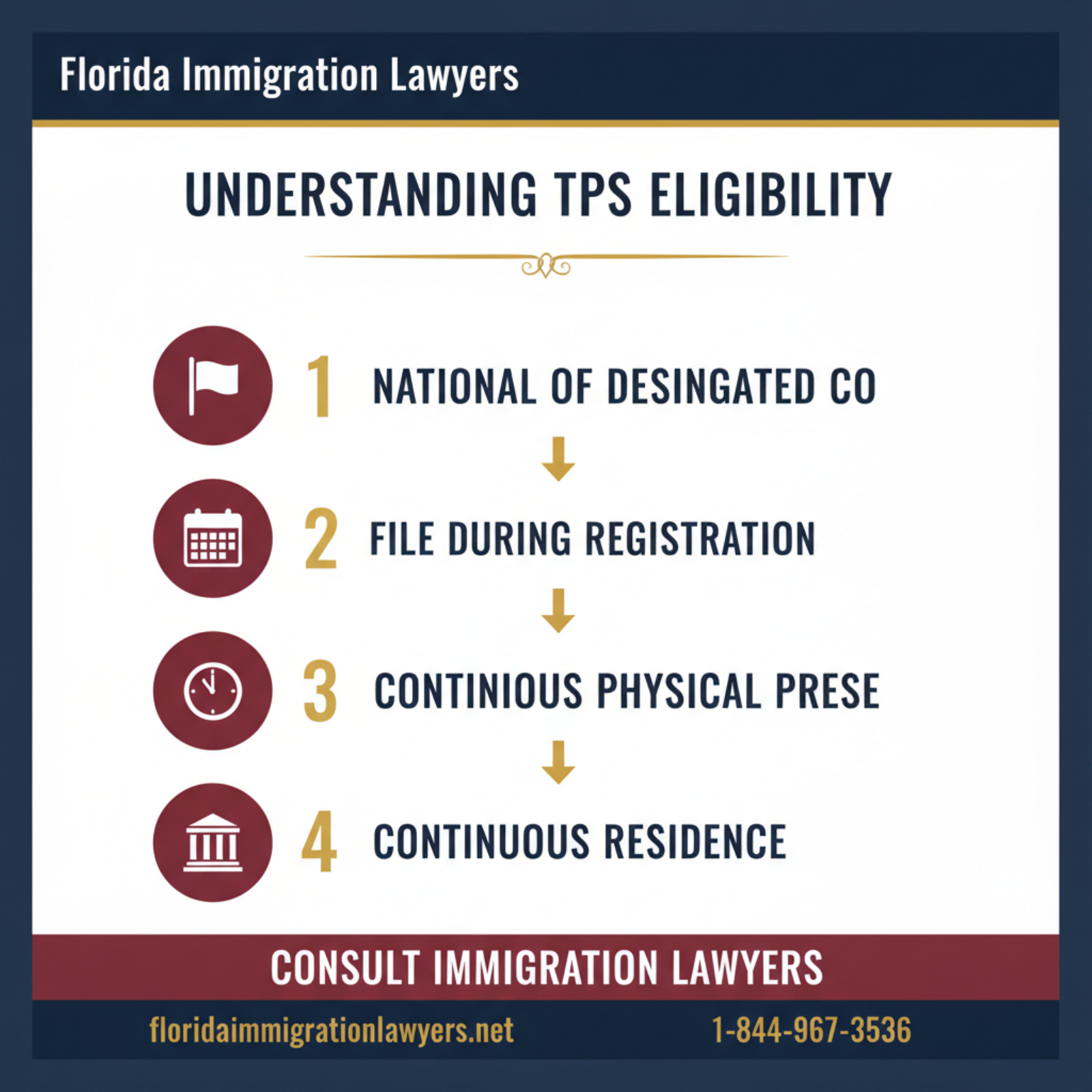
To be eligible for TPS, individuals must meet several criteria. You must be a national of Honduras (or a person without nationality who last habitually resided in Honduras). You must have been continuously physically present in the U.S. since the last specified date and continuously resided in the U.S. since a specific date set by the TPS designation. This typically requires substantial proof of your presence in the United States over many years.
Additionally, you must pass security and criminal background checks. Certain criminal offenses, such as two misdemeanors or any felony, or national security concerns, can make an individual ineligible for TPS. If you have questions about your eligibility, especially concerning any past legal issues or immigration violations, our firm can provide clarity and guidance. It is critical to address any potential ineligibilities upfront.
The Re-registration Process: Your Critical Steps for TPS Honduras 2026
Maintaining your TPS Honduras 2026 status requires timely re-registration. USCIS typically announces re-registration periods, which usually last for 60 days. During this window, you must submit Form I-821, Application for Temporary Protected Status, and Form I-765, Application for Employment Authorization, if you wish to continue working. Even if your EAD is automatically extended, re-registration is typically still required to maintain your underlying TPS itself.
Missing a re-registration deadline can lead to the loss of your TPS benefits, including your work authorization, and could put you at risk of deportation. These deadlines are strictly enforced. Therefore, it is imperative to mark your calendar and prepare your application well in advance of the re-registration period.
What to Expect in Gainesville and Across Florida Regarding TPS
Florida is home to a significant Honduran population, with communities thriving across the state, including in Gainesville, Orlando, Miami, and Tampa. USCIS processing centers handle applications from across the nation, but local field offices, such as those in Orlando, Miami, or Tampa, may be involved in specific cases, such as for interviews or biometric appointments, if required.
Our firm, Florida Immigration Lawyers, serves clients throughout Florida. We understand the unique challenges faced by immigrants in our diverse communities. We are here to help you navigate the re-registration process efficiently and accurately, ensuring your application meets all USCIS requirements and is prepared to withstand scrutiny. Our expertise covers the specific nuances of immigration law within the Florida context.
Step-by-Step Guide to Maintaining Your TPS Honduras Status
Navegating the TPS re-registration process can seem daunting, especially with the uncertainties surrounding TPS Honduras 2026. Follow these steps carefully to protect your status and future:
- Stay Informed: Regularly check the official USCIS website (www.uscis.gov) for the latest announcements regarding TPS for Honduras. Pay close attention to re-registration periods and any updates on the Ramos v. Mayorkas litigation. Official news releases from USCIS are your most reliable source.
- Gather Your Documents: Compile all necessary documents well in advance of any re-registration period. This includes robust proof of identity, nationality, continuous physical presence, and continuous residence. Start collecting these now to avoid last-minute stress.
- Complete Forms I-821 and I-765 Accurately: Accurately fill out Form I-821, Application for Temporary Protected Status, and Form I-765, Application for Employment Authorization (if you need an EAD). Ensure all questions are answered truthfully and completely. Any discrepancies or omissions can lead to delays or denials.
- Pay Applicable Fees: Be prepared to pay the filing fees for Form I-765 and the biometric services fee, unless you qualify for a fee waiver. USCIS does not typically charge a fee for Form I-821 for re-registration. Always check current fee schedules on the USCIS website as they can change.
- Submit Your Application: Mail your completed forms and supporting documents to the correct USCIS lockbox facility. The specific address will be clearly specified in the re-registration announcement. Always send via certified mail with a return receipt requested and keep copies of everything you send for your records.
- Attend Biometrics Appointment: If required, attend your biometrics (fingerprinting) appointment at a local Application Support Center (ASC). This appointment is mandatory for background checks. Missing it without rescheduling can jeopardize your application.
- Monitor Your Case Status: Use the receipt number provided by USCIS to track the status of your application online via the USCIS website's "Case Status Online" tool. This allows you to stay updated on the progress of your USCIS TPS Honduras application.
- Consult an Attorney: If you have any doubts, complications, or receive a Request for Evidence (RFE), immediately contact an immigration lawyer for assistance. Florida Immigration Lawyers can help you prepare and submit a strong application, addressing any potential issues proactively.
Essential Document Checklist for TPS Re-registration
Having all your documents organized is key to a smooth re-registration process for TPS Honduras 2026. Here is a general checklist of what you will typically need. Remember, providing clear and legible copies is essential:
- Proof of Identity and Nationality:
- Copy of your Honduran birth certificate.
- Copy of your Honduran passport (if available and valid).
- National identity document from Honduras with your photograph and/or fingerprint.
- Any previous TPS approval notices (Form I-797).
- Proof of Continuous Physical Presence (CPP) and Continuous Residence (CR) in the U.S. since the specified dates: These documents establish that you have been in the U.S. consistently.
- Employment records (pay stubs, W-2 forms, letters from employers, employment verification letters).
- Rent receipts, mortgage statements, utility bills (electricity, water, gas, internet) showing your name and address in Florida.
- School records (transcripts, report cards, enrollment letters) for yourself or your children attending schools in Florida.
- Medical records (hospital bills, doctor visit statements, vaccination records).
- Affidavits from friends, neighbors, religious leaders, or employers attesting to your presence and residence. These should be notarized.
- Bank statements, credit card statements, or other financial records.
- Tax returns filed in the U.S.
- Birth certificates of children born in the U.S.
- Receipts for any previous TPS applications or other immigration benefits.
- Two Passport-Style Photos: These must meet specific USCIS requirements.
- Form I-821, Application for Temporary Protected Status.
- Form I-765, Application for Employment Authorization (if applying for or renewing your EAD).
- Proof of any fee waivers requested: If you are requesting a fee waiver, ensure you submit Form I-912, Request for Fee Waiver, along with supporting documentation.
Remember, USCIS may request additional documentation based on your specific case or if they require further clarification. Always keep original documents safe and only send copies unless specifically requested.
Timeline and Processing Expectations for TPS Honduras 2026
The processing times for USCIS TPS Honduras applications can vary significantly. While USCIS aims for efficiency, backlogs, the volume of applications, and the complexity of ongoing litigation can all impact how quickly applications are processed.
What to Expect After Filing Your TPS Application
After you submit your re-registration application for TPS Honduras 2026, you will receive a receipt notice (Form I-797C) from USCIS. This notice confirms that your application has been received and provides a receipt number. Shortly after, you may receive an appointment notice for biometrics. These appointments are typically held at a local Application Support Center (ASC) in Florida, such as in Orlando or Miami.
The processing of your Employment Authorization Document (EAD) can take several months. USCIS often issues automatic extensions of EADs for specific periods while renewal applications are pending, especially for TPS beneficiaries under the Ramos v. Mayorkas injunction. Always check the USCIS website for the latest automatic extension dates and validity periods. This is a critical piece of Immigration news Florida TPS holders need to follow.
Impact of Litigation on TPS Timelines
The ongoing legal challenges surrounding TPS for Honduras mean that timelines can be unpredictable. Court orders might trigger new re-registration periods or further automatic extensions, affecting the validity of your status and work authorization. These developments are often communicated directly by USCIS through official announcements.
It is important to remember that until a final, definitive court ruling or government action, the protections for many TPS holders continue. Our firm, Florida Immigration Lawyers, stays abreast of all these legal developments to advise our clients accurately and help them prepare for any potential changes to their TPS Honduras extension status.
Cost Factors and Fee Breakdown for TPS Applications
Understanding the costs involved in your TPS Honduras 2026 application is crucial for proper financial planning. While the application for TPS (Form I-821) for re-registration generally does not require a filing fee, other associated costs exist that you must consider.
Required Fees for TPS Honduras
The primary fee you will likely pay is for the Application for Employment Authorization (Form I-765), if you are applying for or renewing your EAD. There is also a separate biometric services fee for fingerprinting and background checks. These fees are subject to change by USCIS, so always verify the current amounts on the official USCIS website before filing your application. Fees must be paid by check, money order, or credit card, as specified by USCIS.
Fee waivers may be available for individuals who can demonstrate an inability to pay, based on specific income guidelines or receipt of means-tested public benefits. If you believe you qualify for a fee waiver, you must submit Form I-912, Request for Fee Waiver, along with supporting documentation, proving your financial hardship. Our Florida immigration lawyer team can help assess your eligibility for a fee waiver.
Attorney Fees and the Value of Legal Counsel
While you can file TPS applications yourself, the complexity of immigration law, especially with the ongoing litigation for TPS Honduras 2026, makes legal assistance highly advisable. Florida Immigration Lawyers offers comprehensive services, including assistance with form preparation, thorough document review, expert legal advice on eligibility, and representation if issues arise or if you receive a Request for Evidence.
Our fees are transparent, and a free initial consultation can help you understand the value we provide. Investing in legal counsel can save you time, reduce stress, and significantly lower the risk of errors that could jeopardize your status. An experienced immigration lawyer can ensure your application is complete, accurate, and submitted correctly, maximizing your chances of a positive outcome.
Do not navigate this process alone. Contact Florida Immigration Lawyers today by calling 1-844-967-3536 or visiting our website at floridaimmigrationlawyers.net/contact to schedule your free consultation. We are here to help you protect your future.
Common Mistakes to Avoid When Applying for TPS Honduras
Making errors in your TPS application can lead to significant delays, Requests for Evidence (RFEs), or even outright denial. Avoid these common pitfalls to protect your TPS Honduras extension status:
- Missing Re-registration Deadlines: Failing to re-register within the designated window is one of the most common and critical mistakes. This can lead to the loss of your TPS status and work authorization, potentially putting you at risk of deportation. Always adhere strictly to USCIS deadlines.
- Incomplete or Inaccurate Forms: Submitting forms with missing information, incorrect dates, or typographical errors can cause significant delays. USCIS requires all questions to be answered fully and accurately. Review every section carefully.
- Insufficient Supporting Documentation: Failing to provide all required evidence, especially robust proof of continuous physical presence and continuous residence, can result in an RFE or denial. Organize your documents meticulously and include all requested proof.
- Not Disclosing Criminal History: Any past arrests, charges, or convictions, no matter how minor or old, must be disclosed truthfully on your application. Failure to do so can be considered misrepresentation, leading to severe immigration consequences and potential ineligibility for TPS.
- Incorrect Filing Fees: Sending the wrong fee amount, an expired check, or an invalid payment method will cause your application to be rejected. Always check the current USCIS fee schedule on their website before submitting.
- Mailing to the Wrong Address: USCIS has specific lockbox facilities for different types of applications and based on your state of residence. Sending your application to the wrong address will cause delays and could result in rejection.
- Assuming Automatic Extensions Apply to Everyone: While automatic EAD extensions are common due to litigation, they do not always negate the need for re-registration for TPS itself. Always confirm your specific situation and the latest USCIS guidance.
- Ignoring RFEs: If USCIS sends a Request for Evidence, respond promptly and thoroughly with all requested information. Failing to do so within the specified deadline can lead to the denial of your application.
- Failing to Update Contact Information: If you move or change your address, inform USCIS of your new address immediately using their online change of address tool. Missing important notices or correspondence can jeopardize your case.
- Not Consulting an Attorney for Complex Cases: If you have a criminal record, previous immigration violations, or any other complicating factors, attempting to navigate the process alone can be very risky. An attorney can identify and address these issues.
- Relying on Unofficial Information: Only trust information from official USCIS sources or reputable legal professionals. Misinformation from unofficial channels can lead to critical errors and adverse outcomes.
- Lack of Proper Translation: If any of your supporting documents are not in English, you must provide a complete and certified English translation. Failure to do so will result in an RFE or rejection.
When to Call a Florida Immigration Lawyer
While some TPS applications may seem straightforward, the complexities surrounding TPS Honduras 2026, especially with ongoing litigation, make expert legal guidance invaluable. Florida Immigration Lawyers are here to assist you.
Specific Scenarios Requiring Legal Help for TPS Honduras
You should strongly consider contacting an attorney if you:
- Have any criminal history, no matter how minor or old, as this can affect your eligibility for TPS and potentially lead to deportation defense issues.
- Have previously been denied TPS or another immigration benefit, as understanding the reasons for denial is crucial.
- Have had any issues with your legal entry into the U.S. or your immigration status in the past.
- Are unsure about your eligibility for TPS or other potential relief options, such as asylum or family immigration petitions.
- Receive a Request for Evidence (RFE) from USCIS, which requires a precise and timely response.
- Are concerned about the specific impact of the Ramos v. Mayorkas litigation or other court decisions on your individual case.
- Are considering applying for other immigration benefits, such as citizenship, alongside TPS.
- Need assistance understanding or responding to complex USCIS notices or decisions.
- Are facing any form of deportation defense proceedings.
Why Choose Florida Immigration Lawyers?
Our firm specializes exclusively in immigration law, serving clients throughout Florida, including the Gainesville area and all major cities. We have extensive experience with TPS cases, including those impacted by complex legal challenges and the nuances of the TPS Honduras extension. We stay current on all developments regarding TPS Honduras 2026 to provide you with the most accurate and effective legal strategy.
Our team offers compassionate support, clear communication, and personalized attention, guiding you through every step of the process. We understand that your immigration status affects every aspect of your life. Do not take chances with your future; let our experienced team advocate for you. Visit our attorneys page to learn more about our dedicated legal professionals.
Addressing Common Concerns and FAQs for TPS Honduras
Many questions arise regarding TPS Honduras 2026 and its future. Here are answers to some of the most common inquiries, providing vital Immigration news Florida TPS holders need to know:
Will TPS be extended in 2026?
The formal extension of TPS for Honduras in 2026 is largely dependent on the ultimate outcome of ongoing legal challenges, particularly the Ramos v. Mayorkas litigation. While termination was planned, court injunctions have significantly delayed this for many beneficiaries. USCIS will issue official announcements if and when a formal extension or termination is finalized. It is critical to monitor these announcements closely, ideally with the guidance of a Florida immigration lawyer.
Has TPS for Honduras been extended?
As of early 2026, for many long-term beneficiaries, TPS for Honduras has effectively been extended due to court orders, even if a new formal DHS extension has not been issued. This means individuals continue to maintain their status and work authorization through automatic extensions of their EADs, provided they meet re-registration requirements. Always check the latest USCIS guidance for specific validity dates.
Which countries will lose TPS?
The list of countries whose TPS designation has been terminated or is facing termination is subject to change based on evolving conditions, U.S. foreign policy, and ongoing legal challenges. Honduras, along with El Salvador, Nicaragua, and Nepal, has faced termination announcements that have been delayed by litigation. Always refer to the official USCIS website for the most current list of TPS-designated countries and their statuses. It is important not to rely on rumors or unofficial news sources.
Is TPS automatically extended?
In many instances, USCIS has issued automatic extensions of Employment Authorization Documents (EADs) for TPS beneficiaries from Honduras, particularly while renewal applications are pending or due to court injunctions stemming from the Ramos v. Mayorkas case. However, this automatic extension of the EAD does not always mean the underlying TPS itself is automatically extended without re-registration. Beneficiaries must still comply with any re-registration requirements announced by USCIS to maintain their status and work permit. Always read USCIS notices carefully.
About Florida Immigration Lawyers
Florida Immigration Lawyers is a leading law firm dedicated to serving the immigration needs of individuals and families across the Sunshine State. With offices strategically located to serve all of Florida, including Gainesville and the surrounding areas, we are committed to providing exceptional legal representation and compassionate support. Our experienced attorneys specialize in a wide range of immigration matters, including Temporary Protected Status, asylum, deportation defense, family immigration, citizenship, and business immigration. We understand the profound impact immigration issues have on your life and are dedicated to achieving the best possible outcomes for our clients. We offer free consultations and are available 24/7 to address your urgent concerns. Trust Florida Immigration Lawyers to be your advocate. Call us today at 1-844-967-3536 or visit our website at https://www.floridaimmigrationlawyers.net.
Sources and References
- U.S. Citizenship and Immigration Services (USCIS) - Temporary Protected Status
- USCIS News Release: Continued TPS and EAD Validity under Ramos v. Mayorkas Pre-Settlement Agreement
- Executive Office for Immigration Review (EOIR) - Temporary Protected Status
- 8 U.S.C. Chapter 12 - Immigration and Nationality Act (INA) § 244 (8 U.S.C. § 1254a)
- 8 CFR Part 244 - Temporary Protected Status (8 CFR Part 244)
- USCIS Policy Manual, Volume 7 - Asylum and Withholding of Removal, Part B - Temporary Protected Status
- Ramos v. Mayorkas, 3:18-cv-01585-EMC (N.D. Cal.) - Federal Court Litigation
This article provides general legal information and is not intended as legal advice. Every case is unique, and outcomes depend on specific facts and circumstances. Contact an attorney for advice about your particular situation.
The situation for TPS Honduras 2026 can be complex and intimidating, but you do not have to face it alone. Florida Immigration Lawyers are here to provide the expert legal guidance and support you need to protect your status and future in Florida. We offer free, confidential consultations to discuss your specific circumstances and answer your questions. Do not delay; your immigration status is too important. Call us today at 1-844-967-3536 to schedule your free consultation. Se Habla Español - Estamos aquí para ayudarle.
Florida Immigration Lawyers
Legal Team
Our experienced attorneys at Florida Immigration Lawyers have been serving clients across Florida for over 20 years. We specialize in immigration, personal injury, criminal defense, workers compensation, and family law.