Naturalization Ceremony ICE Concerns in Florida: Your Guide to Safety
For many immigrants in Florida, the naturalization ceremony marks a joyous milestone. However, concerns about ICE presence can cause anxiety. This comprehensive guide from Florida Immigration Lawyers addresses common worries, outlines your rights, and provides crucial steps for a smooth naturalization process. Learn how to prepare for your oath, understand potential risks, and when to seek expert legal counsel. We cover eligibility, required documents, timelines, and common mistakes to avoid, ensuring you confidently navigate your path to U.S. citizenship in Florida, especially in communities like Homestead. Contact us for a free consultation and personalized support.
While rare, concerns about ICE (U.S. Immigration and Customs Enforcement) presence at naturalization ceremonies exist, especially in areas like Florida with high immigrant populations. Knowing your rights, understanding the naturalization process, and preparing thoroughly are crucial steps. A qualified immigration lawyer can provide vital guidance, ensuring a smooth path to U.S. citizenship and protecting your interests against potential issues.
- ICE presence at naturalization ceremonies is uncommon but possible, particularly for individuals with specific legal issues.
- Naturalized citizens generally gain strong protections against deportation, but certain serious offenses can lead to denaturalization.
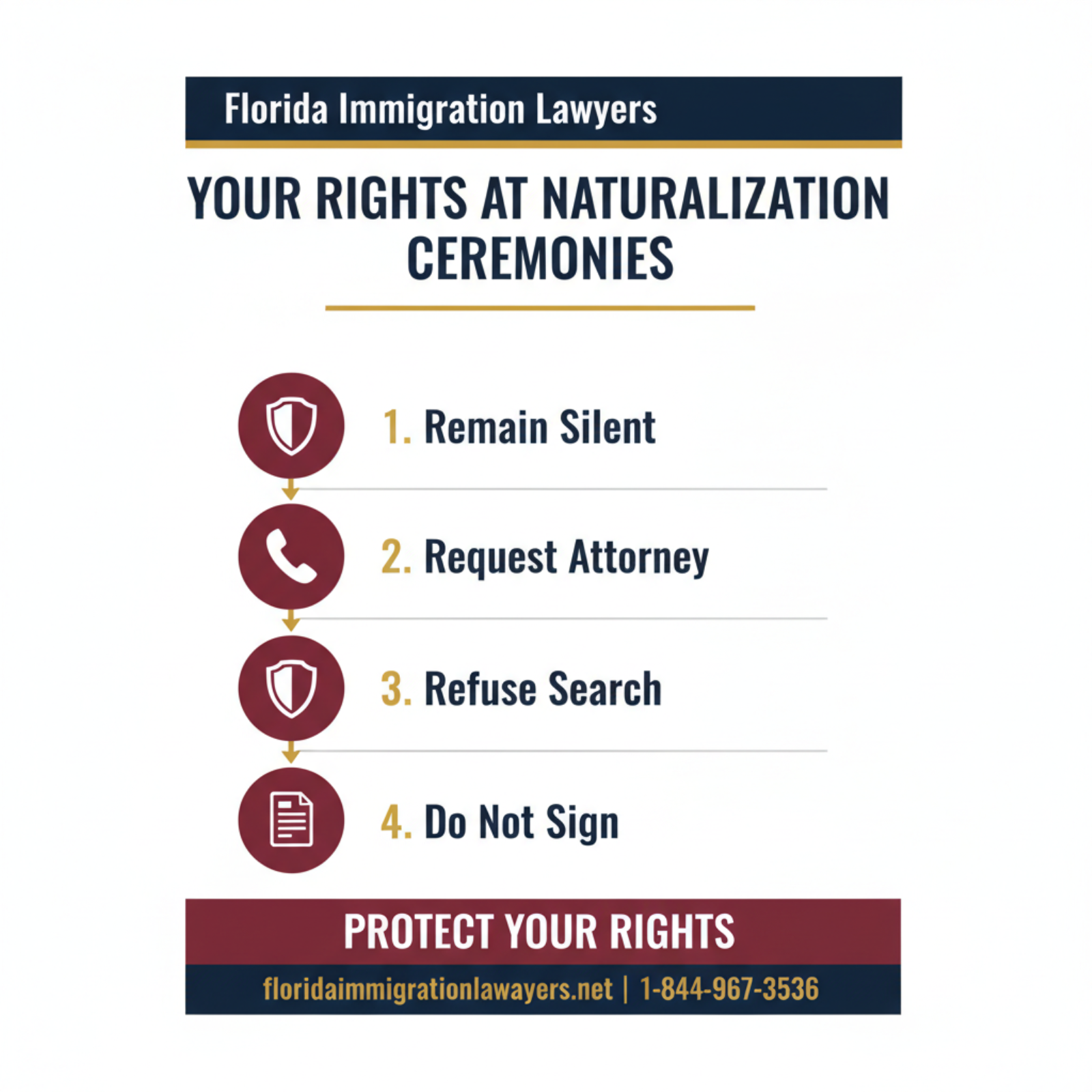
- Always carry proof of your immigration status, and know your rights regarding questioning by immigration officials.
- Thoroughly review your immigration history and consult an attorney if you have any past legal issues or concerns.
- Seeking legal counsel from Florida Immigration Lawyers can help you navigate potential challenges and secure your citizenship.
Naturalization Ceremony ICE Concerns in Florida: Your Guide to Safety
The journey to U.S. citizenship is a significant milestone for many immigrants in Florida, culminating in the joyous naturalization ceremony. This event symbolizes the fulfillment of years of effort and dedication. However, for some, the anticipation of this day is shadowed by worries about potential encounters with U.S. Immigration and Customs Enforcement (ICE).
These concerns, while often unfounded for eligible applicants, are understandable given the complexities of immigration law. Especially in diverse communities like Homestead and across Florida, rumors or isolated incidents can create anxiety. Our goal at Florida Immigration Lawyers is to provide clear, reliable information to ease your mind and help you prepare confidently for your naturalization ceremony.
This comprehensive guide will address your questions about ICE presence at naturalization ceremonies, your rights, and how to ensure a smooth path to citizenship. We understand the importance of this moment for you and your family. If you have specific concerns or need personalized advice, please do not hesitate. Call Florida Immigration Lawyers at 1-844-967-3536 for a free consultation today.
Understanding Naturalization and ICE Presence in Florida
Naturalization is the process by which a lawful permanent resident (green card holder) becomes a U.S. citizen. This process typically involves meeting specific eligibility requirements, filing an application, undergoing an interview, and finally, taking the Oath of Allegiance at a naturalization ceremony. The ceremony is a public event, often held at federal courthouses or USCIS offices throughout Florida, including locations serving Homestead residents.
Historically, naturalization ceremonies have been considered safe spaces, allowing new citizens to celebrate without fear. USCIS (U.S. Citizenship and Immigration Services) and ICE are distinct agencies within the Department of Homeland Security (DHS), each with different mandates. USCIS focuses on immigration benefits, while ICE is primarily responsible for immigration enforcement.
While there have been isolated reports of ICE operations near or at naturalization ceremonies in various parts of the country, it is important to emphasize that these incidents are not common for the vast majority of applicants. The U.S. government encourages naturalization, and disrupting these ceremonies is generally not standard procedure. However, applicants with specific, unresolved legal issues, especially those involving serious criminal convictions or outstanding warrants, might face scrutiny. This is why understanding your unique situation is so critical.
Who is at Risk of ICE Scrutiny at a Ceremony?
The primary concern for ICE at a naturalization ceremony would involve individuals who have undisclosed or newly arisen issues that could impact their eligibility for citizenship or make them removable. This could include a recent arrest, a criminal conviction that was not disclosed, or a final order of removal that was previously unknown to USCIS. For most applicants who have been truthful and have a clean record, these concerns are minimal. However, any change in circumstances since your N-400 application was filed should be immediately discussed with an attorney.
The Importance of Full Disclosure
During the naturalization process, honesty and full disclosure are paramount. Any misrepresentation or omission of material facts, whether intentional or not, can lead to serious consequences, including denial of citizenship, deportation proceedings, or even criminal charges. USCIS conducts thorough background checks, and any discrepancies can raise red flags. Consulting with an experienced immigration lawyer can help you review your application and history to ensure everything is accurately represented.
Step-by-Step Guide to Naturalization and Addressing ICE Concerns
Navigating the naturalization process requires careful attention to detail. Here’s a general overview, with specific advice on how to mitigate concerns about ICE.
-
Determine Your Eligibility: You must generally be at least 18 years old, a lawful permanent resident for 5 years (or 3 years if married to a U.S. citizen), have continuous residence and physical presence in the U.S., demonstrate good moral character, and pass English and civics tests. Ensure you meet all USCIS eligibility requirements.
-
Prepare and File Form N-400: The Application for Naturalization, Form N-400, is extensive. Be meticulously honest and accurate in your responses. Any past encounters with law enforcement, even minor ones, must be disclosed. If you have any doubts about what to disclose, consult an attorney.
-
Attend Biometrics Appointment: After filing, you will receive a notice for a biometrics appointment at an Application Support Center (ASC). This involves fingerprinting and background checks. Ensure you arrive on time with the required documents.
-
Prepare for the Naturalization Interview: This is a critical step where a USCIS officer will review your application, test your English and civics knowledge, and ask questions about your eligibility and good moral character. Be truthful and bring all requested original documents. If you have any criminal history, even minor, prepare to discuss it openly and provide all relevant court dispositions.
-
Receive a Decision: After your interview, USCIS will mail you a decision. If approved, you will receive a notice for your Oath of Allegiance ceremony.
-
Attend the Naturalization Ceremony: This is the final step. Arrive early, dress appropriately, and bring your Permanent Resident Card (Green Card) and the ceremony invitation. At the ceremony, you will return your Green Card, take the Oath of Allegiance, and receive your Certificate of Naturalization. Before attending, ensure no new legal issues have arisen since your interview. If any have, consult your attorney immediately.
-
Post-Ceremony Steps: Once you receive your Certificate of Naturalization, you are a U.S. citizen! Consider applying for a U.S. passport. Your Certificate of Naturalization is proof of your citizenship.
Essential Document Checklist for Your Naturalization Journey
Having all necessary documents organized is key to a smooth naturalization process. This list covers general requirements; your specific case may require additional items.
- Form N-400, Application for Naturalization
- Copy of your Permanent Resident Card (front and back)
- Copies of all marriage certificates, divorce decrees, or death certificates (if applicable)
- Copies of birth certificates for all your children (if applicable)
- Copies of court dispositions for any arrests, citations, or criminal charges (even if dismissed or expunged)
- Proof of selective service registration (for males 18-26)
- IRS tax transcripts for the past 5 years (or 3 years if married to a U.S. citizen)
- Travel records, including all foreign trips and dates
- Passport-style photographs (as specified by USCIS)
- Medical examination results (if required for certain waivers)
- Certified English translations of any foreign language documents
Timeline and Processing Expectations for Naturalization in Florida
The naturalization process timeline can vary significantly based on the USCIS field office processing your application, the complexity of your case, and current caseloads. For applicants in Florida, processing times can range from several months to over a year. The USCIS field offices in Miami, Orlando, and Tampa serve different parts of Florida, including applicants from Homestead.
You can check current processing times on the USCIS website by entering your form type (N-400) and your field office. Be prepared for potential delays and maintain copies of all correspondence. The period between your interview and the oath ceremony can sometimes be a few weeks or a few months. During this time, it is crucial to avoid any actions that could jeopardize your application, such as committing new offenses.
Cost Factors and Fee Breakdown for Naturalization
The naturalization process involves certain government filing fees. These fees are set by USCIS and are subject to change, so it's always important to check the most current fee schedule on the USCIS website. The primary fee is for filing Form N-400, which typically includes the biometrics service fee.
Additional costs may include attorney fees if you choose to hire legal representation, fees for obtaining necessary documents (such as birth certificates or court records), and translation services. While some applicants may be eligible for a fee waiver or reduced fee, this depends on their income level. Discussing all potential costs with your legal team will help you budget appropriately for your citizenship application.
Do not navigate this complex process alone. Contact Florida Immigration Lawyers today for expert guidance and support.
Common Mistakes to Avoid During the Naturalization Process
Avoiding these common pitfalls can significantly improve your chances of a successful naturalization outcome and reduce any potential ICE concerns:
-
Failing to Disclose All Criminal History: Even minor arrests, citations, or expunged records must be disclosed on Form N-400. Omission can be considered a material misrepresentation, leading to denial or even denaturalization later. Always provide certified court dispositions.
-
Not Meeting Continuous Residence Requirements: Extended trips outside the U.S. can break your continuous residence. Understand the rules regarding absences and consult an attorney if you have spent significant time abroad.
-
Lacking Good Moral Character: Certain criminal offenses, failure to pay child support, or tax evasion can demonstrate a lack of good moral character, making you ineligible for naturalization. Ensure your record is clear for the statutory period.
-
Providing Inconsistent Information: Discrepancies between your N-400 application, previous immigration forms, or interview answers can raise doubts about your credibility. Review all past applications thoroughly.
-
Not Updating Your Address with USCIS: Moving without notifying USCIS can result in missed notices, interview appointments, or ceremony invitations, leading to delays or even application abandonment. File Form AR-11 promptly.
-
Failing the English or Civics Test: While you get a second chance, inadequate preparation can cause unnecessary delays. Utilize available study materials from USCIS.
-
Attending the Interview or Ceremony with New Legal Issues: If you are arrested or cited for any offense between your N-400 filing and the oath ceremony, inform your attorney immediately. This could impact your eligibility.
When to Call a Lawyer: Protecting Your Path to Citizenship
While many naturalization cases proceed smoothly, certain situations warrant the immediate attention of an experienced immigration attorney. Florida Immigration Lawyers are here to help you navigate these complex scenarios and protect your rights.
Specific Scenarios Requiring Legal Help:
- Any Criminal History: If you have any arrests, charges, or convictions, no matter how minor or old, you should consult an attorney. This is the most common reason for naturalization denials and potential ICE involvement. We can assess the impact on your good moral character and prepare a strong defense.
- Prior Deportation Orders or Immigration Violations: If you have ever been subject to deportation proceedings or have a history of immigration violations, legal counsel is essential.
- Long Absences from the U.S.: If your continuous residence has been broken by prolonged trips outside the country, an attorney can evaluate if you still meet the eligibility criteria.
- Denial of Naturalization: If your N-400 application has been denied, you have options to appeal or reapply. An attorney can help you understand the reasons for denial and strategize your next steps.
- Concerns about ICE at the Ceremony: If you have legitimate concerns about your specific situation potentially attracting ICE attention, an attorney can provide tailored advice and, in some cases, attend the ceremony with you.
- Complex Family Immigration History: If your immigration journey involved complex family petitions or waivers, an attorney can ensure all details are correctly presented.
Warning Signs and Red Flags:
- You receive a Request for Evidence (RFE) from USCIS.
- You receive a Notice of Intent to Deny (NOID).
- Your case is taking significantly longer than the posted processing times without explanation.
- You have received an arrest warrant or have pending criminal charges after filing your N-400.
At Florida Immigration Lawyers, we specialize in helping individuals throughout Florida, including Homestead, achieve their American dream. Our experienced team can review your case, prepare your application, represent you at interviews, and provide robust immigration defense if needed. We are dedicated to ensuring your journey to citizenship is as stress-free as possible.
Frequently Asked Questions About Naturalization and ICE Concerns
Are you safe from ICE if you're a naturalized citizen?
Once you are a naturalized U.S. citizen, you gain significant protection against deportation. You are generally safe from ICE, as they do not have jurisdiction over U.S. citizens for immigration enforcement purposes. However, citizenship can be revoked (denaturalization) in rare circumstances, such as if it was obtained through fraud or willful misrepresentation. This is an extremely serious legal process, typically initiated by the Department of Justice, and not a routine ICE action.
Can ICE make you prove citizenship?
Yes, any law enforcement officer, including ICE, can ask you about your immigration status. If you are a U.S. citizen, you have the right to remain silent and do not have to answer questions about your citizenship or show documents. However, carrying proof of your citizenship (like a U.S. passport or Certificate of Naturalization) can help you avoid prolonged questioning or detention, especially if you look or sound foreign-born. If you are detained, state clearly that you are a U.S. citizen and wish to speak with an attorney.
Can ICE deport a naturalized citizen without revoking their citizenship?
No. ICE cannot deport a naturalized U.S. citizen without first revoking their citizenship through a formal denaturalization process in federal court. Deportation (removal) proceedings apply to non-citizens. If your citizenship is revoked, you revert to your previous immigration status (e.g., lawful permanent resident), and then you could be subject to deportation proceedings if you have grounds of removability.
What is the current wait time for US citizenship?
The current wait time for U.S. citizenship (naturalization) varies significantly depending on the USCIS field office processing your application and the complexity of your individual case. You can find the most up-to-date processing times by visiting the USCIS website and entering your specific form type (N-400) and the service center or field office with jurisdiction over your case. These times can range from several months to over a year or more.
About Florida Immigration Lawyers
Florida Immigration Lawyers is a leading immigration law firm dedicated to serving individuals and families across the entire state of Florida. With years of specialized experience, our attorneys are passionate about helping our clients navigate the complexities of U.S. immigration law, including naturalization, family immigration, business immigration, asylum, and deportation defense.
We understand the unique challenges faced by immigrants in Florida, from Homestead to Jacksonville, and we are committed to providing compassionate, effective, and personalized legal representation. Our firm prides itself on clear communication, strategic advocacy, and unwavering support for every client. We believe everyone deserves the opportunity to achieve their American dream.
Why Choose Florida Immigration Lawyers?
- Expertise: Our attorneys possess in-depth knowledge of U.S. immigration laws and policies.
- Client-Centered Approach: We prioritize your needs and provide tailored solutions.
- Bilingual Services: Our team is fluent in English and Spanish, ensuring effective communication.
- Comprehensive Support: From initial consultation to final resolution, we guide you every step of the way.
We are available 24/7 to answer your questions and offer free consultations. Visit our website at https://www.floridaimmigrationlawyers.net or call us directly at 1-844-967-3536 to schedule your free consultation. Let us be your trusted partner in your immigration journey.
Sources and References
- U.S. Citizenship and Immigration Services (USCIS)
- Executive Office for Immigration Review (EOIR)
- U.S. Immigration and Customs Enforcement (ICE)
- 8 U.S.C. Chapter 12 - Immigration and Nationality Act (INA)
- 8 U.S.C. § 1427 - Requirements for Naturalization
- 8 U.S.C. § 1448 - Oath of Allegiance
- 8 CFR Part 337 - Oath of Allegiance
This article provides general legal information and is not intended as legal advice. Every case is unique, and outcomes depend on specific facts and circumstances. Contact an attorney for advice about your particular situation.
Don't let uncertainty overshadow your path to U.S. citizenship. Empower yourself with knowledge and experienced legal support. Call Florida Immigration Lawyers today at 1-844-967-3536 for a free consultation. Se Habla Español - Estamos aquí para ayudarle.
Florida Immigration Lawyers
Legal Team
Our experienced attorneys at Florida Immigration Lawyers have been serving clients across Florida for over 20 years. We specialize in immigration, personal injury, criminal defense, workers compensation, and family law.