TPS Honduras 2026 Florida: Renewal Guide & Legal Support
For Honduran nationals in Florida with Temporary Protected Status (TPS), understanding the latest developments for TPS Honduras 2026 is crucial. Ongoing legal challenges have resulted in automatic extensions of TPS and work authorization, offering temporary relief but also requiring vigilance. This guide provides essential information on the renewal process, required documentation, and what to expect regarding timelines and costs. We delve into common mistakes to avoid and highlight when expert legal counsel from Florida Immigration Lawyers becomes indispensable. Stay informed and prepared to protect your status in Florida's vibrant communities like Homestead and Miami.
Temporary Protected Status (TPS) for Honduras has faced complex legal challenges, resulting in extended work permits and protection from deportation for many beneficiaries. While a definitive extension for TPS Honduras 2026 is not yet confirmed by Congress or DHS, current litigation means beneficiaries in Florida continue to retain their status and work authorization through at least mid-2025 or beyond. It is crucial to stay informed and prepare for potential renewal processes to maintain your legal status.
- Current TPS protections for Honduras are extended due to ongoing litigation.
- Beneficiaries should prepare for future re-registration, even without a new designation.
- Employment Authorization Documents (EADs) are automatically extended for eligible individuals.
- Consulting an immigration lawyer is vital for navigating future changes and renewals.
- Staying informed about USCIS announcements is critical for all TPS holders in Florida.
TPS Honduras 2026 Florida: Renewal Guide & Legal Support
Are you a Honduran national living in Florida, currently benefiting from Temporary Protected Status (TPS)? The uncertainty surrounding your immigration status can be a source of significant stress, especially with looming deadlines and legal battles. Many families in communities like Homestead, Miami, and Orlando rely on TPS for their ability to live and work legally in the U.S.
Understanding the current status of TPS Honduras 2026, potential extensions, and the renewal process is critical for your future. This comprehensive guide from Florida Immigration Lawyers aims to clarify the complexities, provide actionable steps, and highlight how our dedicated team can support you through every stage. We understand your concerns and are here to help you navigate this intricate legal landscape.
Do not face this uncertainty alone. For personalized guidance on your TPS status and potential renewal, call Florida Immigration Lawyers at 1-844-967-3536 for a free consultation. We are ready to assist you.
Overview of Temporary Protected Status for Honduras in Florida
Temporary Protected Status (TPS) provides a temporary immigration status to nationals of designated countries who are unable to return safely to their home country due to conditions such as armed conflict, environmental disaster, or other extraordinary and temporary conditions. Honduras was first designated for TPS in 1999 following Hurricane Mitch. Since then, the designation has been extended multiple times.
The journey for Honduran TPS beneficiaries has been particularly turbulent in recent years. In 2017, the Department of Homeland Security (DHS) announced the termination of TPS for Honduras, effective January 5, 2020. However, this termination has been enjoined by federal court orders in the Ramos v. Mayorkas and Garza v. Mayorkas lawsuits. As a result, TPS status and related work authorizations for Honduran beneficiaries have been automatically extended.
These automatic extensions mean that eligible Honduran TPS beneficiaries, including those residing in Florida, have maintained their status and employment authorization documents (EADs) beyond their printed expiration dates. The most recent notices from USCIS indicate these extensions will likely continue through at least June 30, 2024, and potentially longer, depending on the outcome of the ongoing litigation. It is vital for all TPS holders to regularly check the USCIS website for the latest updates.
Florida is home to a significant population of Honduran TPS holders, many of whom have established deep roots in communities across the state. The legal protections offered by TPS are crucial for these individuals and their families, allowing them to contribute to Florida's economy and society without fear of deportation. Our firm, Florida Immigration Lawyers, is deeply committed to serving this community.
The legal framework for TPS is found in Section 244 of the Immigration and Nationality Act (INA), codified at 8 U.S.C. § 1254a. This law outlines the criteria for designation, extension, and termination of TPS. Understanding these provisions is key to grasping the current situation for TPS Honduras 2026.
Current Status and Impact of Litigation
The ongoing legal battles, particularly the Ramos v. Mayorkas lawsuit, have been instrumental in preventing the termination of TPS for several countries, including Honduras. These court orders have provided a lifeline, extending TPS and EAD validity for thousands of individuals. While the exact duration of these extensions remains tied to the litigation, it is clear that beneficiaries must be prepared for any future re-registration period.
For those in Florida, this means closely monitoring official announcements from USCIS and seeking legal counsel to understand how these federal court decisions impact your individual case. We recognize the profound impact these legal developments have on your daily life and future plans.
Step-by-Step Guide to Renewing Your TPS Honduras Status
While a specific re-registration period for TPS Honduras 2026 has not been announced as of early 2026, it is essential to understand the typical renewal process. This preparation will ensure you are ready to act quickly once USCIS provides updated instructions. Timely re-registration is critical to maintaining your protected status and work authorization.
-
Monitor USCIS Announcements:
The first and most crucial step is to regularly check the official USCIS website for TPS Honduras. USCIS will publish a Federal Register notice announcing any re-registration period, eligibility criteria, and specific filing instructions. Pay close attention to the designated re-registration window, which is typically 60 days.
-
Review Eligibility Requirements:
To re-register for TPS, you must continue to meet the eligibility requirements. This generally includes maintaining continuous physical presence (CPP) and continuous residence (CR) in the U.S. since the last required date. You must also not have been convicted of certain crimes or be otherwise inadmissible under U.S. immigration law. Any changes to your criminal record since your last TPS application could impact your eligibility.
-
Complete Form I-821, Application for Temporary Protected Status:
This is the primary form for TPS re-registration. Ensure you complete all sections accurately and truthfully. Any discrepancies from previous applications should be carefully reviewed and explained. You will need to provide your Alien Registration Number (A-Number) and other identifying information.
-
Complete Form I-765, Application for Employment Authorization:
If you wish to continue working legally in the U.S., you must file Form I-765 to renew your Employment Authorization Document (EAD). Even if your current EAD is automatically extended, filing a new I-765 during re-registration will provide you with a new card reflecting the latest validity period.
-
Pay Filing Fees or Request a Fee Waiver:
You will typically need to pay filing fees for Form I-821 and Form I-765, as well as a biometrics services fee. USCIS fees are subject to change, so always check the latest fee schedule on the USCIS website. If you are unable to pay the fees, you may be eligible to apply for a fee waiver by submitting Form I-912, Request for Fee Waiver. Providing robust documentation of your financial hardship is essential for a successful fee waiver request.
-
Gather Supporting Documentation:
Although re-registrants typically do not need to resubmit extensive evidence of continuous physical presence and residence that they provided in their initial application, you should be prepared to submit documents related to your identity, nationality, and any changes in your circumstances since your last application. We will detail common documents in the next section.
-
Attend Biometrics Appointment:
After filing, USCIS will send you an appointment notice for biometrics (fingerprints, photograph, and signature) at an Application Support Center (ASC). It is mandatory to attend this appointment. Failure to do so can lead to delays or even denial of your application.
-
Receive Decision:
Once USCIS processes your application, you will receive a decision notice. If approved, you will receive a new Form I-797, Approval Notice, and a new EAD card (if requested). It is crucial to keep all approval notices and EADs in a safe place.
Essential Document Checklist for TPS Honduras 2026 Renewal
Preparing the correct documentation is a cornerstone of a successful TPS re-registration. While USCIS typically requires less extensive documentation for re-registrants compared to initial applicants, having these documents ready can streamline your process and address any Requests for Evidence (RFEs) promptly. This list includes documents you should generally have on hand, especially for TPS Honduras 2026.
- Proof of Identity and Nationality:
- Copy of your Honduran passport (biographic page).
- Copy of your Honduran birth certificate, with a certified translation if not in English.
- Any national identity document from Honduras with your photograph and/or fingerprint.
- Proof of Last TPS Approval:
- Copy of your most recent Form I-797, Approval Notice for TPS.
- Copy of your most recent Employment Authorization Document (EAD).
- Proof of Continuous Physical Presence (CPP) and Continuous Residence (CR) in the U.S.:
- Although typically not required for re-registration unless specifically requested, it is wise to have records demonstrating your presence in the U.S. since your initial TPS grant. Examples include:
- Rental agreements or mortgage statements.
- Utility bills (electricity, water, gas, phone).
- Employment records (pay stubs, W-2 forms, letters from employers).
- School records (transcripts, enrollment letters).
- Medical records (hospital bills, doctor's notes).
- Bank statements.
- Tax returns.
- Receipts for purchases or services.
- Photographs:
- Two passport-style photographs taken within 30 days of filing. Ensure they meet USCIS specifications.
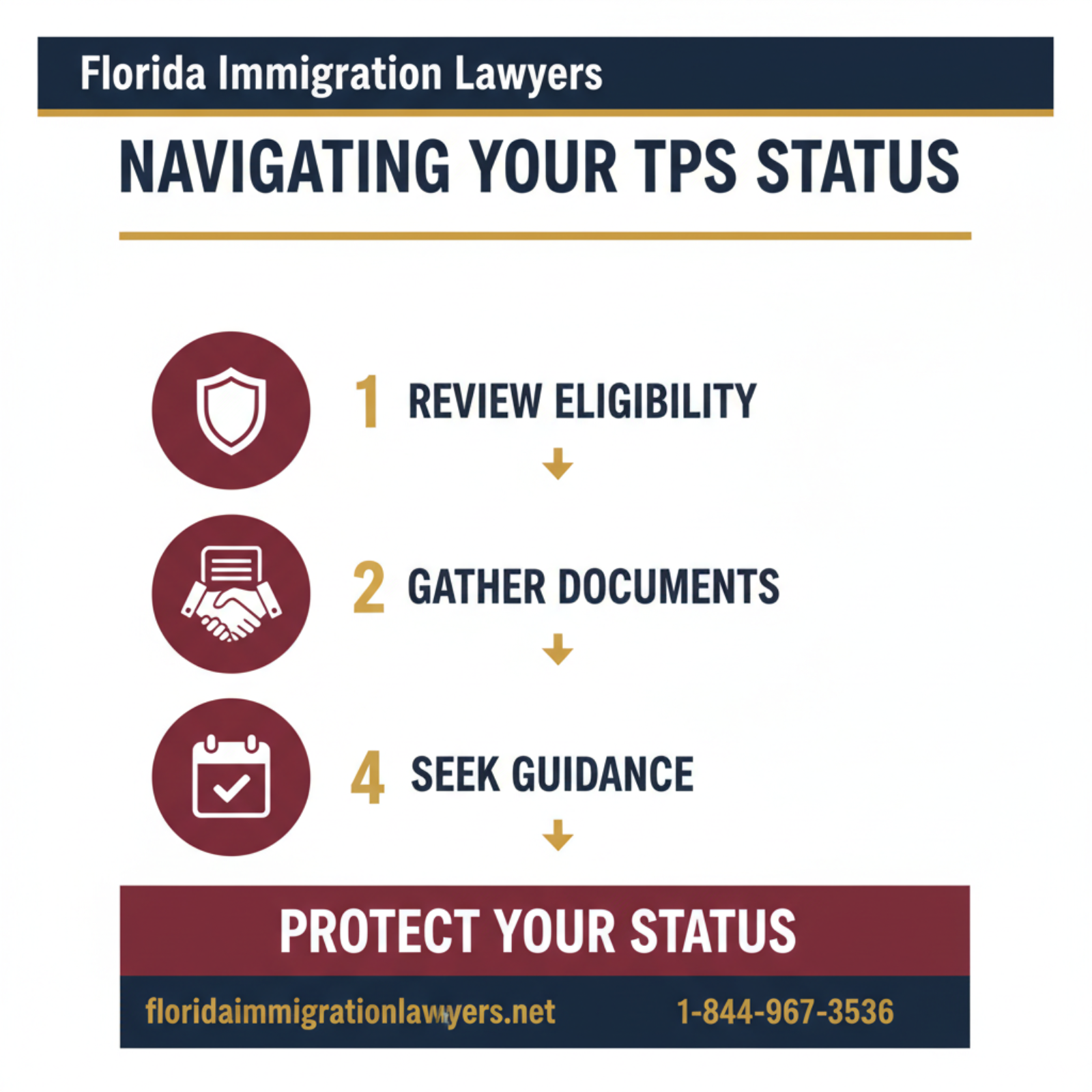
Step-by-Step Process Guide - Marriage Certificate/Birth Certificates (if applicable):
- If you are applying for TPS for a spouse or child, or if your name has changed due to marriage, include relevant certificates with certified translations.
- Criminal History Documentation (if applicable):
- If you have any arrests or convictions, even if they were dismissed or expunged, you must disclose them and provide certified court disposition documents. Failure to disclose can lead to severe consequences.
Organizing these documents beforehand will significantly reduce stress and potential delays during the re-registration process. Florida Immigration Lawyers can help you review your documentation and ensure everything is in order.
TPS Honduras 2026 Timeline and Processing Expectations
The timeline for TPS Honduras 2026 and beyond remains largely dependent on the resolution of ongoing litigation and any subsequent actions by DHS. Historically, TPS designations are made for periods of 6, 12, or 18 months and are subject to renewal. However, the current situation for Honduras is unique due to the federal court injunctions.
As of early 2026, the automatic extensions for Honduran TPS beneficiaries and their EADs are tied to these court orders. USCIS has issued Federal Register notices extending the validity of TPS-related documentation for beneficiaries under the Ramos and Garza lawsuits. These extensions typically last until a specified date, which is then updated as the litigation progresses or new decisions are made.
For example, a recent Federal Register notice might extend the validity of certain TPS documents for Honduras through June 30, 2024, or later. This means that even if your EAD has an expiration date prior to this, it remains valid for employment and as proof of identity. Employers in Florida and across the U.S. are instructed to accept these automatically extended documents.
When a re-registration period is announced, USCIS typically provides a 60-day window for beneficiaries to submit their applications. Processing times for Form I-821 and Form I-765 can vary significantly, ranging from a few months to over a year, depending on the volume of applications and the specific USCIS service center handling your case. You can check the average processing times on the USCIS website for the specific form and service center.
It is important to remember that filing your re-registration application early within the designated window is always advisable. This helps avoid last-minute issues and ensures continuous work authorization. If your EAD expires before your new one is issued, the automatic extension provisions should cover the gap, but having a new card is always preferable.
For those living in Florida, staying connected with our firm, Florida Immigration Lawyers, can provide you with timely updates and guidance as these complex legal and administrative timelines evolve. We understand the importance of knowing what to expect and when.
Understanding Cost Factors and Fee Breakdown for TPS Applications
The costs associated with renewing your TPS status, including for TPS Honduras 2026, can vary depending on several factors. It is crucial to budget for these expenses to ensure a smooth application process. Please note that USCIS fees are subject to change, and you should always verify the most current fees on the official USCIS website before filing.
USCIS Filing Fees:
- Form I-821, Application for Temporary Protected Status: There is typically no fee for filing Form I-821 for re-registration.
- Form I-765, Application for Employment Authorization: A fee is required for this form if you are requesting an EAD.
- Biometrics Services Fee: A separate fee is required for biometrics collection (fingerprints and photograph). This fee is usually mandatory for all applicants unless a fee waiver is granted.
Fee Waivers:
If you cannot afford the USCIS filing fees, you may be eligible for a fee waiver. To request a fee waiver, you must file Form I-912, Request for Fee Waiver, along with supporting documentation demonstrating your financial inability to pay. USCIS reviews these requests on a case-by-case basis. Our team can help you determine your eligibility and prepare a strong fee waiver application.
Additional Potential Costs:
- Legal Fees: Hiring an experienced immigration attorney, like those at Florida Immigration Lawyers, incurs legal fees. These fees cover professional guidance, preparation of forms, review of documents, and representation. While an upfront cost, legal fees can save you significant time, stress, and potential problems down the line by ensuring your application is accurate and complete.
- Document Translation Fees: If any of your supporting documents are not in English, they must be accompanied by a certified English translation. Translation services will incur additional costs.
- Photographs: You will need to obtain passport-style photographs meeting USCIS specifications.
- Postage and Mailing: Costs associated with mailing your application package to USCIS, especially if you opt for certified mail or courier services for tracking.
Understanding these potential costs upfront allows you to plan effectively. While it may seem daunting, the investment in ensuring your TPS status is secure is invaluable. Our firm is transparent about our fee structure and can discuss payment options during your free consultation.
Do not navigate this process alone. The complexities of TPS Honduras 2026 and immigration law can be overwhelming. Contact Florida Immigration Lawyers today to ensure your application is handled with expertise and care.
Common Mistakes to Avoid During TPS Honduras Renewal
Renewing your TPS status can be a straightforward process if done correctly, but even minor errors can lead to significant delays or even denial. For TPS Honduras 2026 and any future re-registration, avoid these common pitfalls:
-
Missing the Re-registration Deadline:
Consequence: Failing to file within the specified re-registration window, typically 60 days, can result in the loss of your TPS status. This can put you at risk of deportation and make you ineligible for future TPS benefits. Always mark your calendar and aim to file well before the deadline.
-
Incomplete or Inaccurate Forms:
Consequence: Submitting forms with blank fields, incorrect information, or unanswered questions will lead to USCIS rejecting your application or issuing a Request for Evidence (RFE). This causes significant delays and adds stress to the process. Double-check every entry.
-
Failing to Disclose Criminal History:
Consequence: Even minor arrests, dismissed charges, or expunged records must be disclosed on your application. Failing to do so can be considered misrepresentation, leading to denial of your TPS and potentially other severe immigration consequences, including deportation proceedings. Always provide certified court dispositions.
-
Not Submitting Required Biometrics:
Consequence: Skipping your biometrics appointment or failing to reschedule it can lead to the denial of your application. Biometrics are a mandatory part of the security checks. Ensure you attend your appointment at the designated Application Support Center (ASC) in Florida.
-
Leaving the U.S. Without Advance Parole:
Consequence: Traveling outside the U.S. without obtaining advance parole (Form I-131) can automatically terminate your TPS status upon your return. This is a critical mistake that can have irreversible consequences. Always consult an attorney before any international travel.
-
Not Updating Your Address with USCIS:
Consequence: If USCIS sends notices or RFEs to an old address, you may miss critical deadlines or information. This can lead to your application being denied without your knowledge. File Form AR-11, Alien's Change of Address Card, within 10 days of any move.
-
Providing Inconsistent Information:
Consequence: Discrepancies between your current application and previous immigration filings (e.g., initial TPS application, asylum claims, visa applications) can raise red flags for USCIS. Ensure all information is consistent and truthful, or provide clear explanations for any changes.
-
Failing to Respond to RFEs on Time:
Consequence: If USCIS sends a Request for Evidence, it means they need more information to process your application. Failing to respond by the deadline, or providing insufficient evidence, will likely lead to a denial. Address RFEs thoroughly and promptly.
-
Assuming Automatic Extension Without Verification:
Consequence: While automatic extensions for EADs exist due to litigation, you must verify the specific dates and conditions. Relying on outdated information can put your employment and status at risk. Always refer to the latest Federal Register notices and USCIS announcements.
-
Not Seeking Legal Counsel for Complex Cases:
Consequence: If you have any criminal history, prior immigration violations, or complex eligibility questions, attempting to navigate the process alone can lead to severe errors. An experienced immigration lawyer in Florida can identify potential issues and strategize the best approach.
When to Call a Lawyer for TPS Honduras in Florida
Navigating the intricacies of Temporary Protected Status, especially with the ongoing legal challenges for TPS Honduras 2026, can be daunting. While some re-registration cases are straightforward, many situations warrant the expertise of a seasoned immigration attorney. Florida Immigration Lawyers are here to provide the guidance and representation you need.
You should strongly consider contacting our firm if any of the following scenarios apply to you:
- You Have a Criminal Record: Any arrest or conviction, no matter how minor or old, can jeopardize your TPS eligibility. An attorney can assess the impact of your criminal history and advise on the best course of action, potentially including waivers or explaining the disposition.
- You Have Prior Immigration Violations: If you have previously overstayed a visa, entered without inspection, or had any prior deportation proceedings, these issues can complicate your TPS application. Our lawyers can help address these complexities.
- You are Unsure About Your Eligibility: If you have questions about your continuous physical presence, continuous residence, or other eligibility criteria, an attorney can review your specific circumstances and determine if you meet the requirements.
- Your Application Was Denied or You Received an RFE: If USCIS has denied your previous TPS application or issued a Request for Evidence, our attorneys can help you understand the reasons for the denial and assist in filing an appeal or responding effectively to the RFE.
- You Plan to Travel Internationally: Traveling outside the U.S. requires advance parole for TPS holders. Our team can guide you through the process of applying for advance parole to ensure your safe return and maintenance of status.
- You Have Concerns About the Future of TPS Honduras 2026: The dynamic nature of TPS for Honduras means constant changes. We stay updated on all legal developments and USCIS announcements, providing you with the most current and accurate advice.
- You Are Considering Other Immigration Options: TPS is a temporary status. Our attorneys can explore pathways to permanent residency or other visa options, such as family-based immigration or asylum, that may be available to you.
- You Need Assistance with Deportation Defense: If you are facing deportation proceedings, securing TPS can sometimes offer protection. Our firm provides robust deportation defense services.
Choosing Florida Immigration Lawyers means partnering with a team that is not only highly experienced in immigration law but also deeply empathetic to your situation. We serve clients across all of Florida, including Homestead, Miami, Orlando, Tampa, and Jacksonville. Let us be your advocate.
About Florida Immigration Lawyers
Florida Immigration Lawyers is a premier immigration law firm dedicated to serving the diverse immigrant communities across the entire state of Florida. With years of specialized experience, our attorneys are passionate advocates committed to providing exceptional legal representation and personalized service.
We understand that immigration matters are deeply personal and often life-changing. Our firm handles a comprehensive range of immigration services, including Temporary Protected Status (TPS), citizenship applications, family-based visas, business immigration, asylum, deportation defense, and more. We pride ourselves on our client-focused approach, ensuring you feel heard, understood, and confidently represented.
Why choose Florida Immigration Lawyers? We offer free consultations, are available 24/7 to address your urgent needs, and provide bilingual services (Se Habla Español) to ensure clear communication. Our profound knowledge of both federal immigration law and Florida-specific contexts allows us to offer strategic and effective solutions for your unique situation. We are your trusted partners in navigating the complexities of U.S. immigration law.
Visit our website at https://www.floridaimmigrationlawyers.net or call us directly at 1-844-967-3536 to learn how our dedicated attorneys can assist you.
Sources and References
- U.S. Citizenship and Immigration Services (USCIS) - TPS Honduras
- U.S. Citizenship and Immigration Services (USCIS) Policy Manual - TPS
- Executive Office for Immigration Review (EOIR)
- 8 U.S.C. § 1254a - Immigration and Nationality Act, Section 244 (Temporary Protected Status)
- 8 CFR Part 244 - Regulations for Temporary Protected Status
- Ramos v. Mayorkas, 336 F. Supp. 3d 1113 (N.D. Cal. 2018)
- Garza v. Mayorkas, No. 19-CV-00839 (N.D. Cal.)
This article provides general legal information and is not intended as legal advice. Every case is unique, and outcomes depend on specific facts and circumstances. Contact an attorney for advice about your particular situation.
Don't face the complexities of TPS Honduras 2026 alone. The future of your status and your ability to live and work in Florida are too important to leave to chance. Our experienced immigration lawyers are ready to provide the compassionate and effective legal assistance you deserve.
Call Florida Immigration Lawyers at 1-844-967-3536 for a free consultation today. Se Habla Español - Estamos aquí para ayudarle.
Florida Immigration Lawyers
Legal Team
Our experienced attorneys at Florida Immigration Lawyers have been serving clients across Florida for over 20 years. We specialize in immigration, personal injury, criminal defense, workers compensation, and family law.