Supreme Court TPS Venezuela: Your Florida Guide to Legal Aid
For Venezuelan nationals in Florida, understanding Temporary Protected Status (TPS) is crucial. Recent discussions surrounding Supreme Court TPS Venezuela decisions have created uncertainty. This guide from Florida Immigration Lawyers provides comprehensive information on eligibility, the application process, required documents, and critical timelines. We explain the role of the Supreme Court in the broader TPS landscape and address common concerns, including the path to a green card and deportation risks. Learn how to navigate the complexities and avoid common mistakes to protect your temporary legal status. Contact us for expert legal assistance and a free consultation.

The landscape surrounding Temporary Protected Status (TPS) for Venezuelans, particularly in Florida, is continuously evolving, influenced by administrative actions and potential judicial reviews. While there hasn't been a direct Supreme Court ruling specifically terminating Venezuela's TPS designation, past court decisions concerning other TPS countries have created significant apprehension. Understanding your eligibility and the re-registration process is critical to maintaining lawful status and avoiding potential deportation risks in the U.S.
- Venezuelan TPS status is subject to ongoing review and potential legal challenges.
- Re-registration deadlines are crucial; missing them can lead to loss of status.
- TPS does not directly lead to a green card but offers temporary protection.
- Consulting an immigration lawyer is vital for navigating complex eligibility or court-related concerns.
- Florida has a large Venezuelan population, making local legal expertise essential.
Are you a Venezuelan national living in Florida, uncertain about the future of your Temporary Protected Status (TPS) amid evolving immigration policies and judicial discussions? The legal landscape surrounding TPS, especially for Venezuelans, can feel like a labyrinth, leaving many in our community anxious and seeking clarity. With a significant Venezuelan population across Florida, from Pembroke Pines to Orlando, understanding the nuances of your status is paramount.
This comprehensive guide from Florida Immigration Lawyers aims to demystify the complexities surrounding Supreme Court TPS Venezuela related discussions, offering crucial insights into eligibility, the application process, and how to protect your temporary legal status. We will cover everything from understanding the current designation to anticipating processing times and avoiding common pitfalls. For immediate guidance on your specific situation, do not hesitate to call Florida Immigration Lawyers at 1-844-967-3536 for a free consultation.
Understanding Temporary Protected Status (TPS) and Venezuela
Temporary Protected Status (TPS) is a humanitarian immigration benefit provided by the United States government to eligible nationals of designated countries. It offers temporary protection from deportation and the ability to obtain work authorization. The authority to designate a country for TPS rests with the Secretary of Homeland Security, as outlined in Section 244 of the Immigration and Nationality Act (INA).
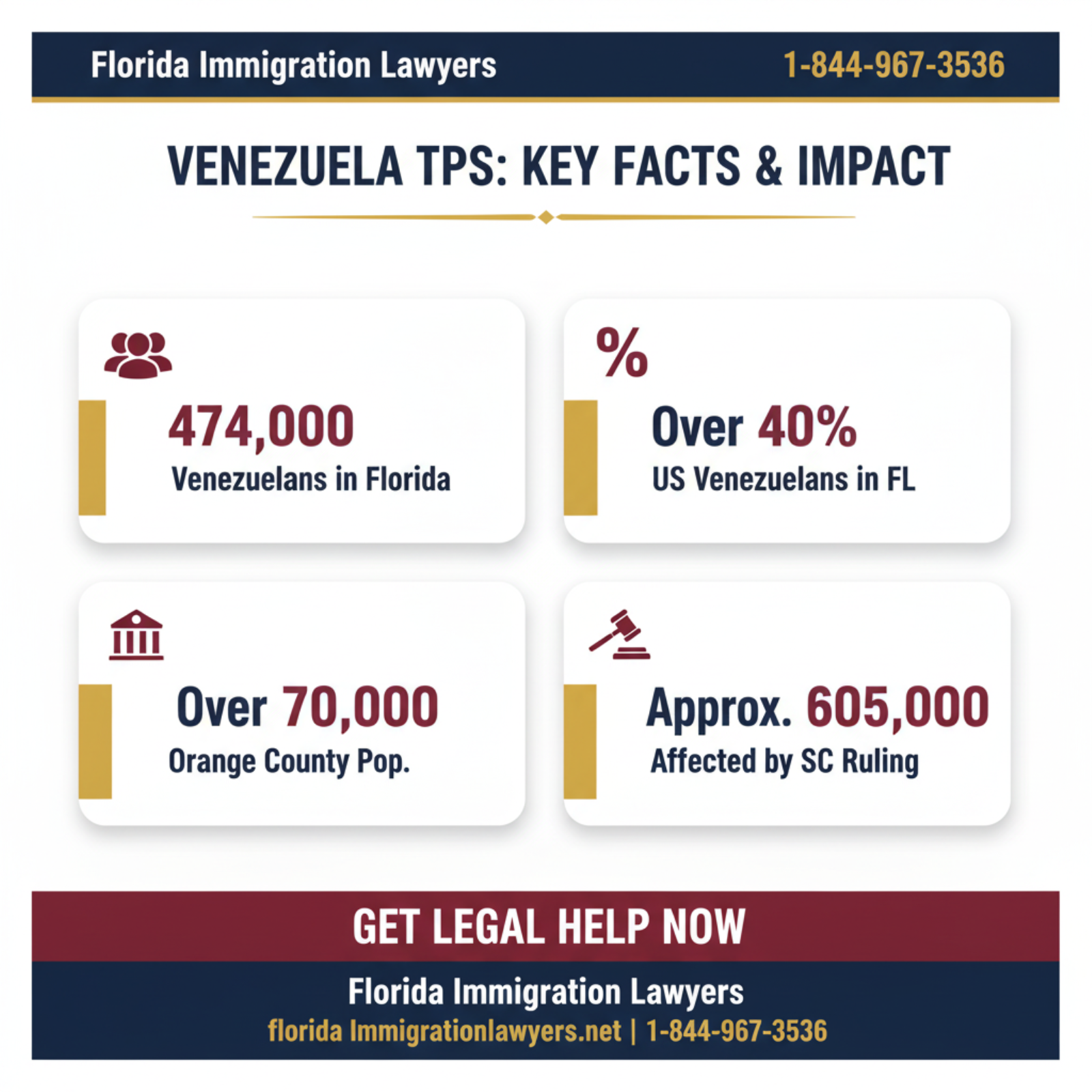
Venezuela was initially designated for TPS on March 8, 2021, due to extraordinary and temporary conditions preventing nationals from safely returning. This designation has since been extended and re-designated, reflecting the ongoing instability and humanitarian crisis within the country. For thousands of Venezuelans residing in Florida, TPS has been a lifeline, offering a measure of security and stability.
To be eligible for TPS, individuals must meet specific criteria, including continuous physical presence in the U.S. since a specified date and continuous residence in the U.S. since another designated date. They must also not have committed certain crimes or be subject to specific grounds of inadmissibility. The rules are strict and require careful attention to detail.
The Supreme Court's Role and Recent Developments for Venezuelan TPS Holders
While the Supreme Court has not issued a direct ruling *terminating* TPS specifically for Venezuela, its past decisions and discussions concerning other TPS designations have created a climate of uncertainty. For instance, cases like Ramos v. Mayorkas (formerly Ramos v. Nielsen), though not directly about Venezuela, addressed the legality of previous administrations' attempts to terminate TPS for other countries. These legal battles highlight the potential for judicial review to impact the future of TPS designations.
The Supreme Court typically examines whether executive branch actions adhere to statutory authority and constitutional principles. Any major ruling affecting the Secretary of Homeland Security's power to designate or terminate TPS could have broad implications for all TPS beneficiaries, including Venezuelans in Florida. This is why staying informed about the broader legal landscape is crucial for anyone holding TPS.
For Venezuelan TPS holders, the ongoing political and humanitarian situation in Venezuela remains the primary factor for designation and extension decisions by the Department of Homeland Security (DHS). However, the legal environment in the U.S., including potential challenges at the Supreme Court level, adds another layer of complexity. Our firm closely monitors these developments to provide the most current advice to our clients.
Navigating the TPS Re-registration and Application Process in Florida
The process for applying for or re-registering for TPS can be intricate, but following a structured approach can help ensure success. For many Venezuelans in Florida, particularly those in areas like Pembroke Pines, Miami, and Orlando, understanding these steps is vital to maintaining their protected status.
-
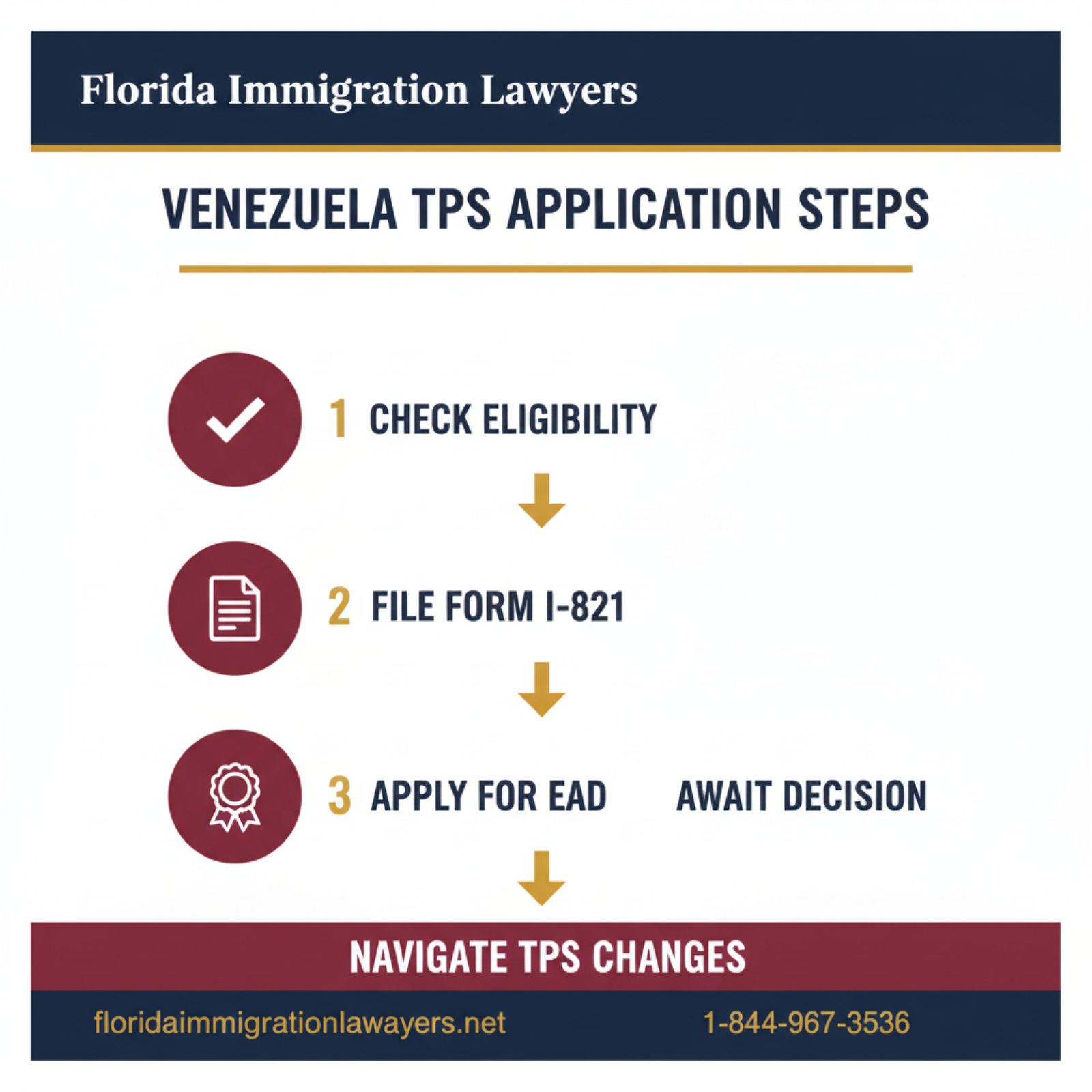
Determine Your Eligibility
First, confirm you meet the specific requirements for Venezuelan TPS. This includes continuous physical presence (CPP) and continuous residence (CR) in the U.S. since the most recent designation date. You must also pass security checks and not be inadmissible under certain grounds, such as for felony convictions or two or more misdemeanors.
-
Gather All Required Documents
Collect all necessary identity, nationality, and residency documents. This step is critical, as incomplete applications are a leading cause of delays or denials. We will provide a detailed checklist shortly to assist you.
-
Complete and File Form I-821, Application for Temporary Protected Status
This is the primary form for TPS. Fill it out accurately and completely. Any discrepancies or errors can cause significant issues. Remember to sign all forms.
-
File Form I-765, Application for Employment Authorization (Optional but Recommended)
If you wish to work legally in the U.S., you must file Form I-765. This application allows you to receive an Employment Authorization Document (EAD). Many individuals file this concurrently with Form I-821.
Step-by-Step Process Guide -
Submit Biometrics
After filing, USCIS will send you an appointment notice for biometrics collection at an Application Support Center (ASC). In Florida, these centers are located in cities such as Miami, Orlando, and Tampa. It is mandatory to attend this appointment, as your fingerprints and photo are crucial for background checks.
-
Respond to Requests for Evidence (RFEs)
USCIS may send an RFE if they need additional information or clarification. Respond promptly and thoroughly to avoid delays or potential denial. This is often where legal counsel becomes invaluable.
-
Receive a Decision
Once USCIS reviews your application and all supporting documents, you will receive a decision. This could be an approval, a request for more information, or a denial. An approval means your TPS is granted or extended, and your EAD will be issued.
Essential Documents for Your TPS Application or Re-registration
Having a complete set of documents is paramount for a successful TPS application or re-registration. Missing or incorrect documentation can lead to delays or even denial of your application. Ensure you have all original documents ready, along with clear copies for submission.
- Proof of Identity and Nationality:
- Passport from Venezuela or birth certificate with photo identification.
- National identity document from Venezuela with photo and/or fingerprint.
- Any other national identity document from Venezuela.
- Proof of Entry into the United States:
- Form I-94, Arrival/Departure Record.
- Entry stamps in your passport.
- Other official travel records.
- Proof of Continuous Residence in the U.S. (CR):
- Employment records (pay stubs, W-2 forms, letters from employers).
- Rent receipts, utility bills, or mortgage statements.
- School records (transcripts, report cards, letters from schools).
- Medical records (hospital or doctor records).
- Bank statements, credit card statements.
- Affidavits from friends, relatives, or employers attesting to your residence.
- Any other dated receipts, letters, or documents showing you were in the U.S.
- Proof of Continuous Physical Presence in the U.S. (CPP):
- Similar documents as for CR, specifically showing your presence on key dates specified in the TPS designation.
- Records of any departures from the U.S. and re-entry if applicable.
- Two Passport-Style Photos: Ensure these are recent and meet USCIS specifications.
- Court and Police Records (if applicable): If you have any arrests or criminal convictions, you must provide certified copies of all court dispositions and police records, even if charges were dismissed or expunged.
Timeline, Processing Expectations, and Cost Factors for TPS
Understanding the timeline and potential costs involved in your TPS application or re-registration is crucial for planning. While USCIS strives for efficiency, processing times can vary significantly based on caseload, policy changes, and the completeness of your application.
Understanding USCIS Processing Times
USCIS processing times for Form I-821 and Form I-765 can range from several months to over a year. You can check current processing times on the USCIS website for the service center handling your application. Factors that can influence your wait time include the volume of applications, the complexity of your case, and how quickly you respond to any Requests for Evidence. It is always wise to apply or re-register as early as possible within the designated window.
For those in Florida, applications are typically processed by specific USCIS service centers, which can have varying backlogs. Keep copies of everything you submit and track your application status online using the receipt number provided by USCIS. Delays are common, but consistent follow-up, often best handled by an attorney, can sometimes expedite resolution.
Financial Considerations for TPS Applicants
Applying for TPS involves several fees, which are subject to change by USCIS. It is important to consult the most current fee schedule on the USCIS website (uscis.gov/forms/our-fees). Generally, fees may include:
- Form I-821, Application for Temporary Protected Status: A filing fee may be required for initial applications, though often waived for re-registrations.
- Form I-765, Application for Employment Authorization: A filing fee is typically required for this form.
- Biometrics Services Fee: This fee covers the cost of fingerprinting and background checks. This fee is mandatory unless a fee waiver is granted.
It is important to note that USCIS offers fee waivers for certain low-income individuals. If you believe you are eligible, you can submit Form I-912, Request for Fee Waiver. However, submitting a fee waiver request can sometimes add to processing time. Always verify current fee amounts before submitting your application.
Do not navigate this complex process alone. The stakes are too high. Contact Florida Immigration Lawyers today for professional guidance and peace of mind. We are here to help you understand your options and secure your future.
Common Mistakes to Avoid When Applying for TPS
The TPS application process is fraught with potential pitfalls that can lead to delays, denials, or even more severe immigration consequences. Being aware of these common mistakes can significantly improve your chances of a successful outcome.
-
Missing Application or Re-registration Deadlines
Consequence: Failing to file within the specified registration or re-registration period is one of the most common reasons for denial. Unless there are exceptional circumstances, you will lose your eligibility for TPS.
-
Submitting Incomplete or Incorrect Forms
Consequence: USCIS will often reject applications with missing information or incorrect formatting. This wastes time and money, requiring you to resubmit and potentially miss deadlines.
-
Providing Insufficient Supporting Evidence
Consequence: Not providing enough proof of identity, nationality, continuous residence, or continuous physical presence will lead to a Request for Evidence (RFE) or a denial. Strong, clear evidence is crucial.
-
Failing to Disclose All Criminal History
Consequence: Omitting or misrepresenting any criminal record, no matter how minor, can be considered immigration fraud. This can lead to a denial of TPS and potentially render you inadmissible to the U.S. indefinitely.
-
Not Attending Biometrics Appointments
Consequence: The biometrics appointment is mandatory for background checks. Missing it without rescheduling can lead to your application being considered abandoned and subsequently denied.
-
Traveling Outside the U.S. Without Permission
Consequence: Leaving the U.S. without first obtaining a travel authorization (Form I-131, Advance Parole) can result in an automatic denial of your TPS application upon re-entry and may trigger inadmissibility issues.
-
Assuming Automatic Re-registration
Consequence: While TPS designations are often extended, re-registration is almost never automatic. You must actively re-register within each designated period to maintain your status.
-
Filing Incorrect Fee Amounts or Forgetting Fee Waivers
Consequence: Submitting the wrong fee amount, or forgetting to include a valid fee waiver request, will cause your application to be rejected. Always check the latest USCIS fee schedule.
-
Not Seeking Legal Counsel for Complex Cases
Consequence: If you have a criminal record, prior immigration violations, or gaps in your residency, attempting to navigate TPS without an attorney can lead to irreversible negative outcomes.
-
Miscalculating Continuous Residence or Physical Presence
Consequence: Incorrectly determining your eligibility dates can lead to a denial. These calculations can be complex, especially if you have had multiple entries or exits.
When to Call a Florida Immigration Lawyer for TPS Assistance
While some TPS applications may seem straightforward, the intricacies of immigration law, combined with the dynamic nature of judicial review and administrative policy, often necessitate professional legal guidance. Florida Immigration Lawyers are here to help you navigate these challenges.
You should consider contacting our firm if you:
- Have questions about your eligibility for TPS, especially if your situation is not typical.
- Have a criminal record, even minor offenses, which could impact your TPS eligibility or lead to inadmissibility.
- Have previously been denied TPS or another immigration benefit.
- Are concerned about the implications of a Supreme Court ruling or a change in TPS policy.
- Have received a Request for Evidence (RFE) from USCIS and are unsure how to respond adequately.
- Are facing deportation proceedings and need robust deportation defense while also seeking TPS.
- Need help understanding the process for obtaining work authorization or travel documents while on TPS.
- Are exploring pathways beyond TPS, such as family-based immigration or asylum, and how TPS might affect those applications.
- Require assistance with citizenship applications once you become eligible.
Our experienced attorneys at Florida Immigration Lawyers understand the unique challenges faced by Venezuelan nationals. We are committed to providing personalized and effective legal strategies. Our goal is to protect your rights and help you secure your future in Florida.
About Florida Immigration Lawyers
Florida Immigration Lawyers is a premier immigration law firm dedicated to serving individuals and families across the entire state of Florida. With a deep understanding of U.S. immigration law and a compassionate approach, we provide comprehensive legal services to immigrants from all walks of life. Our team is committed to delivering exceptional representation and achieving favorable outcomes for our clients.
We specialize in a wide range of immigration matters, including Temporary Protected Status, asylum, deportation defense, family-based immigration, business immigration, and citizenship. Our firm prides itself on its accessibility and client-focused service, ensuring that you receive the attention and expert advice you deserve.
Why choose Florida Immigration Lawyers? We offer free consultations, are available 24/7 to address your urgent needs, and provide bilingual services to ensure clear communication. Our dedicated team is ready to fight for your rights and guide you through every step of your immigration journey. Visit our website at https://www.floridaimmigrationlawyers.net or call us at 1-844-967-3536 to schedule your free consultation today.
Frequently Asked Questions About TPS Venezuela and the Supreme Court
Navigating the complexities of TPS, especially with the added layer of judicial influence, often leads to many questions. Here, we address some of the most common concerns for Venezuelan TPS holders.
What is the Supreme Court decision on TPS in Venezuela?
As of March 24, 2026, there has not been a specific Supreme Court decision directly *terminating* the TPS designation for Venezuela. However, past Supreme Court rulings concerning the executive branch's authority to terminate TPS for other countries (such as in the Ramos v. Mayorkas case, which ultimately allowed the Biden administration to review and reinstate some TPS designations) have created a precedent and general apprehension. These decisions emphasize the dynamic nature of TPS designations and the importance of vigilance.
Did the Supreme Court allow Trump to deport Venezuelans?
The Supreme Court did not issue a direct ruling allowing the Trump administration to deport Venezuelans under a TPS termination. The most notable related case, Ramos v. Mayorkas, involved a challenge to the Trump administration's termination of TPS for several countries. While an appeals court initially sided with the administration, the Supreme Court ultimately dismissed the case, allowing the Biden administration to review and, in many instances, extend or re-designate TPS for those countries. For Venezuelans, TPS was initially designated by the Biden administration, and subsequent extensions have continued to offer protection, mitigating the immediate threat of deportation related to prior administration policies.
Can Venezuelans with TPS get deported?
Yes, Venezuelans with TPS can still face deportation under certain circumstances. While TPS provides protection from deportation, it is not absolute. Individuals can lose their TPS status and become subject to deportation if they: commit certain crimes, fail to re-register for TPS on time, travel outside the U.S. without advance parole, or if the TPS designation for Venezuela is eventually terminated. It is critical to adhere strictly to all TPS requirements and avoid any actions that could jeopardize your status.
Does TPS lead to a green card in Venezuela?
Generally, TPS does not directly lead to a green card or permanent residency. It is a temporary humanitarian status. However, holding TPS can potentially open pathways to other forms of immigration relief if you meet specific eligibility requirements. For example, if you are eligible for an adjustment of status through a qualifying family petition or employment-based petition, having TPS might provide a basis for applying for a green card from within the U.S., depending on your entry and other factors. Consulting an immigration attorney is essential to explore these complex options.
Sources and References
- U.S. Citizenship and Immigration Services (USCIS)
- Executive Office for Immigration Review (EOIR)
- U.S. Department of State - Visa Bulletin
- 8 U.S.C. § 1254a - Temporary Protected Status (Section 244 of the Immigration and Nationality Act)
- 8 CFR Part 244 - Temporary Protected Status
- USCIS Policy Manual, Volume 7 - Asylum and Withholding of Removal, Part B - Temporary Protected Status
This article provides general legal information and is not intended as legal advice. Every case is unique, and outcomes depend on specific facts and circumstances. Contact an attorney for advice about your particular situation.
The journey through U.S. immigration law can be daunting, but you do not have to face it alone. Whether you are applying for TPS for the first time, re-registering, or seeking clarity on how judicial decisions might impact your status, Florida Immigration Lawyers are here to provide expert, compassionate legal assistance. Protect your future and your family's well-being. Call us today at 1-844-967-3536 to schedule your free consultation. Se Habla Español - Estamos aquí para ayudarle.
Do Not Navigate This Process Alone
Our experienced immigration attorneys are ready to fight for you. Get a free, confidential consultation today.
Se Habla Español
Or leave your details and we’ll call you:
Free Evaluation in 24 Hours
Or talk to us right now

AI voice assistant — available 24/7
FreeFrequently Asked Questions

William J. Vásquez
Founding Attorney · Vasquez Law Firm
U.S. Air Force veteran and immigration attorney with years of hands-on U.S. immigration experience. J.D., NCCU School of Law. AILA member. Admitted to the 4th, 5th, and 11th Circuit Courts.
Available 24/7 - Free Evaluations
Reviewed for legal accuracy by William J. Vásquez
Licensed in North Carolina; U.S. immigration is federal practice.
Related Legal Services
Our Florida immigration attorneys can help you with asylum protection, deportation defense and citizenship and naturalization. Call today at 1-844-967-3536 for a free consultation.
Related Links
Related Topics
Free Legal Consultation
Discuss your case with our experienced attorneys. We're available 24/7.
Se Habla Español - Estamos aquí para ayudarle.
Related Articles
BIA Remand Order: Your 2026 Guide in Florida
A BIA remand order means the Board of Immigration Appeals has sent your immigration case back to an Immigration Judge for further review. This crucial development requires immediate and strategic action, as it indicates a need to address legal errors, consider new evidence, or develop the factual record. For individuals in Florida, navigating a BIA remand can be complex, involving new hearings, strict deadlines, and the potential need for updated documentation. Understanding the reasons for the remand, preparing comprehensive evidence, and securing experienced legal representation are vital steps to achieving a favorable outcome. This guide explains the process, potential outcomes, and common mistakes to avoid in 2026, emphasizing the importance of professional legal assistance from Florida Immigration Lawyers.
I-360 Widow Petition: Guide for Surviving Spouses
For non-citizen surviving spouses of U.S. citizens in Florida, the I-360 Widow Petition offers a vital pathway to permanent residency. This self-petition allows eligible individuals to apply for a green card independently, without requiring another sponsor. You must generally file within two years of your spouse's death, prove a bona fide marriage, and ensure you have not remarried. As of 2026, understanding the strict eligibility criteria, detailed filing process, and potential costs is crucial. Florida Immigration Lawyers provides expert guidance, helping you gather necessary documentation, navigate USCIS requirements, and address any complexities, ensuring your application is strong and complete for a secure future in Florida.
Immigration Lawyer Orlando Free Consultation in 2026
Navigating U.S. immigration law in Orlando, Lakeland, and Polk County requires expert legal guidance. Florida Immigration Lawyers offers a free consultation to help you understand your options for visas, Green Cards, citizenship, or deportation defense. This comprehensive guide covers the typical process, essential documents, processing timelines for 2026, and cost factors associated with an immigration lawyer in Orlando. Learn about common mistakes to avoid and when it's crucial to seek legal assistance. Our firm provides personalized, empathetic, and strategic representation across Central Florida, ensuring you have dedicated support for your immigration journey.
I-140 Premium Processing Timeline in Florida 2026
Expediting an I-140 immigrant petition through premium processing can significantly shorten your wait time for an employment-based green card in Florida. As of 2026, USCIS guarantees a decision within 15 calendar days for eligible EB-1, EB-2, and EB-3 cases, provided Form I-907 and the associated fee are correctly filed. This guide explores the detailed timeline, eligibility requirements, necessary documents, and cost factors involved in I-140 premium processing. We also highlight crucial mistakes to avoid and underscore the importance of professional legal counsel. For employers and skilled workers in West Palm Beach and across Florida, understanding these nuances is key to a successful and timely immigration process. Florida Immigration Lawyers offers expert guidance to navigate these complex procedures effectively.