TPS Venezuela: Supreme Court Ruling's Impact on Florida
The Supreme Court's involvement in Temporary Protected Status (TPS) for Venezuelans, especially concerning potential terminations and extensions into 2026, has created significant uncertainty for thousands in Florida. This comprehensive guide from Florida Immigration Lawyers explores the implications of these rulings, offering a step-by-step approach to understanding your options. We cover eligibility, essential documents, processing timelines with USCIS, and cost factors. Learn about common mistakes to avoid and when to seek expert legal counsel. Our firm, serving St. Petersburg and all of Florida, provides crucial support for those navigating complex immigration challenges. Schedule a free consultation to discuss your specific situation and protect your future.

The Supreme Court's decisions regarding Temporary Protected Status (TPS) for Venezuelans, particularly in 2025-2026, have created significant uncertainty for thousands of immigrants in Florida. While judicial review continues, understanding the specific impact on your status and exploring potential alternative pathways is crucial. Proactive legal consultation is essential to protect your future.
- The Supreme Court's stance on TPS termination has a direct impact on Venezuelan beneficiaries.
- Affected individuals in Florida must carefully review their eligibility and explore alternative immigration options.
- Legal battles often lead to complex, evolving policies and deadlines.
- Consulting an experienced Florida immigration lawyer is vital for personalized guidance.
- Timely action and thorough preparation are key to safeguarding your immigration status.
Supreme Court TPS Venezuela Ruling: Navigating Your Future in Florida for 2026
The landscape of immigration law is constantly shifting, and few areas have experienced as much flux as Temporary Protected Status (TPS). For thousands of Venezuelans living in Florida, the decisions made by the Supreme Court regarding TPS have profound implications for their ability to live and work in the United States. As we look towards 2026, understanding these rulings and their potential impact is more critical than ever.
Many Venezuelan nationals in Florida, particularly in vibrant communities like St. Petersburg, Tampa, and Miami, rely on TPS for stability. The legal battles surrounding TPS termination have caused immense anxiety and confusion. Our goal at Florida Immigration Lawyers is to provide clarity and steadfast support during these challenging times.
This comprehensive guide will explore the Supreme Court's involvement in TPS for Venezuelans, what these rulings mean for you in Florida, and the steps you can take to protect your immigration status. We will delve into eligibility, application processes, potential costs, and common pitfalls to avoid. If you are a Venezuelan national concerned about your TPS status or exploring other immigration options, do not wait. Call Florida Immigration Lawyers at 1-844-967-3536 for a free consultation today. Our experienced team is ready to assist you.
Understanding the Supreme Court TPS Venezuela Decision and Its Implications for Florida
Temporary Protected Status (TPS) is a humanitarian immigration benefit granted by the Secretary of Homeland Security. It allows eligible nationals of designated countries, or stateless individuals who last resided in the designated country, to remain in the U.S. and obtain work authorization when conditions in their home country prevent their safe return. Venezuela was designated for TPS in March 2021, and its status has been extended, most recently through March 10, 2024, and then redesignated and extended through September 10, 2025, allowing many to apply or re-register. However, previous administrations have attempted to terminate TPS for other countries, leading to extensive litigation that has reached the Supreme Court.
The Role of the Supreme Court in TPS Cases
The Supreme Court's involvement in TPS cases often stems from challenges to the Department of Homeland Security's (DHS) decisions to terminate a country's TPS designation. These legal battles frequently center on whether DHS followed proper administrative procedures or acted within its statutory authority, as outlined in 8 U.S.C. § 1254a. In many instances, lower court injunctions have temporarily prevented terminations, but the Supreme Court has sometimes allowed these terminations to proceed while litigation continues, as seen in cases involving other TPS nationalities around 2025.
For Venezuelan TPS holders, a significant concern has been the potential for the Supreme Court to allow the termination of their status, which could lead to increased fear of deportation. While the Supreme Court did not directly block all TPS terminations, its decisions have sometimes cleared the way for previous administration's efforts to end protections for various groups. This creates a precarious situation, and understanding the specific ruling affecting supreme court tps venezuela status is paramount for Florida residents.
Impact on Venezuelan Nationals in Florida
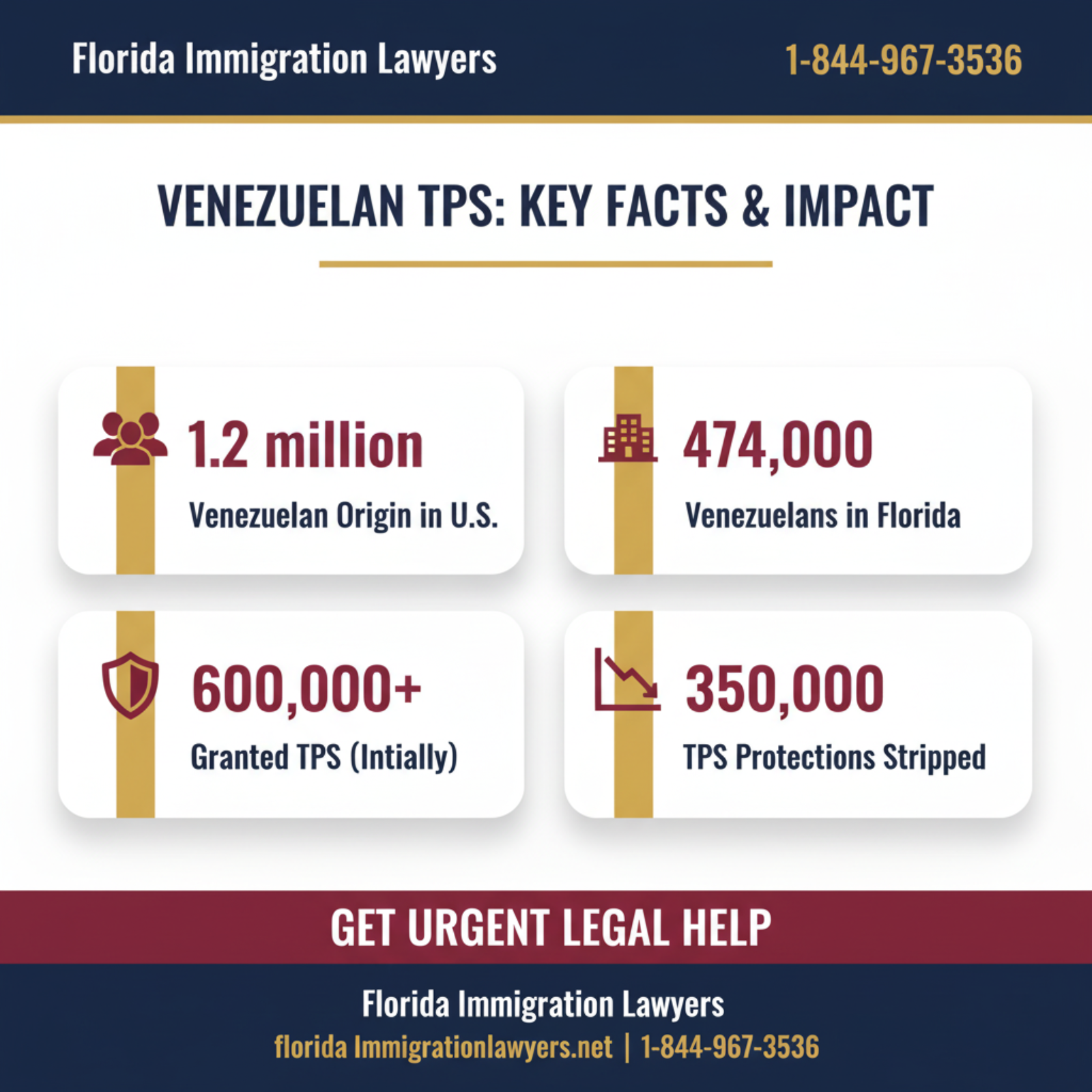
Florida is home to one of the largest Venezuelan immigrant populations in the United States. Many of these individuals have built lives, established families, and contributed significantly to the local economy in St. Petersburg, Orlando, and across the state. A Supreme Court decision that permits the termination of TPS for Venezuelans could have devastating consequences, including loss of work authorization and increased risk of deportation. This is why staying informed and seeking legal guidance is crucial for your future.
The legal challenges surrounding TPS, including those that reached the Supreme Court, highlight the need for beneficiaries to be prepared for various outcomes. Even if a nationwide injunction is in place, individual eligibility issues or future policy changes could still affect your status. Consulting with a knowledgeable Florida immigration lawyer becomes essential to navigate these complexities.
Navigating Your Options After the Supreme Court TPS Venezuela Ruling: A Step-by-Step Guide
The legal landscape for TPS Venezuela beneficiaries in Florida can be complex, especially following any Supreme Court decisions. It is imperative to understand your current status and explore all available immigration avenues. This step-by-step guide outlines general actions you should consider.
- Review Your Current TPS Status and Validity: First, confirm the current expiration date of your TPS designation and work authorization document (EAD). USCIS typically publishes official notices in the Federal Register regarding extensions or redesignations. Ensure your records are up-to-date and reflect any automatic extensions.
- Consult with an Experienced Immigration Attorney: Given the evolving nature of TPS litigation, particularly concerning the supreme court tps venezuela context, a personalized consultation is vital. An attorney can assess your specific situation, explain the implications of any Supreme Court ruling, and identify all potential immigration pathways for which you might be eligible, such as asylum, family-based petitions, or employment-based visas. We encourage you to visit our attorneys page to learn more about our team.
- Gather and Organize All Immigration Documents: Collect all documents related to your TPS application, previous immigration filings, identity, and any criminal history. This includes your I-94, EAD cards, TPS approval notices, birth certificates, marriage certificates, and any court dispositions. A comprehensive collection will expedite any future applications or legal strategies.
- Explore Eligibility for Other Immigration Relief: Do not solely rely on TPS. An attorney can help you determine if you qualify for other forms of relief, such as asylum, a U visa, a T visa, or a family-based green card through a U.S. citizen or lawful permanent resident relative. Early exploration of these options is key, especially if you have a pending deportation defense case.
- Prepare for Potential Changes or Re-registration: Be ready for potential re-registration periods or new application processes. Stay vigilant for official announcements from USCIS. If your TPS is terminated, an attorney can help you understand the timeframe for departure or how to pursue other legal remedies.
- Maintain Valid Identity and Travel Documents: Ensure your passport and other identity documents are current. If you need to travel internationally, obtain an Advance Parole document from USCIS prior to departure to ensure you can lawfully re-enter the U.S. without jeopardizing your status.
Essential Document Checklist for Venezuelan TPS Applicants in Florida
Whether you are applying for TPS for the first time, re-registering, or exploring alternative immigration pathways, having your documents organized is paramount. This checklist will help you prepare for any scenario, especially in light of the evolving status of TPS Venezuela extension 2026 discussions.
- Form I-821, Application for Temporary Protected Status: The primary form for TPS application or re-registration.
- Form I-765, Application for Employment Authorization: Required if you wish to obtain or renew your work permit.
- Form I-601 Application for Waiver of Grounds of Inadmissibility (if applicable): If you have certain inadmissibilities, a waiver might be necessary.
- Proof of Identity and Nationality: A copy of your Venezuelan passport, birth certificate with photo identification, or national identity document.
- Proof of Entry into the U.S. before the designated date: Your I-94 arrival/departure record, airline tickets, or other travel documents.
- Proof of Continuous Residence in the U.S. since the designated date: This can include utility bills, rental agreements, school records, employment records, medical records, bank statements, and sworn affidavits.
- Two Passport-Style Photos: Ensure they meet USCIS specifications.
- Evidence of any previous immigration applications or status: Copies of prior I-485, I-130, I-589, or other forms and approval notices.
- Certified copies of all court dispositions (if arrested or convicted of any crime): Even minor infractions must be disclosed.
- Documentation of any prior immigration court proceedings or orders: This includes Notices to Appear (NTAs) and orders from an Immigration Judge.
Timeline and Processing Expectations for TPS Venezuela Applications with USCIS
The processing times for TPS applications, including those for Venezuelan nationals, can vary significantly. Factors such as the volume of applications, staffing levels at USCIS service centers, and the complexity of individual cases all play a role. Following any major legal ruling, such as a TPS Supreme Court decision, there can be surges in applications or policy adjustments that impact timelines.
Typical Processing Stages for TPS Venezuela USCIS Applications
- Submission and Receipt: Once your application package is mailed, USCIS will typically send a receipt notice (Form I-797C) within a few weeks, confirming they have received your application. This notice is important for tracking your case.
- Biometrics Appointment: Most applicants will receive an appointment notice for a biometrics (fingerprinting) appointment at an Application Support Center (ASC) in Florida. This usually occurs within 1-3 months of submission.
- Case Review and Request for Evidence (RFE): A USCIS officer will review your application. If additional information or documentation is needed, you may receive an RFE. Responding promptly and thoroughly to RFEs is crucial to avoid delays or denials. We often help clients in St. Petersburg and across Florida respond effectively.
- Decision: After review, USCIS will issue a decision. This can be an approval, a denial, or a referral to an immigration judge if there are issues of inadmissibility. Processing times for a final decision can range from several months to over a year, especially if a TPS Venezuela extension 2026 is involved.
- Work Permit (EAD) Issuance: If approved, your Employment Authorization Document will be mailed separately. USCIS has often provided automatic extensions for EADs during re-registration periods, but it is vital to verify the current policy. This is critical for maintaining your ability to work in Florida legally, especially if you rely on a TPS Venezuela work permit.
It is important to regularly check the USCIS website for current processing times and updates. USCIS updates its processing time charts monthly. You can also create an online account to track your case status. However, for the most accurate and personalized information, especially concerning the intricacies of the supreme court tps venezuela context, consulting with Florida Immigration Lawyers is highly recommended.
Cost Factors and Fee Breakdown for TPS Venezuela Petitions
Applying for or re-registering for TPS involves various fees, which are subject to change by USCIS. While we cannot provide exact figures due to their fluctuating nature, understanding the types of costs involved is important for planning. These costs generally include filing fees for the application forms and biometric services fees.
Typical Fees Associated with TPS Applications
- Form I-821, Application for Temporary Protected Status: This form may have a filing fee, or it may be waived for re-registrants in certain circumstances.
- Form I-765, Application for Employment Authorization: There is typically a filing fee for this form, which is necessary for obtaining a work permit.
- Biometrics Services Fee: This fee covers the cost of fingerprinting and background checks. This fee is generally required for all applicants who are 14 years of age or older.
- Attorney Fees: Legal fees for assistance from a qualified immigration attorney will vary based on the complexity of your case and the services required. While an additional cost, investing in legal representation can significantly increase your chances of a successful outcome and help you avoid costly mistakes.
Fee waivers may be available for certain low-income applicants for some forms. You can submit Form I-912, Request for Fee Waiver, with your application if you meet the eligibility criteria. It is crucial to review the latest USCIS guidance on fees and fee waivers before filing your application. Always verify current fees directly on the USCIS website.
Do not navigate this complex process alone. Contact Florida Immigration Lawyers today to discuss your specific situation and explore your best legal path forward. We offer dedicated support to immigrants in St. Petersburg, Florida, and throughout the state.
Common Mistakes to Avoid When Dealing with Supreme Court TPS Venezuela Issues
Navigating TPS regulations, especially in the wake of significant judicial decisions like those from the supreme court tps venezuela context, can be fraught with potential pitfalls. Avoiding these common mistakes can save you time, money, and protect your immigration status.
- Missing Deadlines: Failing to apply or re-register for TPS within the designated window is one of the most common and serious mistakes. Late applications are generally rejected unless you can prove exceptional circumstances, which is a high bar. Always be aware of the official deadlines published by USCIS.
- Submitting Incomplete or Inaccurate Applications: Any missing information, incorrect dates, or insufficient evidence can lead to delays, Requests for Evidence (RFEs), or outright denials. Double-check every field and ensure all required supporting documents are included.
- Failing to Disclose Criminal History: Attempting to hide arrests, charges, or convictions, even minor ones, is a severe error. USCIS conducts thorough background checks. Non-disclosure can lead to a finding of misrepresentation and permanent bars from immigration benefits. Always be truthful and provide certified court dispositions.
- Assuming Automatic Extensions Without Verification: While USCIS sometimes grants automatic extensions for EADs during re-registration periods, you must verify this for your specific situation. Relying on outdated information can lead to unauthorized employment and other serious consequences.
- Traveling Internationally Without Advance Parole: Leaving the U.S. without an approved Form I-131, Application for Travel Document (Advance Parole), can result in being unable to re-enter the country and the automatic termination of your TPS status. This is a critical mistake for TPS holders.
- Not Seeking Legal Counsel for Complex Cases: If you have a criminal record, prior immigration violations, or an unusual situation, attempting to navigate the TPS process alone is risky. An experienced Florida immigration lawyer can identify potential issues and develop a strategy to address them.
- Ignoring Changes in Law or Policy: Immigration law is dynamic. A Supreme Court ruling or a new policy from DHS can significantly alter TPS eligibility or procedures. Staying informed through reliable legal sources and your attorney is crucial.
When to Call a Lawyer Regarding Your TPS Venezuela Status in Florida
While some TPS applications may seem straightforward, the complexities introduced by judicial rulings and evolving policies make legal counsel invaluable. For Venezuelan nationals in Florida, particularly those in St. Petersburg, recognizing when to seek professional help is critical. Florida Immigration Lawyers are here to offer the guidance you need.
Specific Scenarios Requiring Legal Help:
- Uncertainty Regarding the Supreme Court's Decision: If you are unsure how the latest supreme court tps venezuela ruling affects your status or future, an attorney can provide clear, accurate interpretations.
- Prior Denials or Immigration Issues: If you have had a previous TPS application denied, have been placed in deportation defense proceedings, or have any other negative immigration history, legal expertise is essential.
- Criminal Record Concerns: Even minor arrests or convictions can impact your TPS eligibility. An attorney can assess your criminal history and advise on potential waivers or alternative strategies.
- Exploring Alternative Immigration Pathways: If TPS is terminated or you wish to seek a more permanent status, an attorney can help you determine eligibility for family-based immigration, employment-based visas, or citizenship.
- Confusion About Eligibility Requirements: If you are unsure whether you meet the continuous physical presence or continuous residence requirements, or if your travel history complicates your case, a lawyer can clarify.
- Need for a Work Permit (EAD): If you are struggling to obtain or renew your TPS Venezuela work permit, legal intervention can often resolve administrative hurdles.
Do not wait for a crisis to seek legal advice. Proactive engagement with a knowledgeable Florida immigration lawyer can help prevent issues before they arise and ensure you are prepared for any changes in immigration policy or law. Florida Immigration Lawyers offers comprehensive services for all immigration matters.
About Florida Immigration Lawyers
Florida Immigration Lawyers is a leading immigration law firm dedicated to serving individuals and families across the entire state of Florida. With a deep understanding of U.S. immigration laws and policies, we provide compassionate yet aggressive legal representation for a wide range of immigration matters. Our firm is committed to protecting the rights and securing the futures of our clients.
Our Services
We offer comprehensive legal services in areas including, but not limited to, Temporary Protected Status (TPS), asylum claims, deportation defense, family-based visas, business immigration, citizenship and naturalization, and federal litigation. Our goal is to provide tailored solutions that meet the unique needs of each client.
Why Choose Us?
At Florida Immigration Lawyers, we understand the profound impact immigration issues have on your life. Our team of dedicated attorneys provides personalized attention, clear communication, and strategic advocacy. We pride ourselves on our client-focused approach, ensuring that you are informed and supported every step of the way. We are available 24/7 and offer free consultations to help you understand your options.
Contact Florida Immigration Lawyers today:
- Phone: 1-844-967-3536
- Website: https://www.floridaimmigrationlawyers.net
- Serving: All of Florida, including St. Petersburg, Miami, Orlando, and Tampa.
Sources and References
- U.S. Citizenship and Immigration Services (USCIS)
- Executive Office for Immigration Review (EOIR)
- U.S. Department of State
- 8 U.S.C. § 1254a - Temporary Protected Status
- 8 CFR Part 244 - Temporary Protected Status
- Immigration and Nationality Act (INA) sections relevant to TPS eligibility and termination.
This article provides general legal information and is not intended as legal advice. Every case is unique, and outcomes depend on specific facts and circumstances. Immigration laws are subject to frequent change. Contact an attorney for advice about your particular situation.
The decisions from the Supreme Court regarding TPS for Venezuelans will continue to shape the lives of many in Florida. Do not face these challenges alone. Take proactive steps to secure your future by seeking expert legal counsel. Florida Immigration Lawyers are here to provide the dedicated support and representation you need. Our team is ready to guide you through every step of the immigration process.
Protect your future today. Call Florida Immigration Lawyers for a free, confidential consultation: 1-844-967-3536. Se Habla Español - Estamos aquí para ayudarle.
Do Not Navigate This Process Alone
Our experienced immigration attorneys are ready to fight for you. Get a free, confidential consultation today.
Se Habla Español
Frequently Asked Questions
Florida Immigration Lawyers
Immigration Attorney | Founder, Vasquez Law Firm
U.S. Air Force veteran and immigration attorney with thousands of cases resolved. J.D., NCCU School of Law. AILA member. Admitted to the 4th, 5th, and 11th Circuit Courts.
Available 24/7 - Free Evaluations
Related Legal Services
Our Florida immigration attorneys can help you with business immigration, asylum protection and deportation defense. Call today at 1-844-967-3536 for a free consultation.
Related Links
Related Topics
Free Legal Consultation
Discuss your case with our experienced attorneys. We're available 24/7.
Se Habla Español - Estamos aquí para ayudarle.
Related Articles
Expungement Effect on Immigration in Florida | VLF Florida
Discover how expungement impacts immigration in Florida. Learn about eligibility, the process, and potential consequences. Contact Florida Immigration Lawyers at 1-844-967-3536 for a free consultation.
Immigration Services in Kissimmee Florida | VLF Florida
Discover essential immigration services in Kissimmee, Florida. Learn about the resources available for immigrants, including Puerto Rican residents in Osceola County. Contact Florida Immigration Lawyers at 1-844-967-3536 for expert guidance and a free consultation.
Child Status Protection Act (CSPA) Florida: Preventing 'Aging
Understand the Child Status Protection Act (CSPA) in Florida and how it prevents 'aging out' for derivative beneficiaries. Navigate complex immigration laws
I-360 Widow Self-Petition in Florida: A Complete Guide
Learn how to navigate the I-360 widow self-petition process in Florida. This comprehensive guide covers eligibility, documentation, and common mistakes. Call Florida Immigration Lawyers for expert assistance.
