Refugee Resettlement in Florida: Your Guide to a New Beginning
For those seeking refugee resettlement in Florida, understanding the process is key. Our guide covers obtaining refugee status, the resettlement journey, and accessing vital support in cities like Naples. Learn about eligibility, required documents, timelines, and how to avoid common mistakes. Florida Immigration Lawyers offers expert legal assistance for your refugee application and integration. Contact us for a free consultation to ensure a smooth transition and a strong start to your new life.
Refugee status in Florida offers a pathway to safety and integration for individuals fleeing persecution. The process involves referral, USCIS approval, and comprehensive resettlement support designed to help you rebuild your life. Services in Florida, including Naples, assist with housing, employment, and community integration.
- Refugee status is granted to those outside their country facing persecution.
- Resettlement in Florida provides essential support services upon arrival.
- The process involves a referral, USCIS interview, and ultimate approval.
- Benefits include temporary assistance, medical aid, and employment services.
- Legal guidance is crucial for a successful application and smooth integration.
Starting a new life in a foreign land can be overwhelming, especially when fleeing persecution. For those seeking refugee resettlement in Florida, the journey is filled with hope, challenges, and new beginnings. Florida, with its diverse communities and welcoming spirit, has become a significant destination for individuals rebuilding their lives.
This comprehensive guide will walk you through the intricacies of obtaining refugee status in Florida, understanding the refugee resettlement process, and accessing vital support services available across the state, including in Naples and surrounding areas. We will cover eligibility, application steps, available benefits, and common pitfalls to avoid. Our goal is to empower you with the knowledge needed for a successful transition.
If you are considering or pursuing refugee status in Florida, expert legal guidance is invaluable. The complexities of immigration law require seasoned professionals. Call Florida Immigration Lawyers at 1-844-967-3536 for a free consultation today. Our team is dedicated to helping you navigate this complex journey with compassion and expertise.
Understanding Refugee Status and Resettlement in Florida
A refugee is defined under U.S. immigration law as a person located outside of their country of nationality who is unable or unwilling to return to that country because of persecution or a well-founded fear of persecution. This fear must be based on race, religion, nationality, membership in a particular social group, or political opinion, as outlined in the Immigration and Nationality Act (INA) Section 101(a)(42) and 8 U.S.C. § 1101(a)(42). Understanding this definition is the first step in the process.
It is important to differentiate between a refugee and an asylee. While both seek protection from persecution, a refugee applies for status from outside the United States, typically through the U.S. Refugee Admissions Program (USRAP). An asylee, conversely, applies for asylum while already present in the U.S. or at a port of entry. Both pathways offer critical protection, but their procedural requirements differ significantly.
The United Nations High Commissioner for Refugees (UNHCR) often plays a crucial role in identifying individuals for refugee resettlement. While UNHCR does not grant refugee status directly under U.S. law, its referrals are a common entry point into the USRAP. Their assessments help ensure that the most vulnerable individuals are considered for protection.
Florida is one of the top states for refugee resettlement in the United States, welcoming thousands of individuals annually. Cities like Miami, Orlando, Jacksonville, and Tampa, as well as smaller communities such as Naples, have established robust support networks. These networks help new arrivals integrate into American society, providing a foundation for a new beginning. We understand the unique challenges faced by newcomers.
Upon arrival, refugees in Florida are connected with local resettlement agencies. These agencies offer critical initial support, assisting with housing, cultural orientation, and access to essential services. This immediate assistance is vital for a smooth transition and helps refugees begin their journey towards self-sufficiency. U.S. Citizenship and Immigration Services (USCIS) oversees many aspects of the refugee program.
For more detailed information on various immigration pathways, including those for refugees, you can explore our resources on immigration law. Our firm is dedicated to clarifying complex legal concepts for our clients.
The Step-by-Step Refugee Resettlement Process in Florida
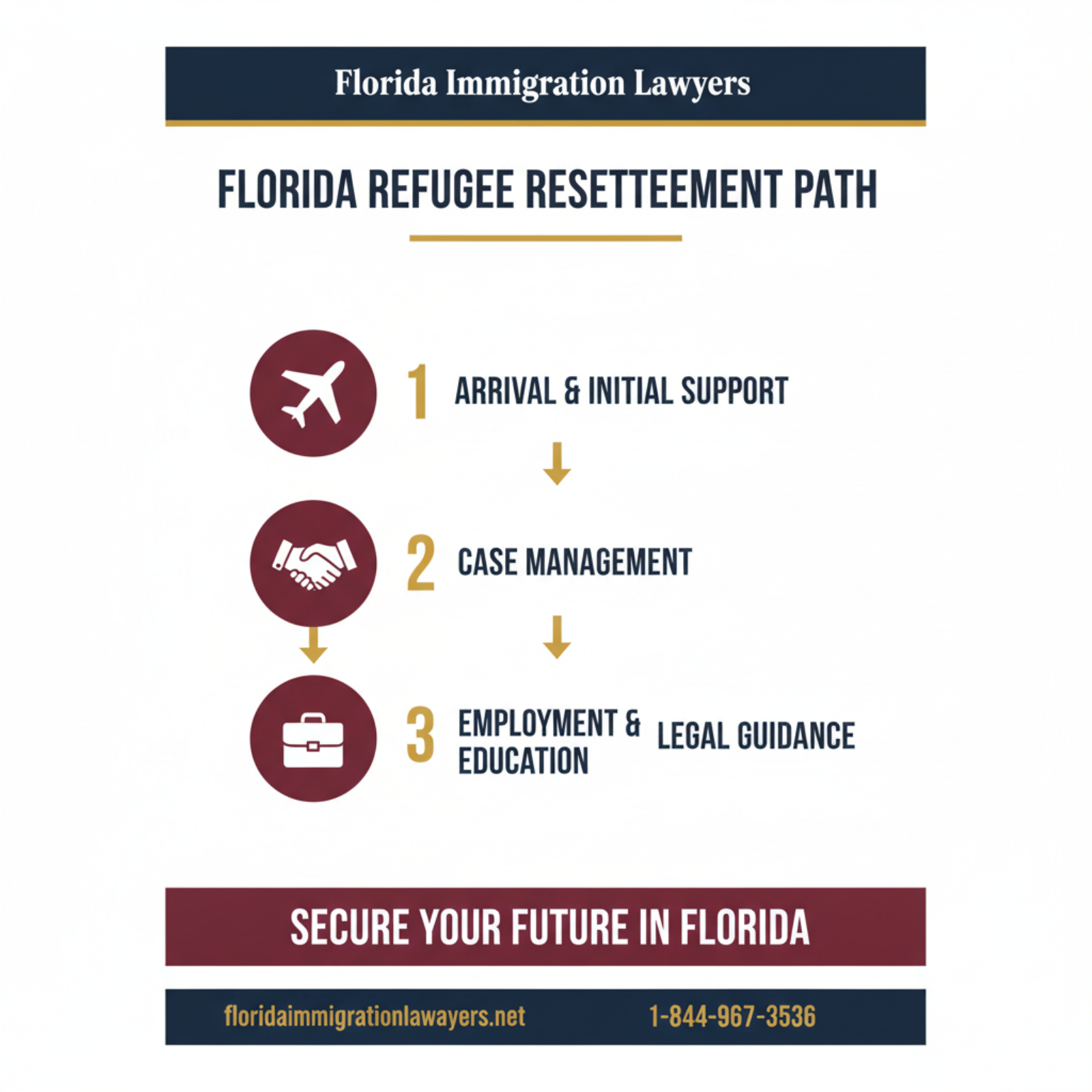
The journey to refugee status and resettlement in Florida is a multi-stage process involving various government agencies and non-governmental organizations. Here is a general outline of what you can expect:
- Referral to the U.S. Refugee Admissions Program (USRAP): Most individuals are referred to the USRAP by the UNHCR, a U.S. Embassy, or a designated non-governmental organization (NGO). Direct application to the USRAP is generally not possible from abroad. This initial referral is a critical first hurdle in the process.
- Interview and Vetting by USCIS: Once referred, your case will be reviewed, and you will typically undergo an interview with a USCIS officer. This interview, often conducted overseas, is crucial for establishing your eligibility as a refugee under U.S. law. Officers will assess your fear of persecution and verify your background.
- Medical Examination and Security Checks: All refugee applicants must undergo a thorough medical examination to ensure they meet U.S. health admissibility standards. Extensive security checks are also conducted by various U.S. government agencies to ensure national security. These checks are comprehensive and can take considerable time.
- Approval and Travel Arrangement: If approved for refugee status, the International Organization for Migration (IOM) typically arranges your travel to the United States. Travel costs are usually covered by the U.S. government or through loans that refugees are expected to repay over time. You will receive an assurance from a U.S. resettlement agency.
- Arrival and Initial Resettlement: Upon arrival in the U.S., you will be met by a representative from a local resettlement agency. In Florida, this could be in cities like Miami, Orlando, or if destined for Southwest Florida, potentially an agency serving Naples. This agency provides immediate essential services, including temporary housing, food, and cultural orientation.
- Post-Arrival Support and Integration: Resettlement agencies continue to provide support for a period, typically 30-90 days, with some services extending longer. This includes assistance with finding permanent housing, enrolling children in school, accessing medical care, and applying for social security cards. They also help with employment services and English language training. These services are vital for long-term success.
The process is governed by regulations such as 8 CFR Part 207, which details the procedures for refugee admission. For more information on the U.S. Refugee Admissions Program, you can visit travel.state.gov. This website provides valuable insights into the broader framework of refugee admission. Our firm can help you navigate this entire refugee resettlement process.
Essential Document Checklist for Refugee Applicants
Preparing the correct documentation is a critical step in the refugee status application process. While the specific documents required can vary based on your individual case and country of origin, here is a general checklist of essential items you should gather and prepare:
- Identity Documents: This includes passports, national identity cards, birth certificates, or any other official documents proving your identity and nationality. Even expired documents can be helpful.
- Proof of Persecution: Any evidence supporting your claim of persecution or well-founded fear of persecution. This could include police reports, medical records detailing injuries, witness statements, news articles, or any official threats received.
- Family Relationship Documents: Marriage certificates, birth certificates of children, or other documents proving your familial ties if you are applying with family members. This helps establish derivative refugee status.
- UNHCR or Other Referral Documents: Any official documents or correspondence from UNHCR or other referring NGOs that initiated your case for the USRAP. These documents are often foundational to your application.
- Medical Records: While a new medical exam will be required, any existing medical records can be useful for providing a comprehensive health history. This can help with continuity of care upon arrival.
- Educational and Employment Records: Diplomas, work certificates, or resumes can assist resettlement agencies in helping you find employment and suitable education opportunities in Florida. These records aid in your integration.
- Travel Documents: Any existing travel documents, even if they are no longer valid, should be presented. These can provide valuable historical information.
It is crucial to provide accurate and consistent information across all your documents. If you have lost documents or cannot obtain them, it is important to explain these circumstances clearly to USCIS. Our legal team can assist you in organizing your documentation and preparing a robust application for refugee status.
Timeline and Processing Expectations for Refugee Status
The timeline for obtaining refugee status and completing the refugee resettlement process can vary significantly. It is rarely a quick process and often involves considerable waiting periods due to the extensive vetting and security checks required by U.S. law. Understanding these expectations can help manage your journey.
Factors influencing the processing speed include your country of origin, the complexity of your case, the volume of applications, and current U.S. government priorities. Initial processing from referral to USCIS interview can take months or even years. The security checks, in particular, are thorough and can contribute to lengthy delays. Patience is truly a virtue in these situations.
Once approved, the travel arrangements and initial resettlement support in Florida typically begin shortly thereafter. Resettlement agencies provide intensive support for the first 30-90 days, helping you establish a new life. This includes securing housing, enrolling in benefits programs, and starting language or job training. Their goal is to foster early self-sufficiency.
After one year of being granted refugee status and physically present in the U.S., you are generally required to apply for adjustment of status to become a lawful permanent resident (Green Card holder). This application is made to USCIS and is a critical step towards long-term stability in the United States, as outlined in INA Section 209. Our firm can guide you through this adjustment process.
Following five years as a Green Card holder, you may then be eligible to apply for U.S. citizenship, further solidifying your future in Florida. This pathway to naturalization is a testament to the U.S. commitment to integrating refugees into the fabric of American society. Learn more about the path to U.S. Citizenship on our website.
Cost Factors and Fee Breakdown in Refugee Cases
One of the most important aspects for individuals seeking protection is understanding the financial implications. Fortunately, there are generally no filing fees associated with the initial application for refugee status through the U.S. Refugee Admissions Program. This policy ensures that financial barriers do not prevent individuals from seeking safety.
Travel costs for approved refugees are typically covered by the International Organization for Migration (IOM) or through loans provided by resettlement agencies. These loans are interest-free and are generally expected to be repaid over time, once the refugee has gained employment and established financial stability. This system allows for immediate relocation without upfront financial burden.
While there are no government fees for the initial application, you may incur costs for legal assistance. Engaging an experienced immigration attorney, like those at Florida Immigration Lawyers, can significantly enhance your chances of a successful application. Our legal fees cover expert guidance, document preparation, and representation, providing invaluable support throughout the complex process. We ensure your case is presented effectively.
Upon arrival in Florida, you will need to manage initial living expenses until you access available support programs. Fortunately, refugee cash assistance Florida programs are available to help bridge this gap. These programs provide temporary financial aid to cover basic needs such as food, shelter, and transportation during your initial weeks and months. Resettlement agencies will help you apply for these benefits. These benefits are critical for a stable start.
Other potential costs could include expenses for obtaining new personal documents if yours were lost, or for specific medical treatments not fully covered by initial health assistance. However, the primary goal of the resettlement program is to minimize the financial burden on new arrivals, ensuring they can focus on rebuilding their lives. Our team can help you understand all potential financial aspects.
The journey to refugee status and resettlement in Florida can be complex and emotionally taxing. Do not navigate this process alone. Our compassionate team at Florida Immigration Lawyers is here to provide dedicated support and legal expertise. Contact us today to ensure your rights are protected and your application is strong.
Common Mistakes to Avoid in the Refugee Process
Navigating the complex path to refugee status and resettlement in Florida can be challenging. Avoiding common pitfalls is crucial for a successful outcome. Here are several mistakes to watch out for, along with their potential consequences:
- Providing Inconsistent Information: Submitting conflicting details in different parts of your application or during interviews can severely damage your credibility. Inconsistencies can lead to skepticism from USCIS officers and may result in denial of your claim.
- Missing Deadlines: The immigration process is strict about deadlines for submitting documents or responding to requests. Missing a deadline can cause significant delays, or even lead to the administrative closure or denial of your case without further review.
- Failing to Disclose All Relevant Facts: Withholding information, even if it seems minor or embarrassing, can be detrimental. U.S. immigration law requires full disclosure, and any discovered omissions can be interpreted as an attempt to mislead, resulting in a denial and potential future immigration bars.
- Not Preparing Adequately for Interviews: Interviews with USCIS or other officials are a critical part of the process. Failing to review your application, recall key dates, or articulate your story clearly can undermine your claim. This lack of preparation can lead to a negative determination.
- Traveling Back to Your Home Country: Returning to the country from which you sought protection can be seen as an indication that you no longer fear persecution. This action can lead to the termination of your refugee status and loss of all associated benefits.
- Not Seeking Legal Counsel: Attempting to navigate the intricate immigration laws and procedures without legal guidance can lead to errors, missed opportunities, and an increased risk of denial. An experienced attorney can provide invaluable support.
- Relying on Unofficial Sources for Information: Obtaining information from unreliable sources can lead to misinformation and incorrect actions. Always consult official government websites or qualified legal professionals for accurate guidance.
- Failing to Understand Post-Arrival Obligations: Once granted refugee status and resettled in Florida, there are obligations, such as applying for a Green Card after one year. Failing to meet these requirements can jeopardize your long-term immigration goals and future stability.
- Not Utilizing Available Refugee Benefits Florida: Many refugees are eligible for various benefits designed to aid their integration. Not applying for or utilizing these services, such as cash assistance or employment programs, can make the resettlement process unnecessarily difficult and prolong financial hardship.
- Misunderstanding the Difference Between Refugee and Asylum Claims: Confusing the specific requirements for refugee status versus asylum can lead to an incorrectly filed application or misrepresentation of your situation. Each path has distinct legal criteria and procedures.
Avoiding these common mistakes can significantly improve your chances of a successful refugee status application and a smoother resettlement in Florida. Always seek clarity and professional advice when in doubt.
When to Call a Lawyer for Refugee Status in Florida
While the U.S. government and resettlement agencies provide support, the legal complexities of obtaining refugee status often necessitate professional legal assistance. Knowing when to engage an attorney can make a crucial difference in your case. Florida Immigration Lawyers are here to help.
You should consider calling a lawyer if you are unsure about your eligibility for refugee status. An attorney can assess your specific circumstances against current immigration laws and provide an honest evaluation of your case. This initial assessment is vital for setting realistic expectations.
If your case involves complex legal issues, such as past immigration violations, criminal history, or if you have received a Request for Evidence (RFE) or a Notice of Intent to Deny from USCIS, legal representation is highly recommended. These situations present significant red flags that require expert handling to avoid adverse outcomes. Our attorneys have experience with challenging cases.
Furthermore, if you are facing potential deportation defense proceedings, and believe you have a claim for protection, an attorney can represent you in immigration court. Immigration courts in Florida, such as those in Miami or Orlando, handle complex cases, and having legal counsel is critical. Our firm specializes in protecting individuals from removal. You can learn more about our deportation defense services.
Even for seemingly straightforward cases, an attorney can ensure all documentation is correctly prepared and submitted, helping you avoid common mistakes. They can also represent you during interviews, providing a layer of protection and advocacy. Do not hesitate to reach out to us for guidance.
If you have questions about adjusting your status after one year as a refugee, or if your circumstances change significantly, consulting an attorney is wise. We can help you navigate the path to a Green Card and eventually citizenship. For any questions or to schedule a consultation, visit our contact page.
FAQs About Refugee Status and Resettlement in Florida
Here are answers to some of the most frequently asked questions regarding refugee status and resettlement in Florida:
What benefits do refugees get in Florida?
Refugees arriving in Florida may be eligible for a range of benefits designed to promote self-sufficiency and integration. These include temporary cash assistance, medical assistance through Medicaid or Refugee Medical Assistance, and employment services to help find work. Additionally, they may access English language training, social services, and educational support programs. These refugee benefits Florida are provided through federal programs administered by the state and local resettlement agencies.
What happens after 5 years of refugee status?
After one year of being granted refugee status and physically present in the U.S., you are generally required to apply for adjustment of status to become a lawful permanent resident (Green Card holder) under INA Section 209. Once you have held a Green Card for five years (including the one year as a refugee), you may be eligible to apply for U.S. citizenship through naturalization. The five-year mark is a significant milestone towards full integration. For more information on protection, see our Asylum page.
How long does it take for a refugee to be resettled?
The time it takes for a refugee to be processed and resettled varies significantly, ranging from several months to many years. Factors such as the country of origin, the complexity of the case, the intensity of security vetting, and the capacity of the U.S. Refugee Admissions Program all play a role. Initial resettlement support upon arrival in Florida typically lasts for a few months, focusing on immediate needs and integration.
Can refugee status be deported?
Yes, refugee status can be terminated, and an individual may face deportation under certain circumstances. For example, if you voluntarily return to your country of persecution, acquire a new nationality, or if it is determined that you obtained your status through fraud or misrepresentation. Additionally, committing certain crimes can lead to termination of status and removal proceedings. It is crucial to understand that refugee status, while protective, is not absolute and requires adherence to U.S. laws and regulations.
About Florida Immigration Lawyers
Florida Immigration Lawyers is a leading immigration law firm dedicated to serving individuals and families across the entire state of Florida. With a deep understanding of U.S. immigration laws and a compassionate approach, we provide comprehensive legal services to help you achieve your immigration goals. Our firm is committed to protecting your rights and advocating for your best interests.
We offer a wide range of immigration services, including assistance with refugee status and asylum claims, family-based immigration, business immigration, deportation defense, and naturalization. Our experienced attorneys are equipped to handle even the most complex cases, providing personalized strategies tailored to your unique situation. We believe every client deserves dedicated attention.
Choosing Florida Immigration Lawyers means choosing a partner who understands the profound impact immigration matters have on your life. We pride ourselves on our professionalism, integrity, and unwavering commitment to our clients. Our goal is to make your immigration journey as smooth and successful as possible, offering peace of mind every step of the way. Our team of skilled attorneys is ready to assist you.
Contact Florida Immigration Lawyers today at 1-844-967-3536 for a free consultation. Our firm is available 24/7 to answer your questions and provide the legal support you need. We serve all of Florida, from Naples to Jacksonville, Miami to Pensacola, ensuring accessible, high-quality legal representation for all.
Sources and References
- U.S. Citizenship and Immigration Services (USCIS)
- U.S. Department of State (travel.state.gov)
- Executive Office for Immigration Review (EOIR)
- Immigration and Nationality Act (INA) Section 101(a)(42) - Definition of Refugee
- 8 U.S.C. § 1101(a)(42) - Definition of Refugee
- 8 CFR Part 207 - Refugee Status
- Immigration and Nationality Act (INA) Section 209 - Adjustment of Status of Refugees
- 8 U.S.C. Chapter 12 - Immigration and Nationality Act
This article provides general legal information and is not intended as legal advice. Every case is unique, and outcomes depend on specific facts and circumstances. Contact an attorney for advice about your particular situation.
Navigating refugee status and resettlement in Florida demands careful attention and a deep understanding of immigration law. Protect your future and ensure a smooth transition by partnering with experienced legal professionals. Our team at Florida Immigration Lawyers is ready to stand by your side, offering the expert guidance you deserve. Call Florida Immigration Lawyers at 1-844-967-3536 for a free, confidential consultation. Se Habla Español - Estamos aquí para ayudarle a construir su nueva vida en Florida.
Need help with Immigration?
Our Florida immigration attorneys offer free consultations. Call today or schedule online.
Frequently Asked Questions
Florida Immigration Lawyers
Legal Team
Our experienced attorneys at Florida Immigration Lawyers have been serving clients across Florida for over 20 years. We specialize in immigration, personal injury, criminal defense, workers compensation, and family law.