Refugee Resettlement Florida: Your 2026 Guide to
Navigating refugee resettlement in Florida can be complex. This comprehensive guide for 2026 details the step-by-step process, essential documents, and vital support services available to refugees in West Palm Beach and across Florida. From understanding eligibility to securing a Green Card, we cover key aspects of the journey. Learn about the role of the Office of Refugee Resettlement (ORR), financial assistance, and common mistakes to avoid. Florida Immigration Lawyers provides expert legal assistance to ensure a smooth transition and successful integration. Discover how our dedicated team can support you.
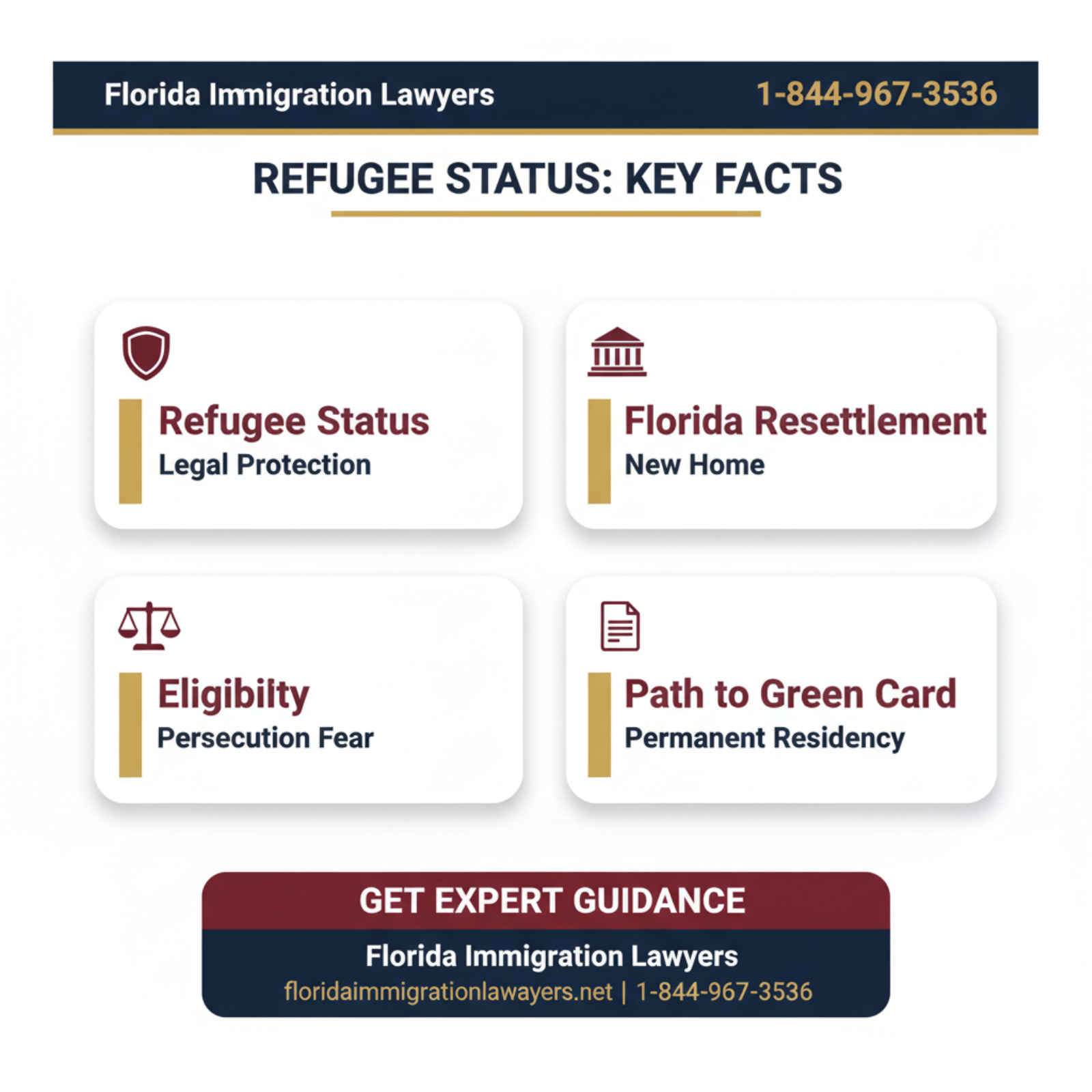
Refugee resettlement in Florida is the process by which individuals granted refugee status abroad are relocated to communities like West Palm Beach, receiving essential support for integration. This includes initial housing, medical care, language classes, and employment assistance, primarily facilitated by the Office of Refugee Resettlement (ORR) and local agencies.
- Refugee status is granted outside the U.S. based on fear of persecution.
- The Office of Refugee Resettlement (ORR) coordinates support services.
- Florida is a significant state for refugee resettlement, offering various resources.
- The process involves multiple steps from referral to long-term integration.
- Legal guidance is crucial for navigating complex requirements and securing benefits.
Imagine arriving in a new country, seeking safety and a fresh start. For many, this journey begins with seeking refugee resettlement Florida. Florida, with its diverse communities and established support networks, has long been a destination for individuals and families fleeing persecution and seeking refuge. Understanding the process of gaining refugee status and successfully resettling in areas like West Palm Beach is paramount for a smooth transition.
This comprehensive guide from Florida Immigration Lawyers will walk you through the intricacies of refugee status and resettlement in Florida, focusing on what you need to know for 2026. We will cover everything from eligibility requirements to the step-by-step process, essential documents, and available support services. Our goal is to provide clear, actionable information to help you or your loved ones navigate this critical journey.
Do not face the complexities of immigration law alone. For personalized guidance and a free consultation, call Florida Immigration Lawyers at 1-844-967-3536 today. Our experienced team is here to assist you every step of the way.
Understanding Refugee Status and Resettlement in Florida
Before diving into the resettlement process, it is essential to understand what defines a refugee. Under U.S. immigration law, a refugee is generally someone who has been persecuted or has a well-founded fear of persecution based on race, religion, nationality, membership in a particular social group, or political opinion. Importantly, refugee status is typically sought and granted while the individual is still outside the United States. This differs from asylum, which is sought by individuals already present in the U.S. or at a port of entry.
The legal definition of a refugee is codified in the Immigration and Nationality Act (INA) Section 101(a)(42), 8 U.S.C. § 1101(a)(42). The U.S. Refugee Admissions Program (USRAP) is responsible for processing and admitting refugees. Once admitted, the Office of Refugee Resettlement (ORR), a program of the Administration for Children and Families (ACF) within the U.S. Department of Health and Human Services (HHS), takes over the coordination of services. ORR works with state governments and non-profit organizations to provide critical assistance.
Florida is recognized as a significant state for refugee resettlement, consistently welcoming a diverse population of refugees from around the globe. Cities like West Palm Beach, Miami, Orlando, and Jacksonville have established networks of agencies and community organizations dedicated to supporting new arrivals. These communities offer a welcoming environment and essential resources to help refugees build new lives. The state's commitment to assisting refugees underscores its role as a beacon of hope for many.
ORR's mission is to help refugees, asylees, and other eligible populations achieve self-sufficiency and social adjustment. This involves a wide array of services designed to ease the transition into American society. From initial reception to long-term integration, the support provided is comprehensive. Understanding these foundational elements is the first step in navigating the refugee resettlement Florida process effectively.
The Journey to Refugee Resettlement in Florida: A Step-by-Step Guide
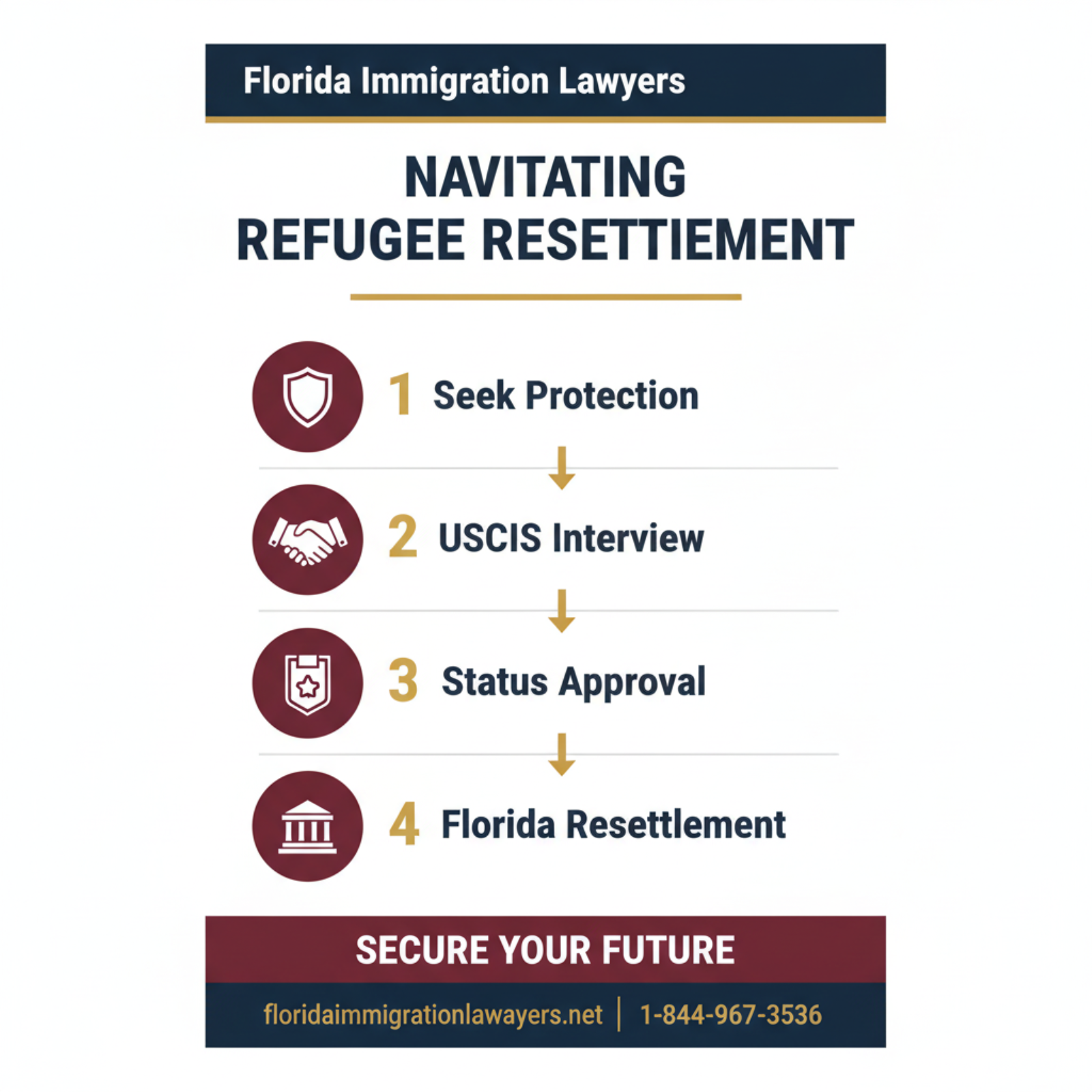
The path to refugee resettlement Florida is a multi-faceted process that begins long before an individual arrives on U.S. soil. It involves several stages of vetting, processing, and coordination. Here is a general step-by-step guide to help you understand this complex journey:
-
Referral to the U.S. Refugee Admissions Program (USRAP)
Most refugees are referred to the USRAP by the United Nations High Commissioner for Refugees (UNHCR), a U.S. Embassy, or a specially designated non-governmental organization (NGO). Direct applications to the U.S. for refugee status from abroad are generally not possible. This initial referral is a critical gateway to the entire process, signaling that an individual or family meets preliminary criteria for protection.
-
Security Vetting and Interviews
Once referred, applicants undergo extensive security checks by multiple U.S. government agencies, including the Department of Homeland Security (DHS), the Department of State (DOS), and intelligence agencies. A crucial step is an interview with a U.S. Citizenship and Immigration Services (USCIS) officer. During this interview, applicants must demonstrate a well-founded fear of persecution, meeting the legal definition of a refugee. This is a rigorous process designed to ensure the safety and security of both the applicants and the United States.
-
Medical Examination
All refugee applicants must undergo a thorough medical examination to identify any public health concerns and ensure they meet health admissibility requirements. This examination is conducted by panel physicians approved by the U.S. government. Clearance is necessary before final approval for travel to the United States can be granted.
-
Cultural Orientation and Assignment to a Resettlement Agency
Before departure, refugees typically receive cultural orientation sessions. These sessions provide vital information about life in the United States, including laws, customs, and available services. Concurrently, a U.S. resettlement agency, often one with a presence in Florida, is assigned to the refugee. This agency will be responsible for the initial reception and placement services upon arrival.
-
Travel to the United States (Florida)
Once all approvals are in place, travel arrangements are made. The U.S. government, often through the International Organization for Migration (IOM), facilitates the travel. Refugees are typically provided with a travel loan that they are expected to repay over time. Upon arrival at a U.S. port of entry, such as Miami International Airport or Palm Beach International Airport, they are processed by Customs and Border Protection (CBP) officers and officially admitted as refugees.
-
Initial Reception and Placement (R&P) Services
Upon arrival in Florida, the assigned resettlement agency provides initial R&P services. These services are critical during the first 30-90 days and include meeting the refugee at the airport, providing safe and affordable housing, furnishing the home, enrolling children in school, and assisting with applications for essential benefits like Social Security cards and food assistance. In West Palm Beach, various local agencies work tirelessly to ensure a welcoming start.
-
Long-Term Integration and Self-Sufficiency Support
Beyond the initial R&P period, refugees are eligible for a range of ORR-funded services for up to five years. These services are designed to promote economic self-sufficiency and social adjustment. They include English language training, job placement assistance, vocational training, mental health services, and community integration programs. These long-term supports are vital for refugees to thrive in their new Florida homes. For more information on navigating the broader immigration landscape, visit our immigration practice area page.
Essential Documents for Refugee Resettlement in Florida: Your Checklist
Having your documents in order is crucial for successful refugee resettlement Florida. While many documents are processed by agencies, understanding and safeguarding your personal records is vital. Here is a checklist of essential documents you will encounter or need to keep secure:
- Refugee Travel Document (Form I-571): This document is issued by USCIS to refugees and asylees in the United States to allow them to travel abroad and return. It is essential for any international travel.
- Form I-94 Arrival/Departure Record: Upon entry to the U.S., you will receive an electronic or paper I-94. This document serves as proof of lawful admission as a refugee and is critical for accessing benefits and applying for other immigration statuses.
- Employment Authorization Document (EAD) (Form I-766): Refugees are immediately eligible for work authorization. The EAD allows you to legally work in the U.S. and is essential for achieving economic self-sufficiency.
- Social Security Card: Your resettlement agency will assist you in applying for a Social Security card, which is necessary for employment, banking, and many other aspects of life in the U.S.
- Medical Records: Keep copies of your medical examination results and any other health records. These are important for continuity of care and for enrolling in health programs in Florida.
- Birth Certificates and Marriage Certificates: Original or certified copies of these vital records for yourself and all family members are crucial for identification, family reunification applications, and future citizenship processes.
- Proof of Identity from Home Country: While you may have fled without original documents, any existing identification from your home country, such as passports or national ID cards, should be kept safe.
- Form I-485, Application to Register Permanent Residence or Adjust Status: After one year of being granted refugee status, you are required to apply for a Green Card (permanent residency). This application is critical for long-term stability.
It is imperative to keep all these documents in a safe, accessible place. Losing them can cause significant delays and complications in your resettlement journey. Always carry copies and know where your originals are stored.
Refugee Resettlement Timeline and Processing Expectations in Florida (2026)
One of the most common questions individuals have about the process is, "How long does it take for a refugee to be resettled?" The answer is that the timeline for refugee resettlement Florida can vary significantly, ranging from several months to many years. This extensive variation depends on numerous factors, including the country of origin, the complexity of the case, security checks, and the overall capacity of the U.S. Refugee Admissions Program.
Generally, the process of being interviewed, vetted, and approved for refugee status while still abroad can take a considerable amount of time. Once approved, the travel arrangements and initial reception in Florida typically occur within a few weeks to a few months. Upon arrival, the initial Reception and Placement (R&P) services provided by resettlement agencies usually last for the first 30 to 90 days. During this critical period, agencies help refugees find housing, enroll children in school, apply for benefits, and begin cultural orientation.
After the initial R&P phase, refugees are eligible for extended services funded by the Office of Refugee Resettlement (ORR) for up to five years from their date of arrival. These services aim to foster self-sufficiency and integration. They include English language training, employment services, and social adjustment programs. It is important to note that after one year of continuous presence in the U.S. as a refugee, individuals are legally required to apply for Adjustment of Status to become lawful permanent residents (Green Card holders). This application, Form I-485, is a crucial step towards long-term stability and eventual citizenship.
Regarding the question, "What happens after 5 years of refugee status?", it is vital to understand that refugee status itself is not indefinite. The expectation is that refugees will apply for a Green Card after one year. Once you receive your Green Card, you are a lawful permanent resident, and after meeting specific residency and other requirements, you may be eligible to apply for U.S. citizenship. The five-year period often refers to the maximum duration of ORR-funded benefits, not the refugee status itself. Continuous legal counsel can help manage these critical deadlines and applications. For assistance with Green Card applications or other long-term immigration goals, explore our citizenship practice area page.
Processing times for various applications, such as the I-485, can fluctuate. You can check current processing times on the USCIS website. Staying informed and proactive is key to managing expectations for your resettlement journey in Florida.
Cost Factors and Financial Support for Refugee Resettlement in Florida
Understanding the financial aspects of refugee resettlement Florida is crucial for new arrivals. Fortunately, refugees generally do not bear the direct costs of their initial processing and travel. The U.S. government, often through various international and domestic partners, covers these expenses, although travel costs are typically provided as a loan that refugees are expected to repay over time once they become employed.
Upon arrival, refugees in Florida are immediately eligible for a range of critical support services and financial assistance programs designed to help them achieve self-sufficiency. These benefits are primarily coordinated through the Office of Refugee Resettlement (ORR) and administered at the state level by agencies like the Florida Department of Children and Families (DCF).
Key Financial and Support Programs:
- Refugee Cash Assistance (RCA): For eligible refugees who are not receiving other forms of cash assistance (like Temporary Assistance for Needy Families-TANF), RCA provides temporary financial support. The amount of RCA in Florida varies based on household size and income, similar to other welfare programs. It is designed to bridge the gap until refugees can secure employment.
- Refugee Medical Assistance (RMA): This program provides medical coverage to eligible refugees who do not qualify for Medicaid. RMA covers essential health services, ensuring that new arrivals have access to necessary healthcare during their initial resettlement period.
- Employment Services: A cornerstone of ORR programs is employment assistance. Resettlement agencies in Florida offer job counseling, resume building, interview preparation, and job placement services. The goal is to help refugees quickly find employment and become economically independent.
- English Language Training (ELT): Learning English is often vital for successful integration. ORR-funded programs provide English language classes, which are crucial for communication, employment, and navigating daily life in Florida.
- Social Services: Beyond financial aid, refugees can access a variety of social services, including cultural orientation, school enrollment assistance for children, vocational training, and mental health support. These services are tailored to help refugees adapt to their new environment and overcome challenges.
The availability and specific details of these programs can sometimes be complex, requiring careful navigation. It is important to work closely with your assigned resettlement agency and local Florida DCF offices to understand your eligibility and access all available benefits. While these programs provide a vital safety net, the ultimate goal is to empower refugees to become fully self-sufficient members of their new communities in Florida. If you are an asylum seeker, many of these benefits may also become available upon a grant of asylum. Learn more about seeking protection on our asylum practice area page.
Do not navigate this process alone. Contact Florida Immigration Lawyers today for expert legal assistance. Our dedicated team is ready to provide the support you need.
Common Mistakes to Avoid in Refugee Resettlement in Florida
Navigating refugee resettlement Florida can be challenging, and mistakes can lead to significant delays or even jeopardize your status. Being aware of common pitfalls can help you avoid them:
- Providing Inconsistent Information: Any discrepancies in your statements or applications, whether intentional or accidental, can raise red flags with USCIS and potentially lead to denials or accusations of fraud. Always be truthful and consistent in all communications with immigration authorities.
- Missing Critical Deadlines: The U.S. immigration system operates on strict timelines. A particularly crucial deadline is the requirement to apply for a Green Card (Adjustment of Status, Form I-485) within one year of being granted refugee status. Failing to file on time without a valid reason can impact your ability to become a lawful permanent resident, as stipulated in 8 CFR § 209.1.
- Failing to Report Changes of Address: You are legally required to notify USCIS of any change in your physical address within 10 days of moving by filing Form AR-11. Failure to do so can result in missed notices, delayed processing, or even legal consequences, including potential deportation proceedings if authorities cannot locate you.
- Not Seeking Legal Counsel: Attempting to navigate the complex immigration system without the guidance of an experienced immigration lawyer is a common and often costly mistake. A lawyer can help you understand your rights, prepare applications accurately, and represent you in interviews or hearings.
- Misunderstanding Benefits Eligibility and Duration: While many benefits are available, they often have specific eligibility criteria and time limits (e.g., ORR-funded services typically last up to five years). Misunderstanding these can lead to a loss of crucial support when you need it most.
- Traveling Internationally Without a Refugee Travel Document: Refugees who travel outside the U.S. without a valid Refugee Travel Document (Form I-571) may be denied reentry and could even have their refugee status revoked. Always obtain this document before any international travel.
- Not Engaging with Resettlement Agencies: Resettlement agencies are your primary resource for initial support and integration services. Disengaging from these agencies means missing out on vital assistance with housing, employment, language training, and cultural orientation.
- Failing to Attend Required Interviews or Appointments: Missing an interview with USCIS or other agencies without proper notification and rescheduling can lead to the denial of your application or the termination of your benefits. Always prioritize and attend all scheduled appointments.
- Not Disclosing All Family Members: When applying for refugee status or subsequently for a Green Card, it is crucial to accurately list all eligible family members. Failure to do so can complicate future family reunification efforts or even lead to accusations of misrepresentation.
- Engaging in Criminal Activity: Any criminal offense, even minor ones, can have severe immigration consequences, potentially leading to the loss of refugee status, denial of a Green Card, or even deportation. Adhere strictly to all U.S. laws.
- Assuming Refugee Status is Permanent Without Further Action: Refugee status provides protection but is not permanent residency. It is a pathway to a Green Card, which must be actively pursued. Failing to apply for your Green Card after one year is a significant oversight.
- Ignoring Notices from Immigration Authorities: Do not ignore any mail or notifications from USCIS, immigration courts, or other government agencies. These documents often contain critical information, deadlines, or requests for action. Seek legal advice immediately if you receive a notice you do not understand.
When to Call a Florida Immigration Lawyer for Refugee Resettlement
While resettlement agencies offer invaluable support, there are specific situations during your refugee resettlement Florida journey where the expertise of a qualified immigration lawyer becomes indispensable. Florida Immigration Lawyers are here to provide the specialized legal guidance you need, especially when facing complex challenges.
You should consider contacting an attorney if you encounter any of the following scenarios:
- Complex Case or Prior Denials: If your refugee application had unusual circumstances, or if you faced a denial or a Request for Evidence (RFE), an attorney can help analyze the issues and formulate a strong strategy for appeal or reapplication.
- Adjustment of Status (Green Card) Application: Although applying for a Green Card after one year as a refugee (Form I-485) is a standard process, errors can be costly. A lawyer ensures your application is accurately prepared, all necessary documents are included, and you are properly represented during interviews.
- Family Reunification: If you wish to petition for family members to join you in the U.S. through a refugee follow-to-join petition (Form I-730), the process can be complex. An attorney can guide you through eligibility requirements and ensure your family's applications are handled correctly. Explore our family immigration services.
- Deportation Concerns: The question, "Can refugee status be deported?" is often asked. While refugee status offers significant protection, it is not absolute. Refugees can face deportation (removal) if they commit certain crimes, engage in fraudulent activities, or are found to be a danger to U.S. national security. If you receive a Notice to Appear (NTA) in immigration court, immediate legal representation is critical. Our deportation defense team is ready to help.
- Changes in Circumstances or Travel Issues: If your personal circumstances change significantly (e.g., marriage, divorce, birth of a child) or if you encounter issues with your Refugee Travel Document or re-entry, legal advice can prevent serious problems.
- Difficulty Accessing Benefits: If you are struggling to access eligible ORR-funded benefits or facing bureaucratic hurdles with state agencies like Florida DCF, an attorney can advocate on your behalf to ensure you receive the support you are entitled to.
- Seeking U.S. Citizenship: After holding a Green Card for a specified period, typically five years (or three years if married to a U.S. citizen), you may be eligible for naturalization. An attorney can help you prepare for the N-400 application and citizenship interview.
The immigration journey can be overwhelming. Florida Immigration Lawyers possess the expertise and dedication to protect your rights and guide you towards a secure future in Florida. Do not hesitate to seek professional legal help when your future is on the line. Visit our attorneys page to learn more about our team.
About Florida Immigration Lawyers
Florida Immigration Lawyers is a leading law firm dedicated to providing comprehensive and compassionate legal services to immigrants across the entire state of Florida. With a deep understanding of complex U.S. immigration laws, our experienced attorneys are committed to helping individuals, families, and businesses navigate their immigration journeys successfully. We pride ourselves on offering personalized attention and strategic solutions tailored to each client's unique situation.
Our firm specializes in a wide array of immigration matters, including refugee and asylum claims, family-based immigration, business and employment visas, deportation defense, and naturalization. We understand the profound impact immigration issues have on our clients' lives and approach every case with empathy and unwavering advocacy. Our mission is to protect your rights and empower you to achieve your American dream.
Why choose Florida Immigration Lawyers? We offer a client-focused approach, transparent communication, and a proven track record of success. Our team is available 24/7 to address your urgent needs, and we provide free consultations to help you understand your options without financial obligation. Serving all of Florida, including West Palm Beach and surrounding areas, we are your trusted partners in immigration law. Se Habla Español.
For dedicated and experienced legal representation, contact Florida Immigration Lawyers today. Call us at 1-844-967-3536 or visit our website at https://www.floridaimmigrationlawyers.net to schedule your free consultation.
Sources and References
- U.S. Citizenship and Immigration Services (USCIS)
- USCIS Check Case Processing Times
- U.S. Department of State - Visa Availability & Priority Dates
- Office of Refugee Resettlement (ORR)
- 8 U.S.C. Chapter 12 - Immigration and Nationality Act (INA)
- INA § 101(a)(42) - Definition of Refugee
- 8 CFR § 209.1 - Adjustment of status of refugee or asylee
- Executive Office for Immigration Review (EOIR)
This article provides general legal information and is not intended as legal advice. Every case is unique, and outcomes depend on specific facts and circumstances. Contact an attorney for advice about your particular situation. Immigration laws are subject to frequent change.
Your journey to a new life in Florida is important. Let Florida Immigration Lawyers be your trusted advocates. We are committed to providing the legal support and guidance you need for a successful refugee resettlement Florida. Contact us today for a free, confidential consultation.
Call 1-844-967-3536 now to speak with our team. Se Habla Español - Estamos aquí para ayudarle.
Do Not Navigate This Process Alone
Our experienced immigration attorneys are ready to fight for you. Get a free, confidential consultation today.
Se Habla Español
Florida Immigration Lawyers
Immigration Attorney | Founder, Vasquez Law Firm
U.S. Air Force veteran and immigration attorney with thousands of cases resolved. J.D., NCCU School of Law. AILA member. Admitted to the 4th, 5th, and 11th Circuit Courts.
Available 24/7 - Free Evaluations
Related Legal Services
Our Florida immigration attorneys can help you with asylum protection, deportation defense and citizenship and naturalization. Call today at 1-844-967-3536 for a free consultation.
Related Links
Related Topics
Free Legal Consultation
Discuss your case with our experienced attorneys. We're available 24/7.
Se Habla Español - Estamos aquí para ayudarle.
Related Articles
Expungement Effect on Immigration in Florida | VLF Florida
Discover how expungement impacts immigration in Florida. Learn about eligibility, the process, and potential consequences. Contact Florida Immigration Lawyers at 1-844-967-3536 for a free consultation.
Immigration Services in Kissimmee Florida | VLF Florida
Discover essential immigration services in Kissimmee, Florida. Learn about the resources available for immigrants, including Puerto Rican residents in Osceola County. Contact Florida Immigration Lawyers at 1-844-967-3536 for expert guidance and a free consultation.
Child Status Protection Act (CSPA) Florida: Preventing 'Aging
Understand the Child Status Protection Act (CSPA) in Florida and how it prevents 'aging out' for derivative beneficiaries. Navigate complex immigration laws
I-360 Widow Self-Petition in Florida: A Complete Guide
Learn how to navigate the I-360 widow self-petition process in Florida. This comprehensive guide covers eligibility, documentation, and common mistakes. Call Florida Immigration Lawyers for expert assistance.
