Public Charge Rule Florida Immigrants: What You Must Know in 2026
For Florida immigrants, understanding the public charge rule is essential for securing a green card or certain visas. This rule assesses whether you are likely to become primarily dependent on specific government cash assistance or long-term institutional care. It involves a comprehensive 'totality of the circumstances' test, evaluating factors like your age, health, family status, assets, education, and skills. An Affidavit of Support from a financial sponsor is often a critical component. While many non-cash benefits like food stamps or most Medicaid are not considered, misinterpretations can lead to unnecessary fear or application errors. This guide provides a detailed overview for 2026, including a step-by-step process, essential document checklist, common mistakes to avoid, and when to seek legal counsel. Florida Immigration Lawyers offers expert assistance to navigate these complex immigration regulations in Hialeah, Miami, and throughout Florida.
The public charge rule assesses whether a noncitizen is likely to become primarily dependent on government assistance. For Florida immigrants, understanding this rule is crucial to avoid inadmissibility when seeking a green card or certain visas. It evaluates factors like age, health, family status, assets, resources, financial status, education, and skills. Not all benefits are considered, and using some benefits will not make you a public charge.
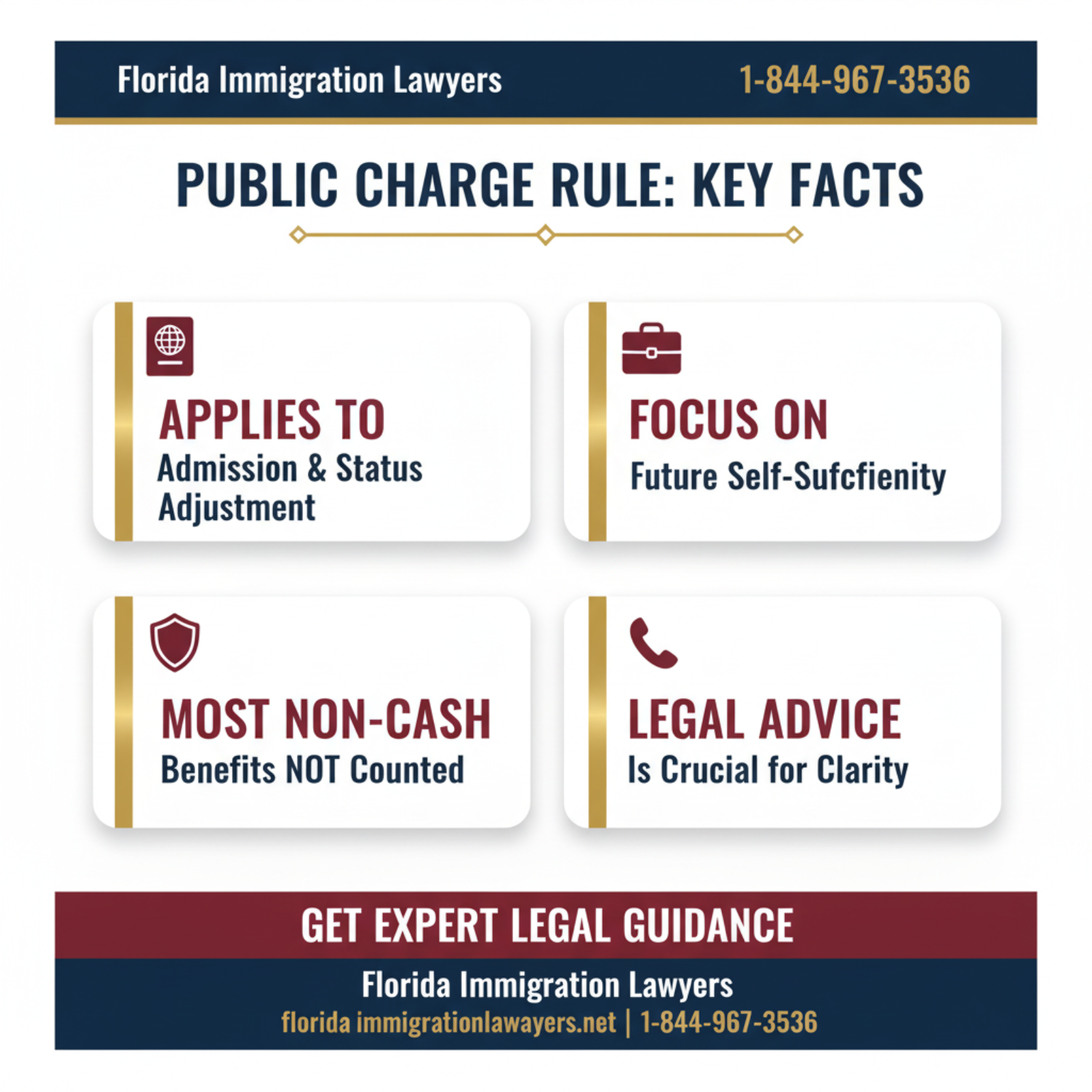
- The public charge rule focuses on primary dependence on specific cash benefits or long-term institutional care.
- Most Medicaid, food stamps, and housing assistance are generally NOT considered in the public charge determination.
- A comprehensive review of your circumstances, including an Affidavit of Support, is part of the assessment.
- Consulting an experienced Florida immigration lawyer is vital to navigate this complex immigration rule.
- The rule aims to ensure immigrants can support themselves and not burden the U.S. public system.
Public Charge Rule Florida Immigrants: What You Must Know in 2026
Navigating the U.S. immigration system can feel like a complex maze, especially when rules like the public charge rule come into play. For many aspiring immigrants and their families in Florida, particularly in diverse communities like Hialeah, understanding this crucial immigration rule is paramount. It can directly impact your eligibility for a green card or certain visas.
Are you worried that receiving certain public benefits might jeopardize your immigration application? Do you wonder how your family's circumstances in Florida might be viewed under this rule? You are not alone in these concerns. Many individuals and families across the Sunshine State face similar questions about the public charge rule Florida immigrants must contend with.
This comprehensive guide from Florida Immigration Lawyers aims to demystify the public charge rule, providing you with clear, actionable information for 2026. We will explain what the rule is, how it affects you, and what steps you can take to protect your immigration future. Do not leave your future to chance.
Call Florida Immigration Lawyers at 1-844-967-3536 for a free consultation. Our experienced team is ready to help you understand your options and ensure you navigate the public charge rule effectively.
Understanding the Public Charge Rule for Florida Immigrants in 2026
The public charge rule is a long-standing principle in U.S. immigration law, codified in the Immigration and Nationality Act (INA) at INA 212(a)(4), that allows immigration officials to deny admission or adjustment of status to individuals deemed likely to become a "public charge." Essentially, this means someone who is likely to become primarily dependent on the government for subsistence.
The rule considers specific factors to determine if an applicant for a green card or certain visas is inadmissible. This assessment is forward-looking, meaning immigration officials try to predict future reliance on public assistance. For Florida residents, especially in areas with large immigrant populations like Hialeah, Miami, Orlando, and Tampa, understanding these criteria is essential.
What Benefits are Considered Under the Public Charge Rule?
It is a common misconception that *any* use of public benefits will trigger the public charge rule. This is not true. The rule primarily considers two types of public assistance:
- Cash assistance for income maintenance: This includes Supplemental Security Income (SSI), Temporary Assistance for Needy Families (TANF), and state or local cash assistance programs that provide income support.
- Long-term institutionalization at government expense: This refers to long-term care in facilities such as nursing homes, where the government directly pays for the care.
Importantly, most non-cash benefits and special purpose cash benefits are generally NOT considered. This includes Medicaid (except for long-term institutionalization), CHIP, SNAP (food stamps), housing assistance, WIC, and disaster relief. Utilizing these programs typically does not negatively impact your public charge assessment.
Exemptions and Special Considerations for Florida Families
Certain categories of immigrants are exempt from the public charge rule entirely. These often include refugees, asylees, U-visa and T-visa applicants, and some special immigrant juveniles. If you are applying for asylum or refugee status, this rule generally does not apply to your application.
For other applicants, particularly those seeking family-based immigration, the Affidavit of Support (Form I-864) submitted by a U.S. citizen or lawful permanent resident sponsor plays a critical role. This affidavit serves as a legally binding promise that the sponsor will financially support the immigrant, mitigating public charge concerns.
Navigating the Public Charge Test: A Step-by-Step Guide
When you apply for a green card or certain visas, USCIS or a consular officer will conduct a "totality of the circumstances" test to determine if you are likely to become a public charge. This test evaluates several factors comprehensively. Understanding each step can help you prepare effectively, especially for immigration processes in Florida.
-
Review of Statutory Factors: The adjudicating officer will examine your age, health, family status, assets, resources, financial status, education, and skills. Each of these elements contributes to the overall picture of your ability to be self-sufficient.
- Age: Younger children or elderly individuals may face closer scrutiny if they lack a strong Affidavit of Support.
- Health: While most Medicaid use is not considered, a severe medical condition requiring extensive, long-term institutional care at government expense could be a factor.
- Family Status: The number of dependents you have and their ability to contribute to the household income are assessed.
- Assets, Resources, and Financial Status: This includes your income, savings, property, and any debts. A strong financial standing is a positive factor.
- Education and Skills: Your educational background, professional licenses, and work experience demonstrate your ability to secure employment and support yourself.
-
Affidavit of Support (Form I-864): For most family-based immigrants and some employment-based immigrants, a U.S. citizen or lawful permanent resident must submit Form I-864. This sponsor promises to support you financially, ensuring you will not become a public charge. The sponsor must meet specific income requirements, typically 125% of the federal poverty guidelines for their household size.
-
Past or Current Receipt of Public Benefits: While the rule is forward-looking, past receipt of *disqualifying* public benefits (cash assistance or long-term institutionalization) can be considered as a negative factor in the totality of circumstances. However, this is not automatically determinative.
-
Consideration of Medical Condition and Health Insurance: Your access to health insurance or ability to pay for medical care is also considered. This ensures that potential health issues would not lead to reliance on government-funded long-term institutional care. Having private health insurance or the means to obtain it is a positive factor.
-
Overall Assessment: USCIS or the consular officer weighs all these factors together. No single factor is usually determinative. The goal is to determine if, on balance, you are likely to become primarily dependent on government assistance in the future. A strong application will demonstrate self-sufficiency and robust support from a sponsor.
Navigating this complex assessment requires careful preparation. An experienced Florida immigration attorney can help you present the strongest possible case, highlighting your strengths and addressing any potential concerns regarding the public charge rule.
Essential Document Checklist for Public Charge Assessment
To successfully demonstrate that you are not likely to become a public charge, you will need to gather a comprehensive set of documents. This checklist will help you prepare for your application, whether you are in Hialeah, Miami, or any other part of Florida. Having these documents ready can significantly streamline your immigration process.
- Proof of Identity and Immigration Status: Passport, birth certificate, current visa, I-94 arrival/departure record.
- Affidavit of Support (Form I-864): Completed and signed by your financial sponsor, along with all required supporting documents.
- Sponsor's Financial Documents:
- Federal income tax returns (most recent three years, including W-2s and 1099s).
- Proof of current employment and income (pay stubs, employer letter).
- Bank statements and other asset documentation (if needed to meet income requirements).
- Your Financial Documents (if applicable):
- Proof of current employment and income.
- Bank statements, property deeds, investment accounts.
- Documentation of any debts or liabilities.
- Educational and Professional Credentials:
- Diplomas, degrees, certificates of vocational training.
- Professional licenses or certifications.
- Resume or curriculum vitae detailing work history and skills.
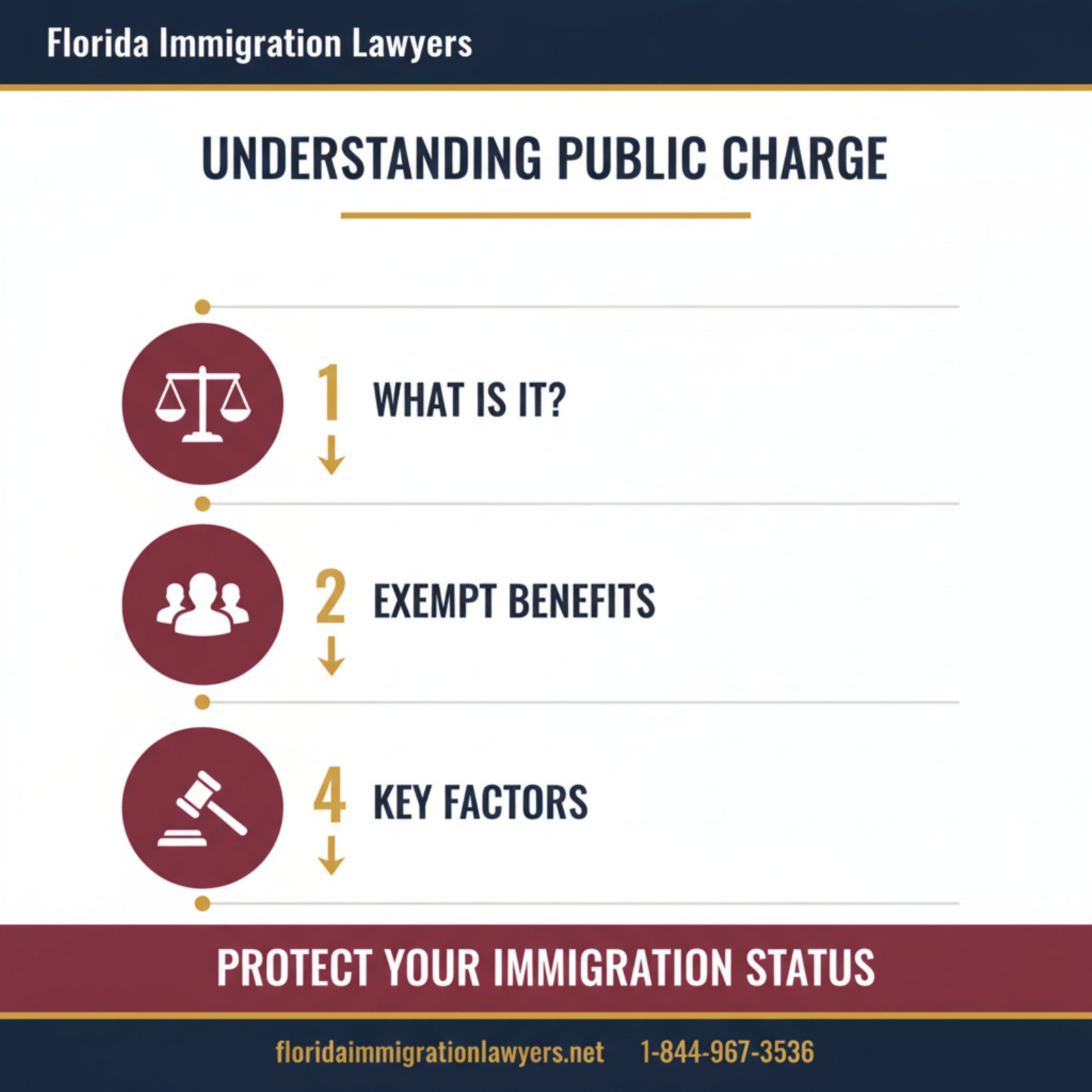
Step-by-Step Process Guide - Health Records and Insurance:
- Proof of health insurance coverage (private or employer-sponsored).
- Medical examination results (required for most green card applicants).
- Documentation of any serious medical conditions and how they are managed (e.g., treatment plans, ability to pay).
- Proof of Family Status: Marriage certificates, birth certificates for dependents.
- Any other evidence of self-sufficiency: For instance, business ownership documents or letters from community organizations.
Organizing these documents thoroughly is a critical step in addressing the public charge rule. Our team at Florida Immigration Lawyers can help you compile and review your documentation to ensure it meets all requirements.
Public Charge Rule Timeline and Processing Expectations
The timeline for immigration applications, including the assessment for the public charge rule, can vary significantly. Factors such as the specific type of visa or green card you are seeking, the USCIS field office or consular post processing your case, and the completeness of your application all play a role. For Florida residents, applications are typically processed through USCIS offices in Miami, Orlando, or Tampa, or through the National Benefits Center.
Generally, after filing your application (e.g., Form I-485 for adjustment of status), USCIS will review all submitted documentation, including the Affidavit of Support and evidence related to the public charge factors. This initial review can take several months to over a year. You will then typically receive a notice for biometrics appointment and potentially an interview.
During the interview, an immigration officer will ask questions related to your eligibility, including your financial circumstances and potential public charge concerns. If the officer determines that more information is needed, you may receive a Request for Evidence (RFE). Responding promptly and thoroughly to an RFE is crucial to avoid delays or a denial based on the immigration rule.
While there is no fixed timeline specifically for the public charge assessment itself, it is an integral part of the overall application processing time. Staying informed about current processing times on the USCIS website and working with an experienced attorney can help manage your expectations and ensure your application is as strong as possible.
Cost Factors and Immigration Fee Breakdown
Pursuing an immigration application in Florida involves various costs, and it is important to budget for these expenses. While we cannot provide specific filing fee amounts (as they are subject to change), we can outline the general categories of costs associated with navigating the public charge rule and your overall immigration process.
- USCIS Filing Fees: Most immigration forms, such as the Petition for Alien Relative (Form I-130) and Application to Adjust Status (Form I-485), require filing fees. These fees are set by USCIS and can be found on their official website.
- Biometrics Fee: There is typically a separate fee for biometrics services, which involves fingerprinting and background checks.
- Medical Examination Fee: All applicants for adjustment of status must undergo a medical examination by a USCIS-approved civil surgeon. The cost of this exam is paid directly to the civil surgeon and varies by provider.
- Attorney Fees: Retaining an experienced immigration attorney, like those at Florida Immigration Lawyers, is an investment in your future. Legal fees cover the attorney's expertise, assistance with form preparation, document review, strategy development, and representation during interviews or RFEs. Our firm offers competitive rates and transparent fee structures.
- Translation and Document Preparation Costs: If any of your supporting documents are not in English, you will need to pay for certified translations. Additionally, there may be costs for obtaining official copies of birth certificates, marriage certificates, or other records.
Understanding these potential expenses upfront can help you plan financially. Our team can provide you with a clear breakdown of expected costs related to your specific case during your free consultation. We believe in transparency and helping you manage every aspect of your immigration journey, including financial planning related to the public charge rule Florida immigrants face.
Do not navigate this process alone. Contact Florida Immigration Lawyers today. Our dedicated team is ready to provide the guidance and support you need to overcome any challenges related to the public charge rule and secure your future in Florida. Call us at 1-844-967-3536 to schedule your free consultation.
Common Public Charge Mistakes to Avoid
Making errors in your immigration application can lead to significant delays, requests for evidence, or even denial. When it comes to the public charge rule, certain mistakes are particularly common and can have serious consequences. Be aware of these pitfalls to protect your application.
-
Misunderstanding What Benefits Count: Many applicants mistakenly believe that using any public benefit, such as SNAP or WIC, will make them a public charge. This fear often leads them to forgo essential aid for which they are eligible. Consequences: Unnecessary hardship for families and incorrect self-assessment of public charge risk.
-
Incomplete or Inaccurate Affidavit of Support (Form I-864): The I-864 is central to overcoming public charge concerns for many applicants. Errors, omissions, or insufficient sponsor income can lead to significant issues. Consequences: RFE, interview delays, or denial due to insufficient financial assurance.
-
Lack of Comprehensive Documentation: Failing to provide thorough evidence of your own or your sponsor's financial stability, education, skills, and health can weaken your case. Consequences: Inability to demonstrate self-sufficiency, leading to public charge inadmissibility.
-
Not Disclosing Past Receipt of Benefits: Intentionally withholding information about past receipt of public benefits, even if they are not disqualifying, can be seen as misrepresentation. Consequences: Credibility issues, potential denial, or even accusations of fraud.
-
Ignoring Changing Public Charge Guidance: Immigration policies, including the immigration rule on public charge, can evolve. Relying on outdated information can lead to incorrect assumptions about eligibility. Consequences: Application based on old rules, resulting in unforeseen challenges.
-
Failing to Address Health Concerns: While most Medicaid is not counted, severe medical conditions requiring long-term institutionalization at government expense are. Not demonstrating how such care would be funded can be problematic. Consequences: Inadmissibility based on health-related public charge concerns.
-
Underestimating the Importance of Education and Skills: These factors demonstrate your potential for employment and self-sufficiency. Neglecting to highlight your educational background or vocational skills can weaken your overall public charge argument. Consequences: Missing an opportunity to present a stronger case for self-reliance.
-
Not Seeking Legal Counsel: Attempting to navigate the complexities of the public charge rule without the guidance of an experienced attorney is a significant risk. Consequences: Overlooking critical details, making preventable mistakes, and potentially jeopardizing your immigration future.
When to Call a Florida Immigration Lawyer
The public charge rule is one of the most intricate aspects of U.S. immigration law, and its interpretation can be highly subjective. While this guide provides general information, your specific situation requires personalized legal advice. Florida Immigration Lawyers are here to help you understand if you may be eligible and how to proceed.
You should consider contacting our firm if any of the following scenarios apply to your situation:
- You have previously received or are currently receiving public benefits, and you are unsure how they impact your application.
- Your financial sponsor's income is borderline, or they have a complex financial history.
- You have a medical condition that might be perceived as a public charge concern.
- You have received a Request for Evidence (RFE) or a Notice of Intent to Deny (NOID) related to public charge.
- You are applying for a green card or visa and want to ensure your application is as strong as possible to prevent future issues.
- You are concerned about potential deportation defense implications if your public charge assessment leads to inadmissibility.
- You are seeking citizenship and want to ensure past benefit use does not affect your naturalization process (though public charge generally doesn't apply to naturalization, it's good to clarify any concerns).
Our attorneys at Florida Immigration Lawyers understand the nuances of the public charge rule Florida immigrants face. We serve clients throughout Florida, including Hialeah, Miami, Orlando, and Tampa, offering dedicated and compassionate legal representation. We can review your case, identify potential red flags, and develop a robust strategy to address any public charge concerns.
Frequently Asked Questions (FAQs) About the Public Charge Rule
Many immigrants in Florida have questions about the public charge rule and its impact. Here, we address some of the most common inquiries, including those related to recent updates and broader immigration concerns.
What is the new public charge rule for green card holders?
As of 2026, the public charge rule primarily refers to the 1999 field guidance and the Biden administration's 2022 final rule, which largely reverted to this guidance. This means the focus is on primary dependence on specific cash benefits for income maintenance or long-term institutionalization at government expense. It is less expansive than the rule implemented by the previous administration. Green card holders are generally not subject to the public charge rule once they have obtained lawful permanent residency, but it is a factor during the initial application for the green card.
What is the new public charge rule 2026 update?
The core of the public charge rule in 2026 continues to follow the 2022 final rule, which emphasizes the "totality of the circumstances" test. This test considers age, health, family status, assets, resources, financial status, education, and skills, alongside a robust Affidavit of Support. There haven't been significant new updates to the fundamental framework of the rule as of early 2026, but immigration policies are always subject to review and potential changes. Always consult official USCIS resources or an attorney for the most current information.
Can ICE ask for immigration status in public?
Yes, Immigration and Customs Enforcement (ICE) agents, like other law enforcement officers, may ask individuals about their immigration status in public. However, you generally have the right to remain silent and do not have to answer questions about your immigration status or national origin. You also have the right to refuse to consent to a search and to speak with an attorney. This issue is separate from the public charge rule, which deals with inadmissibility based on benefit use, not interactions with law enforcement.
Does local county jail have jurisdiction to charge an illegal immigrant?
Local county jails generally do not have the authority to charge individuals with federal immigration violations. Immigration law is federal law. However, local jails can detain individuals based on state or local criminal charges. If an individual is undocumented and arrested for a state crime, the local jail may notify ICE, and ICE can then issue a detainer request. This would lead to the individual being transferred to ICE custody after their state charges are resolved. This scenario is distinct from the public charge rule, which assesses a person's financial self-sufficiency for immigration benefits.
About Florida Immigration Lawyers
Florida Immigration Lawyers is a leading immigration law firm dedicated to serving individuals and families across the entire state of Florida. With offices and services available throughout the region, including Hialeah, Miami, Orlando, and Tampa, we are committed to providing expert legal guidance and compassionate representation to our diverse clientele.
Our experienced attorneys specialize in a wide range of immigration matters, including family-based immigration, business immigration, asylum, deportation defense, and citizenship applications. We understand the unique challenges faced by immigrants in Florida and strive to achieve the best possible outcomes for every client.
Why choose Florida Immigration Lawyers? We offer personalized attention, a deep understanding of complex immigration laws like the public charge rule, and a commitment to keeping you informed every step of the way. Our firm is available 24/7, and we provide free consultations to discuss your case and outline your legal options. Your immigration journey is our priority.
Contact us today at 1-844-967-3536 or visit our website at https://www.floridaimmigrationlawyers.net to learn how we can assist you.
Sources and References
- U.S. Citizenship and Immigration Services (USCIS) - Policy Manual, Volume 8, Part G, Chapter 3: Public Charge
- U.S. Department of State - The Public Charge Rule
- Executive Office for Immigration Review (EOIR)
- 8 U.S.C. § 1182(a)(4) - Immigration and Nationality Act (INA) Section 212(a)(4)
- 8 CFR Part 212 - Documentary Requirements: Nonimmigrants; Waivers; Admission of Certain Inadmissible Aliens; Parole
This article provides general legal information and is not intended as legal advice. Every case is unique, and outcomes depend on specific facts and circumstances. Contact an attorney for advice about your particular situation.
Do not let the complexities of the public charge rule deter you from pursuing your American dream. Florida Immigration Lawyers is here to offer the expert guidance and robust representation you deserve. We are committed to helping Florida immigrants achieve their goals.
Call us today for a free, confidential consultation at 1-844-967-3536. Se Habla Español - Estamos aquí para ayudarle.
Frequently Asked Questions
Florida Immigration Lawyers
Legal Team
Our experienced attorneys at Florida Immigration Lawyers have been serving clients across Florida for over 20 years. We specialize in immigration, personal injury, criminal defense, workers compensation, and family law.