Political Asylum Florida Requirements: Your 2026 Guide
Understanding political asylum Florida requirements is crucial for those seeking safety from persecution. This comprehensive 2026 guide covers eligibility based on race, religion, nationality, political opinion, or social group membership, detailing both affirmative and defensive application processes. It outlines essential documentation, processing timelines, and cost factors, emphasizing the importance of legal counsel. Learn about common mistakes to avoid and when to seek professional assistance to navigate the complexities of U.S. immigration law. Florida Immigration Lawyers offers expert guidance for asylum seekers across Florida, including Homestead and Miami, providing free consultations to help protect your rights and future.
Political asylum in Florida offers protection to individuals facing persecution in their home countries based on race, religion, nationality, political opinion, or membership in a particular social group. To qualify, you must demonstrate a well-founded fear of persecution. The process involves filing Form I-589, an interview with USCIS, and potentially immigration court proceedings. Legal guidance is crucial.
- Asylum protects those with a well-founded fear of persecution.
- Eligibility is based on five specific grounds: race, religion, nationality, political opinion, or social group.
- You typically must apply within one year of arriving in the U.S.
- The process includes Form I-589 submission and an asylum interview.
- Legal assistance from firms like Florida Immigration Lawyers is highly recommended.
Political Asylum Florida Requirements: Your 2026 Guide
Are you or a loved one seeking safety from persecution? The thought of finding refuge in a new country can be overwhelming, especially when navigating complex legal systems. In Florida, individuals facing persecution in their home countries may be eligible for political asylum.
This comprehensive guide will walk you through the essential political asylum Florida requirements for 2026. We will cover eligibility criteria, the application process, required documentation, and what to expect during this challenging journey. Understanding these requirements is the first step toward securing your future.
Navigating the asylum process can be daunting, but you do not have to face it alone. For personalized guidance and a strong legal defense, call Florida Immigration Lawyers at 1-844-967-3536 for a free consultation. We are here to help you understand your options and protect your rights.
Understanding Political Asylum Florida Requirements in 2026
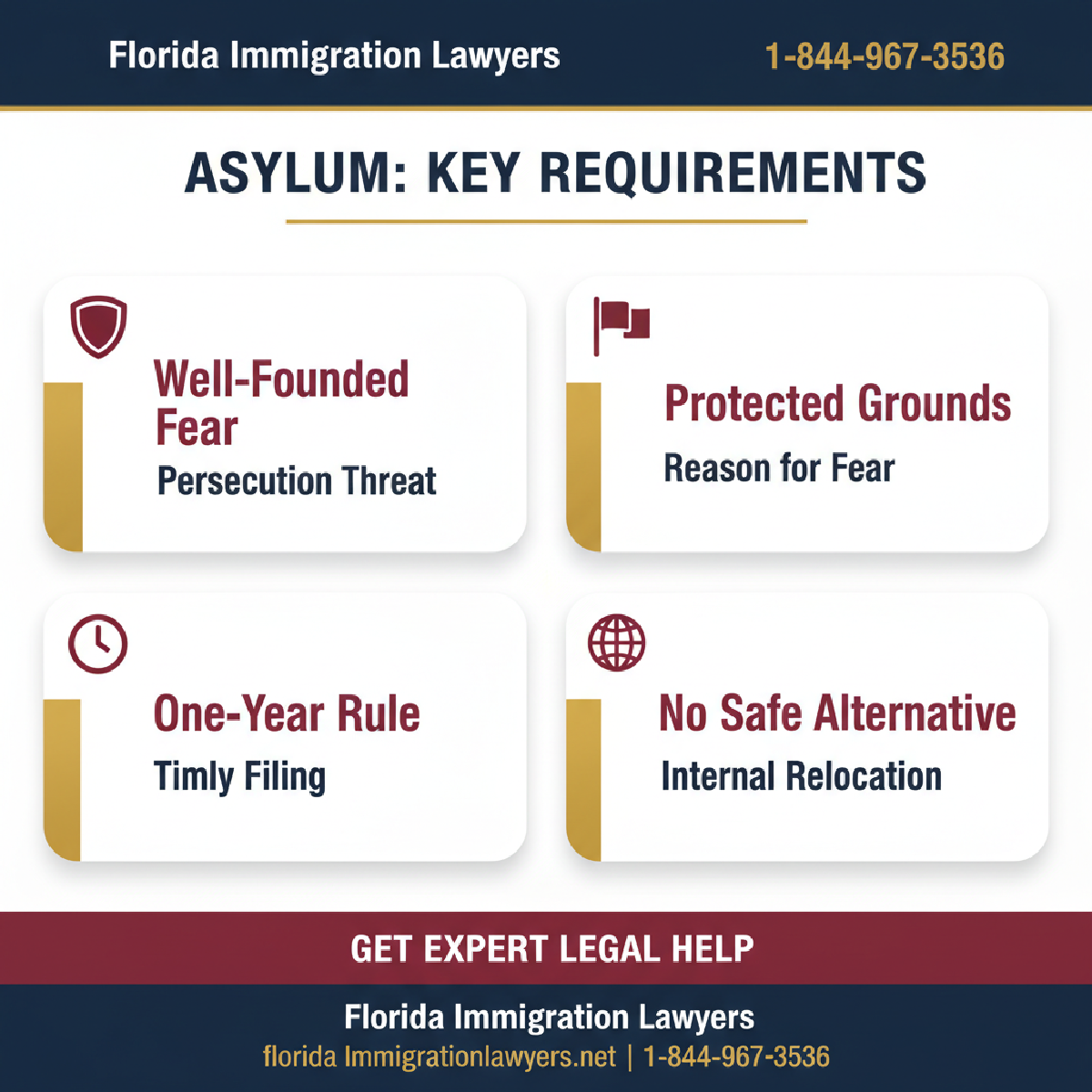
Political asylum is a form of protection granted to individuals who are unable or unwilling to return to their country of origin due to a well-founded fear of persecution. This fear must be based on one of five specific grounds: race, religion, nationality, membership in a particular social group, or political opinion. The legal framework for asylum is primarily found in the Immigration and Nationality Act (INA) Section 208, also codified at 8 U.S.C. § 1158.
For those residing in Florida, including communities like Homestead, Miami, and Orlando, understanding these fundamental principles is crucial. The U.S. government offers this protection to uphold international human rights standards. Our firm, Florida Immigration Lawyers, is dedicated to assisting clients throughout the state.
Defining Persecution and Protected Grounds
Persecution, in the context of asylum eligibility, refers to harm or suffering inflicted upon an individual by their government or by groups that the government is unable or unwilling to control. This harm must be severe enough to be considered a serious threat to one's life or freedom. Examples include threats to life, liberty, or security, as well as severe economic deprivation or widespread discrimination.
The five protected grounds are strictly defined. For instance, 'membership in a particular social group' often involves shared immutable characteristics, such as sexual orientation, family ties, or a common past experience. 'Political opinion' can encompass not only active political dissent but also neutrality or imputed political views.
Affirmative vs. Defensive Asylum Applications in Florida
There are two primary ways to seek political asylum in Florida. An affirmative asylum application is filed by individuals who are not currently in removal proceedings. They submit Form I-589 directly to U.S. Citizenship and Immigration Services (USCIS).
A defensive asylum application, conversely, is filed by individuals who are already in removal (deportation) proceedings before an immigration judge. They present their asylum claim as a defense against deportation. Both types of applications require demonstrating the same eligibility criteria for asylum.
Whether you are filing affirmatively or defensively, the core requirements for political asylum remain consistent. The one-year filing deadline is a critical aspect for most asylum seekers, typically requiring you to file your Form I-589 within one year of your last arrival in the United States. There are, however, limited exceptions to this rule.
Step-by-Step Guide to Applying for Political Asylum in Florida
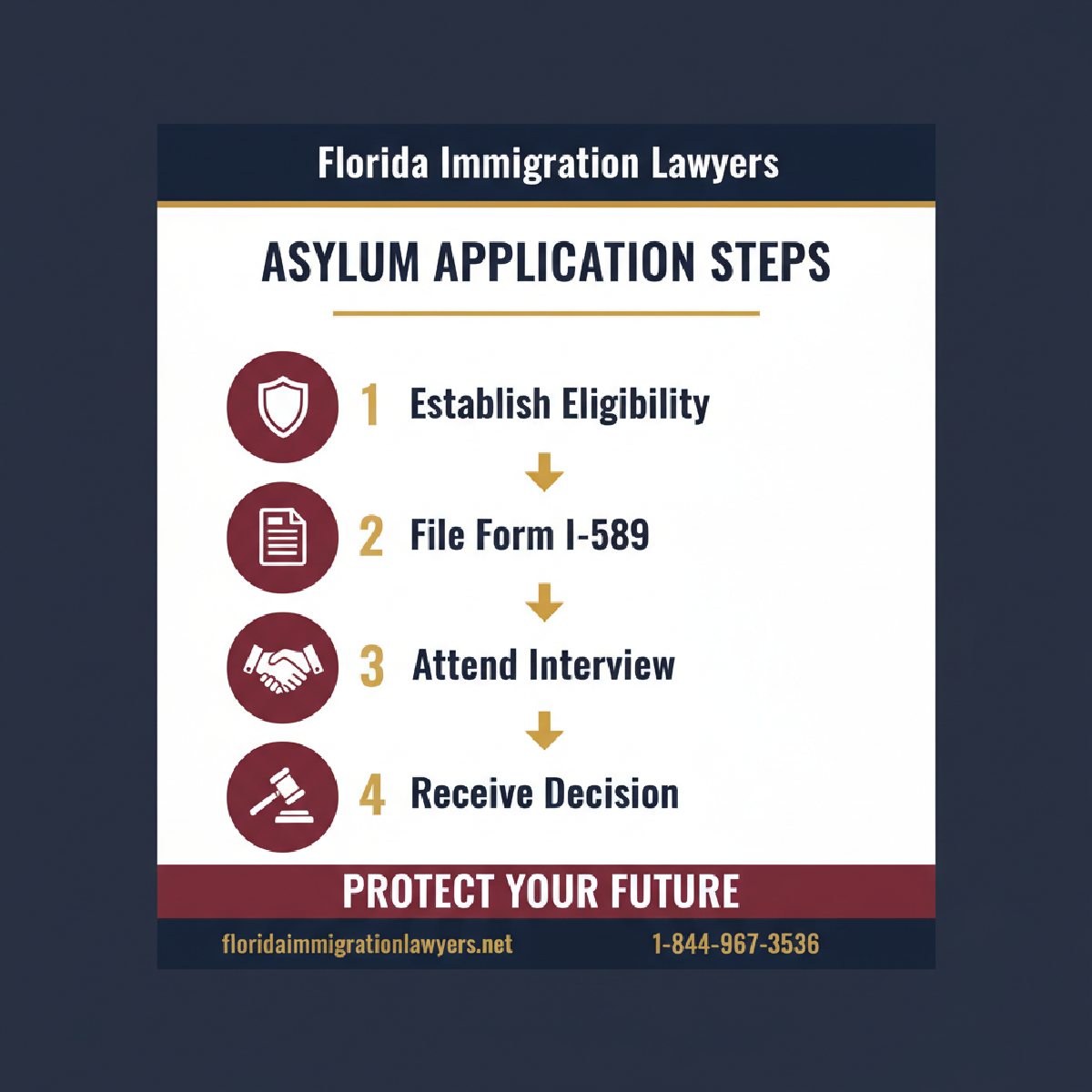
The asylum application process can be complex and lengthy, requiring careful attention to detail and strict adherence to deadlines. This guide outlines the typical steps involved for those seeking political asylum in Florida.
-
Consult with an Experienced Immigration Attorney: This is arguably the most critical first step. An attorney from Florida Immigration Lawyers can assess your eligibility, help you gather evidence, prepare your application, and represent you throughout the process. We understand the specific nuances of political asylum Florida requirements.
We can help you determine if you meet the 'well-founded fear' standard and identify which of the five protected grounds applies to your situation. This initial consultation is vital for building a strong case.
-
Prepare and File Form I-589, Application for Asylum and for Withholding of Removal: This form is the cornerstone of your asylum application. It must be filled out accurately and completely, detailing your persecution claim, personal history, and family information. Remember the one-year filing deadline from your last arrival in the U.S., unless an exception applies.
You will need to mail your application to the appropriate USCIS Service Center based on your residential address. For individuals in Homestead and other Florida areas, this typically involves sending it to the USCIS Chicago Lockbox.
-
Attend Your Biometrics Appointment: After filing Form I-589, USCIS will send you a notice to attend a biometrics appointment at an Application Support Center (ASC). At this appointment, your fingerprints, photograph, and signature will be collected for background and security checks.
This is a mandatory step, and failure to attend can lead to delays or even denial of your application. Ensure you bring the appointment notice and a valid form of identification.
-
Prepare for and Attend Your Asylum Interview: If you filed an affirmative asylum application, you will be scheduled for an interview with an Asylum Officer at a USCIS Asylum Office. For Florida residents, this typically occurs at the USCIS Asylum Office in Kendall, near Miami, or potentially in Orlando.
Your attorney can prepare you thoroughly for this interview, where you will be asked to testify about your fear of persecution. This is your opportunity to clearly articulate your story and present your evidence. An attorney can accompany you to this interview.
-
Receive a Decision or Referral to Immigration Court: After your interview, the Asylum Officer will make a decision. If your application is approved, you will be granted asylum. If it is not approved, and you are not in legal immigration status, your case will generally be referred to an Immigration Judge for defensive asylum proceedings.
If your case is referred, you will receive a Notice to Appear (NTA) in Immigration Court. This initiates removal proceedings, and you will present your asylum claim directly to an Immigration Judge.
-
Defensive Asylum Process (if applicable): If your case is referred to Immigration Court, your attorney will represent you before an Immigration Judge. This process involves multiple hearings, presenting evidence, and potentially calling witnesses. The judge will ultimately decide whether to grant asylum or order your removal.
Appeals are possible if the Immigration Judge denies your case, typically to the Board of Immigration Appeals (BIA). Navigating these court proceedings requires experienced legal counsel.
Essential Document Checklist for Your Asylum Application
A strong asylum application relies heavily on compelling evidence. Gathering and organizing the necessary documents is a crucial part of meeting the political asylum Florida requirements. Here is a general checklist of documents you should consider including:
- Form I-589, Application for Asylum and for Withholding of Removal: The original signed form and all required copies.
- Two Passport-Style Photos: For each applicant included on the I-589.
- Copy of Identity Documents: Passport, birth certificate, national identity card, or any other government-issued identification.
- Copy of Travel Documents: Visa, I-94 Arrival/Departure Record, or any other documents showing your entry into the U.S.
- Detailed Personal Statement (Affidavit): Your written testimony explaining your fear of persecution, how it relates to one of the five protected grounds, and a chronological account of events.
- Affidavits from Witnesses: Statements from individuals who can corroborate your story or aspects of your persecution.
- Country Conditions Reports: Official reports from human rights organizations, government agencies (like the U.S. Department of State), or academic institutions detailing persecution in your home country.
- Evidence of Harm or Threats: Police reports, medical records, photographs of injuries, death certificates, court documents, or other official records related to your persecution.
- Newspaper Articles, Media Reports, or Online Posts: Evidence from reputable sources that support your claim of persecution or general country conditions.
- Membership Documents: Proof of membership in a particular social group, religious organization, or political party, if relevant to your claim.
- Any Other Supporting Documents: Any other evidence that strengthens your claim, even if it seems minor.
- Translations: All documents not in English must be accompanied by a certified English translation.
Political Asylum Florida Timeline and Processing Expectations
The timeline for political asylum cases can vary significantly due to factors such as USCIS backlogs, the complexity of your case, and the specific USCIS Asylum Office or Immigration Court handling your application. It is important to set realistic expectations.
Typically, after filing Form I-589, you will receive a receipt notice within a few weeks. The biometrics appointment usually follows within 1-3 months. The waiting period for an asylum interview can range from several months to several years, depending on the asylum office's caseload. The Miami Asylum Office, which serves much of Florida, has experienced significant backlogs.
Employment Authorization and Travel
As an asylum applicant, you may be eligible to apply for an Employment Authorization Document (EAD), also known as a work permit, if your asylum application has been pending for at least 150 days and has not been denied by an Asylum Officer or an Immigration Judge. This allows you to legally work while your case is pending.
Traveling outside the United States while your asylum application is pending is generally not recommended and can be detrimental to your case. If you must travel, consult with your attorney about obtaining advance parole. Leaving without permission can be seen as an abandonment of your asylum claim.
Factors Influencing Processing Times
Several factors can influence how long your asylum case takes. These include the volume of applications at the relevant USCIS office or Immigration Court, the complexity of your case and the need for additional evidence, and any requests for continuances from either party. Current policies and legislative changes can also impact processing speeds.
Cost Factors and Fee Breakdown for Asylum Seekers
One of the most important aspects of the political asylum Florida requirements to understand is the financial implications. While the U.S. government does not charge a fee to file Form I-589, there are other costs associated with pursuing an asylum claim.
These costs can include legal fees for representation, translation services for documents not in English, and fees for obtaining supporting evidence. It is crucial to budget for these expenses to ensure a smooth application process.
Attorney Fees and Value
Hiring an experienced immigration attorney, such as those at Florida Immigration Lawyers, is a significant investment but often proves invaluable. Our fees reflect the extensive legal expertise, time, and resources dedicated to preparing a robust asylum application and representing you in interviews or court.
We offer various payment structures, and a free consultation allows you to discuss our services and fees upfront. Investing in legal counsel significantly increases your chances of a successful outcome, helping you avoid critical mistakes that could jeopardize your case.
Other Potential Costs
Beyond attorney fees, you might incur costs for: certified translations of foreign documents; obtaining police reports, medical records, or other official documents from your home country; expert witness fees (if necessary); and travel expenses for biometrics appointments and interviews. While these costs vary, they are important considerations for any asylum seeker in Homestead or elsewhere in Florida.
Do not navigate this process alone. Contact Florida Immigration Lawyers today to schedule your free consultation and discuss your asylum options. Our team is ready to provide the dedicated legal support you deserve.
Common Mistakes to Avoid When Seeking Political Asylum in Florida
Seeking political asylum is a high-stakes endeavor where even minor errors can have severe consequences. Being aware of common pitfalls can help you strengthen your case and avoid unnecessary delays or denials.
-
Missing the One-Year Filing Deadline: Unless you qualify for an exception, you must file Form I-589 within one year of your last arrival in the U.S. Failing to meet this deadline without a valid excuse is one of the most common reasons for denial. Always consult an attorney to see if an exception applies to your situation.
-
Providing Inconsistent Testimony or Information: Any discrepancies between your written application, interview testimony, and supporting documents can severely damage your credibility. Be truthful and consistent at all times. An attorney can help you prepare your statement and testimony.
-
Lack of Sufficient Supporting Evidence: A compelling story needs to be backed by robust evidence. Failing to provide adequate documentation, country conditions reports, or witness affidavits can weaken your claim. Gather as much evidence as possible to corroborate your persecution.
-
Not Disclosing All Family Members: You must include all eligible family members (spouse and unmarried children under 21) on your Form I-589 application. Failure to do so can prevent them from receiving derivative asylum status or raise questions about your honesty.
-
Poor Preparation for the Asylum Interview: The interview is a critical stage where you present your case directly. Underestimating its importance or failing to prepare thoroughly can lead to a weak performance. Practice articulating your story clearly and concisely.
-
Traveling Outside the U.S. Without Authorization: Leaving the U.S. while your asylum application is pending, especially to your home country, can be interpreted as an abandonment of your claim. It suggests you no longer fear persecution. Always seek legal advice before any international travel.
-
Having a Criminal History: Certain criminal convictions can render you ineligible for asylum, regardless of your persecution claim. It is crucial to disclose any criminal history to your attorney immediately. Aggravated felonies are particularly problematic.
-
Not Seeking Qualified Legal Counsel: Attempting to navigate the complex asylum process without an experienced immigration attorney significantly reduces your chances of success. An attorney provides expertise, guidance, and advocacy.
-
Not Understanding the Five Protected Grounds: Your fear of persecution must be directly linked to your race, religion, nationality, political opinion, or membership in a particular social group. A general fear of violence or economic hardship is not sufficient for asylum eligibility.
-
Failure to Update Your Address with USCIS and EOIR: If you move, you must notify USCIS and the Executive Office for Immigration Review (EOIR) of your new address within 10 days. Missing important notices can lead to your case being denied or an order of removal issued in absentia.
When to Call a Lawyer for Political Asylum in Florida
While this guide provides valuable information, the political asylum process is rarely straightforward. There are specific scenarios where the expertise of an immigration lawyer from Florida Immigration Lawyers becomes not just helpful, but absolutely essential.
You should immediately contact our firm if you:
- Have missed the one-year filing deadline: We can assess if you qualify for any exceptions.
- Have a complex persecution claim: If your story involves multiple forms of harm, state actors, or non-state actors, legal guidance is crucial.
- Have any criminal history, even minor offenses: Certain convictions can bar you from asylum. We can help evaluate the impact and potential defenses.
- Are already in removal (deportation) proceedings: This means you are seeking defensive asylum, a more adversarial process requiring court representation.
- Received a Notice of Intent to Deny (NOID) from USCIS: This indicates the Asylum Officer has concerns about your application.
- Need help gathering evidence or writing your personal statement: We can assist in compiling a strong, coherent package.
- Are unsure about any aspect of the political asylum Florida requirements: Our team provides clarity and confidence.
Our attorneys regularly represent clients from Homestead, Miami, Orlando, and across Florida in all stages of the asylum process. We offer dedicated support for affirmative and defensive asylum cases, ensuring your rights are protected.
About Florida Immigration Lawyers
Florida Immigration Lawyers is a leading law firm dedicated to providing comprehensive and compassionate immigration legal services across the entire state of Florida. Our team of experienced attorneys understands the profound impact immigration matters have on individuals and families. We are committed to delivering personalized, effective, and ethical representation.
We specialize in a wide range of immigration practice areas, including asylum, deportation defense, family immigration, business immigration, citizenship, and more. Our mission is to guide our clients through the complexities of U.S. immigration law with professionalism and care.
Why choose Florida Immigration Lawyers? We offer a client-focused approach, deep legal knowledge, and a commitment to achieving the best possible outcomes. We pride ourselves on being accessible and responsive to our clients' needs. Our team is available 24/7 to address urgent concerns.
For expert legal assistance, contact us today. We offer free consultations to discuss your case and explore your options. Visit our website at https://www.floridaimmigrationlawyers.net or call us directly at 1-844-967-3536.
Sources and References
- U.S. Citizenship and Immigration Services (USCIS) - Asylum
- Executive Office for Immigration Review (EOIR)
- 8 U.S.C. Chapter 12 - Immigration and Nationality Act (INA)
- INA Section 208 - Asylum (8 U.S.C. § 1158)
- 8 CFR Part 208 - Asylum and Withholding of Removal
- U.S. Department of State - Visas for Immigrants
This article provides general legal information and is not intended as legal advice. Every case is unique, and outcomes depend on specific facts and circumstances. Contact an attorney for advice about your particular situation.
Securing political asylum in Florida is a profound step towards safety and a new beginning. While the path can be challenging, with the right legal support, you can navigate the process successfully. Florida Immigration Lawyers is here to be your trusted partner every step of the way.
Do not hesitate to seek the protection you deserve. Call Florida Immigration Lawyers now at 1-844-967-3536 for a free, confidential consultation. Se Habla Español - Estamos aquí para ayudarle.
Florida Immigration Lawyers
Legal Team
Our experienced attorneys at Florida Immigration Lawyers have been serving clients across Florida for over 20 years. We specialize in immigration, personal injury, criminal defense, workers compensation, and family law.