Nicole Micheroni Immigration Lawyer Florida: Your 2026 Guide
The case of Nicole Micheroni, an immigration lawyer who received an erroneous self-deportation order, serves as a powerful cautionary tale for all immigrants in Florida. This article delves into the implications of her experience, offering a comprehensive guide for navigating complex USCIS processes in 2026. We provide step-by-step instructions, essential document checklists, and insights into timelines and costs. Learn to avoid common pitfalls and understand when to seek expert legal counsel from Florida Immigration Lawyers. Our firm, led by Attorney William Vasquez, is dedicated to fighting for your rights and ensuring your immigration journey in Florida is as smooth as possible.
Quick Answer:
The case of Nicole Micheroni, an immigration lawyer who faced an erroneous self-deportation order, highlights the critical importance of accurate immigration status verification and expert legal representation. For immigrants in Florida, understanding your rights and navigating complex USCIS processes in 2026 requires diligent preparation and, often, the guidance of a skilled attorney to prevent errors and ensure a smooth process.
- ✓ Even U.S. citizens can face erroneous immigration orders.
- ✓ Verify your immigration status and documents meticulously.
- ✓ Legal representation is crucial for navigating complex USCIS procedures.
- ✓ Errors in immigration processes can have severe consequences.
Living in Florida as an immigrant, you navigate a unique landscape of opportunities and challenges. The Sunshine State is a vibrant melting pot, but it also presents complex immigration realities. Imagine receiving an official notice questioning your legal status, even if you believe everything is in order. This unsettling scenario, similar to what Nicole Micheroni, an immigration lawyer, experienced, underscores the importance of vigilance and expert legal counsel.
In 2026, immigration laws and procedures continue to evolve, making it more crucial than ever for individuals and families in Hialeah, Miami, Orlando, and across Florida to stay informed. This comprehensive guide will explore the implications of the Nicole Micheroni case, provide essential steps for navigating USCIS processes, and highlight why partnering with a dedicated immigration lawyer in Florida is indispensable for protecting your future.
Schedule Your Free Consultation
Call Florida Immigration Lawyers at 1-844-967-3536 for a free case evaluation.
Get Free ConsultationUnderstanding the Nicole Micheroni Case and its Implications for Florida Immigrants
The story of Nicole Micheroni, an immigration lawyer born and raised in the United States, sent shockwaves through the legal community and immigrant populations nationwide. In a highly publicized incident, Micheroni received an erroneous email from the Department of Homeland Security (DHS) ordering her to self-deport within seven days. This glaring error for a U.S. citizen highlighted systemic vulnerabilities and the potential for grave mistakes within immigration enforcement.
For many immigrants and their families in Florida, this case served as a stark reminder of the anxieties and uncertainties that can arise, even when one believes they are fully compliant with the law. While Micheroni’s case was ultimately resolved due to her U.S. citizenship, it underscored how easily individuals can be caught in administrative tangles. It also emphasized the critical need for a robust understanding of one's legal standing and access to knowledgeable legal counsel.
Lessons from the Micheroni Case for Florida Residents
The Micheroni incident offers several crucial lessons for anyone navigating the U.S. immigration system, particularly those residing in Florida. First, it demonstrates that government agencies can make errors, and these errors can have profoundly distressing consequences. Secondly, it highlights the power of legal expertise in challenging such mistakes. An immigration lawyer like Micheroni herself was uniquely positioned to understand and dispute the erroneous order.
For residents of Hialeah and other diverse communities across Florida, the case reinforces the importance of not taking your immigration status for granted. Always keep precise records, understand the nuances of your visa or green card, and be prepared to seek legal advice if any official communication seems questionable. This proactive approach can prevent minor issues from escalating into major crises.
The Importance of Verifying Your Immigration Status in Florida
Given the complexities of immigration law and the potential for administrative errors, regularly verifying your immigration status is a crucial step for all non-citizens in Florida. This means understanding the type of visa or status you hold, its expiration date, and any conditions attached to it. For example, some visas restrict employment or require specific actions to maintain status.
Many individuals might assume their status is permanent or automatically renewed, but this is often not the case. Keeping abreast of changes in immigration policy, especially those affecting your particular status, is vital. Attorney William Vasquez at Florida Immigration Lawyers frequently advises clients on how to confirm their status and what steps to take if there are discrepancies or approaching deadlines.
Navigating USCIS Processes in Florida: A Step-by-Step Guide for 2026
Dealing with USCIS (U.S. Citizenship and Immigration Services) is a central part of any immigration journey in Florida. Whether you are applying for a green card, seeking asylum, or pursuing citizenship, the process involves multiple steps, extensive documentation, and strict deadlines. Understanding this journey is key to success.
For those in Florida, the USCIS field offices in Miami, Tampa, and Orlando handle many local applications and interviews. Each step requires meticulous attention to detail. Our firm, Florida Immigration Lawyers, is dedicated to guiding you through this intricate system with clarity and confidence. We believe in empowering our clients with knowledge, just as we would fight for them with our motto, "Yo Peleo."
Key Application Pathways for Florida Immigrants
Florida is home to a diverse immigrant population, meaning many different pathways are utilized to achieve legal status. Some common applications include family-based petitions, employment-based visas, asylum claims, and naturalization. Each pathway has its own specific set of requirements and forms, often outlined in the Immigration and Nationality Act (INA).
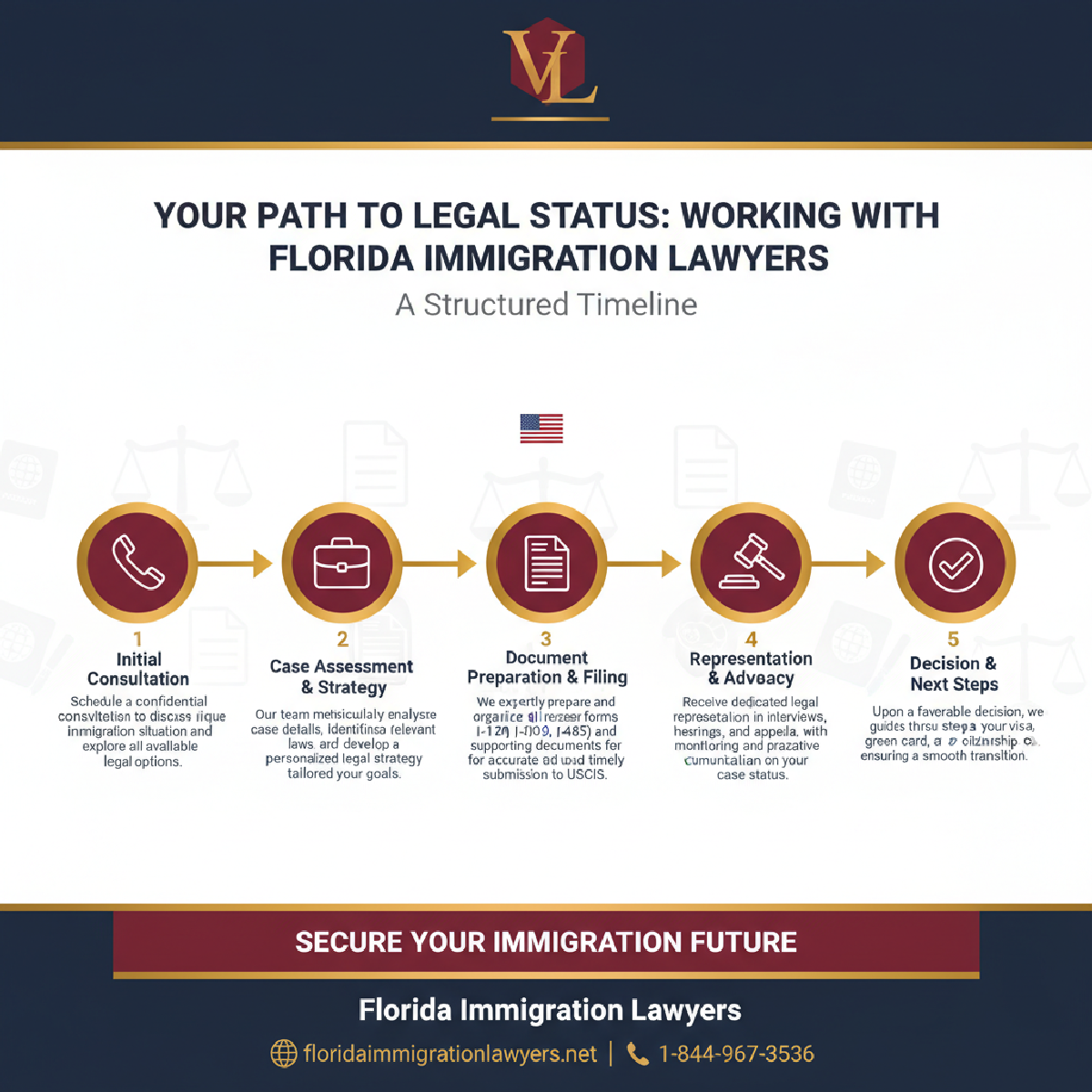
For instance, family-based immigration often involves I-130 petitions, while naturalization requires Form N-400. Understanding which forms apply to your situation and completing them accurately is paramount. To learn more about specific types of cases, you can visit our family immigration page or our citizenship services page.
- Determine Your Eligibility: Before submitting any application, thoroughly assess your eligibility for the desired immigration benefit. This includes reviewing your immigration history, criminal record (if any), and family ties. An experienced immigration lawyer in Florida can help you understand the criteria outlined in 8 U.S.C. § 1101 et seq.
- Gather Required Documentation: Collect all necessary supporting documents, such as birth certificates, marriage certificates, passports, financial records, and medical examination results. Ensure all documents are current and, if not in English, properly translated and certified.
- Complete and File Forms Accurately: Fill out all USCIS forms truthfully and completely. Even minor errors or omissions can lead to delays or denials. Double-check every entry before submission.
- Pay Required Fees: USCIS charges various filing fees, which can change. Do not send cash. Typically, personal checks, money orders, or credit card payments are accepted. Always confirm the current fee schedule on the official USCIS website.
- Attend Biometrics Appointment: Most applicants will receive an appointment notice for biometrics (fingerprints, photos, and signature). This is a mandatory step for background checks.
- Prepare for Interview (if required): Depending on your application, you may be called for an interview at a USCIS field office in Florida. Prepare by reviewing your application and supporting documents. An attorney can help you prepare for this critical step.
- Respond to Requests for Evidence (RFE): If USCIS needs more information, they will send an RFE. Respond promptly and comprehensively to avoid delays or denial.
- Receive Decision: After all steps are completed, USCIS will mail a decision on your application. If approved, follow any further instructions provided.
Essential Documents for Your Immigration Case in Florida
The success of your immigration application heavily relies on providing accurate and complete documentation. Incomplete submissions are a leading cause of delays and denials. From Hialeah to Jacksonville, ensuring your paperwork is in order is a universal challenge that our firm can help you overcome.
When preparing your case for USCIS, think of it as building a strong narrative supported by verifiable evidence. Every claim you make on an application form must be backed by a corresponding document. Attorney William Vasquez emphasizes the need for meticulous organization and attention to detail.
Organizing Your Immigration Documents for USCIS
Having a well-organized set of documents is not just about convenience; it demonstrates diligence and helps the adjudicating officer easily review your case. This can often expedite processing. Consider creating a master checklist and making copies of everything you submit. If you're seeking protection, our asylum practice area page provides more information.
- ✓ Proof of Identity: Passport, birth certificate, national identity card.
- ✓ Proof of Legal Entry: Visa, I-94 arrival/departure record.
- ✓ Marital and Family Documents: Marriage certificates, divorce decrees, birth certificates of children.
- ✓ Financial Documentation: Tax returns, bank statements, employment letters, affidavits of support (Form I-864).
- ✓ Medical Records: I-693 Report of Medical Examination and Vaccination Record.
- ✓ Criminal Records: Certified copies of any arrest records, court dispositions, or police clearances, even if charges were dismissed or expunged.
- ✓ Proof of Residence: Utility bills, lease agreements, driver's license.
- ✓ Translated Documents: Any document not in English must be accompanied by a certified English translation.
- ✓ Passport-Style Photos: Recent photos meeting USCIS specifications.
Immigration Timelines and Processing Expectations for Florida Applicants in 2026
One of the most common questions immigrants in Florida have is, "How long will my case take?" The answer, unfortunately, is rarely simple. USCIS processing times vary significantly based on the type of application, the specific service center or field office handling the case, and current caseloads. Global events and policy changes can also impact timelines.
In 2026, applicants should continue to monitor the official USCIS website for updated processing times. While these times provide an estimate, they are not a guarantee. Patience is often a virtue in the immigration process, but proactive legal guidance can help mitigate unnecessary delays. For example, understanding the Visa Bulletin can be crucial for certain family-based and employment-based categories.
Factors that can influence processing times include the completeness of your application, your response time to Requests for Evidence (RFEs), and the complexity of your individual case. For example, a case requiring a waiver of inadmissibility, as outlined in INA § 212(a), will typically take longer than a straightforward petition. You can check current processing times at USCIS Processing Times.
Understanding Immigration Costs and Fees in Florida
The financial aspect of immigration can be a significant concern for many families in Florida. There are generally two main categories of costs: government filing fees and attorney fees. Government fees are paid directly to USCIS and other agencies (like the Department of State for visa applications) and are subject to change.
It is important to budget for these expenses and understand that they are separate from legal fees. While specific filing fees are not provided here due to their fluctuating nature, you should always consult the official USCIS website for the most current fee schedule before submitting any application. For insights into related costs, you might find our article on H1B visa pricing in Florida helpful.
Hiring an immigration lawyer in Florida, such as Attorney William Vasquez, involves legal fees for their expertise, guidance, and representation. While this is an additional cost, it is an investment in accuracy, compliance, and peace of mind. A skilled lawyer can help you avoid costly mistakes, prepare a strong case, and represent you in interviews or hearings, potentially saving you significant time and money in the long run.
Do Not Navigate This Process Alone
Contact Florida Immigration Lawyers today. Our experienced team is here to help you every step of the way.
Call 1-844-967-3536Schedule OnlineCommon Mistakes to Avoid in Florida Immigration Applications
Navigating the U.S. immigration system can be fraught with potential pitfalls. Even a minor oversight can lead to significant delays, requests for additional evidence, or even outright denial of your application. Being aware of these common errors can help you avoid them and ensure a smoother process.
- Incomplete or Inaccurate Forms: Failing to fill out every section of a USCIS form or providing incorrect information is a frequent mistake. This can result in your application being rejected or returned, causing considerable delays.
- Missing or Insufficient Supporting Documents: Submitting an application without all the required evidence is a critical error. Each form has specific document requirements that must be met precisely.
- Missing Deadlines: Immigration processes are time-sensitive. Missing a deadline for filing an application, responding to an RFE, or attending an interview can lead to the denial of your case or even loss of status.
- Failure to Update Address with USCIS: If you move, you are legally required to notify USCIS within 10 days using Form AR-11. Failing to do so can mean missing important notices, RFEs, or interview appointments.
- Misrepresentation or Fraud: Providing false information or misrepresenting facts on any immigration form or during an interview can have severe, long-lasting consequences, including denial of current and future immigration benefits, and even criminal charges under 8 CFR Part 214.
- Traveling Without Proper Permission (Advance Parole): Certain applicants, particularly those adjusting status, may jeopardize their application by traveling outside the U.S. without obtaining Advance Parole beforehand. This can be considered abandonment of the application.
- Not Disclosing All Arrests or Criminal History: Even minor arrests, dismissed charges, or expunged records must generally be disclosed on immigration forms. Failure to do so can be considered misrepresentation and lead to serious issues.
- Attempting to Self-Represent in Complex Cases: While some simple cases might be manageable, complex situations like deportation defense or waiver applications often require the nuanced understanding of an experienced immigration lawyer.
When to Call an Immigration Lawyer
While the prospect of hiring legal counsel might seem daunting, there are specific scenarios where the expertise of an immigration lawyer becomes not just beneficial, but absolutely essential. Don't wait until a problem becomes insurmountable. Proactive engagement with a legal professional can save you stress, time, and potentially your immigration future.
Attorney William Vasquez and the team at Florida Immigration Lawyers are ready to assist you, especially if you encounter any of these red flags:
- You Receive an RFE or Notice of Intent to Deny (NOID): These notices indicate that USCIS has concerns about your application. A lawyer can help you understand the issues and prepare a robust response.
- You Have a Complex Immigration History: If you have previous denials, overstays, or changes in status, your case is likely more complicated and requires expert navigation.
- You Have a Criminal Record: Any criminal history, regardless of severity, can significantly impact your immigration case. An attorney can assess potential inadmissibility issues and explore waivers.
- You Are Facing Deportation or Removal Proceedings: This is a critical situation where legal representation is paramount. An experienced deportation defense lawyer can fight for your right to stay in the U.S.
- You Are Applying for Asylum or Other Humanitarian Relief: These cases are highly complex and require strong legal arguments and extensive documentation.
- You Are Unsure About Your Eligibility or the Correct Application Process: Rather than risking errors, consult a lawyer to confirm your options and the proper steps.
- You Experience Delays or Lack of Communication from USCIS: If your case is taking an unusually long time or you've lost track of its status, an attorney can help inquire and advocate on your behalf.
Remember, the motto of Florida Immigration Lawyers is "Yo Peleo" (I Fight). We are here to fight for your rights and guide you through even the most challenging immigration scenarios. You can learn more about our dedicated team by visiting our attorneys page.
Frequently Asked Questions
Who is Nicole Micheroni?
Nicole Micheroni is a U.S.-born immigration attorney who gained national attention in 2022 after erroneously receiving an email from the Department of Homeland Security ordering her to self-deport. Her case highlighted the potential for significant administrative errors within the U.S. immigration system, even impacting U.S. citizens. She is a practicing immigration lawyer who has advocated for immigrant rights.
How much does an immigration lawyer cost in Florida?
The cost of an immigration lawyer in Florida varies widely depending on the complexity of your case, the type of service required, and the attorney's experience. Some lawyers charge flat fees for specific services (e.g., visa applications), while others charge hourly rates for more involved cases like deportation defense. Many firms, including Florida Immigration Lawyers, offer initial free consultations to discuss your case and provide fee estimates.
How much does an immigration lawyer make in Florida?
The earnings of an immigration lawyer in Florida, like in any legal field, can vary significantly based on factors such as years of experience, firm size, location (e.g., Miami vs. Orlando), and specialization. Entry-level salaries may differ greatly from those of seasoned partners with over 15 years of experience, like Attorney William Vasquez. This information is generally not relevant to clients seeking legal services.
Is it worth using an immigration lawyer?
Yes, it is often highly worth using an immigration lawyer, especially for complex cases or if you have any doubts about the process. An attorney can help you avoid common mistakes, navigate intricate legal requirements, prepare a strong case, and represent you in interviews or court. Their expertise can save you time, reduce stress, and significantly increase your chances of a positive outcome.
Does Florida Immigration Lawyers handle deportation defense cases?
Yes, Florida Immigration Lawyers provides robust deportation defense services across Florida. Attorney William Vasquez and our experienced team are dedicated to fighting for clients facing removal proceedings. We understand the severe consequences of deportation and work tirelessly to explore every available defense, including waivers, asylum, and other forms of relief. We are available 24/7 for emergencies.
What is the role of USCIS in Florida immigration?
USCIS (U.S. Citizenship and Immigration Services) is the primary federal agency responsible for administering the nation's lawful immigration system. In Florida, USCIS offices process various applications, including green cards, citizenship, work permits, and family petitions. They conduct interviews, review documents, and make decisions on immigration benefits for residents across the state, from Hialeah to Tampa.
Can I apply for a Green Card if I live in Hialeah, Florida?
Yes, if you meet the eligibility requirements, you can apply for a Green Card while residing in Hialeah, Florida. Your application will be processed by USCIS, likely through the Miami Field Office or a service center. Eligibility typically depends on factors such as family relationships, employment, or asylum status. Consulting with a Florida immigration lawyer is recommended to determine the best pathway for you.
How do I check my immigration case status in Florida?
You can check your USCIS immigration case status online using the receipt number provided on your official notices. Visit the USCIS website and enter your 13-character receipt number (starting with three letters like EAC, WAC, LIN, SRC, NBC, or MSC). This tool provides real-time updates on your application's progress. For complex issues, an attorney can assist with inquiries.
What are the benefits of hiring a local Florida immigration attorney?
Hiring a local Florida immigration lawyer offers several advantages. They are familiar with local USCIS field offices, immigration courts, and regional policies. They can provide personalized advice tailored to Florida-specific nuances and are readily available for in-person meetings. A local attorney, like Attorney William Vasquez, understands the unique needs of Florida's diverse immigrant communities.
Are immigration laws changing in 2026?
Immigration laws and policies are subject to frequent changes, and 2026 is no exception. While major legislative overhauls are less common, administrative policies, enforcement priorities, and processing procedures can evolve. Staying informed through reliable sources, such as USCIS announcements and legal counsel, is crucial. Florida Immigration Lawyers monitors these changes to provide up-to-date advice.
About Florida Immigration Lawyers
At Florida Immigration Lawyers, we combine compassion with aggressive representation. Our motto "Yo Peleo" (I Fight) reflects our commitment to standing up for your rights. We understand the profound impact immigration matters have on your life and family, and we are dedicated to providing personalized, effective legal solutions.
- Bilingual Support: Se Habla Espanol, ensuring clear communication and comfort for our diverse clientele.
- Service Areas: Proudly serving Orlando, Miami, Tampa, Jacksonville, and all of Florida, with a strong presence in communities like Hialeah.
- Experience: Over 15 years of dedicated legal practice, building a legacy of successful outcomes and client satisfaction.
- Availability: We are available 24/7 for emergencies and consultations, understanding that immigration issues don't adhere to business hours.
Attorney William Vasquez holds a Juris Doctor degree and is admitted to practice in both the Florida Bar and North Carolina State Bar. With over 15 years of dedicated legal experience, he has built a reputation for providing personalized attention and achieving favorable outcomes for his clients. His profound understanding of immigration law and unwavering advocacy make him a trusted ally in your legal journey.
Phone: 1-844-967-3536
Website: https://www.floridaimmigrationlawyers.net
Sources and References
- U.S. Citizenship and Immigration Services (USCIS). https://www.uscis.gov
- Immigration and Nationality Act (INA). 8 U.S.C. § 1101 et seq. (Title 8 of the U.S. Code)
- Code of Federal Regulations (CFR), Title 8, Aliens and Nationality. https://www.ecfr.gov/current/title-8
- U.S. Department of Justice (DOJ), Executive Office for Immigration Review (EOIR). https://www.justice.gov/eoir
- USCIS Policy Manual. https://www.uscis.gov/policy-manual
Start Your Free Consultation Now
Our experienced immigration attorneys are ready to fight for you. Available 24/7.
Call 1-844-967-3536Schedule OnlineFlorida Immigration Lawyers
Legal Team
Our experienced attorneys at Florida Immigration Lawyers have been serving clients across Florida for over 20 years. We specialize in immigration, personal injury, criminal defense, workers compensation, and family law.