Naturalization Process Florida Timeline: Your Path to U.S. Citizenship
Discover a comprehensive guide to the naturalization process in Florida, detailing eligibility, the N-400 application steps, and expected processing times in 2026. Learn about essential documents, potential costs, and common mistakes to avoid. This article focuses on helping green card holders in Tampa and across Florida understand their journey to U.S. citizenship. Get expert insights on when to seek legal assistance and how Florida Immigration Lawyers can provide dedicated support. Call us for a free consultation to start your path to citizenship.
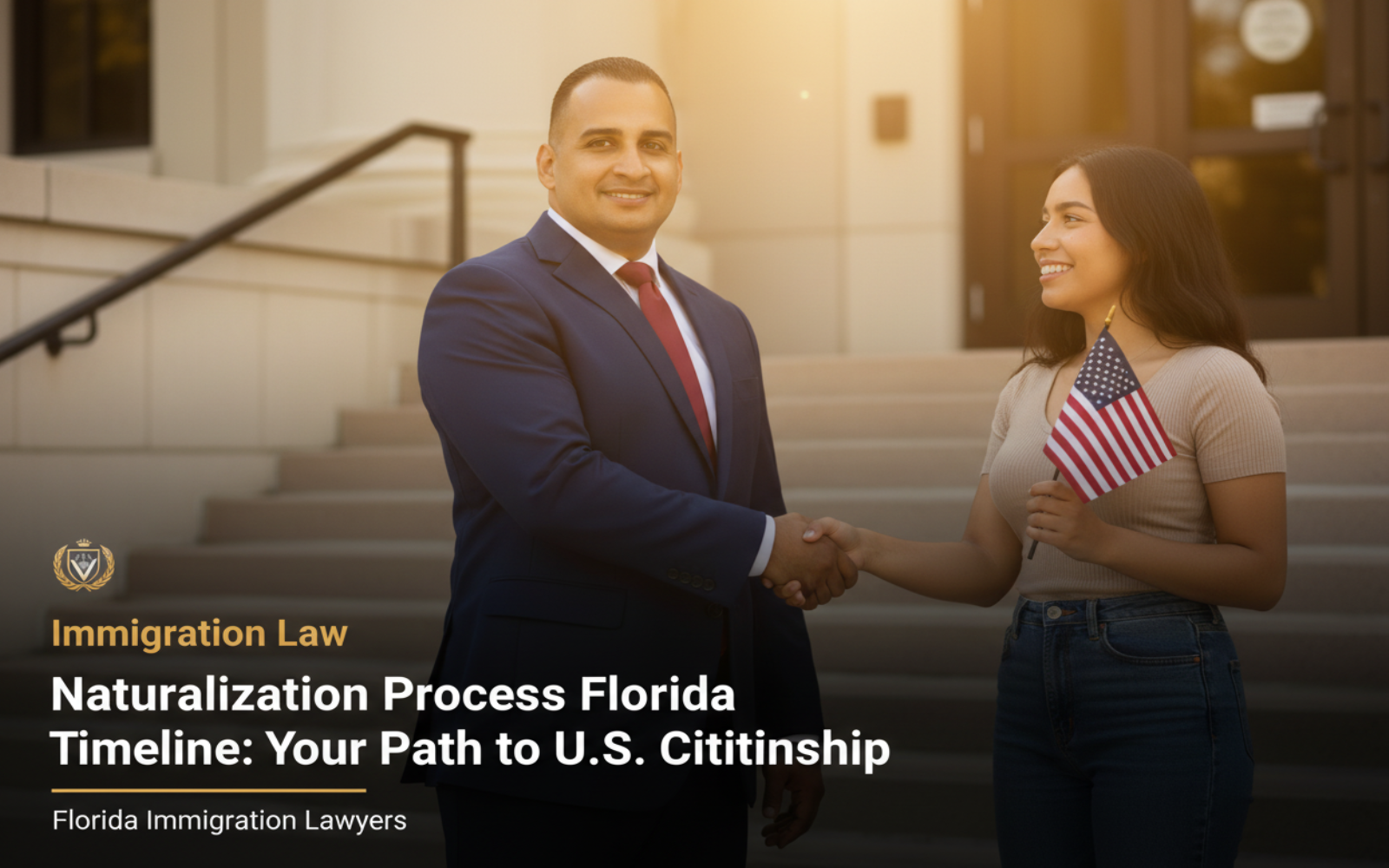
The naturalization process in Florida typically involves several steps, from filing Form N-400, Application for Naturalization, to attending an interview and Oath of Allegiance ceremony. While processing times vary, applicants generally spend 12-24 months from application submission to becoming a U.S. citizen. Eligibility requires meeting specific residency and moral character criteria, often as a green card holder for at least 3-5 years.
- Florida naturalization timeline generally 12-24 months.
- Eligibility requires lawful permanent residency for 3-5 years.
- Form N-400 is the primary application for U.S. citizenship.
- USCIS processing times can fluctuate significantly by field office.
- Consulting an immigration lawyer is highly recommended for complex cases.
Are you a lawful permanent resident in Florida dreaming of becoming a U.S. citizen? The journey to U.S. citizenship through naturalization is a significant milestone, offering numerous rights and responsibilities. Understanding the naturalization process Florida timeline is crucial for a smooth and successful application. This comprehensive guide will walk you through each step, from eligibility requirements to current processing expectations, focusing on the experience for residents in Tampa and across the Sunshine State.
We know the path to citizenship can seem complex and overwhelming. Our goal is to demystify the process and provide you with clear, actionable information. If you have questions or need personalized assistance with your N-400 application, do not hesitate to call Florida Immigration Lawyers at 1-844-967-3536 for a free consultation. We are here to help you navigate every aspect of your journey.
Understanding the Naturalization Process and Eligibility in Florida
Becoming a U.S. citizen is a profound step, offering benefits like voting rights, greater protection from deportation, and the ability to sponsor more family members. The naturalization process is how eligible lawful permanent residents (green card holders) can apply for U.S. citizenship. In Florida, as in other states, the process is governed by federal immigration laws and administered by U.S. Citizenship and Immigration Services (USCIS).
Who is Eligible for Naturalization?
To be eligible for naturalization, you must generally meet several key requirements. These criteria are set forth in the Immigration and Nationality Act (INA). Most applicants must be at least 18 years old and be a lawful permanent resident (green card holder) for a specific period.
For most applicants, this period is five years of continuous permanent residency immediately preceding the date of filing Form N-400, Application for Naturalization. If you are married to a U.S. citizen, this period may be reduced to three years, provided you have been living in marital union with your citizen spouse for that entire time. There are also specific rules for military personnel and certain other groups.
You must also demonstrate continuous residence and physical presence in the U.S. during your required residency period. This means you have not left the U.S. for extended periods, typically six months or more, which could break your continuous residency. Furthermore, applicants must show good moral character for the statutory period. This involves having a clean criminal record and adhering to U.S. laws.
Finally, you must demonstrate an attachment to the principles of the U.S. Constitution, a basic understanding of U.S. history and government (civics), and the ability to read, write, and speak English. These are typically tested during the naturalization interview. Exceptions to the English and civics requirements may apply for older applicants or those with certain disabilities.
Step-by-Step Guide to the Naturalization Process in Florida
Navigating the path to U.S. citizenship in Florida involves several distinct stages. Understanding each step can help you prepare thoroughly and avoid unnecessary delays. This guide provides a general overview of what you can expect when filing your N-400 application.
-
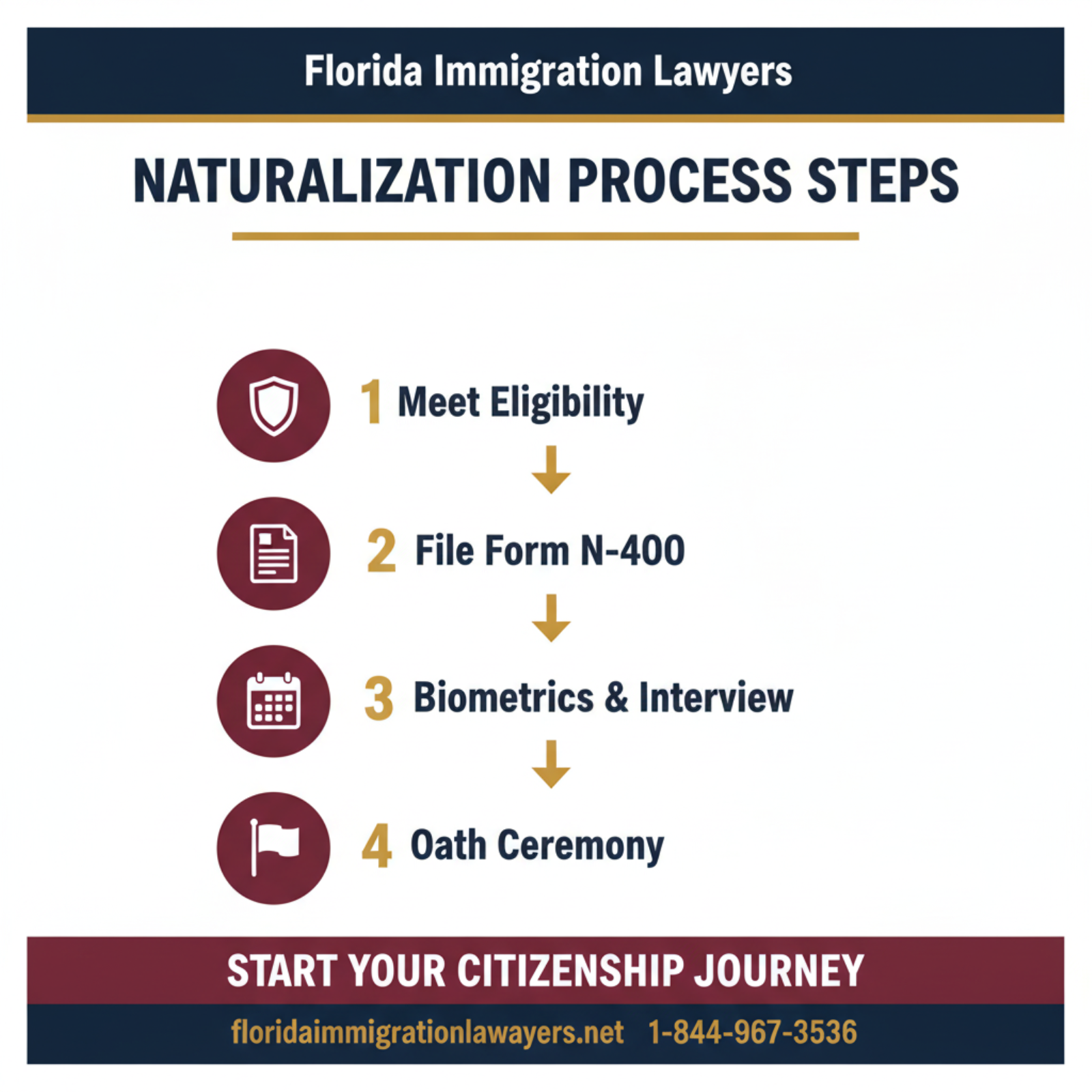
Determine Your Eligibility
Before beginning the application process, it is essential to confirm you meet all eligibility requirements. This includes age, continuous residency, physical presence, good moral character, and English/civics knowledge. Carefully review the USCIS requirements for naturalization to ensure you qualify. Consulting with an immigration attorney can help you accurately assess your eligibility, especially if you have a complex immigration history or any criminal record.
-
Prepare and File Form N-400, Application for Naturalization
The core of your naturalization application is Form N-400. This form collects detailed information about your personal history, residency, employment, family, and any travel outside the U.S. It is crucial to fill out this form accurately and completely, providing truthful answers to all questions. Any discrepancies or omissions could lead to delays or even denial of your application. Gather all necessary supporting documents as outlined by USCIS instructions.
-
Attend Your Biometrics Appointment
After USCIS receives your N-400 application, they will send you an appointment notice for biometrics collection. This appointment typically takes place at a local Application Support Center (ASC) in Florida, such as those serving the Tampa area. During this appointment, USCIS will collect your fingerprints, photograph, and signature. These biometrics are used for background checks and to verify your identity. It is vital to attend this appointment as scheduled.
-
Complete the Naturalization Interview
Once your background checks are complete, USCIS will schedule your naturalization interview at a local field office, such as the USCIS Tampa Field Office. During the interview, an immigration officer will review your N-400 application with you, ask questions about your eligibility, and test your English and civics knowledge. Be prepared to answer questions about your good moral character, residency, and attachment to the U.S. Constitution. Bring all original supporting documents to your interview.
-
Receive a Decision from USCIS
After your interview, the USCIS officer will either make a decision on your application, continue your case for further review, or request additional documents. If your application is approved, you will typically receive a notice for your Oath of Allegiance ceremony. If your application is denied, you will receive a written explanation and information on how to appeal the decision. An attorney can help you understand the decision and your options.
-
Take the Oath of Allegiance
The final step in becoming a U.S. citizen is taking the Oath of Allegiance. This ceremony is a formal event where you renounce allegiance to any foreign state and pledge loyalty to the United States. Once you take the oath, you will receive your Certificate of Naturalization, officially making you a U.S. citizen. You will then have all the rights and responsibilities of U.S. citizenship.
Essential Document Checklist for Your Naturalization Application
Preparing your N-400 application requires meticulous attention to detail, especially when it comes to supporting documents. Having all necessary paperwork in order can significantly streamline your naturalization process Florida timeline. This checklist outlines the common documents typically required by USCIS.
- Form N-400, Application for Naturalization: The completed and signed application form.
- Photocopies of your Green Card: Both front and back of your Permanent Resident Card (Form I-551).
- Photocopies of all passports: Copies of all valid and expired passports you have held since becoming a permanent resident.
- Two passport-style photos: Taken within 30 days of filing your application.
- Marriage Certificate (if applicable): If applying based on marriage to a U.S. citizen.
- Divorce Decrees or Death Certificates (if applicable): For any prior marriages of you or your spouse.
- Tax Transcripts: For the last five years (or three years if applying based on marriage to a U.S. citizen).
- Evidence of good moral character: Such as police clearances, court dispositions for any arrests, traffic tickets, or criminal charges.
- Court Orders for Child Support/Alimony (if applicable): Proof of payment if you have obligations.
- Selective Service Registration Number (if applicable): For males who resided in the U.S. between ages 18 and 26.
- Travel Records: Dates of all trips outside the U.S. since becoming a permanent resident.
- Medical Documentation (if requesting disability waiver): Form N-648, Medical Certification for Disability Exceptions.
- Fee payment: Check, money order, or credit card authorization for the filing fee and biometric services fee (fee waiver may be available for eligible applicants).
Always consult the official USCIS website or your attorney for the most current and complete list of required documents for your specific situation.
Naturalization Timeline and Processing Expectations in Florida (2026)
One of the most common questions our clients ask is, "How long will my naturalization process Florida timeline take?" The answer can vary significantly based on several factors. These include the USCIS field office processing your application, the completeness of your documentation, and any complexities in your case. In 2026, applicants in Florida, including those in Tampa, can expect certain general timeframes.
Current USCIS Processing Times in Florida
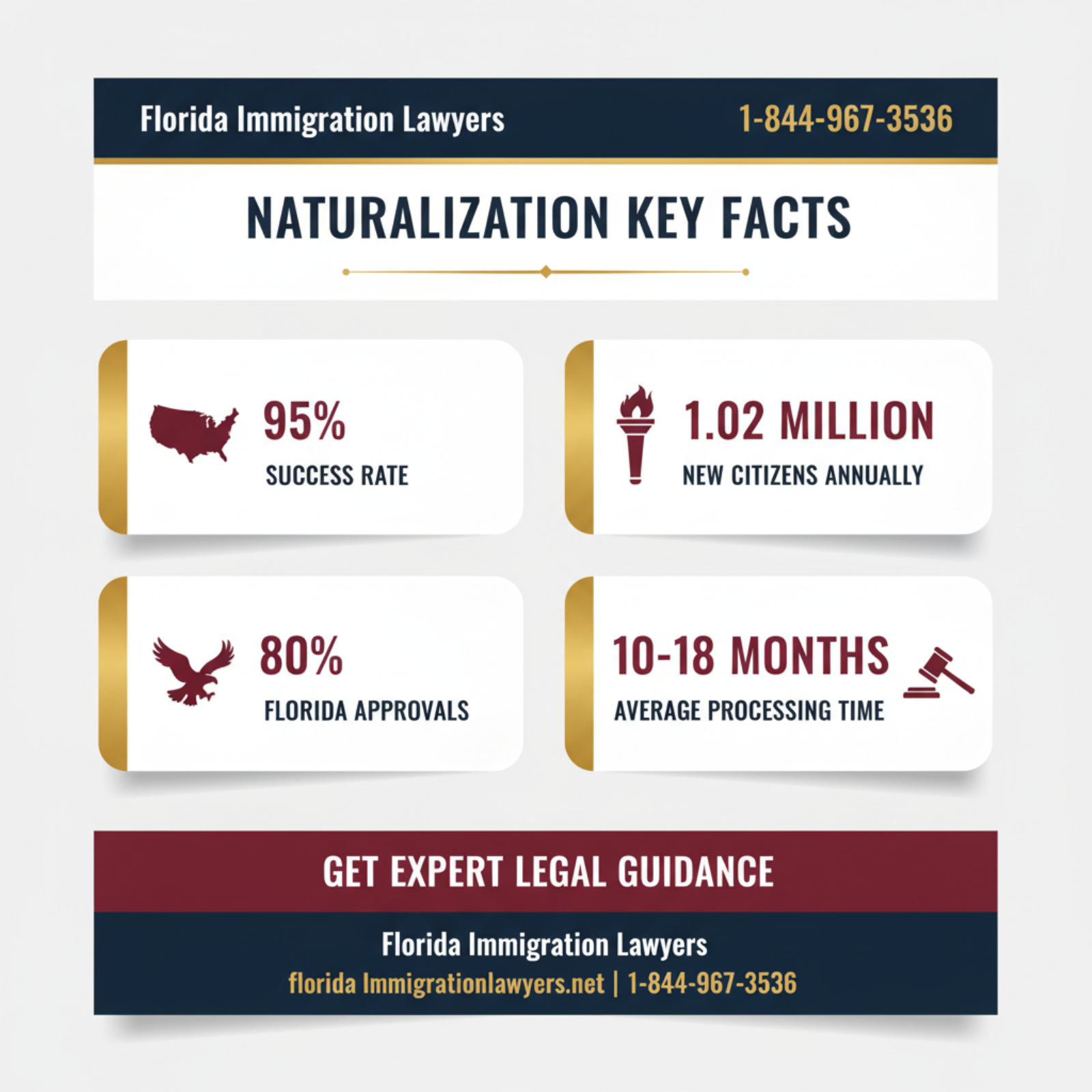
USCIS regularly updates its processing times for Form N-400. While these are estimates and not guarantees, they provide a general idea of how long each stage might take. You can check specific processing times for the Tampa Field Office, Miami Field Office, or other Florida locations directly on the USCIS website. Typically, the entire naturalization process from filing your N-400 to taking the Oath of Allegiance can range from 12 to 24 months.
Factors influencing the processing times include:
- Workload at the specific USCIS field office: Offices with higher application volumes may have longer wait times.
- Completeness and accuracy of your application: Errors or missing documents will lead to delays.
- Results of background checks: Extensive or complicated background checks can extend the timeline.
- Response to Requests for Evidence (RFEs): If USCIS requests additional information, your response time will affect the overall timeline.
What to Expect During Each Stage (Estimated)
- Filing to Biometrics Appointment: Typically 1-3 months after USCIS receives your application.
- Biometrics to Interview Scheduling: This phase can vary widely, from 6-12 months or longer, depending on the field office workload.
- Interview to Decision: Often, a decision is made at the interview or shortly thereafter. If approved, the Oath Ceremony notice usually follows within 1-2 months.
- Oath of Allegiance Ceremony: Typically scheduled 1-3 months after interview approval.
It is crucial to monitor your case status online using the receipt number provided by USCIS. If your case falls outside the normal processing times, you may be able to inquire with USCIS or seek assistance from an attorney.
Cost Factors and Fee Breakdown for Naturalization
Understanding the financial aspects of the naturalization process is an important part of your planning. The costs associated with applying for U.S. citizenship primarily include USCIS filing fees and potential legal fees. It is important to note that USCIS fees can change, so always verify the current amounts on their official website.
USCIS Filing Fees
The main fee for naturalization is the Form N-400 filing fee. This fee covers the cost of processing your application. Additionally, there is typically a biometric services fee that covers the cost of collecting your fingerprints, photograph, and signature. These two fees are often paid together.
USCIS does offer fee waivers for eligible applicants who can demonstrate an inability to pay. Eligibility for a fee waiver is usually based on income levels or receipt of certain public benefits. If you believe you qualify for a fee waiver, you must submit Form I-912, Request for Fee Waiver, along with your N-400 application and supporting documentation.
Other Potential Costs
Beyond the USCIS fees, you may incur other expenses during your naturalization process Florida timeline:
- Attorney Fees: While not mandatory, hiring an experienced immigration lawyer can be invaluable. Legal fees vary depending on the complexity of your case and the services provided, such as preparing the application, responding to RFEs, or accompanying you to the interview.
- Document Translation Fees: If any of your supporting documents are not in English, you will need to provide certified English translations. Costs for these services can vary.
- Travel Expenses: You may incur costs for travel to your biometrics appointment, interview, and Oath of Allegiance ceremony, especially if you live far from a USCIS office in Florida.
- Passport Photos: The cost for required passport-style photographs.
Always budget carefully for these potential expenses. Financial planning is a key component of a successful application for U.S. citizenship.
The journey to U.S. citizenship is a significant undertaking, and navigating the complex legal requirements can be challenging. Do not navigate this process alone. Contact Florida Immigration Lawyers today for dedicated legal support. We can help you understand your eligibility, prepare your N-400 application, and guide you through every step of the naturalization process Florida timeline. Call us at 1-844-967-3536 to schedule your consultation.
Common Mistakes to Avoid During the Naturalization Process
The naturalization process, while straightforward for many, is fraught with potential pitfalls that can lead to delays or even denial of your U.S. citizenship application. Being aware of these common mistakes can help you avoid them and ensure a smoother naturalization process Florida timeline.
-
Failing to Meet Residency Requirements
One of the most frequent errors is miscalculating the continuous residency or physical presence requirements. Extended trips outside the U.S. (typically six months or more) can break your continuous residency, restarting the clock on your eligibility period. Always track your travel dates carefully and consult an attorney if you have spent significant time abroad.
-
Inaccurate or Incomplete Form N-400
Submitting an N-400 application with errors, omissions, or inconsistent information can lead to Requests for Evidence (RFEs) or even denial. Every question must be answered truthfully and completely. Double-check all dates, addresses, and employment history before filing.
-
Lack of Good Moral Character
Failure to demonstrate good moral character is a common reason for denial. This includes undisclosed arrests, convictions, or even certain traffic offenses. Any interaction with law enforcement, no matter how minor, must be disclosed. Lying during the interview or on the application is a severe offense that can lead to a lifetime bar from citizenship.
-
Ignoring Selective Service Registration
Most males who have resided in the U.S. between the ages of 18 and 26 are required to register for Selective Service. Failure to do so can negatively impact your naturalization application, unless you can demonstrate you were not required to register or that your failure was not knowing and willful. This is a critical point for many male green card holders.
-
Failing the English and Civics Tests
Many applicants underestimate the importance of preparing for the English and civics components of the interview. While exceptions exist for age or disability, most must pass these tests. Practice reading, writing, and speaking English, and study the 100 civics questions thoroughly. Resources are available on the USCIS website.
-
Not Disclosing All Children or Spouses
Even if children or spouses do not live with you, or if you have previous marriages, you must disclose all family members on your N-400. Failure to do so can be considered misrepresentation and may result in denial of your U.S. citizenship application.
-
Missing Deadlines or Appointments
Ignoring USCIS notices for biometrics, interviews, or Requests for Evidence can lead to your application being denied or abandoned. Always keep your address updated with USCIS and respond promptly to all communications. Missing an appointment without proper rescheduling can severely jeopardize your case.
-
Not Providing Certified Translations
Any supporting document not in English must be accompanied by a complete and certified English translation. Failing to provide these translations, or providing non-certified ones, will lead to delays and RFEs.
-
Travelling Abroad After Filing Without Caution
While you can travel after filing Form N-400, lengthy trips can still impact your continuous residency or physical presence. Consult with an attorney before making extended international travel plans during your naturalization process Florida timeline.
-
Not Updating USCIS of Address Changes
If you move while your N-400 is pending, you must notify USCIS of your new address promptly. Failure to do so means you might miss critical notices, leading to delays or even denial. You can update your address online or by mail.
When to Call a Florida Immigration Lawyer for Naturalization Assistance
While the naturalization process appears straightforward on paper, many situations warrant the expertise of an experienced immigration attorney. Florida Immigration Lawyers are dedicated to guiding individuals through the complexities of obtaining U.S. citizenship. We serve clients across Florida, including Tampa, Orlando, Miami, and Jacksonville.
You should consider contacting Florida Immigration Lawyers if:
- You have a criminal record: Any arrest, conviction, or even minor traffic infractions can impact your good moral character. An attorney can assess the impact and advise on disclosure and mitigation.
- You have spent significant time outside the U.S.: Long trips can break your continuous residency. We can help you determine if you still meet the physical presence requirements.
- You have previously been denied naturalization: We can review your prior application, identify issues, and strategize for a new application or appeal.
- Your case involves complexities: This might include issues with selective service registration, tax problems, or specific family situations.
- You need a disability waiver for the English or civics test: We can assist with preparing Form N-648 and ensuring proper medical documentation.
- You are concerned about the naturalization interview: We can help you prepare for the interview, including practicing civics questions and reviewing your N-400 application.
- You receive a Request for Evidence (RFE) or a Notice of Intent to Deny (NOID): These require a timely and precise response. An attorney can help you gather the necessary evidence and craft a compelling submission.
- You simply want peace of mind: Ensuring your N-400 application is perfectly prepared and submitted can alleviate stress and increase your chances of a smooth naturalization process Florida timeline.
Our team at Florida Immigration Lawyers is here to provide personalized guidance and representation. We understand the local USCIS procedures in Florida and are committed to helping you achieve your dream of U.S. citizenship.
About Florida Immigration Lawyers
Florida Immigration Lawyers is a leading law firm dedicated to providing comprehensive and compassionate immigration legal services across the entire state of Florida. Our experienced team understands the nuances of U.S. immigration law and is committed to helping individuals and families navigate their unique immigration journeys. We pride ourselves on offering personalized attention and strategic advice to achieve the best possible outcomes for our clients.
Our Services Include:
- Citizenship and Naturalization: Guiding clients through the entire naturalization process, from N-400 application preparation to interview accompaniment.
- Family-Based Immigration: Assisting with petitions for spouses, children, parents, and siblings.
- Employment-Based Immigration: Supporting businesses and individuals with work visas and green cards.
- Deportation Defense: Providing aggressive representation for individuals facing removal proceedings.
- Asylum and Refugee Status: Helping those seeking protection in the U.S.
- Visa Applications: Assistance with various non-immigrant and immigrant visa categories.
Why Choose Florida Immigration Lawyers?
- Expertise: Our attorneys possess deep knowledge of immigration law and stay updated on the latest policy changes.
- Client-Centered Approach: We treat every client with respect and empathy, understanding the personal stakes involved.
- Accessibility: We are available 24/7 to address your urgent immigration concerns.
- Free Consultations: We offer free initial consultations to discuss your case and outline your options.
- Bilingual Services: Se Habla Español – our team is fluent in both English and Spanish to serve Florida's diverse community effectively.
Let us be your trusted partner on your immigration journey.
Phone: 1-844-967-3536
Website: https://www.floridaimmigrationlawyers.net
Serving all of Florida, including Tampa, Orlando, Miami, Jacksonville, and Fort Lauderdale.
Sources and References
- U.S. Citizenship and Immigration Services (USCIS)
- Form N-400, Application for Naturalization - USCIS
- Study for the Test - USCIS Civics Test
- 8 U.S.C. § 1427 - Requirements for naturalization
- 8 U.S.C. § 1429 - Ineligibility to naturalize
- 8 CFR Part 316 - General Requirements for Naturalization
This article provides general legal information and is not intended as legal advice. Every case is unique, and outcomes depend on specific facts and circumstances. Contact an attorney for advice about your particular situation.
Are you ready to take the next step towards becoming a U.S. citizen? Do not leave your future to chance. The complexities of the naturalization process Florida timeline require expert guidance. Call Florida Immigration Lawyers today at 1-844-967-3536 for a free, confidential consultation. Let our experienced team help you navigate your path to U.S. citizenship with confidence. Se Habla Español - Estamos aquí para ayudarle.
Frequently Asked Questions
Florida Immigration Lawyers
Legal Team
Our experienced attorneys at Florida Immigration Lawyers have been serving clients across Florida for over 20 years. We specialize in immigration, personal injury, criminal defense, workers compensation, and family law.