Green Card Holder ICE Detention in Florida: Your Rights & Defense
A green card holder ICE detention in Florida can happen for various reasons, primarily criminal convictions or immigration violations. While LPRs have significant rights, they are not immune to removal proceedings. This guide outlines the detention process, essential documents, timelines, and costs involved. It emphasizes the critical need for immediate legal representation to protect your rights and fight potential deportation. Learn how Florida Immigration Lawyers can provide expert guidance and support to challenge detention and defend your permanent resident status in Florida, including areas like St. Petersburg. Act quickly and understand your options.
Yes, a green card holder ICE detention is possible in Florida, even for lawful permanent residents. This typically occurs due to certain criminal convictions, past immigration violations, or misrepresentations. Understanding your rights, seeking immediate legal counsel, and preparing a robust defense are critical to challenging your detention and preventing potential deportation.
- Green card holders are not immune to ICE detention or deportation.
- Criminal convictions, even minor ones, can trigger detention.
- Immediate legal representation is crucial for bond hearings and defense.
- Know your rights: do not sign documents without understanding them.
- Prepare all immigration and personal documents for your defense.
Imagine receiving a knock on your door, or being stopped on the street in St. Petersburg, Florida, only to find yourself facing questioning by Immigration and Customs Enforcement (ICE). For many lawful permanent residents (LPRs), also known as green card holders, the thought of ICE detention can be terrifying. You've built a life here, perhaps for decades, and assumed your green card offered complete protection.
However, the reality is that green card holders are not entirely immune from detention or even deportation. Certain actions, particularly criminal convictions or immigration infractions, can put your lawful permanent resident status at significant risk. Understanding your rights and the potential pathways to detention is the first step in protecting your future in Florida.
This comprehensive guide from Florida Immigration Lawyers will walk you through the complexities of green card holder ICE detention in Florida. We will cover why detention occurs, what to expect during the process, and how a skilled immigration attorney can fight to keep you with your family. Do not face this daunting challenge alone. Call Florida Immigration Lawyers at 1-844-967-3536 for a free consultation today.
Understanding ICE Detention for Green Card Holders in Florida
Many green card holders mistakenly believe their status provides absolute immunity from immigration enforcement actions. While LPRs have significantly more rights than undocumented individuals, they are still subject to the Immigration and Nationality Act (INA). Certain circumstances can lead to detention by ICE and initiation of removal proceedings.
In Florida, a state with a large immigrant population, encounters with ICE are a real concern. Knowing the specific triggers for detention is essential for every green card holder. Your understanding can be your best defense against unexpected challenges to your status.
Who is a Green Card Holder (Lawful Permanent Resident)?
A green card holder, or lawful permanent resident (LPR), is an individual who has been granted the privilege of permanently residing in the United States. This status allows you to live and work permanently anywhere in the U.S., travel internationally, and eventually apply for U.S. citizenship. Your green card, Form I-551, is proof of this status.
However, this status is conditional and can be revoked under specific legal grounds. It is vital to understand that permanent residency is not the same as citizenship. Citizens generally cannot be deported, but LPRs can be.
Common Reasons for ICE Detention of Green Card Holders
ICE primarily detains green card holders who are considered deportable under U.S. immigration law. The most common reasons for detention stem from criminal activity or significant immigration violations. Even seemingly minor offenses can have severe immigration consequences.
Key reasons for detention include:
- Criminal Convictions: This is the most frequent cause. Certain crimes, especially those classified as "aggravated felonies" or "crimes involving moral turpitude" (CIMT), make a green card holder deportable. Examples include drug offenses, certain violent crimes, theft, and fraud. Even old convictions can resurface.
- Immigration Violations: This can include abandonment of residence (spending too much time outside the U.S.), marriage fraud, or misrepresentation on immigration applications. If USCIS believes you obtained your green card fraudulently, your status can be revoked.
- Violation of Terms of Admission: For example, if you entered on a temporary visa and then adjusted status, but there were issues with the original entry.
- Security Grounds: Though less common, involvement in terrorism-related activities or other national security concerns can lead to detention and deportation.
It's important to note that even if you have served your time for a criminal offense, ICE can still place a detainer on you. This means that upon your release from criminal custody, you would be transferred directly to ICE custody instead of being set free. This often happens in county jails across Florida, including facilities in Pinellas County near St. Petersburg.
Navigating the Detention Process: A Step-by-Step Guide
Being detained by ICE is a frightening experience, but understanding the process can help you prepare. While every case is unique, there's a general sequence of events that green card holders typically face in Florida.
-
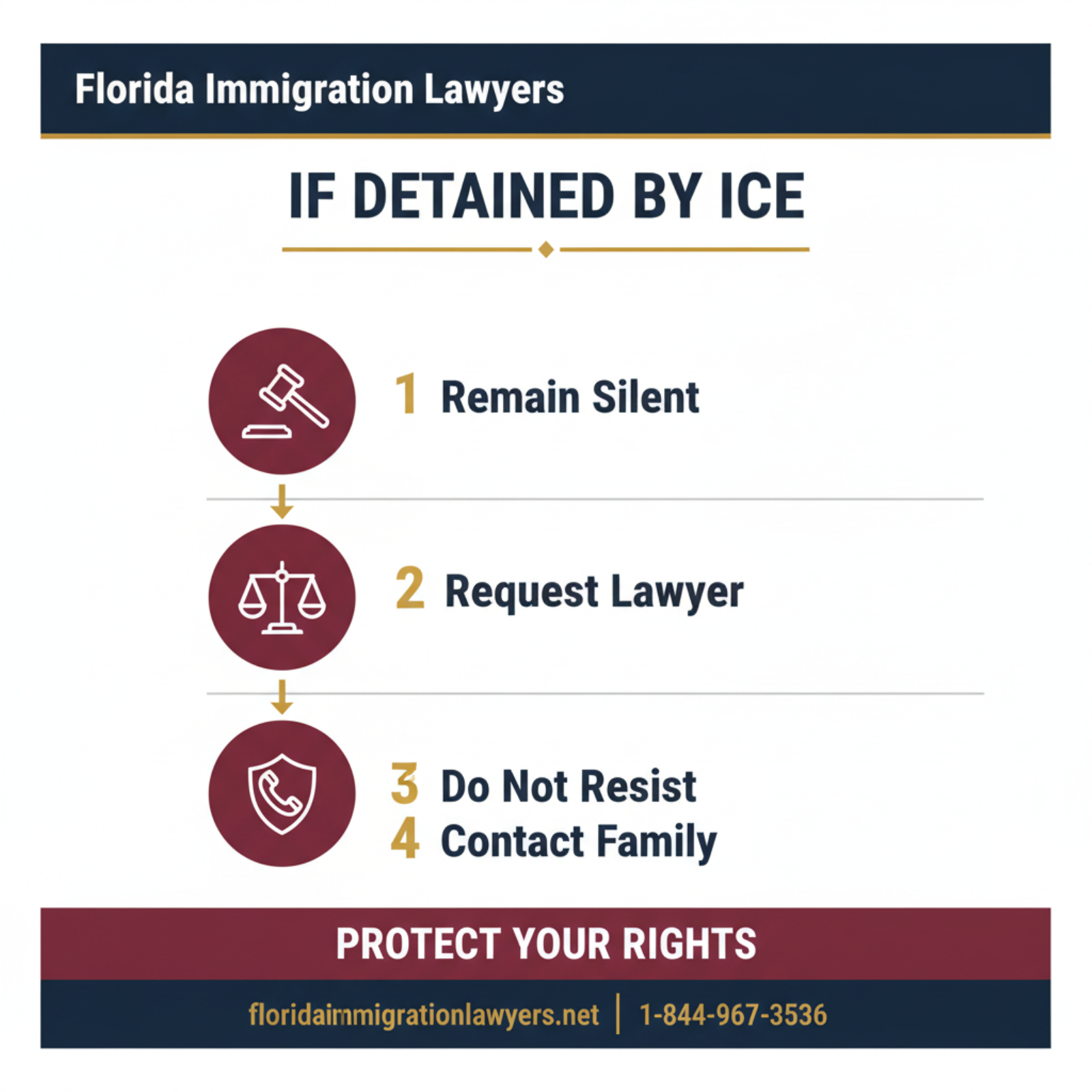
Arrest and Initial Processing: ICE may arrest a green card holder at home, work, or after release from criminal custody. You will be taken to an ICE detention facility, often in places like Glades County Detention Center or Krome Service Processing Center in Florida. During processing, your fingerprints will be taken, and you will be questioned. You have the right to remain silent and the right to speak with a lawyer. Do not sign anything you do not understand.
-
Issuance of a Notice to Appear (NTA): If ICE believes you are deportable, they will issue a Form I-862, Notice to Appear (NTA). This document formally charges you with being removable from the U.S. and initiates removal proceedings in immigration court. The NTA will list the specific grounds of deportability against you, often referencing sections of the INA, such as 8 U.S.C. § 1227 (INA 237) for deportable aliens.
-
Bond Hearing (if eligible): Not all green card holders are eligible for bond. If you are detained for certain serious offenses (e.g., "aggravated felonies" under INA 101(a)(43), 8 U.S.C. § 1101(a)(43)), you may be subject to mandatory detention, meaning no bond can be set. For those eligible, an immigration judge in a Florida immigration court (such as in Orlando or Miami) will determine if you are a flight risk or a danger to the community. If bond is granted, you or your family can pay it for your release while your case proceeds. An experienced lawyer can argue for your release on bond.
-
Master Calendar Hearing: This is the first court appearance before an immigration judge. The judge will confirm your identity, ensure you received the NTA, and ask you to admit or deny the allegations and concede or contest deportability. This is where your attorney will formally enter an appearance and discuss potential forms of relief from removal. This initial hearing sets the stage for your defense.
-
Individual Hearing (Merits Hearing): If you contest deportability or seek relief, the judge will schedule an individual hearing. This is a trial where both sides present evidence, call witnesses, and cross-examine. Your attorney will present your case, arguing why you should not be deported and are eligible for relief, such as cancellation of removal (INA 240A) or adjustment of status. The burden of proof is generally on the government to show you are deportable, but on you to show eligibility for relief.
-
Decision and Appeals: After the individual hearing, the immigration judge will issue a decision. If the judge orders your removal, your attorney can appeal the decision to the Board of Immigration Appeals (BIA). Further appeals can be made to the U.S. Circuit Court of Appeals. The appeals process can be lengthy but offers a critical opportunity to overturn an unfavorable decision.
Throughout this entire process, having a knowledgeable deportation defense attorney from Florida Immigration Lawyers is paramount. We can guide you through each step, advocate for your rights, and build the strongest possible defense to keep you in Florida.
Essential Documents for Your Defense
When facing green card holder ICE detention, having access to crucial documents can significantly impact your case. These documents help establish your identity, legal status, and eligibility for various forms of relief. Start gathering these as soon as possible, or instruct family members to do so.
- Lawful Permanent Resident Card (Green Card): Your Form I-551 is the most critical document proving your status.
- Passport and Birth Certificate: To verify your identity and nationality.
- Marriage Certificate and Children's Birth Certificates: If you have U.S. citizen or LPR family members, especially immediate relatives, they may be crucial for certain forms of relief.
- Criminal Records: Certified copies of all arrest records, court dispositions, and sentencing documents, even for old or seemingly minor offenses. Your attorney needs to review these thoroughly.
- Immigration Documents: Copies of all previous immigration applications (e.g., I-130, I-485, I-765, I-140), approval notices, and any correspondence with USCIS or the Department of State.
- Financial Records: Proof of employment, tax returns, bank statements to demonstrate your ties to the community and financial stability.
- Proof of Residence: Utility bills, lease agreements, property deeds showing your long-term residence in Florida.
- Character References: Letters from employers, community leaders, family, and friends attesting to your good moral character.
- Medical Records: If you have any serious health conditions that would make deportation difficult or dangerous.
Organizing these documents can be overwhelming, especially when detained. Our team at Florida Immigration Lawyers can help you and your family compile and present these vital records effectively to the immigration court.
Timelines and Processing Expectations in Florida Immigration Courts
The immigration court process, especially for detained individuals, can be highly unpredictable. While some cases resolve quickly, others can drag on for months or even years. Several factors influence the timeline for green card holder ICE detention cases in Florida.
Key factors affecting your timeline include:
- Court Caseload: Immigration courts in Florida, particularly in Miami and Orlando, often have heavy dockets, leading to delays in scheduling hearings.
- Type of Case: Cases involving complex criminal issues or multiple forms of relief can take longer.
- Mandatory Detention: If you are subject to mandatory detention, you will remain in ICE custody throughout your court proceedings unless you win your case or are granted relief. This adds urgency to your case.
- Appeals: If either side appeals a decision, the process can extend significantly, as appeals to the BIA can take many months.
- Availability of Evidence and Witnesses: Delays can occur if it takes time to gather necessary documents or schedule witness testimony.
Generally, initial bond hearings for eligible individuals may occur relatively quickly after detention. Master calendar hearings typically follow within a few weeks to months. Individual hearings, however, can be scheduled several months or even over a year after the initial hearing, depending on court availability.
It is important to manage your expectations and work closely with your attorney. We will keep you informed of all developments and help you understand the potential duration of your case. You can find more information on court dockets and processes on the Executive Office for Immigration Review (EOIR) website.
Cost Factors and Legal Fees
Navigating green card holder ICE detention involves various potential costs. Understanding these financial aspects upfront can help you plan and make informed decisions. Legal fees are a significant component, but other expenses may also arise.
- Attorney Fees: Legal representation is crucial, and fees will vary based on the complexity of your case, the attorney's experience, and the amount of time required. Our firm, Florida Immigration Lawyers, offers transparent fee structures and works to provide accessible legal services.
- Bond Amount: If an immigration judge grants bond, you or your family must pay the specified amount for your release. Bond amounts can range from a few thousand dollars to tens of thousands, depending on the individual's flight risk and danger assessment.
- Filing Fees: While less common for detained cases, certain applications for relief (e.g., waivers) may require filing fees with USCIS or EOIR.
- Translation and Document Costs: You may incur costs for translating documents not in English or for obtaining certified copies of records from various agencies.
- Expert Witness Fees: In complex cases, such as those involving criminal law or mental health, expert witnesses may be needed, incurring additional costs.
Investing in skilled legal representation can ultimately save you money and, more importantly, your green card and your future. A successful defense can prevent deportation, which would have far greater financial and personal costs. We encourage you to discuss all potential costs during your free consultation with Florida Immigration Lawyers.

Do not navigate this process alone. Contact Florida Immigration Lawyers today to discuss your situation and explore your legal options. We are here to fight for you.
Common Mistakes to Avoid During ICE Detention
When a green card holder ICE detention occurs, the situation is stressful and confusing. Making mistakes during this critical time can jeopardize your case and lead to severe consequences, including deportation. Be aware of these common pitfalls:
-
Lying or Misrepresenting Facts to ICE: Providing false information to immigration officers can lead to charges of fraud and misrepresentation, making you inadmissible or deportable. Honesty, even if it seems detrimental, is usually the best policy, especially under the guidance of your attorney. (Refer to INA 212(a)(6)(C)(i), 8 U.S.C. § 1182(a)(6)(C)(i)).
-
Signing Documents Without Understanding Them: ICE agents may present you with documents to sign, such as a "Voluntary Departure" form. Signing these without understanding their implications or consulting an attorney can lead to you waiving critical rights, including your right to a hearing before an immigration judge. Always ask to speak with your lawyer first.
-
Not Carrying Your Green Card: Lawful permanent residents are required by law to carry proof of their registration, which is typically their green card (Form I-551). Failure to do so can lead to detention and questioning. (Refer to 8 CFR 264.7).
-
Abandoning Your Green Card: If you leave the U.S. for extended periods (typically more than six months, or especially more than a year) without proper re-entry permits or intent to return, you may be deemed to have abandoned your LPR status. This can lead to issues at ports of entry in Florida or detention. (Refer to 8 CFR 211.1(a)(2)).
-
Discussing Your Case with Others in Detention: Be cautious about what you say to other detainees. Information can be misconstrued or used against you. Limit discussions about your case to your attorney and trusted family members.
-
Missing Court Dates: Failing to appear for scheduled immigration court hearings, whether master calendar or individual, can result in an "in absentia" removal order. This is a deportation order issued in your absence, making it extremely difficult to reverse. Always keep track of your court schedule.
-
Not Disclosing All Criminal History to Your Attorney: Even if you think a past arrest or conviction is irrelevant or expunged, it is crucial to disclose everything to your immigration lawyer. What seems minor in criminal law can have major immigration consequences. Your attorney needs the full picture to prepare your defense.
-
Failing to Seek Legal Counsel Immediately: The moments following an ICE detention are critical. Delaying legal consultation can mean missed opportunities for bond, improper self-representation, or even unknowingly signing away your rights. An attorney can intervene quickly.
-
Assuming All Criminal Lawyers Understand Immigration Law: While a criminal attorney handles your criminal charges, immigration law is a separate, complex field. A criminal conviction can have vastly different consequences under immigration law. Ensure you have an immigration attorney who specializes in deportation defense.
-
Not Informing Family of Your Detention: It is vital to inform a trusted family member or friend of your detention location. This allows them to contact an attorney on your behalf, provide support, and gather necessary documents. ICE must allow you to make a phone call.
When to Call a Lawyer for ICE Detention in Florida
The decision to contact an attorney should not be delayed if you or a loved one is facing green card holder ICE detention. The complexities of immigration law, combined with the high stakes of potential deportation, make legal representation essential. Florida Immigration Lawyers are ready to assist you.
You should immediately call an immigration lawyer if:
- You or a family member has been detained by ICE: This is the most critical time to seek legal help. An attorney can ascertain the reason for detention, check for bond eligibility, and begin building a defense.
- You receive a Notice to Appear (NTA): This signifies that formal removal proceedings have begun. An attorney will help you understand the charges and prepare your response in immigration court.
- You have a past criminal conviction, even a minor one: Many criminal offenses can trigger deportability, even if they occurred years ago. A lawyer can assess the immigration consequences of your criminal history.
- You are concerned about your green card status: If you have spent significant time outside the U.S., made a misrepresentation on an immigration form, or have any doubts about your LPR status, consult an attorney proactively.
- You are asked to sign any documents by ICE: Never sign anything without a lawyer reviewing it first. An attorney will protect your rights and prevent you from unknowingly waiving them.
- You are a non-citizen arrested for any reason in Florida: Even a simple traffic stop that leads to an arrest can trigger ICE involvement if you are not a U.S. citizen. An attorney can advise on potential immigration consequences.
At Florida Immigration Lawyers, we specialize in immigration and deportation defense for individuals throughout Florida, including St. Petersburg. Our experienced attorneys understand the nuances of the law, including INA sections and BIA decisions, and how they apply to your unique situation. We are committed to fighting for your right to remain in the U.S. and protecting your green card status.
About Florida Immigration Lawyers
Florida Immigration Lawyers is a leading immigration law firm dedicated to serving individuals and families across the entire state of Florida. With years of experience and a deep understanding of U.S. immigration law, we are committed to providing compassionate, effective, and results-oriented legal representation.
Our firm specializes in a wide range of immigration services, including family-based immigration, business immigration, asylum, citizenship, and robust deportation defense. We understand the profound impact immigration issues have on your life and your family, and we approach every case with the dedication it deserves.
Why choose Florida Immigration Lawyers? We offer personalized attention, strategic legal advice, and a relentless commitment to protecting our clients' rights and futures. We are available 24/7 to address urgent concerns, and we offer free consultations to help you understand your options without financial burden. Our team is bilingual, with fluent Spanish speakers ready to assist you.
When your future in Florida is at stake, trust the experienced advocates at Florida Immigration Lawyers. Call us today at 1-844-967-3536 or visit our website at https://www.floridaimmigrationlawyers.net.
Sources and References
- U.S. Citizenship and Immigration Services (USCIS)
- Executive Office for Immigration Review (EOIR)
- U.S. Immigration and Customs Enforcement (ICE)
- 8 U.S.C. Chapter 12 - Immigration and Nationality Act (INA)
- INA Section 101(a)(43) - Definition of Aggravated Felony
- INA Section 212(a)(6)(C)(i) - Misrepresentation
- INA Section 237 - Deportable Aliens
- INA Section 240A - Cancellation of Removal
- 8 CFR 211.1(a)(2) - Abandonment of LPR Status
- 8 CFR 264.7 - Carrying Proof of Registration
This article provides general legal information and is not intended as legal advice. Every case is unique, and outcomes depend on specific facts and circumstances. Contact an attorney for advice about your particular situation.
If you or a loved one is facing green card holder ICE detention in Florida, the time to act is now. Do not delay in seeking professional legal assistance. Florida Immigration Lawyers are here to provide the expert guidance and robust representation you need. Call us for a free consultation at 1-844-967-3536. Se Habla Español - Estamos aquí para ayudarle.
Frequently Asked Questions
Florida Immigration Lawyers
Legal Team
Our experienced attorneys at Florida Immigration Lawyers have been serving clients across Florida for over 20 years. We specialize in immigration, personal injury, criminal defense, workers compensation, and family law.