Naturalization Ceremony ICE Concerns: Your Essential Florida Guide
For aspiring citizens in Florida, the naturalization ceremony is a significant milestone, often accompanied by anxieties about U.S. Immigration and Customs Enforcement (ICE) presence. While rare for approved candidates, individuals with unresolved immigration issues or certain criminal histories may face concerns. This comprehensive guide addresses these naturalization ceremony ICE concerns, detailing the naturalization process, required documents, timelines, and costs. We emphasize the importance of avoiding common mistakes and knowing when to seek legal counsel. Florida Immigration Lawyers offers expert guidance to ensure a smooth and confident path to U.S. citizenship. Contact us for a free consultation.
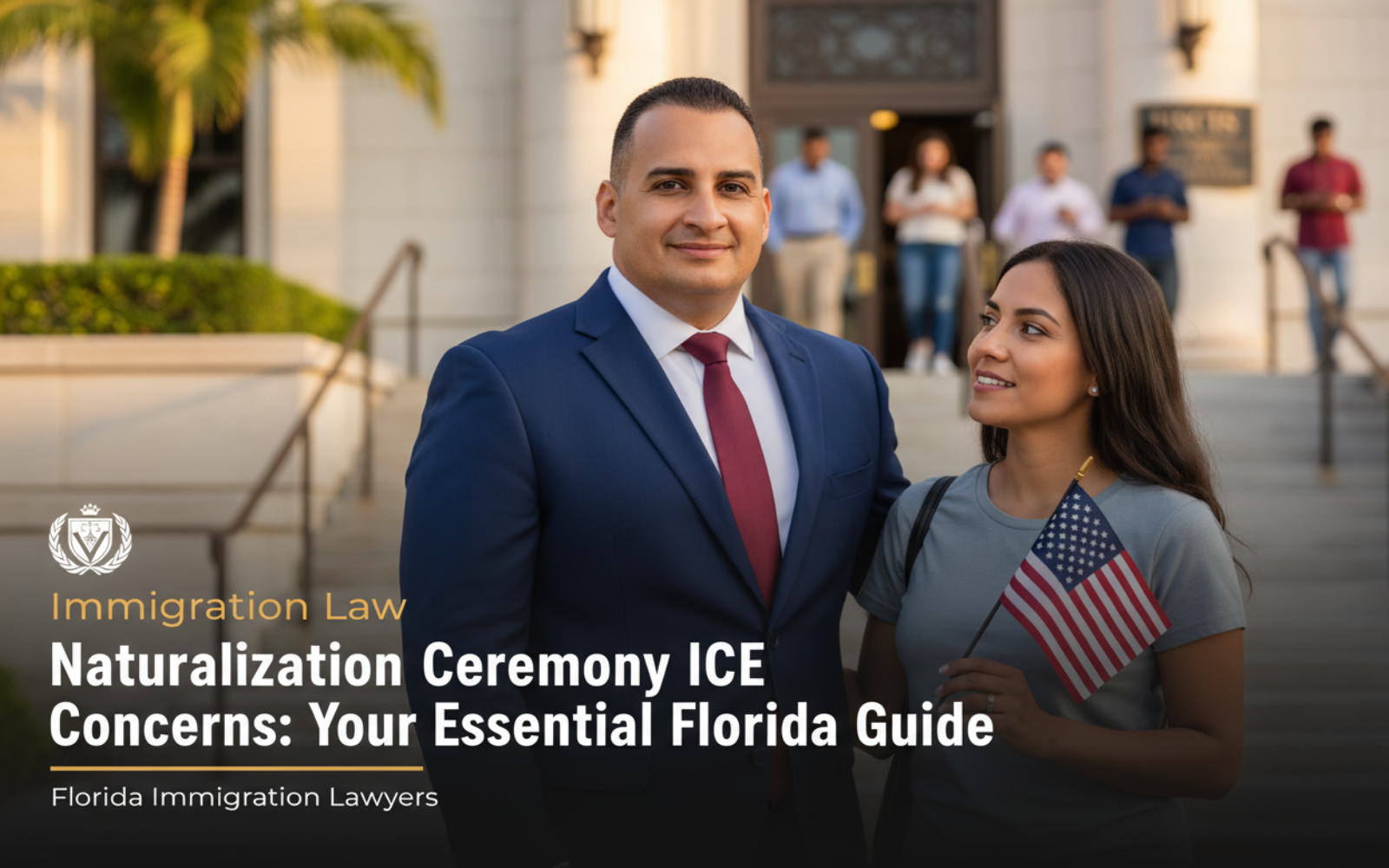
While U.S. Immigration and Customs Enforcement (ICE) typically does not target individuals at naturalization ceremonies who are eligible and approved for citizenship, concerns can arise for those with unresolved immigration issues or certain criminal histories. It is rare for ICE to detain an approved naturalization candidate. However, any past immigration violations, criminal records, or undisclosed issues could pose a risk. Consulting a Florida immigration lawyer before your naturalization ceremony is crucial to ensure your peace of mind and protect your rights.
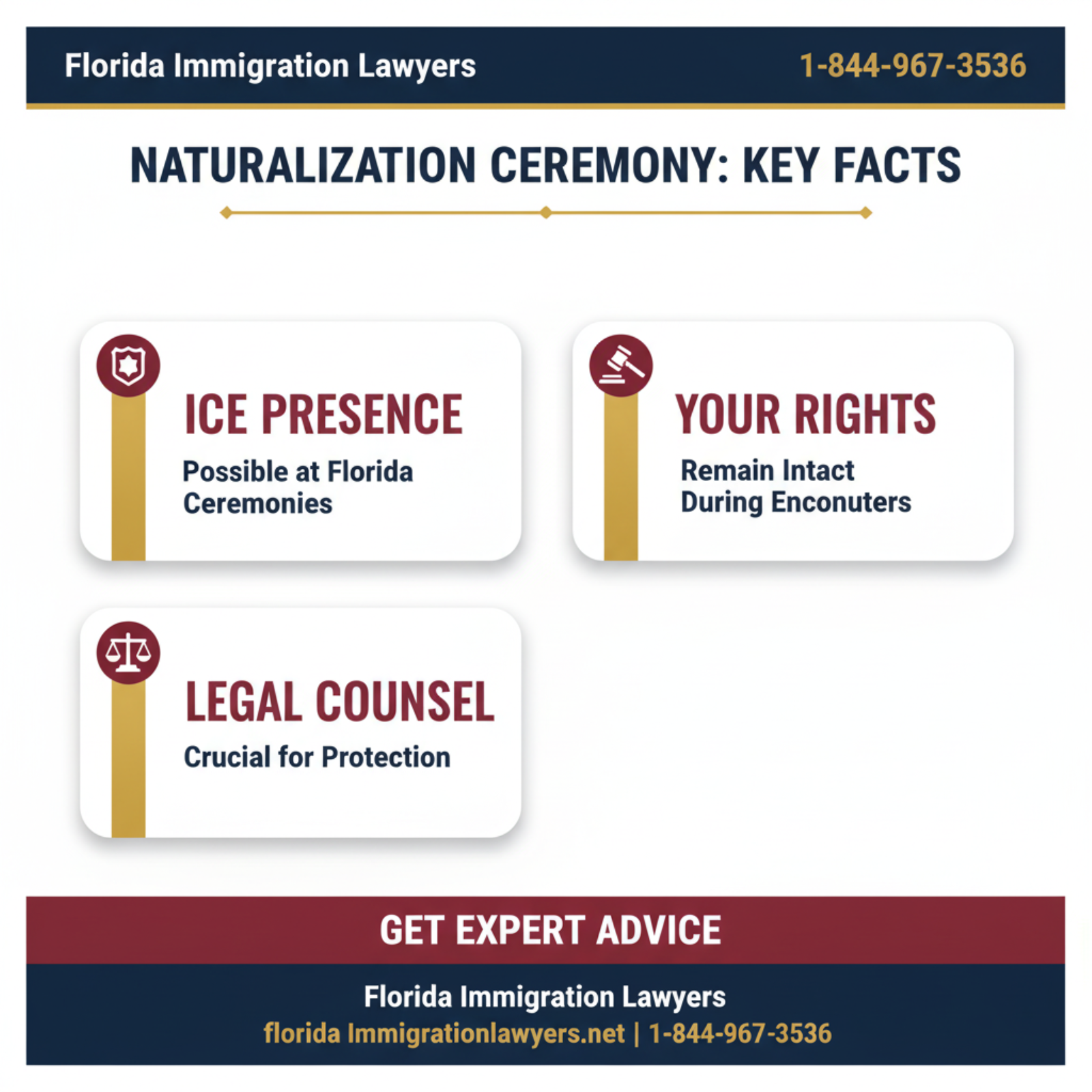
- ICE presence at naturalization ceremonies for approved candidates is generally rare.
- Individuals with pending immigration issues or certain criminal histories face higher risks.
- Full disclosure and resolving past issues before the ceremony are vital.
- A qualified Florida immigration lawyer can assess your specific situation and offer protection.
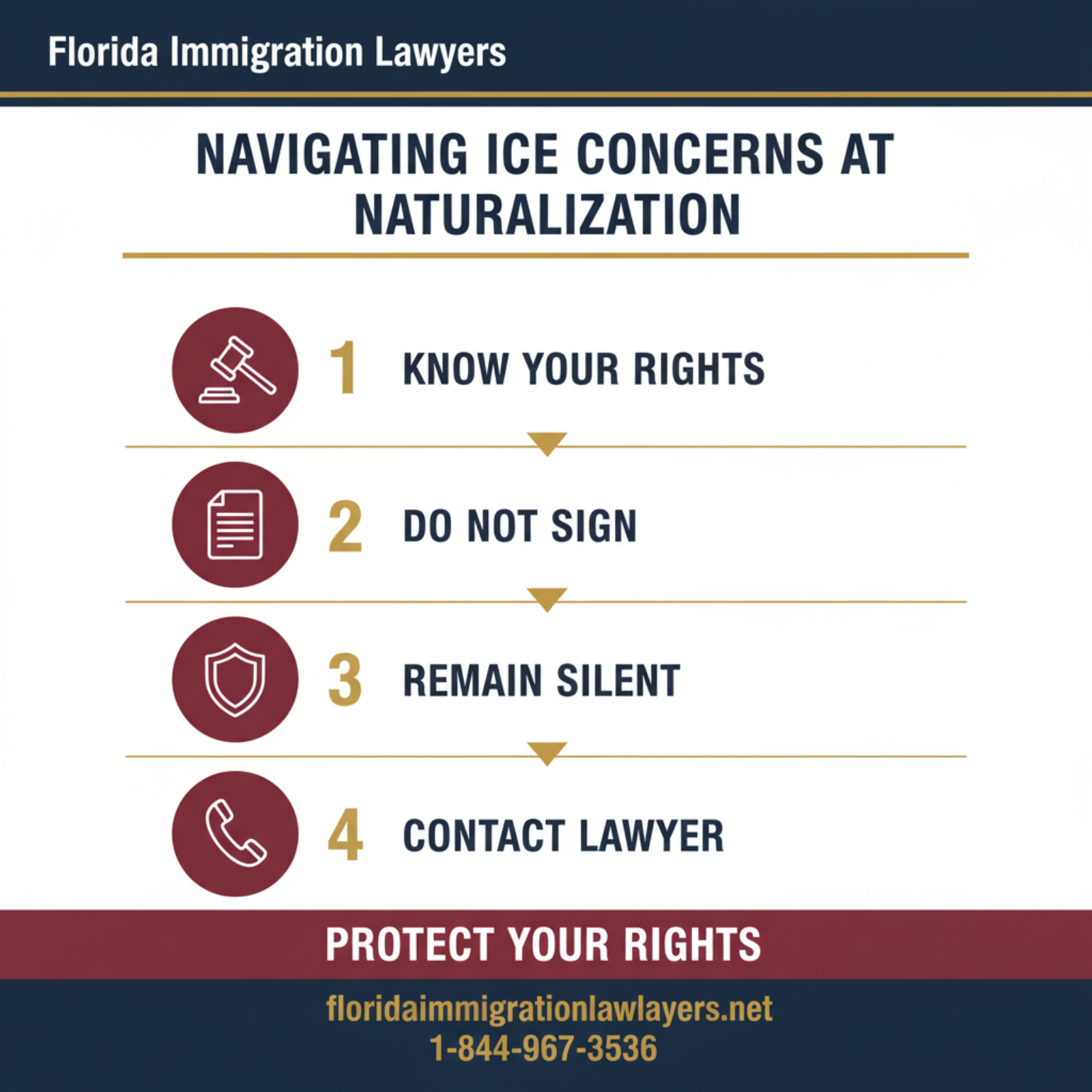
- Understanding your rights is key to navigating any potential naturalization ceremony ICE concerns.
The journey to becoming a U.S. citizen is a profound achievement, culminating in the naturalization ceremony. For many aspiring citizens in Hollywood and across Florida, this momentous occasion is also accompanied by a unique set of anxieties, particularly regarding the potential presence of U.S. Immigration and Customs Enforcement (ICE). You might worry if naturalization ceremony ICE concerns are relevant to your case. This article aims to address these fears directly, providing you with essential information about your rights and what to expect. We understand the importance of this step in your life.
Your peace of mind is paramount as you approach this final stage of your immigration journey. We will explore the realities of ICE involvement, the naturalization process itself, and crucial steps you can take to protect yourself. Do not navigate this significant milestone alone. Call Florida Immigration Lawyers at 1-844-967-3536 for a free consultation to discuss your specific naturalization ceremony ICE concerns. We are here to help you secure your future.
Understanding Naturalization Ceremony ICE Concerns in Florida
The prospect of encountering ICE at a naturalization ceremony can be a source of significant stress for many individuals. It is important to understand the general policy and the specific circumstances under which ICE might become involved. For the vast majority of applicants who have successfully navigated the naturalization process and been approved for citizenship, the naturalization ceremony is a safe and celebratory event.
Historically, there have been isolated incidents where ICE has been present at or near naturalization ceremonies. These situations typically involve individuals who have undisclosed criminal histories, outstanding warrants, or other serious immigration violations that were not fully resolved or discovered during the naturalization application process. In Florida, particularly in areas with large immigrant populations like Hollywood, Miami, and Orlando, vigilance is always advised, though the focus of these ceremonies remains on welcoming new citizens.
U.S. Citizenship and Immigration Services (USCIS) conducts naturalization ceremonies. USCIS and ICE are both components of the Department of Homeland Security (DHS), but they have different functions. USCIS processes immigration benefits, while ICE enforces immigration laws. While collaboration can occur, the primary purpose of a naturalization ceremony is to administer the Oath of Allegiance to eligible applicants, not to conduct immigration enforcement operations against those who have been approved for citizenship.
Your eligibility for naturalization is thoroughly vetted during the application and interview stages. If you have been approved, it generally means USCIS has determined you meet all legal requirements. However, if new, adverse information comes to light between your interview and the ceremony, or if there were misrepresentations on your application, it could potentially lead to complications. This is why addressing any potential issues proactively with an experienced Florida immigration lawyer is critical.
The Naturalization Process in Florida: A Step-by-Step Guide
Becoming a U.S. citizen through naturalization is a multi-step process. Understanding each stage can help alleviate naturalization ceremony ICE concerns by ensuring you are well-prepared and fully compliant. The process typically begins with meeting specific eligibility requirements related to age, residency, moral character, and English/civics knowledge.
- Determine Your Eligibility: You must generally be at least 18 years old, a lawful permanent resident (green card holder) for at least 5 years (or 3 years if married to a U.S. citizen), demonstrate continuous residency, be physically present in the U.S. for a specific period, show good moral character, and pass English and civics tests. Certain exceptions apply for military personnel.
- Prepare and File Form N-400, Application for Naturalization: This is the core application form. It requires detailed personal information, residency history, employment, travel, marital history, and criminal record disclosures. Accuracy and completeness are paramount. You can find the latest version and instructions on the USCIS website.
- Attend Biometrics Appointment: After filing, you will receive an appointment notice to provide fingerprints, photographs, and a signature. This data is used for background checks by the FBI and other agencies. These checks are a critical part of the process to ensure national security and public safety.
- Attend the Naturalization Interview: A USCIS officer will interview you to verify the information on your N-400, test your English proficiency (reading, writing, speaking), and assess your knowledge of U.S. history and government (civics test). The officer will also evaluate your good moral character. This is a crucial step where any discrepancies or undisclosed issues can surface.
- Receive a Decision: Following your interview, USCIS will issue a decision. This could be an approval, a request for more evidence, or a denial. If approved, you will typically receive a notice for your Oath of Allegiance ceremony.
- Attend the Oath of Allegiance Ceremony: This is the final step where you take an oath to become a U.S. citizen and receive your Certificate of Naturalization. Most ceremonies are administered by USCIS, though some may be conducted by a federal court in Florida. It is at this stage that the rare concerns about ICE might arise for certain individuals.
Throughout this entire process, maintaining good moral character is essential. This includes obeying all laws and being truthful in all your dealings with immigration authorities. A conviction for certain crimes, even minor ones, can jeopardize your application. For specific guidance on your situation, especially if you have a complex history, consulting a Florida immigration lawyer specializing in naturalization is highly recommended.
Required Documents for Your Naturalization Application
A well-prepared application package is key to a smooth naturalization process and can help prevent delays or issues that might lead to naturalization ceremony ICE concerns. Gathering all necessary documents before filing your Form N-400 is a critical step. While the exact list can vary based on your personal circumstances, the following are generally required:
- Copy of your Green Card (front and back).
- Copies of all passports, foreign and U.S. (if applicable), for the past 5 years (or 3 years if applying under the 3-year rule).
- Certified copies of marriage certificates and divorce decrees for you and your spouse (if applicable).
- Birth certificates for your children (if applicable).
- Tax returns for the past 5 years (or 3 years if applying under the 3-year rule).
- Proof of selective service registration (for males aged 18-26).
- Court disposition documents for any arrests, citations, or convictions, even if dismissed or expunged. This is especially important for mitigating naturalization ceremony ICE concerns.
- Proof of payment of child support or alimony (if applicable).
- Evidence of your continuous residence and physical presence in the U.S. (e.g., utility bills, leases, employment records, school records).
- Travel records, including dates of all trips outside the U.S. lasting 24 hours or more since becoming a permanent resident.
- Any other documents requested by USCIS during the application process or at your interview.
Always provide certified English translations for any documents not originally in English. Make sure to keep copies of everything you submit to USCIS. A missing or incorrect document can lead to a Request for Evidence (RFE), significantly delaying your application and potentially raising red flags. This meticulous preparation is a cornerstone of a successful naturalization case.
Naturalization Timeline and Processing Expectations in Florida 2026
The naturalization process timeline can vary significantly based on several factors, including the USCIS field office processing your application, the completeness of your submission, and any complexities in your case. In 2026, applicants in Florida, whether in Hollywood, Miami, Tampa, or Jacksonville, can expect certain general timeframes, but these are estimates and not guarantees.
Typically, after filing Form N-400, you can expect to receive a receipt notice within a few weeks. The biometrics appointment usually follows within 1-2 months. The longest part of the process is often the wait for the naturalization interview, which can take several months to over a year, depending on the specific USCIS field office workload. For example, the Miami Field Office may have different processing times than the Orlando or Tampa offices.
After a successful interview, the Oath of Allegiance ceremony can be scheduled anywhere from a few days to several months later. Some applicants may even be able to take the oath on the same day as their interview if their case is straightforward and resources allow. However, this is not always the case. Overall, the entire naturalization process, from filing to oath ceremony, can range from 8 months to over 2 years in Florida. You can check the average processing times for your specific USCIS field office on the USCIS website.
Factors that can extend your timeline include requests for additional evidence, issues discovered during background checks, a need for a second interview, or any complications related to your good moral character assessment. Delays are a common source of anxiety, but they do not necessarily indicate naturalization ceremony ICE concerns. Patience and proactive communication with your attorney are beneficial during these waiting periods.
Naturalization Cost Factors and Fee Breakdown
Understanding the financial aspects of naturalization is an important part of planning your journey to U.S. citizenship. The costs primarily consist of government filing fees and potential legal fees if you choose to hire an attorney. It is crucial to note that government fees are subject to change, so always check the latest amounts on the USCIS website or consult with your attorney.
The main government fee is for filing Form N-400, Application for Naturalization. There is also a separate fee for biometrics services. In certain situations, you might be eligible for a fee waiver if your income is below a certain threshold or if you receive certain public benefits. Carefully review the fee waiver eligibility requirements on the USCIS website, Form I-912, Request for Fee Waiver.
Beyond government fees, a significant cost factor for many applicants is legal representation. While not mandatory, hiring an experienced Florida immigration lawyer can provide invaluable assistance. Legal fees will vary based on the complexity of your case, the services provided (e.g., initial consultation, full case preparation, representation at interview, addressing naturalization ceremony ICE concerns), and the firm's experience. An attorney can help you prepare your application accurately, gather necessary documents, prepare you for your interview, and address any potential red flags that could lead to delays or complications.
Investing in legal assistance can often save you time, stress, and potential pitfalls in the long run. It ensures your application is robust and reduces the likelihood of issues that might draw unwanted attention from immigration enforcement. Discussing all potential costs upfront with your Florida Immigration Lawyers is a good practice to ensure transparency and proper financial planning.
Do not navigate this process alone. Contact Florida Immigration Lawyers today at 1-844-967-3536 to schedule your free consultation. We are ready to provide the expert guidance you need for a successful naturalization journey.
Common Mistakes to Avoid During the Naturalization Process
The naturalization process is rigorous, and even minor errors can lead to delays, denials, or even trigger unwanted attention from immigration authorities. Avoiding these common mistakes is crucial for a smooth path to citizenship and minimizing naturalization ceremony ICE concerns.
- Providing Incomplete or Inaccurate Information: Any false statements, omissions, or inconsistencies on your Form N-400 can be considered misrepresentation. This can lead to a denial, accusations of fraud, and potentially severe immigration consequences, including deportation defense issues. Always be truthful and thorough.
- Failing to Disclose All Criminal History: Even minor arrests, citations, or convictions, regardless of whether they were expunged or dismissed, must be disclosed. USCIS conducts thorough background checks. Hiding information will likely be discovered and can be detrimental to your good moral character assessment.
- Not Meeting Continuous Residence Requirements: Long absences from the U.S. can break your continuous residence period, making you ineligible. Understand the rules about absences and how they impact your eligibility.
- Inadequate Preparation for the Interview: Failing the English or civics test, or being unable to answer questions about your application, can lead to delays or a second interview. Practice for these tests and review your N-400 thoroughly.
- Ignoring USCIS Requests for Evidence (RFEs): If USCIS sends an RFE, you must respond completely and on time. Failing to do so will almost certainly result in a denial.
- Assuming Good Moral Character: Certain actions, even if not criminal, can impact your good moral character. These include failing to pay taxes, child support, or making false claims to U.S. citizenship.
- Traveling Internationally After Application Approval but Before Oath: While generally allowed, significant travel could raise questions, especially if it appears you are abandoning your U.S. residency. Discuss any travel plans with your attorney.
- Not Updating Your Address with USCIS: Missing important notices due to an outdated address can cause significant problems, including missed appointments or denials. Always update your address promptly.
- Attending the Ceremony with Unresolved Issues: If you have any new arrests, have traveled extensively, or have any doubts about your eligibility after your interview, do not attend the ceremony without first consulting your citizenship lawyer. This is where naturalization ceremony ICE concerns are most relevant.
- Misunderstanding the Oath of Allegiance: The oath is a serious commitment. Ensure you understand its meaning and are willing to uphold it.
When to Call a Lawyer Regarding Naturalization Ceremony ICE Concerns
While most naturalization ceremonies proceed without incident, certain situations warrant immediate legal consultation to mitigate naturalization ceremony ICE concerns. If you find yourself in any of the following scenarios, contacting an experienced Florida immigration lawyer from Florida Immigration Lawyers is highly advisable.
- Criminal History: If you have any arrests, charges, or convictions, no matter how minor or old, you should seek legal advice. Even expunged records can impact your good moral character. Your attorney can assess the impact on your naturalization and potential ICE implications.
- Previous Immigration Violations: If you have ever had a visa overstay, an order of deportation defense, or any other immigration violation, these issues must be addressed.
- Long Absences from the U.S.: If you have taken extended trips outside the U.S. that might affect your continuous residency or physical presence requirements, a lawyer can help evaluate your eligibility.
- Uncertainty About Good Moral Character: If you have engaged in any activities that could be seen as undermining your good moral character (e.g., failure to pay taxes, false claims, or certain financial issues), legal guidance is essential.
- Received a Notice of Intent to Deny (NOID): If USCIS sends you a NOID, it means they intend to deny your application. This is a critical point where legal intervention can be the difference between approval and denial.
- Fear of ICE Presence at Ceremony: If you have a specific reason to fear ICE at your ceremony, perhaps due to a family member's past issues or a misunderstanding, an attorney can provide reassurance and strategic advice.
- Any Changes Since Your Interview: If you have been arrested, traveled extensively, or had any significant life changes between your naturalization interview and your Oath of Allegiance ceremony, consult your lawyer immediately.
- Questions About Your Rights: If you are unsure about your rights during the naturalization process or if approached by immigration officers, a lawyer can explain your protections under the law.
Florida Immigration Lawyers has extensive experience in immigration law, including complex naturalization cases. We serve clients throughout Florida, including Hollywood, and are dedicated to protecting your rights and ensuring a smooth path to citizenship. Our team can help you prepare for your naturalization interview, address any potential red flags, and represent you if complications arise, including those related to naturalization ceremony ICE concerns.
About Florida Immigration Lawyers
Florida Immigration Lawyers is a leading immigration law firm dedicated to serving individuals and families across the entire state of Florida. With years of experience and a deep understanding of U.S. immigration law, our firm provides compassionate, effective, and results-driven legal representation. We understand the complexities and emotional challenges often associated with immigration matters, and we are committed to guiding our clients through every step of their journey.
Our comprehensive practice areas include general immigration, citizenship and naturalization, family-based immigration, business immigration, asylum, and deportation defense. We pride ourselves on offering personalized attention and strategic solutions tailored to meet the unique needs of each client. Our dedicated attorneys are highly skilled advocates, passionate about helping you achieve your immigration goals.
Why choose Florida Immigration Lawyers? We offer free consultations to assess your case, are available 24/7 to address your urgent questions, and have a proven track record of success. We are proud to offer bilingual services (Se Habla Español), ensuring clear and effective communication with our diverse clientele. From the initial consultation to the final resolution of your case, we stand by your side, providing expert legal advice and unwavering support. Visit us at https://www.floridaimmigrationlawyers.net or call 1-844-967-3536 to learn how we can assist you.
Sources and References
- U.S. Citizenship and Immigration Services (USCIS) - Apply for Citizenship
- USCIS Policy Manual - Volume 12, Part D, Oath of Allegiance
- Executive Office for Immigration Review (EOIR)
- Immigration and Nationality Act (INA) Section 316 - Requirements for Naturalization
- 8 U.S.C. § 1427 - Requirements for Naturalization
- 8 CFR Part 316 - General Requirements for Naturalization
This article provides general legal information and is not intended as legal advice. Every case is unique, and outcomes depend on specific facts and circumstances. Contact an attorney for advice about your particular situation. Immigration laws are complex and subject to change; always verify current regulations.
Do not let naturalization ceremony ICE concerns overshadow your momentous achievement. Secure your future with confidence. For expert legal guidance and a free consultation, contact Florida Immigration Lawyers today at 1-844-967-3536. Se Habla Español - Estamos aquí para ayudarle.
Need help with Immigration?
Our Florida immigration attorneys offer free consultations. Call today or schedule online.
Frequently Asked Questions
Florida Immigration Lawyers
Legal Team
Our experienced attorneys at Florida Immigration Lawyers have been serving clients across Florida for over 20 years. We specialize in immigration, personal injury, criminal defense, workers compensation, and family law.