Immigration Medical Exam Florida: Your I-693 Guide for St. Petersburg
The immigration medical exam is a mandatory process for many seeking permanent residency in the U.S., including those in Florida. This crucial evaluation, performed by a USCIS-approved civil surgeon, ensures applicants meet health standards documented on Form I-693. This guide covers everything from finding a civil surgeon in St. Petersburg, understanding the required vaccinations and tests, to managing costs and avoiding common mistakes. Learn why expert legal advice from Florida Immigration Lawyers can be vital, especially for complex cases or if you receive a Request for Evidence.
The immigration medical exam is a mandatory part of the U.S. immigration process for many applicants, ensuring public health and admissibility. Conducted by a USCIS-designated civil surgeon, this exam evaluates your health, vaccination status, and any conditions that might affect your eligibility. In Florida, including St. Petersburg, finding the right doctor for your I-693 form is crucial for a smooth application.
- Mandatory for many U.S. immigration applications.
- Must be performed by a USCIS-designated civil surgeon.
- Evaluates health, vaccinations, and potential inadmissibility grounds.
- Results are documented on Form I-693.
- Essential for applications in Florida, including St. Petersburg.
Embarking on the journey to a new life in the United States, especially in a vibrant state like Florida, can be both exciting and complex. Amidst the paperwork and legal requirements, one crucial step often stands out: the immigration medical exam. This examination, formally documented on Form I-693, is a cornerstone of the U.S. immigration process, designed to ensure that applicants meet specific health-related standards for admission. For those living in St. Petersburg and across Florida, understanding this requirement is vital.
We know that navigating immigration procedures can feel overwhelming. Our goal with this comprehensive guide is to demystify the immigration medical exam process, helping you understand what to expect, how to prepare, and why it's so important. From finding a certified civil surgeon in Florida to understanding the costs and common pitfalls, we're here to provide clarity. Remember, you don't have to face this alone. For personalized guidance and support throughout your immigration journey, call Florida Immigration Lawyers at 1-844-967-3536 for a free consultation. Our experienced team is ready to assist you.
Understanding the Immigration Medical Exam (Form I-693) in Florida
The immigration medical exam is a critical component for many individuals seeking to adjust their status to a lawful permanent resident (green card holder) within the United States, or for certain visa applicants abroad. Its primary purpose is to identify applicants with health-related grounds of inadmissibility under U.S. immigration law, specifically outlined in Section 212(a)(1) of the Immigration and Nationality Act (INA). This ensures public health and safety for residents of places like St. Petersburg and all of Florida.
This mandatory immigration physical must be conducted by a doctor approved by U.S. Citizenship and Immigration Services (USCIS), known as a civil surgeon. These designated professionals are specifically authorized to perform these unique examinations and complete the required Form I-693, Report of Medical Examination and Vaccination Record. It's crucial not to use just any doctor; only a USCIS-approved civil surgeon can provide a valid I-693 form.
The immigration medical exam generally assesses several key areas. First, it screens for communicable diseases of public health significance, such as active tuberculosis, syphilis, gonorrhea, and Hansen's disease (lepra). Second, it evaluates whether an applicant has a physical or mental disorder with associated harmful behavior, or a history of such behavior. Third, it checks for drug abuse or addiction. Finally, the exam verifies that applicants have received the necessary vaccinations required by U.S. law, aligning with guidelines from the Centers for Disease Control and Prevention (CDC). Meeting these health standards is a non-negotiable step in your journey to live legally in Florida.
Who Needs an I-693 Immigration Medical Exam?
Typically, individuals applying for adjustment of status to become lawful permanent residents within the United States must undergo an immigration medical exam and submit Form I-693. This includes family-based applicants, employment-based applicants, and asylum seekers adjusting their status. Certain refugee applicants may also require it.
There are some limited exceptions, such as those who previously completed an exam overseas and received an immigrant visa. However, for most applicants, especially those seeking a green card while residing in Florida, the I-693 is an essential requirement. Your immigration attorney at Florida Immigration Lawyers can help you determine if this exam is necessary for your specific case and advise on how it impacts your application in St. Petersburg or elsewhere in the state.
Step-by-Step Guide: Navigating Your Immigration Medical Exam in St. Petersburg
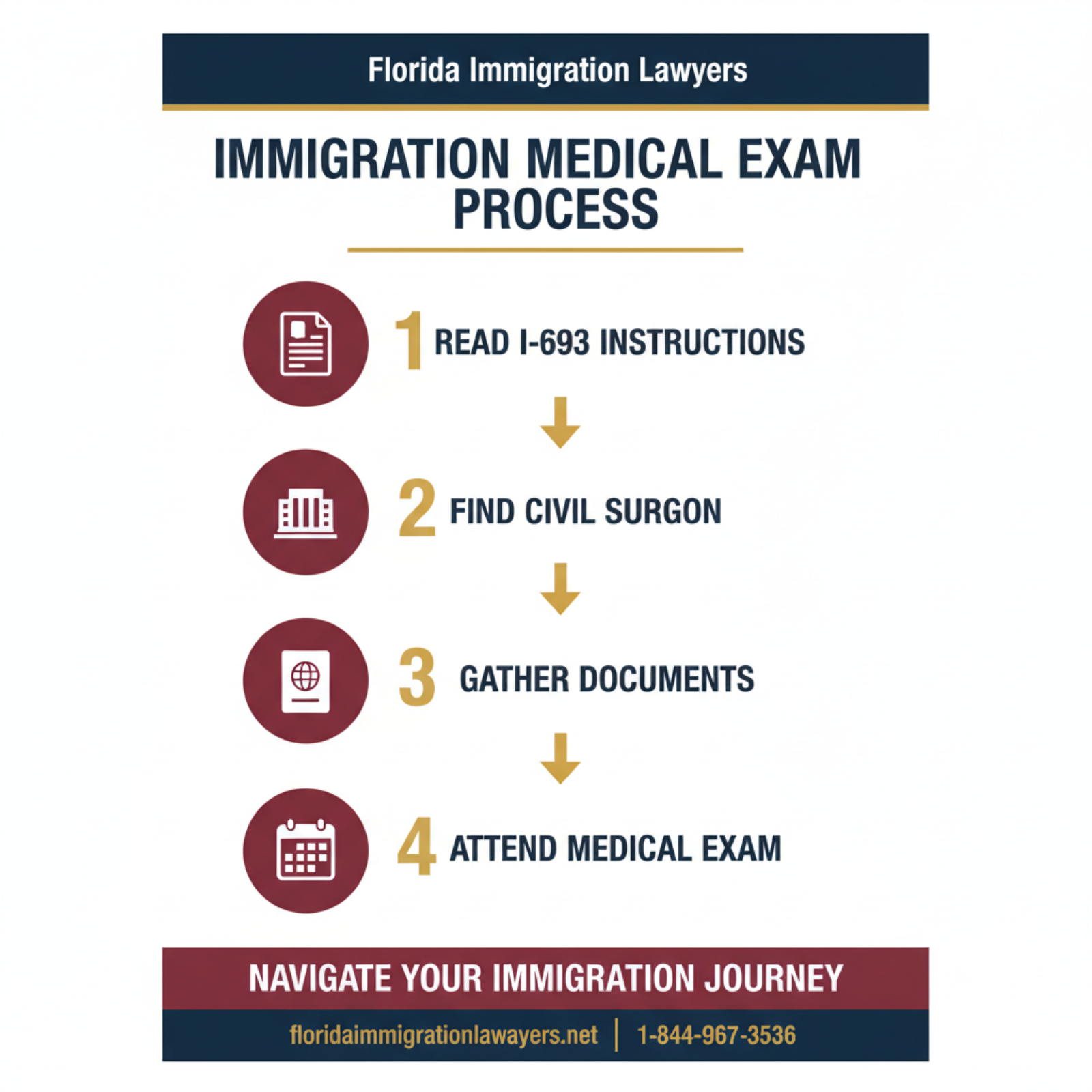
Preparing for your immigration medical exam can feel daunting, but by following a clear process, you can ensure a smoother experience. Here's a step-by-step guide for applicants in Florida, particularly those in the St. Petersburg area:
- Find a USCIS-Designated Civil Surgeon in Florida: This is the very first and most critical step. Only a doctor approved by USCIS can perform your immigration physical and complete Form I-693. You can find a list of approved civil surgeons in St. Petersburg and across Florida by using the "Find a Civil Surgeon" tool on the official USCIS website (my.uscis.gov/findadoctor). Be sure to select "Florida" as your state to narrow down the search. Many clinics in the Tampa Bay area, including St. Petersburg, specialize in these exams.
- Schedule Your Immigration Medical Exam Appointment: Once you've identified a civil surgeon, contact their office to schedule your immigration medical exam. When calling, clearly state that you need an "immigration medical exam" for USCIS (Form I-693). Inquire about their fees, required documents, and what tests are included. This upfront communication can save you time and prevent surprises.
- Gather All Required Documents and Information: Before your appointment, compile all necessary paperwork. This typically includes your passport or other government-issued photo identification, your vaccination records, and any relevant medical history. Having these documents organized will streamline your visit to the civil surgeon.
- Attend Your Immigration Physical: During the actual immigration medical exam, the civil surgeon will conduct a thorough physical examination. This involves checking your general health, reviewing your medical history, and discussing any past or current conditions. You will also undergo blood tests (e.g., for syphilis) and a tuberculosis (TB) test (usually a skin test or chest X-ray, depending on risk factors). The doctor will review your vaccination history and administer any missing required vaccines.
- Civil Surgeon Completes and Seals Form I-693: After completing all necessary tests and examinations, the civil surgeon will fill out Form I-693. They will record all findings, vaccination status, and any waivers sought. Crucially, the civil surgeon will then seal the completed form in an envelope. Do not open this envelope. Opening it will invalidate the results, and you will have to undergo the exam again.
- Submit the Sealed I-693 to USCIS: You are responsible for submitting the sealed envelope containing your Form I-693 to USCIS. In most cases, you will submit it with your application for adjustment of status (Form I-485). You may also submit it later at an interview or as a response to a Request for Evidence (RFE). Always follow the specific instructions provided by USCIS for your application.
Essential Document Checklist for Your Immigration Medical Exam
To ensure a smooth and efficient immigration medical exam process, gather the following documents and information before your appointment with a civil surgeon in Florida:
- Valid Government-Issued Photo Identification: This could be your passport, national identity card, or driver's license. Ensure it matches the name on your immigration application.
- Form I-693, Report of Medical Examination and Vaccination Record: Some civil surgeons may provide this form, but it's wise to bring a blank copy just in case. You can download it from the USCIS website.
- Vaccination Records: Bring all available records of past immunizations. This is crucial for determining which vaccines you still need. The civil surgeon will review these against CDC requirements.
- Medical History Documentation: Any records related to significant past illnesses, hospitalizations, or chronic conditions. This includes reports for any mental health treatment.
- List of Current Medications: Provide a complete list of all prescription and over-the-counter medications you are currently taking.
- Eyeglasses or Contact Lenses (if applicable): If you use corrective lenses, bring them to your appointment.
- Payment for the Exam: Be prepared to pay the civil surgeon's fees. Confirm accepted payment methods beforehand.
- Prior X-rays (if applicable): If you have a history of tuberculosis or abnormal chest X-rays, bring previous films or reports.
Having these documents readily available will help the civil surgeon complete your I-693 accurately and efficiently, minimizing potential delays in your immigration case in St. Petersburg.
Immigration Medical Exam Timeline and Processing Expectations
The timeline for your immigration medical exam typically involves a few stages, from the initial appointment to the eventual USCIS review. While the exam itself might take one or two visits to the civil surgeon, the overall process can vary.
After your immigration physical, the civil surgeon will complete Form I-693. The time it takes for them to finalize the report and seal the envelope depends on whether additional tests (like follow-up TB tests or specialist consultations) are needed, or if you require additional vaccinations. Generally, if all vaccinations are up-to-date and tests are clear, you might receive the sealed envelope within a few days to a couple of weeks.
Validity Period of Form I-693
Understanding the validity period of your I-693 is extremely important. As of November 1, 2018, a completed Form I-693 remains valid for two years from the date the civil surgeon signs it. However, USCIS requires that the form must be submitted to them within 60 days of the civil surgeon's signature. If you submit it after this 60-day window, USCIS may issue a Request for Evidence (RFE) for a new immigration medical exam, causing significant delays.
Therefore, it is often advisable to schedule your immigration medical exam closer to the time you plan to file your adjustment of status application (Form I-485), or when you anticipate an interview. Your immigration attorney can help you strategize the best timing for your exam to ensure its validity throughout the processing of your application at USCIS field offices, such as the one serving St. Petersburg in Tampa. USCIS processing times for the adjustment of status application itself can vary significantly based on the particular office, case type, and current workload. You can check average processing times on the USCIS website.
Cost Factors and Fee Breakdown for Your I-693 Exam in Florida
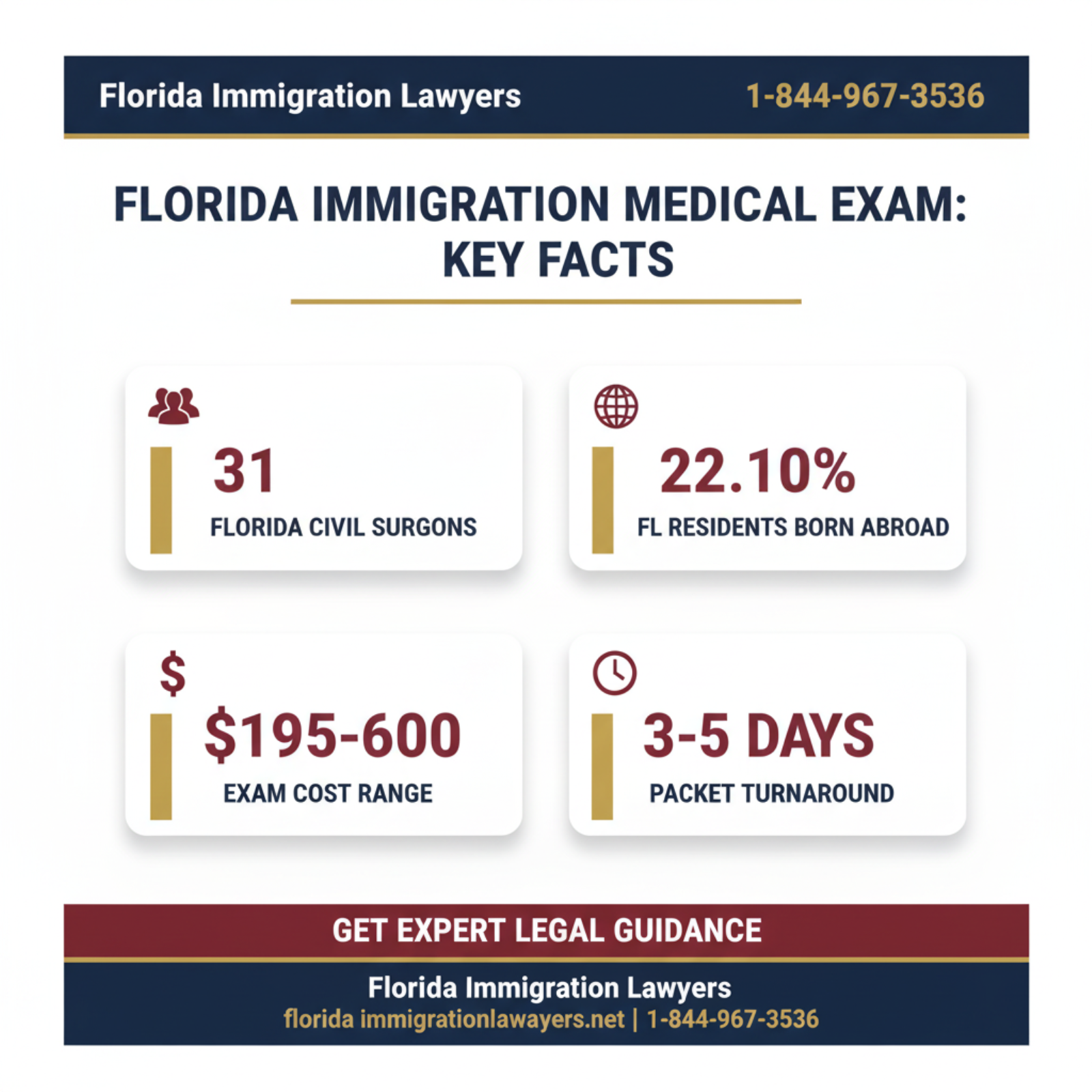
The cost of an immigration medical exam can vary significantly depending on several factors, including the civil surgeon's office, your location in Florida, and your individual health needs. It's important to understand that there isn't a single, fixed fee for the I-693 exam.
Typically, the total cost will include the civil surgeon's fee for the physical examination and review of your medical history. This fee can range widely across different clinics and cities, for example, between St. Petersburg, Miami, or Orlando. In addition to the base fee, you should anticipate costs for required laboratory tests, such as blood tests for syphilis and potentially a urine test for gonorrhea, as well as the tuberculosis (TB) test.
Another significant cost factor is vaccinations. If your vaccination records are incomplete or you lack certain required immunizations, the civil surgeon will administer them, and these will add to your total expense. Some clinics include common vaccines in their base price, while others charge separately. It's advisable to call several USCIS-designated civil surgeon offices in St. Petersburg or your surrounding area in Florida to compare prices and inquire about what is included in their quoted fees. Always ask for a detailed breakdown of costs before scheduling your immigration medical exam. While we cannot provide specific fee amounts as they are subject to change, being prepared for these potential expenses is crucial.
Do not navigate this complex process alone. The nuances of the immigration medical exam and the entire immigration system can be challenging to understand. Contact Florida Immigration Lawyers today for expert legal assistance. Our team is dedicated to guiding you through every step, ensuring your application is complete and accurate.
Common Mistakes to Avoid During Your Immigration Medical Exam
The immigration medical exam is a critical step, and making mistakes can lead to delays or even denials of your immigration application. Be mindful of these common pitfalls:
- Not Using a USCIS-Designated Civil Surgeon: This is perhaps the most common and easily avoidable mistake. Only doctors specifically approved by USCIS can perform the immigration physical and sign Form I-693. An exam by any other doctor will be rejected. Always verify the doctor's designation on the USCIS website.
- Opening the Sealed I-693 Envelope: The civil surgeon will provide you with a sealed envelope containing your completed Form I-693. It is absolutely crucial that you do not open this envelope. Opening it invalidates the exam results, requiring you to undergo and pay for another immigration medical exam.
- Failing to Bring All Required Documents: Arriving at your appointment without your passport, vaccination records, or medical history documents can cause significant delays. The civil surgeon may not be able to complete your exam without them, necessitating a return visit.
- Not Disclosing Full Medical History: It is imperative to be completely honest and transparent with the civil surgeon about your medical and mental health history. Withholding information can lead to serious issues if USCIS discovers discrepancies later, potentially resulting in accusations of misrepresentation.
- Ignoring Vaccination Requirements: U.S. immigration law mandates specific vaccinations. If your records are incomplete or you lack certain required immunizations, you must get them during your immigration medical exam. Failure to do so, without a valid waiver, can lead to inadmissibility.
- Delaying the Exam: Waiting too long to schedule your immigration medical exam can lead to issues with the I-693's validity period, especially if submitted more than 60 days after the civil surgeon's signature. This can result in RFEs and processing delays.
- Not Following Up on Abnormal Test Results: If the civil surgeon finds abnormal test results (e.g., for TB), you will need to undergo further evaluation or treatment. Failing to complete these follow-ups will prevent the civil surgeon from signing off on your I-693.
- Misunderstanding the Expiration Date: While the I-693 is valid for two years from the civil surgeon's signature, it must be submitted to USCIS within 60 days of that signature. Many applicants overlook this crucial 60-day submission window, leading to expired forms.
- Trying to Conceal Drug Use or Addiction: Immigration law specifically lists drug abuse or addiction as grounds for inadmissibility. Attempting to hide this from the civil surgeon can have severe consequences if discovered. Honesty, combined with legal guidance, is the best approach.
- Not Seeking Legal Advice for Complex Cases: If you have a complex medical history, a criminal record, or any health-related inadmissibility issues, attempting to navigate the immigration medical exam process without legal counsel is risky. An experienced immigration lawyer can advise on potential waivers and strategies.
By being aware of these common mistakes, you can significantly improve your chances of a smooth and successful immigration medical exam process in Florida.
When to Call a Florida Immigration Lawyer for Your Medical Exam
While the immigration medical exam is primarily a medical procedure, its implications are entirely legal. There are specific scenarios where consulting an experienced immigration lawyer, like those at Florida Immigration Lawyers, becomes not just helpful, but essential. Our team is well-versed in the intricacies of U.S. immigration law and can provide invaluable assistance for residents of St. Petersburg and across Florida.
You should consider calling an attorney if:
- You have a Complex Medical History: If you have a history of serious illnesses, mental health conditions, or require ongoing medical treatment, an attorney can help you understand how these might affect your admissibility and if any waivers (like an I-601 waiver) might be necessary.
- You Have a Criminal Record: Certain criminal convictions can be linked to health-related inadmissibility, especially those involving drug-related offenses. An attorney can assess your situation and advise on potential challenges.
- You Have Received an RFE (Request for Evidence) Regarding Your I-693: If USCIS has sent you an RFE asking for more information or a new immigration medical exam, it's a clear sign that something in your initial submission was problematic. An attorney can help you understand the RFE and formulate an appropriate response.
- You Are Concerned About Inadmissibility: If you believe you might be inadmissible on health-related grounds, or any other grounds, an attorney can evaluate your case, explain your options, and help prepare arguments for why you should be admitted. This is particularly relevant under INA § 212(a)(1).
- You Need Assistance with Waivers: For some health-related inadmissibility issues, waivers may be available. Navigating the waiver application process (e.g., Form I-601, Application for Waiver of Grounds of Inadmissibility) is highly complex and requires expert legal guidance.
- You Have Been Denied Benefits Due to Medical Reasons: If your immigration application was denied, and the denial letter cites medical grounds, immediately contact an attorney. We can review the denial, identify potential errors, and advise on appeal or reapplication strategies.
- You are an Asylum Seeker or Refugee Adjusting Status: These cases often have unique medical requirements and considerations. An attorney specializing in asylum and adjustment of status can provide specialized guidance.
- You Have Questions About the I-693 Validity Period: If you are unsure about when to submit your I-693 to ensure its validity, or if you suspect your form might have expired, an attorney can provide clarification and strategic advice.
At Florida Immigration Lawyers, we specialize in all aspects of immigration law, including preparing for your immigration medical exam. We serve clients throughout Florida, from St. Petersburg to Miami, Orlando, and beyond. Our attorneys can help you gather necessary documents, communicate with the civil surgeon if issues arise, and ensure your I-693 is correctly submitted. Don't let health-related immigration hurdles derail your dreams. Contact us for a free consultation to discuss your unique situation. We are also experts in deportation defense and citizenship applications, offering comprehensive support for your journey in the U.S.
About Florida Immigration Lawyers
Florida Immigration Lawyers is a leading immigration law firm dedicated to serving individuals and families across the entire state of Florida. With a deep understanding of the complexities of U.S. immigration law, our experienced attorneys provide compassionate, effective, and results-driven legal representation. We are committed to helping our clients achieve their immigration goals, whether they are pursuing a green card, seeking asylum, or defending against deportation.
Our firm offers a comprehensive range of immigration legal services, including family-based immigration, business immigration, naturalization and citizenship, deportation defense, and immigration medical exam guidance. We pride ourselves on clear communication, strategic advice, and unwavering advocacy for our clients in St. Petersburg, Tampa, Orlando, Miami, and beyond.
When you choose Florida Immigration Lawyers, you gain a partner who understands your challenges and fights for your future. We offer free consultations and are available 24/7 to address your urgent needs. Our team is fluent in both English and Spanish, ensuring that language is never a barrier to receiving top-tier legal support. Visit our website at https://www.floridaimmigrationlawyers.net or call us at 1-844-967-3536 to learn how we can assist you with your immigration matters. Your success is our priority.
Sources and References
- U.S. Citizenship and Immigration Services (USCIS)
- USCIS Find a Civil Surgeon Tool
- Centers for Disease Control and Prevention (CDC) - Civil Surgeons
- Executive Office for Immigration Review (EOIR)
- Immigration and Nationality Act (INA) Section 212(a)(1) - Health-Related Grounds of Inadmissibility
- 8 U.S.C. Chapter 12 - Immigration and Nationality Act
- 8 CFR § 232 - Medical examinations
This article provides general legal information and is not intended as legal advice. Every case is unique, and outcomes depend on specific facts and circumstances. Contact an attorney for advice about your particular situation.
Don't let the complexities of the immigration medical exam or any other immigration process deter you. Florida Immigration Lawyers is here to offer the expert guidance and support you need. Take the first step towards securing your future in Florida by calling us today for a free, confidential consultation. Call 1-844-967-3536 now! Se Habla Español - Estamos aquí para ayudarle.
Need help with Immigration?
Our Florida immigration attorneys offer free consultations. Call today or schedule online.
Frequently Asked Questions
Florida Immigration Lawyers
Legal Team
Our experienced attorneys at Florida Immigration Lawyers have been serving clients across Florida for over 20 years. We specialize in immigration, personal injury, criminal defense, workers compensation, and family law.