DACA News 2026 Florida: Crucial Updates for Dreamers & Renewals
Stay ahead of DACA news 2026 Florida with crucial updates for Dreamers. This guide covers renewal processes, legal challenges, and essential documents. Learn about DACA eligibility, processing times, and cost factors. We address common mistakes and when to seek legal counsel, particularly for those in Homestead and across Florida. The program faces ongoing legal scrutiny, making timely renewals and expert legal advice more critical than ever. Florida Immigration Lawyers is here to help you navigate these complex immigration updates and protect your future.
The future of DACA news 2026 Florida remains uncertain due to ongoing legal challenges. While new DACA applications are generally not accepted, current recipients in Florida should prioritize timely renewals. It is generally safe for DACA recipients in Florida, but legal advice is always recommended to navigate complex state and federal immigration landscapes. The DACA program is not canceled, but its operational status is limited to renewals.
- Renewals are Vital: Ensure your DACA renewal application is submitted well before its expiration date.
- Legal Challenges Persist: The program's long-term future is subject to federal court decisions.
- Florida-Specific Considerations: Understand how state laws and local resources impact Dreamers.
- Consult an Attorney: Seek personalized legal advice to navigate the complexities of DACA and explore other options.
For many young individuals in Florida, the Deferred Action for Childhood Arrivals (DACA) program represents a beacon of hope, enabling them to live, work, and study without immediate fear of deportation. As we look towards 2026, the landscape surrounding DACA continues to evolve, bringing both anticipation and apprehension. Understanding the latest DACA news 2026 Florida is paramount for Dreamers and their families across the state, from Homestead to Jacksonville.
The legal and political environment impacting DACA recipients is constantly shifting. Staying informed about these changes is not just important; it is essential for protecting your status and planning your future. This comprehensive guide will provide critical updates, outline renewal processes, and offer valuable insights for DACA recipients in Florida.
Do you have questions about your DACA status or need assistance with your renewal? Do not hesitate to call Florida Immigration Lawyers at 1-844-967-3536 for a free consultation. Our experienced team is here to help you understand your options and secure your future.
Understanding DACA in 2026: An Overview for Florida Dreamers
The Deferred Action for Childhood Arrivals (DACA) program, established in 2012, has provided temporary relief from deportation and work authorization to hundreds of thousands of eligible young people who came to the United States as children. In 2026, the program continues to operate under significant legal scrutiny and uncertainty.
The core of DACA's current challenge stems from the ongoing lawsuit, Texas v. United States. A federal court ruling has declared DACA unlawful, preventing the U.S. Citizenship and Immigration Services (USCIS) from approving new initial DACA applications. This means that individuals who have never before been granted DACA are generally unable to apply for it.
However, for current DACA recipients, USCIS continues to accept and process renewal applications. This distinction is critical for Dreamers Florida residents must grasp. Your existing DACA status can typically be maintained through timely renewal, but the door for new applicants remains closed, pending further court decisions or congressional action.
Is DACA allowed in Florida? Yes, DACA is a federal program, and its provisions apply nationwide, including in Florida. DACA recipients can legally reside and work in Florida if their status is valid. Is it safe to go to Florida with DACA? Generally, yes. Florida, like any other state, is subject to federal immigration laws. However, it is always wise to carry your DACA documentation and consult with an immigration attorney if you have any specific concerns, especially concerning travel or interactions with law enforcement.
Florida is home to a significant population of DACA recipients, many of whom contribute substantially to our communities and economy. From the vibrant agricultural fields of Homestead to the bustling cities of Miami and Orlando, DACA recipients are an integral part of Florida's fabric. Understanding the nuances of DACA renewal 2026 is vital for maintaining their stability.
The Evolving Legal Landscape of DACA
The legal battles surrounding DACA are complex and have far-reaching implications. While the current injunction allows for renewals, any adverse ruling from higher courts could potentially impact even existing DACA protections. This constant state of flux underscores the importance of staying informed about immigration updates.
Congress has yet to pass a permanent legislative solution for Dreamers. This means the program's future continues to depend on court rulings and executive actions. Florida Immigration Lawyers closely monitors these developments to provide the most current and accurate advice to our clients.
Navigating Your DACA Renewal in 2026: A Step-by-Step Guide
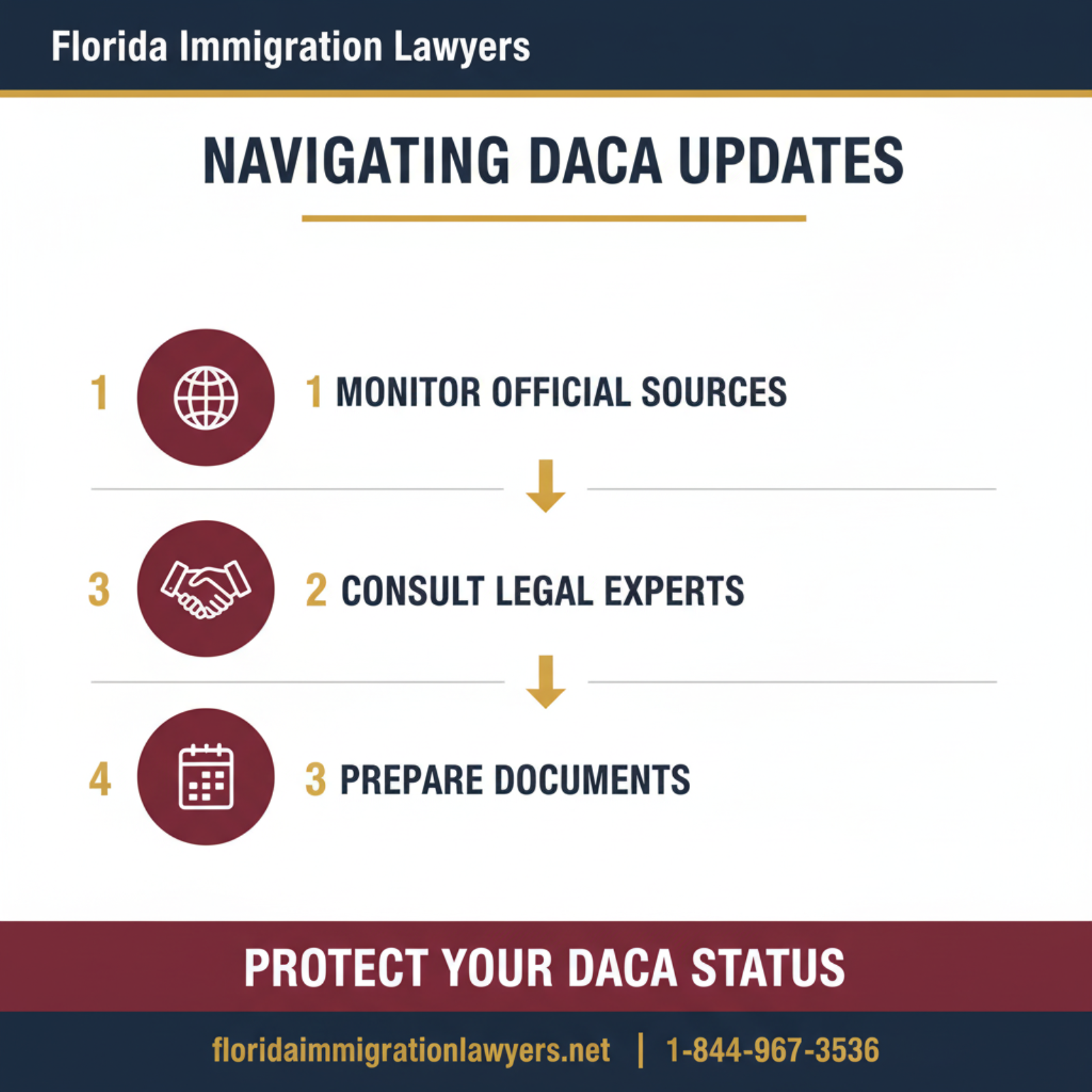
For DACA recipients in Florida, renewing your status is a critical process that demands careful attention to detail and timing. A lapse in your DACA status can lead to loss of work authorization and potential exposure to deportation proceedings. Here is a step-by-step guide to help you navigate your DACA renewal in 2026:
-
Check Your Eligibility: Before beginning the renewal process, confirm you still meet the DACA eligibility criteria. This includes having no disqualifying criminal convictions and continuously residing in the U.S. since your last DACA approval. Any changes in your criminal history or residence should be thoroughly reviewed with an attorney.
-
Gather Necessary Documents: Collect all required documentation, including your previous DACA approval notices (Form I-797C), current Employment Authorization Document (EAD), and any other supporting evidence of your continuous residence and lack of disqualifying criminal history. Ensure all documents are current and accurately reflect your information.
-
Complete USCIS Forms: You will need to accurately complete Form I-821D, Consideration of Deferred Action for Childhood Arrivals; Form I-765, Application for Employment Authorization; and Form I-765 Worksheet. Always use the most current versions of these forms, which can be found on the USCIS website. Pay close attention to all instructions.
-
Prepare Supporting Evidence: Provide evidence of your continuous residence in the U.S. since your last DACA approval. This could include school transcripts, employment records, medical records, or utility bills. If you have had any encounters with law enforcement, even minor ones, ensure you include certified court dispositions. Failure to disclose such information can lead to denial.
-
Pay Required Fees: The DACA renewal process involves filing fees for Form I-821D and Form I-765, along with a biometrics services fee. These fees are subject to change by USCIS. Ensure you submit the correct payment amount and method as specified in the USCIS instructions. Fee waivers are generally not available for DACA renewals, but you should verify current policies.
-
Submit Your Application to USCIS: Mail your complete application package to the correct USCIS lockbox facility. The mailing address depends on your state of residence. For DACA news 2026 Florida recipients, confirm the specific address on the USCIS website. It is highly recommended to send your application via a trackable mail service.
-
Attend Biometrics Appointment: After submitting your application, you will typically receive a notice for a biometrics appointment at an Application Support Center (ASC). It is crucial to attend this appointment, as your fingerprints and photos are necessary for background checks. Missing this appointment without rescheduling can delay or jeopardize your renewal.
-
Monitor Your Application Status: You can monitor the status of your DACA renewal application online using the receipt number provided by USCIS. Be prepared for potential Requests for Evidence (RFEs) or other communications from USCIS. Respond promptly and accurately to any requests.
Essential Documents for DACA Renewal in Florida
A complete and accurate submission of documents is vital for a successful DACA renewal. Missing or incorrect documentation can lead to delays, requests for evidence (RFEs), or even denial. Here is a checklist of essential documents typically required:
- Most Recent DACA Approval Notice (Form I-797C): This document confirms your previous DACA grant and is crucial for renewal.
- Current Employment Authorization Document (EAD): Your DACA-based work permit card (Form I-766).
- Proof of Continuous Residence: Documentation proving you have resided in the U.S. since your last DACA approval. Examples include school records, employment pay stubs, bank statements, utility bills, medical records, and rent receipts. Ensure these documents cover the entire period.
- Evidence of DACA Eligibility: Documents that continue to demonstrate you meet the initial DACA criteria. This might include educational records (transcripts, diplomas), military service records, or proof of enrollment in a GED program.
- Certified Court Dispositions: If you have ever been arrested or cited for any offense, even if charges were dropped or expunged, you must provide certified court dispositions for each incident. Consult an attorney before submitting if you have any criminal history.
- Two Passport-Style Photos: Ensure these photos meet USCIS specifications (2x2 inches, white background, taken within 30 days of filing).
- Copy of Government-Issued Identification: This could be your passport, birth certificate, or state ID.
- Payment for Filing Fees: A check or money order made payable to the "U.S. Department of Homeland Security" for the correct combined fee amount.
DACA Processing Timelines and Expectations for 2026
Understanding the typical processing times for DACA renewals is crucial for avoiding a lapse in your work authorization and status. USCIS processing times can vary based on workload, policy changes, and individual case complexities. For DACA news 2026 Florida, it is wise to anticipate potential delays.
Generally, USCIS recommends filing your DACA renewal application 120 to 150 days (approximately 4 to 5 months) before your current DACA and EAD expire. This timeframe allows sufficient time for USCIS to process your application and issue a new EAD before your current one expires. Filing too early (more than 150 days) might result in your application being rejected, while filing too late risks a period without work authorization.
Processing times for DACA renewals typically range from a few weeks to several months. You can check the average processing times for your specific service center on the USCIS website. However, these are estimates, and individual cases may take longer. Factors that can lead to delays include:
- Incomplete applications or missing documents.
- Requests for Evidence (RFEs) from USCIS.
- Security checks or background investigation issues.
- High volume of applications at USCIS service centers.
- Legal challenges impacting DACA policy.
If your EAD expires while your renewal application is pending, you will not be authorized to work until your new EAD is approved and issued. This is why early filing is so important. If you find yourself in this situation, consult with Florida Immigration Lawyers immediately to explore any potential options or to understand the implications for your employment.
Understanding DACA Costs and Fees in 2026
The DACA renewal process involves several fees that applicants must pay directly to USCIS. These fees are subject to change, so it is crucial to verify the current amounts on the official USCIS website before submitting your application. Typically, the fees include:
- Form I-821D (Consideration of Deferred Action for Childhood Arrivals) Fee: While there isn't a separate fee for this form, it is part of the combined DACA application.
- Form I-765 (Application for Employment Authorization) Fee: This fee covers the cost of processing your work permit.
- Biometrics Services Fee: This fee covers the cost of your fingerprinting and background checks.
The total combined fee for a DACA renewal generally includes the I-765 fee and the biometrics fee. It is important to submit the correct payment amount. Payments can typically be made by money order, personal check, cashier's check, or by credit card using Form G-1450, Authorization for Credit Card Transactions. Make checks or money orders payable to "U.S. Department of Homeland Security."
Beyond the government filing fees, you may also incur other costs, such as:
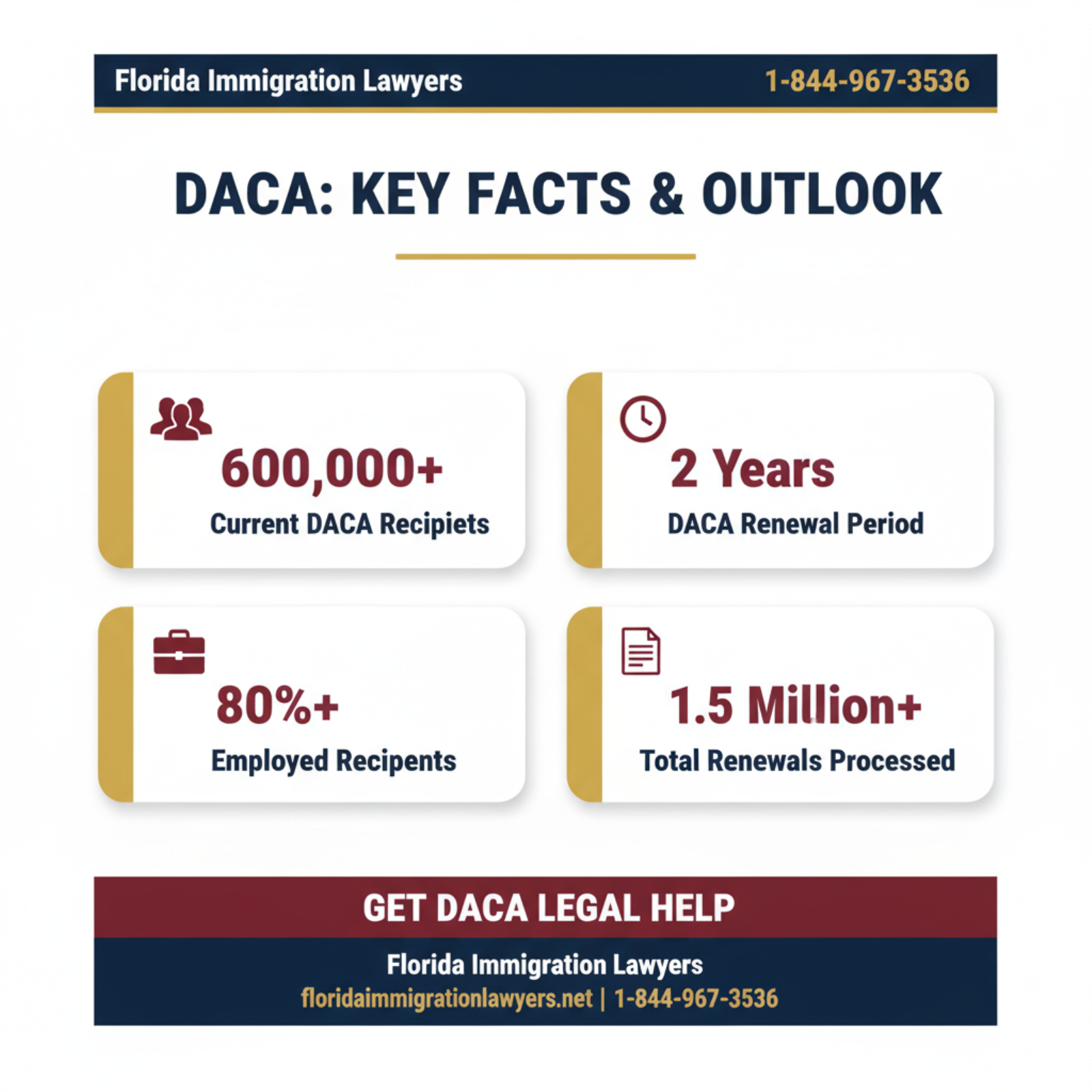
- Legal Fees: If you choose to hire an immigration attorney to assist with your DACA renewal, you will pay legal fees for their services. This investment can be invaluable for ensuring accuracy and navigating complex situations.
- Document Gathering Costs: Fees for obtaining certified court dispositions, birth certificates, or other supporting documents may apply.
- Postage: Costs for sending your application via certified mail or other trackable services.
While the fees can be a financial burden, the cost of not renewing DACA can be far greater, potentially leading to loss of employment, inability to drive, and increased risk of deportation. Always budget for these expenses and consult with our firm if you have concerns about affordability or need assistance with the application process.
Do not navigate this process alone. The complexities of DACA news 2026 Florida, coupled with ever-changing regulations, require expert guidance. Contact Florida Immigration Lawyers today to schedule your free consultation and ensure your renewal is handled correctly. Our dedicated team is ready to assist you.
Common Mistakes DACA Recipients Must Avoid
Renewing your DACA status correctly is paramount. Even small errors can lead to significant delays or even denial. Here are common mistakes DACA recipients in Florida should actively avoid:
-
Submitting a Late Renewal Application: This is perhaps the most critical mistake. Failing to submit your renewal application 120-150 days before your current EAD expires can result in a lapse in your work authorization. This could mean losing your job and facing a period without legal status. Consequences include loss of employment and potential deportation risk.
-
Providing Incomplete Forms or Missing Information: Leaving sections blank or failing to answer questions fully can trigger a Request for Evidence (RFE) or outright denial. USCIS expects thorough and accurate responses. This leads to processing delays and increased stress.
-
Failing to Include All Supporting Documents: Your application must be supported by adequate evidence of continuous residence and eligibility. Omitting crucial documents like school transcripts, pay stubs, or certified court dispositions can weaken your case. The consequence is an RFE or denial, forcing you to resubmit.
-
Not Disclosing All Criminal History: Even minor arrests, citations, or expunged records must be disclosed. USCIS conducts thorough background checks. Failure to disclose can be seen as a misrepresentation and lead to denial, and in severe cases, initiation of removal proceedings. This can have dire, long-term immigration consequences under 8 U.S.C. § 1182.
-
Not Updating Your Address with USCIS: If you move, you are legally required to update your address with USCIS within 10 days. Failing to do so can mean missing important notices, RFEs, or even your biometrics appointment. The consequence is missed deadlines and potential denial due to lack of response.
-
Traveling Outside the U.S. Without Advance Parole: DACA does not grant lawful immigration status. Traveling internationally without approved Advance Parole (Form I-131) can result in being denied re-entry into the U.S. and potentially trigger a 3-year or 10-year bar to readmission. This is a severe immigration violation.
-
Assuming Automatic Renewal: DACA renewals are not automatic. Each recipient must actively submit a new application, pay fees, and attend biometrics. Assuming otherwise will lead to a lapse in status. The consequence is loss of DACA benefits and potential loss of employment.
-
Using Outdated USCIS Forms: USCIS frequently updates its forms. Always download the latest version directly from the USCIS website. Using an outdated form will lead to rejection of your application. This results in significant delays as you must resubmit with the correct form.
-
Ignoring Legal Changes and Immigration Updates: The DACA program is subject to ongoing legal challenges and policy shifts. Not staying informed about these changes can leave you unprepared for new requirements or potential risks. The consequence is being caught off guard by new regulations or opportunities.
-
Failing to Seek Legal Counsel: Attempting to navigate the complex DACA renewal process without legal guidance, especially with any complications, increases the risk of errors. An attorney can help identify potential issues and ensure a strong application. The consequence is a higher likelihood of denial or prolonged processing times.
When to Consult an Immigration Lawyer in Florida
While many DACA renewals can be straightforward, certain situations warrant the expertise of an experienced immigration attorney. If you are a DACA recipient in Homestead, Miami, or anywhere else in Florida and encounter any of the following scenarios, it is highly advisable to seek legal counsel from Florida Immigration Lawyers:
- Any Criminal History: If you have any arrests, charges, or convictions, no matter how minor or old, you should consult an attorney. Certain offenses can disqualify you from DACA eligibility or even lead to removal proceedings under USCIS Policy Manual, Volume 6, Part D, Chapter 2. Our team specializes in deportation defense and can assess your situation.
- Previous DACA Denial or Termination: If your DACA application was previously denied or terminated, an attorney can help you understand the reasons and whether you have options for reapplying or appealing.
- Uncertainty About Eligibility: If you are unsure whether you meet all DACA eligibility criteria, particularly regarding continuous residence or educational requirements, an attorney can provide clarity.
- Significant Travel History: If you have traveled outside the U.S. without Advance Parole, or have complex travel records, this could impact your DACA renewal.
- Desire to Explore Other Immigration Pathways: DACA is temporary. An attorney can discuss potential avenues for permanent residency, such as family-based immigration or employment-based visas, if you may be eligible.
- Concerns About Legal Challenges: Given the ongoing legal battles, an attorney can provide the most current information on how court decisions may affect your DACA status and offer strategic advice.
- Difficulty Gathering Documents: If you are struggling to obtain necessary supporting documents, an attorney can guide you on alternative forms of evidence.
Florida Immigration Lawyers has extensive experience assisting DACA recipients throughout Florida. We understand the specific challenges faced by Dreamers in our state and are committed to providing compassionate and effective legal representation. Do not risk your future by navigating these complexities alone. Contact us today for expert guidance on your DACA renewal or to explore other immigration options.
About Florida Immigration Lawyers
Florida Immigration Lawyers is a leading immigration law firm dedicated to serving individuals and families across the entire state of Florida. With a deep understanding of U.S. immigration law and a commitment to our clients, we provide comprehensive legal services tailored to your unique needs.
Our team of experienced immigration attorneys offers expert guidance in a wide range of practice areas, including general immigration matters, asylum applications, deportation defense, citizenship and naturalization, family-based immigration, and business immigration. We pride ourselves on our empathetic approach and our unwavering dedication to achieving the best possible outcomes for our clients.
Why choose Florida Immigration Lawyers? We offer free consultations, are available 24/7 to address your urgent concerns, and provide bilingual services (Se Habla Español) to ensure clear communication and understanding. Our firm is founded on the principles of integrity, professionalism, and a genuine desire to help individuals build a better future in the United States. We serve all of Florida, from the Panhandle to the Keys, including communities like Homestead, Miami, Orlando, and Tampa.
Visit our website at https://www.floridaimmigrationlawyers.net or call us directly at 1-844-967-3536 to learn how we can assist you with your immigration journey.
Sources and References
- U.S. Citizenship and Immigration Services (USCIS) - DACA
- USCIS - Form I-821D, Consideration of Deferred Action for Childhood Arrivals
- Executive Office for Immigration Review (EOIR)
- 8 U.S.C. Chapter 12 - Immigration and Nationality Act (INA)
- 8 U.S.C. § 1182 - Inadmissible aliens
- 8 U.S.C. § 1227 - Deportable aliens
- USCIS Policy Manual, Volume 6, Part D, Chapter 2 - Discretionary Factors
- 28 CFR Part 1003 - Executive Office for Immigration Review
This article provides general legal information and is not intended as legal advice. Every case is unique, and outcomes depend on specific facts and circumstances. The information regarding DACA news 2026 Florida is based on current understanding and is subject to change. Contact an attorney for advice about your particular situation.
The future of DACA can be uncertain, but your path forward doesn't have to be. Let Florida Immigration Lawyers be your trusted partner in navigating the complexities of immigration law. We are here to provide the clarity and support you need. Call us today at 1-844-967-3536 for a free, confidential consultation. Se Habla Español - Estamos aquí para ayudarle.
Need help with Immigration?
Our Florida immigration attorneys offer free consultations. Call today or schedule online.
Frequently Asked Questions
Florida Immigration Lawyers
Legal Team
Our experienced attorneys at Florida Immigration Lawyers have been serving clients across Florida for over 20 years. We specialize in immigration, personal injury, criminal defense, workers compensation, and family law.