Naturalization Ceremony ICE Concerns: Florida Immigrants' Guide
For many Florida immigrants, the excitement of a naturalization ceremony can be mixed with concerns about potential interactions with ICE. While USCIS oath ceremonies are generally considered 'protected areas' where ICE avoids enforcement, understanding your rights and the nuances of these policies is crucial. This guide from Florida Immigration Lawyers addresses common anxieties, offers a step-by-step overview of the naturalization process, and highlights essential documents and timelines. Learn how to prepare, avoid common mistakes, and when to seek legal counsel to ensure a smooth path to U.S. citizenship. Get expert guidance for your journey in Orlando and across Florida.
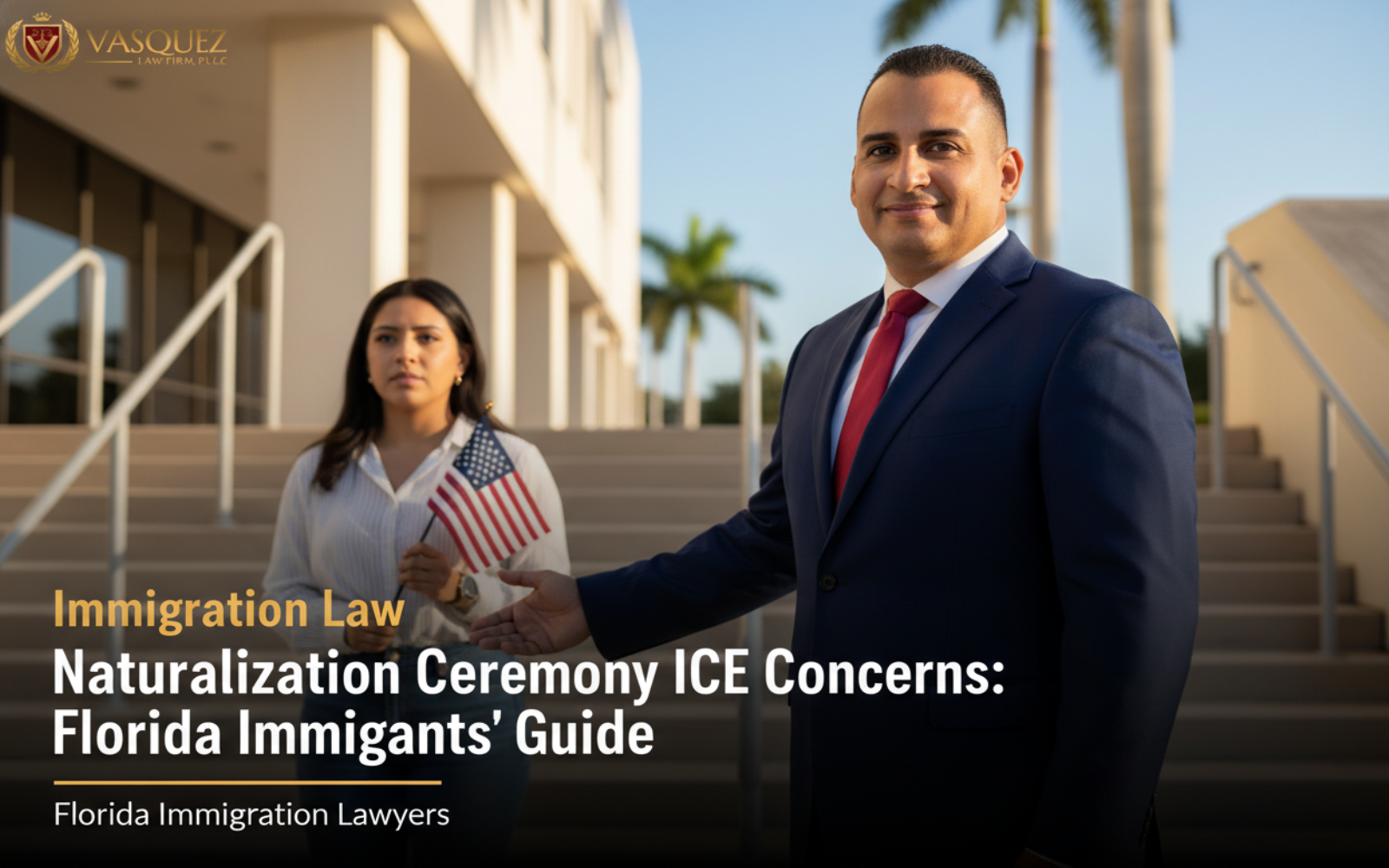
While U.S. Citizenship and Immigration Services (USCIS) oath ceremonies are generally considered 'protected areas' where Immigration and Customs Enforcement (ICE) typically avoids enforcement actions, concerns about ICE presence remain for some Florida immigrants. It's crucial to understand your rights and the limited circumstances under which ICE might interact with individuals at or near these events. Legal guidance can help alleviate fears and prepare you for your naturalization ceremony.
- USCIS ceremonies are generally protected, but awareness is key.
- ICE typically avoids enforcement at official USCIS events.
- Individuals with serious criminal histories or outstanding warrants may face scrutiny.
- Knowing your rights and having legal counsel can provide peace of mind.
- Consulting an immigration lawyer is recommended for complex cases.
The journey to U.S. citizenship culminates in a deeply meaningful naturalization ceremony. For many immigrants in Florida, this event represents the realization of years of effort, dedication, and hope. However, for some, the excitement of this milestone can be overshadowed by anxieties, particularly concerning potential interactions with Immigration and Customs Enforcement (ICE).
In a state as diverse as Florida, with communities like Orlando being home to many aspiring citizens, these concerns are understandable. This comprehensive guide from Florida Immigration Lawyers aims to address your questions about naturalization ceremony ICE concerns, helping you understand your rights, prepare thoroughly, and approach your oath ceremony with confidence. We are here to support you every step of the way.
Call Florida Immigration Lawyers at 1-844-967-3536 for a free consultation to discuss your naturalization process and any concerns you may have.
Understanding Naturalization Ceremony ICE Concerns in Florida
The fear of encountering immigration enforcement at a significant life event like a naturalization ceremony is a very real concern for many individuals. While USCIS facilities, particularly during oath ceremonies, are generally considered 'sensitive locations' or 'protected areas,' it's vital to understand the nuances of ICE enforcement policies.
ICE policy generally dictates that enforcement actions should not occur at sensitive locations unless there are exigent circumstances or prior approval. These locations include schools, places of worship, and typically, official USCIS events. The goal is to ensure individuals can access government services without fear.
ICE Enforcement Policies at Sensitive Locations
The Department of Homeland Security (DHS) and ICE have policies regarding enforcement at sensitive locations. These policies aim to avoid enforcement actions at places where immigrants may be accessing critical services. A naturalization ceremony falls under this protective umbrella, allowing individuals to attend without undue fear.
However, it is crucial to understand that 'sensitive location' policies are not absolute prohibitions. They require ICE agents to obtain prior approval from a supervisor to conduct enforcement actions, and such actions are generally reserved for serious circumstances, such as national security threats or immediate public safety risks. For the vast majority of applicants, their naturalization ceremony will proceed without incident.
Florida-Specific Context and Local Offices
In Florida, USCIS Field Offices in cities like Orlando, Miami, and Tampa regularly host naturalization ceremonies. While local enforcement priorities can vary, the overarching federal policy regarding sensitive locations remains consistent. Our firm, Florida Immigration Lawyers, closely monitors local enforcement trends and can provide up-to-date advice specific to your location.
It is important to differentiate between general ICE operations in the community and targeted actions at specific events. The former is more common, while the latter is rare at naturalization ceremonies. Staying informed and consulting with an attorney can significantly reduce anxiety.
The Naturalization Process: A Step-by-Step Guide for Florida Residents
Becoming a U.S. citizen involves several key steps. Understanding each stage can help demystify the process and prepare you for what to expect, from initial application to the final oath ceremony.
-
Determine Your Eligibility: Before applying, you must meet specific U.S. citizenship requirements. These generally include being a lawful permanent resident (green card holder) for at least five years (or three years if married to a U.S. citizen), being at least 18 years old, demonstrating continuous residence and physical presence in the U.S., showing good moral character, and having basic English literacy and knowledge of U.S. history and government (civics). You must also be willing to take the Oath of Allegiance.
-
Prepare and File Form N-400: The Application for Naturalization, Form N-400, is the cornerstone of your application. This extensive form requires detailed personal information, residency history, employment, travel, marital history, and criminal record (if any). Accuracy and completeness are paramount. Any discrepancies or omissions can lead to delays or even denial.
-
Attend Biometrics Appointment: After filing Form N-400, USCIS will send you an appointment notice for a biometrics (fingerprint) appointment at an Application Support Center (ASC). This appointment is crucial for background checks and security clearances. It is essential to attend this appointment as scheduled.
-
Complete the Naturalization Interview: Following successful background checks, you will be scheduled for an interview with a USCIS officer. During the interview, the officer will review your N-400 application, test your English reading, writing, and speaking abilities, and administer the civics test. They will also assess your good moral character. Be prepared to answer questions truthfully and provide any requested additional documentation.
-
Receive a Decision: After your interview, the USCIS officer will issue a decision. This could be an immediate approval, a request for additional evidence, or a denial. If approved, you will typically receive a notice for your Oath of Allegiance ceremony.
-
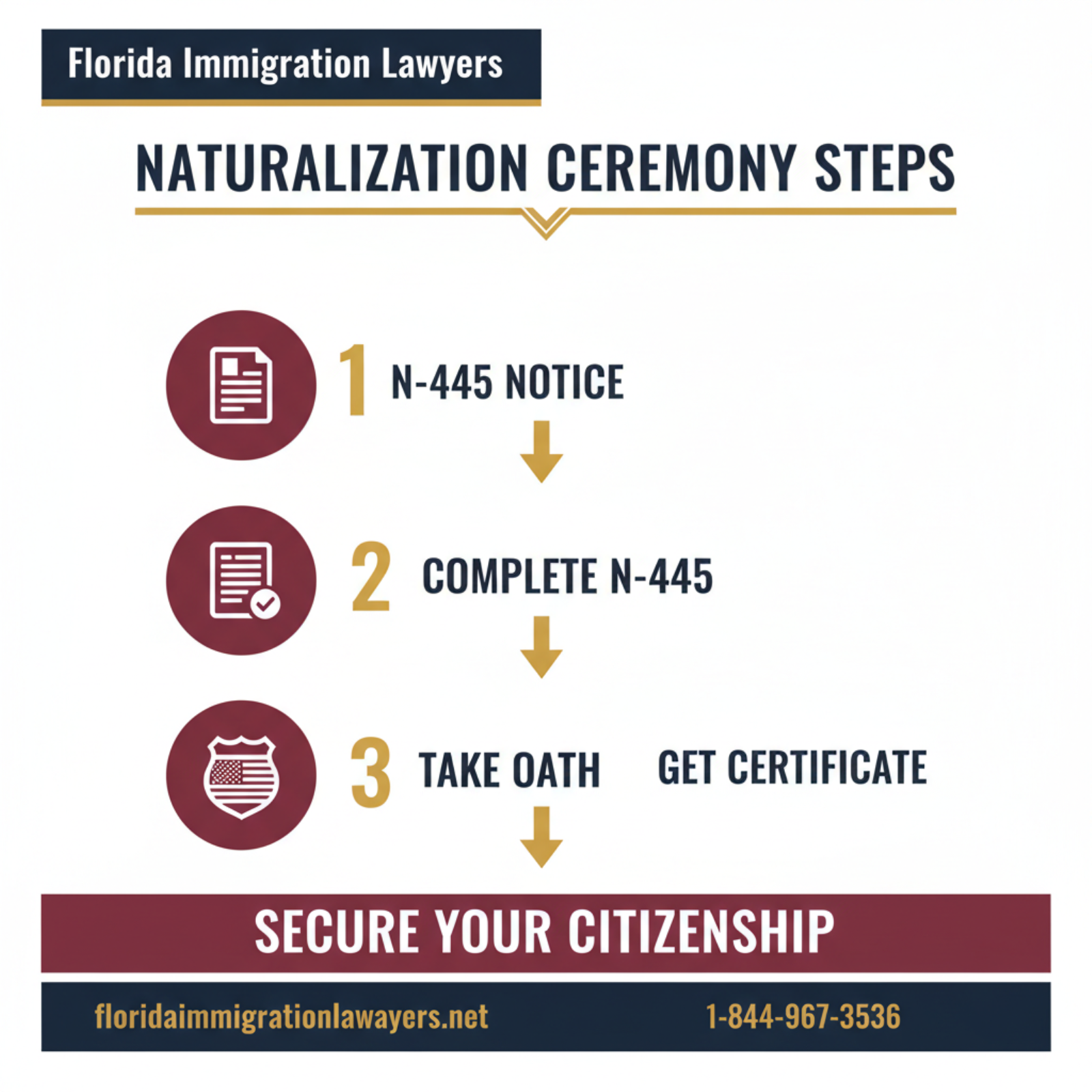
Attend the Oath of Allegiance Ceremony: This is the final step where you take the Oath of Allegiance and officially become a U.S. citizen. You will surrender your Permanent Resident Card (Green Card) and receive your Certificate of Naturalization. It is at this ceremony that some individuals harbor naturalization ceremony ICE concerns, though, as discussed, direct enforcement is rare.
Essential Documents for Your Naturalization Application
A well-organized application package is critical for a smooth naturalization process. Missing or incorrect documents can cause significant delays. Here is a general checklist of documents you may need:
- Your Permanent Resident Card (Green Card)
- State-issued identification (driver's license or state ID card)
- All passports (current and expired)
- Marriage certificate (if applicable)
- Divorce decrees or death certificates for any previous marriages (if applicable)
- Birth certificates of your children (if applicable)
- Tax returns for the past five years (or three years if married to a U.S. citizen)
- Proof of selective service registration (for male applicants between 18 and 26)
- Court disposition records for any arrests or citations, even if expunged or dismissed
- Travel records (dates of all trips outside the U.S. since becoming a permanent resident)
- Any other documents requested by USCIS based on your specific circumstances
It is always advisable to make copies of all submitted documents for your records and to bring originals to your interview, even if not explicitly requested in the appointment notice.
Naturalization Timeline and Processing Expectations in Florida (2026)
The time it takes to become a U.S. citizen can vary significantly based on the USCIS Field Office processing your application and the complexity of your individual case. As of 2026, processing times are subject to change, but general trends can be observed.
Typically, the entire process, from filing Form N-400 to attending the Oath of Allegiance ceremony, can take anywhere from 8 to 24 months, and sometimes longer. Factors such as the volume of applications, staffing levels at USCIS, and the need for additional evidence or interviews can all impact your timeline. You can check current processing times for the Orlando, Miami, or Tampa Field Offices on the USCIS website.
Factors Affecting Processing Times
Several elements can influence how quickly your naturalization application is processed. These include:
- USCIS Workload: High volumes of applications can naturally lead to longer wait times.
- Completeness of Application: Errors or missing documents will undoubtedly cause delays.
- Background Checks: Extensive background checks, especially for individuals with complex histories, can extend processing times.
- Interview Performance: If the USCIS officer requires additional information or clarification during your interview, it can prolong the decision process.
- Policy Changes: Periodic USCIS updates and policy shifts can also impact timelines.
For the most accurate and up-to-date information regarding your specific case, it is always best to refer to your USCIS online account or consult with an experienced citizenship lawyer.
Cost Factors and Fee Breakdown for Naturalization
Applying for U.S. citizenship involves certain fees. While these fees are subject to change, understanding the typical cost components is essential for financial planning.
- Form N-400 Filing Fee: This is the primary fee for processing your application.
- Biometrics Fee: A separate fee for your fingerprinting and background check.
USCIS offers a fee waiver option for applicants who meet specific low-income guidelines. If you believe you qualify, you may submit Form I-912, Request for Fee Waiver. It is crucial to accurately complete this form and provide supporting documentation.
Beyond government fees, you may incur other costs, such as obtaining necessary documents (birth certificates, marriage licenses), translation services for foreign-language documents, and legal fees if you choose to retain an immigration attorney. While not mandatory, legal representation can significantly enhance your chances of a smooth and successful application, especially if you have concerns about naturalization ceremony ICE concerns or other complexities. For current fee information, always check the USCIS website.
Do not navigate this process alone. Contact Florida Immigration Lawyers today to ensure your application is strong and your rights are protected.
Common Mistakes to Avoid During the Naturalization Process
The naturalization process is detailed and requires careful attention. Avoiding common pitfalls can save you time, stress, and potential denial. Here are some mistakes to watch out for:
-
Providing Incomplete or Inaccurate Information: Any false statements or omissions on Form N-400 can lead to serious consequences, including denial of your application, accusations of fraud, and even deportation proceedings. Always be truthful and thorough.
-
Failing to Meet Residency Requirements: Not accurately calculating continuous residence and physical presence can result in your application being rejected. Carefully track your time inside and outside the U.S.
-
Not Disclosing All Travel History: Every trip outside the U.S., no matter how short, must be listed. USCIS has access to your travel records, and discrepancies can raise red flags.
-
Ignoring Minor Criminal Offenses: Even seemingly minor arrests or citations, such as traffic tickets (excluding parking), must be disclosed. Failure to do so can be considered a lack of good moral character. Seek legal advice if you have any criminal history.
-
Missing Deadlines or Appointments: USCIS operates on strict timelines. Missing a biometrics appointment, an interview, or a deadline for submitting additional evidence can severely jeopardize your application.
-
Poor Preparation for the Interview: Failing to study for the English and civics tests, or being unable to articulate answers clearly, can lead to delays or a request for re-examination. Practice makes perfect.
-
Not Updating Your Address with USCIS: If you move, you must inform USCIS within 10 days using Form AR-11. Failure to do so can result in missed notices and potentially the abandonment of your application.
-
Lapsing on Child Support or Tax Obligations: Demonstrating good moral character includes fulfilling financial responsibilities. Unpaid child support or outstanding tax debts can impact your eligibility.
-
Believing Naturalization Guarantees Immunity from Deportation: While naturalized citizens generally cannot be deported, citizenship can be revoked in rare cases of fraud or certain severe crimes committed before naturalization. This is why addressing naturalization ceremony ICE concerns with an attorney is prudent.
-
Not Seeking Legal Counsel for Complex Cases: If you have a criminal record, extensive travel, prior immigration violations, or other complexities, attempting to navigate the process alone is a significant risk. An attorney can help identify and mitigate potential issues.
When to Call a Lawyer for Your Naturalization Process
While many individuals successfully navigate the naturalization process on their own, certain situations warrant the expertise of an experienced immigration lawyer. Consulting with Florida Immigration Lawyers can provide invaluable assistance and peace of mind, especially if you have specific concerns about naturalization ceremony ICE concerns.
You should consider contacting an attorney if:
- You have any criminal history, no matter how minor: Even old or expunged arrests can affect your good moral character determination. An attorney can analyze your records and advise on potential impacts. This is critical for deportation defense planning.
- You have a complicated travel history or spent significant time outside the U.S.: This can impact your continuous residence and physical presence calculations.
- You have prior immigration violations or a history of deportation proceedings: These complexities require expert legal analysis.
- You have received a Request for Evidence (RFE) or a Notice of Intent to Deny (NOID): These indicate USCIS has concerns about your application, and a lawyer can help you respond effectively.
- You are concerned about potential ICE interaction at your ceremony: Although rare, if you have specific reasons for concern (e.g., mistaken identity, an old minor offense you've disclosed), an attorney can assess the risk and advise on your rights.
- You have a mental or physical impairment that prevents you from meeting the English or civics requirements: An attorney can help you apply for appropriate waivers.
- Your N-400 application has been pending for an unusually long time: A lawyer can inquire with USCIS and potentially take legal action if there are unreasonable delays.
Florida Immigration Lawyers understands the intricacies of immigration law and the specific challenges faced by Florida residents. We are dedicated to protecting your rights and ensuring a smooth path to citizenship. Our team provides comprehensive support, from preparing your application to representing you at interviews, addressing any anxieties you may have.
People Also Ask: Naturalization and ICE
Here we address some common questions regarding naturalization and ICE:
-
Can ICE deport you if you're a naturalized citizen? Generally, no. Once you are a naturalized U.S. citizen, you gain the full rights and protections of citizenship, including immunity from deportation. However, citizenship can be revoked in very rare circumstances, typically if it was obtained fraudulently (e.g., lying on your application) or if certain severe crimes were committed before naturalization that would have made you ineligible. This is an extremely complex area of law.
-
Do naturalized citizens have to worry about ICE? For the vast majority of naturalized citizens, the answer is no. ICE's mandate is to enforce immigration laws, primarily targeting non-citizens. Unless there is credible suspicion of citizenship fraud or a very specific, rare scenario involving severe criminal activity prior to naturalization, naturalized citizens typically do not need to worry about ICE.
-
Can ICE make you prove citizenship? Yes, if an ICE agent has reasonable suspicion to believe you are not a U.S. citizen, they can ask you about your immigration status. You are generally required to carry proof of your immigration status (such as your Green Card before naturalization, or your Certificate of Naturalization/U.S. passport after naturalization). However, you have the right to remain silent and request an attorney. Do not present false documents or make false statements.
-
What is the current wait time for US citizenship? Wait times for U.S. citizenship (naturalization) vary significantly by USCIS field office and are subject to change. As of 2026, it can range from 8 months to over 2 years in some areas of Florida. The most accurate current wait times can be found on the USCIS processing times website by selecting your specific field office (e.g., Orlando, Miami, Tampa).
About Florida Immigration Lawyers
Florida Immigration Lawyers is a leading immigration law firm dedicated to serving individuals and families across the entire state of Florida. Our team of experienced attorneys provides compassionate and effective legal representation for a wide range of immigration matters, including naturalization, family immigration, asylum, and deportation defense.
We understand the complexities and emotional weight of immigration challenges. Our commitment is to provide personalized attention, clear communication, and strategic advocacy to achieve the best possible outcomes for our clients. Choosing Florida Immigration Lawyers means partnering with a firm that genuinely cares about your future and your success.
We offer free consultations and are available 24/7 to address your urgent legal needs. Serving all of Florida, including Orlando and surrounding communities, we are your trusted resource for expert immigration guidance. Call us today at 1-844-967-3536 or visit https://www.floridaimmigrationlawyers.net to learn more.
Sources and References
- U.S. Citizenship and Immigration Services (USCIS)
- Executive Office for Immigration Review (EOIR)
- U.S. Immigration and Customs Enforcement (ICE)
- 8 U.S.C. Chapter 12 - Immigration and Nationality Act (INA)
- INA Section 236 - Apprehension and Detention of Aliens
- 8 CFR Part 236 - Apprehension and Detention of Aliens
- USCIS Policy Manual, Volume 12 - Citizenship and Naturalization
This article provides general legal information and is not intended as legal advice. Every case is unique, and outcomes depend on specific facts and circumstances. Contact an attorney for advice about your particular situation.
Your path to U.S. citizenship is a significant journey. Do not let anxieties about naturalization ceremony ICE concerns deter you from achieving your dream. With the right legal support, you can navigate this process confidently.
Contact Florida Immigration Lawyers today for a free consultation at 1-844-967-3536. Se Habla Español - Estamos aquí para ayudarle.
Florida Immigration Lawyers
Legal Team
Our experienced attorneys at Florida Immigration Lawyers have been serving clients across Florida for over 20 years. We specialize in immigration, personal injury, criminal defense, workers compensation, and family law.