Immigration Medical Exam Florida: Finding Civil Surgeons in
For individuals seeking U.S. residency in Florida, the mandatory immigration medical exam is a vital step. This comprehensive guide from Florida Immigration Lawyers explains how to navigate the process in 2026, focusing on finding a USCIS-approved civil surgeon in areas like Hialeah. Learn what the Form I-693 exam entails, including required vaccinations and tests, and how to prepare your documents. We provide a step-by-step walkthrough, discuss timelines, and outline cost factors. Discover common mistakes to avoid and when it's crucial to seek legal counsel to ensure a smooth application. Contact Florida Immigration Lawyers for a free consultation.

An immigration medical exam is a mandatory part of the U.S. immigration process, conducted by a USCIS-approved civil surgeon. This exam evaluates your health to ensure you meet U.S. health-related admissibility standards. In Florida, finding the right doctor for your Form I-693 is essential for a smooth application. This guide helps you navigate the process, from locating a qualified physician to understanding what the exam entails.
- Locate USCIS-approved civil surgeons using the official online tool.
- Understand the required vaccinations, tests, and physical examination components.
- Prepare all necessary documents, including vaccination records and photo ID.
- Ensure your Form I-693 is correctly completed and sealed by the civil surgeon.
- Seek legal assistance from Florida Immigration Lawyers for any complex issues.
Introduction: Your Journey to a Green Card in Florida
Embarking on the path to U.S. residency is an exciting but often complex journey. For many individuals and families across Florida, a critical step in this process is completing the mandatory immigration medical exam. This examination, formally documented on Form I-693, Report of Medical Examination and Vaccination Record, is designed to ensure applicants meet specific health-related standards for admissibility into the United States.
Whether you're in Hialeah, Miami, Orlando, or any other part of the Sunshine State, understanding this requirement is vital. The medical exam must be performed by a physician specifically designated by U.S. Citizenship and Immigration Services (USCIS) as a civil surgeon. This comprehensive guide from Florida Immigration Lawyers will walk you through everything you need to know about your immigration medical exam in Florida in 2026.
We will cover how to find an approved doctor, what to expect during your appointment, and how to avoid common pitfalls. Navigating these requirements can be daunting, but you don't have to do it alone. For personalized assistance with your immigration process, or if you have questions about your medical exam, please call Florida Immigration Lawyers at 1-844-967-3536 for a free consultation. Our team is ready to help you every step of the way.
Understanding the Immigration Medical Exam Process
The immigration medical exam is a cornerstone of the U.S. immigration system. Its primary purpose is to identify applicants who may have certain health conditions that could render them inadmissible under U.S. immigration law. These conditions generally fall into four categories: communicable diseases of public health significance, physical or mental disorders with associated harmful behavior, drug abuse or addiction, and certain vaccination requirements.
This exam is a requirement for most individuals applying for adjustment of status to become lawful permanent residents within the United States. It is also required for many K visa applicants and, in some cases, for asylum seekers. The results of this exam are recorded on Form I-693, which the civil surgeon then seals in an envelope for submission to USCIS.
Who Needs an Immigration Medical Exam?
Typically, if you are applying for a Green Card (adjustment of status) while in the U.S., you will need to undergo an immigration medical exam. This also applies to K-1 fiancé(e) visa applicants adjusting to permanent resident status. Certain asylum applicants and refugees may also require this examination.
There are some limited exceptions, such as for certain adopted children or individuals who have already completed an exam overseas. However, for most applicants in Florida, this exam is a non-negotiable part of the process. Our firm can help you determine if this requirement applies to your specific case. Learn more about general immigration processes.
The Role of a USCIS Civil Surgeon
Only doctors approved by USCIS, known as civil surgeons, are authorized to perform these exams. These medical professionals have undergone specific training and are familiar with USCIS requirements. They understand the intricacies of Form I-693 and the health-related grounds of inadmissibility, as outlined in the USCIS Policy Manual, Volume 8, Part B.
A civil surgeon's role is not to treat you but to evaluate your health against U.S. immigration standards. They will complete all necessary sections of Form I-693, including your medical history, physical examination findings, mental health evaluation, and vaccination records. They will also order and review any required laboratory tests.
Finding a Florida Civil Surgeon for Your Immigration Medical Exam
Locating an approved civil surgeon in Florida is your first practical step. USCIS provides an official online tool to help you find authorized physicians near you. This tool is the most reliable way to ensure the doctor you choose is qualified to conduct your USCIS medical exam.
To use the tool, you will typically enter your zip code or city and state. For example, if you are in Hialeah, Florida, you would enter the Hialeah zip code (e.g., 33010, 33012, 33013, 33014, 33015, 33016, 33018) to find local civil surgeons. You can find this tool on the official USCIS website.
Tips for Choosing Your Civil Surgeon in Hialeah and Beyond
- Verify Approval: Always confirm that the doctor is currently listed as a USCIS-approved civil surgeon. Their approval status can change.
- Location and Accessibility: Choose a clinic that is convenient for you, especially if multiple visits are required. Consider options in Hialeah, Miami, Fort Lauderdale, or other nearby areas.
- Cost and Payment: Inquire about the total cost of the exam, including all tests and vaccinations. Ask about payment plans or if they accept insurance (though immigration exams are rarely covered).
- Language Services: If English is not your primary language, ask if the clinic offers services in Spanish or other languages. Many clinics in South Florida, including Hialeah, are bilingual.
- Reviews and Reputation: While not directly related to USCIS approval, patient reviews can offer insights into the clinic's service and efficiency.
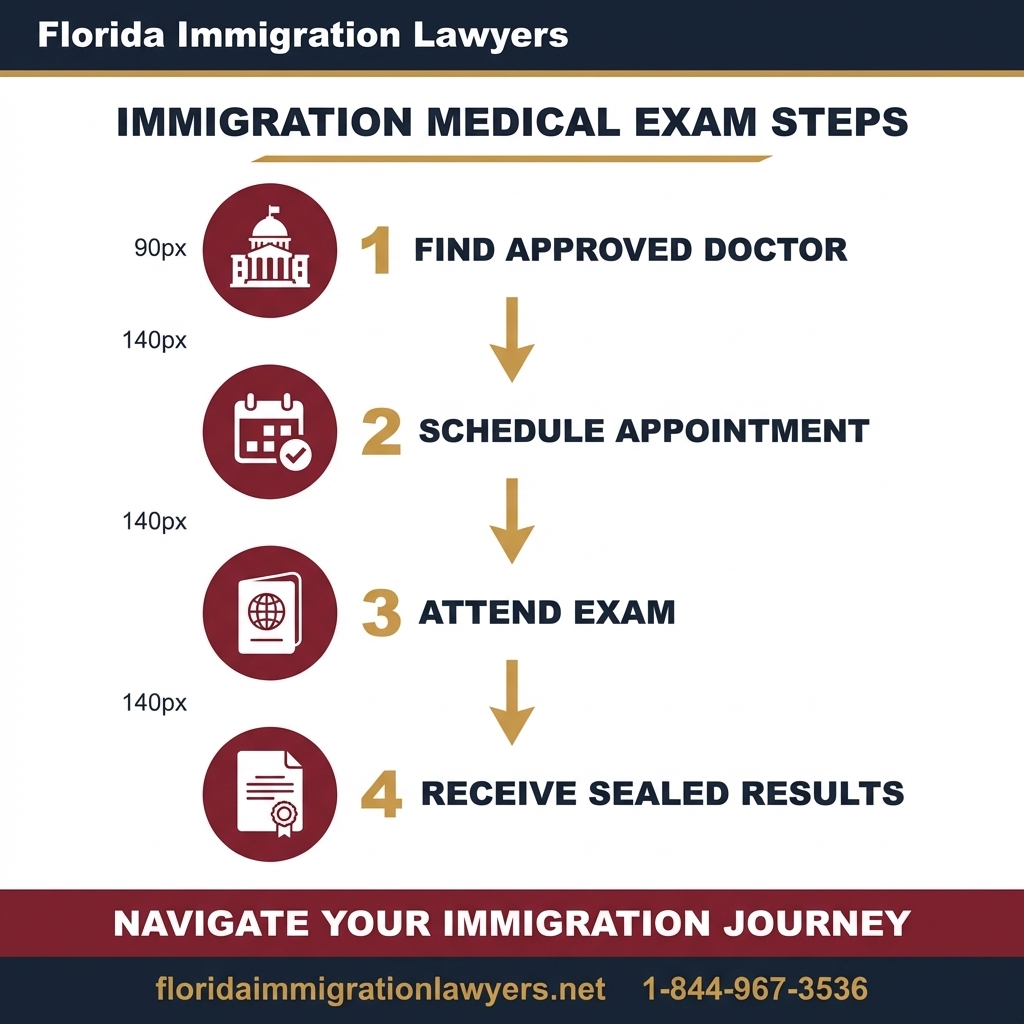
When you contact a clinic, clearly state that you need an immigration medical exam for USCIS Form I-693. This helps the clinic schedule you appropriately and provide accurate information.
Step-by-Step Guide to Your Immigration Medical Exam
Preparing for your immigration medical exam can make the process smoother and less stressful. Here’s a typical step-by-step guide:
-
Find a Civil Surgeon: Use the USCIS online tool to locate an approved civil surgeon in your Florida area, such as Hialeah, Miami, or Orlando. Call their office to inquire about availability, cost, and required documents.
-
Gather Required Documents: Before your appointment, collect all necessary identification, medical records, and vaccination history. (See Document Checklist section below for details).
-
Attend Your Appointment: The civil surgeon will review your medical history, perform a physical examination, and assess your mental health. They will also review your vaccination records and administer any missing required vaccinations, or order necessary blood tests.
-
Complete Lab Tests and Vaccinations: If needed, you will undergo blood tests for specific conditions (e.g., syphilis, gonorrhea) and tuberculosis screening. Any missing vaccinations required by USCIS will be administered or you will be referred for them.
-
Review and Sign Form I-693: Once all tests and vaccinations are complete, the civil surgeon will fill out Form I-693. You will review the form for accuracy and sign it in the presence of the civil surgeon. The civil surgeon will then sign and date the form.
-
Receive Sealed Envelope: The civil surgeon will place the completed Form I-693 and any supporting documents in a sealed envelope. It is CRUCIAL that this envelope remains sealed. Do NOT open it. If the seal is broken, USCIS will not accept the form, and you will need a new exam.
-
Submit to USCIS: You will submit the sealed envelope with your Form I-693 to USCIS along with your adjustment of status application (Form I-485) or as requested by USCIS. Our experienced attorneys can assist with your application submission.
Document Checklist for Your Immigration Medical Exam
Being well-prepared with your documents can save you time and potential delays. Here’s a list of what you should typically bring to your immigration medical exam appointment:
- Valid government-issued photo identification (e.g., passport, driver's license, national ID).
- Form I-693, Report of Medical Examination and Vaccination Record (if you have already downloaded it, otherwise the civil surgeon's office will provide it).
- Your vaccination records (original copies are best). This includes records for MMR, Polio, Tetanus and Diphtheria Toxoids, Pertussis, Haemophilus influenzae type B, Hepatitis A, Hepatitis B, Varicella, Influenza, and Pneumococcal.
- Any relevant medical records, such as previous diagnoses, hospitalizations, or treatments for chronic conditions.
- List of current medications.
- Proof of previous tuberculosis (TB) treatment, if applicable.
- Any mental health records or evaluations, if applicable.
- A list of your prior addresses.
- Payment for the exam fees.
- Your immigration case number or Alien Registration Number (A-number), if you have one.
Always confirm with your chosen civil surgeon's office if they have any specific additional requirements before your visit. Having everything organized will help ensure a smooth process.
Timeline and Processing Expectations for Your I-693
The timeline for completing your immigration medical exam can vary. The actual appointment with a Florida civil surgeon typically lasts a few hours, but follow-up visits might be necessary for additional tests or vaccinations. Lab results usually take a few days to a week to process.
Once the civil surgeon completes and seals your Form I-693, it has a specific validity period. Generally, the Form I-693 is valid for two years from the date the civil surgeon signed it, provided it was signed no more than 60 days before you filed your underlying application (e.g., Form I-485). USCIS must receive the form within this validity period.
It's important to plan your medical exam strategically. Completing it too early could mean the form expires before USCIS processes your application. Completing it too late might delay your case if USCIS issues a Request for Evidence (RFE) for a medical exam you haven't yet done. Our team at Florida Immigration Lawyers can help you determine the optimal timing for your USCIS medical exam.
Cost Factors and Fee Breakdown for the Medical Exam
The cost of an immigration medical exam is a significant consideration for many applicants. USCIS does not set fees for these exams; rather, each civil surgeon's office determines its own pricing. This means costs can vary widely among different providers in Florida, including in areas like Hialeah, Miami, and Fort Myers.
Typically, the total cost for the exam includes several components:
- Civil Surgeon's Examination Fee: This covers the physical examination, review of medical history, and completion of Form I-693.
- Laboratory Tests: Blood tests for syphilis and gonorrhea, and tuberculosis screening (usually a TST or IGRA blood test).
- Vaccinations: If you lack proof of required vaccinations or need new ones, these will be an additional cost. The cost depends on how many vaccinations you need.
- X-rays: If your tuberculosis screening is positive, a chest X-ray will be required, incurring an additional fee.
It is crucial to inquire about the total estimated cost when you first contact a civil surgeon's office. Ask for a breakdown of all potential fees, including any follow-up appointments, lab work, and vaccinations. Remember, these fees are paid directly to the civil surgeon, not to USCIS. Health insurance generally does not cover immigration medical exams, so be prepared to pay out-of-pocket.
Do not navigate this process alone. Contact Florida Immigration Lawyers today. Our experienced team can provide invaluable guidance, helping you understand each step and ensuring your application is complete and accurate. Call us at 1-844-967-3536 for a free consultation.
Frequently Asked Questions (FAQs) About the Immigration Medical Exam
Many applicants have similar questions about the immigration medical exam. Here are some of the most common inquiries, providing clarity on typical concerns.
What do they check for in an immigration medical exam?
During the USCIS medical exam, civil surgeons check for several key areas. They look for communicable diseases of public health significance, such as active tuberculosis, syphilis, and gonorrhea. They also assess for physical or mental disorders that could be associated with harmful behavior, or a history of drug abuse or addiction. Furthermore, they verify that you have received all required vaccinations for your age and medical condition, as outlined by the CDC.
Can I use my own doctor for the I-693 exam?
No, you cannot use just any doctor for your Form I-693. The exam must be performed by a physician specifically authorized by USCIS, known as a civil surgeon. These doctors are approved and trained to conduct immigration medical examinations according to strict federal guidelines. Using a non-approved doctor will result in your Form I-693 being rejected by USCIS.
How long does the immigration medical exam take?
The duration of the immigration medical exam itself can vary, but the initial appointment with the civil surgeon typically lasts between one to three hours. This includes reviewing your medical history, the physical examination, and discussion of vaccination records. However, the entire process, including waiting for lab results and any necessary follow-up for vaccinations or further testing, can extend over several days to a week or more.
What vaccinations are required for the immigration medical exam?
USCIS requires specific vaccinations, generally including Mumps, Measles, Rubella (MMR), Polio, Tetanus and Diphtheria Toxoids, Pertussis, Haemophilus influenzae type B, Hepatitis A, Hepatitis B, Varicella (chickenpox), Influenza, and Pneumococcal. The exact requirements depend on your age and the specific vaccination schedule recommended by the Centers for Disease Control and Prevention (CDC). Your civil surgeon will determine which vaccinations you need based on your records.
Can I get a cheap immigration medical exam near me?
The cost of an immigration medical exam varies significantly between providers in Florida, including in Hialeah. While price is a factor, prioritizing a USCIS-approved civil surgeon and thoroughness is key. Some clinics may offer more competitive pricing, but ensure they are legitimate and provide all required components. It's advisable to call several approved clinics to compare costs, including all lab tests and potential vaccinations, before making a decision.
Common Mistakes to Avoid During Your Immigration Medical Exam
Avoiding these common errors can prevent significant delays or even rejection of your immigration application:
-
Opening the Sealed Envelope: This is perhaps the most critical mistake. The civil surgeon provides Form I-693 in a sealed envelope. If you open it, even accidentally, USCIS will reject the form, requiring you to get a new exam. Always submit the envelope to USCIS exactly as you receive it.
-
Using an Unapproved Doctor: Only USCIS-designated civil surgeons can perform the immigration medical exam. Using your regular family doctor will result in rejection of your Form I-693. Always verify a doctor's status on the official USCIS website before scheduling an appointment.
-
Failing to Bring Vaccination Records: Missing or incomplete vaccination records can lead to delays and additional costs, as the civil surgeon will require you to get any missing vaccinations. Gather all immunization records beforehand.
-
Not Disclosing Full Medical History: Be completely honest and transparent with the civil surgeon about your medical history, including any past treatments for physical or mental health conditions, or drug use. Omissions can lead to issues later on.
-
Ignoring Follow-up Requirements: If the civil surgeon requests additional tests, X-rays, or vaccinations, it is crucial to complete them promptly. Failure to follow through will delay the completion of your Form I-693.
-
Submitting an Expired Form I-693: The completed Form I-693 has a specific validity period. If USCIS receives it after it has expired, they will issue an RFE or reject it. Pay close attention to the validity dates and plan your submission accordingly.
-
Not Bringing Proper Identification: Ensure you bring a valid government-issued photo ID to your appointment. Without it, the civil surgeon may not be able to proceed with your exam, causing delays.
-
Assuming Insurance Coverage: Most health insurance plans do not cover the costs associated with the immigration medical exam. Be prepared for out-of-pocket expenses and clarify fees with the clinic beforehand.
-
Waiting Until the Last Minute: Procrastinating on your medical exam can create unnecessary stress and potential delays, especially if unforeseen issues arise or if the civil surgeon has limited availability in areas like Hialeah or Miami.
-
Not Reviewing the Form I-693: Before signing, carefully review the information on Form I-693 for any errors or inaccuracies. While the civil surgeon completes it, it's your responsibility to ensure your personal details are correct.
When to Call Florida Immigration Lawyers
While the immigration medical exam itself is a medical procedure, the legal implications and ensuring it integrates correctly with your overall immigration application can be complex. There are several scenarios where consulting an experienced immigration attorney at Florida Immigration Lawyers is highly recommended:
- Medical Inadmissibility Concerns: If you have a medical condition that might make you inadmissible to the U.S., such as a history of certain infectious diseases, a physical or mental disorder with associated harmful behavior, or a history of drug abuse. Our attorneys can help you explore waivers or prepare compelling arguments. This is particularly relevant under 8 U.S.C. § 1182(a)(1).
- Complex Vaccination Issues: If you have religious or moral objections to vaccinations, or if medical reasons prevent you from receiving them. We can guide you through the waiver application process.
- Requests for Evidence (RFEs): If USCIS sends an RFE regarding your Form I-693 or any aspect of your medical exam. An attorney can help you understand and respond appropriately.
- Delays or Complications: If your case is experiencing unusual delays, or if you encounter any issues with the civil surgeon or the documentation process.
- Asylum or Refugee Status: If you are an asylum seeker or refugee and unsure about the specific medical exam requirements for your situation. Our firm specializes in asylum law.
- Deportation Defense: If medical issues are being raised in a deportation defense case.
Our team at Florida Immigration Lawyers understands the intricate connection between your medical exam and your overall immigration goals, including pursuing U.S. citizenship or family-based immigration. We serve clients across Florida, including Hialeah, Miami, and Orlando, providing strategic advice and robust representation. Let us help you navigate these challenges effectively.
About Florida Immigration Lawyers
Florida Immigration Lawyers is a premier immigration law firm dedicated to serving individuals and businesses across the entire state of Florida. With a deep understanding of U.S. immigration law and a commitment to our clients, we provide compassionate yet aggressive legal representation for a wide range of immigration matters.
Our experienced attorneys specialize in family-based immigration, employment visas, deportation defense, asylum, naturalization, and complex waiver applications. We pride ourselves on offering personalized legal strategies tailored to each client's unique circumstances, ensuring you receive the highest level of service and support.
Why choose Florida Immigration Lawyers? We offer free consultations, are available 24/7 to address your urgent needs, and provide bilingual services (English and Spanish) to ensure clear communication. Our firm is committed to protecting your rights and helping you achieve your American dream. Visit our website at www.floridaimmigrationlawyers.net or call us today at 1-844-967-3536 to schedule your free consultation.
Sources and References
- U.S. Citizenship and Immigration Services (USCIS)
- USCIS Find a Civil Surgeon Tool
- USCIS Policy Manual, Volume 8, Part B - Admissibility and Health-Related Grounds
- Centers for Disease Control and Prevention (CDC) - Immigration Medical Examination
- 8 U.S.C. Chapter 12 - Immigration and Nationality Act (INA)
- 8 U.S.C. § 1182(a)(1) - Inadmissible Aliens (Health-related grounds)
- 8 CFR § 232.1 - Medical examination
This article provides general legal information and is not intended as legal advice. Every case is unique, and outcomes depend on specific facts and circumstances. Contact an attorney for advice about your particular situation.
Ready to Secure Your Future in Florida?
The immigration medical exam is a critical step, but it's just one part of your broader immigration journey. Don't leave your future to chance. Our dedicated team at Florida Immigration Lawyers is here to provide the expert legal guidance you deserve.
Whether you need assistance with your Form I-693, navigating complex medical inadmissibility issues, or any other immigration matter, we are ready to help. Take the first step towards a successful outcome. Call us today at 1-844-967-3536 for a free consultation. Se Habla Español - Estamos aquí para ayudarle.
Do Not Navigate This Process Alone
Our experienced immigration attorneys are ready to fight for you. Get a free, confidential consultation today.
Se Habla Español
Frequently Asked Questions
Florida Immigration Lawyers
Immigration Attorney | Founder, Vasquez Law Firm
U.S. Air Force veteran and immigration attorney with thousands of cases resolved. J.D., NCCU School of Law. AILA member. Admitted to the 4th, 5th, and 11th Circuit Courts.
Available 24/7 - Free Evaluations
Related Legal Services
Our Florida immigration attorneys can help you with free immigration consultation, experienced immigration attorneys and business immigration. Call today at 1-844-967-3536 for a free consultation.
Related Links
Related Topics
Free Legal Consultation
Discuss your case with our experienced attorneys. We're available 24/7.
Se Habla Español - Estamos aquí para ayudarle.
Related Articles
Immigration Services in Jacksonville, Florida | VLF Florida
Explore comprehensive immigration services in Jacksonville, Florida. Navigate your immigration journey with expert legal guidance from Florida Immigration Lawyers. Call us for a free consultation today!
Understanding Citizenship Application Delays in Florida
Facing delays in your citizenship application in Florida? Learn about the causes, how to manage them, and when to seek legal help. Our guide provides insights into the N-400 process and offers practical advice for applicants in Tallahassee. Contact us for a free consultation.
VAWA Self-Petition for Abused Spouse in Florida | VLF Florida
Learn how to file a VAWA self-petition in Florida as an abused spouse. Discover eligibility requirements, process steps, and when to seek legal help. Call Florida Immigration Lawyers for a free consultation.
Navigating the Unlawful Presence Waiver in Florida
Learn about the I-601A provisional waiver for unlawful presence in Florida. This guide covers eligibility, application steps, common mistakes, and why consulting an attorney is crucial. Contact Florida Immigration Lawyers for a free consultation.