Immigration Lawyer Orlando Free Consultation: Bond Hearings
Facing an immigration bond hearing in Orlando, Florida can be challenging. This comprehensive guide covers everything you need to know about the bond process, eligibility criteria, and how to prepare effectively. Discover the role of an immigration lawyer in improving your chances of release from detention. Call Florida Immigration Lawyers at 1-844-967-3536 for a free consultation.

Finding an immigration lawyer in Orlando for a free consultation can significantly impact your bond hearing process. An experienced attorney helps navigate the complexities of immigration detention and bond hearings. Key takeaways include:
- Understanding the bond hearing process in Florida
- Criteria for bond eligibility
- The role of an immigration lawyer in bond hearings
- Common mistakes to avoid
- How to prepare for a bond hearing
Introduction
If you or a loved one is facing immigration detention in Orlando, Florida, understanding the bond hearing process is crucial. This process determines whether an individual can be released from detention while their immigration case proceeds. Navigating this complex legal landscape can be daunting, but with the help of an experienced immigration lawyer, you can improve your chances of success. In this article, we will explore the intricacies of immigration bond hearings in Florida, including eligibility criteria, the role of a lawyer, and common pitfalls to avoid. Call Florida Immigration Lawyers at 1-844-967-3536 for a free consultation.
Immigration detention can be an incredibly stressful and confusing experience, not just for the individual detained but also for their family and loved ones. The uncertainty surrounding detention length and the legal process can be overwhelming. A bond hearing offers a glimmer of hope, providing an opportunity for release, allowing individuals to pursue their immigration case from outside the confines of a detention center.
In Florida, the immigration courts in Miami and Orlando are central to these proceedings. Having a clear understanding of what to expect, from the initial detention to the final bond decision, is paramount. This guide aims to demystify the process, offering practical advice and highlighting why expert legal representation from firms like Florida Immigration Lawyers is not just beneficial, but often essential for a favorable outcome.
What is an Immigration Bond Hearing?
An immigration bond hearing is a proceeding where an immigration judge decides if a detained individual can be released on bond while awaiting their immigration court date. As of 2026, bond hearings in Florida are typically held at designated immigration courts such as those in Miami and Orlando.
During the hearing, the judge evaluates factors like the detainee's risk of flight and any potential danger to the community. Successful outcomes can lead to the individual being released upon payment of the bond, allowing them to continue their life outside of detention.
The primary goal of a bond hearing is to strike a balance between an individual's right to liberty and the government's interest in ensuring they appear for future court dates and do not pose a threat to public safety. The immigration judge has significant discretion in determining whether to grant bond and, if so, the amount. This discretion is exercised by carefully weighing all evidence presented, making a compelling case crucial for a positive decision. Understanding the nuances of this judicial discretion is where an experienced attorney truly shines.
For example, if an individual has strong family ties in Orlando, a stable job, and no criminal record, these factors would weigh heavily in favor of granting a bond. Conversely, a history of failing to appear in court or serious criminal convictions would make securing a bond much more challenging. An immigration lawyer helps present these mitigating factors effectively, ensuring the judge sees the full picture of the detainee's circumstances.
Eligibility for an Immigration Bond
Eligibility for an immigration bond depends on several factors. Generally, detainees must demonstrate they are not a flight risk and do not pose a danger to the community. Individuals with past criminal records or previous immigration violations may face challenges in securing a bond.
To establish that an individual is not a flight risk, the judge will look for strong community ties. This includes evidence of long-term residence in the U.S., stable employment, close family relationships with U.S. citizens or lawful permanent residents, and a history of complying with legal obligations. The more evidence you can provide to show deep roots in the community, the stronger your case against being deemed a flight risk.
Regarding danger to the community, the judge will scrutinize any criminal history. While minor offenses might not be an automatic disqualifier, serious felonies, crimes involving violence, or those related to national security concerns can significantly impede bond eligibility. However, even with a criminal record, an attorney can present mitigating circumstances, such as rehabilitation efforts, lack of recent criminal activity, or the non-violent nature of past offenses, to argue for release. It's vital to discuss all aspects of your history openly with your legal counsel from Florida Immigration Lawyers.
How to Prepare for a Bond Hearing
Preparation is key to a successful bond hearing. As of 2026, the following steps can help you prepare effectively:
- Hire an Immigration Lawyer: Engage with a lawyer who specializes in immigration law to guide you through the process. An experienced attorney from Florida Immigration Lawyers can assess your eligibility, gather crucial evidence, and represent you vigorously in court, significantly increasing your chances of a favorable outcome.
- Gather Supporting Documents: Collect evidence that supports your eligibility for bond, such as proof of community ties and employment. These documents are the backbone of your case, providing tangible proof of your stability and commitment to remaining in the community.
- Understand the Legal Criteria: Familiarize yourself with the legal standards used by judges to assess bond requests. Your lawyer will explain the specific factors the judge considers, helping you tailor your evidence and testimony to address these points directly.
- Prepare a Personal Statement: Clearly articulate your reasons for requesting bond and how you meet the eligibility criteria. This statement allows you to tell your story in your own words, emphasizing your ties, responsibilities, and commitment to attending all future court dates.
- Practice Your Testimony: Work with your lawyer to rehearse your testimony and anticipate potential questions. Being prepared helps you remain calm and articulate during the hearing, ensuring your message is clear and credible to the judge.
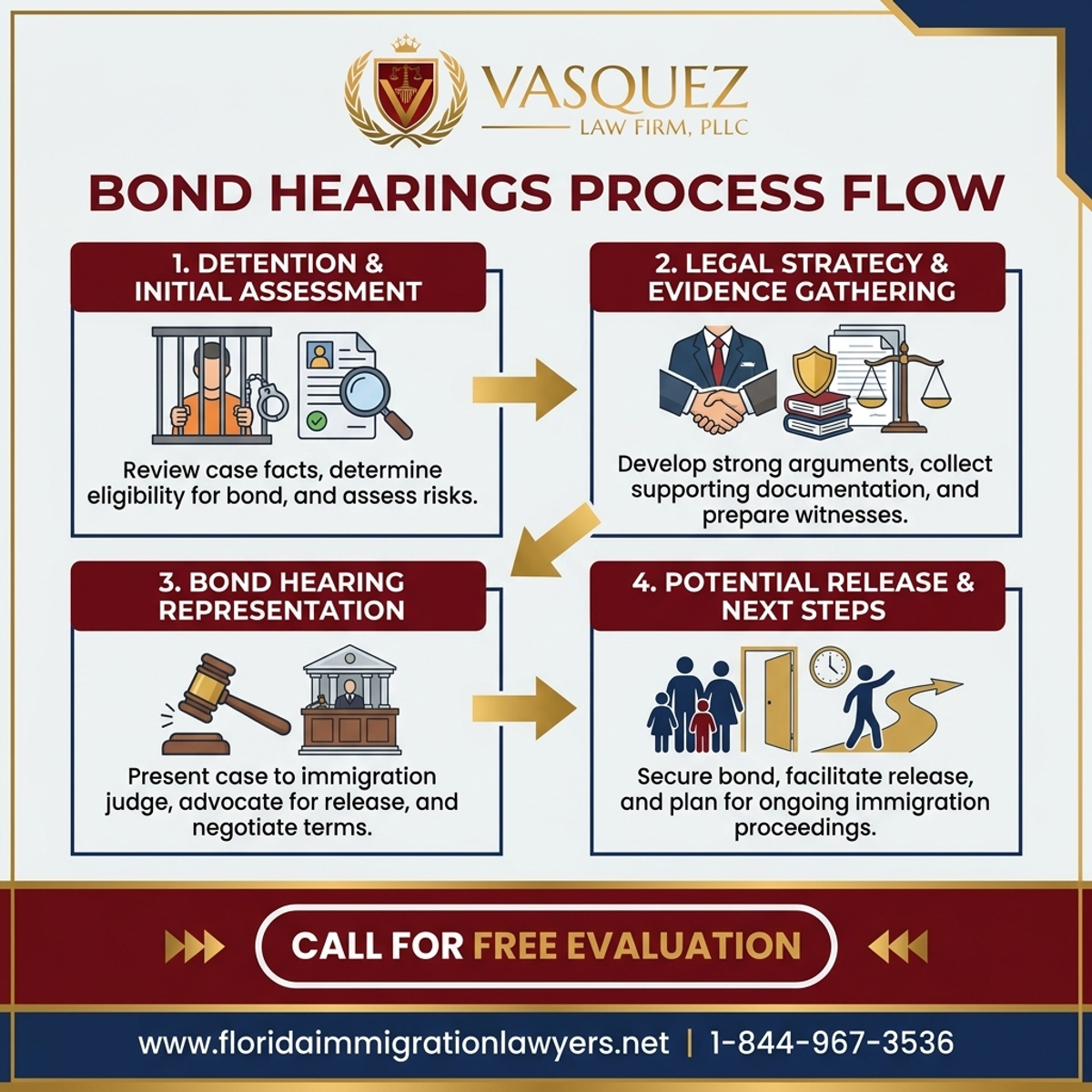
Step-by-Step Process — Immigration Lawyer Orlando Free Consultation: Bond Hearings
Document Checklist for Bond Hearings
- Proof of Address: Utility bills, lease agreements, or property deeds demonstrate stable residence.
- Employment Verification: Pay stubs, employment letters, or tax returns prove stable income and community engagement.
- Character References: Letters from community leaders, employers, or family members attest to your good character and ties.
- Community Service Records: Evidence of volunteer work or community involvement shows positive contributions.
- Any Court Documents: Provide all relevant legal paperwork, especially those related to past immigration or criminal proceedings, to ensure transparency and allow your lawyer to address them proactively.
Thorough preparation is not just about gathering documents; it's about building a comprehensive narrative that convinces the judge of your eligibility for bond. This proactive approach, guided by an expert immigration lawyer in Orlando, can make a monumental difference in the outcome of your hearing. Florida Immigration Lawyers are adept at helping clients compile these crucial materials and craft compelling arguments.
Timeline and Processing Expectations
| Stage | Typical Timeframe | Notes |
|---|---|---|
| Initial Detention | 1-3 days | Varies by circumstances |
| Bond Hearing Scheduling | 1-2 weeks | Depends on court docket |
| Bond Hearing Decision | Same day | Decision typically rendered immediately |
| Bond Payment and Release | 24-48 hours | After bond payment is processed |
While the table above provides a general overview, it's important to understand that these timelines can fluctuate significantly based on various factors. The specific immigration court's caseload, the complexity of your individual case, and even national policy changes can all impact how quickly your bond hearing is scheduled and processed. For instance, courts in high-volume areas like Miami might have longer waiting periods.
The urgency of securing legal representation becomes clear when considering these timelines. An immigration lawyer can work diligently to ensure all necessary paperwork is filed promptly and correctly, potentially expediting the scheduling of your hearing. They can also follow up with the court and ICE to monitor your case's progress, providing crucial updates and helping to navigate any unforeseen delays. Don't leave your freedom to chance; consult with Florida Immigration Lawyers at 1-844-967-3536 to understand your specific timeline.
Cost Factors and Fee Breakdown
The cost of an immigration bond and associated legal fees can vary. Below is a typical breakdown:
| Item | Typical Fee | Notes |
|---|---|---|
| Immigration Bond Amount | Varies | Depends on judge's decision |
| Legal Fees | Varies | Based on attorney's rate |
| Document Preparation | Varies | May include additional costs |
The immigration bond amount, set by the judge, is a critical factor. It can range from a few thousand dollars to tens of thousands, depending on the perceived flight risk and danger to the community. This amount is paid to the Department of Homeland Security and is typically returned (minus any fees) once the individual's immigration case is resolved and all court appearances have been made. Families often use bond agents, who charge a non-refundable percentage of the bond amount, to facilitate payment.
Legal fees for an immigration lawyer will depend on the complexity of the case, the attorney's experience, and the scope of services provided. Some attorneys may charge a flat fee for bond hearings, while others work on an hourly basis. It's essential to have a clear understanding of the fee structure upfront. Florida Immigration Lawyers offers transparent pricing and a free initial consultation to discuss your specific needs and potential costs, ensuring you are well-informed every step of the way.
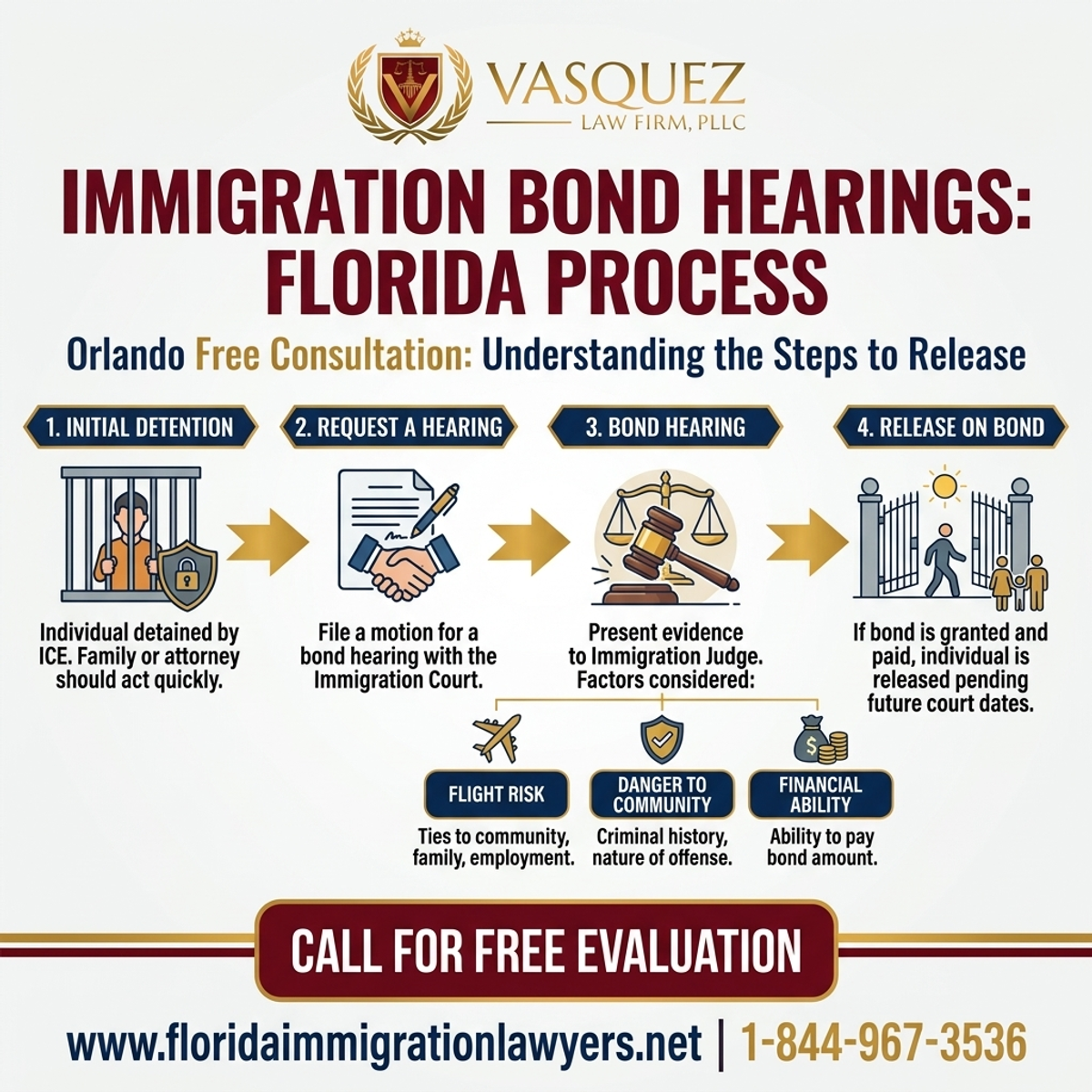
Key Statistics — Immigration Lawyer Orlando Free Consultation: Bond Hearings
Do not navigate this process alone. Contact Florida Immigration Lawyers today.
Common Mistakes to Avoid
- Failing to Hire a Lawyer: Attempting to handle a bond hearing without professional legal help can lead to unfavorable outcomes. An experienced immigration attorney understands the intricate legal arguments, evidentiary requirements, and court procedures necessary to present a strong case. Representing yourself, especially when detained, often results in missed opportunities to present crucial evidence or challenge government claims effectively, significantly reducing the likelihood of release.
- Insufficient Documentation: Not providing enough evidence to support your bond eligibility can result in denial. Judges rely on tangible proof of community ties, stable employment, and good character. Failing to submit documents like utility bills, employment letters, tax returns, or character references leaves gaps in your narrative and makes it harder for the judge to assess you as neither a flight risk nor a danger to the community.
- Missing Court Deadlines: Failing to meet deadlines can jeopardize your case. Immigration court dockets are strict, and missing a filing deadline for an appeal or a request for a hearing can lead to automatic denials or even orders of removal. An immigration lawyer ensures all paperwork is filed on time, preventing procedural errors that could negatively impact your chances of release.
- Ignoring Legal Advice: Not following your attorney's guidance can negatively impact your hearing. Your lawyer provides advice based on their expertise and understanding of your specific case and the legal system. Disregarding instructions, such as what to say or not say during testimony, or failing to provide requested documents, can undermine the strategy developed for your defense and weaken your credibility before the judge.
- Providing Inaccurate Information: Misrepresentations can lead to bond denial and further legal complications. It is paramount to be completely honest and transparent with your attorney and the court about all aspects of your immigration history, criminal record, and personal circumstances. Any discrepancies or false statements can severely damage your credibility and result in severe penalties, including a permanent bar from immigration benefits.
- Overlooking Community Ties: Failing to demonstrate strong community ties can weaken your case. Judges prioritize evidence that shows you have deep roots in the U.S. and are unlikely to flee. This includes proof of family living in the U.S., property ownership, long-term employment, and active participation in local community organizations or religious institutions. These ties serve as powerful indicators of your commitment to remaining in the country.
- Not Preparing for Testimony: Being unprepared for your testimony can hinder your credibility. A bond hearing is a formal legal proceeding where your demeanor and responses are scrutinized. Without preparation, you might appear nervous, confused, or provide inconsistent answers. Working with your lawyer to practice your testimony ensures you can clearly and confidently articulate your situation and reasons for requesting bond.
- Forgetting to Update Address: Not updating your address with the court can result in missed notices and hearings. If you are released on bond, it is your responsibility to keep the court informed of your current address. Failure to do so can lead to missed court dates, which can result in an order of removal in absentia and a warrant for your arrest, making future immigration relief extremely difficult.
- Disregarding Immigration History: Failing to address past immigration issues can affect bond decisions. Any prior encounters with immigration authorities, such as previous deportations, voluntary departures, or asylum claims, must be disclosed and thoroughly explained. Your attorney can help frame these past events in a way that minimizes their negative impact and highlights any changes in circumstances or rehabilitation efforts.
- Not Considering Financial Ability: Setting a bond amount that is too high can prevent release. While the judge sets the bond amount, it's crucial for your attorney to present arguments about your financial capacity. If the bond is unaffordable, even if granted, it defeats the purpose of release. Your lawyer can advocate for a reasonable bond amount, or explore alternatives if the initial amount is too high, to ensure actual release is possible.
When to Call a Lawyer
Contacting an immigration lawyer is crucial if you are detained or awaiting a bond hearing. Legal representation can significantly impact your case's outcome, providing guidance and advocacy. If you face complex legal issues, have a criminal record, or lack understanding of the process, a lawyer's expertise is invaluable. Florida Immigration Lawyers offers comprehensive support to navigate these challenges.
The moment you or a loved one is detained by immigration authorities, time becomes of the essence. Early intervention by an attorney can prevent critical mistakes, ensure your rights are protected, and expedite the bond hearing process. A lawyer can immediately begin gathering necessary documents, contacting family members, and preparing a robust defense strategy, even before a formal hearing is scheduled. This proactive approach is often the determining factor in securing a timely release.
Furthermore, navigating the U.S. immigration system can be incredibly complex, with constantly evolving laws and procedures. Trying to understand these intricacies while detained and under immense stress is nearly impossible. An experienced immigration lawyer from Florida Immigration Lawyers possesses the specialized knowledge required to interpret these laws, identify potential avenues for relief, and present your case in the most favorable light possible. Don't hesitate to call 1-844-967-3536 for a free consultation and take the first step towards securing your freedom.
About Florida Immigration Lawyers
Florida Immigration Lawyers is dedicated to helping individuals navigate the complexities of immigration law. Our experienced attorneys offer personalized services to meet your immigration needs. With 24/7 availability and a commitment to serving all of Florida, we provide free consultations to guide you through your legal journey. Call us at 1-844-967-3536 or visit our website at floridaimmigrationlawyers.net.
Our firm understands the profound impact immigration issues have on individuals and families. We pride ourselves on providing compassionate yet aggressive representation, ensuring every client receives the attention and expertise they deserve. From bond hearings to complex deportation defense, our team is equipped to handle a wide range of immigration challenges across Florida.
Sources and References
- U.S. Citizenship and Immigration Services (USCIS)
- Executive Office for Immigration Review (EOIR)
- 8 U.S.C. Chapter 12 - Immigration and Nationality Act
- State Department
Frequently Asked Questions About Immigration Bond Hearings
Below are some common questions regarding immigration bond hearings, with practical advice to guide you.
What factors does an immigration judge consider when setting bond?
Judges primarily assess whether an individual is a flight risk or a danger to the community. They consider factors like community ties (family, property, employment), criminal history, immigration history, and the likelihood of success in the underlying immigration case. Presenting strong evidence for each of these areas is crucial, and an attorney can help you strategically highlight favorable aspects of your background to the court.
Can I get released on bond if I have a criminal record?
Having a criminal record can complicate bond eligibility, but it doesn't automatically disqualify you. The judge will evaluate the nature and severity of the offenses, how recent they were, and any evidence of rehabilitation. An experienced lawyer can present mitigating circumstances, such as community service or completion of treatment programs, to argue that you are not a danger and deserve release. Always be transparent with your attorney.
How important are community ties in a bond hearing?
Community ties are extremely important, as they directly address the judge's concern about flight risk. Strong ties, such as U.S. citizen family members, stable employment, property ownership, and long-term residence, demonstrate a significant incentive to remain in the U.S. and appear for all court dates. Gathering extensive documentation to prove these ties is a cornerstone of a successful bond application.
What should I do if my bond is denied?
If your bond is denied, it's not necessarily the end of the road. Your attorney can discuss options, which may include filing a motion to reconsider or appealing the decision to the Board of Immigration Appeals (BIA). New evidence or a change in circumstances might also warrant a new bond hearing. It's critical to consult with Florida Immigration Lawyers immediately to explore all available legal avenues.
Is a free consultation with Florida Immigration Lawyers truly helpful for bond hearings?
Absolutely. A free consultation with Florida Immigration Lawyers offers invaluable insights into your specific situation without financial commitment. Our attorneys can assess your eligibility, explain the bond hearing process, identify potential challenges, and outline a strategic plan. This initial discussion provides clarity and peace of mind, empowering you to make informed decisions about your legal representation and the path forward for you or your loved one.
Related services: asylum and refugee protection, immigration waivers, humanitarian protection programs, DACA renewal and applications.
This article provides general legal information and is not intended as legal advice. Every case is unique, and outcomes depend on specific facts and circumstances. Contact an attorney for advice about your particular situation.
For personalized legal assistance, call Florida Immigration Lawyers at 1-844-967-3536 for a free consultation. Se Habla Español - Estamos aquí para ayudarle.
If you need legal assistance, learn more about get deportation defense help today, or call us at 1-844-967-3536 for a free consultation.
Do Not Navigate This Process Alone
Our experienced immigration attorneys are ready to fight for you. Get a free, confidential consultation today.
Se Habla Español
Or leave your details and we’ll call you:
Free Evaluation in 24 Hours
Or talk to us right now
AI voice assistant — available 24/7
FreeFrequently Asked Questions

William J. Vásquez
Founding Attorney · Vasquez Law Firm
U.S. Air Force veteran and immigration attorney with years of hands-on U.S. immigration experience. J.D., NCCU School of Law. AILA member. Admitted to the 4th, 5th, and 11th Circuit Courts.
Available 24/7 - Free Evaluations
Reviewed for legal accuracy by William J. Vásquez
Licensed in North Carolina; U.S. immigration is federal practice.
Related Legal Services
Our Florida immigration attorneys can help you with asylum protection, deportation defense and citizenship and naturalization. Call today at 1-844-967-3536 for a free consultation.
Related Links
Related Topics
Free Legal Consultation
Discuss your case with our experienced attorneys. We're available 24/7.
Se Habla Español - Estamos aquí para ayudarle.
Related Articles
Military Naturalization Expedited in Florida Bases
Explore military naturalization options for families at Florida bases, including parole in place benefits in Miami. Learn how to expedite your application with expert guidance from Florida Immigration Lawyers.
Immigration Lawyer Orlando Free Consultation 2026
Discover how an immigration lawyer in Orlando can help you through a free consultation. Learn about the services offered, costs, and recent immigration policy updates affecting your case.
USCIS Application Support Center (ASC) Jacksonville: 2026
The USCIS Application Support Center (ASC) in Jacksonville, Florida, is crucial for biometric data collection, a mandatory step for various immigration benefits like Green Cards and naturalization. This guide explains the ASC's role, how to prepare for appointments, and distinguishes it from broader USCIS Field Offices. We cover timelines, potential costs, and common mistakes to avoid, emphasizing the importance of accurate documentation and timely responses. For complex situations or any concerns regarding your immigration process in Florida, consulting an experienced attorney is highly recommended to ensure compliance and protect your rights. Florida Immigration Lawyers are ready to assist with expert legal advice.
Biometrics Appointment: What to Expect in Florida 2026
A biometrics appointment is a critical step in the U.S. immigration process, requiring fingerprints, photos, and signatures for identity verification and background checks. This guide for Florida residents explains what to expect, how to prepare, the necessary documents, and common mistakes to avoid in 2026. Understanding your USCIS biometrics appointment ensures a smoother path for your green card, work permit, or naturalization application. Learn about timelines, costs, and when to seek legal counsel from Florida Immigration Lawyers to protect your immigration future.