Immigration Court Proceedings in Florida: A Guide
Navigate the complex world of immigration court proceedings in Florida with our comprehensive guide. From understanding the steps involved to knowing when to seek legal help, Florida Immigration Lawyers are here to support you.

Navigating the U.S. immigration system can be a daunting experience, especially when facing immigration court proceedings. In Florida, individuals find themselves in a complex legal arena governed by specific rules and procedures. This comprehensive guide aims to demystify the process, offering clarity on what to expect, the critical stages involved, and how to best prepare for your appearance before an immigration judge. Understanding these proceedings is the first step towards a successful outcome, and securing experienced legal counsel is often paramount.
Understanding the Basics of Immigration Court in Florida
Immigration courts in Florida, like all others across the U.S., fall under the Executive Office for Immigration Review (EOIR), an agency within the Department of Justice. Unlike federal criminal or civil courts, immigration courts are administrative courts focused on determining whether non-citizens have a legal basis to remain in the United States or if they are subject to removal. The primary goal of these proceedings, often referred to as removal proceedings, is to decide an individual's immigration status.
Key Players in Immigration Court:
- Immigration Judge (IJ): An administrative judge who presides over hearings, considers evidence, and issues decisions regarding an individual's removability and eligibility for relief.
- Department of Homeland Security (DHS) Attorney: Represents the U.S. government, arguing for the removal of the non-citizen. This attorney works for Immigration and Customs Enforcement (ICE), a component of DHS.
- Respondent: The non-citizen facing removal proceedings. They are often referred to as the 'alien' in legal documents, though 'respondent' is the preferred term in court.
- Respondent's Attorney: A crucial advocate who represents the non-citizen, presents their case, and navigates the intricate legal landscape.
Types of Proceedings:
While removal proceedings are the most common, immigration courts also handle other types of cases:
- Asylum Hearings: For individuals seeking protection because they fear persecution in their home country.
- Bond Hearings: To determine if a detained non-citizen can be released on bond while their case is pending.
- Withholding of Removal: A form of protection similar to asylum but with a higher burden of proof.
- Convention Against Torture (CAT) Claims: For individuals who fear torture if returned to their home country.
The jurisdiction of these courts extends to various locations within Florida, with major courts located in Miami and Orlando. Each court operates with specific local rules in addition to the overarching federal regulations. Familiarity with these nuances is vital for anyone involved in the process.
The Journey Through Removal Proceedings: Key Stages
The path through immigration court is structured, moving through several distinct stages. Understanding each phase is essential for effective preparation and strategy.
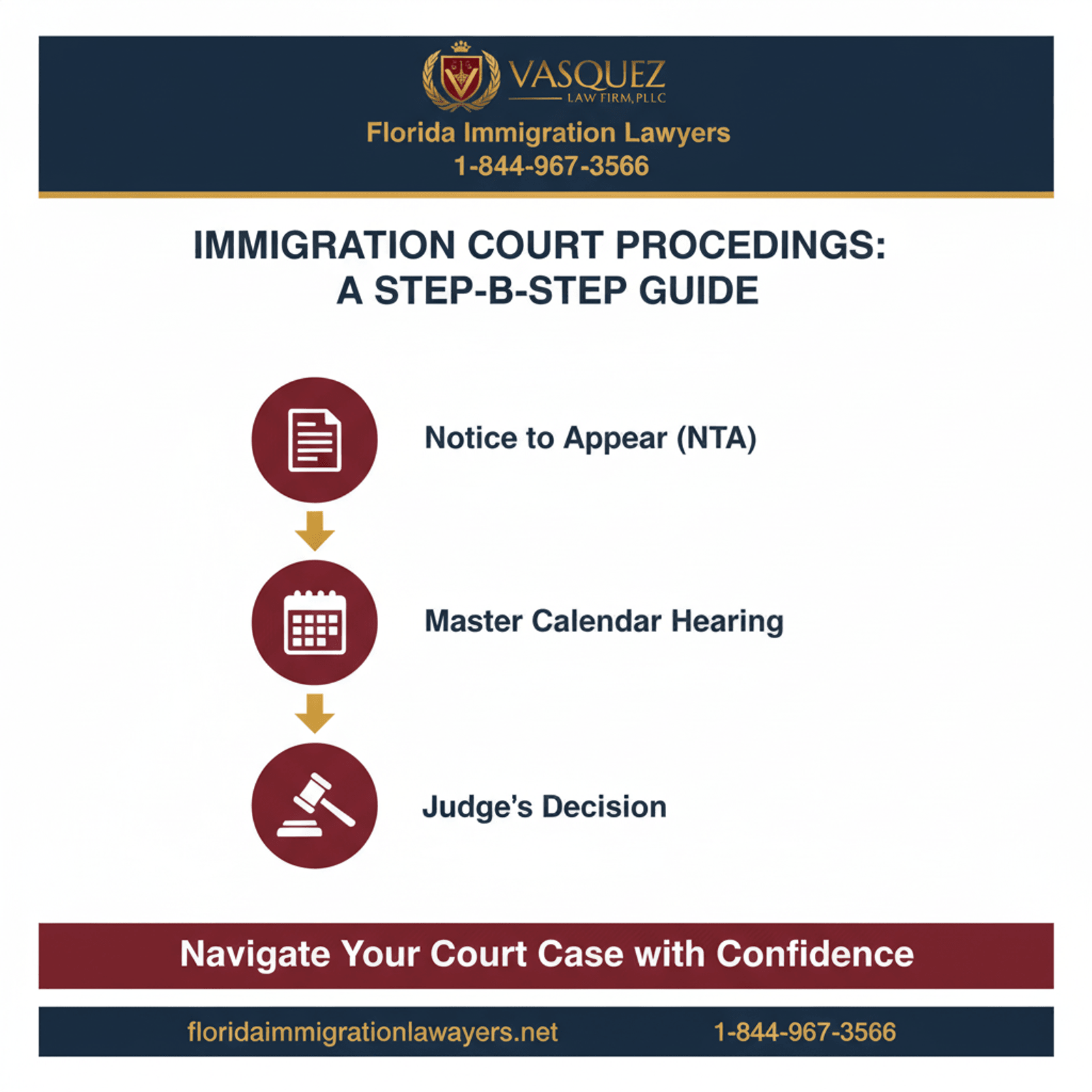
1. Notice to Appear (NTA):
The process typically begins when the Department of Homeland Security (DHS) issues a Notice to Appear (NTA) to a non-citizen. This document is the charging instrument, alleging that the individual is removable from the U.S. and specifying the legal grounds for removal. The NTA will also state the date and location of the initial hearing. Receiving an NTA is a serious matter and signals the formal commencement of deportation defense proceedings. It's crucial to review the NTA carefully with an attorney to understand the specific allegations.
2. Master Calendar Hearings (MCH):
The first appearance before an Immigration Judge is usually a Master Calendar Hearing. These are preliminary hearings where:
- The Immigration Judge confirms the respondent's identity.
- The respondent acknowledges receipt of the NTA.
- The respondent, through their attorney, admits or denies the factual allegations and concedes or disputes the charges of removability.
- The respondent informs the court of any applications for relief from removal they intend to file (e.g., asylum, cancellation of removal, adjustment of status).
- Deadlines are set for filing applications and supporting documents.
- Future hearing dates, including Individual Hearings, are scheduled.
MCHs are typically brief and may involve multiple respondents. It's a procedural stage, but critical for laying the groundwork for the entire case.
3. Individual Hearings (Merits Hearings):
If a respondent applies for relief from removal, the case proceeds to an Individual Hearing, also known as a Merits Hearing. This is a full evidentiary hearing where:
- The respondent and their witnesses testify under oath.
- Evidence (documents, affidavits, expert reports) is presented to support the application for relief.
- The DHS attorney has the opportunity to cross-examine the respondent and their witnesses.
- The DHS may present its own evidence to counter the respondent's claims.
- The Immigration Judge hears arguments from both sides.
Individual Hearings can be lengthy, often spanning several hours or even multiple days, depending on the complexity of the case. This is where the core legal arguments and factual disputes are presented.
4. Decision and Appeals:
After the Individual Hearing, the Immigration Judge issues a decision. The decision can be rendered orally at the end of the hearing or in writing at a later date.
- If the judge grants relief, the respondent is allowed to remain in the U.S. (e.g., granted asylum, adjusted status).
- If the judge denies relief and orders removal, the respondent has the right to appeal the decision to the Board of Immigration Appeals (BIA).
The appeal process is a separate legal proceeding with strict deadlines and procedural requirements. It's vital to have experienced counsel to navigate this stage of deportation defense.
Common Forms of Relief from Removal
For individuals facing removal proceedings, understanding the various forms of relief available is paramount. These legal avenues can allow a non-citizen to remain in the U.S. despite being found removable. Eligibility for each form of relief is highly specific and often requires meeting stringent criteria.
1. Asylum and Withholding of Removal:
Individuals who have a well-founded fear of persecution in their home country based on race, religion, nationality, membership in a particular social group, or political opinion may apply for asylum. Asylum provides a path to permanent residency. Withholding of Removal is a similar form of protection, but it prevents removal to a specific country where the individual's life or freedom would be threatened, without necessarily leading to permanent residency. The burden of proof for withholding is higher than for asylum.
2. Cancellation of Removal:
This relief is available in two forms:
- Cancellation of Removal for Lawful Permanent Residents (LPRs): An LPR may be eligible if they have been an LPR for at least five years, resided continuously in the U.S. for seven years after admission in any status, and have not committed certain serious crimes.
- Cancellation of Removal for Non-Permanent Residents: A non-LPR may be eligible if they have been physically present in the U.S. for at least 10 years, have demonstrated good moral character during that period, have not been convicted of certain offenses, and can show that their removal would result in exceptional and extremely unusual hardship to a qualifying U.S. citizen or LPR spouse, parent, or child. This is a very high standard to meet.
3. Adjustment of Status:
If a non-citizen is eligible for a green card through a family petition, employment, or other means, they may be able to 'adjust their status' to a lawful permanent resident while in removal proceedings, provided they meet all eligibility requirements and are not barred from adjustment. This often requires an approved visa petition and an available visa number.
4. Voluntary Departure:
In some cases, an Immigration Judge may grant voluntary departure, allowing a non-citizen to leave the U.S. at their own expense within a specified period (usually 120 days for pre-hearing and 60 days for post-hearing). This avoids a formal order of removal, which can have severe future immigration consequences. However, failure to depart voluntarily by the deadline can result in significant penalties.
5. Waivers of Inadmissibility or Deportability:
Various waivers exist to forgive certain grounds of inadmissibility or deportability. These are highly specific and depend on the particular ground of removability, the applicant's family ties, and other factors. Examples include waivers for misrepresentation, certain criminal offenses, or unlawful presence.
Each of these forms of relief requires a detailed application, extensive documentation, and compelling legal arguments. The complexity often necessitates the guidance of an experienced immigration attorney.
The Critical Role of Legal Representation
Facing immigration court without legal counsel can significantly diminish your chances of a favorable outcome. The U.S. immigration system is notoriously complex, with laws and regulations that frequently change. An experienced immigration attorney plays an indispensable role in navigating this labyrinth.
How an Attorney Can Help:
- Expert Guidance: Attorneys possess in-depth knowledge of immigration law, including the nuances of court procedures, eligibility requirements for various forms of relief, and the latest legal precedents. They can accurately assess your case, identify potential challenges, and advise on the best course of action.
- Case Preparation: A lawyer will help you gather and organize crucial evidence, including personal documents, affidavits from witnesses, expert opinions, and country condition reports (especially relevant for asylum cases). They ensure all necessary forms are correctly completed and filed on time, avoiding costly procedural errors.
- Courtroom Advocacy: During Master Calendar and Individual Hearings, your attorney will represent your interests vigorously. They will present your case persuasively, cross-examine DHS witnesses, object to improper evidence, and make compelling legal arguments to the Immigration Judge. Their presence ensures your rights are protected throughout the proceedings.
- Strategic Planning: An attorney can develop a comprehensive legal strategy tailored to your specific circumstances, anticipating potential government arguments and preparing rebuttals. They can advise on plea bargains, voluntary departure options, and the implications of various decisions.
- Appeals Process: If the Immigration Judge's decision is unfavorable, an attorney can guide you through the appeals process to the Board of Immigration Appeals (BIA) and, if necessary, to the federal circuit courts. This requires specialized knowledge of appellate procedures and legal writing.
- Reducing Stress: The emotional toll of immigration proceedings can be immense. Having a knowledgeable advocate by your side can alleviate much of the stress and uncertainty, allowing you to focus on your family and future.
Studies have consistently shown that non-citizens represented by legal counsel in immigration court have a significantly higher success rate compared to those who proceed pro se (without an attorney). This underscores the profound impact an attorney can have on the outcome of your case.
After the Decision: Appeals and Post-Order Relief
Even after an Immigration Judge renders a decision, the legal journey may not be over. Both the respondent and the Department of Homeland Security have the right to appeal an unfavorable decision.
1. Board of Immigration Appeals (BIA):
The BIA is the highest administrative body for interpreting and applying immigration laws. It reviews decisions made by Immigration Judges. An appeal to the BIA must be filed within 30 days of the IJ's decision. The BIA typically reviews cases based on the existing record, meaning no new evidence or testimony is usually presented. They assess whether the IJ made an error of law or fact. The BIA can affirm the IJ's decision, reverse it, or remand the case back to the IJ for further proceedings.
2. Federal Circuit Courts of Appeals:
If the BIA's decision is unfavorable, the respondent may have the option to appeal to a federal Circuit Court of Appeals. This is a judicial review process, meaning the federal court examines whether the BIA's decision was legally sound and supported by substantial evidence. Appeals to federal courts are complex and focus primarily on questions of law rather than facts. The jurisdiction of federal courts in immigration matters is limited by statute, particularly concerning discretionary decisions.
3. Motions to Reopen or Reconsider:
Even after a final order of removal, there may be avenues for relief through motions filed directly with the Immigration Court or the BIA.
- Motion to Reopen: This motion asks the court or BIA to reopen a case based on new facts that were not available or discoverable at the time of the original hearing. There are strict time and numerical limits for filing motions to reopen, though exceptions exist for certain circumstances, such as changed country conditions or asylum claims.
- Motion to Reconsider: This motion asks the court or BIA to review its prior decision based on an alleged error of law or fact in that decision. Like motions to reopen, there are strict deadlines.
These post-decision remedies are highly technical and require a thorough understanding of immigration law and procedure. An attorney is essential for navigating these advanced stages and determining the most viable path forward.
Immigration court proceedings in Florida are undeniably complex, but they are not insurmountable. With a clear understanding of the process, diligent preparation, and the strategic guidance of an experienced immigration attorney, individuals can effectively advocate for their right to remain in the United States. Whether you are at the initial stage of receiving an NTA or exploring options after a decision, timely and informed action is key. Don't face this critical journey alone. For personalized legal assistance and to discuss your options, we encourage you to contact our dedicated team today for a consultation.
Do Not Navigate This Process Alone
Our experienced immigration attorneys are ready to fight for you. Get a free, confidential consultation today.
Se Habla Español
Frequently Asked Questions
Florida Immigration Lawyers
Immigration Attorney | Founder, Vasquez Law Firm
U.S. Air Force veteran and immigration attorney with thousands of cases resolved. J.D., NCCU School of Law. AILA member. Admitted to the 4th, 5th, and 11th Circuit Courts.
Available 24/7 - Free Evaluations
Related Legal Services
Our Florida immigration attorneys can help you with asylum protection, deportation defense and citizenship and naturalization. Call today at 1-844-967-3536 for a free consultation.
Related Links
Related Topics
Free Legal Consultation
Discuss your case with our experienced attorneys. We're available 24/7.
Se Habla Español - Estamos aquí para ayudarle.
Related Articles
Asylum Interview Preparation in Florida: Key Steps
Prepare for your asylum interview in Florida with expert guidance. Learn about key steps, document requirements, common mistakes, and when to seek legal help.
EB-5 Investor Green Card in Florida: Key Insights | VLF Florida
Explore how the EB-5 investor green card program can help you start a new life in Florida. Learn about the benefits, processes, and common pitfalls of this investment immigration path. Call 1-844-967-3536 for expert guidance.
E-2 Visa for Florida Business Investors | VLF Florida
Learn how the E-2 investor visa can help you start a business in Naples, Florida. We cover eligibility, application steps, common mistakes, and when to seek legal help. Contact Florida Immigration Lawyers for a free consultation.
VAWA Immigration Relief: Support in Florida | VLF Florida
Explore VAWA immigration relief options for abuse victims in Hollywood, Florida. Learn about eligibility, application steps, and common mistakes to avoid. Contact Florida Immigration Lawyers for a free consultation.