Immigration Appeal BIA Florida: Your Guide to Challenging
Facing an unfavorable immigration decision in Florida can be daunting. This comprehensive guide from Florida Immigration Lawyers explains the intricate process of an immigration appeal to the Board of Immigration Appeals (BIA). Learn about the strict deadlines for filing Form EOIR-26, how to prepare a compelling appeal brief, and what to expect regarding processing times and costs. We detail crucial documents, common mistakes to avoid, and when legal representation is indispensable for residents across Florida, including Gainesville. Protect your rights and future by understanding how to challenge adverse rulings effectively.
An immigration appeal to the Board of Immigration Appeals (BIA) allows individuals in Florida to challenge adverse decisions made by an immigration judge or certain USCIS officers. This complex process requires submitting a Notice of Appeal and detailed brief within strict deadlines. Success depends on identifying legal errors in the initial ruling. Seeking experienced legal counsel is crucial for navigating BIA procedures effectively.
- Appeal unfavorable immigration judge decisions to the BIA.
- Strict deadlines apply for filing a Notice of Appeal (Form EOIR-26).
- Success hinges on demonstrating legal or factual errors.
- The BIA is the highest administrative body for immigration cases.
- Legal representation significantly improves appeal chances.
Imagine receiving a decision that threatens your ability to live and work in Florida, despite your best efforts. Many individuals across the state, from Gainesville to Miami, face the daunting prospect of an unfavorable immigration ruling. This can be a moment of deep uncertainty and fear for your future and your family's stability. However, an adverse decision is often not the final word in your immigration journey. You may have the right to pursue an immigration appeal. This comprehensive guide will walk you through the process of appealing to the Board of Immigration Appeals (BIA) in Florida, explaining what it entails, what to expect, and how to build a strong case. We understand the challenges you face and are here to help you understand your options. Do not despair; learn how you can fight for your rights and your future. If you are facing an unfavorable immigration decision in Florida, do not hesitate to seek professional legal guidance. Call Florida Immigration Lawyers at 1-844-YO-PELEO for a free consultation today.
Understanding the Immigration Appeal Process in Florida
The journey through the U.S. immigration system can be long and complex, and sometimes, the decisions made are not in your favor. When this happens, understanding your rights, particularly the right to an immigration appeal, becomes paramount. For residents of Gainesville and other Florida communities, challenging an adverse ruling is a critical step in protecting their immigration future.
What is the BIA?
The Board of Immigration Appeals (BIA) is the highest administrative body for interpreting and applying immigration laws. It reviews decisions made by immigration judges in removal proceedings and by Department of Homeland Security (DHS) officers regarding certain petitions and applications. Headquartered in Falls Church, Virginia, the BIA serves as the primary appellate body for all immigration matters nationwide, including those originating from Florida's immigration courts in cities like Miami, Orlando, and Bradenton.
The BIA operates under the Executive Office for Immigration Review (EOIR) within the Department of Justice. Its role is to ensure that immigration judges and DHS officers apply immigration law correctly and consistently. This oversight is vital for maintaining fairness and due process within the immigration system.
Why an Appeal Matters
An appeal offers a critical opportunity to challenge errors of law or fact that may have occurred in your initial hearing or decision. For many in Gainesville and throughout Florida, this represents a crucial second chance to protect their right to remain in the U.S. It's a fundamental aspect of due process in the immigration system, allowing individuals to correct injustices or misinterpretations of the law.
Without the option to appeal, many individuals would be left without recourse against potentially flawed decisions. An appeal can provide a stay of removal, allowing you to remain in the country while your case is being reviewed. This time is invaluable for planning your next steps and continuing to live your life in Florida.
Decisions You Can Appeal
Generally, you can appeal decisions from immigration judges, such as orders of removal or denial of relief like asylum, cancellation of removal, or adjustment of status. You can also appeal certain decisions made by USCIS, though these typically go to the Administrative Appeals Office (AAO) first, or directly to the BIA in specific circumstances. Understanding which decisions are appealable is the first step in protecting your rights.
It is important to differentiate between decisions that are appealable to the BIA and those that might require a different appellate pathway, such as an appeal to a federal circuit court. Your attorney can help clarify the appropriate appellate body for your specific case, ensuring you pursue the correct legal avenue.
Navigating the Board of Immigration Appeals (BIA) Process: A Step-by-Step Guide
Successfully navigating a BIA immigration appeal requires precision and adherence to strict procedural rules. This process is not a rehearing of your original case but rather a review of the existing record for legal or factual errors. Understanding each step is crucial for anyone in Florida considering an appeal.
-
Step 1: Filing the Notice of Appeal (Form EOIR-26)
This is the crucial first step in initiating your immigration appeal. You must file Form EOIR-26, Notice of Appeal from a Decision of an Immigration Judge, with the BIA within 30 calendar days of the immigration judge's oral decision or the mailing of a written decision. This deadline is extremely strict and missing it can lead to the permanent loss of your appeal rights. The form must be properly completed, indicating the specific grounds for your appeal.
Along with the form, you must also pay the required filing fee or submit a fee waiver request. Proper service of the Notice of Appeal on the opposing party (DHS) is also mandatory. Failure to meet any of these requirements can result in your appeal being summarily dismissed, even before its merits are considered.
-
Step 2: Submitting Your Appeal Brief
After filing the Notice of Appeal, you will typically be given a deadline, usually 21 days, to submit a detailed written brief. This brief is your opportunity to explain why the immigration judge's decision was incorrect. It must clearly articulate the errors of law or fact, supported by legal arguments and references to applicable statutes, regulations, and case law, including administrative decision immigration court precedents.
The brief should be a compelling legal document, meticulously organized and well-researched. It should directly address the immigration judge's findings and conclusions, presenting counter-arguments based on the existing record. This is where the expertise of an immigration attorney is invaluable, as they can craft a persuasive argument that highlights the critical flaws in the original decision.
-
Step 3: Government's Response
The Department of Homeland Security (DHS) will have an opportunity to file a response brief. This brief will typically argue in favor of upholding the immigration judge's original decision, countering the arguments presented in your appeal brief. Your attorney will review this response carefully to anticipate their arguments and prepare for potential counter-responses if permitted.
Understanding the government's position is key to a successful appeal. Their brief will outline their legal reasoning and interpretation of the facts. A skilled attorney can analyze their arguments and identify any weaknesses or misrepresentations that can be further addressed.
-
Step 4: BIA Review and Decision
The BIA generally reviews appeals based on the written record, including the transcripts of your original hearing, exhibits, and the briefs submitted by both parties. Oral arguments before the BIA are rare and typically only granted in exceptional circumstances. The BIA may affirm the immigration judge's decision, reverse it, or remand the case back to the immigration judge for further proceedings.
A remand means the BIA sends the case back to the immigration judge for additional proceedings, often to consider new evidence or to apply the law correctly. A reversal means the BIA agrees with your appeal and overturns the original decision. An affirmance means the BIA upholds the immigration judge's decision. Each outcome has significant implications for your immigration status.
-
Step 5: Motion to Reopen or Reconsider (If Applicable)
If the BIA denies your appeal, you may have options to file a motion to reconsider or a motion to reopen. A motion to reconsider asks the BIA to review its own decision based on an alleged error of law or fact in its ruling. This motion focuses on the BIA's decision itself, not the original immigration judge's decision.
A motion to reopen requests the BIA to consider new facts or evidence that were not available at the time of the original hearing. These motions also have strict deadlines, usually 30 days for a motion to reconsider and 90 days for a motion to reopen. They are complex and require strong legal justification to be granted, often relying on specific immigration case law.
Essential Documents for Your BIA Immigration Appeal
Preparing a complete and accurate set of documents is fundamental to a successful BIA immigration appeal. Missing or incorrect documentation can lead to delays or even dismissal of your case. For individuals in Gainesville and throughout Florida, meticulous attention to detail in document preparation is paramount.
Initial Filing Documents:
- Form EOIR-26, Notice of Appeal: This is the official form to initiate your appeal. Ensure all sections are accurately completed, including your alien registration number (A-number) and the specific grounds for your appeal.
- Filing Fee or Fee Waiver Request: The required fee must accompany your appeal, or you must submit a Form EOIR-26A, Fee Waiver Request, with supporting documentation demonstrating your inability to pay. The fee amount is subject to change, so always verify the current fee.
- Proof of Service: Documentation showing you served a copy of the Notice of Appeal on the opposing party (DHS). This typically involves a certificate of service signed by you or your attorney.
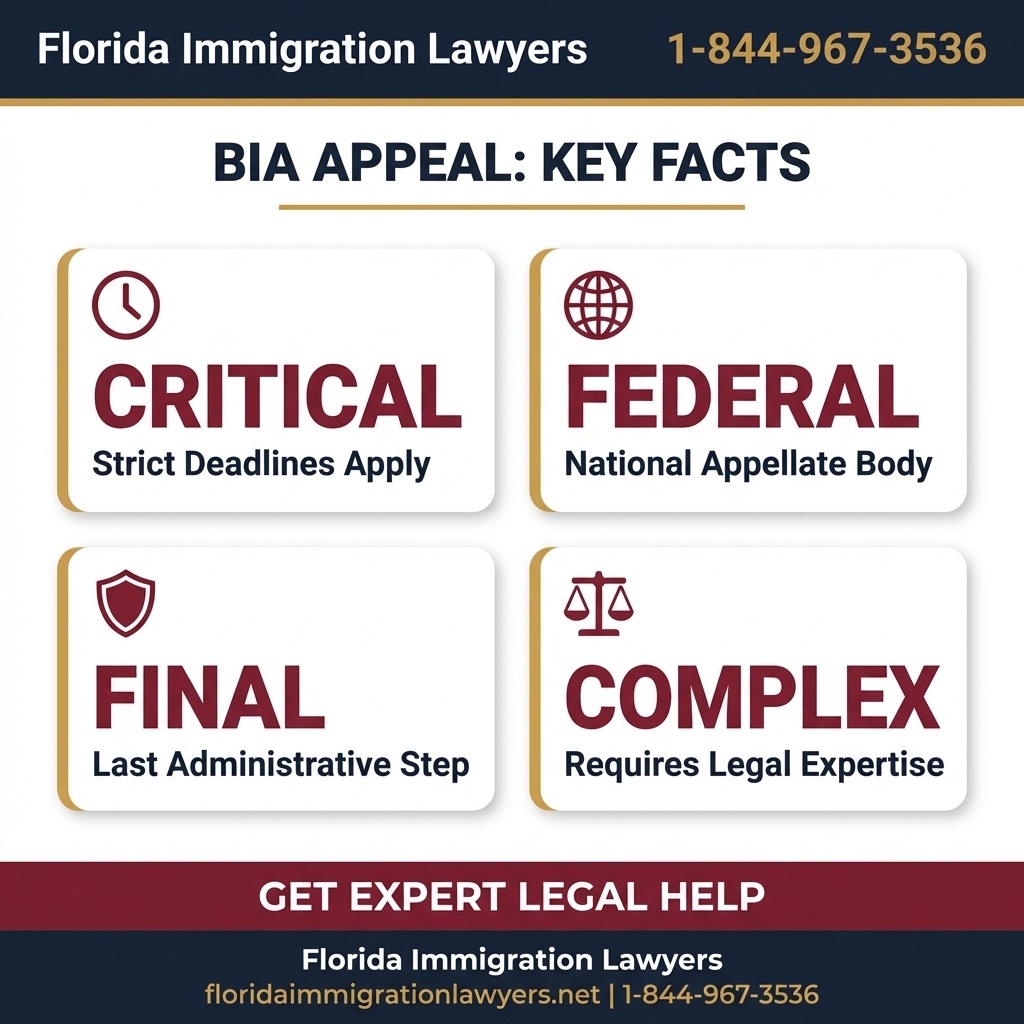
Supporting Documents for Your Brief:
- Transcript of Immigration Court Proceedings: Essential for identifying specific errors made by the immigration judge. You must obtain this official transcript to accurately cite the record in your appeal brief.
- Immigration Judge's Decision: A copy of the written decision you are appealing. This document outlines the judge's findings of fact and conclusions of law, which you will be challenging.
- Exhibits from Original Hearing: Any documents, affidavits, or evidence presented during your initial hearing. These form part of the existing record that the BIA will review.
- Legal Brief: A well-researched and persuasively written argument outlining the legal and factual errors in the immigration judge's decision. This should cite relevant statutes, regulations (e.g., 8 CFR 1003), and immigration case law, including administrative decision immigration court precedents.
- Supporting Affidavits or Declarations: If new evidence is permissible or relevant to your legal arguments through a motion to reopen, these documents would be included.
- Any Relevant Legal Precedent: Copies of cited BIA decisions or federal court rulings that support your arguments. These help establish the legal framework for your appeal.
BIA Appeal Timeline and Processing Expectations for Florida Residents
One of the most common questions from individuals pursuing an immigration appeal is about how long the process will take. For those in Florida, understanding the potential timeline is crucial for planning their lives and managing expectations. The BIA processing times can vary significantly, and patience is often required.
How Long Does a BIA Appeal Take?
The processing time for an immigration appeal to the BIA can vary significantly. While some cases are resolved within a few months, others can take a year or more, especially if the case is complex or remanded. The BIA's caseload, the complexity of your specific legal issues, and whether the case is remanded for further proceedings all impact the timeline. Typically, you can expect a decision within 6 to 12 months, but this is not guaranteed.
The BIA aims to process cases efficiently, but the sheer volume of appeals means that wait times can fluctuate. It is important to remember that each case is unique, and general timelines may not apply to every situation. Your attorney can provide a more personalized estimate based on the specifics of your case.
Factors Influencing Delays
Common factors that can extend processing times include requests for additional information from the BIA, the need for further review by a BIA panel (rather than a single board member), or if the case involves novel or complex legal questions that require extensive deliberation. The BIA's internal processing capacity, staffing levels, and evolving immigration policies also play a role.
Furthermore, if your case is remanded back to the immigration judge, the clock essentially resets for that portion of the process, adding significant time to the overall resolution. Delays can be frustrating, but they do not necessarily indicate a negative outcome for your appeal.
What Happens While Your Appeal is Pending?
In most cases, if you timely filed an appeal of a removal order, the removal order is stayed, meaning it cannot be enforced while your appeal is pending before the BIA. This allows you to remain in the U.S. during the appeal process, often continuing to work if you had prior authorization. This automatic stay is a critical protection for individuals in Florida facing deportation.
However, specific circumstances can impact this stay, such as certain criminal convictions or security concerns. It is vital to consult with your attorney to confirm the status of your stay and understand any potential exceptions. Maintaining your legal status and adhering to all immigration laws during this period is essential.
Cost Factors and Fee Breakdown for an Immigration Appeal
Understanding the financial aspects of an immigration appeal is an important part of preparing for the process. While specific fee amounts are not provided here due to their variable nature, knowing the types of costs involved can help you plan. For those in Gainesville and across Florida, investing in an appeal is often an investment in their future.
Government Filing Fees:
The Board of Immigration Appeals charges a filing fee for Form EOIR-26, Notice of Appeal. This fee is subject to change, so it is crucial to check the most current fee schedule on the Executive Office for Immigration Review (EOIR) website before filing. If you cannot afford the fee, you may be eligible to apply for a fee waiver by filing Form EOIR-26A, Fee Waiver Request, with supporting financial documentation. This documentation typically includes proof of income, assets, and expenses.
Properly requesting a fee waiver is as important as paying the fee itself. An improperly filed fee waiver request can lead to the rejection of your appeal. Your attorney can help you determine eligibility and prepare the necessary documentation to support your request.
Attorney Fees:
Legal representation is highly recommended for a BIA immigration appeal due to its complexity. Attorney fees for appeals typically involve a flat fee or hourly rates, depending on the complexity of the case, the amount of time anticipated, and the attorney's experience. These fees cover services such as reviewing the record, conducting legal research, drafting the appeal brief, and preparing any motions.
Investing in experienced legal counsel can significantly increase your chances of a successful outcome. While there is an upfront cost, the potential benefits of winning an appeal, such as remaining in the U.S. and pursuing legal status, often far outweigh the financial outlay. Many firms, including Florida Immigration Lawyers, offer free consultations to discuss fees.
Associated Costs:
Other potential costs can include obtaining official transcripts of your immigration court hearings, which are often necessary to build a strong appeal. There may also be costs for photocopying, postage for certified mail, and potentially expert witness fees if unique circumstances require specialized testimony. These ancillary costs should be factored into your overall budget for the appeal.
Your attorney can provide a detailed breakdown of all anticipated costs during your initial consultation. Transparency regarding fees and expenses is a hallmark of reputable legal practices. Be sure to ask for a clear explanation of all potential charges.
The BIA appeal process is intricate and fraught with technicalities. A single misstep can jeopardize your future in Florida. Do not navigate this process alone. Contact Florida Immigration Lawyers today for guidance and dedicated representation. We are committed to protecting your rights.
Common Mistakes to Avoid in Your BIA Immigration Appeal
The BIA immigration appeal process is highly technical, and even minor errors can lead to severe consequences, including the dismissal of your appeal. Being aware of common pitfalls can help you avoid them and strengthen your chances of success. For those in Florida, understanding these mistakes is crucial.
- Missing Deadlines: The 30-day deadline to file Form EOIR-26 is absolute and rarely extended. Missing it almost certainly means forfeiting your right to appeal. Be meticulous with all deadlines, including those for submitting briefs and motions.
- Failing to State Specific Grounds for Appeal: Simply stating "I disagree with the judge" is insufficient. Your Notice of Appeal and brief must clearly articulate specific errors of law or fact made by the immigration judge. Vague arguments will likely be rejected.
- Not Providing Adequate Legal Argument: A successful appeal requires more than just facts; it demands strong legal arguments. You must cite relevant statutes (e.g., 8 U.S.C. Chapter 12), regulations (e.g., 8 CFR 1003), and immigration case law to support your position persuasively.
- Submitting New Evidence Without Proper Motion: Generally, the BIA reviews the record as it existed before the immigration judge. Submitting new evidence usually requires a motion to reopen, which has specific requirements and strict deadlines. Improperly introduced evidence will be disregarded.
- Lack of Organization and Clarity: The BIA judges review hundreds of cases. A disorganized, poorly written, or unclear brief makes it difficult for them to understand your arguments, potentially weakening your case. Clarity and conciseness are key.
- Improper Service of Documents: All documents, including the Notice of Appeal, must be properly served on the opposing party (DHS). Failure to do so can lead to dismissal, as it violates procedural due process requirements.
- Not Requesting a Fee Waiver When Eligible: If you cannot afford the filing fee, failing to submit a timely and properly documented fee waiver request will result in your appeal being rejected. Ensure all financial documentation supports your inability to pay.
- Assuming the BIA Will Review Everything: The BIA will only review issues properly raised and preserved in the record and your brief. Do not assume they will re-examine every aspect of your original hearing or introduce new arguments on their own.
- Failing to Address the Immigration Judge's Reasoning: Your brief must directly challenge the specific findings of fact and conclusions of law made by the immigration judge. A general appeal will not suffice; you must pinpoint where the judge erred.
- Underestimating the Complexity: The BIA appeal is not a simple re-do of your previous hearing. It is a highly technical legal process requiring specialized knowledge of immigration law and appellate procedure. Attempting it without legal counsel is a significant risk.
When to Call a Lawyer for Your Immigration Appeal
Navigating an immigration appeal, especially before the BIA, is incredibly complex. The legal framework, including the Immigration and Nationality Act (INA) and federal regulations, is vast and constantly evolving. Many individuals in Florida, from Gainesville to Fort Lauderdale, find themselves overwhelmed by the procedural demands and legal intricacies. This is precisely when experienced legal counsel becomes indispensable.
You should consider calling an immigration lawyer immediately if:
- You have received an unfavorable decision from an immigration judge or USCIS.
- The 30-day deadline for filing a Notice of Appeal is approaching rapidly.
- You need to understand if your specific case is eligible for an immigration appeal.
- You are unsure how to identify legal or factual errors in the initial decision.
- You lack experience drafting complex legal briefs and citing case law effectively.
- You need to file a motion to reopen or a motion to reconsider a BIA decision.
- You are concerned about deportation or removal and need a stay of removal while your appeal is pending.
- You are facing a complex legal issue, such as those involving criminal grounds of inadmissibility or asylum claims.
Our attorneys at Florida Immigration Lawyers focus on appellate immigration law. We can review your case, identify potential grounds for appeal, prepare compelling legal arguments, and represent you throughout the entire BIA process. We understand the stakes are high, and we are dedicated to providing the diligent and knowledgeable representation you deserve. Do not face this challenge alone; let us fight for your future.
About Florida Immigration Lawyers
At Florida Immigration Lawyers, we are a leading immigration law firm dedicated to serving individuals and families across all of Florida, including Orlando. Our mission is to provide compassionate, effective, and results-driven legal representation for all immigration matters. We understand the profound impact immigration decisions have on your life and your loved ones.
Our Services Include:
- Immigration Appeals: Focusing on appeals to the Board of Immigration Appeals (BIA) and federal courts.
- Deportation Defense: Vigorously defending clients facing removal proceedings.
- Asylum Claims: Guiding individuals through the complex asylum application process.
- Family Immigration: Helping families unite through visas and green cards.
- Citizenship & Naturalization: Assisting clients in achieving U.S. citizenship.
- Business Immigration: Supporting businesses and professionals with work visas.
Our team of experienced attorneys is available 24/7 to provide free consultations. We pride ourselves on our deep knowledge of immigration law, our commitment to client success, and our ability to communicate effectively in English and Spanish. When you choose Florida Immigration Lawyers, you choose a partner who will fight tirelessly for your rights and your future. Visit our website at https://www.floridaimmigrationlawyers.net or call us at 1-844-YO-PELEO to learn how we can assist you.
Sources and References
- U.S. Citizenship and Immigration Services (USCIS)
- Executive Office for Immigration Review (EOIR) - Board of Immigration Appeals (BIA)
- EOIR Forms (including Form EOIR-26)
- 8 U.S.C. Chapter 12 - Immigration and Nationality Act (INA)
- 8 CFR Part 1003 - Executive Office for Immigration Review
- 8 U.S.C. § 1229a - Removal proceedings
This article provides general legal information and is not intended as legal advice. Every case is unique, and outcomes depend on specific facts and circumstances. Contact an attorney for advice about your particular situation.
Do not let an adverse immigration decision define your future. With the right legal strategy, you can challenge unfavorable rulings and fight for your right to remain in Florida. Trust the experienced team at Florida Immigration Lawyers to guide you through every step of the immigration appeal process. We offer free consultations and are available 24/7 to discuss your case. Protect your future in Florida. Call Florida Immigration Lawyers at 1-844-YO-PELEO for a free consultation. Se Habla Español - Estamos aquí para ayudarle.
Do Not Navigate This Process Alone
Our experienced immigration attorneys are ready to fight for you. Get a free, confidential case review today.
Se Habla Español
Or leave your details and we’ll call you:
Free Evaluation in 24 Hours
Or talk to us right now

AI voice assistant — available 24/7
FreeFrequently Asked Questions

William J. Vásquez
Founding Attorney · Vasquez Law Firm
U.S. Air Force veteran and immigration attorney with years of hands-on U.S. immigration experience. J.D., NCCU School of Law. AILA member. Admitted to the 4th, 5th, and 11th Circuit Courts.
Available 24/7 - Free Evaluations
Reviewed for legal accuracy by William J. Vásquez
Licensed in North Carolina; U.S. immigration is federal practice.
Related Legal Services
Our Florida immigration attorneys can help you with immigration lawyer cost in Florida, experienced immigration attorneys and asylum protection. Call today at 1-844-YO-PELEO for a free case review.
Related Links
Related Topics
Free Legal Case Review
Discuss your case with our experienced attorneys. We're available 24/7.
Se Habla Español - Estamos aquí para ayudarle.
Related Articles
EAD Advance Parole Combo Card in Florida: What You Need
An EAD advance parole combo card allows individuals with pending adjustment applications to both work and travel abroad without jeopardizing their green card application. Learn how to apply in Florida, what documents you need, and common mistakes to avoid.
PERM Labor Certification in Florida: A 2026 Guide
Learn all about the PERM labor certification process in Florida, essential for employers sponsoring green card applicants. Understand the steps, document requirements, and common mistakes to avoid in this 2026 guide.
Dual Citizenship Lawyer in Florida: What You Need to Know
For Florida residents, the concept of dual citizenship, or holding two passports, offers a compelling blend of opportunities and challenges. While the U.S. generally permits dual nationality, the path to achieving this status requires a meticulous understanding of both U.S. immigration laws and the citizenship policies of your country of origin. This guide explores the definition of dual citizenship, the detailed step-by-step process for U.S. naturalization, and the significant benefits and potential pitfalls involved. We cover essential documentation, typical timelines, and cost considerations for 2026, providing crucial insights for anyone in Orlando, Miami, or across Florida considering this important legal step. Learn about common mistakes to avoid and understand when to seek professional legal counsel to navigate this complex process successfully. Florida Immigration Lawyers is here to provide expert, bilingual support for your dual citizenship journey.
Immigration Lawyer Orlando Free Consultation in Florida
For individuals and families in Orlando, Florida, navigating the complexities of U.S. immigration law requires expert guidance. An immigration lawyer in Orlando offers crucial support for everything from visa applications and green card processes to naturalization and deportation defense. This comprehensive guide details what a free consultation covers, providing a step-by-step overview of immigration pathways, essential document checklists, and expected timelines in 2026. We also highlight common mistakes to avoid, discuss the critical role of legal counsel in deportation and asylum cases, and explain why choosing a local Orlando immigration attorney is beneficial. Florida Immigration Lawyers is dedicated to serving the diverse community of Orlando with compassionate, effective legal solutions, ensuring you receive personalized advice and robust representation for a successful immigration journey.