H-1B Visa Fee Increase Florida 2026: What You Must Know
The H-1B visa program is undergoing significant changes, with substantial fee increases anticipated in Florida for 2026. These adjustments will impact both employers sponsoring skilled foreign workers and individuals seeking to work in specialty occupations across the state, including Tampa. Our comprehensive guide from Florida Immigration Lawyers breaks down the new costs, outlines the application process, and highlights crucial documents needed. We also address common mistakes and explain when expert legal assistance is essential to navigate these complex regulations successfully. Prepare your petition accurately and efficiently with our guidance.

The H-1B visa fee increase in Florida for 2026 introduces significant changes to application costs, impacting both employers and foreign nationals. These adjustments, mandated by USCIS, include higher base filing fees, increased fraud prevention and detection fees, and potentially a new asylum program fee. Understanding these new financial requirements is crucial for a successful petition. Employers in Tampa and across Florida must prepare for these elevated expenses to ensure compliance and avoid delays.
- New USCIS fees may significantly increase H-1B application costs.
- Employers bear primary responsibility for most H-1B related fees.
- Accurate documentation and timely payment are more critical than ever.
- Consulting an immigration lawyer is vital to navigate these complex changes.
- Florida businesses must plan budgets carefully for H-1B sponsorship in 2026.
H-1B Visa Fee Increase Florida 2026: What You Must Know
Are you an employer in Florida looking to sponsor skilled foreign workers, or a professional seeking an H-1B visa to work in the Sunshine State, particularly in thriving areas like Tampa? The landscape of U.S. immigration, especially concerning the H-1B visa program, is constantly evolving. In 2026, significant fee increases are set to impact H-1B visa petitions, making the process more complex and costly for many.
Understanding these changes is not just about knowing the new numbers; it is about strategically planning your immigration path or sponsorship to avoid pitfalls. At Florida Immigration Lawyers, we are committed to keeping our clients informed and prepared for every challenge. We serve individuals and businesses across all of Florida, from Miami to Jacksonville, including our strong presence in Tampa.
This comprehensive guide will break down the H-1B visa fee increase for 2026, explain what it means for you, and outline the steps necessary to navigate this new environment successfully. Do not face these complex changes alone. Call Florida Immigration Lawyers at 1-844-967-3536 for a free consultation today to discuss your specific situation and how we can assist you.
Understanding the H-1B Visa Fee Increase in Florida for 2026
The U.S. Citizenship and Immigration Services (USCIS) regularly adjusts its fees to cover operational costs and fund various immigration services. The fee increases anticipated for 2026 represent a substantial overhaul, directly impacting the H-1B visa program. These adjustments are designed to ensure the agency's financial stability and improve processing, though they undeniably place a greater financial burden on petitioners.
For businesses in Florida, particularly those in high-demand sectors like technology and healthcare in cities such as Tampa, Orlando, and Fort Lauderdale, these fee hikes will require careful budget planning. The H-1B visa allows U.S. employers to temporarily employ foreign workers in specialty occupations, requiring theoretical or technical expertise. It is a critical pathway for many skilled professionals to contribute to Florida's economy.
Key Changes to H-1B Visa Fees
While specific final amounts are subject to change until officially published, the proposals indicate significant increases across several categories. These include the base filing fee for Form I-129, Petition for a Nonimmigrant Worker, and adjustments to the Fraud Prevention and Detection Fee. A new Asylum Program Fee has also been introduced, which will be levied on most employment-based petitions, including H-1B.
Employers should also be aware of potential increases to the American Competitiveness and Workforce Improvement Act of 1998 (ACWIA) fee, which varies based on the employer's size. For companies with 25 or fewer full-time equivalent employees, this fee is typically lower than for those with 26 or more. Additionally, the Public Law 114-113 fee, often referred to as the '100k fee' or '50k fee' for specific employers, may also see adjustments or clarifications.
It is crucial to remember that most H-1B related fees are the responsibility of the petitioning employer, not the foreign national employee. This is explicitly stated in the regulations found in 8 CFR § 214.2(h)(19). Understanding these responsibilities is key to compliance.
Why are H-1B Visa Fees Increasing?
USCIS states that fee adjustments are necessary to recover the full cost of services provided, including processing applications, petitions, and requests, and to maintain the agency's operations. Unlike most government agencies, USCIS is primarily funded by fees, not congressional appropriations. The agency aims to ensure fair and equitable fees while also addressing backlogs and improving service efficiency.
These fee increases also reflect the rising costs associated with administering the immigration system, including technology upgrades, increased staffing, and enhanced security measures. The goal is to create a more sustainable funding model for the agency's future operations. The impact on Florida's businesses and foreign workers will be substantial, necessitating thorough preparation.
Navigating the H-1B Visa Application Process with New Fees
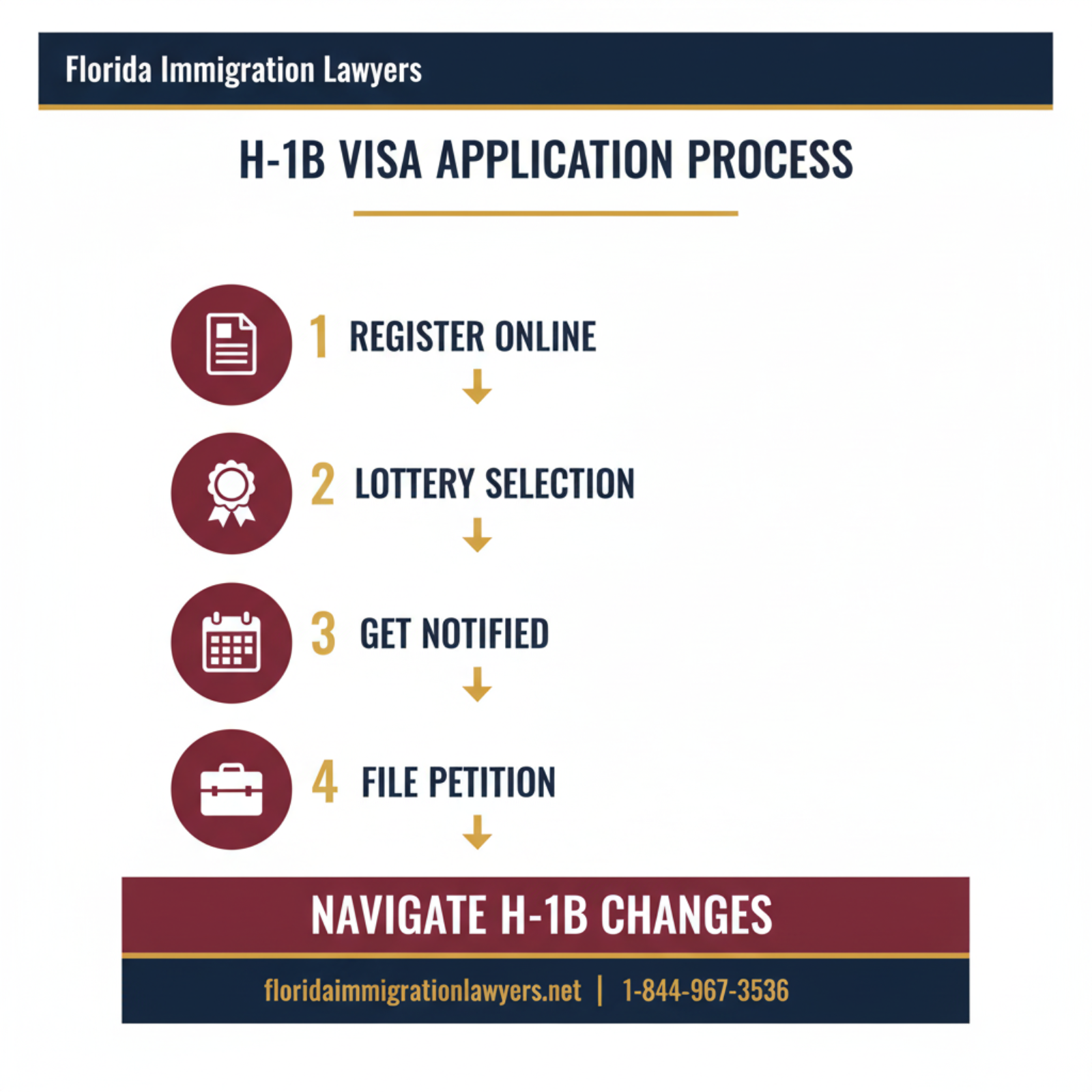
The H-1B visa application process is detailed and requires meticulous attention to detail. With new fees, the financial aspect becomes an even more critical component. Here is a step-by-step guide to help you understand the process, keeping the fee increases in mind.
- Determine Eligibility and Prevailing Wage: The employer must first determine if the position qualifies as a specialty occupation and if the foreign national meets the H-1B requirements. A crucial step is obtaining a certified Labor Condition Application (LCA) from the Department of Labor (DOL). This LCA ensures that the H-1B worker will be paid at least the prevailing wage for their occupation in the area of intended employment, such as Tampa, Florida, or the actual wage paid to other employees with similar experience and qualifications, whichever is higher.
- H-1B Cap and Registration (if applicable): If the H-1B cap applies (most cases), employers must participate in the annual H-1B Lottery. This electronic registration process typically occurs in March. A non-refundable H-1B registration fee, which has also increased, must be paid for each beneficiary. Only selected registrations can proceed to file a full petition.
- Prepare and File Form I-129, Petition for a Nonimmigrant Worker: This is the core petition. The employer must complete Form I-129 and gather all supporting documentation, including the certified LCA, educational credentials, work experience letters, and a detailed letter of support. This is where the increased base filing fee for Form I-129, the Fraud Prevention and Detection Fee, and the Asylum Program Fee will apply.
- Pay All Applicable Fees: Ensure all fees are correctly calculated and submitted with the petition. This includes the Form I-129 filing fee, ACWIA fee, Fraud Prevention and Detection Fee, and the new Asylum Program Fee. Depending on specific circumstances, other fees like premium processing (Form I-907) or attorney fees will also be incurred.
- Respond to Requests for Evidence (RFEs): USCIS may issue an RFE if they require additional information or clarification. A timely and comprehensive response is critical to avoid denial. This is an area where legal counsel from Florida Immigration Lawyers can be invaluable.
- Approval and Visa Stamping (if applicable): If the petition is approved, foreign nationals outside the U.S. will typically apply for an H-1B visa stamp at a U.S. embassy or consulate in their home country. Those already in the U.S. may have their status changed or extended.
Essential Documents for Your H-1B Visa Petition in 2026
A successful H-1B petition hinges on thorough documentation. Missing or incorrect documents can lead to delays, RFEs, or even denial. Here is a comprehensive checklist of documents typically required for an H-1B visa petition:
- Certified Labor Condition Application (LCA) Form ETA 9035/9035E
- Form I-129, Petition for a Nonimmigrant Worker, and H-1B Data Collection and Filing Fee Exemption Supplement
- Company financial statements, tax returns, and business licenses for the petitioning employer
- Employer's letter of support detailing the job offer, duties, salary, and why the position requires a specialty occupation worker
- Beneficiary's educational degrees, diplomas, and transcripts (with official English translations if applicable)
- Evaluation of foreign educational credentials by a USCIS-recognized agency
- Beneficiary's resume or CV
- Letters of experience from previous employers
- Copies of all pages of the beneficiary's passport
- Beneficiary's birth certificate (with translation)
- Marriage certificate and children's birth certificates (for H-4 dependents)
- Previous U.S. visa copies and I-94 records (if applicable)
- Proof of H-1B cap registration and selection
- Any other documents requested by USCIS or deemed relevant by your immigration attorney
H-1B Visa Timeline and Processing Expectations in Florida
The H-1B visa timeline can vary significantly based on several factors, including the annual cap, USCIS workload, and whether premium processing is used. For 2026, petitioners should anticipate potential processing delays due to the influx of applications and the implementation of new fee structures.
Typical Timeline Overview:
- LCA Certification: 7-10 business days
- H-1B Cap Registration: Typically March, with results in late March.
- Petition Filing Window: Early April for selected registrations.
- Regular Processing: Can take 6-12 months, or even longer, depending on the service center. For example, petitions processed at the California Service Center or Vermont Service Center serving Florida cases may have varying times.
- Premium Processing (Form I-907): Offers expedited processing, typically within 15 calendar days, for an additional fee. This fee has also seen increases.
- Visa Interview (Consular Processing): Varies by embassy/consulate; can take weeks to months to schedule.
It is important to note that these are general estimates. Factors such as RFEs, background checks, and administrative processing can extend timelines. Starting the process early and with complete documentation is the best way to mitigate delays. For Florida-based employers, especially in busy economic hubs like Tampa, planning ahead is essential to secure talent.
Breaking Down H-1B Visa Costs and Fees for Florida Employers
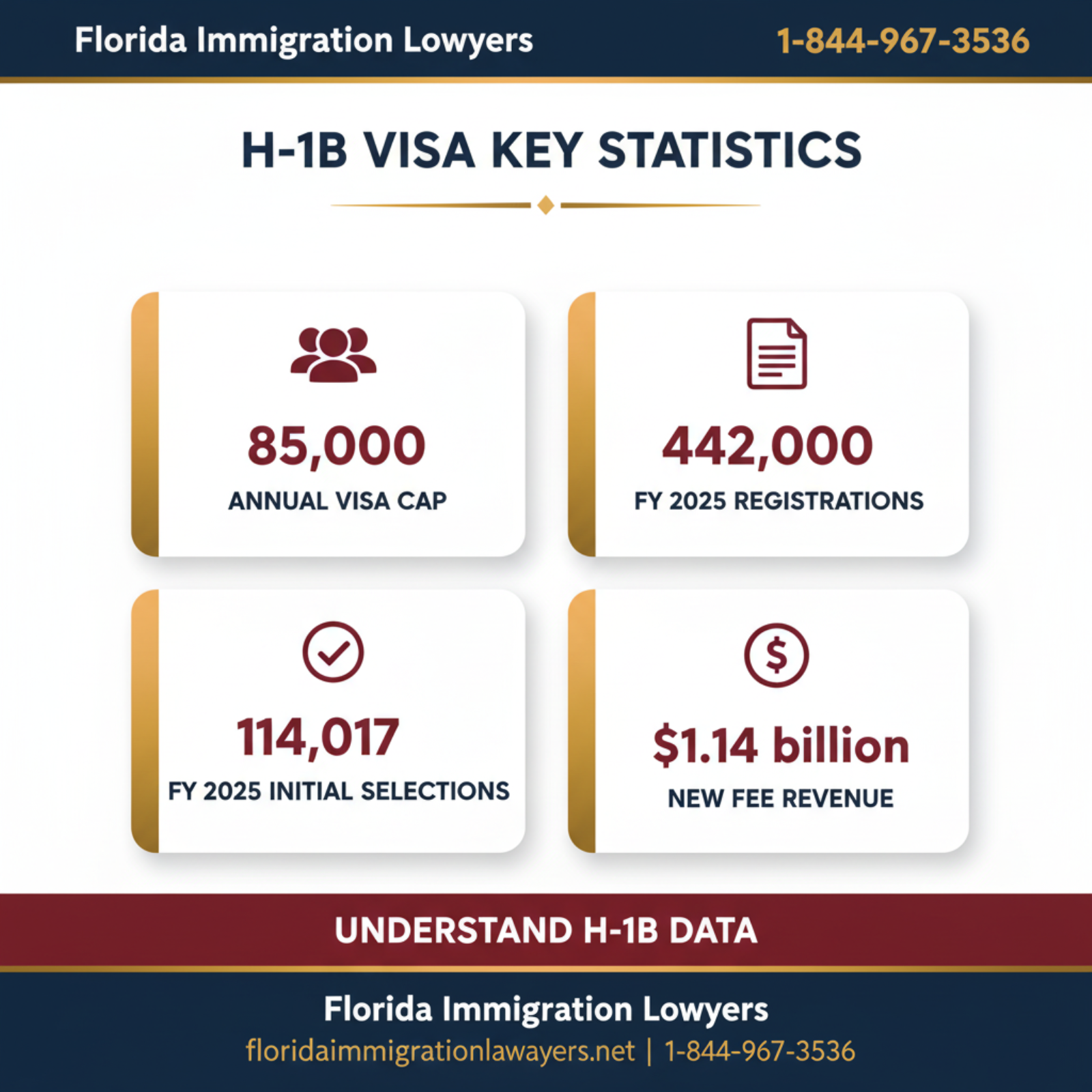
The H-1B visa fee increase for 2026 necessitates a detailed understanding of the financial commitment. Employers in Florida must budget for these costs, which can total several thousands of dollars per petition. Here is a breakdown of the typical fees involved:
- USCIS Base Filing Fee (Form I-129): This is the primary fee for filing the petition. It has seen a significant increase.
- H-1B Registration Fee: A smaller, non-refundable fee paid during the electronic lottery registration.
- Fraud Prevention and Detection Fee: A mandatory fee for initial H-1B petitions and change of employer petitions. This fee is also subject to increase.
- American Competitiveness and Workforce Improvement Act (ACWIA) Fee: This fee varies based on the employer's size (e.g., $750 for employers with 1-25 full-time equivalent employees; $1,500 for employers with 26 or more).
- Asylum Program Fee: A new fee proposed to fund asylum processing, applicable to most employment-based petitions.
- Public Law 114-113 Fee (also known as the '100k fee'): For employers with 50 or more employees, where more than 50% of their U.S. workforce are H-1B or L-1 nonimmigrants, an additional fee applies. This fee is $4,000 for H-1B petitions.
- Premium Processing Fee (Form I-907): An optional fee to expedite processing to 15 calendar days. This fee has also increased.
- Attorney Fees: Legal fees for professional assistance in preparing and filing the petition. These vary by firm but represent a vital investment in ensuring compliance and success.
- H-4 Dependent Fees: If the H-1B worker brings family members (spouse and unmarried children under 21) on H-4 visas, separate filing fees for Form I-539 (Application to Extend/Change Nonimmigrant Status) will apply.
Who pays the $100,000 H-1B fee? This refers to the Public Law 114-113 fee, which is $4,000 for H-1B. It is paid by employers who meet specific criteria: 50 or more employees, with over 50% of their U.S. workforce on H-1B or L-1 visas. This is a responsibility of the petitioning employer.
How much salary is required for an H-1B visa? There isn't a single set amount. Instead, the employer must pay the H-1B worker at least the prevailing wage for the occupation in the specific geographic area (e.g., Tampa, Florida) or the actual wage paid to other employees with similar experience and qualifications, whichever is higher. This is determined by the Department of Labor.
Do I have to pay $250 to enter the US? This question likely refers to the I-94 automation fee or similar entry fees, which are separate from H-1B specific fees and apply generally to travelers entering the U.S. by air or sea. It is not an H-1B application fee.
How much is a Green Card? A Green Card is a separate immigration process (permanent residency) with different fees and requirements. H-1B is a nonimmigrant, temporary visa. The fees for a Green Card vary significantly based on the specific pathway (e.g., family-based, employment-based) and forms involved (e.g., I-130, I-485, I-140).
The total cost for an H-1B petition can range from a few thousand dollars to significantly more, especially for larger companies subject to additional fees or those opting for premium processing. Budgeting for these expenses well in advance is paramount for Florida businesses.
Do not navigate this process alone. Contact Florida Immigration Lawyers today. Our experienced team can help you understand the new H-1B visa fee increase in Florida for 2026 and ensure your petition is prepared accurately and efficiently.
Common Mistakes to Avoid During the H-1B Process
The H-1B visa process is intricate, and even minor errors can lead to significant delays or denials. Being aware of common pitfalls can save you time, money, and stress, especially with the H-1B visa fee increase in Florida for 2026.
- Incorrect Fee Payment: Submitting an incorrect fee amount, whether too much or too little, or using an outdated fee schedule, will cause your petition to be rejected. Ensure all checks or money orders are for the exact, current amounts.
- Missing the H-1B Cap Registration Deadline: For cap-subject petitions, failing to register within the designated window in March means missing the opportunity for that fiscal year. There are no exceptions for late registrations.
- Incomplete or Inaccurate LCA: The Labor Condition Application (LCA) is foundational. Errors in prevailing wage determination, job duties, or employment location can lead to denials or lengthy RFEs.
- Insufficient Evidence of Specialty Occupation: USCIS rigorously reviews whether the position truly requires a bachelor's degree or higher in a specific specialty. Failing to provide compelling evidence can result in an RFE or denial.
- Poorly Documented Beneficiary Qualifications: Not adequately demonstrating the foreign national's qualifications for the specialty occupation, through degrees, transcripts, and experience letters, is a common issue.
- Failing to Respond to RFEs on Time: Requests for Evidence must be addressed thoroughly and within the specified deadline. A late or inadequate response will almost certainly lead to denial.
- Not Adhering to Public Law 114-113 Fee Requirements: Employers subject to the '100k fee' (Public Law 114-113 fee) who fail to include it will have their petition rejected. Clarifying eligibility is vital.
- Inconsistent Information Across Forms: Discrepancies between the I-129, LCA, and supporting letters can raise red flags for USCIS, leading to scrutiny.
- Lack of Employer-Employee Relationship Proof: For third-party placements, demonstrating a clear employer-employee relationship and control over the H-1B worker is crucial and often heavily scrutinized.
- Not Consulting an Experienced Immigration Attorney: Attempting to navigate the complex H-1B process without legal guidance, especially with new fee structures and regulations, significantly increases the risk of errors and denial.
When to Call a Lawyer for Your H-1B Visa in Florida
While some employers or individuals might consider handling the H-1B process themselves, the complexities, especially with the new H-1B visa fee increase in Florida for 2026, make professional legal guidance almost essential. Florida Immigration Lawyers offers comprehensive support for businesses and foreign nationals across the state, including Tampa, Orlando, and Miami.
You should consider calling an experienced immigration lawyer from Florida Immigration Lawyers in the following specific scenarios:
- Initial H-1B Petition: If this is your first time sponsoring an H-1B worker or applying for an H-1B visa, a lawyer can ensure all requirements are met from the outset.
- Navigating New Fee Structures: With the H-1B visa fee increase for 2026, understanding which fees apply to you and ensuring correct payment amounts is critical.
- Complex Specialty Occupation Cases: If the job duties are not clearly defined as a specialty occupation, or if the beneficiary's qualifications are unconventional, legal expertise is vital.
- Requests for Evidence (RFEs): Receiving an RFE indicates USCIS has concerns. A lawyer can help craft a strong, evidence-based response to prevent denial.
- Employer Compliance Issues: If you are an employer concerned about wage compliance, public access file requirements, or other H-1B regulations, legal counsel can ensure you remain compliant.
- H-1B Transfers or Extensions: While seemingly simpler, transfers and extensions still require careful attention to detail, especially if there have been changes in employment terms.
- Potential for Denial or Appeals: If your petition has been denied, or you anticipate a denial, an attorney can advise on options such as motions to reconsider or appeals.
- Concerns about the H-1B Lottery: Understanding the registration process and increasing your chances of success within the lottery framework.
Our team at Florida Immigration Lawyers is well-versed in the latest immigration laws and policies. We can provide personalized advice, meticulously prepare your petition, and represent your interests throughout the entire process. Do not risk your future or your business's ability to hire top talent. We are here to help you secure your H-1B visa in Florida.
About Florida Immigration Lawyers
Florida Immigration Lawyers is a leading immigration law firm dedicated to serving individuals and businesses throughout the state of Florida. With offices strategically located to serve clients from Jacksonville to Miami, including a strong presence in Tampa, we pride ourselves on providing exceptional legal representation and compassionate client service.
Our experienced attorneys specialize in a wide range of immigration matters, including business immigration, family immigration, asylum, deportation defense, and citizenship. We understand the complexities of U.S. immigration law and are committed to guiding our clients through every step of their journey.
Why Choose Florida Immigration Lawyers?
- Expertise: Our lawyers possess in-depth knowledge of current immigration laws and policies.
- Client-Centered Approach: We prioritize your needs, offering personalized strategies and clear communication.
- Proven Track Record: We have a strong history of successful outcomes for our diverse clientele.
- Bilingual Services: Our team is fluent in English and Spanish, ensuring effective communication.
- Accessibility: We are available 24/7 to address your urgent immigration concerns.
Whether you are an employer seeking to navigate the H-1B visa fee increase in Florida for 2026 or an individual pursuing your American dream, Florida Immigration Lawyers is your trusted partner. Visit our attorneys page to learn more about our dedicated team. We offer free consultations to help you understand your options without obligation. Call us today at 1-844-967-3536.
Sources and References
- U.S. Citizenship and Immigration Services (USCIS) - H-1B Specialty Occupation Visa
- U.S. Department of State - H-1B Specialty Occupations
- U.S. Department of Justice - Executive Office for Immigration Review (EOIR) - Immigration Court Locations (referencing Florida courts)
- 8 U.S.C. Chapter 12 - Immigration and Nationality Act (INA), specifically INA Section 214(g) regarding H-1B cap.
- 8 CFR § 214.2(h) - Regulations governing H-1B classification.
- Public Law 114-113, Section 402, regarding additional H-1B and L-1 fees.
This article provides general legal information and is not intended as legal advice. Every case is unique, and outcomes depend on specific facts and circumstances. Contact an attorney for advice about your particular situation.
Navigating the H-1B visa process, especially with the upcoming fee increases in Florida for 2026, requires expert guidance. Do not leave your future to chance. Let Florida Immigration Lawyers be your advocate. We offer dedicated, experienced legal support for all your immigration needs, serving clients across Tampa, Orlando, Miami, and all of Florida. Call us for a free consultation at 1-844-967-3536. Se Habla Español - Estamos aquí para ayudarle.
Do Not Navigate This Process Alone
Our experienced immigration attorneys are ready to fight for you. Get a free, confidential consultation today.
Se Habla Español
Frequently Asked Questions
Florida Immigration Lawyers
Immigration Attorney | Founder, Vasquez Law Firm
U.S. Air Force veteran and immigration attorney with thousands of cases resolved. J.D., NCCU School of Law. AILA member. Admitted to the 4th, 5th, and 11th Circuit Courts.
Available 24/7 - Free Evaluations
Related Legal Services
Our Florida immigration attorneys can help you with experienced immigration attorneys, business immigration and asylum protection. Call today at 1-844-967-3536 for a free consultation.
Related Links
Related Topics
Free Legal Consultation
Discuss your case with our experienced attorneys. We're available 24/7.
Se Habla Español - Estamos aquí para ayudarle.
Related Articles
USCIS Biometrics Appointment Florida: Your Guide | VLF Florida
Understanding your USCIS biometrics appointment in Florida is crucial for a smooth immigration process. This guide covers what biometrics are, the step-by-step process, essential documents, and common mistakes to avoid. Whether you're in Fort Lauderdale or elsewhere in Florida, preparing adequately for your ASC appointment is key to moving your case forward. Learn about timelines, cost factors, and when to seek legal assistance. Florida Immigration Lawyers offers expert guidance to help you navigate this important step, ensuring all requirements are met and your application remains on track. Contact us today for a free consultation.
Asylum Application Process in Florida Explained | VLF Florida
Learn the detailed steps for applying for asylum in Florida. Understand the I-589 form, timelines, and how to avoid common pitfalls. Contact Florida Immigration Lawyers for expert guidance.
Understanding Good Moral Character for Naturalization in Florida
Learn about the good moral character requirement for naturalization in Florida, and how it affects your N-400 application. Understand the role of criminal history and how to demonstrate moral character effectively. For personalized advice, call Florida Immigration Lawyers at 1-844-967-3536.
I-601A Provisional Waiver in Florida: What You Need to Know
Discover how the I-601A provisional waiver can help you stay with your family during the immigration process in Florida. Learn about eligibility, application steps, and common pitfalls. Call Florida Immigration Lawyers at 1-844-967-3536 for a free consultation.